Set Up Your Outbound AI Calling Agent in 2025

You want to launch effective outbound calling campaigns. The market for automated outbound calling is growing, with projections showing significant expansion.
| Year | Market Size (USD Billion) |
|---|---|
| 2024 | 2.09 |
| 2025 | 2.57 |
Many teams already use automated tools for their sales campaigns. A recent study shows:
- 31% of teams use AI for customer communication.
- 45% employ a hybrid human-AI approach.
- 23% do not currently use AI in their sales processes.
Launch your outbound AI calling agent with this 5-step plan for a successful automated campaign:
- Define Your Campaign Goal
- Choose a Platform (like the Sobot call center)
- Build Your Automated Campaign
- Launch & Test Outbound Calls
- Analyze Campaigns & Optimize Calls
This guide details each step for your 2025 automated outbound campaign, ensuring you can launch your outbound calls with confidence using a solution like Sobot AI from Sobot for your successful campaign.
Define Campaign Goals and KPIs

A successful automated outbound calling campaign starts with a clear plan. Before you launch any calls, you need to know what you want to achieve. This first step guides every other decision you make for your sales campaigns.
Identify Your Primary Objective
First, define the main goal for your campaign. What is the single most important action you want a prospect to take? A focused objective helps you design a more effective automated campaign. Your goal could be to generate leads or support your sales campaigns in other ways.
Common objectives for automated outbound campaigns include:
- Booking more sales discovery meetings
- Promoting a special offer or event
- Qualifying leads for your sales team
- Nurturing leads until they are ready to buy
- Collecting payments or securing event sign-ups
Set Key Performance Indicators
Next, you need to set Key Performance Indicators (KPIs). KPIs are metrics that measure the success of your outbound calls. They show you if your campaign is working. For example, a typical connection rate for cold calls is between 25% and 40%. If your rate is lower, you may need to improve your contact list.
Tip: Tracking the right KPIs is essential for optimizing your automated outbound campaigns. Focus on metrics that directly reflect your primary objective.
Here are some of the most important KPIs for an automated calling campaign:
| KPI | What It Measures |
|---|---|
| Connection Rate | The percentage of calls that connect to a person. |
| Conversion Rate | The percentage of calls that achieve your goal (e.g., a booked meeting). |
| Cost per Conversion | The total campaign cost divided by the number of successful outcomes. |
| Customer Sentiment | How prospects feel during the automated calls. |
Calculate Expected Return on Investment
Finally, calculate your expected Return on Investment (ROI). This helps you understand the financial value of your campaign. Start by adding up the total costs of your current process. Then, estimate the savings from your new automated system. Many companies see an ROI between 6x and 12x from their AI-powered sales campaigns. Subtract the software fees from your savings to find your net financial gain. This calculation proves the value of your outbound campaign.
Choose the Right AI Calling Platform
Selecting the right technology is the most critical decision for your outbound campaign. The platform you choose will determine your campaign's power, flexibility, and ultimate success. You need a solution that not only makes automated calls but also intelligently manages conversations and integrates smoothly with your existing tools.
Key Features of an Outbound AI Calling Agent
In 2025, a leading outbound AI calling agent must offer more than just basic dialing. You should look for a platform with sophisticated features designed for human-like interaction and operational efficiency. Your automated calling solution needs to be smart, adaptable, and easy to manage.
Essential features include:
- Advanced Speech Recognition: The AI must understand various languages, accents, and dialects. Modern platforms powered by Natural Language Processing (NLP) and Large Language Models (LLMs) can even detect emotions to guide the conversation.
- Smart Interruption Handling: Prospects don't always wait for their turn to speak. The AI should handle interruptions, pauses, and topic changes smoothly, just like a human agent.
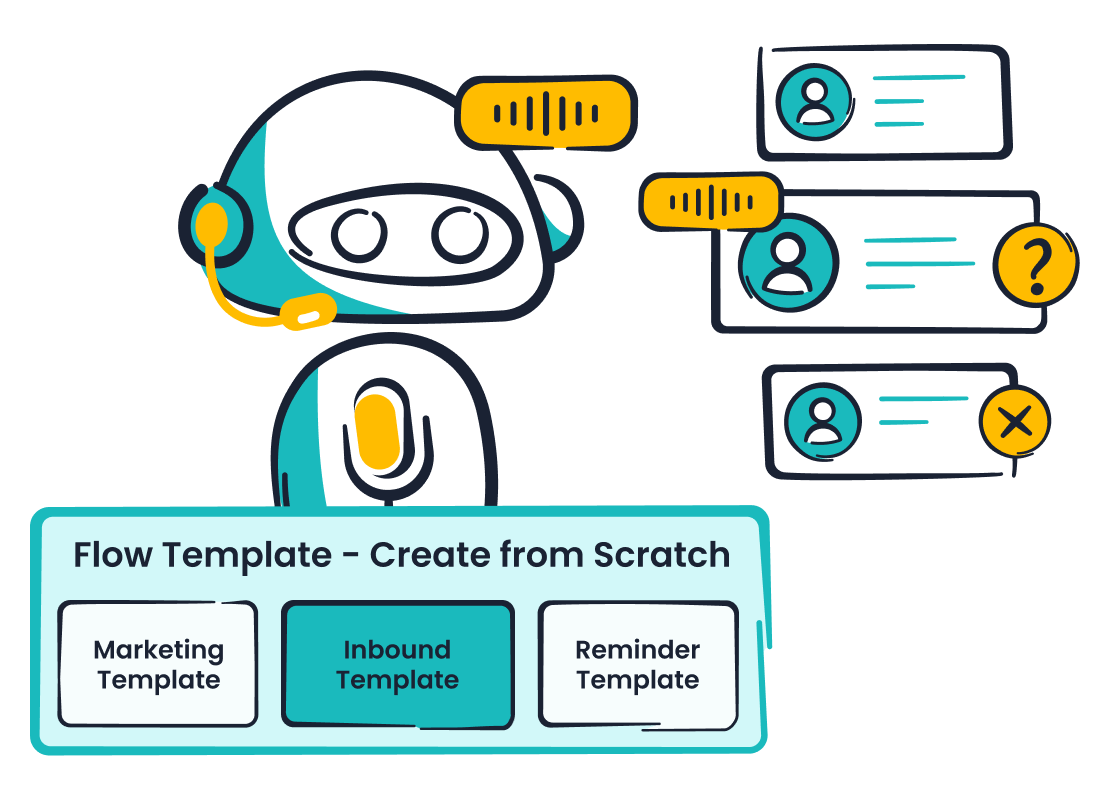
- No-Code Visual Workflow Builder: You shouldn't need a team of developers to design your outbound campaign. A platform like Sobot Voicebot offers a drag-and-drop visual builder, letting you map out the entire call flow with ease.
- Seamless Human Handoff: When a call requires a human touch, the AI must transfer all context—like customer history and the reason for the call—to a live agent instantly.
- Plug-and-Play Integrations: The platform must connect directly to your CRM and other sales systems. This automation saves time and ensures all data is logged correctly without manual work.
Evaluating Conversational AI Capabilities
Not all conversational AI is created equal. The difference between a frustrating bot and an effective automated agent lies in its conversational intelligence. Advanced NLP allows AI to understand and respond accurately, which can reduce call handling time by 50%.
Note: When evaluating platforms, focus on real-world performance. A slick demo doesn't always translate to success for your specific campaign.
Use these criteria to assess a platform's true capabilities:
- Test with Your Data: Ask for a trial and use your own contact lists and scripts. See how the AI handles your specific use cases and customer profiles.
- Understand the AI Engine: Ask how the platform uses LLMs. A vendor should be able to explain how their technology powers the product and improves its performance over time.
- Verify with Customer Stories: Look for tangible proof. Ask for case studies and references that show how the platform delivered real value to businesses similar to yours.
- Assess Security Measures: Your customer data is sensitive. Confirm the vendor has strong data protection, including encryption, access controls, and compliance certifications.
Evaluating Platforms like Sobot Voicebot
When you evaluate platforms, you will find that some offer standalone products while others provide a comprehensive solution. A platform like Sobot exemplifies an all-in-one approach, integrating its powerful Voicebot into a complete customer contact solution. This ensures every part of your outreach works together.
For example, the online Asian supermarket Weee! struggled with an inflexible IVR system and language barriers. By implementing Sobot's voice product, they achieved remarkable results for their outbound and inbound calls:
- Agent efficiency increased by 20%.
- Call resolution time was reduced by 50%.
- Customer satisfaction soared to 96%.
This success story shows the impact of choosing a robust automated calling solution. Sobot's platform combines inbound and outbound call handling, call recording, and a powerful outbound voicebot. Its "AI-First" strategy uses generative AI to deliver secure, human-like interactions, making it a strong contender for any business looking to scale its outbound efforts. This level of automation is key to a successful 2025 campaign.
CRM and Tech Stack Integration
Your outbound AI calling agent should not be an isolated tool. To achieve maximum efficiency, it must integrate seamlessly with your existing tech stack, especially your Customer Relationship Management (CRM) system. Proper integration turns your automated calls into a powerful data-gathering and workflow automation engine.
The benefits of a fully integrated system are significant:
- Unified Customer Data: Integration consolidates customer information from different systems. This gives your automated agent the context needed to personalize outbound calls and score leads effectively.
- Lower Operational Costs: By handling high volumes of repetitive inquiries, AI reduces staffing needs and ensures consistent service, freeing human agents for more complex tasks.
- Automated Workflows: An integrated AI can automatically schedule follow-ups, send confirmation emails, and update customer records in your CRM. This level of automation eliminates manual data entry and reduces errors.
- Better Business Insights: The data gathered from automated calls provides valuable insights into customer sentiment and common questions, helping you refine your campaign and improve your services.
Platforms like Sobot are built with this in mind, offering abundant APIs and plug-and-play capabilities to ensure your new automated calling solution works in harmony with the tools you already use.
Build Your Automated Outbound Calling Campaign

With your goals defined and platform chosen, you are ready to build your campaign. This stage is where you turn your strategy into a functional automated outbound calling system. Modern platforms like Sobot simplify this process, but careful planning is still essential for a successful dialing campaign.
Segment Your Contact List
You should not treat all contacts the same. Segmenting your list allows you to personalize your outbound calls, which makes your campaign more effective. Studies show that 74% of B2B buyers are more likely to purchase when their experience is personalized. A well-segmented list is the foundation of a successful dialing campaign.
Follow these steps to segment your contacts for your automated outbound calling campaigns:
- Create Detailed Customer Personas: Gather demographic, behavioral, and psychographic data. You need to understand your audience's habits, values, and interests to create effective campaigns.
- Identify High-Value Segments: Focus on groups that align with your campaign goals. You can use surveys and analytics to spot patterns. Prioritize contacts who have engaged with you before to maximize your return.
- Tailor Your Message: Personalize your communication for each segment. You can address specific pain points. For example, you might highlight time savings for small business owners in one campaign.
- Prioritize Based on Goals: Align your segments with your main objective. For lead nurturing, you should focus on contacts who have already shown interest. For lead generation, you can target new audiences that match your ideal customer profile.
Scripting for Conversational AI
Your script is the heart of your automated outbound calling. A great script for an AI agent is dynamic and personal. It uses data from your integrated CRM to tailor the conversation in real time. This makes the automated interaction feel more human and less like a robot.
Your script should be a flexible conversation guide, not a rigid monologue. Advanced AI uses context to make each of the calls unique. For example, it can reference a customer's recent purchase or support ticket. This eliminates "blind conversations" and shows the customer you know their history.
To create a powerful, personalized script for your automated outbound calling:
- Use Personalization Tokens: Address users by name and reference past interactions. A simple "Welcome back, John!" builds an instant connection.
- Maintain Your Brand's Tone: Align the AI's tone—whether professional, friendly, or casual—with your brand's voice. This ensures a consistent customer experience across all your campaigns.
- Incorporate Empathy: Program the AI to recognize and respond to frustration. A phrase like, "I understand this is frustrating, and I am here to help," can significantly improve customer sentiment.
- Leverage Context Awareness: Your AI should remember details from the current conversation. This avoids repetition and makes the automated outbound calling feel more natural and intelligent.
Designing the Call Workflow
Next, you need to design the call workflow. This is the logical path the automated outbound calling will follow from start to finish. You map out every possible turn in the conversation, from the initial greeting to the final call to action.
Modern platforms make this step easy. Tools like Sobot's Voicebot feature a drag-and-drop visual flow builder. This allows you to design your entire outbound campaign on a digital canvas without writing any code. This automation makes it simple to build, test, and modify your workflow. You can visually connect triggers, actions, and conditions to create a seamless experience.
Your workflow design depends entirely on your campaign goal. Below are some examples of how you can structure your outbound calls for an effective automated dialing campaign.
| Campaign Goal | Hook Example | Call to Action (CTA) Example |
|---|---|---|
| Appointment Setting | "Hi [Name], I noticed your team handles [process], and many companies struggle with the manual admin involved." | "We save teams up to 30% of their time with automation. Does it make sense to set up a quick 15-minute call so I can show you how?" |
| SaaS Trial Follow-Up | "Hi [Name], I'm following up on your recent trial of our platform. Have you had a chance to get set up?" | "I can walk you through the tools this week to ensure you get the most value. Would you have time on Thursday?" |
| Lead Qualification | "Hi [Name], you recently downloaded our guide on [topic]. I'm calling to see if you had any questions about it." | "Based on your interest, it seems our [product] could be a good fit. Are you available for a brief demo next week?" |
Launch Your Outbound Dialing Campaign
With your list, script, and workflow ready, you can launch your outbound dialing campaign. The final step is choosing the right dialing mode on your auto dialer. The mode you select impacts agent productivity, call volume, and compliance. A powerful auto dialer gives you the flexibility to choose the best mode for each campaign.
Here is a comparison of common auto dialer modes for your automated outbound calling:
| Feature | Predictive Dialer | Progressive Dialer | Power Dialer |
|---|---|---|---|
| Description | Dials multiple numbers per agent and connects only answered calls. | Dials one number per agent and connects only when a person answers. | Dials one number per agent and connects the agent immediately. |
| Call Volume | Highest | High | Medium |
| Abandon Rate | Highest | Low | Low |
| Best Use Case | High-volume telemarketing or lead generation campaigns. | Campaigns where connecting to a live person is critical. | Sales or collection campaigns needing immediate agent connection. |
Choosing the right auto dialer mode is crucial for a successful dialing campaign. For a high-volume lead generation campaign, a predictive auto dialer maximizes efficiency. For a more personalized follow-up campaign, a progressive or power auto dialer ensures a better customer experience. This strategic choice helps you launch an effective automated dialing campaign that meets your goals. This level of automation is key to a successful dialing campaign.
Compliance for Your Automated Dialing Campaign
Launching an automated outbound campaign requires careful attention to legal rules. Strong compliance protects your business from large fines and builds trust with your audience. You must make compliance a core part of your strategy for all outbound calls. This focus on compliance management ensures your campaigns are both effective and lawful.
Understanding TCPA and DNC Lists
You must follow the Telephone Consumer Protection Act (TCPA). This law sets rules for automated calls. For marketing calls to cell phones, you need prior express written consent. You also need to check your contact lists against the National Do Not Call (DNC) Registry. You should scrub your lists against the DNC registry at least every 31 days. Proper compliance requires you to maintain records of these actions. Using tcpa compliant dialers helps you manage this process and maintain compliance.
Implementing AI Disclosure Rules
Transparency is key when using an automated agent. Many states, including California, Texas, and Florida, require you to disclose the use of AI at the start of a call. You must clearly inform the person that they are speaking with an AI.
Tip: A simple opening like, "Hi, I'm an automated assistant calling from [Your Company]..." meets this requirement. This upfront disclosure is essential for legal compliance and customer trust in your outbound campaign.
Managing Call Times and Frequency
You can only make outbound calls during specific hours. Federal rules limit automated calls to between 8 AM and 9 PM in the recipient's local time. Some states have even stricter hours. You must also limit how often you call a single person. For example, Florida prohibits more than three sales calls to the same person in 24 hours for the same campaign. Good tcpa compliant dialers help you manage time zones and call frequency to ensure compliance.
Adhering to State-Specific Regulations
Federal law is just the starting point. Many states have their own rules for outbound campaigns. For instance, some states require you to get a telemarketing license before you start your automated dialing campaign. Others have different rules for calling hours or how you can use an established business relationship. Your compliance plan for your automated campaign must account for these local laws to avoid penalties.
You can launch a successful outbound AI calling agent in 2025. This guide showed you the core steps. You defined your campaign goal. You chose a powerful automated calling solution like Sobot. You built your automated outbound campaign with care. You also prioritized compliance for all outbound calls. Setting up your automated outbound campaigns is achievable with the right tools. Your next outbound campaign can boost efficiency and deliver better results.
Take the next step on your contact journey. Explore how Sobot's Voicebot can transform your outbound calls and automated campaign strategy today.
FAQ
How do I start with automated outbound calling?
You begin by defining a clear campaign goal. Next, you choose a platform that supports automated outbound calling. Then, you build your campaign, segment your contact list, and create a script. This structured approach is key for your first automated outbound calling campaign.
Can an AI handle different languages for outbound calls?
Yes. Modern platforms like Sobot Voicebot are multilingual. They support various languages and dialects for your outbound campaigns. This capability is essential for reaching a diverse audience with your automated outbound calling. Your automated outbound calling can connect with more customers globally.
What makes a good script for automated outbound calling?
A good script is dynamic and personal. You should use data from your CRM to tailor the conversation. This makes the automated outbound calling feel more human. Your script for any outbound call should guide the conversation, not just recite a monologue.
How does automated outbound calling integrate with a CRM?
Platforms offer plug-and-play integrations through APIs. This connects your automated outbound calling system directly to your CRM. The integration syncs customer data, logs call outcomes, and automates follow-up tasks for each outbound call. This makes your entire outbound process more efficient.
See Also
Evaluating Top AI-Powered Solutions for Enterprise Call Centers
Best Automated Voice Calling Software: A Comprehensive 2024 Review
Your Essential Guide to Artificial Intelligence Software for Call Centers
Discovering the Top 10 AI Tools for Enterprise Contact Centers
A Comprehensive Guide to Setting Up Interactive Voice Response Software