Selecting the Best Customer Service Type Made Easy

Choosing the best customer service starts with matching your support to your business goals and your customers’ expectations. When you know what your customers want and how they prefer to reach you, you can pick from different kinds of customer service—like live chat, phone, or Sobot AI-powered solutions. Customers expect fast, personal help. Studies show 80% of people want personalized service, and quick answers boost loyalty. If you meet these expectations, you keep customers happy and coming back. Sobot makes it easy to align your service with what people expect.
Customer Service Types
Different Kinds of Customer Service
You have many options when it comes to customer support types. Each type helps you connect with your customers in a unique way. Some types work better for certain industries or business sizes. Here’s a quick look at the most common types of customer support:
| Customer Service Type | Description | Pros | Cons | Industry Examples |
|---|---|---|---|---|
| Email-based Support | Customers send questions by email. | Detailed tracking, easy follow-up. | Slower replies, less personal. | Tech, SaaS, retail |
| Phone-based Support | Customers call for help. | Fast answers, good for complex issues. | Wait times, language barriers. | Retail, finance |
| Live Chat Support | Real-time chat on your website or app. | Quick, easy, multitasking. | May need to switch to email for depth. | E-commerce, SaaS |
| Self-help Support | FAQs, knowledge bases, and help centers. | 24/7 help, less agent workload. | Not always personal. | All industries |
| Omnichannel Support | Combines all channels for a smooth experience. | Seamless, flexible, consistent. | Can be complex to set up. | Large businesses |
| Social Media Support | Help through Facebook, Instagram, or Twitter. | Public, fast, high engagement. | Needs more staff, risk of bad PR. | Retail, entertainment |
| Automated Support | AI chatbots and voicebots answer common questions. | Always on, cost-effective. | Less personal, may miss details. | E-commerce, SaaS |
| BPO (Outsourced Support) | External teams handle your customer support. | Saves money, expert help. | Less control, brand risk. | Global companies |
| Dedicated Support | Special agents for VIP customers or products. | Personal, builds loyalty. | Costly for big groups. | Premium brands |
Tip: The best types of customer support for your business depend on your customers’ needs, your team size, and your industry.
You can see that different kinds of customer service play a big role in how customers feel about your brand. For example, e-commerce companies often use live chat, self-service, and omnichannel customer support to give fast answers. Retail stores may rely more on phone support and in-person help. SaaS businesses usually need self-service, chatbots, and proactive support for technical questions.
Sobot Omnichannel Solution
If you want to make things easy for both your team and your customers, omnichannel customer support stands out. Sobot’s omnichannel solution brings all your channels—like phone, email, live chat, social media, and even WhatsApp—into one contact center. You get a unified workspace where agents can see every customer interaction, no matter which channel they use.
Sobot’s platform supports advanced AI chatbots and voicebots, so you can offer self-service around the clock. Customers can switch between channels without repeating themselves. Sobot also connects directly with e-commerce platforms like Shopify and Amazon, making it a great fit for online stores. You get secure, global coverage and smart tools for agents, admins, and customers.
Note: Large companies use omnichannel customer support to handle complex needs, but small and medium businesses are catching up fast because cloud solutions like Sobot make it affordable and easy to scale.
With Sobot, you can mix and match different kinds of customer service to fit your business. You can add self-service for simple questions, live chat for quick help, and phone support for urgent or complex issues. This flexibility helps you boost customer satisfaction, improve loyalty, and grow your business.
Key Factors in Choosing Customer Support
Customer Needs and Preferences
When you pick customer support types, you need to start with your customers’ needs and preferences. Most people want convenience, quick answers, and a personal touch. For example, 67% of customers like self-service options because they can solve problems on their own. About 41% prefer live chat for real-time help, while 76% still choose phone support for fast, human responses. Some customers want to feel understood and treated fairly. Others want control and options, like being able to choose between phone, email, or chat. You should also think about accessibility. Make sure your support is easy to reach for everyone.
Customer preferences change by age and region. Younger people, like Millennials and Gen Z, use social media and messaging apps more. Older customers often stick with phone calls or email. Here’s a quick look at how different groups prefer to connect:
| Age Group / Region | Top Channels Used (%) |
|---|---|
| Millennials & Gen Z (18-40) | Social Media (40-50), Messaging Apps (20-30), Email (15-25), SMS (10-20), Phone (<5) |
| Generation X (41-56) | Email (35-45), Phone (25-35), Social Media (15-25), SMS (10-20), Messaging Apps (<5) |
| Baby Boomers (57-75+) | Phone (40-50), Email (25-35), SMS (15-25), Postal Mail (10-20), Social Media (<5) |
Tip: If you want to meet all these needs, try an omnichannel platform like Sobot. It lets you offer many types of customer support in one place, so every customer can pick their favorite way to connect.
Business Size and Resources
Your company’s size and resources shape which customer support types work best for you. Startups often have small teams and tight budgets. You might need to use flexible and lean types of customer support, like AI chatbots or self-service tools. These types help you do more with less. Established companies usually have more money and people. You can set up structured systems, like dedicated call centers or full omnichannel support.
Here’s a quick comparison:
| Aspect | Startups | Established Companies |
|---|---|---|
| Resources | Limited, need flexible types | Abundant, can use all types |
| Work Environment | Fast, innovative | Structured, stable |
| Customer Support | Lean, creative types | Comprehensive, resource-heavy types |
| Decision Speed | Quick | Slower |
Sobot’s cloud-based solutions fit both small and large businesses. You can start with basic types of customer support and add more as you grow. This way, you never outgrow your system.
Product or Service Complexity
The complexity of your product or service changes what customer support types you need. If you sell simple products, self-service or chatbots might be enough. For complex products, you need specialized customer support types. Customers want to talk to well-trained agents who can solve tough problems. Voice support works best for these cases because it gives fast, personal help. You can also use rich media, like video or screen sharing, to explain things better.
Industries like IT services, healthcare, finance, and manufacturing often need advanced customer support types. These industries deal with complicated questions and require skilled agents. Sobot’s omnichannel solution helps you combine technology and human support. You get a unified workspace, AI-powered tools, and integration with your business systems. This makes it easier to handle complex customer interactions and deliver personalized support.
Note: If your products are complex, make sure your customer support types include both technology and human expertise. This keeps your customers happy and confident in your service.
Comparing Customer Support Types
In-House vs Outsourced
When you look at customer support types, you often face a big choice: keep your team in-house or outsource to another company. Each option has its own strengths and challenges. Let’s break it down so you can see which fits your business best.
| Key Factors | In-House Customer Support | Outsourced Customer Support |
|---|---|---|
| Product Knowledge | Deep understanding, close to your team | May lack direct product exposure |
| Brand Representation | Strong brand voice, matches your culture | Needs training to match your brand |
| Feedback Responsiveness | Fast feedback, quick fixes | Slower feedback loop |
| Flexibility & Scalability | Harder to scale quickly, limited 24/7 support | Easy to scale, can offer global and multilingual support |
| Cost | High (salaries, training, tech, office) | Lower, pay for what you use |
| Customer Experience | More personal, higher satisfaction | Can be less consistent, needs good management |
You get more control and a personal touch with in-house customer support. Your team knows your products and brand inside out. They can fix problems fast and keep your brand voice strong. But this type costs more and is harder to scale.
Outsourced customer support types help you save money and scale up fast. You can get 24/7 help and support in many languages. However, you may lose some control and need to work harder to keep your brand voice clear.
Here’s a quick look at the cost differences:
| Cost Category | In-House Customer Support | Outsourced Customer Support |
|---|---|---|
| Salaries and Benefits | High | Low |
| Infrastructure | High | Low |
| Technology | High | Low |
| Training | High | Low |
| Management | High | Low |
| Scalability | Limited | High |
| Overall Cost | High | Low |
Tip: If you want more control and a strong brand feel, in-house types work well. If you need to save money and grow fast, outsourced types might be better.
Sobot Voice/Call Center
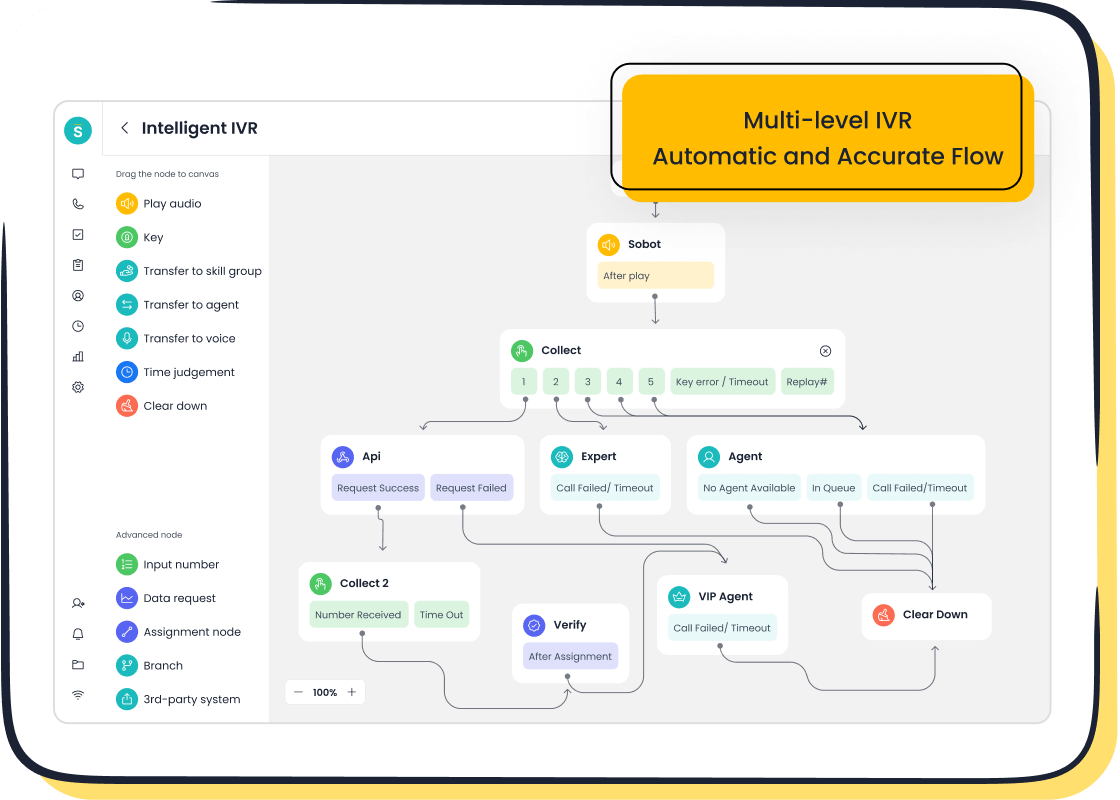
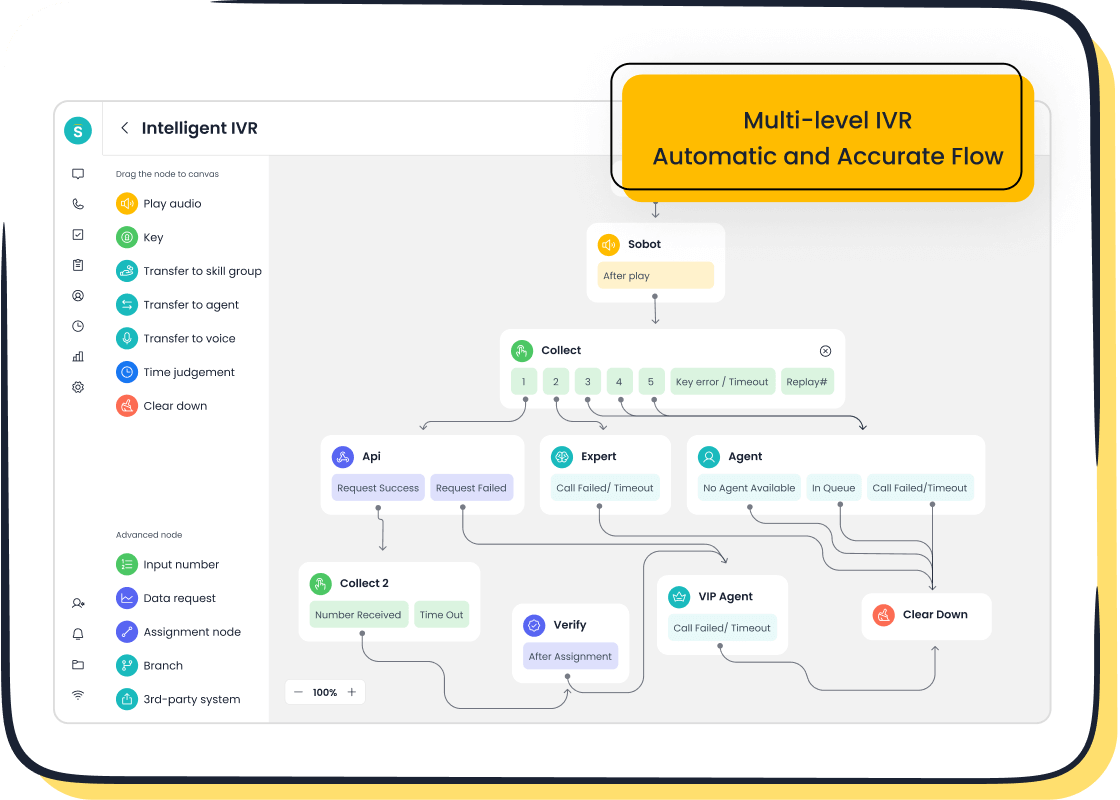
If you want a modern contact center that boosts customer experience, Sobot Voice/Call Center stands out. This solution brings together all your customer support types—calls, live chat, ticketing, and more—into one easy-to-use platform. Your agents can see every customer interaction in one place, which means faster answers and less confusion.
Here’s what makes Sobot Voice/Call Center different from traditional call centers:
- You get real-time support with smart call routing and AI-powered voicebots.
- The platform cuts wait times, even when you get lots of calls at once.
- Sobot’s AI chatbot can handle routine questions, so your team can focus on complex issues.
- You can track and analyze every call, helping you spot trends and improve service.
- The system is stable, with 99.99% uptime, and works globally.
Many big brands, like Samsung and OnePlus, trust Sobot for their contact center needs. They report faster response times, better team organization, and a big jump in customer satisfaction. Sobot’s AI even helps boost sales by giving smart product suggestions during calls.
Note: Sobot Voice/Call Center can save you up to 54% in resolution time compared to old-school methods. You also get a 30% increase in conversions with targeted recommendations.
Self-Service and AI Support
Self-service is one of the fastest-growing customer support types. You give your customers the power to solve problems on their own, any time they want. This includes FAQs, knowledge bases, and AI chatbots. Most people love this type because it’s quick and easy.
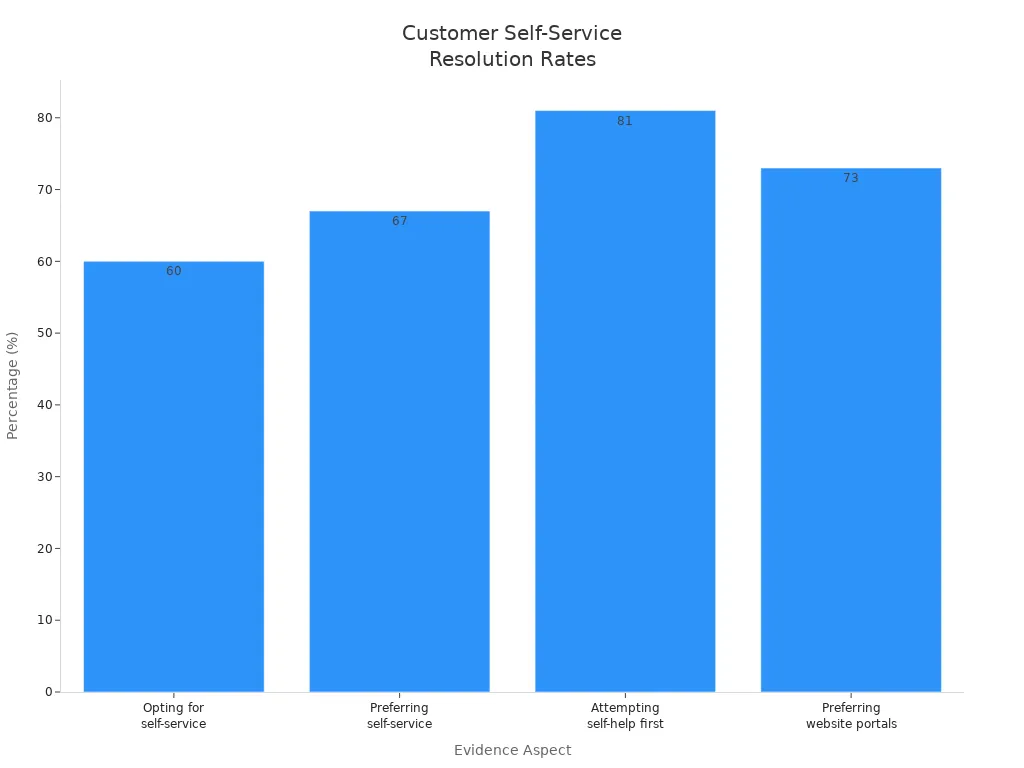
Check out these numbers:
| Evidence Aspect | Percentage | Explanation |
|---|---|---|
| Customers opting for self-service | 60% | People choose self-service tools for simple tasks over live agents. |
| Customers preferring self-service | 67% | Most customers like self-service more than talking to a person. |
| Customers attempting self-help first | 81% | People try to solve issues themselves before reaching out. |
| Customers preferring website portals | 73% | Many prefer using website self-service portals. |
AI-powered customer support types can handle up to 80% of routine tasks. For example, Sobot’s AI chatbot gives instant answers and helps with returns, order tracking, and more. This means your team can focus on real-time support for complex or emotional issues.
Customer satisfaction is high with these types. AI support gets 80-85% positive reviews for speed and accuracy. Human agents still win for empathy and tough problems, but a mix of both gives the best results. Hybrid models reach up to 90% first-contact resolution and 90% customer recommendation rates.
Tip: Use self-service and AI support for simple questions. Keep real-time support with live agents for complex or sensitive issues. Sobot’s omnichannel contact center lets you blend these types for the best customer experience.
Steps to Select the Right Customer Service

Audit Current Channels
Start by taking a close look at your current customer support channels. You want to know which types work best for your customers and where you can improve. Here’s a simple way to audit your channels:
- Collect data from all channels—social media, email, chat, and phone calls. Look for common issues and themes.
- Analyze key metrics like Average Handle Time, First Response Time, and Customer Satisfaction Score. These numbers show how well your channels perform.
- Talk to your frontline agents. They know which types of customer support channels cause the most trouble.
- Use tools like CRM dashboards to track and compare data across all channels.
- Ask your customers for feedback. Surveys and interviews help you understand their real needs.
- Review your performance every quarter. Check for gaps and set new goals to improve your customer service strategy.
Tip: Sobot’s omnichannel platform makes it easy to collect and analyze data from all your channels in one place, so you can spot trends and act fast.
Map the Customer Journey
Mapping the customer journey helps you see every step your customers take. This process shows where your customer support channels shine and where they fall short. When you map out each touchpoint, you can spot moments of frustration or confusion. For example, maybe customers get stuck when switching between types of channels or can’t find help quickly.
You can use tools like Miro or Hotjar to create visual maps. These tools let you see how customers move through your channels and which types they use most. By understanding their emotions and needs at each step, you can fix gaps and make support smoother.
Note: A clear journey map helps you focus on the right types of customer support channels, making sure you meet your customers’ needs every time.
Align with Business Goals
Now, match your customer service strategy with your business goals. When your channels and types of support line up with what your company wants to achieve, you get better results. For example, if your goal is to boost customer retention, focus on types that deliver fast, personal help. Studies show that raising customer retention by just 5% can increase profits by up to 95% (Harvard Business Review).
Set clear goals for your customer support channels. Use data like Net Promoter Score and Customer Lifetime Value to track progress. Share insights across your team so everyone works toward the same goals. Sobot’s unified workspace helps you keep all your channels and types connected, making it easier to deliver consistent service.
Remember: When your customer support channels and types support your business goals, you build loyalty, boost profits, and keep customers coming back.
Evaluating Customer Support Providers
Integration and Scalability
When you choose a customer support provider, you want a system that grows with you. Look for these things:
- Can the provider connect with your current tools and systems?
- Do they offer end-to-end customer support solutions?
- Is their platform built for your industry?
- How well do they handle more users or higher demand?
- Do they have a strong reputation and years of experience?
Sobot makes integration simple. You can link your CRM, e-commerce, and messaging apps in one place. The platform uses a modular design, so you can add new features as your business grows. Sobot’s cloud-based customer support scales up or down without slowing down your team. You get real-time monitoring, auto-scaling, and a system that stays fast even during busy times. This means your customers always get quick help, and your agents never feel overwhelmed.
Security and Compliance
Security matters when you handle customer support. You need to protect customer data and follow the rules. Here’s a quick look at important standards:
| Security Standard / Framework | Description | Key Focus Areas Relevant to Customer Support Providers |
|---|---|---|
| ISO 27001 | International standard for information security management systems (ISMS) | Risk assessment, access control, encryption, incident response, employee training, compliance management |
| NIST Cybersecurity Framework | US best practices for cybersecurity | Risk identification, threat detection, incident response, system recovery |
| PCI-DSS | Payment card data security standard | Network security, data encryption, access management, vulnerability management |
| HIPAA | US healthcare data protection law | Risk management, physical safeguards, encryption, staff training, policy maintenance |
| GDPR | EU data privacy regulation | Data privacy, transparency, user consent, access rights, privacy risk management |
You want a provider that uses strong encryption, access controls, and regular training. Sobot follows strict security and compliance rules, so your customer support stays safe and reliable. They keep your data protected and help you meet industry standards.
Cost and Value
Cost is important, but value matters more. When you compare customer support providers, look at what you get for your money. Sobot offers a flexible pricing model, so you only pay for what you use. You get a full set of customer support tools—voice, chat, ticketing, and AI—without hidden fees. The platform helps you save time and money by automating routine tasks and improving agent efficiency. This leads to higher customer satisfaction and better feedback.
Think about the long-term value. Sobot’s solutions help you boost customer satisfaction, reduce churn, and increase sales. Companies using Sobot’s AI chatbots see a 25% jump in customer engagement and a 15% drop in churn. That’s real value you can measure.
Sobot Customer Stories
Let’s look at OPPO’s story. OPPO wanted to improve customer support during busy shopping seasons. They used Sobot’s chatbot and ticketing system to handle more requests without losing quality. The result? OPPO saw a 30% increase in customer satisfaction and a 25% rise in sales. Their team handled feedback faster and gave customers a better experience. Sobot’s platform helped OPPO connect all their channels, making it easy to track customer feedback and improve service.
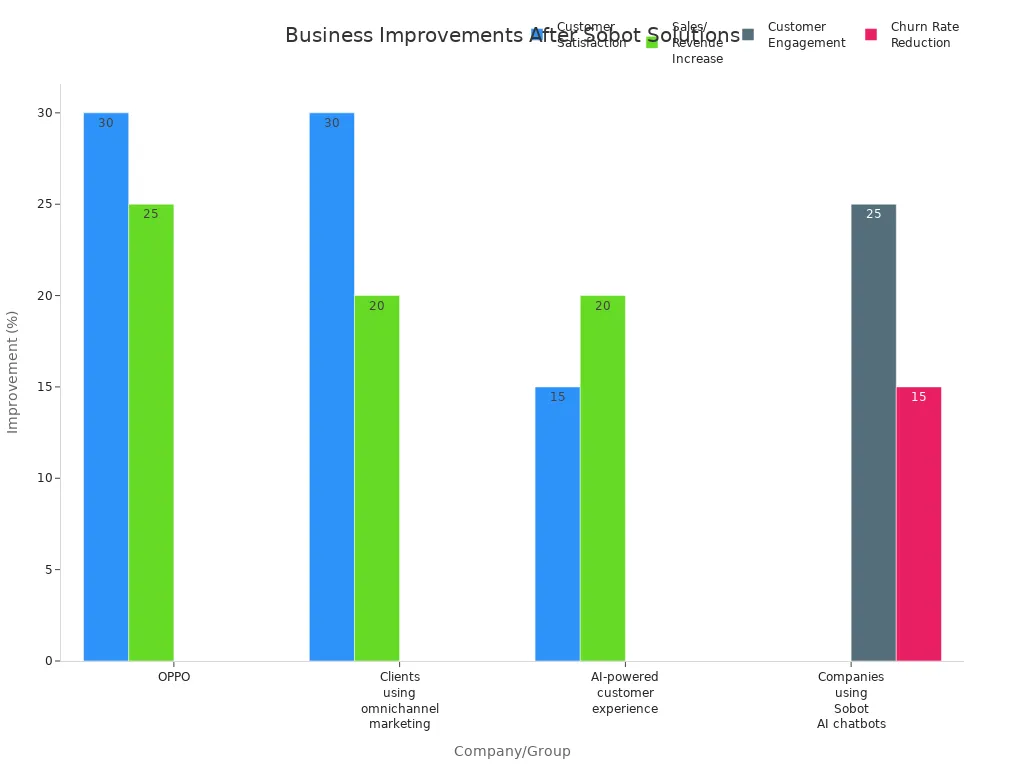
Other companies using Sobot’s omnichannel customer support also report a 30% boost in satisfaction and a 20% increase in revenue. When you choose a provider like Sobot, you get proven results, better feedback, and happier customers.
Choosing the right customer service type can transform your business. Here’s what you should remember:
- Many companies miss customer needs by 38%.
- Fast, personal help matters—75% of people want quick, real answers.
- Most customers (81%) want more self-service, and chatbots now handle 80% of routine tasks.
- Great support drives loyalty—91% will buy again after a good experience (source).
Sobot gives you integrated, scalable support that fits your goals. Start exploring your options today and see how the right customer service type can boost your results!
FAQ
What is the best customer service type for a small business?
You should start with live chat or self-service options. These customer service types save time and money. Sobot’s AI chatbots help you answer common questions 24/7. Many small businesses see a 30% boost in customer satisfaction with these tools.
How do I know which customer service type my customers prefer?
Ask your customers! Use surveys or check which channels get the most messages. Most people want quick answers. Studies show 67% of customers prefer self-service customer service types (source).
Can I mix different customer service types in one platform?
Yes, you can! Sobot’s omnichannel solution lets you blend phone, chat, email, and social media. You get a unified workspace. Your team sees every customer interaction in one place. This makes switching between customer service types easy for everyone.
How does Sobot help improve customer service types?
Sobot gives you tools like AI chatbots, voice/call centers, and ticketing systems. You can automate routine tasks and focus on complex issues. Companies using Sobot report a 25% drop in response time and higher customer satisfaction with their chosen customer service types.
What should I look for when choosing a customer service provider?
Look for easy integration, strong security, and scalability. Sobot offers 99.99% uptime and connects with your CRM and e-commerce tools. You want a provider that supports all customer service types and grows with your business.
See Also
How To Select The Best Social Media Support Tools
The Leading Customer Support Software Solutions For 2024
Effective Strategies To Improve Live Chat Customer Experience

