Mastering Peak Season Customer Service


Peak season is a huge opportunity. Consumer spending continues to rise, with holiday spending reaching $241.1 billion in 2024.
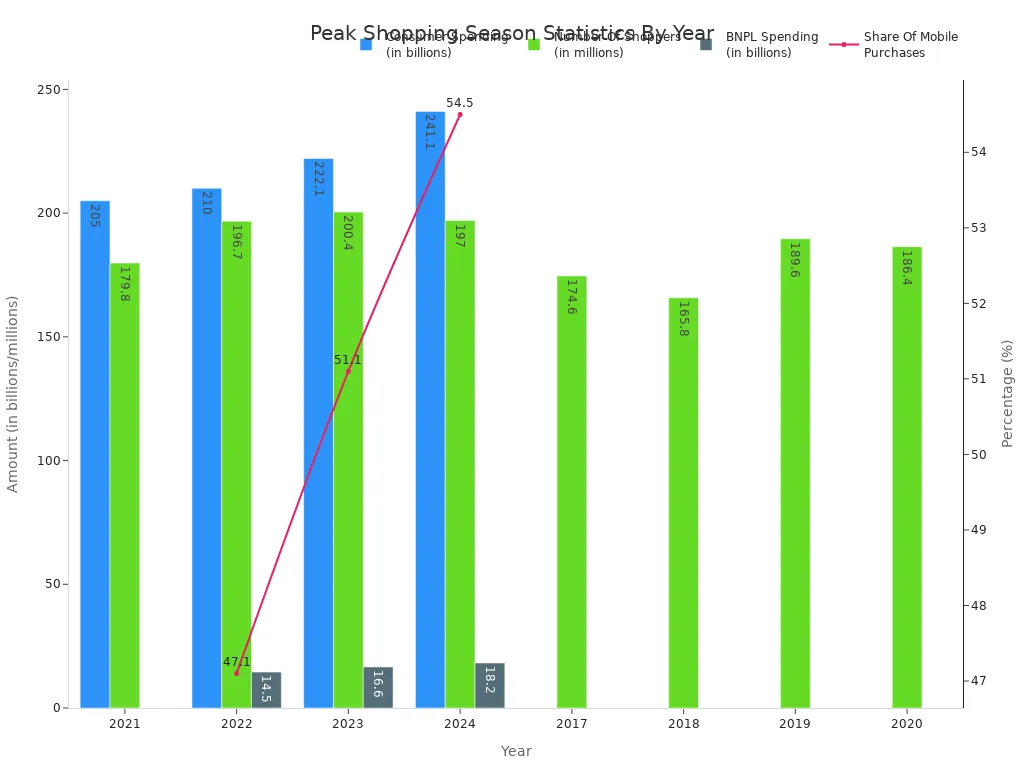
This incredible consumer demand, however, brings a flood of customer inquiries that can risk your brand’s reputation. This guide offers strategic solutions for managing seasonal peaks. You can shift from reactive firefighting to controlled scaling. It is a roadmap for scaling customer support, ensuring you handle surges without sacrificing quality. Mastering customer service during peak seasons and promotions with a platform like Sobot protects your service quality and bottom line.
Phase 1: Proactive Peak Season Demand Management
Success during your busiest times starts long before the first customer inquiry arrives. Proactive peak season demand management is about anticipating needs, not just reacting to them. By analyzing past performance and preparing for potential challenges, you can build a resilient support system. This foundational phase ensures you have the right resources in place for effective scaling.
Analyze Historical Data to Predict Demand
Your past performance is a powerful predictor of future needs. Start by looking at your historical data to understand trends and patterns. This analysis helps you create a reliable demand forecasting model.
Consider these key factors when reviewing your data:
- Seasonality: Identify spikes in customer inquiries related to holidays or specific sales events.
- Consumer Trends: Track how changing customer preferences affect ticket volume.
- Economic Conditions: Note how broader economic shifts influence purchasing and support behavior.
Different forecasting methods can help you turn this data into actionable insights. Forecasting call volume and other support requests becomes much more accurate with the right approach.
| Method | Best for | Data needed |
|---|---|---|
| Time Series | Stable demand patterns | Historical sales data |
| Regression | Understanding cause-effect | Multi-variable historical data |
| Historical | Seasonal trends | Past sales data |
Using these methods helps you prepare for the expected demand and build a solid foundation for scaling your operations.
Calculate Your Seasonal Staffing Needs
Once you have a forecast, you can determine your staffing needs. A simple way to do this is to calculate your ticket-to-order ratio and apply it to your projected sales.
- Calculate your ticket-to-order ratio: Divide the total number of tickets by the total number of orders from a previous period.
- Project your ticket volume: Use your sales forecast to estimate the total number of tickets you'll receive. For example, if you expect 10,000 orders with a 40% ticket ratio, you can anticipate 4,000 tickets.
- Estimate agents needed: Divide the projected ticket volume by your team's capacity. If one agent handles 860 tickets per month, you would need approximately three agents for a two-month peak season to manage the increased demand.
Pro Tip: Always account for agent attrition when calculating your staffing needs. Review historical turnover rates, especially for new hires, and adjust your hiring plan to ensure you are never understaffed. This is a critical part of scaling your team effectively.
Plan for Unexpected Seasonal Peaks in Customer Service
Even the best plans can be disrupted by unforeseen events. That’s why preparing for unexpected seasonal peaks in customer service is crucial. Sudden surges in customer demand can come from various sources, including:
- Shipping carrier delays
- Website or app crashes
- Product availability issues
- Unplanned marketing success
Your demand management strategy must be flexible enough to handle these seasonal peaks in customer service. Building a contingency plan is one of the most important seasonal scaling strategies you can implement. This includes having a pool of trained, on-demand agents ready to step in. This approach to scaling ensures you can manage fluctuating demands in customer service without compromising quality. Preparing for unexpected seasonal peaks in customer service protects your brand reputation when it matters most. Proper planning for these seasonal peaks in customer service turns potential crises into opportunities to demonstrate excellent support, which is key to successful scaling.
Phase 2: Flexible Workforce Models for Scaling Customer Support
Your demand forecast shows a surge is coming. Now you need a team that can grow with it. Rigid, year-round staffing models are costly and inefficient for seasonal businesses. Flexible workforce models are the answer for effective scaling customer support. These strategies allow you to expand your team precisely when you need it and scale back down just as easily. This approach to scaling ensures you maintain service quality without breaking your budget.
Leverage Temporary and On-Demand Agents
Hiring temporary agents is a powerful strategy for managing peak season demand. These agents provide immediate help, allowing you to bypass lengthy recruitment cycles. This flexibility is crucial for successful scaling. You can increase or decrease staff to match business needs perfectly.
This approach offers several key benefits for your business:
- Cost-Effectiveness: You can reduce overall staffing expenses. Temporary employees typically do not receive long-term benefits, and staffing agencies often handle payroll.
- Immediate Availability: Temporary workers can start quickly. This is essential when you face a sudden surge in customer inquiries.
- Trial Opportunities: You can evaluate an agent’s skills and cultural fit. This reduces the risk if you decide to offer a permanent position later.
However, you must also plan for potential challenges. Temporary staff may have higher turnover rates and require significant training. This is why a streamlined onboarding process is so important for maintaining quality.
Finding the right talent is your next step. Several platforms connect businesses with qualified support professionals for on-demand workforce deployment.
| Platform/Agency | Key Features for Customer Support Sourcing |
|---|---|
| Wow Remote Teams | Specializes in nearshore staff from Latin America with strong English skills and cultural alignment. |
| Upwork | A global freelance marketplace that offers great flexibility for project-based or part-time support. |
| Fiverr | Offers specialized support services ("gigs") at set prices, ideal for specific tasks or testing solutions. |
| CrewBloom | Provides highly trained remote professionals with a focus on meeting service level agreements (SLAs). |
| RecruitGo | Connects you with cost-effective support agents in international markets skilled in CRM and ticketing systems. |
Using these flexible staffing solutions helps you build a team that can handle any volume, making your scaling efforts a success.
Implement Rapid Onboarding and Training
A temporary team is only as good as its training. You need to get agents ready to help customers quickly without sacrificing quality. Rapid onboarding focuses on giving new hires the essential tools and knowledge to succeed from day one. A well-trained team is the backbone of excellent peak season service.
Effective onboarding combines structured learning with hands-on practice.
- Start with a Welcome. Introduce new hires to their colleagues and supervisors. A simple orientation can cover company policies, job expectations, and safety guidelines.
- Provide Role-Specific Training. Go beyond basic tasks. Explain why their role matters to the customer experience. Pair new hires with experienced mentors who can answer questions and guide them.
- Use Shadowing and Supervised Practice. Let new agents listen to experienced colleagues. Then, have them handle real inquiries with a coach providing immediate feedback.
- Offer Continuous Support. Schedule check-ins during the first week. This helps you address issues early and shows new hires they are valued.
Pro Tip: Create quick reference tools like cheat sheets or a searchable knowledge base. These resources empower agents to find answers independently, reducing their reliance on supervisors and improving their confidence.
Training becomes much simpler with the right technology. When your agents have to learn multiple disconnected systems for chat, email, and phone calls, ramp-up time increases. A unified platform like Sobot's Omnichannel Solution solves this problem. It brings all customer communication channels into a single, AI-enhanced workspace. Your agents only need to learn one system to handle every inquiry. This dramatically reduces training time and helps your team start delivering high-quality support faster. This is a critical component of scaling your team efficiently.
Explore Hybrid Support Models
Choosing the right team structure is another key part of scaling customer support. Many businesses debate between an in-house team and an outsourced one. A hybrid model gives you the best of both. It combines a core team of in-house experts with flexible, outsourced agents who can be activated during peaks.
- In-House Teams offer deep brand knowledge and cultural alignment but can be expensive and slow for scaling.
- Outsourced Teams provide excellent flexibility and cost savings but may lack a deep connection to your brand's mission.
A hybrid model balances these strengths. Your in-house customer service teams can handle complex, high-value inquiries. Meanwhile, your outsourced partners manage high-volume, repetitive questions. This ensures consistent quality and efficient scaling.
Technology is the bridge that makes this collaboration seamless. For a hybrid model to work, both teams need to operate from a single source of truth. An all-in-one contact center platform like Sobot unifies your in-house and outsourced agents. Everyone accesses the same customer data, conversation history, and internal knowledge base. This eliminates information silos and ensures every customer receives the same high-quality experience, no matter who is handling their request. These flexible staffing solutions are essential for modern scaling.
Phase 3: Optimize with Technology and Automation
A flexible team is essential, but you cannot hire your way out of every peak season challenge. True scaling comes from working smarter, not just harder. This is where technology and automation become your most powerful allies. By optimising processes, you can handle a massive increase in volume without a proportional increase in headcount. An all-in-one contact center platform like Sobot integrates the key tools you need for this phase. It helps you build a system that is both efficient and resilient, turning potential chaos into a smooth customer experience.
Implement Smart Call Routing with an IVR
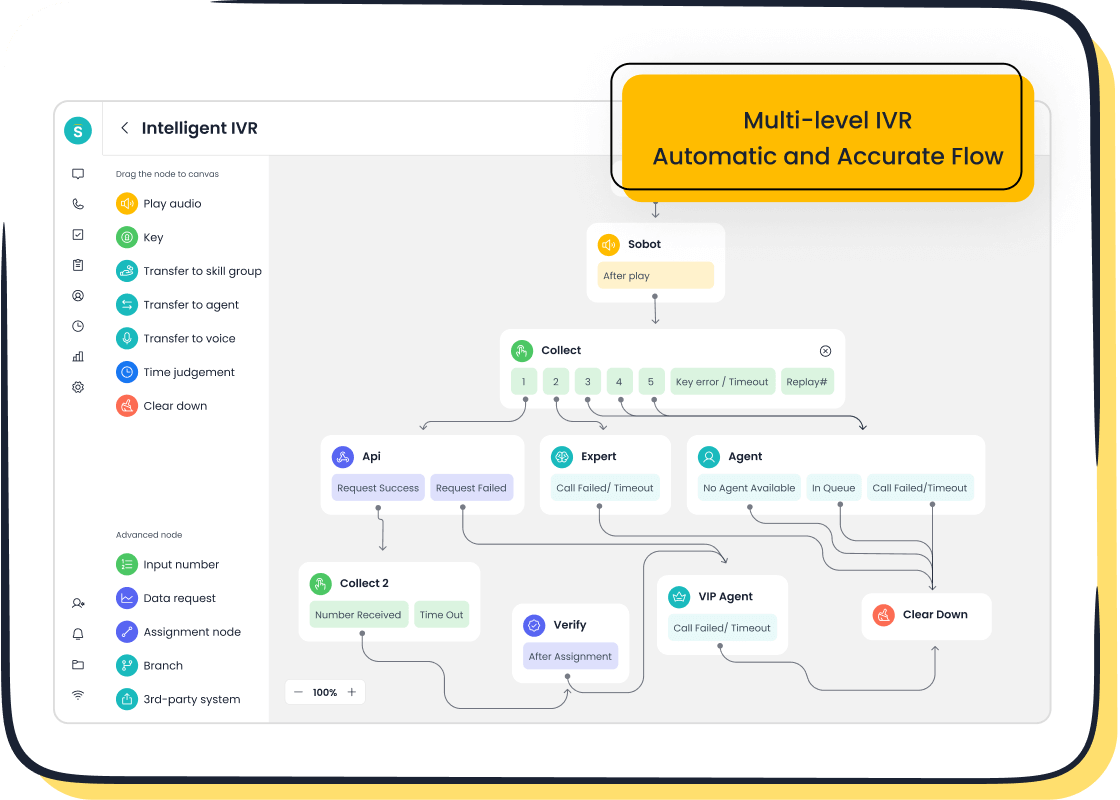
During a rush, your phone lines can become a major bottleneck. An Interactive Voice Response (IVR) system acts as an automated receptionist for your call center. It greets callers and guides them to the right person or department using a simple menu. This is one of the most effective queue management strategies for high call volumes.
A well-designed IVR dramatically improves your service by:
- Routing Calls Directly: It sends customers to the correct agent on the first try, reducing frustrating transfers.
- Gathering Information Upfront: The system can ask for an order number or account details before connecting the call. Your agent gets the context they need to solve the problem faster.
- Offering Self-Service: Many customers can resolve their own issues, like checking an order status, without ever speaking to an agent. This frees up your team for more complex problems.
However, a poorly designed IVR can create frustration. To build a system customers appreciate, you should follow a few best practices.
IVR Design Tips 💡
- Always provide an escape: Give callers a clear option to speak to a live agent at any time.
- Keep menus short and simple: Limit each menu to 3-5 clear options. Avoid jargon.
- Offer a callback option: Instead of making customers wait on hold, let them request a call back when an agent is free.
- Use a natural voice: A human-sounding voice, whether recorded or AI-generated, puts callers at ease.
Building these systems used to be complex. Today, platforms like Sobot's Voice/Call Center simplify the process. You can use a drag-and-drop IVR builder to create and launch custom call flows in real time. Its rule-based routing automatically directs callers based on their needs, agent skills, or time of day, making your phone support a key part of your scaling strategy.
Deploy AI Chatbots and Self-Service FAQs
Many peak season questions are repetitive: "Where is my order?" "What is your return policy?" Answering these manually consumes valuable agent time. You can deflect a huge number of these inquiries by empowering customers to find answers themselves.
A comprehensive FAQ page is your first line of defense. It provides quick, accessible answers to common questions, allowing customers to get help without creating a support ticket. This is a simple but powerful tool for optimising efficiency.
For 24/7 support and more interactive help, you can deploy an AI chatbot. Modern chatbots do more than just answer questions. They can guide customers through troubleshooting, process returns, and even help with new purchases. This level of automation is critical for successful scaling.
The results can be transformative. Just look at OPPO, a leading smart device brand. During their peak shopping periods, they used Sobot's chatbot to manage the surge.
- They achieved an 83% chatbot resolution rate, meaning most customers got their answers without needing a human agent.
- The chatbot received a 94% positive feedback rate from users.
This success allowed OPPO's human agents to focus on complex issues that required their expertise. It improved their customer service operations and even contributed to a 57% increase in their repurchase rate. This shows how effective scaling with AI can build both satisfaction and loyalty.
Use Real-Time Dashboards for Managing Seasonal Peaks
You cannot manage what you cannot measure. During the busiest times, you need instant visibility into your support operations. Real-time dashboards give you a live view of your team's performance and customer demand. This data empowers you to make quick, informed decisions for managing seasonal peaks.
To stay in control, your dashboard should track a few key metrics:
- Ticket Volume Trends: Are you seeing a sudden spike in emails or chats?
- First Response Time (FRT): How long are customers waiting for an initial reply?
- Queue Lengths: How many customers are waiting for help on each channel?
- Agent Availability: Who is online, who is busy, and who is available to take on more work?
This information is not just for review; it is for action. When you see wait times rising, you can use these insights to adjust your queue management strategies immediately. For example, a manager can reassign agents from a quiet channel like email to a busy one like live chat. You can also adjust break schedules or bring in on-demand staff to handle an unexpected rush. This dynamic approach to managing seasonal peaks is essential for maintaining service levels. Effective queue management strategies prevent backlogs and keep your customer service operations running smoothly, making your scaling efforts sustainable.
Phase 4: Maintaining Quality in Customer Service During Peak Seasons and Promotions

Scaling your team and technology is only half the battle. You must also maintain high standards for customer service during peak seasons and promotions. Increased volume can strain your team and risk the quality of every interaction. This phase focuses on the systems you need to ensure every customer receives exceptional customer service, protecting your brand reputation and boosting customer satisfaction. Consistent quality turns a chaotic rush into a positive customer experience.
Standardize Quality Assurance (QA) Processes
A standardized Quality Assurance (QA) process ensures every agent, whether permanent or temporary, delivers the same level of quality. This consistency is vital for customer service during peak seasons and promotions. You can build a strong QA program with a few clear steps.
- Define Your Goals. First, decide what high-quality service means for your brand. Set clear goals and KPIs, like faster response times or improved satisfaction scores.
- Create a Scorecard. Build a simple scorecard with 3-5 rating categories that reflect your goals. This gives agents clear guidelines for success.
- Review Conversations. Choose which conversations to review. Focus on complex tickets or those with low satisfaction ratings to find coaching opportunities.
- Provide Feedback. Use QA reviews to offer targeted coaching. This practice ensures all agents handle interactions with the same level of care and quality.
Automated QA tools can help you review all tickets against the same quality standard. This saves time and ensures consistent, effective communication. A strong QA process is key to delivering exceptional customer service.
Empower Agents with a Unified Knowledge Base
Your agents need quick access to accurate information to resolve issues efficiently. A unified, searchable knowledge base is an essential tool for maintaining quality. It acts as a single source of truth for your entire team. This centralization improves the quality of customer service during peak seasons and promotions.
A good knowledge base offers many benefits:
- Increases Efficiency: Agents find answers faster, reducing handle times.
- Ensures Consistency: Everyone provides the same correct information, building customer trust.
- Improves Training: New hires can quickly learn procedures and product details.
A unified knowledge base is critical for scaling customer service for seasonal demand. It empowers agents to deliver faster, more accurate service. This leads to higher first-contact resolution rates and greater customer satisfaction. It reduces frustration for both your team and your customers.
This tool is fundamental for effective communication and maintaining service quality when your team is under pressure.
Gather Real-Time Customer Feedback
You need to know how you are performing during the rush. Gathering real-time feedback helps you quickly spot and fix problems. This is a crucial part of managing customer service during peak seasons and promotions. You can use several methods for communicating with customers to get their input.
Use in-product surveys or automated emails to ask for feedback right after an interaction. Metrics like Customer Satisfaction (CSAT) provide immediate insight into specific touchpoints. A low CSAT score can alert you to an issue with an agent or process, allowing you to make a quick adjustment. This immediate loop helps maintain a high quality of service and satisfaction. Monitoring feedback ensures you are meeting customer expectations and preserving the quality of your support.
You can master seasonal demand with four pillars: proactive planning, flexible staffing, technology, and quality maintenance. Peak season is your chance to build loyalty. Happy customers are six times more likely to repurchase. Brands like OPPO prove that managing customer demand with the right tools creates success. Use these strategies and a solution like Sobot to turn your next peak season into your most successful one. Strengthen your brand and your bottom line.
FAQ
How can I quickly train temporary agents?
You can use a unified platform like Sobot's Omnichannel Solution. It puts all channels into one workspace. This simplifies training for scaling customer service for seasonal demand. Agents learn one system, reducing ramp-up time and getting them ready to help customers faster.
What is the first step to prepare for peak season?
You should start by analyzing your historical data. This helps you predict future inquiry volume and understand demand patterns. A clear forecast is the foundation for all your staffing and technology decisions. It makes your planning much more accurate.
How do AI chatbots help during a rush? 🤖
AI chatbots provide 24/7 support for common questions. They handle repetitive inquiries like "Where is my order?" This frees your human agents to focus on complex problems. It is a key strategy for managing high volume without sacrificing service quality.
Why is a hybrid support model effective?
A hybrid model gives you flexibility. Your expert in-house team handles complex issues. Meanwhile, outsourced agents manage high-volume, simple questions. This approach balances cost, expertise, and the ability to scale your team up or down as needed.
See Also
Elevating Retail Customer Engagement Through Expert Live Chat Strategies
Optimizing Customer Support Excellence with Advanced Live Chat Techniques
Implementing Top-Tier Quality Management for Superior Call Center Performance
A Comprehensive Guide to Optimally Managing Your Live Chat Agent Team
Ten Essential Tips to Boost Live Chat Customer Satisfaction Significantly