The Pros and Cons of Voice Interaction Technology

Voice interaction technology has transformed how you communicate with devices and systems. By using Voice User Interfaces (VUIs), you can interact with smartphones, smart speakers, or even car infotainment systems through speech instead of traditional inputs. This technology powers tools like Amazon Alexa and Google Assistant, making daily tasks more intuitive. In customer service, voice recognition software speeds up call routing and improves satisfaction.
Its impact is undeniable. Nearly half of U.S. adults own smart speakers, and the global speech recognition market is expected to hit $26.9 billion by 2024. Businesses like Sobot leverage voice interaction to enhance customer experiences, showcasing the advantages of voice recognition technology in modern communication.
Pros of Voice Interaction Technology
Enhanced Accessibility
Benefits for individuals with disabilities
Voice interaction technology has revolutionized how individuals with disabilities interact with digital devices. If you have limited fine motor skills, speech recognition systems can help you convert spoken words into digital text. This makes tasks like writing emails or filling out forms much easier. You can also use voice assistants to navigate apps, set reminders, or even control smart home devices. These tools empower you to perform tasks independently, enhancing your accessibility and overall quality of life.
Hands-free operation for multitasking
Voice control technology is a game-changer when you’re juggling multiple tasks. Imagine cooking dinner while asking your voice assistant to play music or set a timer. With voice-activated systems, you can send texts, make calls, or even adjust your thermostat without lifting a finger. This hands-free convenience boosts your efficiency and keeps you focused on what matters most.
Improved Efficiency in Customer Service
Faster task execution with voice-activated systems
Voice-activated systems streamline customer service processes, saving you time and effort. For example, companies like United Airlines let you check in for flights or get updates using speech recognition systems. Similarly, Starbucks allows you to pay for your coffee with just a voice command. These innovations make interactions faster and more seamless.
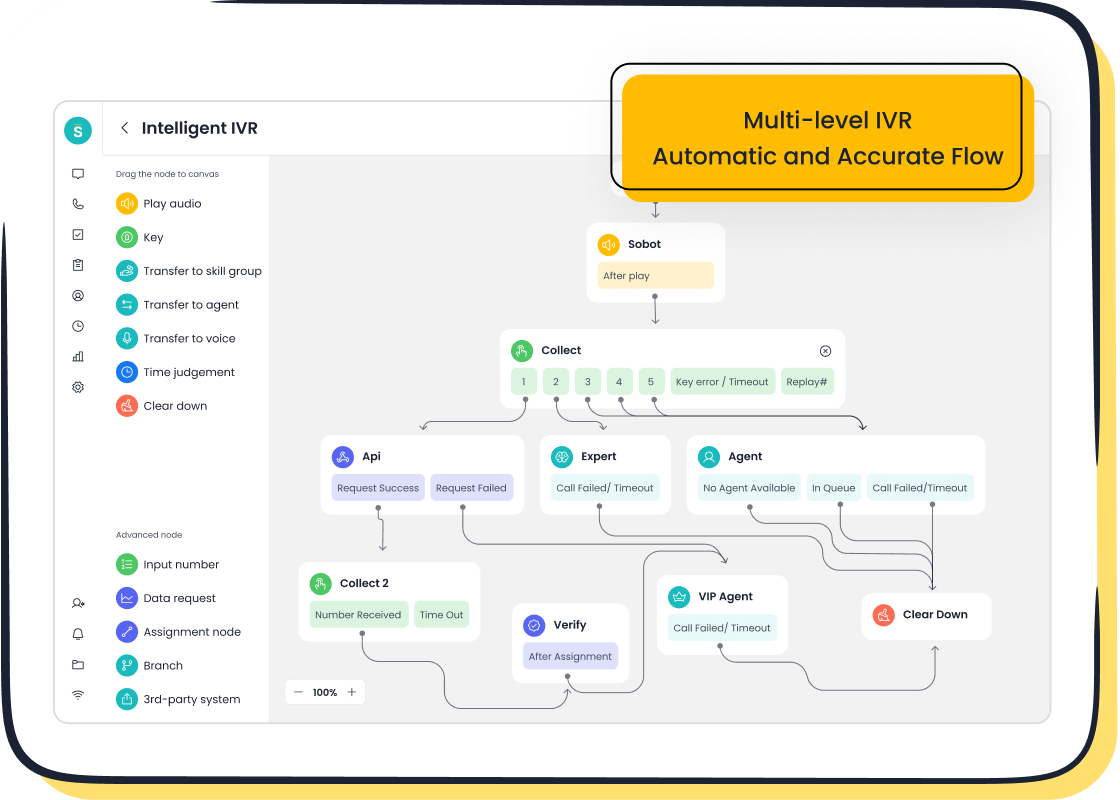
Streamlined interactions in Sobot's Voice/Call Center
Sobot’s Voice/Call Center takes efficiency to the next level. Its intelligent IVR system routes calls to the right agent instantly, reducing wait times. The AI-powered voicebot handles routine queries, freeing up agents to focus on complex issues. With features like real-time monitoring and global number availability, Sobot ensures smooth and efficient customer interactions. Businesses like Weee! have seen a 20% boost in agent efficiency and a 50% reduction in resolution time by using Sobot’s solutions.
User-Friendly Experience
Intuitive and natural communication method
Talking feels natural, doesn’t it? That’s why voice control technology is so appealing. You don’t need to memorize commands or navigate complicated menus. Just speak, and the system understands. Whether you’re asking a voice assistant for the weather or dictating a message, the process feels effortless.
Reduced learning curve for new users
If you’re new to technology, voice assistants make the transition easier. Unlike traditional interfaces, speech recognition systems don’t require technical know-how. You can start using them right away, making technology more accessible to everyone, regardless of age or experience.
Integration with Smart Devices
Seamless control of IoT devices
Voice interaction technology makes managing IoT devices a breeze. You can control wearables like smartwatches or fitness trackers with simple voice commands. For instance, the Apple Watch lets you ask Siri to send messages or check your schedule. Virtual assistants like Google Assistant and Amazon Alexa take it further by connecting with multiple devices. You can dim your lights, lock your doors, or even start your coffee maker—all without lifting a finger. Smart speakers and TVs also respond to voice commands, creating a connected ecosystem that simplifies your daily life.
Applications in smart home systems
Smart home technology thrives on voice interaction. You can manage your entire home with just your voice. Want to adjust the thermostat or turn off the lights? A quick command to your voice assistant does the trick. This hands-free control is especially helpful if you have mobility challenges. Voice assistants also let you create automation routines. For example, you can set a "Good Night" routine that locks doors, turns off lights, and lowers the temperature—all with one command. The growing compatibility of smart home devices ensures you can integrate products from different brands seamlessly.
Applications in Healthcare and Documentation
Assisting healthcare professionals with voice-activated systems
Voice interaction technology is transforming healthcare. Doctors can now use voice-activated systems to take notes during consultations, ensuring accurate records. This hands-free approach is invaluable during emergencies when every second counts. Voice-activated medical devices also improve patient care by enabling quick access to critical information. Virtual assistants streamline tasks like scheduling appointments or setting medication reminders, making healthcare more efficient.
Simplifying documentation processes
Clinical documentation often takes up a significant portion of a healthcare professional’s time. Voice interaction technology changes that. Speech-to-text tools allow you to dictate medical histories or treatment plans directly into electronic health records (EHR). This reduces administrative errors and boosts documentation efficiency. Many healthcare facilities now integrate voice AI with EHR systems, making patient records more user-friendly. By simplifying documentation, healthcare providers can focus more on patient care and less on paperwork.
Cons of Voice Interaction Technology
Privacy Concerns
Risks of data breaches and unauthorized access
Voice interaction technology comes with its share of privacy challenges. Devices equipped with voice-activated features often rely on always-listening systems, which can unintentionally record private conversations. This raises concerns about how your personal information is stored and used. For instance, a security flaw in Amazon Alexa once allowed unauthorized access to users' voice histories. Hackers can also exploit vulnerabilities through voice spoofing or injection attacks, tricking systems into executing unauthorized commands. Companies like Amazon and Google have faced backlash for employing contractors to review user audio clips, further fueling privacy worries.
Concerns over constant device listening
The idea of a device constantly listening to you can feel unsettling. Even though most systems claim to activate only after hearing a wake word, accidental recordings still happen. These incidents have led to fears about data mining practices by tech companies. Surveys reveal that 45% of smart speaker users worry about voice data privacy, while 42% fear hacking. If privacy is a priority for you, these risks might outweigh the convenience of voice-activated technology.
Accuracy and Misinterpretation
Challenges with understanding accents or dialects
Speech recognition systems often struggle with accents, dialects, or even unique speech patterns. If you have a regional accent, you might find yourself repeating commands or facing misinterpretations. This can be frustrating, especially when you're trying to use voice-activated features for quick tasks.
Errors in noisy environments
Background noise can significantly impact the accuracy of voice recognition technology. Whether you're in a bustling café or a noisy household, the system might misinterpret your commands. This limitation reduces the efficiency of voice interaction, making it less reliable in uncontrolled settings.
Technical Limitations
Dependence on internet connectivity
Most voice interaction systems rely heavily on internet connectivity to function. Without a stable connection, you might experience delays or complete system failures. This dependency can be a major drawback if you're in an area with poor network coverage.
Limited functionality in offline mode
Offline, these systems often lack the processing power to handle complex tasks. They may also struggle with supporting multiple languages or dialects. Noise interference further limits their usability. For example, offline voice recognition systems might fail to execute commands accurately in noisy environments, reducing their overall efficiency.
Accessibility Gaps
Issues for non-verbal users
Voice interaction technology has made life easier for many, but it’s not perfect. If you’re non-verbal or have speech impairments, this technology might feel like a closed door. Most voice systems rely entirely on spoken commands, leaving you without an alternative way to interact. For example, someone with conditions like ALS or cerebral palsy may struggle to use voice assistants effectively.
Some companies are working on solutions, like integrating text-based inputs or gesture recognition. However, these features are still rare. This gap in accessibility can make you feel excluded from the convenience that voice technology offers. Businesses need to prioritize inclusivity by designing systems that cater to all users, regardless of their ability to speak.
Language and regional limitations
Voice interaction technology often struggles with languages and regional accents. If you speak a less common language or have a strong regional accent, you’ve probably faced frustration when your device doesn’t understand you. For instance, many voice assistants excel in English but falter with languages like Swahili or Tamil. Even within English, accents from Scotland or India can confuse these systems.
This limitation creates a barrier to accessibility for millions of people worldwide. Companies like Sobot are addressing this by offering multilingual support in their products. For example, Sobot’s Voice/Call Center includes templates for multiple languages, ensuring smoother communication across regions. Expanding language capabilities and improving accent recognition are crucial steps toward making voice technology truly global.
Accessibility isn’t just about convenience—it’s about ensuring everyone can benefit from technology, regardless of their abilities or background.
Practical Applications of Voice Interaction Technology
Customer Service and Support
Enhancing customer experience with Sobot's Voice/Call Center
Voice interaction technology has revolutionized customer service, and Sobot's Voice/Call Center is a prime example. Imagine calling a company and being greeted by an intelligent IVR system that quickly routes your call to the right agent. This system doesn’t just save time—it makes the entire experience smoother. Sobot’s AI-powered voicebot can handle routine queries like order status or account balances, freeing agents to focus on more complex issues. Businesses like Weee! have seen incredible results, including a 20% boost in agent efficiency and a 50% reduction in resolution time. Whether you're in retail, banking, or telecommunications, voice technology ensures personalized and efficient interactions, improving customer satisfaction.
Use in call centers for automated responses
Call centers use voice interaction to automate repetitive tasks. For example, IVR systems can guide you through resetting your internet router or checking your account balance. These systems retrieve information instantly, saving you from long wait times. Some even process bill payments, making the experience hassle-free. By automating these tasks, companies reduce costs while improving service quality.
Smart Home and IoT
Voice-controlled lighting, thermostats, and appliances
Voice interaction has made home automation incredibly convenient. You can adjust your thermostat, dim the lights, or even start your coffee maker—all with simple voice commands. Devices like Amazon Echo and Google Nest let you manage connected appliances effortlessly. This level of control not only saves time but also enhances your daily routine. For instance, you can set reminders or manage data through voice commands, creating a more personalized and engaging experience.
Integration with security systems
Voice technology is also transforming home security. Voice biometrics offer a faster and more accurate way to authenticate users, reducing the risk of fraud. You can lock doors, monitor cameras, or even activate alarms using voice commands. These systems integrate seamlessly with existing infrastructures, making them easy to adopt. Plus, voice authentication is nearly impossible to forge, giving you peace of mind.
Healthcare and Accessibility
Assisting patients with mobility challenges
Voice interaction technology is a game-changer for patients with mobility challenges. If you have limited physical movement, voice commands can help you open windows, respond to doorbells, or even operate a wheelchair. For those with low vision, voice assistants make tasks like setting oven temperatures or reading newspapers much easier. These tools empower you to live more independently, improving your quality of life.
Voice-activated medical devices
In healthcare, voice-activated devices are making a big impact. Doctors can use them for hands-free operation during emergencies, ensuring faster decision-making. These devices also automate tasks like scheduling appointments or setting medication reminders, saving time for both patients and providers. By integrating with electronic health records, they enhance patient care and reduce documentation errors. Voice technology not only improves efficiency but also fosters better communication between patients and healthcare providers.
Business and Productivity
Streamlining workflows with voice commands
Voice interaction technology is a game-changer when it comes to simplifying your daily workflows. Imagine automating routine tasks like scheduling meetings or sending reminders with just a few voice commands. This not only saves time but also allows you to focus on more strategic activities. For example, instead of manually setting appointments, you can simply say, "Schedule a meeting with the marketing team at 3 PM," and let the system handle the rest.
Voice technology also gives you hands-free access to critical data and tools. Need to check your sales numbers while driving? Just ask your voice assistant, and it’ll provide the information instantly. This multitasking capability boosts your productivity by letting you perform multiple tasks efficiently. Businesses are already leveraging this innovation to streamline operations. Sobot’s Voice/Call Center, for instance, automates outbound calls and prioritizes leads, ensuring your team spends less time on repetitive tasks and more on meaningful interactions.
Tip: Use voice commands to automate repetitive tasks and free up time for what truly matters.
Enhancing team collaboration through voice tools
Voice interaction technology isn’t just about individual productivity—it’s also a powerful tool for team collaboration. With voice-enabled platforms, you can quickly share updates, assign tasks, or even host virtual meetings. These tools make communication faster and more seamless, especially for remote teams.
For example, imagine you’re in a brainstorming session and need to capture ideas quickly. Instead of typing them out, you can use voice commands to create a shared document or send notes to your team. Tools like Sobot’s unified workspace integrate voice technology, allowing your team to manage calls, messages, and customer data in one place. This not only enhances collaboration but also ensures everyone stays on the same page.
Voice tools also help you engage with clients more effectively. By automating real-time calls and follow-ups, you can maintain strong relationships without overburdening your team. Whether you’re in sales, customer service, or project management, voice interaction technology keeps your team connected and productive.
Did you know? Companies using voice tools report a 20% increase in team efficiency, making it a must-have for modern businesses.
Balancing the Pros and Cons
Weighing Benefits Against Risks
Evaluating the trade-offs for personal and professional use
Voice interaction technology offers incredible convenience, but it’s not without its challenges. On a personal level, you might enjoy hands-free multitasking or accessibility features that make daily tasks easier. However, privacy concerns can’t be ignored. Devices that constantly listen for commands may unintentionally record sensitive information. For professionals, the efficiency of voice-activated systems can transform workflows. Tools like Sobot’s Voice/Call Center automate repetitive tasks, saving time and improving customer satisfaction. Yet, reliance on internet connectivity can disrupt operations in areas with poor network coverage.
To decide if this technology is right for you, think about your priorities. Do you value convenience over potential privacy risks? Or does your work environment depend on reliable connectivity? By weighing these factors, you can determine whether the benefits outweigh the drawbacks in your specific situation.
Considering the context of application
The effectiveness of voice interaction technology often depends on where and how you use it. In a quiet home setting, smart assistants like Alexa or Google Assistant shine. But in noisy environments, accuracy drops, leading to frustration. Similarly, businesses in customer service benefit greatly from tools like Sobot’s AI-powered voicebot, which handles routine queries efficiently. However, industries requiring high security, such as finance, may need to invest in additional safeguards to protect sensitive data.
When evaluating this technology, consider the context. If you’re in healthcare, voice-activated devices can save lives by enabling hands-free access to critical information. But if you’re in a region with limited language support, the technology might fall short. Tailoring its use to your environment ensures you get the most out of it.
Future Developments
Advancements in AI to address current limitations
The future of voice interaction technology looks promising, thanks to advancements in AI. Developers are working on making interactions feel more natural and less robotic. For example, systems are being designed to recognize individual users and personalize responses based on their preferences. Imagine a voice assistant that not only understands your accent but also anticipates your needs, like reminding you to reorder groceries before you run out.
Machine learning improvements are also enhancing voice recognition capabilities. Proactive assistants that adapt to your habits could soon become the norm. These advancements aim to bridge current gaps, such as misinterpretation in noisy settings or struggles with regional accents. As AI evolves, you can expect a more seamless and intuitive experience.
Potential for improved privacy and security measures
Privacy concerns remain a significant hurdle for voice interaction technology, but progress is being made. Companies are focusing on transparency by clearly communicating how they collect and use your data. Regular privacy impact assessments and bias evaluations are becoming standard practices. Stronger data protection measures, like encryption, are also being implemented to safeguard your information.
Compliance with regulations like GDPR ensures that companies obtain explicit consent before using biometric data. This means you’ll have more control over your personal information. As these measures improve, you can feel more confident using voice-activated systems without worrying about unauthorized access or misuse.
Note: Ethical development and user trust are key to the future success of voice interaction technology.
Voice interaction technology offers incredible benefits. It improves accessibility, boosts efficiency, and provides a user-friendly experience. Whether you're multitasking or managing smart devices, it simplifies your life. However, challenges like privacy concerns and technical limitations can’t be ignored. For example, constant device listening raises valid questions about data security.
To decide if it’s right for you, think about your needs. Tools like Sobot’s Voice/Call Center show how businesses can use this technology to enhance customer service. With features like intelligent IVR and AI-powered voicebots, Sobot ensures seamless communication. Ready to explore? Visit Sobot today!
FAQ
What is voice interaction technology, and how does it work?
Voice interaction technology lets you communicate with devices using your voice. It uses speech recognition to understand commands and natural language processing (NLP) to interpret them. For example, when you ask a smart assistant to play music, it processes your request and executes the task.
Tip: Tools like Sobot’s Voice/Call Center use AI-powered voicebots to enhance customer interactions.
Is voice interaction technology secure?
It depends on the system. Many devices encrypt your data to protect it. However, risks like unauthorized access or accidental recordings exist. Companies like Sobot prioritize security with encrypted data transfer and compliance with global standards, ensuring your information stays safe.
Can voice interaction technology understand all languages?
Not yet. While many systems support major languages, they often struggle with regional accents or less common languages. Sobot’s Voice/Call Center addresses this with multilingual templates, making it easier for businesses to serve diverse customers.
How can businesses benefit from voice interaction technology?
Businesses can automate tasks, reduce wait times, and improve customer satisfaction. For instance, Sobot’s intelligent IVR system routes calls efficiently, while its AI-powered voicebot handles routine queries. This boosts productivity and enhances the customer experience.
What industries use voice interaction technology the most?
Industries like healthcare, retail, and customer service rely heavily on voice interaction technology. For example, Sobot’s solutions help companies like Weee! improve efficiency and reduce resolution times, showcasing its value across sectors.
Did you know? The global speech recognition market is projected to reach $26.9 billion by 2024, highlighting its growing importance.
See Also
Comparative Analysis of Leading Interactive Voice Response Tools
2024 Review of the Best Automated Voice Calling Solutions
Comparing Leading Voice of Customer Software Solutions

