Should You Use a Telemarketing CRM?


For call centers aiming for growth and scalability, a telemarketing crm is a crucial investment.
A modern customer relationship management (crm) system organizes your customer data. The Sobot call center crm, powered by Sobot AI, helps you manage this data. The long-term gains of a crm for customer satisfaction far outweigh initial challenges. Sobot provides a crm to handle customer data. This guide helps you weigh the pros and cons of a crm.
The Pros of a Telemarketing CRM

Adopting a telemarketing crm brings significant advantages to your call center. These benefits improve daily operations and drive long-term growth. A good crm platform transforms how you connect with each customer. It provides the tools for better collaboration and higher productivity. Let's explore the key pros.
Centralized Data for Smarter Calls
A powerful crm centralizes all your customer data. It acts as a single source of truth for your entire team. This integration means your agents have a complete picture of every customer. They can see contact details, past purchases, and previous interactions in one place.
This unified view offers several advantages:
- Anticipate Customer Needs: You can analyze past behavior to predict what a customer might want next. This allows for proactive and valuable outreach.
- Strengthen Data Privacy: A modern crm helps you manage data compliance. It stores consent records and maintains an audit trail, building trust with your customer base.
- Improve Internal Collaboration: When sales, marketing, and support teams all access the same real-time data, collaboration becomes seamless. This ensures a consistent experience for the customer.

For example, Sobot’s Unified Workspace consolidates customer data from multiple channels into a single desktop. This crm integration eliminates the need for agents to search for information across different systems. Your team gets the context they need to have smarter, more relevant conversations, which improves data integrity and team collaboration.
Boost Agent Efficiency
Efficiency is a top priority in any call center. A crm introduces automation and streamlined workflows that significantly boost agent productivity. It reduces the time agents spend on repetitive manual tasks. This allows them to focus on what they do best: building relationships with customers.
A key feature that drives this improved efficiency is task automation. Sobot’s Bulk Outbound Task feature, for instance, automates the assignment of leads to your agents. This workflow automation ensures that high-priority leads are handled quickly, improving your team's overall productivity and performance. This automation directly impacts key metrics like Average Handle Time (AHT) and Agent Utilization Rate.
The results of this improved efficiency are clear. After implementing Sobot’s all-in-one solution, global technology leader Samsung saw a 30% increase in agent efficiency. This boost in productivity allowed their team to handle more inquiries without sacrificing service quality.
This level of efficiency translates directly to a higher return on investment. More productive agents mean a lower cost per call and a greater capacity for growth, all built on a foundation of better collaboration.
Improved Lead Management
A telemarketing crm revolutionizes your lead management process. Instead of manually tracking leads in spreadsheets, you get a dynamic system that nurtures prospects through the sales funnel. The crm software automates follow-ups, scores leads based on their behavior, and provides your sales team with the data they need to close deals faster.
This automation is a game-changer for your pipeline. Consistent and timely follow-ups build trust and keep your brand top-of-mind. The crm's analytics capabilities help you identify which strategies are working and where you can improve. This data-driven approach ensures you focus your efforts on the most promising opportunities. Effective data integration and data analytics are crucial for this process. The right crm software provides the necessary tools for deep analytics. This leads to:
- Faster sales cycles
- Higher conversion rates
- More reliable revenue forecasts
By automating repetitive tasks, the crm frees up your team to focus on building relationships. This focus on high-value activities is a major driver of productivity and sales success.
Elevate the Customer Experience
Ultimately, all these benefits lead to one critical outcome: a superior customer experience. When your agents have the right data and tools, they can provide personalized, efficient, and empathetic service. A crm makes this level of service the standard for every customer interaction.
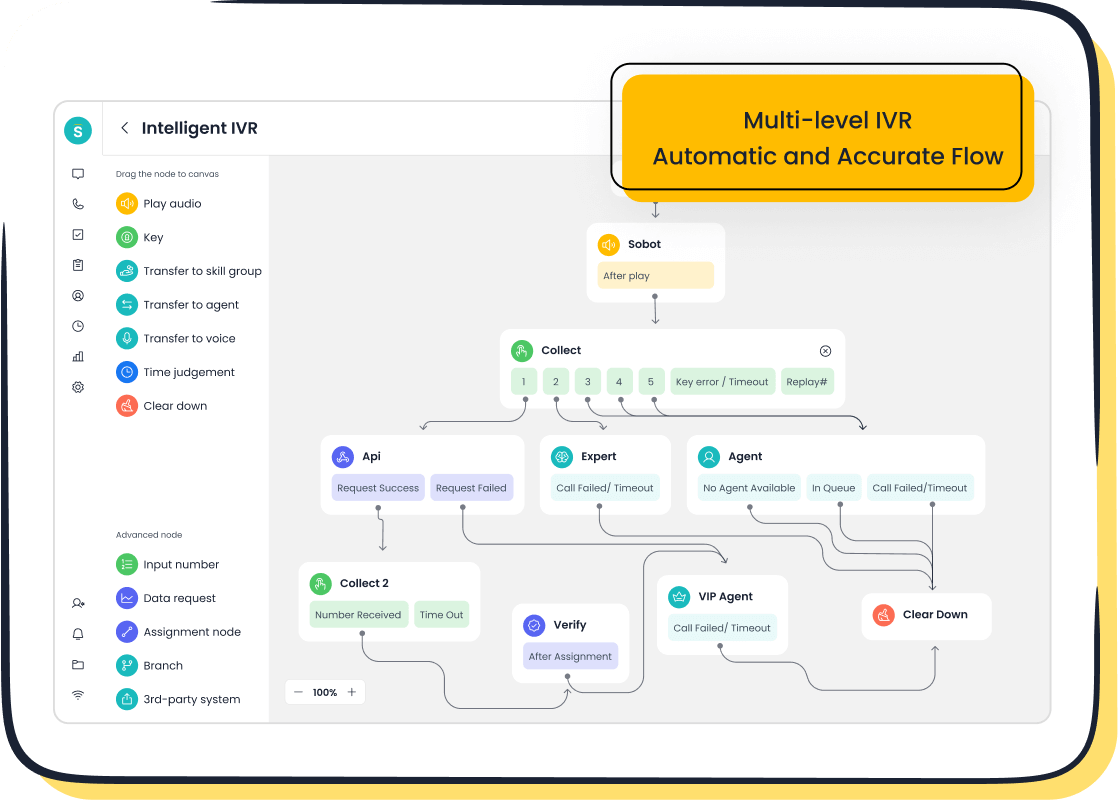
Personalization can start from the very first second of a call. With a feature like Sobot’s Intelligent IVR, you can use customer data to offer personalized greetings and custom menu options. This system can even prioritize high-value callers to ensure they are routed to the right agent immediately, creating a frictionless experience. This positive experience builds loyalty and retention.
The impact on the customer experience is immense. For Samsung, adopting Sobot's crm solution led to a 97% customer satisfaction rate. This shows how a well-implemented crm directly improves the customer experience. Providing a consistently positive experience depends on a reliable platform. Sobot’s 99.99% system stability ensures your crm is always available, so you can deliver an exceptional customer experience without interruption. This focus on a unified customer experience is what sets successful call centers apart.
The Cons of a CRM Implementation
While a CRM offers powerful benefits, you should also consider the potential challenges of implementation. Understanding these hurdles helps you plan effectively and choose the right partner. A successful transition depends on preparing for these common obstacles. Let's look at the cons you might face.
Initial Cost and Subscription Fees
The first hurdle for many businesses is the cost. A new CRM system is an investment. You will encounter initial setup fees and ongoing subscription costs. Traditional on-premise software often requires a large upfront payment for licenses and hardware. This model also comes with hidden expenses that add up over time.
- Ongoing hardware upgrades
- Security patches and software updates
- IT staff for maintenance and support
Modern CRM software often uses a Software-as-a-Service (SaaS) model. This approach changes the investment from a large capital expenditure to a predictable operational expense. Flexible SaaS models, like Sobot's, make a powerful telemarketing crm more accessible. You pay for what you use, which helps manage your budget without sacrificing features. This makes it easier to get started with a new crm.
Implementation and Training Time
Implementing a new crm takes time and effort. You cannot simply turn it on and expect immediate results. The process involves careful planning, data preparation, and system configuration. Disrupting your team's daily workflow is a real risk if the implementation is not managed well.
Choosing the right partner is key to overcoming this challenge. A good provider will guide you through the process to minimize disruption.
For example, a well-designed crm should offer simple integration with the tools you already use. Solutions like Sobot are built for easy crm integration with platforms like Salesforce and Shopify. This seamless connection ensures your teams can get up and running quickly. Proper training is also essential. A clear training plan helps your team understand the new system and its benefits, making the transition smoother for every customer interaction.
Risk of Poor User Adoption
One of the biggest risks in any crm project is poor user adoption. Studies show that up to 70% of crm implementation failures happen because employees do not use the new system. If your team finds the crm software difficult or confusing, they will likely return to their old methods.
Several factors contribute to low adoption:
- A complex interface: A cluttered or unintuitive system frustrates users.
- Lack of training: Without proper guidance, your team won't see the value.
- Too much manual data entry: Agents want to spend time with the customer, not filling out forms.
To avoid this, you should choose a platform designed with the user in mind. An intuitive system with a clean layout encourages adoption. For instance, a Unified Workspace like Sobot's presents all necessary data in one place, making an agent's job easier, not harder. When a crm simplifies workflows, your team will be more willing to embrace it. The right crm integration makes data access simple.
Data Migration and Integration Hurdles
Moving your existing customer data into a new crm can be a major challenge. Your data might be spread across different spreadsheets, email clients, and other applications. Bringing all this information together requires a careful data migration strategy.
Common hurdles include:
- Poor data quality: Inaccurate or duplicate data can corrupt your new crm.
- Security risks: You must ensure all sensitive customer data is transferred securely.
- Integration problems: The new crm must communicate effectively with your other business tools.
A successful data integration plan is crucial. This involves cleaning your data before the transfer and mapping it correctly to the fields in the new crm software. The right partner will help you manage this process, ensuring the integration is seamless and your data remains secure. A smooth integration process protects the integrity of your data and sets your team up for success from day one.
For a growing call center, the benefits of a telemarketing crm are clear. The question is not if you should adopt a crm, but how. Your success depends on choosing the right partner and a scalable solution. A platform with flexible pricing, simple crm integration, and strong support helps you overcome implementation challenges. This ensures a smooth integration for every customer. True scalability comes from a crm that empowers your team to better serve each customer.
Ready to embark on your contact journey? Evaluate how Sobot's all-in-one solution can solve your call center's biggest challenges.
FAQ
What is the main benefit of a telemarketing CRM?
A telemarketing CRM gives your team a single place for all customer information. This helps you make smarter calls, automate tasks, and improve agent productivity. It leads to a better experience for every customer and supports your business growth.
Can a CRM work with my current tools?
Yes, modern CRM software is designed for easy integration. You can connect it to other systems like Salesforce or Shopify. This seamless CRM integration ensures your data flows smoothly between platforms, which helps your team work more efficiently.
How long does it take to learn new CRM software?
The learning time depends on the platform's design. You should choose a system with a user-friendly interface, like a unified workspace. With proper training and an intuitive design, your team can adopt the new CRM software quickly and effectively.
Is a telemarketing CRM affordable for a small business?
Many modern CRMs offer flexible pricing. SaaS (Software-as-a-Service) models let you pay a predictable monthly fee instead of a large upfront cost. This makes a powerful telemarketing CRM an accessible and manageable investment for businesses of any size.
See Also
Essential Capabilities: Unlocking the Power of CRM for Call Centers
Discovering the Best Complimentary Call Center CRM Solutions for 2024
Your Comprehensive Handbook to Omnichannel Call Center Software Solutions
Elevating Call Center Efficiency Through Strategic Performance Monitoring Practices
Streamlining Operations: Understanding the Mechanics of Call Center Automation

