Personalized Support Services for Individuals vs. Families Compared


Personalized support services for individuals and families share a goal: meeting unique needs with tailored care. Key differences appear in the scope and complexity of support, as families often require coordination for multiple people. Choosing the right personalized support can improve satisfaction and outcomes. Sobot uses advanced technology to deliver seamless, omnichannel support.
- Sobot AI, with predictive analytics and real-time personalization, helps both individuals and families get fast, relevant help.
- Sobot call center solutions use conversational AI, enabling support in many languages and channels.
Personalized Support Services Overview
Definition and Scope
Personalized support services help people and families get the help they need in daily life. These services focus on each person’s or family’s unique needs. The scope of these services can include health care, education, and daily living help. Many organizations use wraparound methods to make sure support fits each situation. Wraparound services bring together different helpers, such as doctors, teachers, and social workers, to work as a team. This team approach helps both individuals and families reach their goals.
Personal care services are a big part of wraparound support. These services can include help with bathing, dressing, or taking medicine. For families, wraparound services often mean working with several people at once. The team may help with school, health, and home life. In many communities, wraparound services connect people to local resources, such as food banks or after-school programs. Sobot helps organizations manage these services by offering tools that track needs and connect people to the right support.
Key Features
Most personalized support services share some important features. These features help make wraparound services effective for both individuals and families:
- AI-powered tools, such as chatbots and voice assistants, give real-time answers and support 24/7.
- Secure systems protect private information and follow rules like HIPAA.
- Reporting and analytics help teams see what works and what needs to improve.
- Knowledge management systems store helpful information for easy access.
- Asset management keeps track of equipment and supplies.
- Integration with other systems, such as customer service or health records, makes program delivery smooth.
- Mobile support lets people get help from anywhere.
- Ticketing systems help track requests and make sure no one gets missed.
- Personalized recommendations use customer data to suggest the best wraparound services.
- Sentiment analysis checks how people feel about the support they get.
Sobot’s platform brings these features together in one place. It helps teams deliver wraparound services to both individuals and families. Sobot’s tools support program delivery, track personal care services, and connect with community resources. This makes it easier for organizations to offer complete wraparound support.
Individual Personalized Support Services

Typical Benefits
Individual personalized support services focus on meeting the unique needs of each person. These services often include personal care services, companion care services, and in-home caregiving services. People who use these supports report higher satisfaction and better outcomes. For example, Cigna Healthcare’s My Personal Champion program achieved a 98.8% satisfaction rating by helping patients manage complex health needs. The program provided guidance, managed benefits, and coordinated care, which eased the burden on both patients and families.
Personalized support services offer several key benefits:
- Enhanced and efficient experiences: Services use customer data to tailor responses and streamline support.
- Meaningful communication: Providers build trust by connecting with individuals on a personal level.
- Satisfaction of expectations: Support teams deliver solutions that match each person’s needs.
- Increased trust and loyalty: Consistent, proactive support builds long-term relationships.
- Consistent company growth: Personalized experiences encourage repeat business and referrals.
Many people value individualized care plans that address activities of daily living, such as bathing, dressing, and medication reminders. Concierge medicine also plays a role by offering direct access to healthcare providers and customized wellness plans. These benefits extend to mental health practice, where support teams provide social and emotional support tailored to each person.
Note: Sobot’s AI-powered contact center solutions help organizations deliver these benefits by enabling real-time, personalized communication and efficient case management.
Use Cases
Individualized support services appear in many sectors. The following table highlights common use cases:
| Use Case | Description | Sector Examples | Real-World Example |
|---|---|---|---|
| AI-Powered Chatbots | Provide personalized responses and reduce costs. | Retail, customer service | Fashion retailers use chatbots to boost satisfaction and deflect tickets. |
| Voice Assistants & AI Voice Agents | Use speech recognition for hands-free support and better call handling. | Health insurance, call centers | Health insurers use AI voice agents to improve efficiency and satisfaction. |
| Predictive Customer Analytics | Forecast behavior and personalize marketing. | Retail, marketing | Beauty brands use analytics to increase engagement and sales. |
| Sentiment Analysis | Interpret emotions to tailor responses and improve service quality. | Retail, customer service | Companies use sentiment analysis to respond empathetically and boost satisfaction. |
| AI-Powered Self-Service Portals | Enable independent problem-solving with personalized recommendations. | General support | Customers find answers quickly using self-service portals. |
| Agent Assist Tools | Support agents with real-time suggestions and automate tasks. | Telecommunications | Telecom companies reduce follow-up calls and improve agent effectiveness. |
In education, personalized support services help students by recommending resources and adjusting learning paths. In healthcare, concierge medicine and companion care services support activities of daily living and provide social and emotional support. Sobot’s omnichannel solutions allow organizations to deliver individualized support across voice, chat, and digital channels, ensuring every person receives the right help at the right time.
Family Personalized Support Services

Unique Features for Families
Family personalized support services stand out because they address the needs of both the care recipient and the caregiver. These wraparound services recognize that families often manage complex situations. Caregivers play a dual role. They provide direct care and also balance other responsibilities. Wraparound services for families include respite care, which gives caregivers time to recharge. This feature helps maintain the health and well-being of everyone involved. Trusted professionals deliver care, giving families peace of mind. The approach integrates caregivers into the planning process, making sure their voices matter. Unlike individual-focused support, family services look at the whole picture. They help families maintain balance and sustainability in caregiving roles. Many families use a family communication platform to coordinate care and share updates. This platform supports wraparound services by keeping everyone informed and connected.
Family Use Cases
Families use personalized support services in many situations. Wraparound services help with chronic disease management. They support symptom tracking and health behavior changes. Families often help with medication adherence, appointment management, and communication with healthcare providers. Some programs train families in autonomy-supportive communication. This training improves patient self-care, such as reducing sodium intake for heart failure. Families also manage medication refills, insurance issues, and early detection of health changes. For individuals with intellectual and developmental disabilities (IDD), families provide lifelong caregiving service. Wraparound services help families plan for transitions and community living. Aging caregivers need help with home care service plans and future transitions. Many families rely on companion care services to support activities of daily living and provide social and emotional support. Community resources and wraparound services prevent institutionalization and promote independent living. Sobot’s omnichannel solutions help families and care teams stay connected, making wraparound support more effective for the whole community.
Care Coordination Technology and Software
Sobot Voice/Call Center Solutions
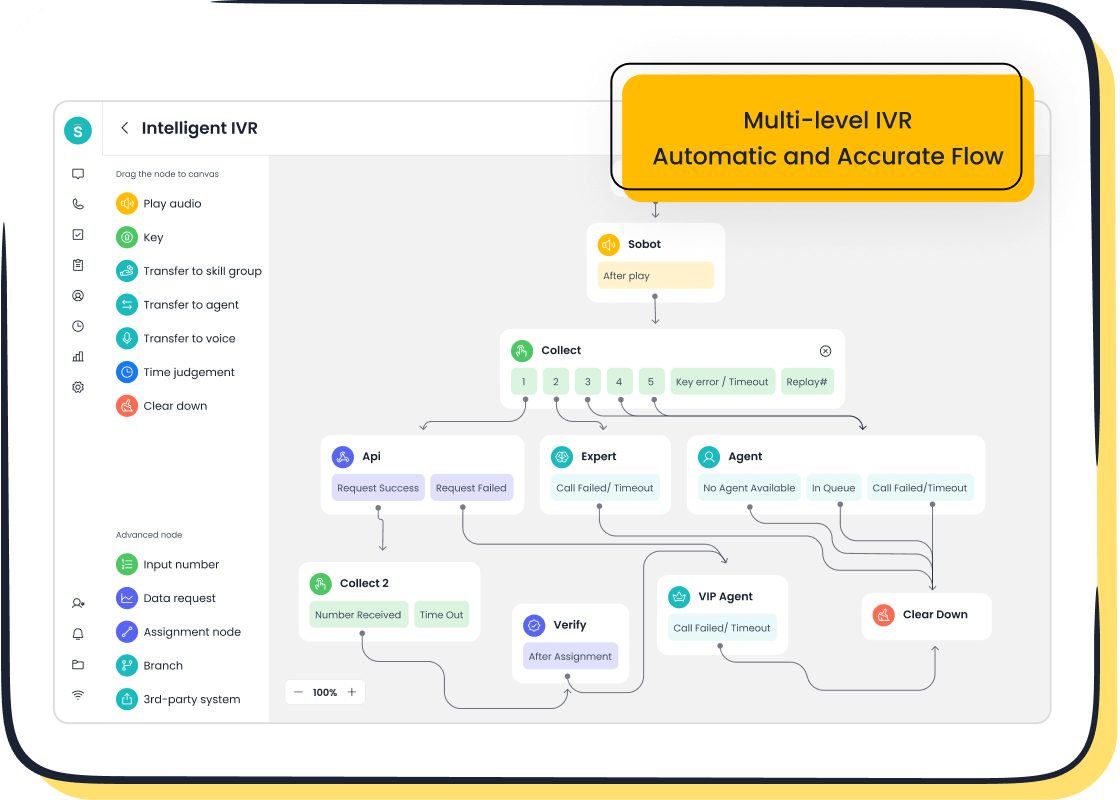
Sobot’s Voice/Call Center Solutions play a key role in care coordination technology for both individuals and families. These solutions help teams manage calls, track client needs, and support integrated care delivery. Sobot’s platform uses intelligent IVR to route calls quickly to the right agent or team. The unified workspace lets agents see all client information in one place, which improves service coordination and collaboration. Real-time call monitoring and analysis help supervisors check call quality and support agents when needed. AI-powered voicebots answer routine questions, reducing wait times and making care management more efficient. Sobot’s system also supports global phone numbers, so organizations can help clients anywhere in the world. High reliability, with a 99.99% uptime, ensures that care coordination stays smooth and uninterrupted.
| Feature | Role in Care Coordination |
|---|---|
| Intelligent IVR | Fast call routing and improved flow |
| Unified Workspace | Centralized client information |
| AI-powered Voicebot | Handles routine inquiries 24/7 |
| Call Monitoring & Analysis | Real-time support and quality checks |
| CRM/ERP Integration | Context-aware, integrated care delivery |
| Global Phone Numbers | Supports worldwide service coordination |
Integration and Efficiency
Care coordination software like Sobot’s connects health, social, and community services. This integration gives providers a full view of each client’s needs, supporting both individuals and families. Omnichannel and AI-driven solutions let teams manage calls, chats, and messages in one place. This unified approach avoids repeated questions and keeps information up to date. AI chatbots handle thousands of conversations at once, cutting response times by up to 50%. This boosts operational efficiency and client engagement. Sobot’s technology helps teams work together, track referrals, and manage resources. It also supports secure data sharing and follows strict privacy standards. These features help prevent service duplication, lower costs, and improve outcomes. In real-world use, Sobot’s solutions have helped reduce resolution times and increase customer satisfaction in industries like retail, healthcare, and education.
Tip: Integrated care delivery with Sobot’s platform means faster help, better teamwork, and more satisfied clients.
Comparing Individuals and Families
Key Differences
Personalized support services for individuals and families share some goals, but they differ in important ways. The main differences come from the focus, outcomes, and the way wraparound services work for each group.
-
Focus and Approach
Individual support services look at one person’s unique needs, skills, and strengths. These services help people build confidence and independence. The goal is to help each person grow and rely less on outside help. For example, a young adult with a disability might use wraparound services to learn job skills and manage daily tasks.
Families, on the other hand, need support that covers everyone in the household. Family support services use wraparound methods to bring together caregivers, children, and sometimes extended family. These services help families work as a team. They focus on building strong family bonds, sharing responsibilities, and using community resources. -
Goals and Outcomes
- Individual support services aim for:
- More independence
- Better quality of life
- Less need for clinical care
- Personal growth and self-confidence
- Family support services aim for:
- Stronger family connections
- Better teamwork and communication
- More resilience during tough times
- Use of community and cultural resources
- Individual support services aim for:
-
Scope of Wraparound Services
Wraparound services for individuals create a care plan just for one person. The team may include doctors, teachers, or social workers who focus on that person’s needs.
For families, wraparound services cover everyone. The team helps with things like school, health, and home life for all family members. They may also help families connect with local programs, such as food banks or after-school clubs. -
Service Delivery
Individual support often uses one-on-one meetings, coaching, or therapy. The wraparound team works closely with the person to set goals and track progress.
Family support uses group meetings, family counseling, and peer support. The wraparound team helps families solve problems together and build skills as a unit. -
Examples
- An individual with anxiety might get wraparound services that include therapy, school support, and social skills training.
- A family with a child who has special needs might get wraparound services that include respite care, parent training, and help with school meetings.
Wraparound services for families often include extra steps, such as training caregivers and helping with transitions, like moving from school to adult services.
| Aspect | Individual Support Services | Family Support Services |
|---|---|---|
| Main Focus | Personal growth and autonomy | Family cohesion and resilience |
| Outcomes | Independence, quality of life | Stronger family bonds, shared resilience |
| Wraparound Team | Focused on one person | Supports all family members |
| Service Delivery | One-on-one, tailored plans | Group, peer, and family-based approaches |
| Use of Community | Connects to resources for one person | Connects whole family to community support |
Similarities
Despite their differences, personalized support services for individuals and families have many things in common. Both use wraparound methods to make sure care fits the unique needs of the people they help.
Personalized support for both groups uses flexible plans. Teams work with clients to set goals and adjust services as needs change. For example, wraparound services for a teenager with mental health needs might include both individual therapy and family meetings. This approach ensures that everyone’s voice matters.
Both types of support use measurement and feedback to improve quality. Teams track progress and use data to see what works best. Programs like the UK’s THRIVE framework and Australia’s Brain and Mind Centre Youth Model show how wraparound services can adapt to each person or family’s situation. These models use regular check-ins and quality checks to keep services effective.
Family support services often use peer helpers—people who have faced similar challenges. These helpers guide families through complex systems and help them find the right wraparound services. Individual support services also use peer mentors or coaches to help clients reach their goals. Both types of support face challenges, such as making sure everyone understands their role and keeping services accessible.
Note: Both individual and family wraparound services need strong organizations and trained staff. Teams must work together, share information, and keep learning new skills. This teamwork, called team-based care, helps everyone get the best support.
Wraparound services for both individuals and families focus on empowerment and resilience. They help people and families build skills, solve problems, and connect with their communities. Both types of support use technology, like Sobot’s omnichannel solutions, to make communication easier and keep everyone on the same page. Sobot’s platform helps teams track needs, manage wraparound plans, and connect with community resources, making wraparound services more effective for all.
Tip: Whether supporting one person or a whole family, wraparound services work best when they are flexible, team-based, and focused on real needs.
Choosing the Right Support Service
Assessing Needs
Selecting the right support service starts with a careful look at what each person or family truly needs. Many people think that asking open questions is enough to understand needs, but research shows a gap between what professionals believe and what service users experience. For example, the WASP Report found that while 85% of clinicians say they ask open questions, only 37% of service users feel heard in this way. This difference highlights the need for better communication and shared decision-making.
When assessing needs, three main factors matter: capability, opportunity, and motivation. Healthcare providers often have the knowledge to deliver personalized care, but they may lack confidence or resources. Less than half feel they have the right environment or support to personalize care. Motivation can also be low if there are no habits or rewards for providing individualized support. These barriers can affect both individuals and families.
Families face extra challenges. They often deal with medical, psychological, and social issues all at once. Accepting a diagnosis can take time and may bring feelings of grief or guilt. This process can change family dynamics and increase the need for ongoing, adaptable care. Support must include open communication, close guidance, and long-term help. Transitions, such as moving from pediatric to adult care, require special attention. Peer support and social connections also play a big role in helping families adjust.
A holistic assessment looks at all parts of life. In England, a framework for assessing children and families checks health, education, emotions, social relationships, and the environment. This approach helps teams decide what level of intervention is needed, from basic support to more intensive care. The framework also screens families into the right services, making sure that wraparound support matches their needs.
Assessment tools and frameworks help guide these decisions. The table below lists some common tools used to assess needs for both individuals and families:
| Framework/Tool | Description | Purpose |
|---|---|---|
| WATI (Wisconsin Assistive Technology Initiative) | Provides a free manual with various assessment forms for assistive technology needs. | Guides assessment of student needs for assistive technology. |
| SETT (Student, Environment, Tasks, and Tools) | A four-part model promoting collaborative decision-making in AT service design and delivery. | Supports consideration, implementation, and evaluation of AT effectiveness. |
| FEAT (Functional Evaluation Tool for Assistive Technology) | A commercially available kit to help educators determine AT needs of individual students. | Assists in functional evaluation for AT suitability. |
| HAAT (Human, Activity, Assistive Technology) | A model recognizing AT as an extrinsic enabler including social, cultural, and environmental factors. | Provides a human performance-based framework for AT assessment. |
| Georgia Department of Education - Assistive Technology | Offers resources to guide IEP teams through AT assessment. | Supports educational planning and AT assessment processes. |
| Education Tech Points | Framework for addressing student AT needs. | Helps conceptualize and address AT requirements. |
A wraparound approach uses these tools to build a complete picture of needs. Teams gather information from different sources, including families, teachers, and healthcare providers. They look for gaps between what is available and what is needed. This process helps create a plan that fits each situation.
Tip: Open communication and regular check-ins help teams adjust support as needs change. Using a wraparound model ensures that no one gets left out and that support stays flexible.
Sobot’s omnichannel solutions make it easier for organizations to assess needs and deliver wraparound services. The platform brings together data from calls, chats, and other channels, giving teams a full view of each client or family. Real-time analytics and reporting help track progress and spot areas for improvement. This technology supports program delivery by making sure that support stays on track and adapts to changing needs.
Provider Comparison
After assessing needs, the next step is to compare providers. Not all support services offer the same features or quality. Choosing the right provider can make a big difference in outcomes for both individuals and families.
Several criteria help families and organizations compare providers:
| Criteria | Profi.io | Biocanic |
|---|---|---|
| Platform Philosophy | Member-led, human connection focused | Lab-led, data-driven, analytical focus |
| Care Delivery Approach | Live sessions, group programs, personalized support | Lab data, protocols, longitudinal tracking |
| Scheduling & Communication | Integrated scheduling, automated reminders, messaging in one platform | Separate or less integrated scheduling and communication |
| Program Delivery | Programs and coaching delivered within platform | Focus on structured assessments and lab data |
| Data Integration | Upcoming integration with wearable data for real-time monitoring | Emphasis on detailed lab and tracker data |
| Scalability | Designed to scale with client volume and team complexity | Supports practices relying on data-heavy protocols |
| Member Experience Continuity | Seamless, unified environment for scheduling, video calls, forms, messaging, and document sharing | Dashboard focused on health data visibility |
This table shows that important factors include the care delivery model, how well the platform integrates different services, scalability, and the overall experience for users. For example, some providers focus on human connection and live support, while others rely more on data and analytics.
When comparing providers, families and organizations should look for:
- Wraparound capability: Does the provider offer services that cover all aspects of care, including health, education, and social needs?
- Individualized support: Can the provider tailor services to each person or family?
- Communication tools: Are there easy ways to schedule, message, and share updates?
- Program delivery: Does the provider offer a seamless experience from assessment to ongoing support?
- Data integration: Can the provider bring together information from different sources for a complete view?
- Scalability: Will the service grow with changing needs?
- Continuity of care: Does the provider ensure smooth transitions and ongoing support?
Sobot stands out by offering an all-in-one contact center solution that supports wraparound services for both individuals and families. The platform unifies voice, chat, and digital channels, making communication simple and efficient. Sobot’s AI-powered tools help teams deliver concierge medicine, companion care, and other services with speed and accuracy. The system integrates with existing records and supports global operations, making it a strong choice for organizations that need reliable, scalable support.
Note: Look for providers that use technology to enhance wraparound care. Platforms like Sobot help teams stay connected, track progress, and deliver high-quality support across all channels.
Families and individuals should also consider the provider’s approach to privacy and data security. Sobot ensures encrypted data transfer and follows strict privacy standards, which is essential for protecting sensitive information.
Finally, real-world results matter. Providers that show measurable improvements in satisfaction, efficiency, and outcomes—like Sobot’s work with Weee!—demonstrate their ability to deliver effective wraparound support. Sobot helped Weee! increase agent efficiency by 20% and reduce resolution time by 50%, leading to a 96% customer satisfaction score. These results show the value of choosing a provider with proven success in program delivery.
Choosing the right support service means looking beyond features. Families and organizations should focus on wraparound capability, individualized care, and a provider’s track record for delivering results.
Personal Care Services and Real-World Examples
Sobot Customer Story: Weee!
Personal care services play a vital role in supporting both individuals and families. These services often include medication management, therapy, and daily living assistance. Many care teams create personalized plans after detailed assessments. These plans address medical, mental health, and social needs. Families often join the planning process, which helps build trust and ensures that wraparound support fits everyone’s needs.
A real-world example comes from Weee!, America’s largest online Asian supermarket. Weee! faced challenges with inflexible call systems and language barriers. The company needed a solution that could support both individual customers and families from diverse backgrounds. Sobot provided a voice solution with a flexible IVR system, multilingual support, and a unified workspace for agents. This wraparound approach allowed Weee! to connect with customers in their preferred language and time zone. The system also helped agents manage calls and messages from different channels in one place.
Outcomes and Lessons
The results at Weee! show the impact of effective wraparound services. After using Sobot’s solution, agent efficiency increased by 20%. Resolution times dropped by 50%. Customer satisfaction reached 96%. These improvements highlight how technology can enhance care experiences for both individuals and families.
Other real-world wraparound examples show similar benefits. Companion care helps seniors manage finances and daily tasks, which supports independence. Homemaking services reduce fall risks and improve nutrition. Pediatric home care improves life for medically fragile children. Memory care specialists provide tailored support for those with cognitive challenges. Technology, such as telehealth and remote monitoring, helps families stay connected and reduces hospital visits.
Lessons from these cases show that team-based wraparound care, strong communication, and family involvement lead to better outcomes. Ongoing training and flexible support help clinics and care teams adapt to changing needs. These strategies ensure that personal care services remain effective for everyone involved.
Personalized support services for individuals focus on daily living help or skilled care, while family services combine both to meet complex needs. Both approaches use wraparound, flexible plans and ongoing teamwork for better outcomes and cost savings. Technology-driven solutions like Sobot use AI and omnichannel tools to deliver fast, secure, and personalized support. Choosing the right service ensures care matches real needs.
Explore how Sobot’s personalized support services can help you or your family make informed decisions and improve satisfaction.
FAQ
What are personalized support services?
Personalized support services help individuals and families get care that fits their unique needs. These services can include health care, education, and daily living help. Sobot provides tools that make it easier to deliver these services quickly and efficiently.
How do wraparound services benefit families?
Wraparound services bring together a team to support families. This team may include doctors, teachers, and social workers. Families get help with health, school, and home life. For example, wraparound services can connect families to local food banks or after-school programs.
Can Sobot support both individuals and families?
Yes. Sobot’s platform supports both individuals and families. The system uses AI and omnichannel tools to track needs, manage wraparound services, and connect users to the right support. Sobot helps teams deliver fast, secure, and personalized support services.
What makes Sobot’s solutions unique for care coordination?
Sobot offers a unified workspace, intelligent IVR, and AI-powered voicebots. These features help teams manage calls, track client needs, and deliver wraparound services. Sobot’s system has a 99.99% uptime and supports global operations. Learn more at Sobot’s official website.
Why is choosing the right personalized support service important?
Choosing the right personalized support service improves satisfaction and outcomes. For example, Weee! used Sobot’s solution and saw a 20% increase in agent efficiency and a 50% drop in resolution time. The right service helps individuals and families get the care they need.
See Also
Enhance SaaS Customer Support Using Effective Live Chat
Comprehensive Guide To Comparing Live Chat Support Costs
Best Interactive Voice Response Solutions Reviewed And Compared

