Should You Outsource Your Ecommerce Contact Center?

Deciding on the right model for an ecommerce contact center depends on a business's unique goals. The global e-commerce market is growing, making excellent customer support a key differentiator. Many e-commerce businesses now consider ecommerce customer service outsourcing. This approach helps manage the rising volume of inquiries from customers. The choice between an in-house team and a call center partner creates a clear decision framework for any e-commerce brand. Sobot helps companies navigate this choice.
Outsourcing ecommerce customer service is ideal for e-commerce businesses prioritizing rapid scaling, cost reduction, and 24/7 availability for their customers.
An in-house customer support team is better for brands where deep product knowledge and direct control over the e-commerce customer service experience are non-negotiable advantages to satisfy customers.
This framework helps guide the decision for your ecommerce customer support and call center strategy. Proper customer service outsourcing, like ecommerce customer service outsourcing, can transform your call center operations.
The Pros of Customer Service Outsourcing

Choosing ecommerce customer service outsourcing offers significant benefits for a growing e-commerce brand. A business process outsourcing (BPO) partner can provide the resources and expertise needed to deliver an excellent customer experience. This allows an e-commerce company to improve efficiency and focus on its primary goals. The main benefits include cost savings, round-the-clock availability, and scalability.
Reduce Operational Costs
One of the primary benefits of outsourcing is financial. Building an in-house call center involves high costs for recruitment, training, salaries, and infrastructure. Ecommerce customer service outsourcing converts these fixed expenses into a more manageable variable cost.
Businesses often see operational cost reductions between 30% and 40%. In fact, over 86% of clients report lower customer service expenses after partnering with a BPO provider. This frees up capital for other critical areas of the e-commerce business.
Provide 24/7 Support
Today's global customers shop at all hours. They expect help whenever they need it. A BPO call center makes it easy to offer 24/7 customer support. This meets the expectations of modern shoppers, as data shows 52% of global customers anticipate this level of availability. Continuous support improves customer satisfaction and builds loyalty for your e-commerce brand.
Scale Your Team On-Demand
E-commerce sales often have seasonal peaks and valleys. A BPO partner provides scalability and flexibility. Brands can quickly expand their outsourced customer support team to handle surges in inquiries during holidays or promotions. This operational elasticity offers several benefits:
- Scalability on demand: Quickly add call center agents for peak times and reduce them afterward.
- Stronger CX: Maintain a high level of e-commerce customer service with trained agents.
- Reduced risk: Convert fixed overheads into variable costs without losing control.
This approach ensures your customers always receive timely support, enhancing their overall experience.
Focus on Core Business Growth
Managing a customer service team requires significant time and resources. Customer service outsourcing allows company leaders to redirect their focus toward core activities. These activities include product development, marketing, and strategic growth. For example, one Amazon e-commerce brand accelerated its growth and surpassed targets after outsourcing. The BPO partner provided access to expertise and handled all customer inquiries, allowing the brand to expand its operations. This strategic move can lead to enhanced customer experience, greater efficiency, and faster business growth.
The Cons of Outsourcing Ecommerce Customer Support
While outsourcing offers many advantages, e-commerce brands must also consider the potential drawbacks. The cons of outsourcing often revolve around control, quality, and security. Understanding these risks helps businesses make a more informed decision about their ecommerce customer support strategy. These drawbacks can impact how customers perceive a brand.
Loss of Brand Control
Handing over customer interactions to a third-party call center means giving up some direct control. An outsourced team may not fully grasp an e-commerce company's brand voice or values. This can lead to inconsistent messaging that confuses customers.
An outsourced customer service team might have lower product awareness. This lack of deep knowledge can compromise the delivery of a high-quality experience for customers, diluting brand recognition and reducing user trust.
Potential Quality Gaps
Maintaining service quality is a major concern with ecommerce customer service outsourcing. An external call center may face challenges that impact performance. These risks include:
- High Agent Turnover: Outsourced call center providers often have higher employee turnover, which affects service consistency and requires constant retraining.
- Cultural Differences: Discrepancies in work styles or communication can create friction and misunderstandings.
- Lack of Priority: Agents at a large call center may serve multiple clients, preventing them from becoming true experts on one e-commerce brand's products. Effective quality assurance becomes crucial to bridge these gaps. Without strong quality assurance, the experience for customers can suffer.
Data Security Risks
E-commerce businesses handle sensitive customer data, making privacy a top priority. Outsourcing introduces significant security risks. Sharing data with a partner increases the potential access points for breaches. In 2020, approximately 83% of e-commerce platforms experienced at least one major hack, highlighting the severe risks involved. A partner’s security protocols might not be as robust, creating vulnerabilities. Ensuring data privacy and managing these risks is essential for protecting customers and the business. Strong quality assurance and vetting are needed to manage these privacy risks.
Hidden Integration Costs
The initial cost savings of customer service outsourcing can be misleading. Several hidden costs can arise during the partnership. For example, training an outsourced agent can cost between $1,000 and $2,000. Other unexpected expenses in ecommerce customer service outsourcing include:
- Onboarding Fees: Costs for knowledge transfer from the in-house team.
- Tooling and Setup: Fees for integrating the partner’s systems with existing e-commerce infrastructure.
- Quality Assurance: Expenses for monitoring performance and ensuring service standards. These financial risks can add up, making the total cost of an Ecommerce Contact Center higher than anticipated.
The Hybrid Approach: Powering Your Ecommerce Contact Center

For many e-commerce brands, the best solution is neither fully in-house nor fully outsourced. A hybrid model offers a middle ground. It combines the brand control of an internal team with the powerful efficiency of technology. This approach empowers an e-commerce business to build a superior ecommerce contact center.
Combining In-House and Tech Solutions
A hybrid ecommerce contact center keeps customer service agents on the payroll. However, it equips them with advanced tools. This strategy provides numerous benefits. The e-commerce company maintains direct oversight of its brand voice. At the same time, technology handles repetitive work, boosting the call center team's capacity. This balance helps an e-commerce business deliver an excellent customer experience.
Leveraging AI and Automation
AI and automation are the engines of a hybrid call center. AI-powered chatbots can resolve up to 83% of routine inquiries, as seen with brands like OPPO. This frees human agents to focus on complex issues that require empathy. The benefits for an e-commerce call center are clear. It reduces resolution times and improves overall efficiency. This allows the call center to better serve all customers. The successful strategy used by OPPO led to a 94% positive feedback rate from its customers, showing a direct link to customer satisfaction.
Using Sobot's Omnichannel Platform
A unified platform is essential for a hybrid e-commerce call center. Sobot’s Omnichannel Solution gives agents a single workspace for all customer interactions, including chat, email, and social media. This integration provides major benefits for the call center. It gives agents a complete view of the customer's history.
This unified approach can improve agent productivity by up to 30%. It ensures customers receive fast, consistent support across every channel.
Gaining Flexibility with a Voice Center
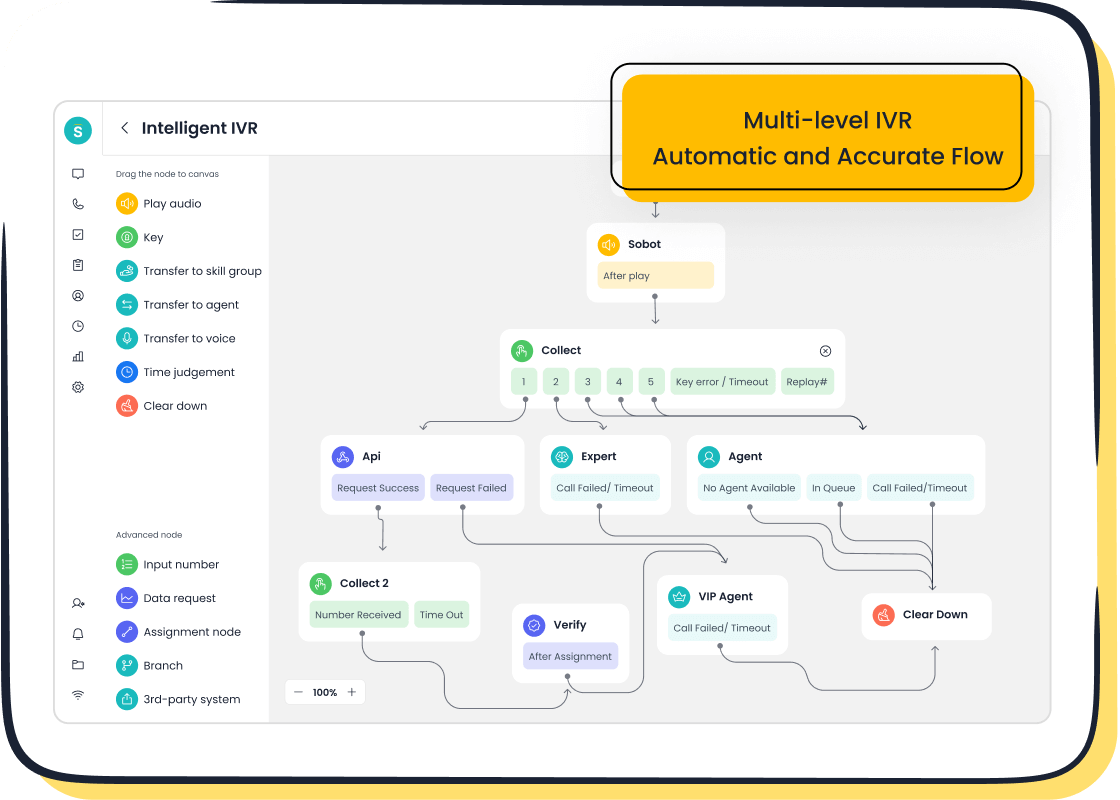
Voice support remains critical for e-commerce customers. Sobot’s Voice/Call Center product gives a smaller in-house call center team enterprise-level capabilities. Features include:
- Intelligent IVR: Guides customers to the right agent with smart menus.
- Smart Call Routing: Directs calls based on agent skills or customer needs.
- 99.99% Uptime: Ensures the call center is always available for customers.
These tools provide significant benefits, allowing an e-commerce business to manage its call center with maximum efficiency and deliver an enhanced customer experience.
Your Guide to Deciding on E-commerce Customer Service
Choosing the right model for your e-commerce customer support requires a careful look at your business. There is no single answer that fits every e-commerce brand. The best decision depends on your company's stage, products, budget, and brand goals. This guide provides a framework to help you make an informed choice.
Assess Your Business Stage
The needs of an e-commerce business change as it grows. The right support model for a startup is often different from what an enterprise needs.
Early-stage e-commerce companies face unique challenges. Their teams often handle customer service without a formal structure. This can lead to problems as the business expands.
- Juggling Conversations: Agents switch between many tasks, causing missed messages and slow replies.
- No Customer History: Information is scattered across email and social media, forcing customers to repeat themselves.
- Unclear Escalation: Difficult tickets linger without a clear path for review, frustrating customers.
- Support Hour Gaps: The team may be offline when global customers need help the most.
High-growth e-commerce businesses face a different set of demands. Their primary need is managing rapid and fluctuating growth.
These larger companies require a flexible and scalable call center capacity to handle seasonal peaks. They also need to support a wide geographic distribution of customers. While digital tools are important, these customers expect personalized, human interactions, making a skilled call center essential for building trust.
Evaluate Product Complexity
The complexity of your products directly impacts your e-commerce customer support strategy. Simple products may only require basic troubleshooting. Complex or technical products demand deep agent knowledge.
Training is a major factor. For an e-commerce business with complex products, new agents can take three to six months to become fully productive. This creates several challenges:
- Senior agents may spend up to 40% of their time on training instead of helping customers.
- Expert knowledge can be lost when an experienced agent leaves the company.
- This constant need for training increases operational costs for the call center.
If your e-commerce brand sells highly specialized items, an in-house team may be better. These agents can develop deep product expertise over time. This knowledge becomes a valuable asset that improves the quality of support for your customers.
Calculate the True Cost
A cost-benefit analysis is crucial for your decision. Outsourcing often appears cheaper, but businesses must consider all expenses. An in-house call center has high upfront and ongoing costs. An outsourced call center converts these into a variable expense.
Here is a simple comparison of the two models:
| Feature | In-House Customer Service | Outsourced Customer Service |
|---|---|---|
| Advantages | Full control, employee loyalty, direct customer feedback | Lower costs, access to experts, easy scalability |
| Disadvantages | High operational costs, recruitment challenges, limited scalability | Less control, communication barriers, quality concerns |
To understand the true cost of an in-house team, you must look beyond salary. The total annual expense for one representative includes benefits, taxes, and training.
| Role | Average Salary | Healthcare | Payroll Taxes | Total Annual Cost (Excluding one-time training) |
|---|---|---|---|---|
| Entry-level Rep | $36,000 | $7,500 | $2,754 | $46,254 |
| Experienced Rep | $60,000 | $7,500 | $4,590 | $72,090 |
Outsourcing avoids many of these direct costs. However, it can have hidden fees for onboarding, integration, or special reporting. A thorough analysis helps an e-commerce business see the full financial picture before committing to a model.
Review Your Control Needs
Direct control over your ecommerce contact center allows you to shape the customer experience. This control is a powerful tool for building brand loyalty. Exceptional e-commerce customer service turns buyers into advocates.
High-quality interactions directly increase Customer Lifetime Value (CLV).
Studies show that a 5% increase in customer retention can boost profits by 25% to 95%. Loyal customers make repeat purchases and refer new customers, fueling sustainable growth.
If you choose to outsource, you can still maintain brand control. Success requires clear communication and strong processes. For example, the company Headspace integrates its outsourced team by holding daily check-ins and using the same quality rubric for all agents. This ensures every agent speaks with the correct brand voice.
To maintain control with a partner, you should:
- Create Thorough Brand Guidelines: Develop a guide covering your mission, tone, and voice.
- Implement Quality Assurance: Use regular audits and customer feedback to monitor performance.
- Promote Collaboration: Treat the outsourced team as an extension of your own.
This level of involvement ensures that every interaction reinforces your brand identity and keeps your customers happy.
How to Succeed with Ecommerce Customer Service Outsourcing
Successful ecommerce customer service outsourcing requires a clear strategy. A business process outsourcing (BPO) partner can become a valuable asset for any e-commerce brand. Success depends on setting clear goals, choosing the right BPO, and providing them with the tools to excel. This approach ensures the outsourced call center team can deliver excellent support to all customers.
Define Clear KPIs
A successful partnership begins with clear expectations. An e-commerce business must define Key Performance Indicators (KPIs) to measure the BPO provider's performance. Strong quality assurance depends on tracking the right metrics. Important KPIs for ecommerce customer support include:
- First Contact Resolution (FCR): The percentage of issues solved in one interaction.
- Average Handle Time (AHT): The time an agent spends on a single case. The industry standard is around 10 minutes.
- Customer Satisfaction Score (CSAT): A measure of how happy customers are with the support they receive. A good score is above 75%.
These metrics help a BPO and the e-commerce company align on quality assurance goals for the call center.
Vet Partners Thoroughly
Choosing the right BPO partner is critical for outsourcing ecommerce customer service. An e-commerce brand should look for a BPO with deep industry expertise. The partner’s culture must align with the brand’s values to ensure agents help customers effectively. A thorough vetting process includes evaluating the BPO provider's technology, security protocols, and quality assurance framework. This ensures the BPO can handle seasonal peaks and protect sensitive data for global customers.
Build a Comprehensive Knowledge Base
An outsourced team needs access to excellent information. A comprehensive knowledge base is essential for effective ecommerce customer support. The e-commerce business should create detailed guides on products, policies, and brand voice. This resource empowers BPO agents to answer questions from customers accurately and consistently. A strong knowledge base is a cornerstone of any quality assurance program for a global call center. This is a key step in ecommerce customer service outsourcing.
Plan for Seamless Integration
A smooth onboarding process sets the stage for a successful partnership. The e-commerce company must provide the BPO with comprehensive training. This ensures the call center agents understand the brand and its products.
Establishing clear communication channels and regular performance reviews is vital for customer service outsourcing. This collaborative approach helps the BPO team feel like an extension of the in-house staff, improving the quality of ecommerce customer service outsourcing for all customers.
Choosing the right model for your ecommerce contact center is a critical business decision. This guide provides a framework to help you select the best path for your e-commerce customer service. Use this final checklist to make an informed choice that aligns with your goals and delivers an excellent customer experience for your customers.
- Choose to outsource if: Cost savings and 24/7 availability are your top priorities for e-commerce customer service.
- Keep it in-house if: Brand control and deep product expertise are non-negotiable advantages.
- Consider a hybrid model with Sobot if: You want to balance cost with control by empowering your team with advanced tools.
This framework should empower any brand to make the best, most informed choice for its unique business needs.
FAQ
What is the main benefit of a hybrid ecommerce contact center?
A hybrid model combines the brand control of an in-house team with the efficiency of technology. Businesses keep their expert agents but use tools like AI to manage simple inquiries. This approach balances cost, control, and customer experience.
How can a business maintain brand control with an outsourced team?
A business maintains control through clear KPIs, a detailed knowledge base, and regular communication. Treating the outsourced team as a partner ensures agents represent the brand voice accurately. This alignment is key to a successful partnership.
What is the first step to setting up a support model?
The first step is to assess your business needs. A company should evaluate its sales volume, product complexity, and budget. This analysis helps determine if an in-house, outsourced, or hybrid model is the best fit for its goals.
How does an omnichannel platform help a support team?
An omnichannel platform unifies all customer communication channels into one workspace. It gives agents a complete customer history. This improves agent productivity and provides a seamless experience for customers across chat, email, and social media.
See Also
Your Essential Handbook for Seamless Omnichannel Call Center Software Solutions
Mastering Omnichannel: Ten Key Steps for Contact Center Implementation Success
Evaluating the Best Contact Center Solutions: A Comprehensive 2024 Review
Unlocking Growth: Live Chat Software's Impact on E-commerce Sales
Demystifying Expenses: A Guide to Live Chat Outsourcing Cost Factors

