Outbound vs Inbound Calls Which is Best?

You may ask about outbound vs inbound calls and which is better. The best strategy depends on your business goals. Your choice between inbound calls and outbound calls shapes how you connect with customers. The Sobot call center, powered by Sobot AI, can manage all your calls. Think of the difference in these simple terms.
Inbound calls capture existing demand from interested customers. Outbound calls actively create new demand and opportunities.
This guide helps you analyze your needs for inbound and outbound calls. A unified platform from Sobot empowers your inbound and outbound calls strategy.
The Case for Prioritizing Inbound Calls

An inbound strategy centers on attracting customers who are already looking for a solution. This approach is reactive, as you respond to a customer who initiates the contact. Your team handles inbound calls from people interested in your products. This makes inbound sales a powerful way to connect with warm leads. Let's explore when this focus on inbound calls makes sense.
When to Focus on an Inbound Strategy
You should focus on an inbound strategy when your business model thrives on building trust. This is especially true for SaaS or e-commerce companies. Your inbound sales efforts build credibility over time. You can create an authentic connection with each customer through helpful inbound calls. This customer-centric approach to inbound sales helps you build brand loyalty. Your inbound sales team becomes a resource, not an interruption. These inbound calls are a core part of your growth.
Key Advantages of an Inbound Approach
An inbound approach offers significant benefits for your sales goals. The biggest advantage is cost-effectiveness. Inbound leads cost 62% less on average than outbound leads. This saves your business money. Another key advantage is customer loyalty. Happy customers stay with you longer. Better retention from quality inbound calls can boost profits significantly. Your inbound sales team can resolve issues on the first of many calls, improving customer satisfaction. This positive communication builds a strong customer relationship.
Note: A well-managed inbound sales process turns incoming calls into valuable opportunities. Your team can focus on closing deals with an engaged customer.
Potential Downsides to Consider
While powerful, an inbound approach has potential challenges. The main downside is a high volume of calls. This can overwhelm an unprepared team. A purely reactive model means you wait for the customer to act. You might miss opportunities if your marketing doesn't generate enough inbound calls. Common issues that hurt an inbound sales strategy include:
- Complex IVR menus that frustrate callers.
- Ineffective call routing that sends a customer to the wrong agent.
- A lack of self-service options, forcing every customer to wait for help.
These problems can lead to abandoned calls and lost sales. Your team must be equipped to handle all inbound calls efficiently.
Leveraging Outbound Calls for Proactive Growth
While inbound calls capture interest, outbound calls create it. This proactive approach shifts your team from a reactive stance to an active one. You initiate the communication to drive growth. An outbound sales strategy is about making connections, not waiting for them. Let's look at how outbound calls can fuel your business.
When an Outbound Strategy is Essential
Certain goals demand a proactive outbound sales strategy. Your business needs outbound calls when you want to enter new markets or quickly fill your sales pipeline with new leads. This approach is vital for:
- B2B Lead Generation: You can use outbound calls to target specific industries and decision-makers who can benefit from your services.
- High-Value Sales: Outbound sales help you engage multiple people in a company, which is crucial for closing complex deals.
- Accelerating Growth: Proactive outreach with outbound calls helps you find potential customers who are not actively searching for a solution.
Key Advantages of an Outbound Approach
A strong outbound sales strategy gives you control over your growth. Your team can generate leads on demand. This proactive communication builds your brand presence in new areas. The success of your outbound calls often depends on your script. A good script is a roadmap for your agents, not a rigid set of lines. It allows for a natural conversation with the customer. Personalized scripts can dramatically improve your sales results.
| Scripting Approach | Conversion Rate Increase |
|---|---|
| Industry-adapted scripts | 47% higher conversion rates |
| Systematized call scripts | Up to 35% higher conversion rates |
These figures show that a thoughtful outbound strategy with the right tools leads to more sales.
Potential Downsides and How to Mitigate Them
Outbound calls can be expensive and time-consuming. Your team might spend hours on manual dialing with low connection rates. Legal rules, like the Telephone Consumer Protection Act (TCPA), also add complexity. You must manage Do Not Call lists to avoid fines. These challenges can make an outbound sales effort seem difficult.
Tip: A successful outbound strategy relies on skilled agents and the right technology to support them.
You can overcome these hurdles with the right platform. Sobot's Voice/Call Center is designed to make your outbound calls more efficient. Features like Bulk Outbound Task let you automate campaigns, saving your agents valuable time. The system also uses intelligent lead assignment to route each customer to the best agent. This ensures your team focuses on high-quality conversations, reducing costs and boosting the effectiveness of every one of your outbound calls.
The Hybrid Model: Combining Inbound and Outbound
Why choose one when you can have the best of both? The most powerful strategy is often a combination of both inbound and outbound calls. This hybrid model creates a complete cycle. Your proactive efforts feed your reactive channels, and vice versa. This approach ensures you capture all possible opportunities for inbound sales and outbound sales.
Using Outbound to Fuel the Inbound Pipeline
You can use outbound calls to generate new interest. Your team makes proactive outbound calls to introduce your brand to potential customers. This outreach plants a seed. When those new leads are ready to learn more, they will make inbound calls. This turns your outbound sales effort into a direct source for your inbound sales team, filling your pipeline with warm, qualified leads who are already familiar with your company. These inbound calls are much easier to convert.
Using Inbound to Nurture Outbound Leads
The cycle also works in reverse. An agent might make several outbound calls to a prospect who shows interest but is not ready to buy. Later, that person might see an ad or read a blog post and decide to call your company. This inbound call is a critical touchpoint. Because your system tracks all communication, the agent who answers has the full history. This allows them to seamlessly continue the conversation started during the outbound calls, effectively nurturing the lead toward a sale. This is how inbound supports your outbound sales.
How Sobot's Unified Workspace Enables a Hybrid Strategy
A hybrid strategy requires a connected system. Sobot’s platform provides a unified workspace where your agents can manage every interaction. This is the key to making a combination of both inbound and outbound work.
Your agents get a single dashboard. They can see a customer's entire history, including past calls, live chats, and support tickets. This means they have full context for all inbound calls and outbound calls without switching apps.
This seamless flow of information empowers your team to handle any type of call effectively.
Integrating AI for Smarter Call Management
AI makes your hybrid strategy even more powerful. Sobot’s AI solution optimizes how you handle all calls. For inbound calls, AI-powered routing instantly sends a customer to the agent with the right skills, improving first-call resolution. For outbound calls, AI can analyze conversations to detect a customer's emotional tone. This helps your team refine scripts for both inbound sales and outbound sales. This intelligent analysis ensures every one of your calls is more effective.
Decision Checklist: Outbound vs Inbound Calls
Choosing between outbound vs inbound calls is a critical decision for your business strategy. This checklist helps you look at your goals, audience, and resources. You can use it to find the right path for your company.
Assess Your Primary Business Goal
Your main goal shapes your entire sales strategy. Are you trying to build brand awareness or drive direct sales? An inbound approach is great for building your brand. You can measure success by tracking your brand's "top-of-mind awareness," which is how often customers think of you first. You can also measure your share of voice in the market. This shows how much people are talking about your brand compared to others. These metrics help you see if your inbound marketing is working.
If your goal is immediate lead generation or customer acquisition, your tactics will be different. An outbound sales approach lets you target specific customers for quick results. Your outbound sales team can make calls to generate new leads directly.
Your choice of tactics depends entirely on your goal. An inbound strategy pulls customers in, while an outbound sales strategy pushes your message out.
This table shows how different goals match with inbound and outbound tactics:
| Goal | Inbound Tactics | Outbound Tactics |
|---|---|---|
| Lead Generation | Content marketing, SEO, social media, webinars | Cold calling, direct mail, trade shows, telemarketing |
| Customer Acquisition | Loyalty programs, referral programs, excellent customer service | Targeted advertising, sales presentations, product demos |
Analyze Your Target Audience
You need to know your audience to connect with them. Different age groups prefer different types of communication. For example, Baby Boomers often value direct, human conversations. A strategy focused on inbound calls with knowledgeable agents works well for them. They appreciate clear explanations and patient service during calls.
In contrast, Gen Z customers are digital natives. They prefer quick, mobile-first options like self-service tools and AI bots. In fact, 38% of younger customers will give up if they cannot find a self-service option. Your outbound sales efforts and inbound support must adapt. For this group, you might use outbound calls to start a conversation but offer a link to a chat for follow-up. Even though many people like digital options, 78% of all customers are more loyal to brands that offer personalized service. This makes every one of your calls, whether inbound or outbound, an opportunity to build loyalty.
Evaluate Your Sales Cycle and Budget
Your budget and sales cycle are major factors in your decision. An inbound strategy can be costly upfront. Agent labor makes up 60-70% of the total cost for inbound calls. You also have costs for technology, like your CRM system and analytics tools. These can range from a few hundred to thousands of dollars per month. A successful inbound team needs significant investment in both people and platforms.
An outbound sales strategy also has costs. The return on investment for outbound calls is closely tied to your sales cycle length. If you have a long sales cycle, it can be hard to justify a constant outbound sales program. Your team might get overwhelmed with new leads from outbound calls and not have enough time to nurture them. You must be sure your sales team can handle new appointments from your outbound sales efforts. Understanding the length of your sales cycle is essential before you commit to an outbound sales plan. Many outbound calls are needed to secure a single deal in a long sales cycle.
Consider Your Product Complexity
How complex is your product? Simple, low-cost products often sell well with an inbound approach. Customers can do their own research and make inbound calls when they are ready to buy. Your inbound sales team can answer final questions and close the deal. This works well for e-commerce and many direct-to-consumer sales.
Complex, high-value products often require an outbound sales strategy. These products usually have a longer sales cycle and require more education. Your outbound sales team can proactively reach out to potential buyers. They can explain the value of your product through a series of calls and demos. This hands-on approach is necessary when the customer needs expert guidance. Your outbound sales team builds a relationship over multiple calls, guiding the customer through a complex decision. These outbound calls are essential for closing big deals.
How Weee! Boosted Efficiency with a New Call Strategy
Real-world examples show you the power of a good call strategy. Weee!, America's largest online Asian supermarket, transformed its customer service with Sobot. Their story shows how the right tools can solve major challenges with inbound and outbound calls.
The Challenge: Inflexible Systems and Language Barriers
Weee! faced significant issues with its old system. The company serves a diverse customer base, but its technology created roadblocks. Imagine your team dealing with these problems on every one of your calls:
- An inflexible IVR system that required developers for simple menu changes.
- Agents switching between systems to find customer information for calls.
- Poor call routing that sent a frustrated customer to the wrong department.
- No immediate access to a customer's order history during calls.
These issues slowed down agents and hurt the customer experience. The company needed a better way to manage its high volume of customer calls.
The Solution: Sobot's Flexible Voice Product
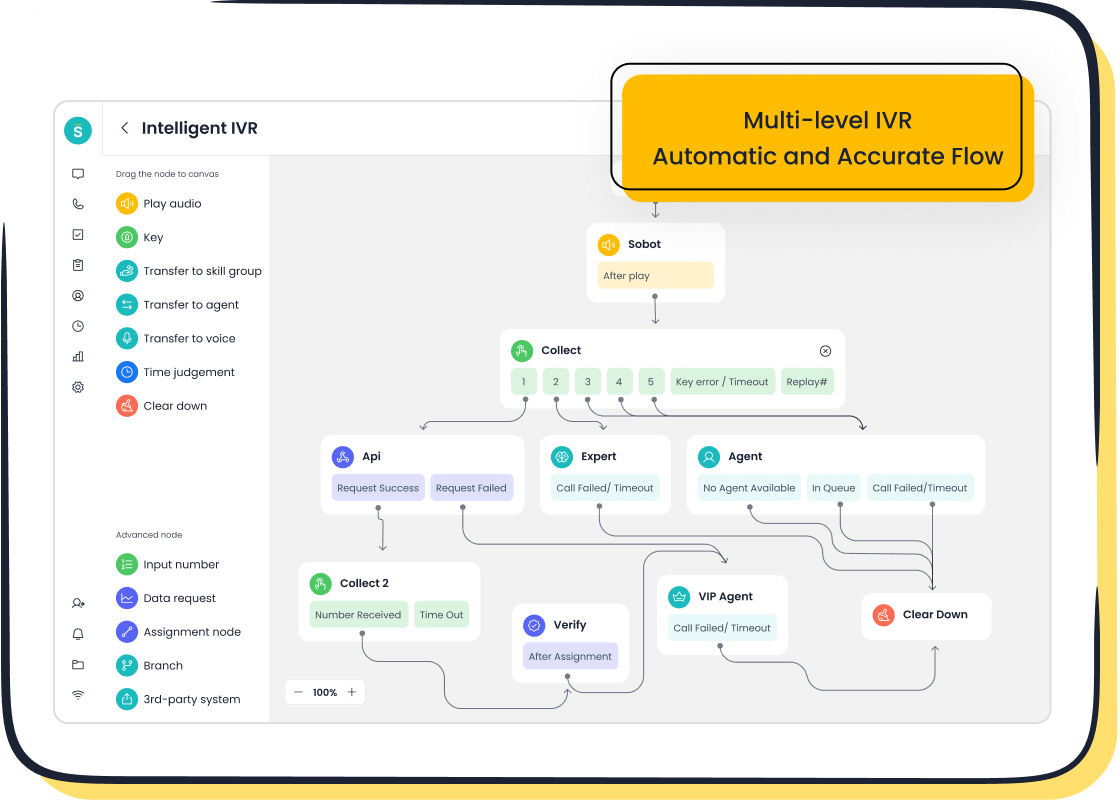
Weee! adopted Sobot’s Voice/Call Center to create a more effective communication strategy. Sobot’s drag-and-drop IVR editor gave them full control. This tool lets you build and change call flows visually, so you can update greetings or menus in real time. This eliminated delays and ensured every customer was routed correctly.
Sobot’s integrated workbench also solved the language barrier. The platform supports multiple languages, allowing agents to switch the entire interface to match the customer's language. This made training easier and improved how agents handled calls from their diverse customer base. All customer data appeared in one place, ending the need to switch between apps during calls.
The Results: Improved Efficiency and Customer Satisfaction
The new approach delivered impressive results for Weee!. By streamlining their inbound calls and empowering agents, they saw a dramatic improvement in performance.
The changes led to a 20% increase in agent efficiency, a 50% reduction in resolution time for customer issues, and a 96% customer satisfaction score.
These numbers prove that a flexible, unified system is key to managing customer calls effectively. Weee! was able to provide faster, more accurate support, which made their customer base happier and more loyal.
The debate of outbound vs inbound calls is about your goals. Your inbound strategy captures demand with inbound calls. Your outbound strategy creates it with proactive outbound calls. A hybrid model combining inbound and outbound efforts is powerful. It uses outbound calls to generate inbound interest and inbound calls to nurture outbound leads. This makes all your calls more effective.
Use the checklist to analyze your needs. See how an all-in-one platform can manage your inbound and outbound calls. This unified approach to inbound and outbound calls helps you master all your calls. Your inbound and outbound teams will have the tools for success with all their calls.
FAQ
What is the main difference in outbound vs inbound calls?
Inbound calls are reactive. A customer contacts you first. Outbound calls are proactive. Your team initiates the communication. Your inbound sales team answers questions from an interested customer, while your outbound sales team finds a new customer. This is the core of outbound vs inbound calls.
Which strategy is better for immediate sales?
For immediate sales, an outbound sales strategy is often more effective. Your outbound sales team can directly target and engage a potential customer. This proactive approach helps you generate leads and close sales deals faster than waiting for a customer to call you.
How do I choose the right strategy for my business?
Your choice depends on your goals. An inbound sales strategy builds long-term customer relationships. An outbound sales strategy drives quick growth. Many businesses use a hybrid model. This combines inbound sales and outbound sales for the best results and a happy customer.
Can outbound sales help my inbound sales efforts?
Yes. A strong outbound sales program introduces your brand to a new customer. This customer may later make an inbound call. Your outbound sales efforts create warm leads for your inbound sales team, making their job easier and boosting overall sales.
See Also
Genesis Call Center Versus Genesys: A Comprehensive Comparison for Optimal Choice
Comparing Leading Interactive Voice Response Software Solutions for Your Business Needs
Unlocking Efficiency: Understanding the Mechanics of Call Center Automation
Implementing Top Strategies for Superior Call Center Quality Management
Your Essential Guide to Mastering Omnichannel Call Center Software Solutions

