Outbound AI Call Agent vs Traditional


For most businesses, an outbound AI call agent is the superior choice for high-volume tasks. The market for AI-powered contact center solutions is set to grow from USD 1.99 billion in 2024 to USD 7.08 billion by 2030, showing a clear trend. This growth highlights the major gains in cost, efficiency, and scale from AI calling. However, traditional call centers still excel at handling complex customer issues. This guide helps businesses find the best fit, whether it's AI phone agents from the Sobot call center, traditional centers, or a powerful Sobot AI solution for AI calling.
Outbound AI Call Agent vs. Traditional Call Centers

Choosing between an outbound AI call agent and a traditional setup requires a clear look at their core differences. Businesses must weigh factors like cost, efficiency, performance, and data capabilities. The right choice depends on specific operational goals and the nature of customer interactions. This comparison breaks down each area to help you decide.
Cost and ROI Comparison
The financial argument for AI is compelling. The cost differences between AI calling and human agents are significant. Traditional call centers have high overhead. These costs include salaries, benefits, training, and infrastructure. AI phone agents operate at a fraction of the price.
Here is a direct look at the pricing per call:
| Agent Type | Cost Per Call (Range) |
|---|---|
| Human Agent | $6 - $15 |
| Outbound AI Agent | $0.50 - $2.00 |
This lower pricing leads to massive operational savings. Businesses often see a 30% to 70% reduction in costs after adopting AI-powered customer support. Some companies even slash per-call costs by up to 90%. Sobot's Voicebot, for example, can reduce the cost-per-contact by 80%. These call center cost savings come from lower staffing expenses and greater efficiency.
The return on investment extends beyond direct savings. AI systems generate value by improving outcomes.
“Implementing Replicant at Sunrun has pretty much paid for itself,” said Stetson Wood, former Director of Engineering and Communications Domain Owner at Sunrun. “Not only have we been able to save money with the number of agents that we have on the phone, but the service is collecting money.”
Organizations that use AI effectively can see a significant boost in ROI and reductions in cost-per-acquisition. The numbers show clear financial benefits.
Efficiency and Scalability
Speed and efficiency are where AI phone agents truly outshine traditional models. AI agents operate 24/7 without breaks, holidays, or sick days. This ensures your business never misses an opportunity to connect with a customer. Traditional call centers are limited by human schedules and labor laws.
AI also offers a truly scalable service.
- AI Agents: AI platforms use a cloud-based design. This gives them unmatched flexibility. They can handle sudden spikes in call volume instantly without needing new staff. This is perfect for seasonal rushes or unexpected events.
- Traditional Centers: Scaling traditional centers is slow and expensive. It involves recruiting, hiring, and training new agents. Physical space and equipment can also limit growth.
AI can handle 70-85% of routine inquiries. This frees human agents for more complex tasks. This hybrid approach can lead to 40-60% savings during peak periods. It eliminates the need for overtime pay or temporary staff.
Performance and Consistency in AI Calling
Performance and consistency are critical in outbound campaigns. AI calling delivers a level of precision that is difficult for humans to match. AI agents follow scripts perfectly every time. This consistency is vital for maintaining brand messaging and ensuring compliance with regulations.
AI agents also show a higher success rate in many structured tasks.
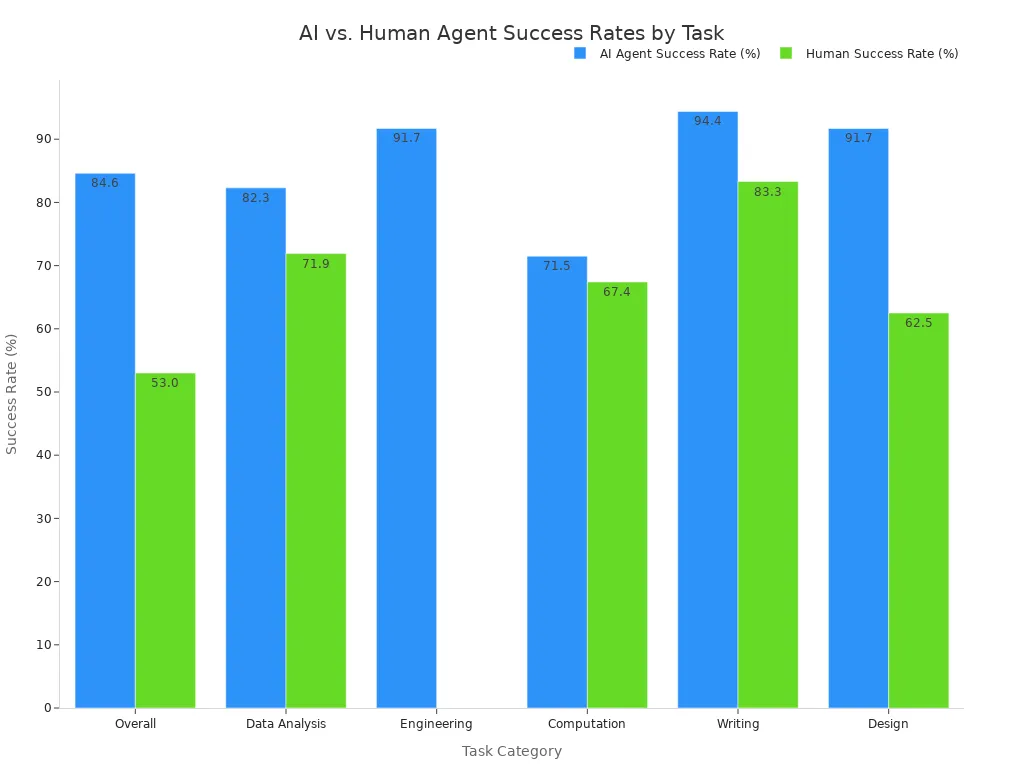
AI phone agents consistently outperform human agents on key metrics:
- Speed to Lead: AI can engage new leads in seconds. This instant response is impossible for human-staffed centers to achieve.
- Hold Times: AI eliminates hold times completely. Every customer call is answered immediately, improving the customer experience.
This level of performance makes AI an ideal tool for high-volume, repetitive outbound tasks. It ensures every interaction is handled with speed and accuracy.
Data and Analytics Capabilities
AI platforms provide deep, real-time insights that traditional call centers cannot offer. Traditional centers often rely on manual call sampling. This method reviews only 1-2% of interactions, leaving huge gaps in understanding. AI systems analyze 100% of calls automatically.
AI-powered analytics offer a wealth of information:
- Sentiment Analysis: AI understands customer emotions in real-time. It detects tone and language patterns to gauge if a customer is happy, frustrated, or neutral. This allows for a more complete picture of customer satisfaction.
- Intelligent Routing: AI analyzes a customer's history and intent. It directs the call to the best-qualified agent from the start.
- Real-Time Assistance: AI acts as a copilot for human agents. It provides instant access to knowledge bases and suggests the next best response.
- Predictive Analytics: AI examines interaction patterns to predict future customer needs. This allows teams to offer proactive solutions and prevent churn.
These advanced data capabilities transform customer support. Businesses can move from being reactive to proactive. They can identify trends, spot operational issues, and make strategic decisions based on comprehensive data. This leads to better outcomes and a stronger connection with every customer.
When to Use an Outbound AI Call Agent
An outbound AI call agent excels at specific, high-volume tasks where speed and consistency are key. Businesses can leverage this technology to automate repetitive processes. This frees up human teams for more strategic work. Understanding the ideal use cases helps companies maximize their return on investment.
High-Volume Lead Qualification
Lead qualification is a perfect task for AI phone agents. Speed is critical in sales outreach. AI calling allows businesses to contact new leads instantly, 24/7. This immediate engagement significantly boosts the chances of conversion. A human team simply cannot match this level of responsiveness. The AI system follows a perfectly designed script to ask qualifying questions. It gathers essential information and identifies high-potential prospects.
The results of using AI for this purpose are transformative. Businesses see major improvements across key metrics.
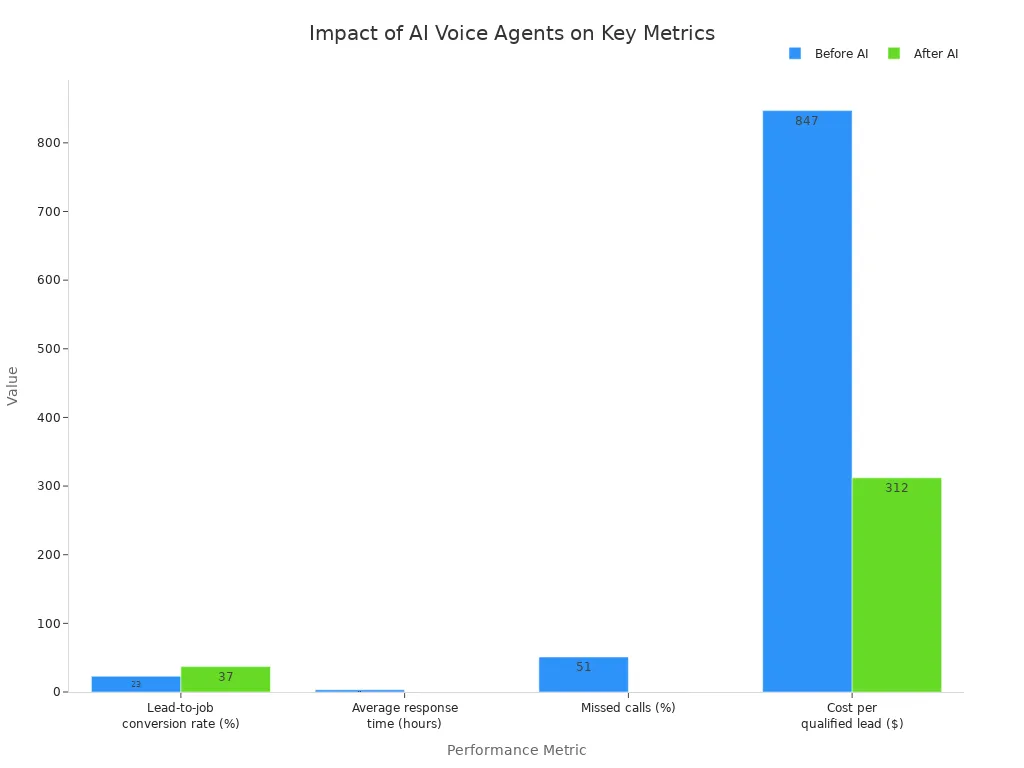
The data shows a clear advantage. An automated solution handles initial outreach, filters out unqualified leads, and passes only the most promising opportunities to the sales team. This automation streamlines the entire sales outreach process.
| Metric | Before AI Voice Agent Implementation | After 3 Months with AI Phone Agents |
|---|---|---|
| Lead-to-job conversion rate | 23% | 37% (+60% improvement) |
| Average response time | 3.2 hours | Instant (100% answer rate) |
| Missed calls | 51% of inbound leads | 0% |
| Cost per qualified lead | $847 | $312 |
Automated Appointment Setting
Scheduling meetings consumes a significant amount of a sales representative's time. AI phone agents can take over this entire process. The AI calls prospects, finds available times, and books appointments directly into a calendar. This automation ensures a persistent and consistent follow-up strategy.
AI appointment setters achieve much higher success rates. They can deliver a 30–40% higher booking rate compared to manual callers. This efficiency leads to more scheduled demos and sales meetings from the same number of leads. The cost savings are also substantial.
| Metric | Before AI Implementation | After AI Implementation |
|---|---|---|
| Meetings Booked | 16 | 50 |
| Increase in Volume | N/A | 213% |
| Cost per Meeting | $1,125 | $48 |
| Reduction in Cost | N/A | 96% |
This automation also gives valuable time back to sales teams. An AI meeting assistant can save a sales representative up to 11 hours per week. It handles tasks like scheduling, data entry, and CRM updates. This allows them to focus on what they do best: selling to the customer.
Customer Surveys and Feedback
Gathering customer feedback is essential for business growth. However, traditional methods like email surveys often have low response rates. AI calling offers a more engaging and effective way to collect this information. An AI agent can call a customer and conduct a conversational survey. This personal touch leads to much higher completion rates.
AI-powered voice surveys can achieve completion rates of 70-90%. This is significantly higher than email surveys, which typically see rates of only 10-15%.
The AI doesn't just collect answers. It analyzes the customer's tone and sentiment. This provides deeper insights into their experience. Businesses can use this data to make immediate improvements. For example:
- E-commerce companies can identify product issues or shipping delays from real-time feedback.
- Telecom providers can uncover specific network problems affecting customer satisfaction.
- Product teams can prioritize new features based on genuine customer demands.
This level of analysis helps businesses resolve issues before they escalate and improve the overall customer experience.
Proactive Reminders and Notifications
Missed appointments and late payments hurt revenue and operational efficiency. AI phone agents provide a simple and effective solution. They can automatically call customers with proactive reminders and important notifications. This simple act of AI calling dramatically reduces no-show rates and improves on-time payments.
Studies show that AI-powered reminders are highly effective. One implementation of an AI model led to a 50.7% reduction in no-show appointments. This automation ensures every customer receives a timely and helpful reminder. Industries across the board benefit from this capability.
| Industry | Proactive AI Application | Key Benefits |
|---|---|---|
| Healthcare | Intelligent appointment reminders and follow-ups. | Reduces missed appointments and offers one-click rescheduling. |
| Banking | Real-time fraud alerts for unusual transactions. | Protects the customer and fosters trust in the institution. |
| SaaS | Detecting drops in user activity to trigger engagement calls. | Helps retain users and improves product adoption. |
This proactive approach to customer support strengthens relationships. It shows the customer that the business values their time and is there to help them. The AI handles the routine communication, ensuring consistency and reach at a massive scale.
Implementing AI Phone Agents with Sobot
Implementing AI phone agents is a strategic process. Partnering with a leading provider of all-in-one contact center solutions like Sobot makes the transition smooth and effective. Sobot’s powerful AI tools help businesses automate outbound tasks with precision. The implementation journey involves clear goal-setting, thoughtful design, seamless integration, and a structured launch.
Defining Your Outbound Goals
The first step is to define what success looks like. Clear objectives guide the entire AI implementation. Businesses should ask critical questions before they begin.
- What is the desired call outcome?
- Are you qualifying leads or connecting them to human sales reps?
- How many calls do you need to make daily or weekly?
- What is your target qualification rate and conversion rate?
Answering these questions provides a roadmap for building effective AI phone agents. This clarity ensures the final solution delivers real business value.
Designing the Conversation Flow
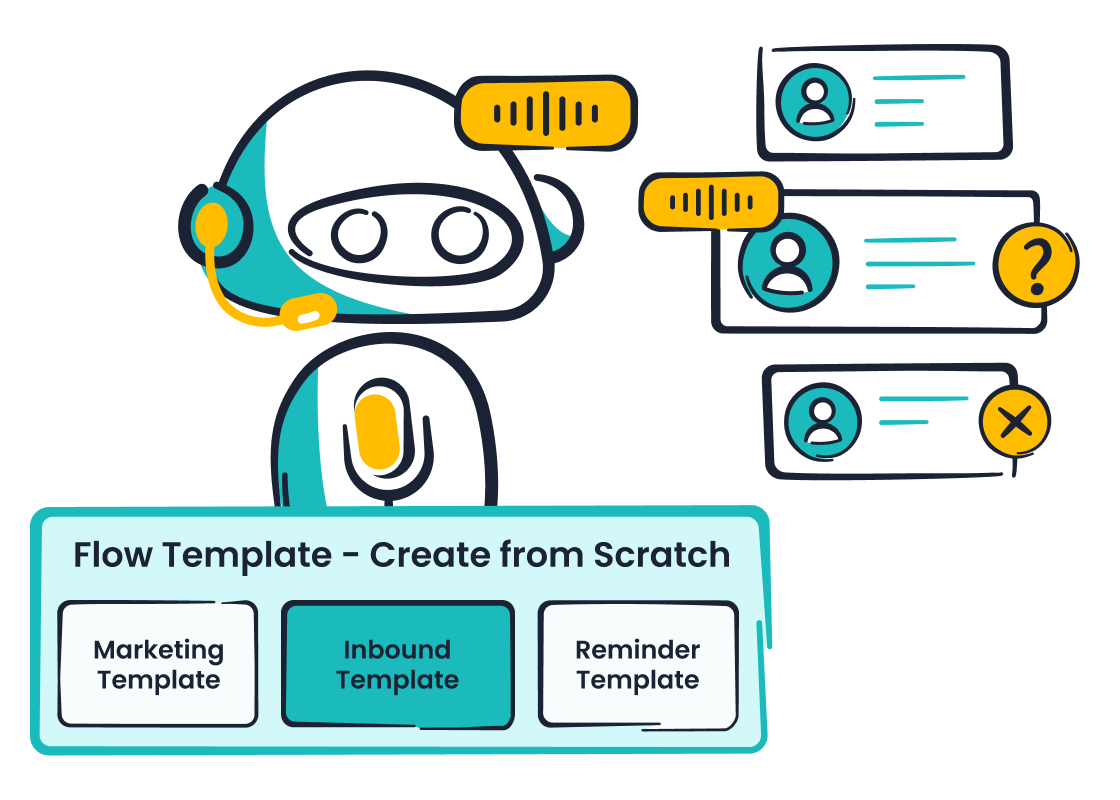
A well-designed conversation is key to success. Sobot’s Voicebot simplifies this with a no-code, drag-and-drop visual flow builder. This tool allows businesses to map out interactions without writing any code. The best AI conversations feel natural and human. This is achieved with advanced NLP and LLM technology, which powers human-like dialogue and dynamic responses. Effective design includes personalization and adaptability, using customer data to make every call relevant. The AI must also handle interruptions and know when to escalate a call to a human agent.
Integrating with Your CRM
For AI to be truly effective, it must connect with existing business systems. Sobot offers plug-and-play integrations and abundant APIs. This flexibility allows its AI systems to connect seamlessly with leading CRMs. This integration enables the AI to access customer history for better personalization. It also ensures that all interaction data, notes, and outcomes are automatically logged back into the CRM. This creates a single source of truth for the sales and support teams.
Training and Launching Your Voicebot
With a no-code platform, launching AI phone agents is faster than ever. Most businesses can deploy voice AI within two to three months. Sobot’s platform supports multilingual capabilities, allowing companies to serve diverse audiences from day one. The training process involves feeding the AI with scripts and knowledge base articles. After launch, the system continues to learn from real interactions. This ongoing adaptability ensures the AI improves its performance over time, making it an increasingly valuable asset.
The Hybrid Model: Best of Both Worlds

The optimal strategy for most businesses is the hybrid model. This approach combines the strengths of an outbound AI call agent with the nuanced skills of human agents. It creates a powerful, efficient, and customer-centric operation. The hybrid model uses the best skills of both AI and people to improve the overall customer experience.
How the Hybrid Approach Works
A hybrid model delegates tasks based on complexity. AI handles routine, high-volume interactions. This frees human agents to focus on issues requiring empathy and creative problem-solving. This division of labor maximizes efficiency and ensures every customer receives the right level of support. The AI excels at repetitive tasks, while humans manage complex situations that need a personal touch.
| Function | Best Handled By |
|---|---|
| Routine Inquiries & FAQs | AI |
| Complex Problem Solving | Human Agent |
| Empathy & Emotional Support | Human Agent |
| Call Routing & Ticket Triage | AI |
| High-Stakes Escalations | Human Agent |
| Consistent 24/7 Availability | AI |
Using AI for Initial Outreach
The hybrid strategy often begins with AI calling. AI phone agents are perfect for initial outreach. They can handle high-volume, standardized communication like gauging interest or verifying basic information. This first touchpoint filters leads and gathers important data. The AI system uses this information to decide the next step. This ensures human agents only engage with qualified prospects or customers who need advanced help.
Seamless Handoff to Human Agents
A key feature of the hybrid model is the seamless handoff from AI to a human. When an AI phone agent identifies a complex issue, a sales opportunity, or a frustrated customer, it intelligently routes the call to a live agent. To make this transfer smooth, the AI provides the human agent with full context.
Note: A successful handoff depends on transferring key data. This includes:
- Full chat or call history
- The customer's intent, urgency, and sentiment
- Any actions the AI has already attempted
This process prevents the customer from having to repeat themselves. It empowers the human agent to resolve the issue quickly and with greater personalization.
Optimizing with AI and Human Synergy
The synergy between AI and humans drives powerful results. America's largest online Asian supermarket, Weee!, provides a real-world example. Weee! faced challenges with an inflexible system and language barriers. By implementing Sobot's voice product, they created a hybrid model. The AI calling system used intelligent routing to direct customers. This integration increased agent efficiency by 20% and cut resolution time in half. The result was an impressive 96% customer satisfaction score. This shows how AI phone agents and human expertise can work together to boost both performance and customer satisfaction.
An outbound AI call agent is the modern choice for efficiency. Traditional call centers remain essential for complex customer needs. The best strategy combines AI calling with human agents from traditional call centers. This hybrid model, offered by solutions like Sobot, boosts customer satisfaction.
AI implementation helps centers handle 13.8% more customer inquiries per hour.
This synergy between AI calling and traditional call centers creates a superior customer experience. The future of support centers involves smart AI calling and powerful AI. This AI calling approach, powered by AI, ensures every customer gets the right help.
FAQ
What is an outbound AI call agent?
An outbound AI call agent is software that automatically makes phone calls. It uses artificial intelligence to talk with people. Businesses use this technology for tasks like lead qualification, appointment setting, and customer surveys. This form of AI calling improves efficiency and reduces operational costs.
How long does it take to set up an AI calling system?
Implementation times vary. However, modern platforms like Sobot make it fast. Businesses can often deploy a new AI calling system in just a few weeks. A no-code visual builder simplifies the process, allowing for quick design and launch of the voicebot.
Can an AI call agent speak multiple languages?
Yes. Advanced AI call agents offer multilingual support. For example, Sobot’s Voicebot supports various languages and dialects. This feature allows businesses to connect with a diverse customer base globally. It ensures every interaction feels personalized and natural, regardless of the customer's language.
When should a business use a human agent instead of AI?
A business should use human agents for complex or emotional situations. While an AI call agent handles routine tasks well, humans excel at creative problem-solving and showing empathy. The best strategy often involves a seamless handoff from the AI to a human agent.
See Also
Evaluating Advanced AI Solutions for Enterprise Call Center Performance
Comprehensive Guide to Artificial Intelligence Software for Call Centers
How AI Customer Service Agents Are Revolutionizing Support Experiences
Understanding How Call Center Automation Boosts Operational Efficiency
Discovering the Top 10 AI Tools for Enterprise Contact Centers

