Why Cloud is the Future of Contact Center Setup

The debate is over. The future of your contact center setup is in the cloud. This shift is more than a technical upgrade. It is a core contact center strategy for your business's survival and growth. The market for the cloud contact center is set to grow at a rate of 26.9% annually, showing its unstoppable momentum.
Your business must adapt to deliver a modern customer experience. This article shows how a cloud contact center drives financial agility and empowers agents with tools like Sobot AI. Leading solutions like the Sobot call center pave the way for a better customer service experience.
The Limits of an On-Premises Contact Center
Your traditional on-premise contact center may feel familiar. This familiarity often hides significant costs and limitations. Sticking with an outdated contact center deployment model puts your business at a serious disadvantage. It creates operational challenges and blocks you from modern innovations.
High Costs and Operational Rigidity
An on-premises system requires large upfront investments in hardware. You also face recurring costs for maintenance and upgrades. For example, some organizations face unexpected costs of over $50,000 just to keep an old system current. This model locks you into a rigid structure.
This lack of flexibility becomes a major problem during unexpected events.
When the pandemic hit, the University of Huddersfield could not have operated its student clearing process with its on-premises system. A swift move to the cloud was necessary for them to function with remote staff. Your on-premises setup makes it difficult to scale or shift to remote work, limiting your contact center operations.
The Widening Innovation Gap
The world of customer service is evolving quickly. Cloud platforms receive continuous, automatic updates with the latest features. An on-premise contact center does not. Upgrades for on-premises systems are manual, expensive, and often require downtime for your contact center operations.
This slow pace creates a widening innovation gap. Your legacy system was not designed for the demands of modern technology. It struggles with key advancements, such as:
- Real-time AI processing
- Instant triggers for automated responses
- Seamless integration using modern APIs
Your on-premises contact center cannot easily support the AI-driven tools that define modern customer experience. This leaves you unable to use predictive analytics or real-time agent assistance, putting you steps behind your competition.
The Business Case for a Cloud Contact Center

Moving away from an on-premise system is not just about avoiding limitations. It is about embracing a superior model for your business. A cloud contact center gives you the tools to build a more resilient, efficient, and modern organization. It provides a clear path to financial health, operational excellence, and a happier workforce.
Financial Agility with an OpEx Model
Your on-premise system requires a large upfront payment for hardware and software. This is a Capital Expenditure (CapEx) model. A cloud contact center changes this completely. It uses an Operational Expenditure (OpEx) model, which turns your contact center costs into a predictable monthly subscription.
This shift gives your finance department incredible budget predictability. You no longer need to worry about surprise maintenance fees or expensive upgrade projects.
The Benefits of a Subscription Model 📈
- No Large Upfront Costs: You eliminate the need for heavy initial investments in physical hardware.
- Predictable Monthly Bills: A fixed fee per user allows for straightforward budgeting. You know exactly what your bill will be each month.
- Transparent Pricing: All essential features are included in a single price, so you avoid hidden fees for maintenance or support.
This financial model is a core part of a modern contact center strategy. It frees up capital that you can invest in other critical areas of your business, like marketing or product development.
Unmatched Scalability and Continuity
Your business needs can change in an instant. You might face a sudden surge in customer calls during a product launch or a seasonal peak. An on-premise system cannot adapt quickly. A cloud contact center provides unmatched scalability and flexibility. You can add or remove agent seats in minutes, ensuring you only pay for what you need.
This flexibility is built on a foundation of extreme reliability. Uptime is critical for your contact center operations. Even a small amount of downtime can lead to lost revenue and frustrated customers. Top-tier cloud providers design their systems for near-perfect availability.
The difference between uptime percentages is significant.
| Uptime Percentage | Average Annual Downtime |
|---|---|
| 99% | 3 days, 15 hours, 40 minutes |
| 99.9% | 8 hours, 46 minutes |
| 99.99% | 52 minutes, 36 seconds |
| 99.999% | 5 minutes, 16 seconds |
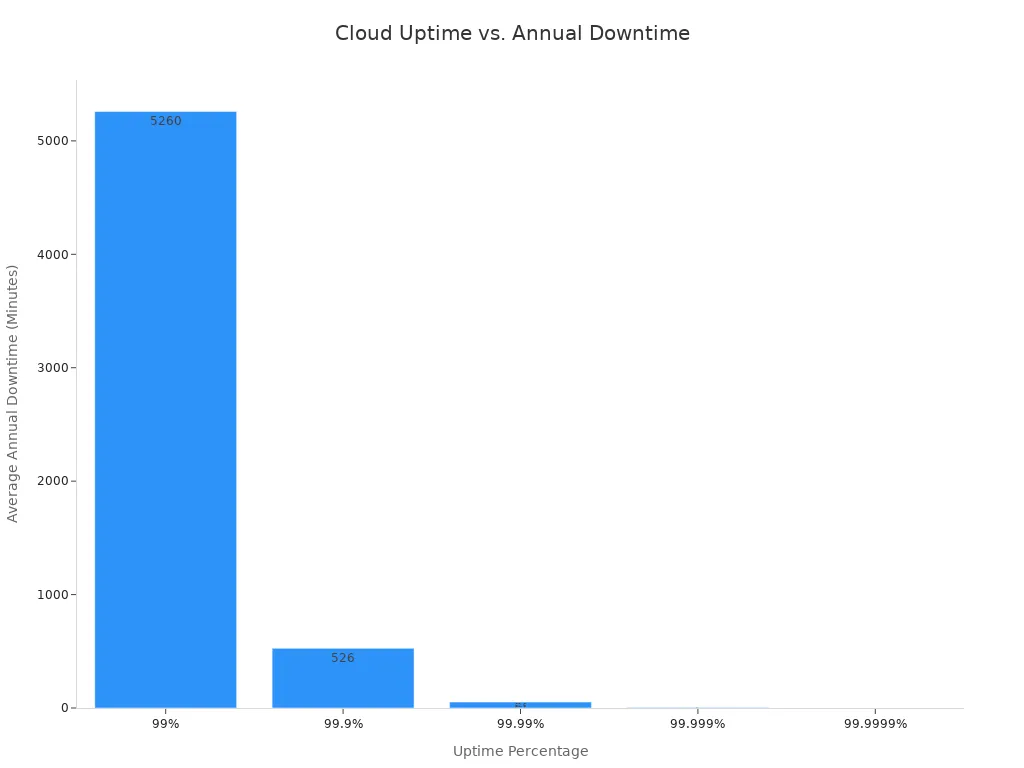
Leading providers like Sobot offer a 99.99% uptime guarantee, which translates to less than one hour of potential downtime per year. This level of reliability is essential for business continuity. It ensures your team can serve customers without interruption, protecting your brand's reputation and customer experience. This powerful scalability and flexibility makes a cloud contact center a smart choice.
Empowering a Modern Remote Workforce
The nature of work has changed. Top talent now expects flexible remote work capabilities. A cloud contact center is the key to meeting this demand. It allows your agents to log in and work from anywhere with an internet connection. This remote accessibility expands your talent pool beyond your local area, helping you hire the best agents regardless of their location.
This flexibility directly impacts your team's morale and loyalty.
- Studies show that 82% of remote workers report increased job happiness.
- Companies offering remote work see employee turnover rates fall by as much as 25%.
Note: A happy and stable team delivers a better customer experience. By empowering your agents with the tools they need to succeed, you improve your contact center operations from the inside out.
Of course, remote accessibility requires strong security. Modern cloud-based technology is built with security at its core. Your customer data is protected through multiple layers of defense.
- Data Encryption: Information is scrambled and protected, both when it's moving across the internet and when it's stored.
- Secure Access Controls: You control exactly who can see and use sensitive data. Multi-factor authentication (MFA) adds another layer of protection.
- Continuous Monitoring: Systems are monitored 24/7 for suspicious activity, and automatic security updates address vulnerabilities before they become a problem.
This robust security framework ensures that your remote team can operate safely, giving you peace of mind and your agents the freedom they desire.
How Sobot's Cloud Solution Delivers Success
The theory behind a cloud contact center is powerful. A real-world example shows you its true potential. Sobot provides a powerful, all-in-one customer service solution that turns these cloud benefits into measurable business success. This cloud-based solution is designed to unify your teams, automate tasks with AI, and scale your support globally.
A Unified Workspace for Omnichannel Service

Your customers expect to connect with you on any channel. They want a consistent experience every time. In fact, 75% of customers expect seamless interactions across all channels. A disconnected system creates frustration for both your customers and your agents. Sobot solves this by bringing all your communication channels into a single, unified workspace.
This approach directly improves your contact center operations.
- Eliminate Window Switching: A unified desktop integrates your CRM, phone systems like the Sobot Call Center, and knowledge bases. Your agents save valuable time because they are not juggling multiple applications.
- Streamline After-Call Work: Agents can log notes and send follow-up emails from one place. This reduces the time spent on administrative tasks after a call ends.
- Provide Instant Answers: A centralized knowledge base allows agents to find information quickly. They can solve customer issues without placing them on hold.
Success in Action: Samsung 🚀 Global technology leader Samsung needed to manage a high volume of inquiries across many channels. By implementing Sobot's all-in-one cloud contact center, they unified their communications. The results were remarkable. Samsung achieved a 97% customer satisfaction rate and saw a 30% boost in agent efficiency. This shows how a unified platform creates better digital-first customer experiences.
AI-Powered Intelligence and Automation
A modern cloud contact center uses artificial intelligence to make your team smarter and faster. AI handles repetitive tasks, so your agents can focus on complex customer needs. Sobot embeds AI across its platform, from its AI-powered Voicebot and Chatbot to its intelligent ticketing system. This functionality delivers a clear return on investment.
You can measure the impact of AI on your key business metrics.
| Metric | Business Impact with AI |
|---|---|
| First-Call Resolution | Reaches up to 95% by routing customers correctly the first time. |
| Average Handling Time | Reduces by an average of 37% as AI handles simple queries. |
| Customer Satisfaction | Improves by 15-20% with instant, 24/7 support. |
| Availability | Provides 24/7 service without extra staffing costs. |
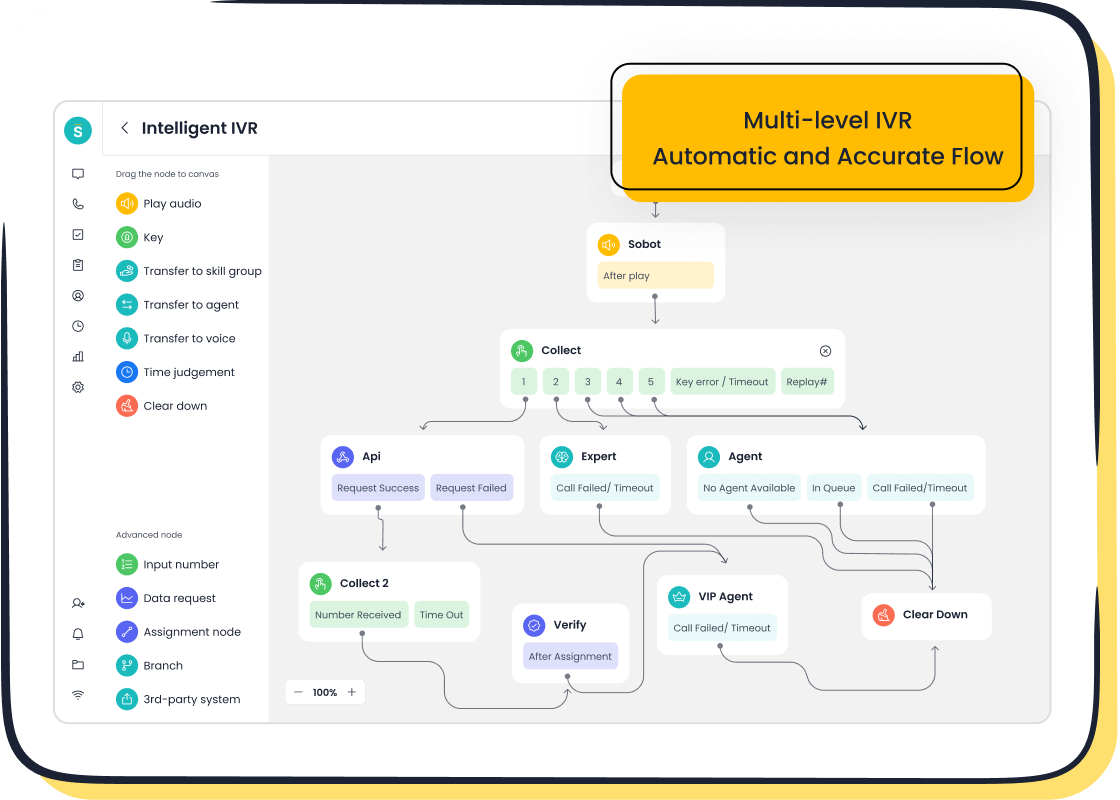
Sobot makes this advanced technology accessible. You can build complex customer journeys with its drag-and-drop IVR builder. This tool uses a visual interface, so you do not need a technical team to create or update your call flows. You can easily set up rules to identify a customer's VIP level and route them to the right agent.
This AI-powered functionality is tailored for different industries. For example, in retail and e-commerce, Sobot’s AI can answer pre-sales questions, provide product recommendations, and resolve post-sales issues. This specialized approach helped the smart device brand OPPO achieve an 83% chatbot resolution rate. This level of automation is a core benefit of a leading customer communication solution.
Global Scale with Localized Support
Your business may operate across different regions and time zones. A cloud-based contact center solution must support this global reach. Sobot is built on a global network with 110 points of presence in 50 countries. This ensures low latency and high-quality connections for your team and customers worldwide. You get access to a stable system with a 99.99% uptime guarantee.
Serving a global audience means speaking their language. Sobot supports your contact center operations with multilingual capabilities and time zone support. This allows you to provide localized service that builds customer trust. Leading global brands rely on this capability.
- Michael Kors
- Samsung
- Agilent
- Opay
Global operations also bring strict data security rules. You must comply with regulations like GDPR in Europe and CCPA in California. Sobot’s platform is built with a privacy-first architecture. It uses global data centers to meet data residency requirements, ensuring your customer data is stored securely and in compliance with local laws. This gives you real-time access to customer data while maintaining the highest security standards.
Planning Your Future-Proof Contact Center Setup
A successful move to the cloud requires careful planning. You need to address common concerns and map out a clear path forward. This ensures your new contact center setup is secure, efficient, and ready for the future.
Addressing Security and Control Myths
You might believe your on-site system is safer than the cloud. This is a common myth. Cloud providers invest heavily in advanced security measures to protect against potential cyberattacks. Their business depends on strong data security. In contrast, legacy systems were not designed for modern cyberattacks.
Did You Know? 🛡️ Internal employees, not hackers, are responsible for about half of all data loss. Cloud platforms reduce this risk with strict access controls and monitoring.
Top providers prove their commitment to data privacy and security with key certifications. Look for providers that meet these standards:
- SOC 2 Type 2: Confirms strong controls for security and availability.
- ISO 27001: Shows a comprehensive framework for managing information risks.
- PCI DSS: Essential for handling payment card data securely.
These security measures ensure your cloud deployments are built on a foundation of trust.
Your Migration Path to the Cloud
Migrating to the cloud does not have to be complicated. A phased approach makes the transition smooth for your contact center operations. You can follow a simple, three-step path.
- Assess and Define: Evaluate your current systems and workflows. Set clear goals for what you want to achieve with your new contact center setup.
- Plan and Choose: Create a detailed migration plan. Select a cloud provider that aligns with your business needs and can integrate with your existing tools.
- Train and Implement: Prepare your team with hands-on training in a sandbox environment. Start with a pilot program before moving your entire team to the new platform.
Considering a Hybrid Contact Center Model
For some businesses, a full cloud migration is not immediately possible. A hybrid contact center offers a flexible middle ground. This contact center deployment model combines on-premise systems with cloud services. A hybrid contact center can be a smart contact center strategy if you have strict data residency rules or want to transition gradually.
However, managing a hybrid contact center comes with challenges. Integrating old and new systems can be complex. You may face difficulties in getting a unified view of your data and performance. This approach often requires specialized skills to manage both environments effectively.
The evidence is clear. A cloud contact center is the future. It offers superior financial agility, scalability, and innovation for your contact center setup. Delaying this move is a decision to fall behind competitors and fail modern customer expectations. Your contact center strategy must evolve to deliver a better experience. It is time to build a resilient and intelligent contact center setup. Embark on Your Contact Journey by exploring a future-ready cloud contact center solution like Sobot today.
FAQ
Is a cloud contact center really secure?
Yes, it is very secure. Top cloud providers like Sobot use advanced security measures.
Your data is protected with strong encryption and continuous monitoring. These systems often provide better security than an older, on-premise setup, giving you peace of mind.
How hard is it to switch to the cloud?
The process is simpler than you might think. You can move to a cloud contact center in phases. A good provider will guide you through each step. This ensures a smooth transition for your team and your contact center operations.
What does a cloud contact center cost?
You pay a predictable monthly fee per user. This subscription model eliminates large upfront hardware costs. Your budget becomes easier to manage. All maintenance and updates are included, so you avoid surprise expenses for your contact center setup.
Can a cloud system handle our busiest days?
Absolutely. A cloud contact center scales instantly. You can add or remove agent seats in minutes to match customer demand. This flexibility ensures you always have the right resources, whether it is a holiday rush or a normal business day.
See Also
Evaluating the Leading Cloud Contact Center Services: A 2024 Review
Discovering the Foremost Cloud Contact Centers: An In-Depth 2025 Analysis
A 10-Step Guide to Deploying Omnichannel Contact Center Solutions Effectively
Comprehensive Review of the Best Contact Center Solutions for 2024
Your Essential Guide to Mastering Omnichannel Call Center Software

