Why Omnichannel Support Matters in Ecommerce Customer Service

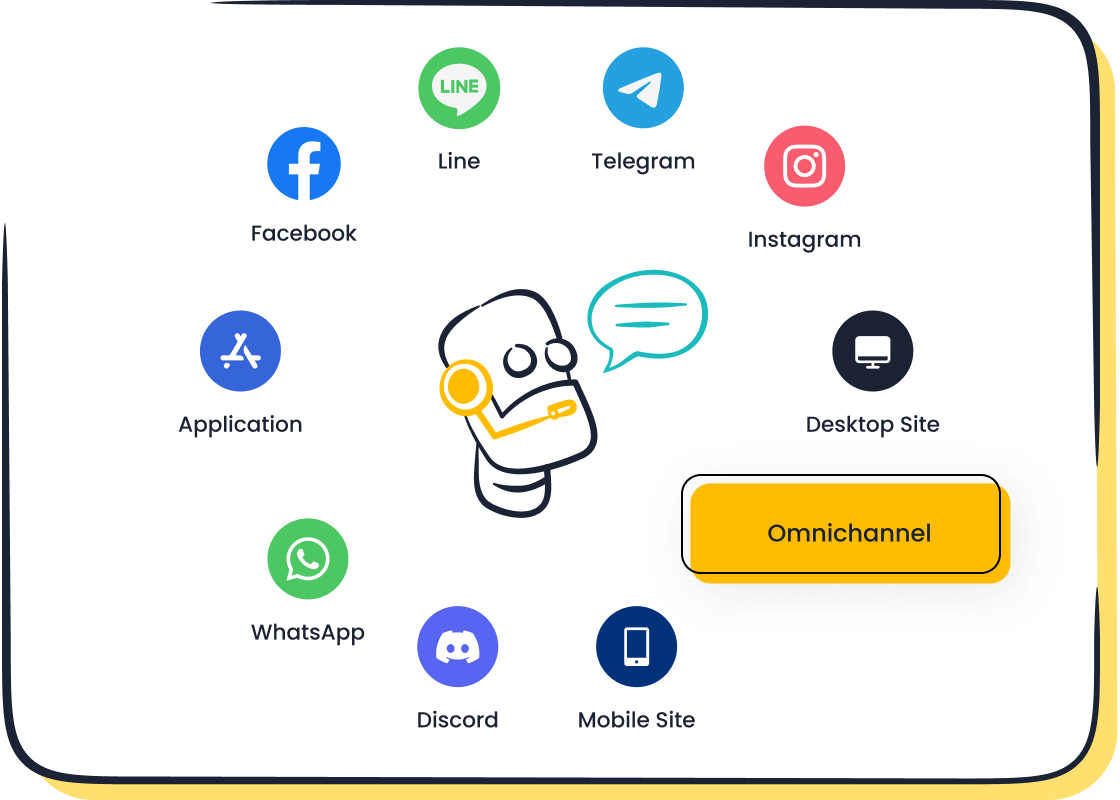
Omnichannel support transforms ecommerce customer service by connecting every customer touchpoint into a seamless journey. As 2026 approaches, customers expect unified and fast responses whether they use chat, voice, or social media. Companies that deliver a consistent customer experience see higher satisfaction, trust, and loyalty. Sobot’s ecommerce customer service software helps brands build this connection. In 2026, advanced AI and automation will shape how every customer receives efficient, personalized service. Companies using strong omnichannel support strategies retain up to 89% of their customers, while others retain only 33%.
- A seamless customer experience increases repeat purchases.
- Consistent support boosts satisfaction and loyalty.
- Positive reviews attract new customers and drive growth.
Omnichannel Support in Ecommerce Customer Service Software
Definition and Principles
Omnichannel support in ecommerce customer service software means connecting every customer touchpoint into one unified experience. This approach recognizes that customers interact with brands through many platforms and devices. The core principles of omnichannel retail focus on delivering a consistent and integrated brand experience, no matter which channel the customer chooses. Customers value having options, with 46% rating channel choice as crucial for their shopping experience. Omnichannel support ensures customers can connect whenever and however they prefer, which increases convenience and satisfaction.
Key principles include:
- Recognizing all platforms and devices for customer interaction.
- Offering core channels such as mobile, email, SMS, social media, instant messaging, and in-person.
- Delivering consistent support and a unified brand experience across all channels.
- Providing integrated experiences that enhance personalized support.
- Reducing wait times and improving resolution efficiency through channel interconnectivity.
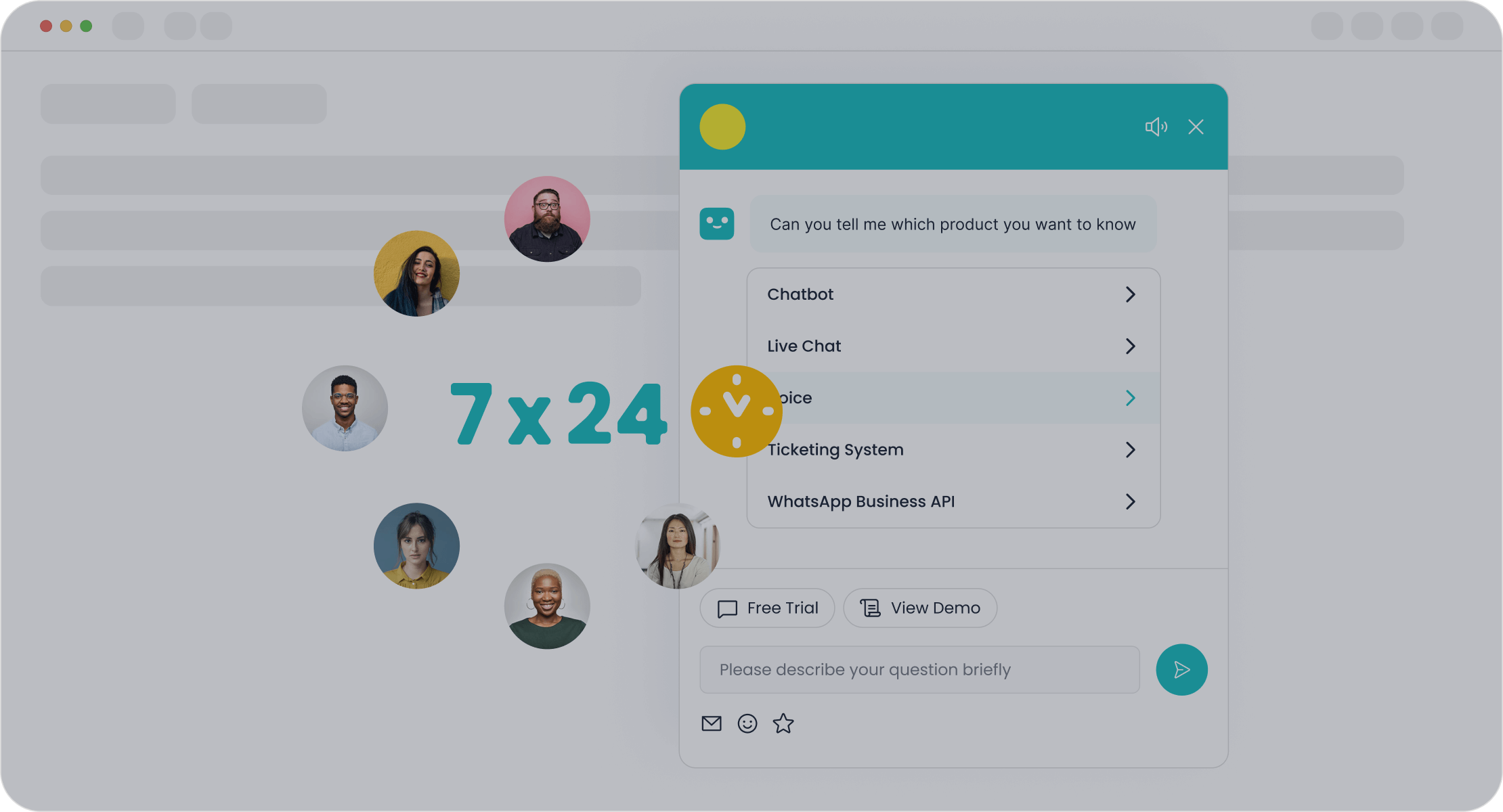
Sobot’s ecommerce customer service software brings these principles to life. Its all-in-one contact center integrates live chat, chatbot, voice, ticketing, and WhatsApp API, ensuring seamless omnichannel support. Sobot’s AI Agent and voicebot automate responses and assist agents, while the ticketing system centralizes inquiries for efficient follow-up.
Omnichannel vs. Multichannel
Omnichannel and multichannel strategies differ in how they connect customer interactions. Multichannel support offers several separate channels, but each operates independently. Omnichannel retail, by contrast, unifies all channels so customers experience a smooth journey. For example, Sobot’s platform centralizes all conversations and customer data, allowing agents to deliver consistent support across chat, email, phone, and social media. This integration improves digital customer service and ensures no information gets lost between channels.
| Feature | Omnichannel Support | Multichannel Support |
|---|---|---|
| Channel Integration | Unified and connected | Separate and siloed |
| Customer Experience | Seamless and consistent | Fragmented |
| Data Accessibility | Centralized | Dispersed |
| Personalization | High | Limited |
Key Channels for 2026
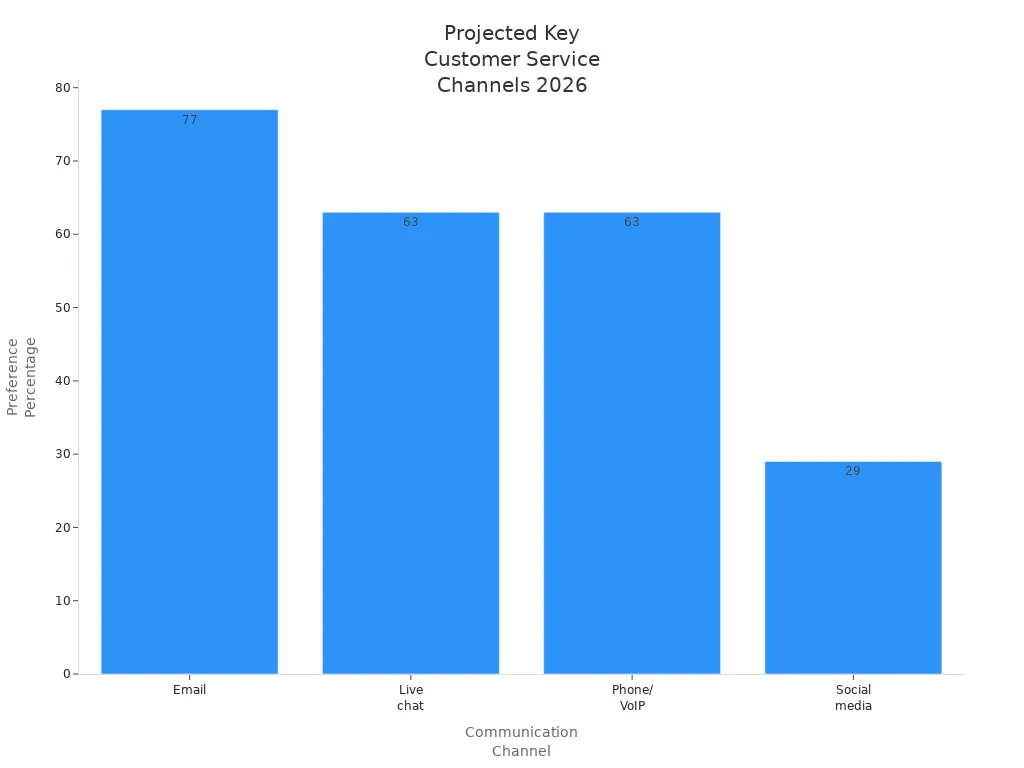
The most important channels for ecommerce customer service in 2026 will include email, live chat, phone/VoIP, and social media. Customers expect brands to support these channels and switch between them without losing context.
| Communication Channel | Percentage of Preference |
|---|---|
| 77% | |
| Live chat | 63% |
| Phone/VoIP | 63% |
| Social media | 29% |
Sobot’s ecommerce customer service software supports all these channels. Its omnichannel integration connects customers from ecommerce sites, social media, apps, emails, and SMS. AI workflows handle complex inquiries at scale, while comprehensive reporting and a human-centered design make the platform easy to use and efficient. This approach ensures brands deliver the best possible omnichannel support as customer expectations evolve.
Trends Shaping Ecommerce Customer Service in 2026
AI and Automation
The year 2026 will mark a turning point for ecommerce as several trends reshape customer service. AI-driven personalization will become the standard, with AI creating dynamic journeys that adapt to each customer’s actions. Retailers will rely on advanced chatbots and AI shopping agents to provide instant responses and guide users through the buying process. AI will streamline shopping, making it conversational and user-friendly. Brands that implement AI and automation will see higher customer satisfaction and outperform competitors. Sobot’s chatbot and AI solution exemplify this tech innovation by unifying customer profiles across chat, voice, social media, and email. The platform uses AI to understand customer intent, language, and history, ensuring seamless omnichannel support and smooth transitions to human agents when needed.
Proactive Service and Self-Service
By 2026, proactive customer support and self-service will define the customer experience. Companies will anticipate issues before they arise, reducing support tickets and increasing satisfaction. AI-driven personalization will enable businesses to offer tailored recommendations and solutions. Self-service options, such as knowledge bases and automated portals, will become essential. In fact, 84% of ecommerce teams plan to implement self-service portals by 2026. Sobot’s AI chatbot empowers customers to resolve issues independently, providing 24/7 support and freeing agents to handle complex cases. This approach not only improves efficiency but also builds trust and loyalty.
Unified Support Systems
Unified support systems will become a cornerstone of ecommerce customer service in 2026. These systems integrate all channels, allowing agents to access real-time customer data and deliver consistent experiences. The benefits include reduced costs, increased employee productivity, improved customer satisfaction, higher sales, and better employee retention rates.
| Benefit | Description |
|---|---|
| Reduced Costs | Unified systems lower operating costs and streamline customer information. |
| Increased Employee Productivity | Real-time data access helps employees resolve issues faster and handle more inquiries. |
| Improved Customer Satisfaction | Consistent experiences across channels build trust and loyalty. |
| Increased Sales | Personalized experiences across channels drive brand recognition and sales. |
| Better Employee Retention Rates | Automation and real-time data improve employee satisfaction and reduce turnover. |
Sobot’s AI solution leads this shift by integrating omnichannel support, AI-driven personalization, and self-service into a single platform. This unified approach ensures brands meet rising customer expectations and stay ahead of e-commerce trends in 2026.
Benefits of Omnichannel Support for Ecommerce
Omnichannel support has become a cornerstone of modern ecommerce customer service. Businesses that invest in unified support systems see measurable improvements in customer experience, satisfaction, and operational efficiency. Sobot’s chatbot and AI-driven solutions demonstrate how advanced technology can transform every stage of the customer journey, from initial contact to post-purchase engagement.
Seamless Customer Experience
A seamless customer experience is the foundation of successful ecommerce customer service. Omnichannel support connects every interaction, allowing customers to move between channels—such as chat, email, phone, and social media—without losing context. This approach ensures that every customer receives consistent service, regardless of how or where they reach out.
Customers expect brands to remember their preferences and history. Omnichannel support delivers on this expectation by integrating all touchpoints into a single, unified view.
The impact of seamless experiences is clear. Customers who engage with brands across multiple channels spend more and return more often. The following table highlights measurable improvements observed in ecommerce:
| Improvement Type | Description |
|---|---|
| Increased Spending | Omnichannel customers spend 4% more in-store and 10% more online than single-channel customers. |
| Higher Repeat Purchase Rates | Brands with strong omnichannel strategies see significantly higher repeat purchase rates. |
| Improved Customer Lifetime Value | Better customer engagement leads to enhanced customer lifetime value. |
| Increased Customer Satisfaction | Two-thirds of customers prioritize trust when choosing a brand, which is enhanced by omnichannel experiences. |
| Better Customer Retention | Seamless experiences create positive interactions, leading to higher retention rates. |
| Increased Sales and Traffic | Customers spend an average of 83% more in-store compared to online, leading to higher sales and traffic. |
| Better Insights | Unified customer data provides deeper insights, allowing for personalized experiences and higher engagement. |
| Enhanced Customer Experience | Customers can easily switch between channels, maintaining a consistent experience across all interactions. |
| Improved Customer Retention | A seamless experience fosters loyalty, leading to higher retention rates and repeat purchases. |
| Increased Customer Satisfaction | Omnichannel experiences lead to quicker response times and higher overall satisfaction. |
| Better Customer Retention | Consistent interactions foster loyalty, turning one-time buyers into lifelong advocates. |
| Higher Engagement Rates | 45% of firms reported better customer engagement due to omnichannel strategies. |
| Improved Customer Loyalty | 35% of firms noted improved customer loyalty as a result of omnichannel engagement. |

Sobot’s chatbot enhances the customer experience by providing 24/7 automated customer service across all channels. The chatbot’s multilingual support ensures global accessibility, while its intelligent knowledge base delivers accurate responses instantly. Customers benefit from a consistent and reliable service, which builds trust and encourages repeat business.
Faster Response and Resolution
Speed is critical in ecommerce customer service. Omnichannel support enables agents to access a complete view of each customer’s history, including past purchases and previous interactions. This real-time access allows for faster and more accurate resolutions, reducing the need for customers to repeat their issues.
Key operational efficiencies gained through omnichannel support include:
- Immediate access to customer information across all platforms.
- Reduced wait times due to interconnected digital channels.
- Built-in tools such as canned responses and internal knowledge bases that help agents resolve queries quickly.
- Self-service options that empower customers to find answers instantly.
Sobot’s chatbot plays a vital role in accelerating response times. The AI-powered system triages queries 24/7, handling regular questions and freeing human agents to focus on complex issues. This approach improves productivity by up to 70% and reduces service costs by as much as 50%. The chatbot’s seamless integration with live chat, voice, and ticketing systems ensures that every customer receives prompt and effective support.
Customers value quick resolutions and personalized service. Omnichannel support delivers both by allowing agents to view customer histories in real time and respond with relevant solutions.
Personalization and Retention
Personalization has become a top priority for ecommerce customer service. Omnichannel support enables businesses to deliver tailored experiences by leveraging unified customer data. This approach goes beyond basic personalization, moving toward hyper-personalization, where every interaction is informed by the customer’s preferences, behavior, and history.
The impact of personalized and hyper-personalized service on retention and loyalty is significant. The table below illustrates the difference in retention rates between omnichannel and single-channel strategies:
| Strategy Type | Customer Retention Rate | Purchase Rate Increase |
|---|---|---|
| Omnichannel Engagement | 89% | 287% |
| Single-Channel Campaign | 33% | N/A |
Sobot’s chatbot supports advanced personalization by integrating with customer profiles, purchase histories, and communication preferences. The system uses AI to deliver proactive recommendations, personalized shopping suggestions, and real-time intent assistance. For example, OPPO achieved an 83% chatbot resolution rate and a 57% increase in repurchase rate after implementing Sobot’s AI-driven solutions. These results demonstrate how omnichannel support and personalization drive higher customer satisfaction and loyalty.
A unified omnichannel strategy creates a consistent and convenient shopping experience across all channels, improving customer engagement and retention.
Sobot’s chatbot also offers no-code implementation, making it easy for businesses to adopt advanced support technologies. The platform’s advanced analytics and reporting provide deep insights into customer interactions, enabling continuous optimization of service and personalization strategies.
Real-World Success: Sobot and OPPO Case Study
Implementation and Results
OPPO, a global leader in smart devices, faced a surge in customer inquiries during peak shopping periods. The company needed a solution to manage high volumes and deliver consistent support. OPPO chose Sobot’s omnichannel support and AI-driven platform to transform its customer service. The implementation followed several key steps:
| Key Step | Description |
|---|---|
| AI-driven Chatbot Integration | Integrated Sobot’s AI chatbot to enhance customer support and engagement. |
| Unified Customer Data Platform | Built a single customer view to streamline data and improve personalization. |
| Channel-agnostic Journey Maps | Ensured consistent customer experiences across all channels. |
| Conversational AI with NLP | Used natural language processing for personalized interactions. |
| Predictive Analytics | Anticipated customer needs and created tailored journeys. |
| Results | Achieved an 83% chatbot resolution rate and a 57% increase in repurchase rate. |
The results were impressive. OPPO’s chatbot resolved 83% of customer queries, which reduced agent workload and improved efficiency. The company saw a 57% increase in repurchase rate, showing that satisfied customers returned more often. Customer feedback reflected high satisfaction, with a 94% positive feedback rate. The unified platform allowed agents to access customer information instantly, leading to faster resolutions and better customer feedback.
Lessons and Best Practices
OPPO’s experience with Sobot’s omnichannel support revealed several best practices for ecommerce brands:
- Start simple by focusing on key channels and expand gradually.
- Invest in agent training to reduce frustration and speed up adoption.
- Monitor analytics to identify bottlenecks and optimize processes.
- Leverage AI in stages, beginning with basic chatbot scenarios.
- Maintain a consistent brand voice in chatbot responses for a better customer experience.
These steps helped OPPO deliver seamless customer journeys and collect valuable customer feedback. The company benefited from unified multichannel access and centralized processing, which improved both efficiency and customer satisfaction. Sobot’s omnichannel support enabled OPPO to meet rising expectations and set a new standard for customer service excellence.
Overcoming Challenges and Measuring ROI in Ecommerce Customer Service
Implementation Steps
Ecommerce businesses face several challenges when adopting omnichannel support. Many marketers struggle with real-time analytics, unified profile data, and personalizing the customer experience. The following table shows the most common issues:
| Challenge | Percentage of Marketers Facing This Issue |
|---|---|
| Lack of real-time analytics | 33% |
| Lack of understanding of effective channels | 18% |
| Lack of unified profile data | 16% |
| Inability to personalize customer experience | 15.4% |
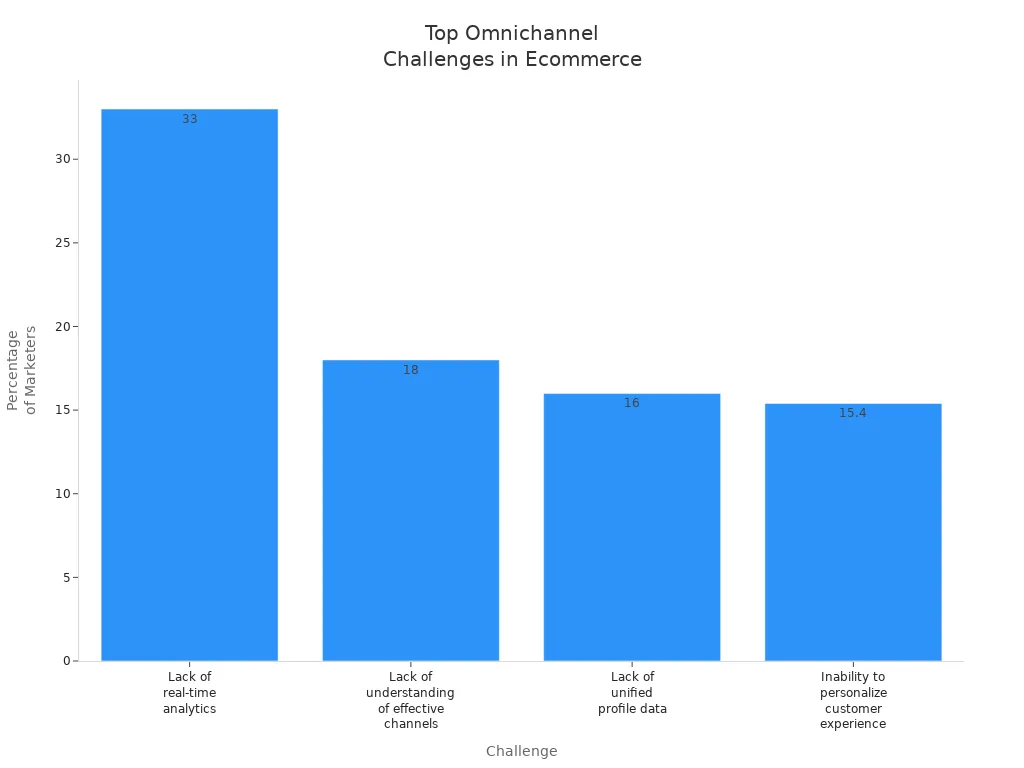
Companies also encounter difficulties in maintaining consistent customer experiences and integrating data for a unified view. Choosing the right technology partner and training representatives remain essential steps.
Sobot helps businesses overcome these challenges by automating customer service, centralizing communication channels, and enabling data-driven personalized services. The platform improves customer satisfaction scores by over 30%, boosts Net Promoter Scores by more than 35%, and increases conversion rates by over 15%.
To implement omnichannel support successfully, businesses should follow these steps:
- Know your customer through surveys and feedback.
- Train support teams in multiple communication methods.
- Choose a technology platform that integrates all service tools.
- Monitor and improve strategy using regular reviews.
Mapping the customer journey and centralizing customer data enhance service accuracy. Ongoing training ensures quality remains high.
Metrics and KPIs
Measuring ROI for omnichannel support requires tracking key metrics. The most effective KPIs include:
| Metric | Description |
|---|---|
| Customer Satisfaction (CSAT) Score | Measures customer approval through post-interaction surveys. |
| Net Promoter Score (NPS) | Assesses likelihood of customers recommending the brand. |
| Resolution Time | Calculates the average time to resolve customer issues. |
| Return on Marketing Investment | Compares revenue from marketing investments to their costs. |
| First Contact Resolution (FCR) | Tracks the percentage of issues resolved on first contact. |
| Channel Volume and Usage | Monitors which channels customers use and how they transition between them. |
Retention rate and sales numbers also indicate the effectiveness of omnichannel support. Businesses should analyze buying journey touchpoints to optimize support channels. Sobot’s unified platform enables real-time tracking of these metrics, helping companies refine their strategies and maximize ROI.
Tip: Regularly review customer satisfaction scores and Net Promoter Scores to identify areas for improvement and maintain high service standards.
Omnichannel support stands as a vital strategy for ecommerce success in 2026. Businesses unify customer service across all channels, ensuring quick access to customer data and higher satisfaction. Key benefits include seamless experiences, measurable business impact, and improved customer loyalty. Companies should assess current support channels by understanding customer expectations and preferred platforms.
| Best Practice | Description |
|---|---|
| Understand Customer Expectations | Align support with what the customer values most. |
| Identify Preferred Channels | Focus on where the customer prefers to interact. |
| Invest in Technology | Use advanced tools to improve customer service. |
| Proactive Engagement | Address customer needs before issues arise. |
| Use Metrics for Evaluation | Track customer satisfaction and service effectiveness. |
Start with phased integration and focus on customer-centric strategies. Continuous optimization, driven by feedback and AI, ensures every customer receives the best possible experience.
FAQ
What is omnichannel support in ecommerce customer service?
Omnichannel support connects all customer communication channels. It allows customers to switch between chat, email, phone, and social media without losing context. This approach ensures a smooth and consistent experience at every touchpoint.
How does omnichannel support improve response times?
Agents can view all customer interactions in one place. This access helps them answer questions faster and resolve issues quickly. Customers do not need to repeat information, which saves time and increases satisfaction.
Why is personalization important in omnichannel support?
Personalization uses customer data to tailor responses and recommendations. It helps brands understand customer behavior and preferences. This leads to higher satisfaction, loyalty, and more repeat purchases.
Can Sobot’s solutions handle multiple languages and channels?
Yes. Sobot’s platform supports many languages and channels, including chat, voice, email, and social media. The AI chatbot operates 24/7, providing consistent support for global customers.
What metrics help measure the success of omnichannel support?
Key metrics include customer satisfaction scores, Net Promoter Scores, resolution time, and first contact resolution rate. Tracking these metrics helps businesses improve service quality and customer loyalty.
See Also
Comprehensive Overview Of Omnichannel Software For Call Centers
Step-By-Step Process To Deploy Omnichannel Contact Center Systems
Ways Live Chat Tools Increase Sales For Ecommerce Businesses
Enhancing Ecommerce Customer Experience Through Effective Chatbots

