What Are Net Promoter Score Surveys Designed to Achieve

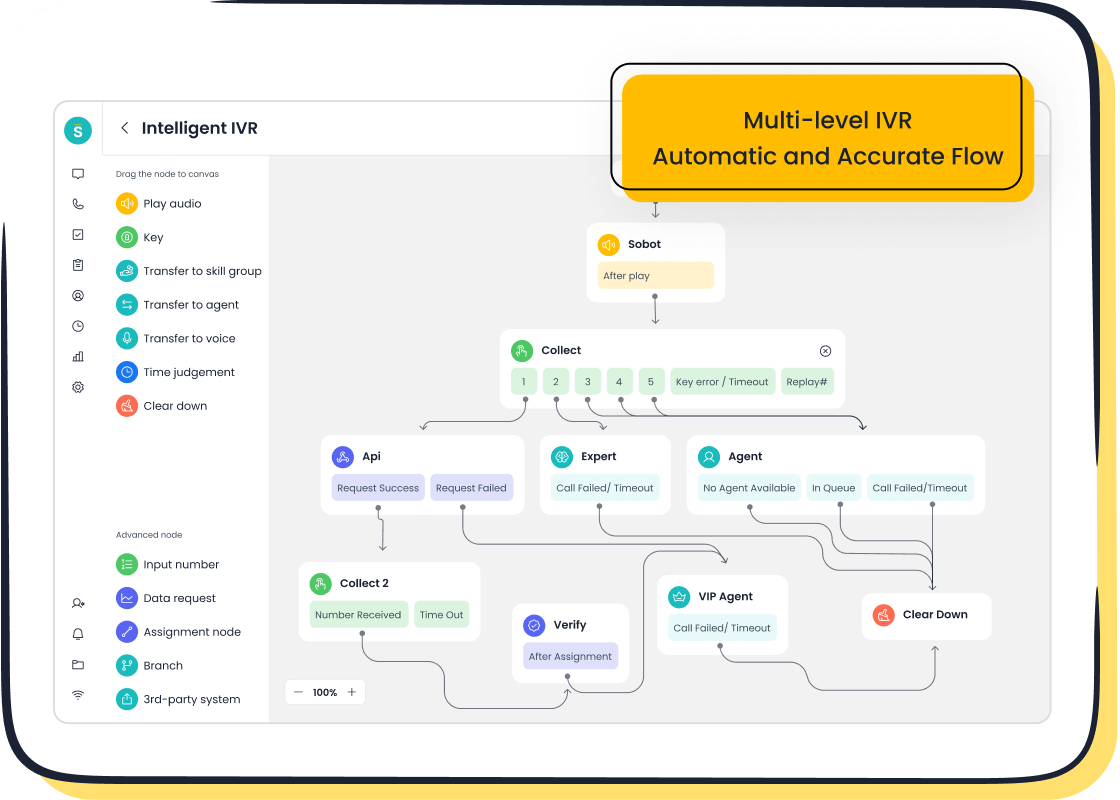
Net Promoter Score (NPS) surveys help you understand how customers feel about your business. By asking net promoter score survey questions, you can measure customer loyalty and satisfaction. These surveys uncover areas where your service or product can improve. Research shows that a 5% increase in customer retention can boost profits by up to 95%, highlighting the importance of loyalty. Companies like Sobot use these surveys to gather feedback and refine their customer experience strategies. With tools like Sobot's Voice/Call Center, businesses can act on insights to build stronger relationships and foster long-term loyalty.
What Are Net Promoter Score Surveys?
Definition of NPS Surveys
Net Promoter Score surveys are tools designed to measure customer loyalty and satisfaction. These surveys ask a simple yet powerful question: "How likely are you to recommend [product or company name] to a friend or colleague?" This question helps businesses understand how customers perceive their brand. By analyzing responses, you can identify loyal customers, those who are indifferent, and those who may be dissatisfied.

NPS surveys are widely used because they provide a clear and actionable metric. They simplify the process of gauging customer sentiment, making it easier for you to track trends over time. Companies like Sobot use these surveys to refine their customer engagement strategies. For example, Sobot's Voice/Call Center integrates seamlessly with NPS tools, enabling businesses to collect feedback during or after customer interactions. This integration ensures that every customer voice is heard and acted upon.
Structure of NPS Surveys
The structure of an NPS survey is straightforward yet effective. It typically consists of two key components:
- The Fundamental Question: This is the core of the survey. It asks customers to rate their likelihood of recommending your business on a scale from 0 to 10.
- Follow-up Questions: These are open-ended questions that allow customers to explain their scores. For instance, you might ask, "What influenced your score?" or "How can we improve your experience?"
Timing also plays a crucial role in the effectiveness of NPS surveys. Sending surveys immediately after a customer interaction, such as a support call or a purchase, can yield more accurate and relevant feedback.
| Key Element | Description |
|---|---|
| Fundamental Question | A simple question to gauge likelihood of recommendation, e.g., 'How likely are you to recommend [product or company name] to a friend or colleague?' |
| Follow-up Questions | Open-ended questions to gather qualitative insights, such as 'Please provide a reason for your score?' |
| Timing of Survey | Importance of deploying surveys at the right time to enhance response quality, e.g., immediately after an interaction for transactional surveys. |

Sobot's solutions, such as its AI-powered Voicebot, can automate the process of collecting and analyzing NPS survey data. This ensures that your team can focus on implementing improvements rather than managing the logistics of feedback collection.
The Scoring System: Promoters, Passives, and Detractors
The NPS scoring system categorizes respondents into three groups based on their ratings:
- Promoters (9-10): These are your most loyal customers. They are likely to recommend your business and contribute to positive word-of-mouth marketing.
- Passives (7-8): These customers are satisfied but not enthusiastic. They are unlikely to actively promote your brand and could be swayed by competitors.
- Detractors (0-6): These individuals are dissatisfied and may discourage others from engaging with your business.
To calculate the net promoter score, subtract the percentage of detractors from the percentage of promoters. For example, if 50% of respondents are promoters, 30% are passives, and 20% are detractors, your NPS would be 30 (50% - 20%).
- In a scenario with 50% Promoters, 30% Passives, and 20% Detractors, with a population size of 5,000 and a response rate of 20%, the number of respondents is 1,000.
- The calculated NPS score would be 30 (50% - 20%).
- The margin of error for this score is +/- 2.5, indicating that 95% of the time, the NPS would fall between 25 and 35 if the study were repeated.
| Statistical Factor | Description |
|---|---|
| Population size | Larger populations provide more stable and reliable NPS scores, reducing the impact of individual opinions. |
| Response rate | Higher response rates yield a more representative sample, enhancing the reliability of NPS results. |
| Margin of error | Indicates the accuracy of results; a smaller margin means more precise results, requiring a larger sample size. |
| Confidence level | Reflects the probability that the population parameter falls within the margin of error, typically set at 95%. |
| Standard deviation | Measures the variability of responses; a high standard deviation indicates less stable NPS scores. |
By understanding these categories and metrics, you can pinpoint areas for improvement and prioritize actions that enhance customer satisfaction. Sobot's unified workspace, part of its Voice/Call Center, provides real-time insights into customer feedback, helping you address concerns promptly and effectively.
Purpose of Net Promoter Score Surveys
Measuring Customer Satisfaction and Loyalty
Net Promoter Score (NPS) surveys are essential tools for understanding how satisfied your customers are and how loyal they feel toward your brand. By asking a simple question about their likelihood of recommending your business, you gain a clear picture of their overall experience. This insight helps you identify areas where your service or product excels and where it needs improvement.
Studies show a strong link between NPS results and customer satisfaction indicators. For example, research by Keiningham et al. (2007) and de Haan et al. (2015) highlights that while NPS has a lower correlation with satisfaction metrics, it still provides valuable insights into customer sentiment.
| Study | NPS Correlation | Satisfaction Correlation |
|---|---|---|
| Keiningham et al. 2007 | Lower (R-square) | Higher (R-square) |
| de Haan et al. 2015 | r = 0.17 | r = 0.18 |

Sobot's Voice/Call Center can enhance this process by integrating NPS surveys directly into customer interactions. For instance, after a call, you can automatically send a survey to collect feedback. This approach ensures you capture real-time insights, helping you improve customer satisfaction and loyalty effectively.
Predicting Business Growth
NPS surveys are not just about measuring satisfaction; they also help you predict future business growth. Loyal customers, often categorized as promoters, are more likely to make repeat purchases and recommend your brand to others. This behavior directly impacts your revenue and market share.
Research supports the predictive power of NPS. For instance, Marsden et al. (2005) found a positive correlation between NPS and sales growth (r = .48). Similarly, Pingitore et al. (2007) reported strong links between NPS and various business metrics. However, not all studies agree. Keiningham et al. (2007) found no correlation with historical revenue growth, emphasizing the need to use NPS alongside other metrics for a comprehensive view.
| Study | Findings | Correlation |
|---|---|---|
| de Haan et al. (2015) | NPS predicts future customer retention | r = .17 |
| Marsden et al. (2005) | Positive correlation with sales growth | r = .48 |
| Pingitore et al. (2007) | Strong correlations with business metrics | N/A |
| Keiningham et al. (2007) | No correlation with historical revenue growth | N/A |
| Morgan and Rego (2006) | No correlation with future business measures | N/A |
| van Doorn et al. (2013) | Correlated with 2008 sales growth but not future metrics | r = .46 |
Using tools like Sobot's AI-powered Voicebot, you can gather and analyze NPS data efficiently. This allows you to identify trends and make data-driven decisions that align with your growth objectives.
Benchmarking Against Competitors
NPS surveys also allow you to benchmark your performance against competitors. By comparing your NPS score with industry averages, you can identify whether your customer experience meets, exceeds, or falls short of expectations. Companies with higher NPS scores often experience faster growth and better revenue performance, making this metric a valuable competitive tool.
| Evidence | Description |
|---|---|
| NPS Comparison | Enables businesses to compare scores against industry benchmarks. |
| Performance Impact | High NPS scores correlate with faster growth and better revenue performance. |
For example, if your NPS score is below the industry average, it signals a need for improvement. Sobot's unified workspace can help you address this by consolidating customer feedback and providing actionable insights. This ensures you stay ahead of competitors by continuously enhancing your customer experience.
Gathering Actionable Customer Feedback
Gathering actionable feedback is one of the most valuable outcomes of using NPS surveys. When you ask customers to share their thoughts, you gain insights that can directly influence your business strategies. This feedback helps you understand what works well and what needs improvement. By acting on these insights, you can enhance customer satisfaction and build stronger relationships.
Why Actionable Feedback Matters
Actionable feedback provides you with specific details about your customers' experiences. For example, if a customer rates your service as a 6 and mentions long wait times, you know exactly where to focus your efforts. This type of feedback goes beyond general opinions. It gives you clear directions for improvement. Studies show that businesses that act on customer feedback see a 10-15% increase in customer retention rates. Retaining customers is crucial because loyal customers are more likely to recommend your brand, boosting your net promoter score.
How NPS Surveys Help Collect Feedback
NPS surveys are designed to make feedback collection simple and effective. The open-ended follow-up question, such as "What influenced your score?" encourages customers to share detailed responses. These responses often highlight specific pain points or areas of excellence. For instance, a detractor might mention poor communication, while a promoter could praise your fast response times. Both types of feedback are equally important for growth.
Sobot's Voice/Call Center integrates seamlessly with NPS tools to streamline this process. After a call, you can automatically send a survey to collect feedback. The platform's AI-powered Voicebot can even analyze responses in real-time, helping you identify trends and prioritize improvements. This ensures that no feedback goes unnoticed.
Converting Passives to Promoters
One of the most impactful uses of NPS feedback is converting passives to promoters. Passives, who rate your business a 7 or 8, are satisfied but not enthusiastic. They represent an opportunity for growth. By addressing their concerns, you can turn them into loyal advocates. For example, if passives frequently mention a lack of personalized service, you can implement changes to address this issue. Sobot's unified workspace allows you to track these trends and take targeted actions, improving customer loyalty over time.
Tips for Acting on NPS Feedback
To make the most of your NPS feedback, follow these best practices:
- Categorize Responses: Group feedback into themes like product quality, customer service, or pricing.
- Prioritize Issues: Focus on the areas that impact customer satisfaction the most.
- Close the Loop: Reach out to customers who provided feedback. Let them know how you're addressing their concerns.
- Monitor Progress: Use tools like Sobot's analytics dashboard to track improvements over time.
By following these steps, you can transform raw feedback into actionable insights. This not only improves your net promoter score but also strengthens your relationship with customers.
Real-World Example: Samsung's Success with Sobot
Samsung's collaboration with Sobot demonstrates the power of actionable feedback. By using Sobot's all-in-one contact center solution, Samsung unified its communication channels and improved data connectivity. This allowed the company to gather detailed feedback from customers across multiple touchpoints. As a result, Samsung achieved a 97% customer satisfaction rate and a 30% increase in agent efficiency. This example highlights how acting on feedback can lead to measurable improvements in customer satisfaction and loyalty.
Tip: Always treat feedback as a gift. It provides you with the opportunity to improve and show customers that their opinions matter.
How NPS Surveys Achieve Their Purpose
Identifying Customer Sentiment Trends
NPS surveys help you uncover trends in customer sentiment, which can guide your business decisions. By analyzing responses, you can identify recurring themes in customer feedback. For example, if detractors frequently mention long delivery times, this signals a logistics issue that needs attention. Similarly, engaging with passive customers can reveal barriers to loyalty, such as unclear communication or limited personalization. Addressing these concerns can significantly improve the customer experience.
When you identify trends, you can take targeted actions that lead to measurable results. Businesses that act on sentiment analysis often see enhanced customer loyalty and better product development. For instance, feedback from promoters can highlight what customers love about your brand, allowing you to amplify those strengths. Sobot’s Voice/Call Center makes this process seamless by integrating NPS surveys into customer interactions. The platform’s real-time analytics help you spot trends quickly, ensuring no insight goes unnoticed.
Prioritizing Feedback for Targeted Improvements
Not all feedback carries the same weight. NPS surveys allow you to prioritize issues that have the greatest impact on customer satisfaction. For example, if multiple detractors mention poor customer support, addressing this should become a top priority. On the other hand, feedback from promoters can guide you in refining what already works well.
Sobot’s unified workspace simplifies this process. By consolidating survey responses and customer data, it helps you categorize feedback into actionable themes. This ensures your team focuses on improvements that matter most. For instance, if passives frequently mention a lack of follow-up after support calls, you can implement automated follow-ups using Sobot’s AI-powered Voicebot. This targeted approach not only improves your NPS but also strengthens customer relationships.
Driving Customer-Centric Decision-Making
NPS surveys empower you to make decisions that put customers at the center of your strategy. By understanding what drives loyalty and dissatisfaction, you can align your business goals with customer needs. For example, if your NPS data shows that customers value quick responses, you can invest in tools that enhance response times.
Sobot’s Voice/Call Center is designed to support customer-centric strategies. Its intelligent call routing ensures customers reach the right agent quickly, while its analytics dashboard provides insights into customer sentiment. These features enable you to make informed decisions that enhance the customer experience. When you prioritize customer needs, you build trust and loyalty, which ultimately drives long-term growth.
Enhancing Customer Retention and Advocacy
Customer retention plays a vital role in sustaining business growth. Loyal customers not only continue purchasing but also advocate for your brand. Net promoter score surveys help you identify ways to improve retention and turn satisfied customers into enthusiastic promoters. By analyzing nps data, you can uncover patterns that reveal what keeps customers loyal and what drives them away.
Promoters, identified through nps surveys, are your most valuable advocates. They actively recommend your business, boosting word-of-mouth marketing. Studies show that referred customers are 18% more likely to stay loyal compared to non-referred ones. To maximize advocacy, focus on enhancing the experiences that promoters already love. For example, if customers praise your fast response times, invest in tools like Sobot’s Voice/Call Center to maintain and improve this strength. Its intelligent call routing ensures quick resolutions, which can further increase customer satisfaction.
Retention strategies often involve addressing detractors and passives. Detractors highlight areas needing improvement, such as slow service or unclear communication. Passives, while satisfied, lack enthusiasm. By acting on feedback from these groups, you can convert them into promoters. For instance, if passives mention a lack of personalized service, Sobot’s AI-powered Voicebot can help. It provides tailored interactions, making customers feel valued and appreciated.
Advocacy grows when customers feel heard. Following up on nps feedback shows you care about their opinions. For example, Samsung achieved a 97% satisfaction rate by using Sobot’s unified workspace to act on customer insights. This approach not only improved retention but also strengthened advocacy, proving the power of listening and responding effectively.
Tip: Use net promoter score surveys regularly to track progress and refine your strategies. Retention and advocacy thrive when you consistently act on customer feedback.
Best Practices for Effective NPS Surveys
Timing Your Surveys for Maximum Impact
The timing of your surveys plays a critical role in achieving high response rates and collecting meaningful feedback. Sending surveys at the right moment ensures that customers provide accurate and relevant insights based on their recent experiences. For example, in ecommerce, sending a survey one week after a transaction allows customers to test the product and share informed opinions. Similarly, for telephone support, sending a survey within ten minutes of resolving an issue captures fresh and precise feedback.
For B2C businesses, surveys sent on Thursdays and Fridays often see a 3% increase in response rates. On the other hand, B2B customers respond best to quarterly surveys, which can improve retention by 5.2%. By aligning your survey timing with these patterns, you can maximize the quality and quantity of responses. Sobot’s Voice/Call Center can automate survey distribution, ensuring they reach customers at the optimal time for actionable insights.
Using Open-Ended Questions for Deeper Insights
Open-ended questions are a cornerstone of effective NPS surveys. They encourage customers to share detailed feedback, offering insights that closed-ended questions might miss. For instance, asking, “What influenced your score?” allows customers to elaborate on their experiences, whether positive or negative. This type of feedback helps you understand customer sentiments and preferences on a deeper level.
Detailed responses from open-ended questions are invaluable for making informed business decisions. They highlight specific areas for improvement and reveal what customers value most about your brand. Sobot’s AI-powered Voicebot can analyze these responses in real-time, identifying trends and recurring themes. This ensures you can act quickly on customer feedback to enhance satisfaction and loyalty.
Following Up with Customers After Surveys
Following up with customers after they complete a survey demonstrates that you value their feedback. It also provides an opportunity to address concerns and strengthen relationships. For example, if a detractor mentions a specific issue, reaching out to resolve it can turn their negative experience into a positive one. Similarly, thanking promoters for their support reinforces their loyalty and encourages advocacy.
Closing the feedback loop is a key aspect of NPS best practices. Sobot’s unified workspace simplifies this process by consolidating survey responses and customer data. This allows your team to prioritize follow-ups and ensure no feedback goes unnoticed. By taking action on survey results, you show customers that their opinions matter, fostering trust and long-term loyalty.
Analyzing and Acting on NPS Data
Analyzing Net Promoter Score (NPS) data helps you uncover actionable insights that can transform your customer experience. By breaking down survey responses, you can identify patterns and prioritize improvements that matter most to your customers. Acting on this data ensures your strategies for improving net promoter score are effective and customer-focused.
Steps to Analyze NPS Data
- Categorize Responses: Group feedback into themes like product quality, customer service, or pricing. This helps you pinpoint areas needing attention.
- Identify Trends: Look for recurring issues or praises. For example, if detractors frequently mention long wait times, this signals a need for faster service.
- Segment Feedback: Analyze responses by customer demographics or purchase history. This reveals how different groups perceive your brand.
Sobot’s Voice/Call Center simplifies this process. Its analytics dashboard organizes survey data into clear categories, allowing you to focus on actionable insights. For instance, if passives mention a lack of follow-up, you can implement automated follow-ups using Sobot’s AI-powered Voicebot.
Turning Insights into Action
Once you’ve analyzed the data, take steps to address customer concerns and enhance their experience. Here’s how:
- Prioritize Improvements: Focus on issues that impact satisfaction the most. For example, if detractors highlight poor communication, invest in tools that improve response times.
- Close the Feedback Loop: Reach out to customers who provided feedback. Let them know how you’re addressing their concerns.
- Monitor Progress: Track changes in your NPS score to measure the effectiveness of your actions.
Sobot’s unified workspace helps you act on feedback efficiently. It consolidates survey responses and customer data, enabling your team to prioritize follow-ups and monitor improvements. For example, Samsung used Sobot’s solutions to address customer concerns, achieving a 97% satisfaction rate and a 30% increase in agent efficiency.
Tip: Treat every piece of feedback as an opportunity to improve. Customers appreciate when their voices lead to meaningful changes.
Real-World Example: Enhancing Customer Retention
Analyzing NPS data can reveal strategies for improving net promoter score and customer retention. For instance, promoters often praise fast service. By investing in tools like Sobot’s intelligent call routing, you can maintain this strength and turn passives into promoters. Studies show that referred customers are 18% more likely to stay loyal, highlighting the importance of advocacy.
By acting on NPS insights, you not only improve your score but also strengthen customer relationships. This approach drives long-term growth and positions your brand as customer-centric.
Applications of NPS Surveys in Business

Improving Customer Support and Success with Sobot
Net Promoter Score surveys play a vital role in improving customer support and success. By collecting feedback after customer interactions, you can identify areas where your service excels and where it needs improvement. For example, American Express uses NPS surveys to assess service quality after customer interactions. This approach has led to higher scores and improved retention rates. Similarly, Symantec achieved a 13-point improvement in support satisfaction and reduced support costs by 30% after implementing NPS surveys.
Sobot’s Voice/Call Center enhances this process by integrating surveys directly into customer interactions. After a call, you can automatically send a survey to gather feedback. The platform’s AI-powered Voicebot analyzes responses in real-time, helping you identify trends and prioritize improvements. This ensures your team focuses on what matters most to customers, driving satisfaction and loyalty.
Enhancing Ecommerce Customer Experiences
In ecommerce, NPS surveys help you understand how customers perceive their shopping experience. By sending surveys after purchases, you can gather insights into delivery speed, product quality, and overall satisfaction. Companies like Amazon use NPS surveys to refine their customer experience, achieving high scores that reflect positive customer perception.
Sobot’s solutions can elevate your ecommerce operations. For instance, its unified workspace consolidates survey responses and customer data, making it easier to act on feedback. If customers mention slow delivery times, you can address this issue promptly. By improving these touchpoints, you enhance the overall shopping experience and build stronger relationships with your customers.
Optimizing Call Center Operations with Sobot Voice/Call Center
Call centers benefit significantly from NPS surveys. These surveys reveal how customers feel about their interactions with agents, helping you identify areas for improvement. Apple Inc. uses NPS surveys in customer support interactions, leading to strong loyalty and repeat purchases. Tesla leverages NPS surveys to gauge customer enthusiasm, creating a passionate referral network.
Sobot’s Voice/Call Center optimizes call center operations by integrating NPS surveys seamlessly. Its intelligent call routing ensures customers reach the right agent quickly, reducing wait times. The platform’s analytics dashboard organizes survey data into actionable insights, allowing you to prioritize improvements. For example, if detractors mention unclear communication, you can train agents to provide clearer responses. This targeted approach improves customer satisfaction and strengthens loyalty.
Building Long-Term Customer Relationships
Building long-term customer relationships requires consistent effort and a deep understanding of your audience. Net Promoter Score (NPS) surveys provide a reliable way to gather insights into what your customers value most. By acting on this feedback, you can create experiences that keep customers coming back.
Loyal customers are more than repeat buyers. They become advocates for your brand, sharing positive experiences with others. Research from Bain & Company shows that increasing customer retention rates by just 5% can boost profits by 25% to 95%. This highlights the importance of nurturing loyalty. NPS surveys help you identify promoters—those most likely to recommend your business—and understand what drives their satisfaction.
To strengthen relationships, focus on addressing the concerns of detractors and passives. For example, if customers mention slow response times, tools like Sobot’s Voice/Call Center can help. Its intelligent call routing ensures customers connect with the right agent quickly, improving their experience. Additionally, Sobot’s AI-powered Voicebot personalizes interactions, making customers feel valued.
Following up on survey feedback is another critical step. When you address concerns or thank customers for their input, you show that their opinions matter. This builds trust and fosters loyalty. For instance, Samsung achieved a 97% satisfaction rate by using Sobot’s solutions to act on customer insights. This demonstrates how listening and responding effectively can lead to measurable improvements.
By leveraging NPS surveys and tools like Sobot’s unified workspace, you can create a customer experience that prioritizes loyalty. Over time, these efforts translate into stronger relationships and sustainable growth.
Tip: Regularly review your NPS data to track progress and refine your strategies. Consistency is key to building lasting customer connections.
Net Promoter Score surveys give you a clear view of customer loyalty and satisfaction. These surveys uncover actionable insights that help you improve experiences and drive growth. By using tools like Sobot's Voice/Call Center, you can collect feedback efficiently and act on it to strengthen relationships. For example, Samsung achieved a 97% satisfaction rate by leveraging Sobot’s solutions. When you follow best practices, NPS surveys become a powerful tool for fostering long-term loyalty and enhancing business success.
FAQ
What is the ideal frequency for sending NPS surveys?
You should send NPS surveys quarterly or after key customer interactions, such as purchases or support calls. This timing ensures you capture fresh feedback while avoiding survey fatigue. For example, Sobot's Voice/Call Center can automate survey scheduling, helping you maintain consistency and collect actionable insights efficiently.
How can NPS surveys improve customer loyalty?
NPS surveys identify what drives customer satisfaction and dissatisfaction. By acting on this feedback, you can address pain points and enhance experiences. For instance, Sobot’s AI-powered Voicebot personalizes interactions, making customers feel valued. This approach strengthens loyalty and encourages repeat business.
Can NPS surveys predict business growth?
Yes, NPS surveys reveal customer loyalty trends, which correlate with revenue growth. Promoters often make repeat purchases and recommend your brand. Research shows a 5% increase in retention can boost profits by up to 95%. Tools like Sobot’s analytics dashboard help you analyze NPS data to forecast growth.
What is a good Net Promoter Score?
A good NPS varies by industry. Generally, scores above 50 indicate strong customer loyalty. For example, companies like Samsung achieved a 97% satisfaction rate using Sobot’s solutions, showcasing how effective tools can elevate your score and customer experience.
How does Sobot simplify NPS survey management?
Sobot’s Voice/Call Center integrates NPS surveys into customer interactions. Its AI-powered Voicebot automates feedback collection and analysis. The unified workspace consolidates responses, enabling you to act on insights quickly. This streamlined process improves customer satisfaction and boosts your Net Promoter Score.
See Also
Comparative Analysis of Leading Customer Feedback Tools
Enhancing Call Center Efficiency Through Effective Monitoring
Best Customer Feedback Software Options for 2024

