AI Agent Trainers for Support Teams


Support managers face a constant challenge. You must scale high-quality agent training in a fast-paced world. Consistent onboarding and continuous training are difficult to manage. This is where AI agent trainers can transform your team's development.
Think of an AI trainer as a digital mentor. It provides personalized, scalable learning for every agent. This AI-powered training ensures your team is always prepared.
This guide explores the necessity of AI Agent trainers in customer support. We will show how platforms like Sobot use AI to improve onboarding and skill development. This AI approach makes training efficient and effective.
The Necessity of AI Agent Trainers in Customer Support

Understanding the necessity of AI agent trainers in customer support helps you see their value. Traditional training methods often use a one-size-fits-all approach. This can be inefficient. AI-powered training, however, offers a personalized and scalable solution. The necessity of AI agent trainers in customer support comes from the need for consistent, high-quality training that adapts to each agent. An AI system provides this adaptive learning experience. This highlights the necessity of AI agent trainers in customer support for modern teams. You can build a more skilled and confident team with the right AI tools. The necessity of AI agent trainers in customer support is clear when you want to improve performance across the board. The necessity of AI agent trainers in customer support is about making training smarter, not harder.
Defining the Modern AI Trainer
A modern AI trainer is more than just software. It is a sophisticated system designed to teach and refine AI models for better interactions. This AI trainer analyzes how users communicate and continuously improves the AI assistant's understanding. The goal is to make the AI a genuinely useful tool for your agents. This ongoing training ensures the AI provides relevant support during customer conversations, making it an essential part of your team's development process. This AI training is crucial for success.
Core Technologies: NLP and Machine Learning
Two core technologies power this advanced training: Natural Language Processing (NLP) and Machine Learning (ML). These technologies are central to how the AI works.
- Natural Language Processing (NLP) allows the AI to understand and generate human language. It analyzes agent input during training simulations, understands the context, and even detects sentiment. This enables the AI to have natural, human-like conversations.
- Machine Learning (ML) is the brain behind the personalization. The AI uses ML to learn from data. It assesses agent performance in real-time and adapts the training content to focus on specific weaknesses, creating a unique learning path for everyone.
Key Functions: Role-Play and Analytics
The AI trainer performs two key functions: role-play simulations and performance analytics. AI-driven role-plays offer a safe, risk-free environment for agents to practice. They can handle difficult customer scenarios without real-world pressure. The AI simulates realistic conversations, providing instant feedback. After the training, the AI provides detailed analytics. It tracks metrics like resolution time and identifies knowledge gaps. This data helps you understand where your team needs more training and support.
Core Benefits of AI in Agent Training

Integrating AI into your agent training program offers significant advantages. You can transform how your team learns and grows. This leads to a better employee experience and higher customer satisfaction. AI makes your training efforts more effective and efficient.
Achieving Training Scalability
Scaling your training program is a major challenge. AI provides a powerful solution. An AI training system allows you to deliver consistent onboarding and continuous learning to your entire team, no matter its size.
With AI, you can support thousands of agents across different locations at the same time. This ensures everyone receives the same high-quality training.
This scalability is possible because AI can:
- Deliver personalized learning modules to each agent.
- Use analytics to track progress and refine training strategies.
- Automate assessments to reduce administrative work.
This approach ensures your training scales without losing its impact, improving the overall employee experience.
Personalizing Agent Learning Paths
One-size-fits-all training is not effective. AI enables true personalization in learning. The AI system analyzes an agent's performance during simulations. It identifies specific areas for improvement. For example, if an agent struggles with empathy, the AI provides more training scenarios focused on emotional intelligence. This creates a unique, personalized journey for each team member. This level of personalization ensures that training time is spent on developing the skills that matter most, which boosts customer satisfaction and the employee experience.
Reducing New Hire Ramp-Up Time
A long onboarding process costs you time and money. AI significantly shortens the time it takes for new hires to become productive. AI-powered onboarding simulations give new agents a safe space to practice. They can handle realistic customer scenarios without any risk. This hands-on training builds confidence quickly. The AI provides instant feedback during the employee onboarding process, accelerating the learning curve. Faster onboarding means your agents can start delivering an excellent customer experience sooner, improving customer satisfaction from day one.
Boosting Performance with Real-time Feedback
Continuous improvement is key to a great customer experience. AI provides agents with real-time feedback during live interactions. This AI guidance helps them handle difficult conversations more effectively. Studies show that companies using real-time AI feedback see major gains. Agent productivity can increase by as much as 25%. This constant support helps agents build skills and confidence on the job. Better performance directly leads to higher customer satisfaction. This AI-driven training and feedback loop creates a cycle of continuous learning and improvement.
Practical Use Cases for AI in Agent Training
Theory is important, but practical application is where AI transforms your training program. You can use AI in specific, high-impact ways to build a more skilled and efficient support team. These use cases move beyond simple automation. They create dynamic learning environments that improve both agent performance and the overall customer experience.
AI-Powered Customer Onboarding Simulations
New agents need a safe space to practice. AI-powered customer onboarding simulations provide exactly that. These simulations are realistic role-playing scenarios where agents interact with an AI "customer." This allows them to handle difficult questions and complex issues without risking real customer satisfaction.
You can create highly specific training situations. For example, you can simulate an angry customer, a technical support query, or a sales inquiry. The AI responds dynamically based on the agent's input. This builds confidence and competence before they ever take a live call or chat.
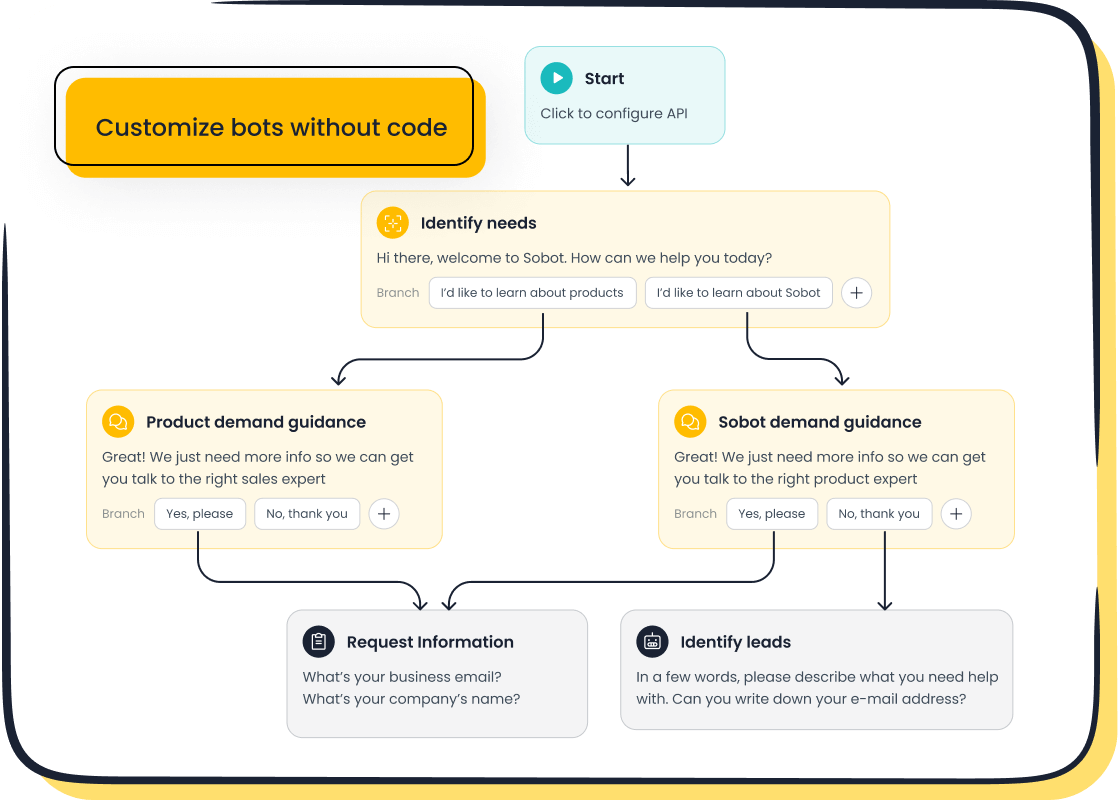
Tip: Modern AI tools make this process simple. Platforms like the Sobot AI Chatbot let you build these training simulations with a no-code, point-and-click interface. You can create realistic scenarios across different channels, like WhatsApp or SMS, to prepare your team for a true omnichannel environment. This makes AI-powered customer onboarding a practical reality for any manager.
This hands-on training is a core part of an effective onboarding program. It accelerates learning and ensures your customer onboarding agents are ready for any challenge, boosting the customer experience from day one.
Driving Efficiency with Onboarding Automation
Onboarding involves more than just skill training. It includes many administrative tasks that consume valuable time. Onboarding automation uses AI to handle these repetitive duties. This frees up your HR team and managers to focus on the human side of onboarding. This automation is key to a scalable training process.
AI-driven onboarding automation can:
- Automate administrative work: The system can handle tasks like pre-filling forms and managing e-signatures. AI chatbots can also answer common new-hire questions about company policy or benefits, providing 24/7 support.
- Personalize the learning journey: AI uses employee data like job role and experience to create a tailored onboarding path. This ensures every new agent receives the most relevant information and training for their specific position.
- Deliver timely information: The AI provides new hires with the right content at the right time. This helps them quickly understand the company's mission and their role within it.
This level of onboarding automation creates a smooth and efficient process. For instance, some companies have used AI assistants to reduce onboarding time by several days. This smart automation ensures a consistent, high-quality onboarding experience for everyone, which is essential for improving customer satisfaction and the long-term customer experience. The right onboarding automation strategy enhances the entire training journey.
Delivering Continuous Micro-trainings
Training should not stop after onboarding. Continuous learning is vital for keeping your team's skills sharp. AI excels at delivering micro-trainings. These are short, focused learning modules that agents can complete in just a few minutes. This approach respects their busy schedules while reinforcing key concepts.
This AI-driven training approach includes several effective methods:
- Diagnostic branching: The AI uses short quizzes to see what an agent already knows. It then guides them to the lessons they truly need.
- Resource recommendation: Based on an agent's real-time performance, the AI suggests helpful articles, videos, or exercises.
- Interactive coaching: The AI engages agents through conversational practice. It offers hints and asks questions to guide them toward the correct answer.
This form of automation ensures that training is always relevant and accessible. An agent who struggles with a specific product feature might receive a five-minute tutorial right after a difficult customer interaction. This just-in-time training helps close knowledge gaps instantly, leading to a better customer experience and higher customer satisfaction.
Identifying and Coaching Knowledge Gaps
You cannot fix a problem you do not see. AI gives you the vision to identify specific knowledge gaps in your team. AI analytics tools can evaluate 100% of customer interactions, including calls and chats. This provides unbiased and comprehensive insights that are impossible to achieve with manual reviews.
The AI analyzes conversations for key metrics like sentiment, empathy, and resolution effectiveness. This data-driven approach allows you to move from guessing to knowing.
| Feature | AI-Powered Approach |
|---|---|
| Knowledge Gap Identification | AI analyzes customer interactions to pinpoint specific areas where agents struggle. |
| Performance Tracking | The system automatically evaluates all calls, providing consistent performance metrics. |
| Coaching Insights | AI generates coaching recommendations from real conversations for targeted training. |
| Real-Time Feedback | It offers immediate feedback on agent performance, enhancing learning opportunities. |
Once a gap is identified, the AI acts as a coaching partner. For example, if the AI detects that many agents are struggling with questions about a new return policy, it can:
- Flag the trend for managers.
- Cross-reference the issue with your existing knowledge base, built from sources like PDFs and articles on platforms like Sobot.
- Recommend the creation of a new knowledge base article or a micro-training module on the topic.
- Deliver that training automatically to the agents who need it most.
This cycle of analysis, identification, and targeted coaching creates a culture of continuous improvement. It ensures your customer onboarding agents and veteran team members always have the knowledge they need. This proactive approach to training and automation directly improves customer satisfaction and the overall customer experience.
A Step-by-Step Guide to Implementation
Adopting an AI trainer for your support team is a strategic move. A clear plan ensures a smooth transition and maximizes your return on investment. This guide provides a four-step roadmap to help you successfully implement AI into your agent training process. Following these steps will help you build a more efficient and effective team.
Step 1: Assess Your Team's Training Goals
Before you choose any tool, you must first understand what you want to achieve. A clear assessment of your training goals will guide your entire implementation strategy. You need to define how AI aligns with your overall business objectives. This ensures your AI initiatives deliver measurable value.
Start by evaluating your team's current state using an AI Readiness Framework. This structured approach helps you look at key areas:
- Strategy: How will AI training support your long-term business goals, like improving customer satisfaction or reducing costs?
- Data: Do you have quality data from customer interactions that an AI can learn from?
- Talent: What are the current skill levels of your agents? Where are the knowledge gaps?
- Culture: Does your team environment encourage experimentation and continuous learning?
Your goal is to create a culture that embraces this new technology. This involves providing clear learning paths and resources for AI skill development. You should also establish systems for feedback. This can include real-time, peer, and AI-driven feedback to help agents refine their skills. A successful AI training program starts with a solid foundation of well-defined goals. This initial assessment is crucial for your onboarding and continuous training efforts.
Step 2: Choose the Right AI Training Solution
With your goals defined, you can now select the right AI training solution. The market offers many options, so you need to focus on criteria that matter most for your team. The right platform should be more than just a single-function tool. It should be a comprehensive system that grows with you.
When evaluating solutions, consider these key factors:
- Ease of Integration: The solution must connect smoothly with your existing systems, like your CRM or helpdesk.
- Scalability: Can the platform support your team as it grows? It should handle more agents and more complex training scenarios over time.
- Flexibility: The tool should be adaptable to your specific training needs, from new hire onboarding to advanced skill development.
- Provider Support: A reliable provider offers assistance during setup and beyond. This is crucial for long-term success.
For example, an all-in-one platform like Sobot provides a suite of integrated tools. It combines an AI chatbot, live chat, and contact center solutions. This allows you to create a unified training and operational environment. You can use its AI for both agent training simulations and live customer interactions.
Look for a solution that offers robust development tools and sandbox testing environments. A sandbox gives you a safe space to test your training modules without affecting live operations. This is a critical part of any successful AI implementation. Choosing the right automated onboarding software sets the stage for effective training and development. This choice impacts the entire onboarding journey.
Step 3: Integrate with Your Knowledge Base
Your knowledge base is the brain of your support operation. An effective AI trainer must connect directly to this source of truth. This integration allows the AI to pull real-time information for training simulations and provide accurate answers. A seamless connection makes your training more relevant and powerful.
The integration process involves several best practices:
- Centralize Your Content: Gather all your internal documents, such as product manuals, PDFs, and past support tickets. This creates a single source of truth for the AI.
- Organize for AI Parsing: Use a consistent tagging system and clear metadata. This helps the AI understand and retrieve information quickly. Organize content with categories, Q&A pairs, and folder structures.
- Choose an Easy-to-Use Platform: Your chosen solution should make this process simple.
Modern platforms simplify this integration. For instance, the Sobot AI Chatbot allows you to build a comprehensive knowledge base from various sources, including articles, PDFs, and text snippets. Its no-code, point-and-click interface means you do not need a team of developers to connect your content. This powerful automation makes it easy to keep your AI training material up-to-date. This level of automation is essential for efficient onboarding and ongoing training. The right automated onboarding software will make this integration a simple task.
Step 4: Pilot, Gather Feedback, and Scale
You should not roll out a new system to your entire team at once. Start with a small pilot program. This allows you to test the AI training platform in a controlled environment, gather valuable feedback, and make adjustments before a full-scale launch. This phased approach minimizes disruption and builds momentum.
Here is a recommended process for your pilot program:
- Select a Pilot Group: Choose a small, diverse group of agents. Include new hires for onboarding feedback and experienced agents for advanced training insights.
- Develop a Phased Training Program: Create a structured training plan for the pilot group. Include workshops and hands-on sessions to familiarize them with the new AI tools.
- Implement a Feedback Loop: Your success depends on agent feedback. Incorporate simple feedback mechanisms, like "thumbs up/down" buttons after each AI training module. Ask users to explain why a response was not helpful.
- Monitor Key Metrics: Track KPIs such as resolution time in simulations, agent confidence scores, and quiz results. This data will show you where the AI training is effective and where it needs improvement.
Analyze the feedback and performance data from the pilot. Use these insights to refine your training modules and improve the AI's accuracy. Once you have demonstrated value and worked out any issues, you can confidently scale the program to your entire team. This cycle of testing, feedback, and improvement is the core of successful automation and AI adoption. It ensures your onboarding and continuous training programs evolve and get better over time.
Overcoming Challenges and Best Practices
Implementing an AI trainer involves some challenges, but you can navigate them with the right strategies. Following these best practices will ensure your team embraces the new technology and your training program succeeds.
Challenge: Ensuring High-Quality Data
Your AI is only as good as the data it learns from. Poor data leads to poor training outcomes. Common issues include inaccurate, incomplete, or biased information that can confuse the AI.
You can ensure high-quality data for your training with a clear plan:
- Set Data Rules: Establish clear standards for how you collect and store information.
- Clean Your Data: Regularly check for errors, duplicates, and missing values.
- Monitor Continuously: Use tools to watch your data over time and catch problems early.
This process ensures your AI has the best information for agent training, making the entire system more effective.
Challenge: Gaining Agent Trust and Adoption
Your agents may feel hesitant about using a new AI tool. Building their trust is essential for successful adoption. You need to show them that the AI is a partner, not a replacement.
Be transparent about how the AI works and what it does. Create a safe space where agents can experiment with the new training tools and share their experiences without fear of failure.
Provide structured training that explains the benefits of the AI system. When agents understand how the technology helps them improve, they are more likely to embrace it. This educational training is key to adoption.
Best Practice: Start Small to Demonstrate Value
Do not try to change everything at once. A great way to build support for AI training is to start with a small, high-impact project. This approach demonstrates value quickly and builds momentum.
Choose a simple but common training issue, like handling a specific customer question. Create a short AI training module for a small group of agents. When they see positive results, they will become advocates for the new training method. This success makes it easier to roll out more advanced AI training programs later.
Best Practice: Blend AI with Human Mentorship
The most effective training programs combine the power of AI with the wisdom of human managers. The AI and the manager should work together as a team to support agent development. This blended training approach gives you the best of both worlds.
| Role | Responsibilities |
|---|---|
| AI Trainer | Analyzes 100% of interactions, identifies knowledge gaps, and delivers personalized micro-training. |
| Human Mentor | Provides context, coaches on soft skills like empathy, and offers career guidance. |
In this model, the AI handles the data-driven parts of training. This frees up your managers to focus on the human side of coaching. This powerful combination creates a superior training experience.
AI agent trainers are now essential tools for your team. They move training from theory to practice. You can solve key challenges with AI. This includes personalized training, scalable onboarding, and faster new hire onboarding. These benefits directly improve the customer experience and boost customer satisfaction.
The future of support training is a hybrid model. This approach fosters a culture of continuous learning.
- AI-enabled platforms provide real-time data to create targeted training.
- Continuous feedback loops refine your onboarding programs.
- AI-driven solutions enhance employee skills through instant learning modules.
Human managers and AI trainers like Sobot will collaborate. This partnership builds a skilled team ready for any challenge. Your onboarding training will enhance the customer experience and drive customer satisfaction. This powerful combination ensures a better customer experience and higher customer satisfaction.
FAQ
What is the main purpose of an AI agent trainer?
An AI agent trainer is a digital tool that helps your support agents learn and improve. It uses simulations and real-time feedback to build skills. This technology makes your training process more efficient and personalized for each team member.
How do AI agent trainers reduce onboarding time?
You can shorten new hire ramp-up time with hands-on practice. AI trainers provide realistic customer simulations in a safe environment. New agents build confidence and skills quickly. This preparation allows them to handle live interactions much sooner.
Can AI replace human training managers?
No, AI does not replace human managers. The best approach blends AI with human mentorship.
- AI Trainers handle data analysis and deliver personalized micro-trainings.
- Human Mentors focus on coaching soft skills, providing context, and offering career guidance.
Is it difficult to set up an AI trainer?
Modern platforms make setup simple. For example, solutions like Sobot offer no-code interfaces. You can build a knowledge base from existing documents like PDFs and articles. This allows you to create and deploy training modules without needing technical expertise.
See Also
AI Agents: Revolutionizing Customer Service and Support Experiences
Demystifying the Essential Role of IT Call Center Agents
Effective Management Strategies for Your Live Chat Agent Team
Elevate SaaS Customer Support Through Smart Live Chat Strategies
Achieving Excellence: Mastering Live Chat in Customer Support Operations

