Key Multilingual AI Trends for Global Business

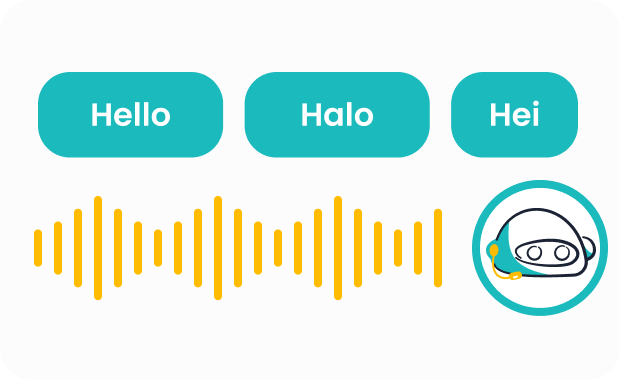
Mastering multilingual AI is no longer just an option; it's a necessity for modern international business, especially since 75% of consumers prefer to shop in their native language. Key trends are emerging to meet this demand, including AI-powered localization and AI-driven communication. Successful localization strategies significantly improve global communication. For instance, a Sobot call center leverages Sobot AI to power its advanced multilingual conversational ai. By adopting these AI trends, companies like Sobot gain a powerful competitive advantage. This sophisticated communication and localization strategy is critical for expanding market reach and enhancing customer interactions.
Trend 1: AI-Powered Localization at Scale

Scaling localization is one of the most impactful business trends today. Companies can no longer afford slow, manual translation processes. AI offers a powerful solution. It enables businesses to translate massive volumes of content quickly and affordably. This speed helps companies enter new international markets faster. Effective AI localization trends are transforming how global brands communicate.
Automating End-to-End Localization Workflows
Modern AI platforms automate the entire content localization workflow. This creates a seamless process from start to finish. Key automation steps include:
- Connecting content systems directly to localization software. This removes the need for manual file transfers.
- Setting up dynamic workflows that route content based on rules. For example, AI can send a high-quality machine-generated translation directly for publishing.
- Integrating translation into developer workflows. This ensures new software strings are automatically captured for localization.
This level of automation allows human translators to focus on creative tasks. The AI handles the repetitive work, leading to major efficiency gains.
Achieving Contextual Accuracy with NMT
Neural Machine Translation (NMT) is a core technology driving these localization trends. NMT models use deep learning to understand the context and nuances of a language. This is a big improvement over older translation methods. NMT architecture uses attention mechanisms. These allow the AI to focus on the most relevant words in a sentence. The result is a more fluent and accurate translation that reads naturally. This advanced AI technology significantly reduces grammatical errors and improves the overall quality of the language output.
Mastering Industry Jargon and Cultural Nuances
Effective localization goes beyond simple word-for-word translation. It requires a deep understanding of industry-specific terms and cultural nuances. Businesses can train AI models with custom glossaries and past translations. This ensures the AI uses the correct terminology and brand voice. Capturing cultural details is equally important for building trust with local audiences. A successful multilingual strategy considers both technical language and cultural context. The impact is clear. Companies using AI for localization report significant cost reductions and faster market entry.
| Company | AI Localization Approach | Impact on Costs & Time-to-Market |
|---|---|---|
| TICA | Hybrid AI-human localization | Doubled international users, 30% global business growth. |
| Firsty | CMS integration with AI localization | Localized ~1,500 pages in 5 languages in hours. |
| MakesYouLocal | AI localization implementation | Reduced translation costs by 90% with higher quality. |
This data shows how AI-powered localization delivers real business value.
Trend 2: Hyper-Personalization in Global Communication

Hyper-personalization is one of the most powerful trends in global business. Generic messages no longer work. Data shows that 71% of consumers expect personalized interactions. Companies that excel at this generate 40% more revenue. AI makes it possible to deliver these tailored experiences at scale, creating a deeper connection with each customer. This approach transforms a company's international communication.
Adapting Brand Voice with AI Transcreation
Effective global branding goes beyond simple translation. It requires transcreation, a process where a message is creatively adapted to evoke the same emotional response in a new cultural context. Unlike translation, which focuses on linguistic accuracy, transcreation prioritizes intent and impact. AI tools can assist by generating creative options, but human oversight is essential. People provide the creative spark and cultural understanding needed to avoid mistakes and ensure the message resonates authentically. This blend of AI efficiency and human creativity helps maintain a consistent brand voice while respecting local nuances.
Driving Engagement with AI-Tailored Marketing
AI is the engine behind personalized marketing that captures customer attention. Retailers use AI to analyze data and tailor product recommendations, promotions, and even website layouts to fit local expectations. This strategy is highly effective. For example, a subscription brand that used a quiz to personalize recommendations saw its conversion rate improve and churn decrease by 12%. When marketing speaks directly to an individual's needs, the audience is more likely to engage. This level of personalization makes customers feel understood and valued.
Dominating Local Search with Multilingual SEO
A successful multilingual content strategy depends on strong multilingual SEO. Simply translating keywords is not enough. Businesses must perform local keyword research to find the terms their target audience actually uses. An effective multilingual SEO plan involves:
- Optimizing title tags and meta descriptions for each language.
- Using hreflang tags to signal language variations to search engines.
- Adapting content to reflect local cultural nuances and search behaviors.
Proper multilingual SEO ensures that your content is visible to the right people in the right markets. Mastering multilingual SEO is critical for dominating local search results and driving organic traffic.
Trend 3: Enhancing Global Communication with AI
AI is transforming how businesses connect with their international customers. These new trends in AI are enhancing global communication and creating more efficient, personalized experiences. Companies that adopt these tools can build stronger relationships with a worldwide audience.
Scaling Video and Audio with AI Dubbing
Video content is a powerful tool for engaging a global audience. AI dubbing automates the translation of video and audio, making it faster and more affordable to reach new markets. This technology allows a business to repurpose a single video for multiple regions. For example, one e-learning platform used AI dubbing for its courses. This led to a 60% increase in watch time in new language markets, showing how effective this communication strategy can be.
Multilingual Conversational AI in Customer Support
Modern businesses need to provide customer support in multiple languages, often 24/7. Multilingual conversational AI makes this possible. AI-powered chatbots and voicebots offer instant, human-like support around the clock. This form of conversational AI improves the customer experience.
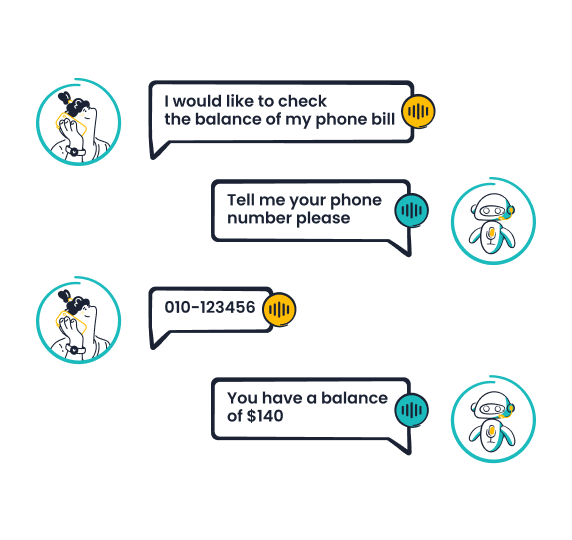
A leading example of this technology is Sobot's Voicebot. This advanced conversational AI uses powerful speech recognition to understand customers across many languages and dialects. It also allows for seamless collaboration between AI and human agents. The value of multilingual conversational AI is clear in real-world applications.
America's largest online Asian supermarket, Weee!, implemented Sobot's voice solution. The results were impressive:
- Agent efficiency increased by 20%.
- Resolution time was reduced by 50%.
- The customer satisfaction score reached 96%.
This case demonstrates how multilingual conversational AI delivers tangible business results. This type of conversational AI is a key part of modern customer service.
Instant Support via AI-Translated Knowledge Bases
Many customers prefer to find answers on their own. AI-powered translation for knowledge bases provides instant self-service support in any language. This empowers customers and reduces the workload for support teams. Companies that use AI to improve their help centers see significant gains. Some have tripled their self-service rate, increasing it by over 200%. This approach also leads to major cost reductions.
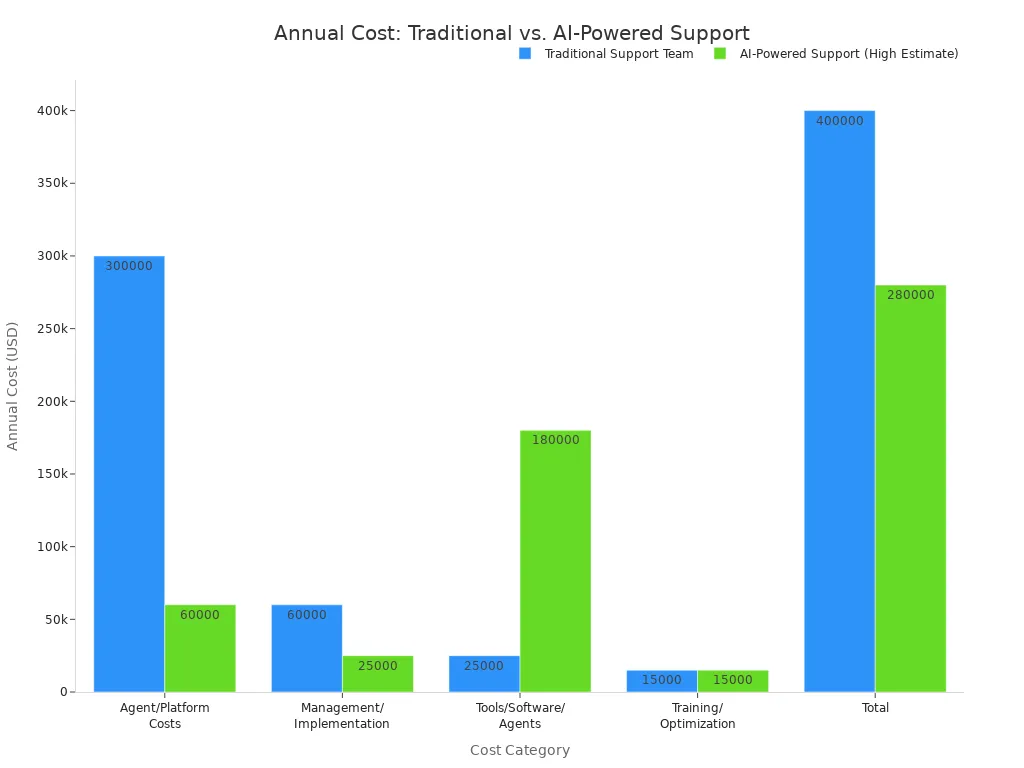
Automating the translation of support articles is a smart investment for any international business looking to improve communication and efficiency.
The path to global success involves three key trends: scalable AI localization, hyper-personalized marketing, and enhanced AI communication. Integrating advanced AI solutions, like those from Sobot, is a strategic imperative for any business targeting worldwide growth.
Leaders should embrace these localization trends. The future of AI is not about replacing people but augmenting them with powerful AI. This human-AI collaboration is the key to building stronger, more efficient global customer relationships.
FAQ
What are the ethics of using AI for translation?
Responsible AI use involves clear ethics. Companies must ensure their AI systems avoid bias and represent cultures respectfully. Strong data governance and transparency are central to these ethics. Upholding these ethics builds trust with global customers.
How do businesses ensure data privacy with AI?
Businesses protect data privacy through strict security measures. This includes data encryption and access controls. Good privacy practices are vital. Companies must comply with regulations like GDPR to maintain customer privacy. This commitment to privacy is non-negotiable.
Does multilingual AI replace human experts?
No, AI augments human experts, it does not replace them. AI handles repetitive translation tasks with speed. Human linguists then provide cultural nuance, creative adaptation, and quality assurance. This collaboration produces the best results for global communication.
What is the first step to implement multilingual AI?
Companies should start by identifying a key pain point. This could be slow customer support or inefficient content localization. Then, they can explore targeted AI solutions, like a chatbot or an automated translation workflow, to address that specific challenge.
See Also
Leading AI Solutions for Enterprise Contact Centers: A Top 10 Guide
Best Speech Analytics Tools for Call Centers in 2024: A Top 10
An In-depth Review of AI Solutions for Enterprise Call Centers
Your Essential Guide to Artificial Intelligence Software for Call Centers

