Modern Customer Service Trends for 2026


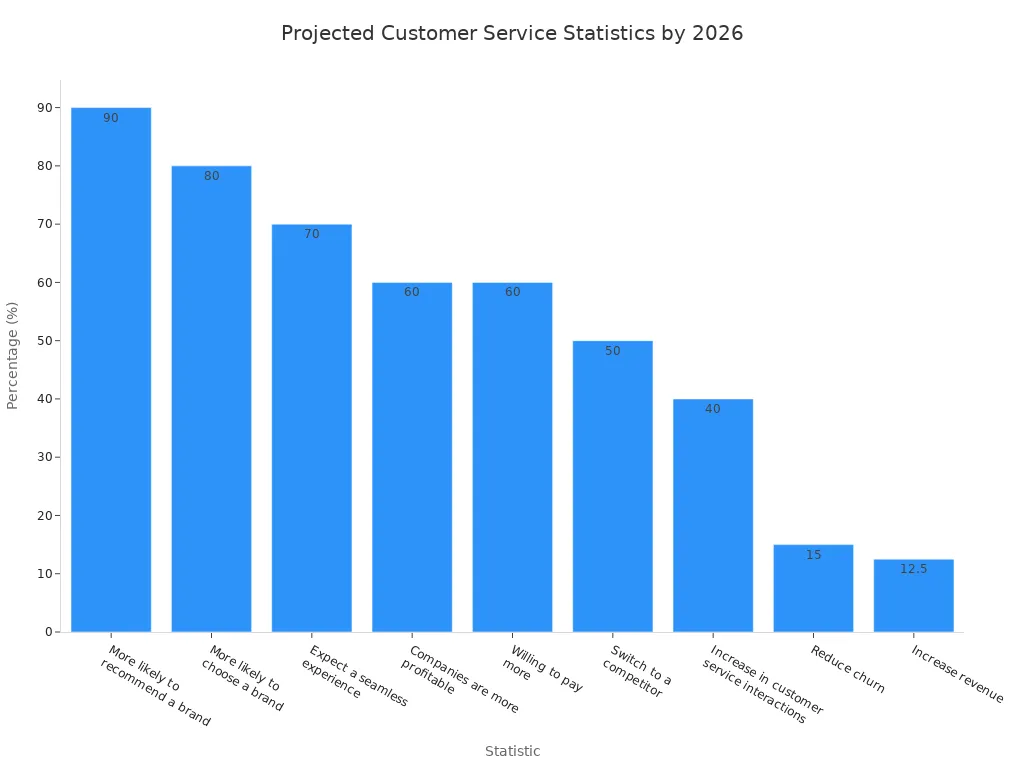
By 2026, customer service will be your primary growth engine. The leaders who act now will own the market. Companies that prioritize an excellent customer experience are 60% more profitable than competitors. Understanding the importance of good customer service is crucial for customer success. Modern customer service is evolving, and businesses must adapt to new customer experience trends and customer growth trends.
 Sobot helps businesses master this shift. Tools like Sobot AI and the Sobot call center empower leaders to build a competitive advantage. It is time to Embark on Your Contact Journey.
Generative AI in Modern Customer Service

The rise of artificial intelligence is reshaping modern customer service. Businesses are moving past simple, rule-based bots. The future belongs to generative AI, a technology that creates new, human-like content. This shift is critical for leaders who want to deliver superior customer experiences.
Defining the Trend: Beyond Basic Chatbots
Generative AI is not just another chatbot. Traditional AI follows scripts. Generative AI understands context and creates original responses. This technology powers a new level of customer self-service. For example, Sobot's Chatbot uses this advanced AI to provide 24/7, multilingual support. It moves beyond simple Q&A to offer a truly conversational experience. The difference is significant.
| Capability | Generative AI | Traditional AI |
|---|---|---|
| Core Functionality | Creates new, original content | Follows pre-defined rules |
| Learning Approach | Learns from vast datasets to understand context | Learns from labeled data to identify patterns |
| Output Nature | Generates novel, human-like responses | Produces predictable, scripted outputs |
| Use Cases | Personalized solutions, complex conversations | Routing calls, answering simple FAQs |
Implications: Autonomous Support and Insights
The impact of generative AI is twofold. It enables autonomous support and delivers deep data insights. This customer-facing AI can resolve complex issues without human help. This automation in support leads to better self-service options for customers.
- AI can detail a shipping delay for a specific order and offer a personalized discount.
- It analyzes a customer's browsing history to suggest relevant new products.
- It uses Natural Language Processing (NLP) for context-aware, human-like answers.
Beyond support, generative AI is a powerful tool for data analytics. It analyzes 100% of customer interactions from calls, emails, and chats. This process identifies trends and customer sentiment, turning raw data into clear business intelligence.
Actionable Roadmap: AI Implementation
Adopting generative AI requires a strategic plan. The rise of artificial intelligence offers great rewards to prepared businesses. Leaders can follow a clear roadmap to integrate this technology successfully.
- Integrate and Train. Work with IT to connect AI to your CRM and chat tools. Train your human ai agents on how the system works. Define which tasks the AI will handle to create a seamless self-service experience.
- Monitor and Optimize. Track key metrics like customer satisfaction and resolution time. Use customer and agent feedback to improve the AI's performance and update its knowledge base.
- Ensure Ethical Use. Comply with data protection laws like GDPR. Be transparent with customers about when they are talking to an AI. Build and enforce guidelines to prevent bias in AI responses.
AI-Powered Agents: Augmenting Human Expertise

The rise of artificial intelligence does not replace human agents. Instead, it creates a powerful partnership. AI-powered agents, or "co-pilots," handle routine tasks. This frees human experts to focus on complex, high-empathy customer issues. This collaboration is a cornerstone of modern customer service.
Defining the Trend: Human-AI Collaboration
Human-AI collaboration combines the efficiency of machines with the emotional intelligence of people. AI tools manage repetitive work like answering common questions, tracking orders, or processing simple returns. This automation in support allows human agents to dedicate their time to situations requiring nuanced understanding and creative problem-solving.
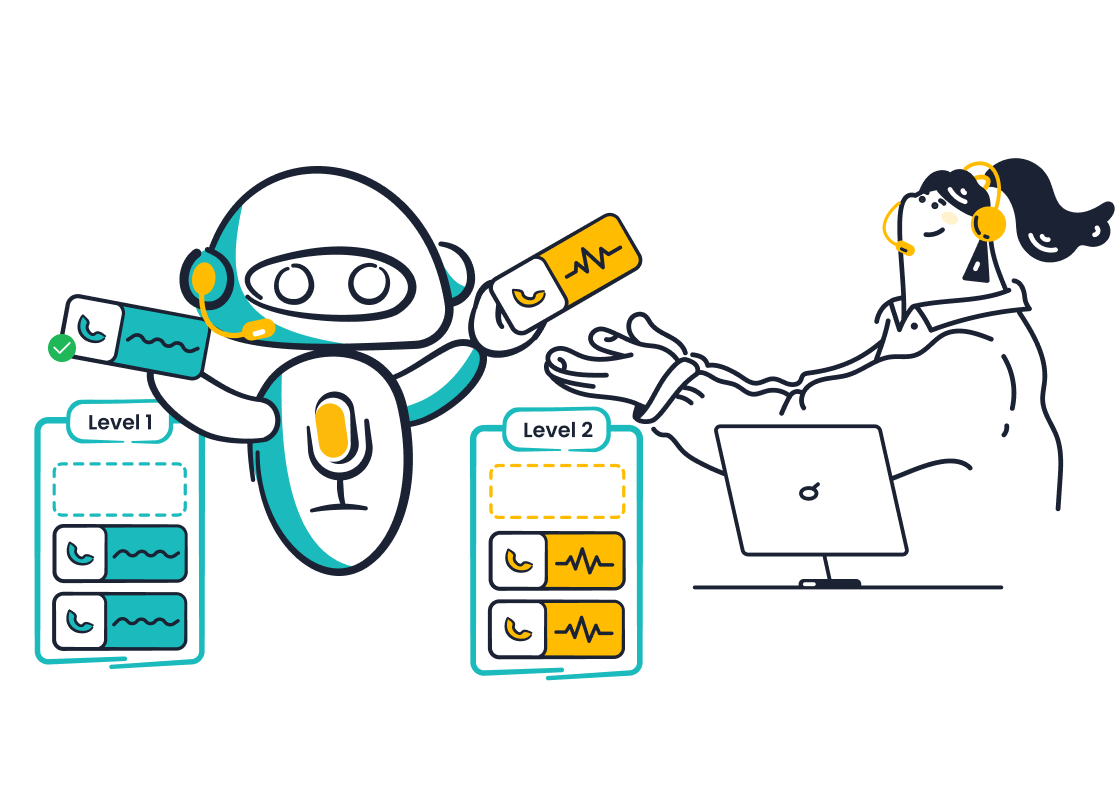
Solutions like Sobot's Voicebot exemplify this trend. The Voicebot uses human-like conversational AI to manage initial inquiries, offering customers effective self-service options. When an issue becomes too complex, it ensures a seamless handoff to a live agent. This synergy enhances both efficiency and the customer experience. By implementing this level of automation in support, businesses can reduce their cost-per-contact by up to 80%.
Implications: Agents as Problem-Solvers
The impact of this trend transforms agents from script-readers into strategic problem-solvers. With AI handling basic queries, human agents can focus on building customer relationships and resolving unique challenges. AI agents provide real-time assistance during calls, offering relevant information and suggesting next steps. This support empowers agents to deliver faster, more accurate resolutions.
AI-driven tools improve key metrics. They use smart routing to direct customers to the right agent on the first try. They also automate after-call work, such as summarizing conversations and updating records. This has been shown to reduce average handle time by 9% while increasing the number of issues resolved per hour by 14%.
Actionable Roadmap: Agent Enablement
Businesses must prepare their teams to work alongside AI. A clear enablement plan ensures a smooth transition and maximizes the benefits of this technology.
- Invest in Integrated Training. Use AI to create personalized training modules for agents. These programs can recommend specific courses to improve skills like empathy or product knowledge. AI can also provide real-time feedback during live interactions, helping agents improve on the fly.
- Redefine Roles and Responsibilities. Clearly outline which tasks the AI will manage and which require human intervention. This helps agents understand their new focus on high-value interactions and complex problem-solving.
- Promote a Culture of Continuous Learning. Encourage agents to see AI as a tool for growth. As AI handles more routine work, agents have more time for professional development, turning your service center into a hub of expertise.
Key Customer Experience Trends: Hyper-Personalization at Scale
Modern customers expect businesses to know them. This shift toward individual recognition is one of the most important customer experience trends. Generic marketing and one-size-fits-all service no longer work. The future is hyper-personalization at scale, where every interaction feels unique to the individual. This approach meets growing customer expectations and builds lasting loyalty.
Defining the Trend: From Segments to Individuals
Traditional personalization groups customers into broad segments. Hyper-personalization treats every customer as an individual. It uses real-time behavioral data, not just past purchases, to tailor the customer experience. This means the experience adapts instantly based on a user's current actions. The difference is fundamental.
| Feature | Traditional Personalization | Hyper-Personalization |
|---|---|---|
| Customer View | Broad segments | Individual profiles (1:1) |
| Data Used | Demographics, purchase history | Real-time behavior, context |
| Update Speed | Monthly or quarterly | Continuous, in-the-moment |
| Technology | Static rules, basic analytics | AI, machine learning |
This move from segments to individuals is the core of personalization at scale.
Implications: Predictive and Contextual Service
The impact of this trend is a shift from reactive to predictive service. With AI-driven personalization, businesses can anticipate customer needs before they arise. For example, predictive analytics can flag accounts at risk of churn, allowing service teams to intervene proactively. This enhances customer engagement and satisfaction.
Companies are already using this to create memorable moments. Carvana, for instance, created over a million unique AI-generated videos celebrating each customer's car purchase. These videos included the customer's name and car model, turning a simple transaction into a powerful engagement.
This level of detail makes the customer experience feel truly special and understood.
Actionable Roadmap: Building a Personalization Engine
Creating a personalization engine requires a clear strategy. Leaders can follow these steps to deliver a superior customer experience.
- Unify Your Data. A successful strategy starts with data. Collect information from every touchpoint, including website interactions, purchase history, and support tickets. A unified customer contact center is essential for gathering this data across all channels.
- Apply AI and Machine Learning. Use AI to analyze the collected data. Machine learning algorithms can identify patterns and predict future customer behavior, forming the brain of your ai-driven personalization efforts.
- Deliver Omnichannel Experiences. Use these insights to tailor interactions across all platforms. Whether a customer is on your website, using your app, or speaking to an agent, the experience should be consistent and personal.
Proactive Service: A Core Driver of Customer Growth Trends
The best customer service is the service a customer never needs. Proactive support is a fundamental shift from waiting for problems to solving them before they happen. This approach is essential for meeting growing customer expectations and is a key driver of modern customer growth trends. It transforms the service department from a reactive cost center into a proactive value engine.
Defining the Trend: Solving Problems Preemptively
Proactive service means anticipating customer needs and addressing potential issues preemptively. Instead of waiting for a customer to report a problem, businesses actively monitor for signs of trouble and intervene first. This strategy relies on listening to customers through data. For example, a robust ticketing system can reveal recurring issues. If many customers create tickets about a confusing checkout step, a proactive team can fix the website flow for everyone, preventing future complaints.
Implications: Shifting from Reactive to Proactive
The impact of moving from a reactive to a proactive model is significant. It directly counters the high cost of poor customer service by building loyalty and preventing customer churn. When businesses solve issues before they escalate, they demonstrate that they value their customers' time and experience.
This shift turns customer service into a powerful tool for retention and revenue generation. The data clearly shows that proactive engagement pays off.
- Companies using proactive strategies have seen customer churn fall by as much as 15-36%.
- Customers are 2.4 times more likely to remain loyal when their issues are resolved quickly.
- For B2B companies, this approach can increase revenue by 22%.
Ignoring this trend leads to the high cost of poor customer service, while embracing it builds a strong competitive advantage.
Actionable Roadmap: Implementing Proactive Support
Building a proactive support model requires the right tools, data, and mindset. This roadmap helps leaders drive customer growth trends by anticipating needs.
- Leverage Technology and Data. Implement AI-powered monitoring tools and predictive analytics to scan for potential problems. An integrated CRM and a unified tech stack provide a complete view of the customer journey, making it easier to spot negative patterns before they cause damage.
- Monitor Leading Indicators. Track key metrics that predict future outcomes. Focus on leading indicators like Customer Satisfaction (CSAT) and Net Promoter Score (NPS). A dip in these scores can signal future churn, allowing your team to intervene before customers leave.
- Empower Teams to Act. Use automated alerts to notify your team of potential issues. Create clear workflows for addressing these alerts. Failing to act on insights results in the high cost of poor customer service. Empowered teams can turn a potential problem into a positive customer interaction.
Linking Customer Experience to Revenue for Customer Success
For decades, many companies viewed customer service as a necessary cost. That mindset is now obsolete. The most forward-thinking leaders understand that a superior customer experience is a powerful revenue engine. This trend redefines the role of service, directly connecting it to business growth and long-term customer success.
Defining the Trend: Measuring Service as a Value Driver
Measuring service as a value driver means shifting focus from cost-per-contact to revenue-per-interaction. It demonstrates the clear financial impact of a positive customer experience. Companies that master this create a significant competitive advantage. This approach confirms the importance of good customer service for achieving customer success.
A real-world example shows this principle in action. OPPO, a global smart device leader, partnered with Sobot to enhance its service operations. By implementing an omnichannel solution, OPPO achieved an 83% chatbot resolution rate. This efficiency directly contributed to a 57% increase in its repurchase rate, proving that excellent service drives revenue and customer success.
Implications: CX Metrics in the C-Suite
The financial impact of a great customer experience is capturing the attention of the C-suite. CX is no longer just an operational metric; it is a boardroom priority. Leaders at top-performing companies focus on high-impact metrics like Customer Lifetime Value (CLV) and Net Promoter Score (NPS). They link these figures directly to business outcomes like loyalty and revenue growth. Companies that lead in customer experience achieve an average compound annual revenue growth of 17%, a powerful incentive for prioritizing customer success. This focus on data-driven customer success is a key part of modern customer growth trends.
Actionable Roadmap: Proving CX ROI
Proving the return on investment from your customer experience efforts is crucial for securing budget and driving strategy. A clear roadmap helps leaders demonstrate value and foster customer success. This process requires a unified view of the entire customer lifecycle.
- Establish a Unified Data Foundation. Use an integrated customer contact center to collect data from all touchpoints. This single source of truth is essential for accurate measurement and achieving customer success.
- Track Revenue-Centric Metrics. Move beyond simple volume metrics. Focus on KPIs that directly connect to financial outcomes.
- Customer Lifetime Value (CLV): Measures the total revenue a business can expect from a single customer account.
- Net Promoter Score (NPS): Gauges customer loyalty and willingness to recommend your brand.
- Retention Rate & Retention Recovery: Tracks how many customers you keep and how many you win back after a negative experience.
- Build Actionable Dashboards. Create clear, visual dashboards that focus on 5-7 critical metrics. This allows leadership to see the financial impact of CX initiatives at a glance and make informed decisions that promote customer success.
The future of modern customer service is a strategic fusion of AI efficiency and empowered human empathy. These trends are interconnected parts of a unified strategy. An all-in-one platform like Sobot's Omnichannel Solution manages this complexity effectively. Linking service initiatives to revenue is critical for customer success. The impact of this shift creates a powerful competitive advantage. Leaders must act now to drive growth and achieve lasting customer success. Embark on your transformation journey and explore how Sobot makes modern customer service a reality.
FAQ
How does AI improve customer service?
AI automates repetitive tasks and provides 24/7 support. Generative AI offers human-like conversations for complex issues. This technology frees human agents to focus on high-value interactions. It also analyzes data to reveal important insights about customer behavior and sentiment, helping businesses refine their strategies.
Will AI replace human customer service agents?
No, AI augments human agents, not replaces them. AI handles routine queries, allowing agents to become expert problem-solvers for complex or emotional issues. This human-AI collaboration enhances efficiency. It also improves the overall quality of support, leading to greater customer satisfaction and loyalty.
What is the first step to implementing hyper-personalization?
The first step is unifying customer data. Businesses must collect information from all touchpoints into a single platform, like a customer contact center. This complete view allows AI to analyze behavior and predict needs, which is essential for delivering truly personalized experiences at every interaction.
How can a business prove the ROI of customer experience?
Businesses prove ROI by tracking revenue-centric metrics. Key indicators include Customer Lifetime Value (CLV), Net Promoter Score (NPS), and customer retention rates. Linking these metrics to service improvements demonstrates how a positive customer experience directly drives revenue growth and long-term business success.
See Also
Leading Contact Center Platforms: An In-Depth Review for 2024
Best Cloud-Based Contact Center Services: Comprehensive Reviews for 2024
Discover the Top 10 Voice of Customer Software Solutions for 2024
Unveiling the Top 10 Customer Service Software Platforms for 2024
How AI Customer Service Agents Are Revolutionizing Support Experiences Today
