Avoid Mistakes in CX Outsourcing

Your choice in customer experience and outsourcing directly impacts brand reputation and growth. You must shift from a cost-cutting view to a value-creation strategy. The global market is projected to expand from USD 102.03 billion in 2024 to USD 296.29 billion by 2033, showing its strategic importance. True success in business process outsourcing means finding a partner for superior customer experience delivery. The right tools, like a Sobot call center powered by Sobot AI, help enhance customer experience. This guide reveals common pitfalls to help you build a winning partnership.
Mistake 1: Prioritizing Low Cost Over Quality and Value

The most common trap in CX outsourcing is focusing solely on the lowest price. A cheap contract can seem like a quick win for your budget. However, it often leads to long-term damage to your brand reputation and customer loyalty. You must look beyond the initial price tag to understand the true value a partner provides.
Calculating the True ROI of a CX Partner
A strategic partner delivers a return on investment (ROI) that goes far beyond simple cost savings. You should calculate the true ROI by evaluating both financial inputs and performance outcomes. A comprehensive analysis includes several key components.
- Cost Factors: Consider initial setup fees, technology integration, ongoing operational costs, and expenses for quality assurance.
- Value Benefits: Measure gains from enhanced customer retention, access to specialized technology, and the ability to scale your support team up or down.
- Measurement Methods: Track key performance indicators (KPIs) like customer satisfaction (CSAT) scores and first-contact resolution (FCR) rates to quantify the partner's impact.
Red Flags of a "Too Good to Be True" Price
A surprisingly low bid should raise immediate concerns. These offers often hide significant costs that appear later. Be cautious of providers who are not transparent about their pricing structure.
Watch out for hidden fees. Low-cost providers may charge extra for essential services like performance reports, after-hours support, or even basic quality control. These unexpected expenses can quickly erase any initial savings. Furthermore, a low price can signal undertrained agents, leading to poor service and higher customer churn.
Balancing Upfront Cost with Performance Metrics
The best approach is to balance upfront costs with clear performance expectations. You should connect the price you pay directly to the results you expect. Before signing a contract, agree on the essential KPIs that define success for your business. This ensures your partner is accountable for delivering excellent service. A focus on performance metrics shifts the conversation from cost to value, protecting your customer experience and your bottom line.
Mistake 2: Neglecting to Verify Industry-Specific Expertise
Choosing a partner without deep industry knowledge is like hiring a chef who has never cooked your favorite cuisine. They might know the basics, but they will miss the essential nuances that create a great experience. A generic outsourcing provider cannot understand your customers' specific challenges, vocabulary, or expectations. This gap in understanding leads to frustrated customers and unresolved issues, directly damaging your brand.
Key Questions to Probe Industry Knowledge
You must dig deeper than surface-level claims of experience. When vetting a potential partner, ask targeted questions to confirm their expertise. Your goal is to understand their practical knowledge of your specific sector.
- What is your proven expertise and history with companies in our industry?
- Can you provide case studies showing how you solved challenges similar to ours?
- Describe a major obstacle you faced with a client in our sector and how your team overcame it.
These questions push partners to demonstrate genuine industry experience rather than just listing past clients. Their answers will reveal their problem-solving capabilities and strategic thinking.
How to Analyze Case Studies for Relevance
A relevant case study is more than just a success story; it is a blueprint of the partner's methodology. Look for evidence that they understand business operations on a granular level.
A strong case study moves beyond vague claims. It should detail how the partner analyzed the client's processes, identified specific improvement opportunities, and defined new service level agreements (SLAs) based on key performance indicators.
Look for specifics like process redesign, data analysis for scheduling, and the segregation of duties into specialized roles. This shows they can deliver strategic value, not just answer calls.
Why Generalist Call Centers Often Fail
Generalist call centers often fail in specialized fields because they lack the necessary depth of knowledge. In complex sectors like healthcare or finance, agents must handle sensitive information and intricate queries. Generalists often use outdated technology and cannot provide the specialized training required. This leads to poor first-contact resolution and high customer frustration. For example, patients become dissatisfied when agents cannot answer specific medical questions, leading to repeat calls and a negative perception of the provider. A partner without proven expertise cannot deliver the high-quality service your customers deserve.
Mistake 3: Overlooking Cultural Fit in Customer Experience Outsourcing
Your outsourcing partner becomes the voice of your brand. A mismatch in culture or values can create a jarring experience for your customers. Successful customer experience and outsourcing hinges on finding a partner whose team can act as a seamless extension of your own. You must prioritize cultural alignment to protect your brand identity and ensure every customer interaction reflects your core principles.
How to Assess a Partner's Company Culture
You need to look beyond the sales pitch to understand a potential partner's true work environment. A deep cultural assessment helps you verify if their values align with yours. Visiting the provider's office gives you a definitive impression of how their team handles daily tasks. You should also schedule time with frontline agents, not just managers, to get a real glimpse of site morale.
When evaluating a potential partner, you should:
- Familiarize yourself with their work ethic, corporate values, and hiring process.
- Interview team members who will work on your project to assess their communication skills.
- Evaluate if their hiring procedure has produced a knowledgeable and collaborative team.
- Assess their responsiveness to your communications early in the process.
Methods to Ensure Your Brand Voice is Maintained
Maintaining your unique brand voice is critical for a consistent customer journey. You can train an outsourced team to represent your brand accurately with a structured approach. This process ensures every agent understands and embodies your brand's personality.
- Create Thorough Brand Guidelines: Develop a guide that defines your brand's mission, values, and tone with clear examples.
- Implement Robust Training: Use interactive sessions and role-playing scenarios that mirror real customer interactions.
- Establish Feedback Loops: Create channels for agents to share insights and for you to provide regular coaching.
- Use Quality Assurance Measures: Conduct regular audits of customer interactions to check for brand voice consistency.
The Importance of a Shared Service Philosophy
Ultimately, a shared service philosophy is the foundation of a strong partnership. When your partner shares your commitment to customer satisfaction, their agents are more motivated to resolve issues effectively and create positive experiences. This alignment goes beyond scripts and procedures. It ensures the outsourced team makes decisions that protect your brand's reputation and foster long-term customer loyalty. This shared commitment is the key to transforming customer experience outsourcing from a cost center into a value driver.
Mistake 4: Failing to Scrutinize Technology and Security

Outdated technology and weak security can quickly turn your outsourcing partnership into a liability. You must evaluate a partner's tech stack and security posture with the same rigor you apply to your internal systems. A modern partner does more than answer calls; they provide a secure, efficient, and integrated technology ecosystem that protects your brand and your customers.
Must-Have Tech: Omnichannel, AI, and CRM Integration
Your partner's technology directly impacts agent efficiency and customer satisfaction. Look for a provider that offers a truly integrated solution. A unified workspace is essential, as it consolidates all communication channels. For instance, solutions like Sobot's Omnichannel platform integrate voice, chat, and ticketing, giving agents a complete customer view without switching between screens.
You should also prioritize a partner with strong AI capabilities. Modern platforms use AI to improve the customer journey.
- 24/7 Availability: AI-powered tools like Sobot's chatbots and voicebots handle repetitive queries around the clock.
- Improved Efficiency: This frees up your human agents to focus on more complex and high-value customer issues.
- Better Insights: AI aggregates data across channels, giving you a deeper understanding of customer needs.
How to Safeguard Customer Data and Ensure Privacy
Excellent service means nothing if you cannot protect customer information. A data breach can cause irreversible damage to your reputation and lead to significant financial penalties. You must choose a partner with robust data security protocols to safeguard customer data and ensure privacy.
Common Security Threats in Outsourcing Human error contributes to over half of all data breaches. Key risks include:
- Data Breaches: Unauthorized access to sensitive customer data.
- Ransomware Attacks: Systems are encrypted, disrupting operations until a ransom is paid.
- Compliance Issues: Failure to adhere to regulations like GDPR, resulting in fines.
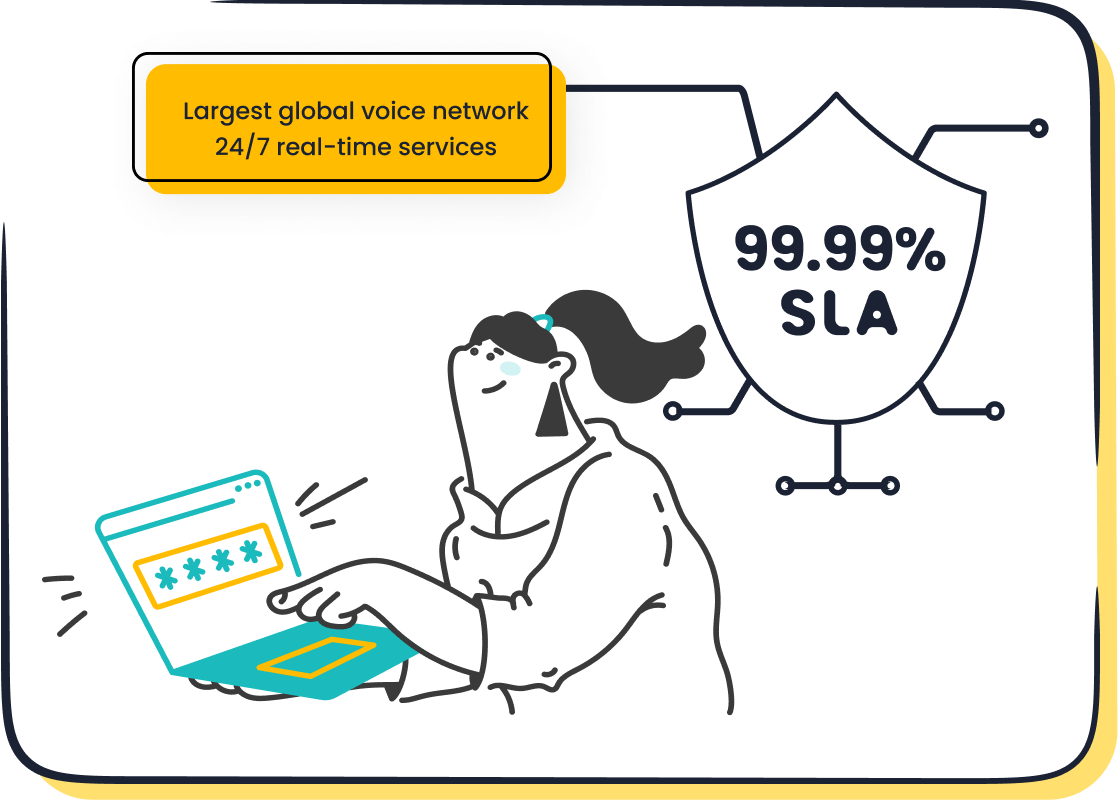
Your partner must demonstrate a serious commitment to security. Ask about their confidentiality measures, such as the use of encrypted data transfer, which is a standard feature in reliable platforms like Sobot's Voice/Call Center. Verifying certifications like ISO 27001 also confirms a partner's dedication to information security and privacy.
Evaluating Disaster Recovery and Breach Response Plans
Even with the best preventative measures, you need a plan for when things go wrong. A strong partner is always prepared for the worst-case scenario. Before signing a contract, you must review their disaster recovery and data breach response plans. A comprehensive plan should include clear, documented procedures for risk assessment, data recovery, and stakeholder communication. The best partners regularly test these plans to ensure readiness, proving their commitment to operational continuity and total security.
Mistake 5: Ignoring Training and Quality Assurance
Choosing a partner is only the beginning. You must ensure their team can deliver the high-quality service your customers expect. Overlooking training and quality assurance (QA) processes is a critical error. A partner without a robust framework for agent development and performance monitoring cannot deliver consistent quality. This leads to poor customer interactions and erodes brand trust over time.
What to Look for in an Agent Training Program
A comprehensive training program is the foundation of excellent service. Inadequate training is a primary cause of low First Contact Resolution (FCR) rates. You should look for training initiatives for customer service that go beyond basic scripts. A top-tier program equips agents with deep knowledge and practical skills.
A strong training program should include:
- Product and Service Mastery: Agents must understand your offerings to explain benefits and solve problems.
- Soft Skills Development: Training should cover empathy, active listening, and de-escalation techniques through role-playing.
- Technical Proficiency: Agents need hands-on practice with your CRM and other essential software.
- Company Policies: A clear understanding of your procedures ensures a consistent customer experience.
How to Guarantee Quality in Customer Service
Training alone is not enough. You need a continuous process to guarantee quality in customer service. Your partner must have a structured QA program to monitor interactions and provide ongoing coaching. This creates a feedback loop that drives improvement and holds agents accountable for performance.
Ask potential partners how they measure and maintain quality. A reliable partner will have a dedicated QA team that regularly reviews calls, chats, and emails. They use these insights to identify skill gaps and provide targeted coaching to agents, ensuring a high standard of service.
Essential KPIs to Agree Upon and Track
You cannot manage what you do not measure. Before signing a contract, you must agree on the key performance indicators (KPIs) that define success. These metrics ensure your partner is aligned with your business goals.
Essential KPIs include:
- First Contact Resolution (FCR): The percentage of issues resolved in a single interaction.
- Average Handle Time (AHT): The average duration of a customer interaction.
- Customer Satisfaction (CSAT): A direct measure of customer happiness with a specific interaction.
- Net Promoter Score (NPS®): A measure of long-term customer loyalty.
A strategic partner provides powerful analytics capabilities to monitor these metrics. For example, Sobot's platform offers real-time monitoring and robust data analytics capabilities. This technology helps managers track performance against agreed-upon KPIs, identify trends, and ensure your team consistently delivers high-quality service.
Mistake 6: Not Planning for Scalability and Future Needs
Your business needs are not static. You will face seasonal peaks, new product launches, and market growth. Choosing a partner who cannot grow with you is a recipe for future disruption. You must select a partner who can scale operations efficiently and adapt to your evolving needs, ensuring your customer support remains seamless at every stage.
Assessing a Partner's Ability to Scale
You need to verify a partner's ability to handle fluctuations in demand without sacrificing quality. A truly scalable partner demonstrates flexibility and efficiency. When evaluating potential providers, look for proof that they can manage changing workloads.
A scalable partner should offer:
- Flexible Staffing: The ability to quickly adjust agent numbers to meet real-time demand, converting your fixed costs into variable ones.
- Cost Efficiency: Smart forecasting and operational practices that optimize costs during both busy and slow periods.
- Advanced Technology: The use of cloud-based platforms and AI-powered systems to handle routine inquiries, freeing up human agents for complex issues.
Planning for Future Service Channel Expansion
Your customers' communication preferences will change over time. A partner who only offers phone support may not meet your future needs. You must plan for the expansion of your customer service channels. Discuss the provider's capabilities across different platforms like chat, social media, and messaging apps. A forward-thinking partner has an integrated technology stack that allows you to add new channels easily, ensuring you can meet customers wherever they are.
Ensuring Contractual Flexibility for Growth
Your outsourcing agreement must support your growth, not hinder it. A rigid, long-term contract can prevent you from adapting to new opportunities or market shifts. You should negotiate a contract that provides flexibility. This allows you to scale your team up or down as needed and access specialized experts for specific projects without incurring long-term overhead. Clear communication protocols and predictable reporting rhythms should also be established upfront to prevent issues as you grow.
Mistake 7: Skipping Due Diligence on Reputation and References
You would not hire a key employee without checking their references. You must apply the same rigor when choosing a CX partner. Skipping due diligence on a provider's reputation is a high-risk gamble. You need to verify their claims and confirm their track record of success. Evaluating credibility is a non-negotiable step in protecting your brand.
How to Effectively Check Client References
You must go beyond the list of happy clients a partner provides. When you check client references, ask for specific, data-driven examples of their performance. Request to speak with companies that faced challenges similar to yours. This approach helps you understand how the partner performs under pressure. Ask about their communication, problem-solving, and ability to meet service level agreements (SLAs).
Reading Between the Lines of Testimonials
Testimonials are valuable, but you need to look for substance over fluff. The best references provide concrete proof of a partner's impact. A powerful example is the partnership between OPPO and Sobot.
OPPO, a global smart device leader, faced overwhelming inquiry volumes during peak shopping seasons. They partnered with Sobot to implement a chatbot and ticketing system. The results were not just positive; they were measurable.
- 83% chatbot resolution rate
- 94% positive feedback rate
- 57% increase in repurchase rate
You can read more about this case study here. This is the kind of verifiable data you should seek from client references. It demonstrates true value and credibility.
The Value of Independent Reviews and Awards
Finally, look for external validation. Independent industry reviews and awards provide an unbiased perspective on a partner's capabilities. These accolades show that a provider has earned respect within their field. While direct references are crucial, third-party recognition adds another layer of confidence. It confirms you are choosing a partner with a proven and respected reputation.
Your success in customer experience and outsourcing depends on a value-driven strategy. You must look beyond the price tag. Making an informed decision requires vetting a partner's industry fit, cultural alignment, technology, and scalability. This ensures consistent quality for your service.
View this process as an opportunity. The right partnership enhances your customer experience delivery. It builds a foundation for brand loyalty and superior service, transforming customer experience and outsourcing into a true driver of growth and quality.
FAQ
How do I start the process of finding a CX partner?
You should begin by defining your specific needs and goals. Document your required service channels, key performance indicators (KPIs), and budget. Use this framework to create a shortlist of potential partners who specialize in your industry. This preparation ensures a focused and efficient search.
What is the single biggest red flag in a potential partner?
A lack of transparency is the biggest red flag. You should be wary of any provider who is unclear about their pricing, security protocols, or performance metrics. A trustworthy partner will openly share information and welcome your questions about their operations and technology.
Can I really maintain my brand voice with an outsourced team?
Yes, you can maintain your brand voice with the right partner. You must provide comprehensive brand guidelines and participate in agent training. A good partner will work with you to establish robust quality assurance processes, ensuring every interaction reflects your company's unique identity.
How important is technology like AI in customer experience and outsourcing?
Technology is critical for modern customer experience and outsourcing. AI-powered tools like chatbots handle simple, repetitive queries 24/7. This improves efficiency and allows your human agents to focus on solving more complex customer issues, which boosts overall satisfaction and service quality.
See Also
Demystifying Live Chat Outsourcing: A Comprehensive Look at Associated Costs
Implementing Top-Tier Quality Management Practices for Call Center Excellence
Essential Principles: A Guide to Quality Management Systems in Call Centers
Ten Key Steps for Seamless Omnichannel Contact Center Solution Implementation
Choosing the Right Software: A Guide to Call Center Quality Assurance