How Metrics Drive Better Customer Satisfaction in Chatbots


You can improve chatbot experiences by using metrics to measure customer satisfaction. Sobot helps you enhance customer interactions and operational efficiency. Leading brands like Samsung use customer metrics to drive satisfaction.
- High CSAT scores increase customer retention.
- Samsung links NPS with revenue for future growth.
Why Customer Satisfaction Metrics Matter

Identifying Strengths and Weaknesses
You need to track customer satisfaction metrics to understand how your chatbot performs. These metrics help you spot strengths and weaknesses in your service. When you analyze chatbot interactions, you can quickly see which features make customers happy and which ones cause frustration. If many customers report low satisfaction with a certain feature, you can investigate and improve it. This process creates a feedback loop that lets you benchmark satisfaction and make changes that matter.
Sobot’s customer-centric approach puts your needs first. By using customer satisfaction metrics, you gain a clear view of what works and what needs fixing. Continuous feedback helps you stay agile and responsive. Customers feel heard, and you can boost satisfaction levels faster.
Tip: Regularly review customer satisfaction metrics to keep your chatbot service sharp and effective.
Impact on Customer Experience
Customer satisfaction metrics shape the customer experience in powerful ways. When you track these metrics, you see how customers interact with your chatbot. You can identify pain points and prioritize improvements based on real data. Companies that excel in customer experience often see revenue growth. For example, loyalty leaders achieve about double the revenue growth of their peers. Customers with the best experiences spend 140% more than those with the poorest experiences.
- Tracking customer satisfaction metrics leads to higher retention rates.
- Improving satisfaction can retain 74% of customers for an extra year.
- Satisfied customers require fewer support interactions, reducing service costs by up to 20%.
Sobot’s industry leadership shows how using customer satisfaction metrics drives measurable improvements. You can create a better customer experience and increase satisfaction by focusing on what matters most.
Key Metrics to Measure Customer Satisfaction
Understanding which metrics to measure customer satisfaction helps you improve your chatbot and create a better customer experience. You need to know what each metric means and how to use it. This section explains the most important metrics and shows you how to choose the right ones for your goals.
CSAT, NPS, and CES Explained
You can use several metrics to measure customer satisfaction in chatbot interactions. The three most common are csat, nps, and ces. Each one gives you a different view of your customer’s experience.
| Metric | Definition | Industry Benchmark |
|---|---|---|
| CSAT | Measures customer satisfaction regarding a specific interaction. | 75% - 85% |
| NPS | Gauges customer loyalty and likelihood to recommend. | N/A |
| CES | Assesses the ease of completing a task or interaction. | N/A |
CSAT (Customer Satisfaction Score):
You use csat to measure how satisfied a customer feels after a specific interaction with your chatbot. After a chat, you can ask, “How satisfied are you with your experience?” Customers respond on a scale, and you calculate the csat score as a percentage of positive responses. A high csat score means your chatbot meets customer needs. Industry benchmarks show that a csat score between 75% and 85% is strong.
NPS (Net Promoter Score):
Nps measures customer loyalty. You ask, “How likely are you to recommend our company to a friend or colleague?” Customers answer on a scale from 0 to 10. You subtract the percentage of detractors (scores 0-6) from promoters (scores 9-10) to get your nps. A high nps shows that customers trust your brand and want to share their positive experience.
CES (Customer Effort Score):
Ces tells you how easy it is for a customer to solve a problem or complete a task using your chatbot. You ask, “How easy was it to get your issue resolved?” A low effort score means your chatbot works well and customers find it simple to get help.
Sobot uses all three metrics to measure customer satisfaction. You can send post-interaction surveys to collect csat scores. You can track nps to see how loyal your customers feel. You can use ces to find out if your chatbot makes things easy for your customers. These metrics help you see where your chatbot shines and where you need to improve.
Note: Sobot’s platform lets you track csat, nps, and ces in real time. You can compare your csat score to industry benchmarks and set goals for improvement.
You can see how these metrics work together in the table below:
| Metric | What It Measures | How You Use It | Why It Matters |
|---|---|---|---|
| CSAT | Customer satisfaction with a single interaction | Post-chat survey | Shows if your chatbot meets customer needs |
| NPS | Customer loyalty and willingness to recommend | Regular survey | Predicts future growth and loyalty |
| CES | Ease of completing a task | Post-task survey | Reveals friction points in the customer journey |
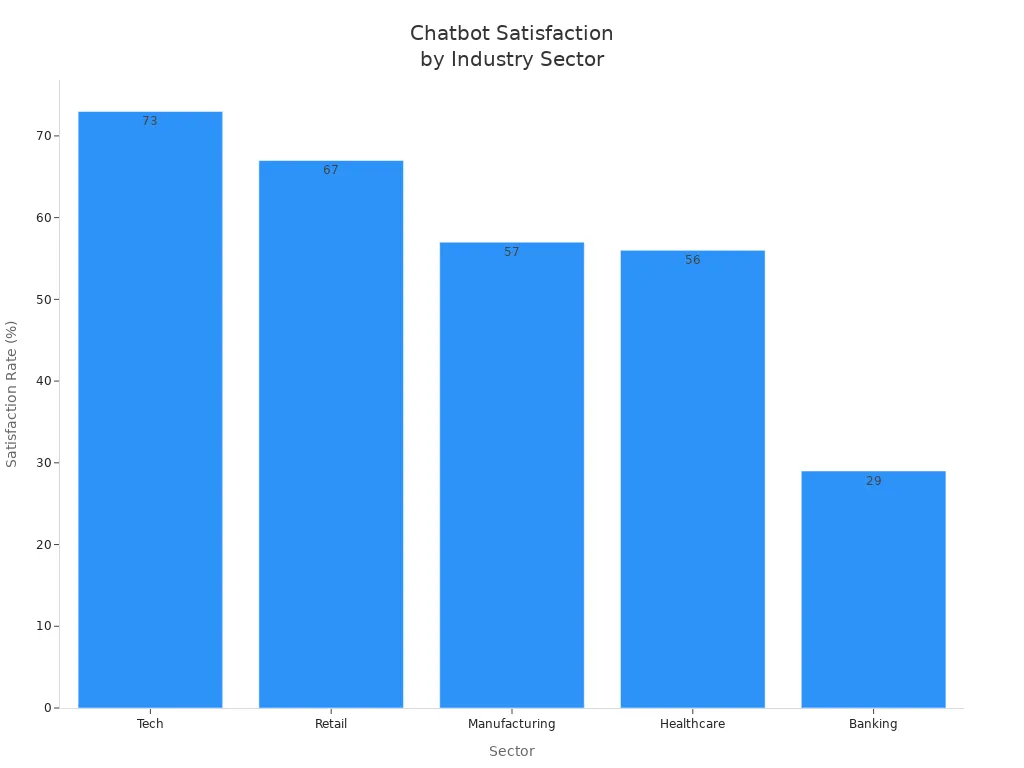
You can also look at how different industries perform. For example, the tech sector has a satisfaction rate of 73%, while retail is at 67%. Manufacturing, healthcare, and banking have lower rates. This shows that your csat score can vary by industry, so you should compare your results to the right benchmarks.
| Sector | Satisfaction Rate |
|---|---|
| Tech | 73% |
| Retail | 67% |
| Manufacturing | 57% |
| Healthcare | 56% |
| Banking | 29% |
Choosing the Right Metrics for Your Goals
You need to pick the right metrics to measure customer satisfaction based on your business goals. Not every metric fits every situation. You should match your metrics to what you want to achieve with your chatbot.
| Metric Type | Description |
|---|---|
| Engagement Metrics | Measures user interactions with the chatbot, such as the number of interactions and session length. |
| Retention Metrics | Indicates user loyalty and satisfaction, tracking returning users and churn rates. |
| Customer Satisfaction | Directly asks users for feedback, providing immediate insight into user experience and satisfaction. |
If you want to know how happy customers feel after using your chatbot, focus on csat. If you want to see if your chatbot builds loyalty, use nps. If you want to find out if your chatbot makes things easy, track ces. You can also use engagement and retention metrics to see how often customers return and how long they interact with your chatbot.
Sobot helps you collect and analyze these metrics to measure customer satisfaction. You can set up surveys for csat, nps, and ces. You can track engagement and retention to see if your chatbot keeps customers coming back. You can use these insights to make changes that improve the customer experience.
You should also look at how these metrics support your business goals. For example, a high net promoter score shows strong customer loyalty, which can lead to stable revenue. A high csat score means customers are happy, which helps you build trust. High retention rates show that customers value your chatbot and want to use it again.
| Metric Type | Evidence Description |
|---|---|
| Net Promoter Score | Serves as evidence of customer loyalty and supports claims about revenue stability. |
| Customer Satisfaction | Provides quantifiable evidence of customer loyalty, critical for buyers assessing business value and risk. |
| Retention Rates | Supports claims of strong customer relationships, enhancing the perceived stability of revenue. |
| Customer Effort Score | Substantiates claims about service quality, indicating how easily customers can interact with the service. |
| Complaint Resolution | Provides data that supports claims of excellent service quality, enhancing customer satisfaction metrics. |
You can see that each metric gives you a different view of your customer’s experience. You should use a mix of metrics to measure customer satisfaction and reach your goals. Sobot’s platform makes it easy to track, compare, and improve your csat score, nps, and ces. You can use these metrics to create a better customer experience and drive business success.
Tip: Review your metrics to measure customer satisfaction every month. Look for trends in your csat score, nps, and ces. Use these insights to make small changes that add up to big improvements.
By choosing the right metrics and tracking your csat score, nps, and ces, you can build a chatbot that delights your customers and supports your business goals.
Measuring and Tracking Customer Satisfaction Survey Data
Data Collection Methods in Chatbots
You can use several methods for measuring customer satisfaction in chatbot interactions. Star ratings give you a quick snapshot of how customers feel. Open-ended comments let customers share detailed feedback. In-conversation feedback prompts customers during the chat, helping you gather real-time feedback. Post-interaction surveys collect customer satisfaction survey data after the conversation ends. Passive monitoring techniques analyze customer actions to spot drop-off points and confusion. The table below shows these methods:
| Method | Description |
|---|---|
| Star Ratings | Quick measure of customer satisfaction. |
| Open-Ended Comments | Detailed feedback from customers. |
| In-Conversation Feedback | Real-time feedback during interaction. |
| Post-Interaction Surveys | Specific feedback after the chat. |
| Passive Monitoring Techniques | Tracks customer actions for insights. |
Tools and Platforms for Tracking (Including Sobot)
You need reliable tools for measuring customer satisfaction metrics. Sobot’s chatbot, AI Agent, live chat, and Voice/Call Center help you collect and analyze customer satisfaction survey data. Sobot uses AI-powered sentiment analysis to track customer emotions in real time. The platform offers live dashboards for real-time feedback, helping you respond quickly. Companies like OPPO and Agilent improved customer satisfaction and efficiency using Sobot. Sobot supports multilingual sentiment analysis, making it easy to serve global customers. You can learn more about Sobot’s solutions at Sobot’s official website.
- Sobot Chatbot: Tracks ces and customer satisfaction survey responses.
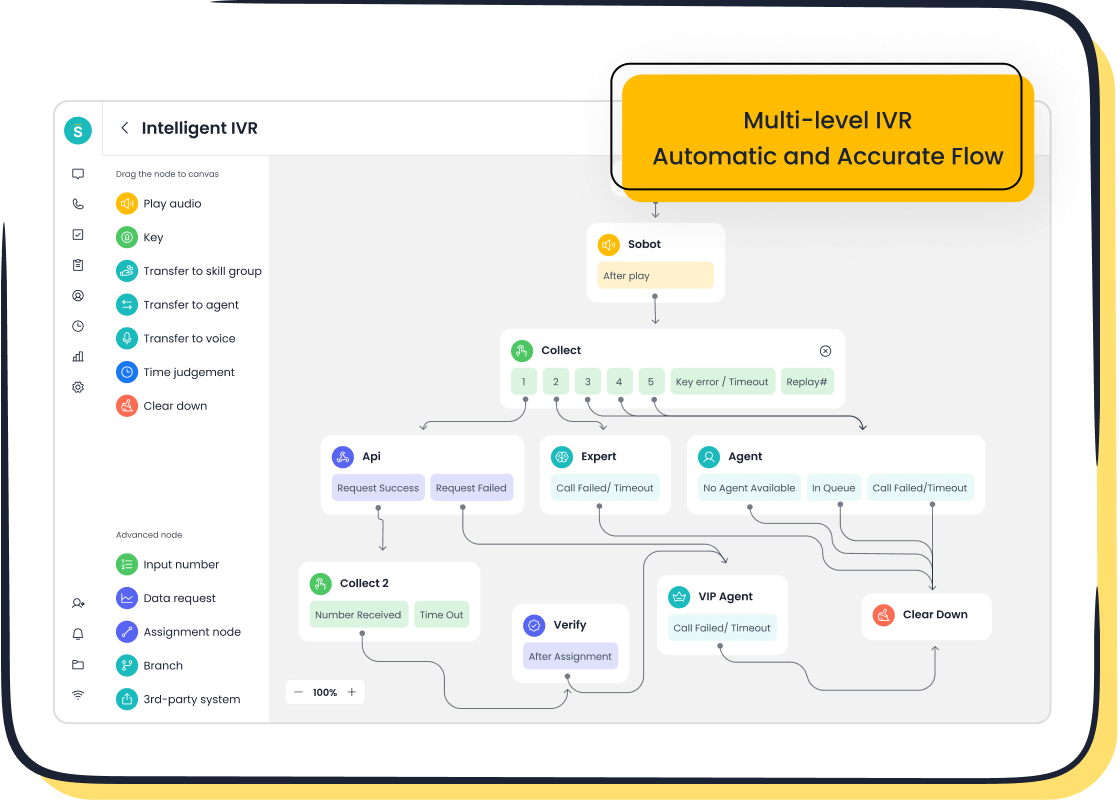
- Sobot Voice/Call Center: Monitors agent performance and customer satisfaction metrics.
- Sobot Live Chat: Collects real-time feedback and survey data.
- Sobot Ticketing System: Organizes customer feedback for analysis.
Setting Benchmarks and Monitoring Trends
You should set benchmarks for measuring customer satisfaction metrics. Customer satisfaction rate shows if your chatbot meets expectations. Goal Completion Rate (GCR) should reach 90%. Deflection Rate for effective bots ranges from 60% to 90%. First Contact Resolution should be at least 70%. Analyze customer satisfaction survey data to spot trends and pain points. Use retention rate, conversion rate, response accuracy, and escalation rate to monitor progress. Regularly review survey results to improve customer satisfaction and optimize your chatbot.
Optimizing Chatbot Satisfaction with Metrics

Turning Insights into Action
You can use actionable insights from customer satisfaction metrics to improve your chatbot. Start by measuring flow completion rate, customer satisfaction score, fallback rate, human takeover rate, retention rate, and leads captured. The table below shows how each metric helps you optimize performance:
| Metric | Description |
|---|---|
| Flow Completion Rate | Measures how many conversations reach the endpoint, showing user engagement. |
| Customer Satisfaction Score | Direct feedback from users on their experience. |
| Fallback Rate | Highlights failed queries, pointing to areas needing improvement. |
| Human Takeover Rate | Shows how often agents intervene, revealing conversation flow issues. |
| Retention Rate | Tracks users returning to the chatbot, indicating effectiveness. |
| Leads Captured | Counts users providing information, useful for lead generation. |
You can integrate AI solutions across the customer journey to increase customer satisfaction. Adaptive questioning lets your chatbot clarify and tailor follow-ups. Analyzing feedback helps you identify gaps and improve features. Sobot’s platform supports these strategies, helping you track customer satisfaction and deliver a better customer experience.
Closing the Feedback Loop
You should close the feedback loop to make customers feel heard and valued. Communicate changes back to customers to reinforce their emotional connection. This process enhances loyalty and reduces churn. When you track customer satisfaction and act on feedback, you increase customer satisfaction and improve the customer service experience. Sobot’s best practices for improving customer satisfaction include sharing updates and improvements with customers.
- Closing the loop builds trust.
- Customers see their feedback leads to real improvement.
- You create a stronger customer experience.
Continuous Improvement with Sobot
Continuous improvement means you gather data and analyze performance regularly. Sobot uses proactive maintenance, data-driven updates, audits of conversation logs, weekly knowledge base updates, and monitoring escalation rates. Monthly benchmarking ensures high response accuracy. Samsung’s story shows how Sobot helped measure customer satisfaction and achieve a 97% satisfaction rate. You can use these best practices to optimize your chatbot and increase customer satisfaction.
Tip: Review feedback often and update your chatbot to meet changing customer needs.
Overcoming Challenges in Customer Satisfaction Measurement
Survey Fatigue and Low Response Rates
You may notice that customers often skip surveys after chatbot interactions. Survey fatigue happens when customers see too many feedback requests. Low response rates make it hard to measure satisfaction and improve retention. Chatbot surveys help solve this problem. They use engaging questions and conversational formats. This approach increases response rates and keeps customers interested. Automated surveys offer convenience and personalization. You can collect customer feedback without overwhelming users. The table below compares chatbot surveys with traditional surveys:
| Feature | Chatbot Surveys | Traditional Surveys |
|---|---|---|
| User Engagement | Highly interactive and engaging | Often static and impersonal |
| Response Rates | Higher due to ease and engagement | Lower, often unnoticed |
Ensuring Consistency and Accuracy
You need consistent and accurate data to improve customer satisfaction and retention. AI chatbots provide uniform responses based on their programming. This reduces errors caused by human fatigue or lack of knowledge. Chatbots deliver reliable support every time. Analyzing chatbot interactions helps you spot common pain points. You can address these issues and improve customer retention. Sobot’s unified platform uses real-time speech recognition and natural language processing. This ensures accurate customer feedback and supports sensitive industries like finance and healthcare.
Balancing Quantitative and Qualitative Feedback
You should balance numbers and stories in customer feedback. Quantitative data, like satisfaction scores, show trends. Qualitative feedback, such as open-ended comments, reveals deeper insights. Methods like the PARADISE Framework and Dialogue Act Tagging help you analyze both types of data. Automated evaluation tools classify message sequences and simulate errors. Sobot’s platform collects and organizes customer feedback from voice, chat, email, and social media. This omnichannel presence helps you understand satisfaction and retention across all touchpoints.
Tip: Use both quantitative and qualitative customer feedback to improve satisfaction and boost customer retention.
You drive business success by tracking customer satisfaction metrics. Companies see higher profits, repeat business, and strong customer engagement. Sobot’s innovation boosts Net Promoter Score, reduces agent workload, and resolves customer inquiries instantly. You can improve your chatbot and build lasting relationships. Request a demo to explore Sobot’s solutions.
| Metric | Impact |
|---|---|
| Net Promoter Score (NPS) uplift | 35% increase |
| Agent workload reduction | 60% decrease in workload |
| Customer inquiries resolved | 70% resolved instantly |
| ROI | 234% return on investment |
- Curate reliable content for your chatbot.
- Leverage real interactions to personalize responses.
- Establish strong feedback loops for continuous improvement.
Tip: Use customer satisfaction metrics to enhance customer engagement and create a positive experience.
FAQ
What are customer satisfaction metrics in chatbots?
Customer satisfaction metrics measure how happy users feel after interacting with your chatbot. You track scores like CSAT, NPS, and CES to improve service.
How often should you review customer satisfaction metrics?
You should review customer satisfaction metrics every month. Regular checks help you spot trends and make quick improvements.
Which tools help you track customer satisfaction metrics?
| Tool | Benefit |
|---|---|
| Sobot Chatbot | Real-time feedback collection |
| Sobot Voice Center | Monitors agent performance |
| Sobot Live Chat | Tracks customer satisfaction metrics |
See Also
Enhancing Customer Satisfaction Through E-commerce Chatbots
Ten Strategies to Improve Live Chat Customer Experience
Key Advantages of Implementing Chatbots on Your Website