Metrics for Measuring Customer Satisfaction in AI-Powered Service


You see customer satisfaction changing fast in AI-powered service environments. Many support teams report that traditional metrics for measuring customer satisfaction are shifting due to new technology. The most relevant metrics for measuring customer satisfaction include CSAT, NPS, CES, and AI-driven analytics. CSAT measures how happy customers feel after an interaction. NPS shows how likely customers are to recommend your service. CES tracks how easy it is for customers to get help. AI-driven analytics reveal deeper insights and trends.
| Metric | Percentage Change |
|---|---|
| Customer Satisfaction (CSAT) | 38% |
| Time to Resolution | 31% |
| Average Handle Time (AHT) | 30% |
| First Response Time | 29% |
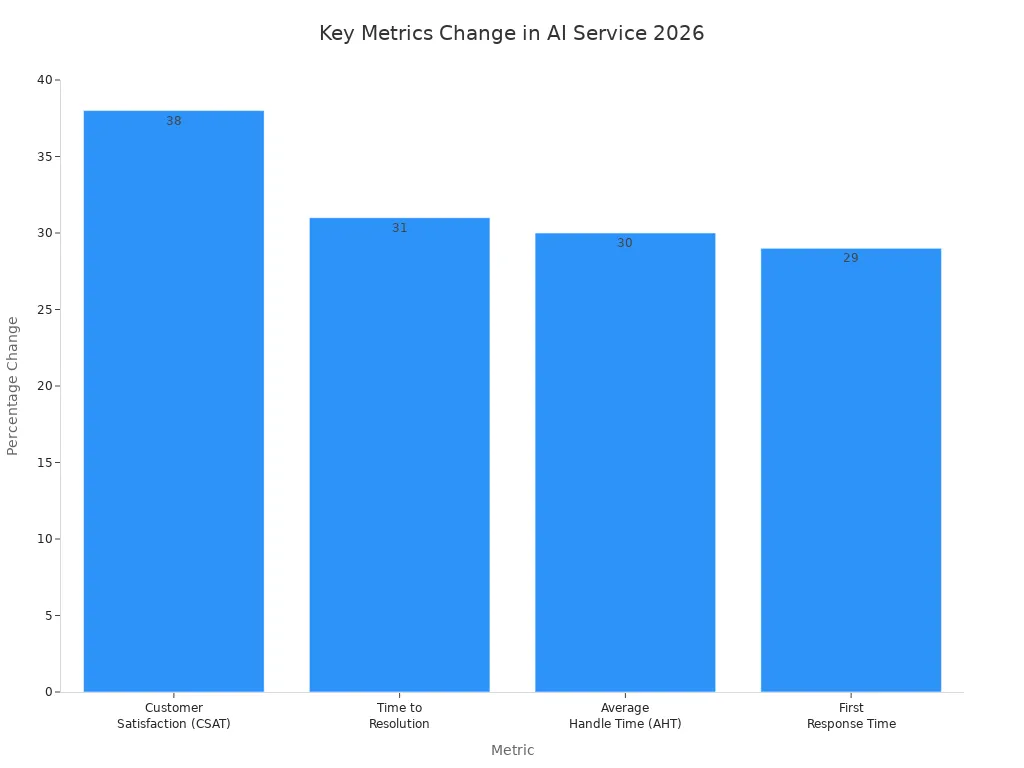
AI and personalization change how you interpret metrics for measuring customer satisfaction. Omnichannel solutions help you create a consistent customer journey. Brands like Sobot use these innovations to improve customer experience across industries.
Key Metrics for Measuring Customer Satisfaction

You need to understand customer satisfaction metrics to improve cx in AI-powered service environments. These metrics help you measure how well your business meets customer needs. Sobot integrates these metrics into its omnichannel solutions, making it easier for you to track and analyze customer satisfaction across every channel. You can use Sobot’s chatbot, AI Agent, live chat, call center, voicebot, ticketing system, and customer contact center to collect and interpret these metrics. This section explains the most important customer satisfaction metrics and how they evolve with AI.
CSAT and NPS in AI Service
CSAT and NPS are two of the most widely used customer satisfaction metrics. CSAT measures how happy customers feel after an interaction. NPS shows how likely customers are to recommend your service. You can use these metrics to track cx and loyalty. AI-powered environments change how you collect and interpret these scores. Sobot’s omnichannel platform segments CSAT into AI-only, handoff, and human-only categories. This helps you see how AI impacts customer satisfaction.
Here is a table that explains the definitions and industry benchmarks for CSAT, NPS, and CES:
| Metric | Definition | Industry Benchmark |
|---|---|---|
| CSAT | Measures customer satisfaction with an interaction | Scores of 80% or higher are considered good; mid-70s to mid-80s are solid for many businesses |
| NPS | Evaluates customer loyalty and retention | Scores above 50 are generally considered good, but context matters based on industry |
| CES | Measures the ease of issue resolution | Improvement in CES should be faster than CSAT if AI is effective |
You should track NPS against support contact reasons to see how AI affects loyalty. Sobot’s platform lets you do this by linking NPS to specific customer journeys. You can also link CES to handoff rates and time to resolution. This helps you identify friction points and improve cx.
Many organizations see NPS scores rise after they implement AI-driven customer service solutions. For example, IuteCredit increased its NPS by 10 points in six months and by 18 points in one year. Aksigorta saw a 20-point increase in 2021. Koçtaş improved its NPS by 60% in nine months.
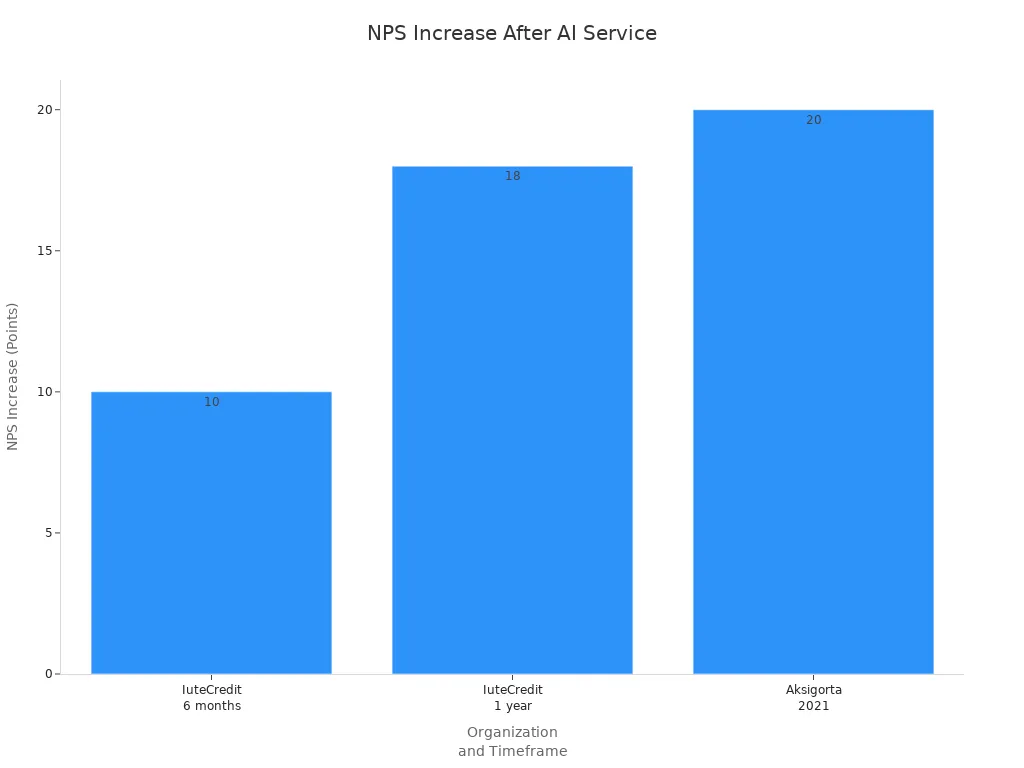
Sobot’s solutions help you achieve similar results. You can unify customer interactions across channels and improve NPS by up to 35%. Learn more about Sobot’s omnichannel solutions for retail and ecommerce at Sobot Retail Solution.
Customer Effort Score (CES) Evolution
Customer Effort Score (CES) is another key customer satisfaction metric. CES measures how easy it is for customers to interact with your business. You want customers to resolve issues quickly and with little effort. Sobot’s AI-powered tools analyze repeat calls, handle times, channel switches, and customer journeys to measure CES.
| Aspect | Description |
|---|---|
| Definition | CES measures how easy it is for customers to interact with an organization. |
| Measurement Techniques | Involves analyzing repeat calls, handle times, channel switches, and customer journeys. |
| Importance of CES | Indicates customer satisfaction; easier interactions lead to happier customers. |
AI changes how you measure CES. You no longer rely only on survey questions. Sobot’s platform uses AI to analyze real-time interactions and conversation data. This gives you deeper insights into cx and customer satisfaction metrics. You can identify friction points and automate responses to reduce customer effort.
- AI can analyze customer interactions in real-time.
- It identifies friction points and automates responses.
- AI predicts customer effort without needing surveys by analyzing conversation data.
Research shows that 96% of customers with a high-effort experience become disloyal. You need to reduce customer effort to keep customers happy. Sobot’s voicebot and call center solutions automate responses and route calls smartly. This lowers CES and improves cx. You can learn more about Sobot’s call center features at Sobot Voice/Call Center.
AI-Driven Analytics and Sentiment
AI-driven analytics and sentiment analysis are transforming customer satisfaction metrics. You can use emotion detection, predictive analytics, and cross-channel sentiment sync to understand customer feelings and motivations. Sobot’s AI Agent and live chat tools use these features to personalize responses and anticipate customer needs.
| Feature | Description |
|---|---|
| Emotion Detection | Advanced tools can identify nuanced emotional states, allowing brands to understand complex customer feelings and motivations, leading to more personalized responses. |
| Predictive Analytics | This feature helps anticipate customer behavior by analyzing historical sentiment trends, enabling proactive measures to enhance customer experience and retention. |
| Cross-Channel Sentiment Sync | Tools that provide synchronized insights across various customer interaction channels help brands track sentiment throughout the customer journey, identifying strengths and weaknesses at each touchpoint. |
AI-driven sentiment analysis improves customer satisfaction metrics in several ways:
| Metric | Improvement Percentage |
|---|---|
| Customer Satisfaction Scores | 27% |
| Response Time to Negative Feedback | 35% |
| Conversion Rates from Neutral to Positive | 42% |
| Customer Churn | 31% |
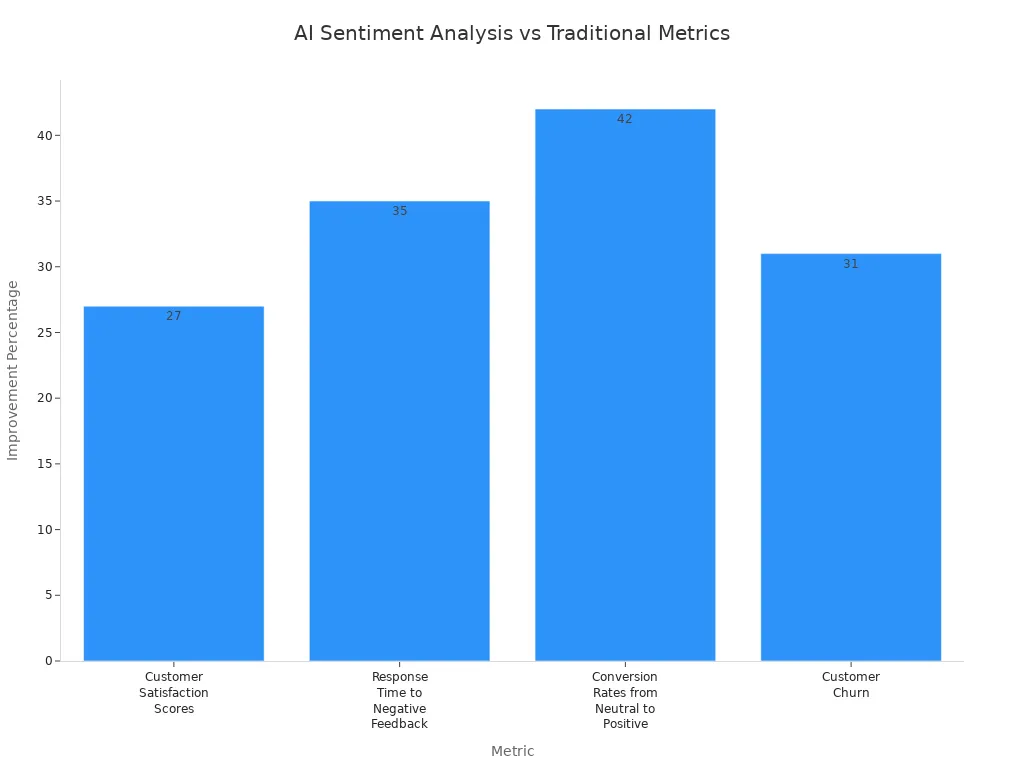
You can use Sobot’s unified workspace to monitor sentiment across all channels. This helps you track cx and customer satisfaction metrics in real time. You respond faster to negative feedback and convert more neutral interactions into positive ones. Sobot’s ticketing system automates workflows and manages SLAs, making it easier to resolve issues and improve customer satisfaction.
Emerging Metrics for 2026
New customer satisfaction metrics are emerging for 2026. You need to adopt these metrics to stay ahead in cx. Leading brands use metrics like Likelihood to Switch (LTS), Customer Retention Rate (CRR), Customer Churn Rate (CCR), Customer Lifetime Value (CLV), and Social Media Metrics. Sobot integrates these metrics into its omnichannel solutions, helping you measure and improve cx across every touchpoint.
- Customer Satisfaction (CSAT)
- Net Promoter Score (NPS)
- Likelihood to Switch (LTS)
- Customer Effort Score (CES)
- Customer Retention Rate (CRR)
- Customer Churn Rate (CCR)
- Customer Lifetime Value (CLV)
- Social Media Metrics
Sobot’s platform gives you a holistic view of customer satisfaction metrics. You can track retention rates, resolution times, and ROI. Sobot’s solutions deliver a 35% uplift in NPS, higher retention, resolution times under one minute, and a 234% ROI.
| Metric | Improvement |
|---|---|
| Net Promoter Scores (NPS) | 35% uplift |
| Customer engagement | Higher retention |
| Resolution times | Under one minute |
| ROI | 234% |
You can use Sobot’s chatbot and AI Agent to engage customers on WhatsApp, SMS, and email. This improves customer satisfaction metrics and cx. Sobot’s customer contact center unifies all channels, making it easy to track and analyze metrics. You can make data-driven decisions to enhance cx and drive revenue growth.
Tip: Adopt emerging customer satisfaction metrics to improve cx and stay competitive in 2026. Sobot’s omnichannel solutions help you measure and optimize every aspect of customer satisfaction.
You can learn more about Sobot’s products and solutions at Sobot Official Website.
Why Customer Satisfaction Metrics Matter in AI-Powered Service
Impact on Customer Experience Trends
You see customer satisfaction metrics shaping customer experience trends in every industry. Companies use CSAT, NPS, and CES to understand what customers want and how they feel. These metrics help you spot patterns and make better decisions. AI-powered service makes it easier to track these numbers in real time. You can see how quickly AI resolves issues and how customers react to automated help. Many people still value human support, but AI tools improve speed and accuracy. When you use these metrics, you learn what works best for your customers.
- CSAT, NPS, and CES give you insights into customer perceptions and behaviors.
- Over 80% of consumers prefer companies that focus on personal interaction, even when using AI.
- Metrics like CSAT and NPS connect directly to loyalty and retention.
Business Outcomes and Loyalty
Customer satisfaction metrics do more than measure feelings. They drive business outcomes and loyalty programs. When you reduce customer effort, you make it easier for people to stay with your brand. Studies show that making service easier can boost repurchase intent by up to 94%. AI-powered tools help you track resolution rates and customer effort. This data helps you build loyalty programs that reward positive experiences. You can see the link between efficient service and higher retention.
| Evidence Description | Impact on Loyalty and Retention |
|---|---|
| Reducing customer effort is a strong predictor of loyalty, even more than delighting customers. | Making service easier can significantly boost retention, with one study showing a potential increase in repurchase intent by up to 94%. |
| Evidence Description | Connection to Business Outcomes |
|---|---|
| Effective metrics focusing on customer effort and resolution rates enhance loyalty and retention. | AI's impact on business performance is tied to measuring critical KPIs related to customer satisfaction. |
Sobot Case Study: Samsung Success Story
Sobot’s work with Samsung shows how metrics for measuring customer satisfaction in AI-powered service lead to real results. Samsung needed to handle many customer questions across different channels. Sobot’s all-in-one contact center unified these channels and improved agent efficiency by 30%. This change helped Samsung deliver better customer experience and build stronger loyalty programs. Sobot’s platform gave Samsung the tools to track satisfaction, reduce effort, and respond faster. You can read more about this case on Sobot’s website.
When you use the right metrics and tools, you can close the gap between industry leaders and others. Sobot helps you measure, analyze, and improve every part of the customer experience.

Implementing Metrics in Sobot Voice/Call Center
Data Collection and Integration
You can use Sobot’s Voice/Call Center to collect and integrate data from every customer interaction. The platform brings together calls, chats, and tickets in one workspace. You track responses, resolution times, and feedback across all channels. Sobot’s system connects with your CRM and other tools, so you see a complete picture of each customer journey. This helps you spot trends and measure customer experience. You reduce complexity and make it easier to analyze feedback.
Sobot’s omnichannel platform solves common challenges:
- High service costs drop with automation.
- You optimize customer experience with AI recommendations.
- Multi-channel communication becomes simple and coordinated.
- Personalized services scale with data-driven insights.
- Feedback turns into actionable improvements.
- Technology stays user-friendly and scalable.
Real-Time Monitoring and AI Insights
Sobot’s Voice/Call Center gives you real-time monitoring and AI-powered insights. You see agent performance, customer sentiment, and call volume as they happen. AI reviews conversations and flags issues quickly. You adjust staffing levels based on call volume and customer mood. This improves customer experience and helps you respond faster.
| Benefit | Description |
|---|---|
| Quality Monitoring | AI and analytics show agent performance and service quality. |
| Customer Sentiment | Real-time insights help you understand how customers feel and improve their experience. |
| Issue Flagging | AI flags problems in conversations so you can fix them right away. |
| Staffing Adjustments | You change staffing levels based on real-time data to meet customer needs. |
Actionable Steps for Improvement
You can use Sobot’s tools to turn feedback into action. The platform helps you share insights with your product team, fix bugs, and update policies. You set clear goals for each improvement. Companies that act on customer experience insights see higher retention rates.
| Feedback Type | Action Taken |
|---|---|
| Feature confusion | Share feedback with product team to improve features or documentation. |
| Bug reports | Make fixing bugs a priority based on customer feedback. |
| Missing features | Suggest new features to product team for future updates. |
| Policy complaints | Update or clarify policies to make them more customer-friendly. |
- You prioritize actions that have the biggest impact on customer satisfaction and loyalty.
- You define clear goals for each strategy.
- Companies that use these steps see a 20-25% increase in retention.
Tip: Use Sobot’s Voice/Call Center to collect, monitor, and act on feedback. This helps you improve customer experience and build stronger relationships. Learn more at Sobot Voice/Call Center.
Overcoming Challenges in Customer Experience Trends
Survey Fatigue and Data Quality
You face survey fatigue when customers get tired of answering too many questions. This can lower response rates and affect data quality. You need to optimize survey length and design. Short surveys help reduce burnout. Sobot’s platform uses AI-powered tools to collect feedback without overwhelming customers. You can enhance the respondent experience with mobile-friendly surveys and real-time monitoring. Sobot tracks response rates and completion times, so you spot fatigue early and adjust your approach.
- Optimize survey length and design for better results.
- Use technology like AI and mobile platforms to make surveys easier.
- Monitor response rates and completion times to detect fatigue.
| Challenge Type | Description |
|---|---|
| Attribution Issues | Difficulty in isolating AI's impact when results overlap with other initiatives. |
| Intangible Benefits | Hard to quantify improvements in decision-making and customer satisfaction in monetary terms. |
| Delayed Outcomes | Financial benefits of AI may take months or years to materialize. |
| Data Quality | Poor-quality or siloed data disrupts accurate evaluations. |
| Lack of Standard Metrics | Absence of a universal framework leads to inconsistent measurements. |
Sobot’s unified workspace helps you collect accurate data across every channel. You get a clear view of the customer journey and improve customer experience.
Privacy, Security, and Compliance
You must protect customer satisfaction data. Sobot’s platform encrypts data both at rest and in transit. You set strict access controls so only authorized staff see sensitive information. Sobot uses anonymization techniques to keep personal identities safe. Regular security audits help you find and fix vulnerabilities.
- Encrypt data at rest and in transit.
- Set strict access controls for sensitive information.
- Use anonymization to protect identities.
- Conduct regular security audits.
Sobot’s platform includes PII anonymizers and data governance layers. You manage user consent and monitor data usage. Sobot aligns with global standards like GDPR and ISO/IEC 27018. You build consumer trust and customer trust by keeping data secure and transparent.
Tip: Use Sobot’s platform to meet compliance requirements and protect customer satisfaction data. Learn more at Sobot Official Website.
Best Practices for 2026
You need best practices to measure customer satisfaction in AI-powered service. Map different personas to create unique customer journey maps. Identify critical moments that shape customer experience. Combine quantitative and qualitative data for a full picture. Sobot’s platform helps you integrate feedback from every channel.
- Map customer journey for key segments.
- Identify high-impact moments of truth.
- Integrate quantitative and qualitative data.
- Prioritize investments in pain points.
- Combine AI tools with human insights for sentiment analysis.
- Set real-time alerts for changes in sentiment.
- Analyze trends over time, not just snapshots.
- Segment sentiment analysis by product or demographic.
- Establish clear ownership for feedback.
- Create closed-loop processes to act on feedback.
Sobot’s omnichannel solutions let you track and improve every step of the customer journey. You respond quickly to feedback and drive strategic changes. You build stronger customer experience and boost loyalty.
Note: Following these best practices helps you stay ahead in customer experience trends and ensures your metrics for measuring customer satisfaction in AI-powered service deliver real value.
You see that Metrics for Measuring Customer Satisfaction in AI-Powered Service keep evolving as AI automates more interactions and boosts agent efficiency. Research shows AI improves response accuracy to 94% and speeds up issue resolution by 83%.
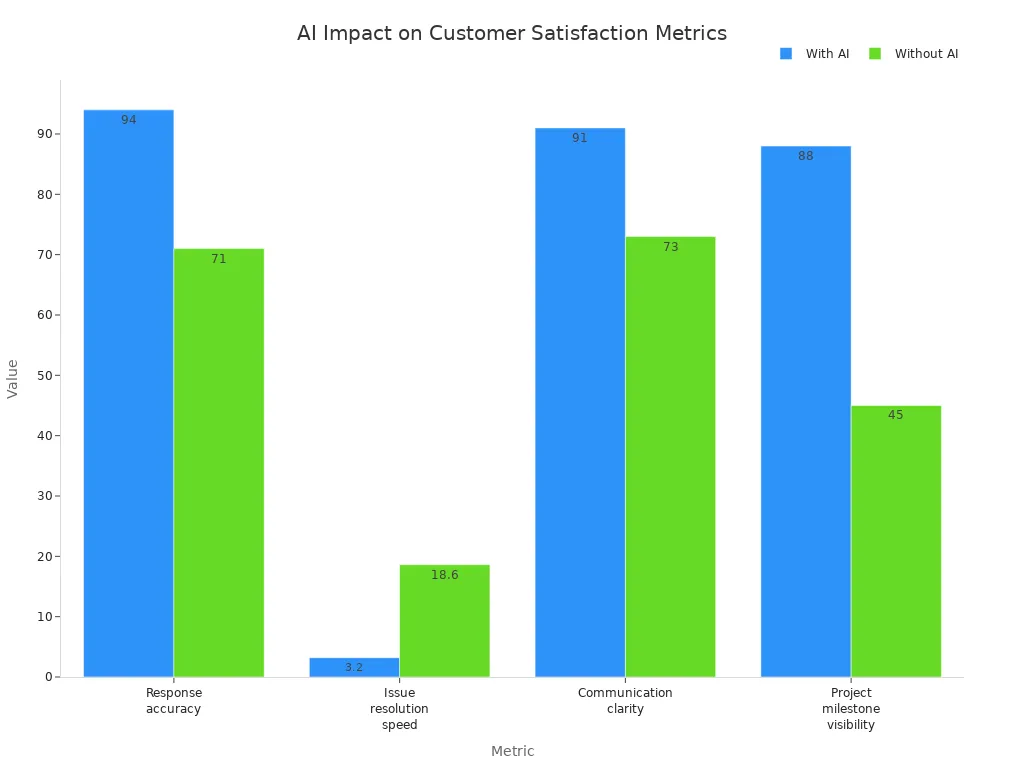
To improve customer experience, use Sobot’s voice AI for smarter call routing, send proactive notifications, and personalize plans. Regularly review your strategy, monitor key metrics, and adapt to new trends. Remember, empathy and agentic AI will shape the future of customer service.
FAQ
What are the main metrics for measuring customer satisfaction in AI-powered service?
You track Customer Satisfaction Score (CSAT), Net Promoter Score (NPS), Customer Effort Score (CES), and AI-driven analytics. These metrics help you understand how customers feel and how easy it is for them to get help.
How does Sobot help you measure customer satisfaction?
Sobot’s platform collects data from calls, chats, and tickets. You see real-time metrics for CSAT, NPS, CES, and sentiment. The unified workspace lets you analyze feedback and improve customer experience across every channel.
Why is real-time monitoring important for customer satisfaction?
Real-time monitoring lets you spot issues quickly. You adjust staffing and respond to feedback right away. This improves Metrics for Measuring Customer Satisfaction in AI-Powered Service and helps you keep customers happy.
Can you integrate Sobot’s metrics with your CRM?
Yes, you connect Sobot’s Voice/Call Center with your CRM. You track Metrics for Measuring Customer Satisfaction in AI-Powered Service alongside customer history. This gives you a complete view and helps you make better decisions.
How does AI improve customer satisfaction metrics?
AI analyzes conversations and predicts customer needs. You automate responses and reduce customer effort. Metrics for Measuring Customer Satisfaction in AI-Powered Service improve as you personalize support and resolve issues faster.
See Also
Enhancing Efficiency With AI-Driven Customer Service Tools
Increasing Customer Satisfaction Through E-commerce Chatbots
Comparative Analysis of Leading Voice of Customer Tools