Mastering Personalization in Customer Service in 2026


The standard for personalization in customer service has changed. You must now move beyond simple name tokens. Customers expect a deeply personalized customer experience, similar to Netflix or Spotify. This creates one of the biggest emerging trends for 2026: the personalization paradox. While customers want you to understand their journey, 81% of people have privacy concerns about how AI uses their data. This guide, with insights from innovators like Sobot, will help you master new trends. You will learn to deliver situational personalization and a better customer experience using tools like Sobot AI and the Sobot call center to build trust throughout the customer journey.
Situational Personalization in Customer Service

To master personalization in customer service, you must look beyond a customer's purchase history. The new standard is situational personalization. This approach focuses on the "right now" of the customer journey. It requires you to adapt your service based on a customer's immediate goals, emotional state, and real-time needs.
Defining Situational Context
Situational context is your ability to understand what a customer is trying to do at any given moment. You are not just looking at their static profile. You are responding to their current situation. This creates a more human and helpful experience. Great brands already do this well.
- Trader Joe's empowers employees to walk customers directly to items. This simple act makes customers feel valued during their shopping journey.
- Nordstrom sales associates build relationships to offer suggestions based on a customer's immediate style preferences, not just past purchases.
This level of awareness transforms a simple transaction into a positive, memorable interaction. It shows you are paying attention to the customer's present journey.
Real-Time Journey Diagnostics
You cannot act on a situation you cannot see. This is why real-time journey diagnostics are critical. This process involves using technology to monitor a customer's live journey on your website or app. Effective customer journey management relies on tools that create a single view of each user. These tools include:
Key Technologies for a Clear View:
- Customer Data Platforms (CDPs) that unify data from all touchpoints.
- Analytics and Reporting Tools that track interactions and reveal patterns.
- System Integrations that connect your platforms for a complete picture of the journey.
These systems allow you to monitor journey health in the moment. You can see if a customer is stuck on a checkout page or repeatedly viewing a help article. This visibility is the first step in effective customer journey management.
Proactive Support and De-escalation
Once you can see the customer journey, you can act proactively. Instead of waiting for a customer to complain, you can anticipate their needs and offer help. Monitoring user behavior for repeated failed actions or signs of frustration allows you to intervene. This is one of the most powerful trends in customer support.
AI systems excel at this. For example, Sobot's AI solutions are designed to understand user intent from their browsing behavior. This helps you convert browsers into buyers by offering timely assistance. When an AI chatbot sees a user hesitating on a product page, it can proactively offer a size guide or answer a common question. Research shows customers who get immediate answers are 63% more likely to complete their purchase. This proactive approach improves journey health, prevents escalations, and makes the entire customer journey smoother.
AI-Powered Agents for a Better Customer Experience
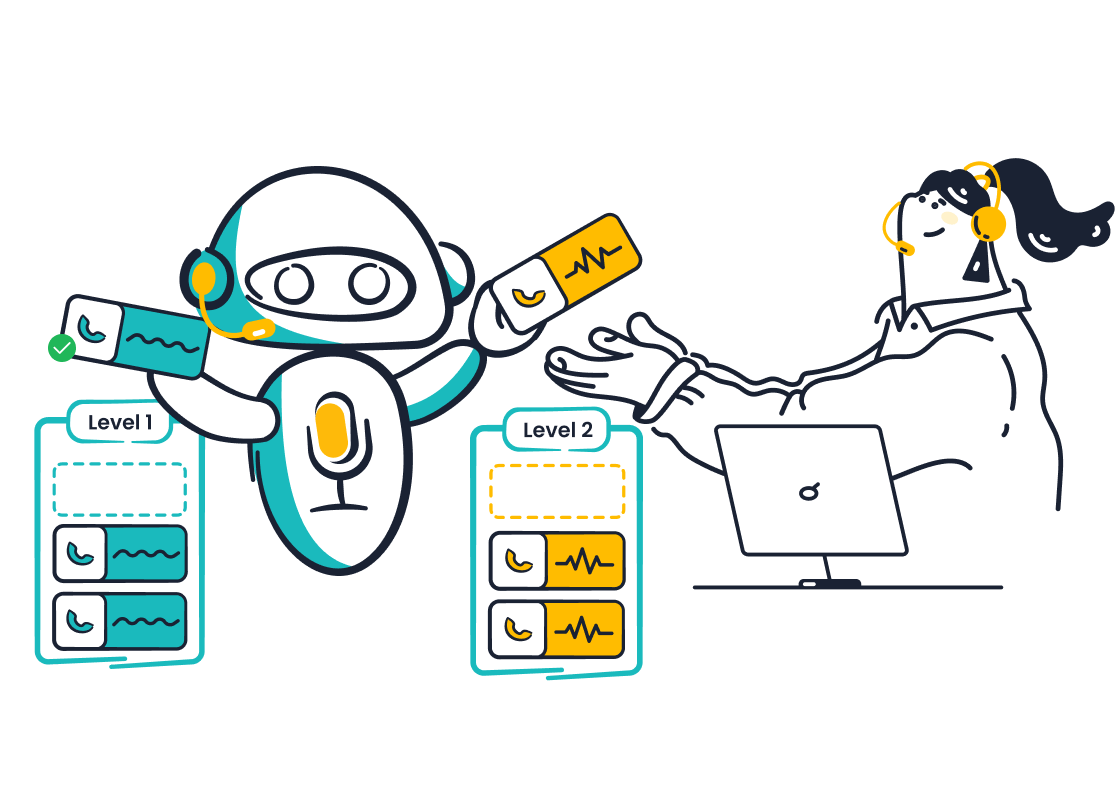
Proactive support is a great start, but true customer experience excellence requires a smart balance between automation and human touch. Many companies make the mistake of over-automating their service journey, which can damage customer trust. The future of ai-powered customer service is not about replacing agents. It is about empowering them.
The Pitfalls of Over-Automation
You risk frustrating customers when you rely too heavily on chatbots to cut costs. More than two-thirds of customers report negative chatbot experiences. These bad interactions often happen because the technology is not implemented with the customer's journey in mind.
Common Customer Complaints with Automation:
- The chatbot cannot answer their questions.
- It fails to understand their actual needs.
- It cannot handle complex or emotional problems.
- There is no easy way to connect with a human agent.
When a chatbot aggravates an already upset customer, it erodes loyalty. This highlights the need for human judgment in the service journey.
AI as an Agent Co-Pilot
Instead of replacing agents, you should use AI as their co-pilot. An AI co-pilot acts as a helpful sidekick inside your help desk. It gives your team instant access to information and tools. This approach helps you build trust in AI while delivering immediate value. For example, Sobot’s AI co-pilot assists your human agents by:
- Instantly generating accurate response suggestions.
- Summarizing long customer conversations for quick context.
- Accessing your knowledge base to find correct answers fast.
This support allows your agents to resolve issues faster and more consistently, improving the entire customer experience.
Measuring Agent-Assist ROI
This human-machine partnership delivers clear business results. You can measure its success by tracking key performance indicators. The smart device innovator OPPO provides a powerful example. By using Sobot's chatbot and ticketing system to support its agents, OPPO transformed its personalization in customer service. This strategic approach to the customer journey yielded incredible results.
| Metric | OPPO's Result with Sobot |
|---|---|
| Chatbot Resolution Rate | 83% |
| Positive Feedback Score | 94% |
| Increase in Repurchase Rate | 57% |
These numbers, detailed in their customer story, prove that empowering agents with AI leads to higher satisfaction and drives real financial growth.
Building Trust with Data Transparency
Empowering agents with AI is a powerful step. However, you must address the data that fuels it. Customers are caught in a difficult position. They want you to know them, but they worry about how you use their information. This is one of the most important trends to navigate. Building trust through transparency is no longer optional; it is essential for a successful customer journey.
The Personalization Paradox
The personalization paradox is the conflict between a customer's desire for tailored experiences and their concern for data privacy. This gap varies by generation. Younger customers have a much higher expectation for a personalized journey.
| Generational Cohort | Desire for Personalized Web Browsing |
|---|---|
| Gen Z | 91% |
| Baby Boomers | 54% |
Despite this demand, 72% of all consumers feel that digital ads are irrelevant or "creepy." When you cross the line, you break trust. Your goal is to find the balance. You must deliver relevance without violating privacy along the customer journey.
Creating a Transparent Value Exchange
You can solve the paradox by creating a transparent value exchange. This means you clearly communicate what data you are collecting and what the customer gets in return. This builds confidence and gives customers control over their journey.
Keys to Clear Communication 🔑 You should simplify your privacy policies with plain language and visual aids. Offer information in layers, starting with a simple summary. This empowers customers to understand their rights and how you protect their data.
For example, you can offer exclusive content through an email newsletter or provide rewards through a loyalty program. In each case, the customer understands they are sharing data for a specific benefit. This turns data collection into a positive and consensual part of the customer journey.
Privacy-Centric Personalization
True personalization in customer service respects user privacy from the start. This requires a commitment to privacy-centric design and technology. You can use Privacy-Enhancing Technologies (PETs) like data anonymization to analyze trends without exposing personal information. This approach allows you to personalize experiences while protecting individuals.
To implement this safely, you need a secure foundation. Platforms like Sobot AI provide the necessary framework. Sobot AI is GDPR compliant and uses data encryption to protect customer information. Using a compliant platform is critical for building a system your customers can trust. It proves your commitment to protecting their data at every stage.
Proving the Financial Impact of Personalization
A great customer experience feels good, but you must prove it delivers financial value. Connecting your customer service efforts to the bottom line is one of the most important trends for leaders in 2026. You must move beyond tracking only customer satisfaction (CSAT) and start measuring financial key performance indicators (KPIs). This proves the return on your investment in the customer journey.
From CX Metrics to Financial KPIs
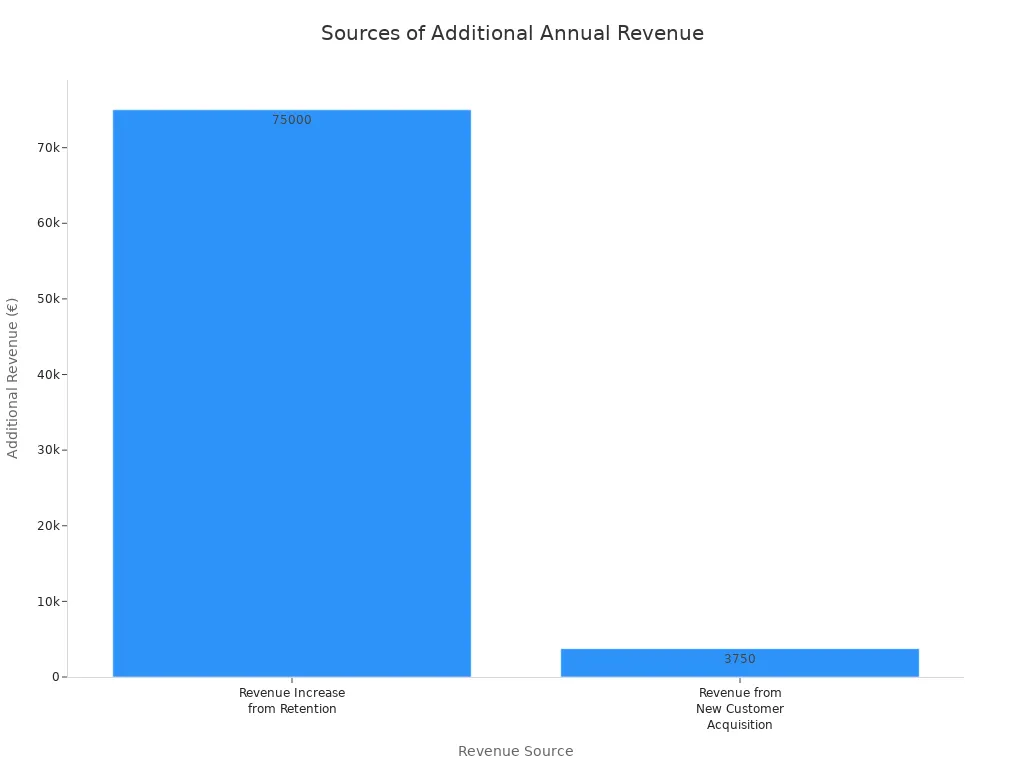
You can directly link customer experience metrics to revenue. Companies that excel at CX achieve more than double the revenue growth of those that lag behind. A small increase in your CSAT score can lead to a significant financial gain. For example, a 5-point rise in CSAT can boost customer retention and acquisition.
Example: The Financial Impact of a 5-Point CSAT Increase For a business with 10,000 customers, this small improvement could generate over €78,000 in new annual revenue. This shows how a better customer journey directly translates to money.
Tying Initiatives to Business Value
You must connect each personalization initiative to a specific business outcome. Two of the most important metrics are churn reduction and Customer Lifetime Value (CLV). Research shows 76% of consumers get frustrated by generic outreach, which can increase churn. Personalized interactions make customers feel valued and more likely to stay. This is a key part of effective customer journey management.

Technology provides a clear path to these results. For instance, Sobot's Voicebot can reduce your cost-per-contact by 80%, delivering immediate savings. Similarly, Sobot's AI solutions helped OPPO achieve a 57% increase in its repurchase rate. This demonstrates how a better journey boosts CLV and drives long-term growth.
A Framework for Reporting ROI
To prove your success, you need a clear framework for reporting your return on investment. A dual-reporting strategy is highly effective. It allows you to show both short-term wins and long-term value.
- Performance Reporting: Focus on immediate results like lower costs or higher conversion rates.
- Potential Reporting: Connect these wins to long-term metrics like CLV and retention to project future revenue.
This approach makes the financial impact of your customer journey management strategy clear to everyone.
Mastering personalization in customer service by 2026 requires an intelligent strategy, not just technology. Innovators like Sobot show that success comes from a balanced approach. You must leverage situational context and empower agents with AI to improve the customer experience. You also need to champion data transparency and measure your financial impact. This integrated method is the definitive path to building lasting customer loyalty and achieving sustainable growth.
FAQ
How can AI improve personalization in customer service?
You can use AI to understand a customer's immediate needs. For example, Sobot’s AI co-pilot helps your agents find answers quickly. This allows your team to provide faster, more accurate, and highly relevant support during every conversation, creating a better customer journey.
What is the best way to handle customer data privacy?
You should build trust through transparency. Use a secure, compliant platform for your customer journey management. Sobot AI is GDPR compliant and uses data encryption. This protects customer information while allowing you to deliver the personalized experiences your customers expect.
How do I prove the ROI of better customer service?
You can connect service metrics to financial results. Track how personalization reduces customer churn and increases lifetime value. Tools like Sobot's Voicebot can lower your cost-per-contact by 80%, showing a direct and immediate return on your investment.
What is the first step to improve our personalization strategy?
You should start by understanding your current customer journey. Identify where customers struggle. Implementing a tool like an AI-powered chatbot can provide immediate proactive support. This offers a quick win while you build a more comprehensive strategy for personalization in customer service.
See Also
Artificial Intelligence Agents Transform Customer Service and Support Operations
Achieving Excellence in Retail Customer Engagement Through Live Chat
Optimizing Customer Support Interactions with Expert Live Chat Strategies
The Ten Best Voice of Customer Software Solutions for the Year 2024
Implementing Top Quality Management Practices for Call Center Success

