Mastering Automated Support for Better Service

Imagine a world where your customers receive instant answers, even at midnight. This is the power of customer service automation. With tools like automated support, businesses are transforming how they interact with customers. Advanced technologies like chatbots and natural language processing make it possible to handle complex queries while understanding human emotions. This evolution isn’t just about efficiency—it’s about delivering proactive customer service that feels personal and seamless.
Today’s customers expect 24/7 availability and fast resolutions. Meeting these expectations is no longer optional. Companies that embrace automation not only improve customer experience management but also gain a competitive edge. By automating customer service, you can ensure personalized service while freeing up your team to focus on more strategic tasks. Brands like Sobot are leading this revolution, helping businesses create smarter, customer-centric strategies.
Understanding Customer Service Automation
What Is Customer Service Automation?
Customer service automation is the use of technology to streamline how you interact with customers. It replaces repetitive tasks with intelligent systems, like chatbots and self-service portals, to provide faster and more efficient support. Instead of waiting for a human agent, customers can get instant answers to their questions, even during off-hours.
Automation doesn’t just save time; it transforms the way businesses operate. Research shows that optimizing customer experience through automation can lead to revenue growth of 5-10%. It’s no wonder that 79% of customer service specialists value AI and automation for improving efficiency and understanding buyers better.
How Automated Customer Service Works
Automated customer service relies on tools like AI chatbots, workflow automation, and self-service support systems. These tools analyze customer inquiries, detect intent, and provide accurate responses. For example, a chatbot can resolve up to 80% of customer service requests through self-service, freeing up your team to focus on complex issues.
Here’s how it works:
- AI-Powered Chatbots: They use natural language processing to understand customer queries and provide instant replies.
- Self-Service Portals: Customers can access FAQs, tutorials, or troubleshooting guides to solve problems independently.
- Workflow Automation: Tasks like ticket routing and follow-ups are automated, reducing manual effort and speeding up resolution times.
This approach not only enhances efficiency but also improves customer satisfaction by delivering faster and more personalized service.
Common Features of Automated Support Systems
Automated support systems come packed with features designed to improve customer experience. Some of the most impactful ones include:
| Feature | Description |
|---|---|
| Sentiment Analysis | Detects tone and emotions in customer inquiries, allowing for better routing of complex issues. |
| Self-Service Options | Automates repetitive tasks, enabling customers to resolve queries independently, achieving a 40-60% resolution rate. |
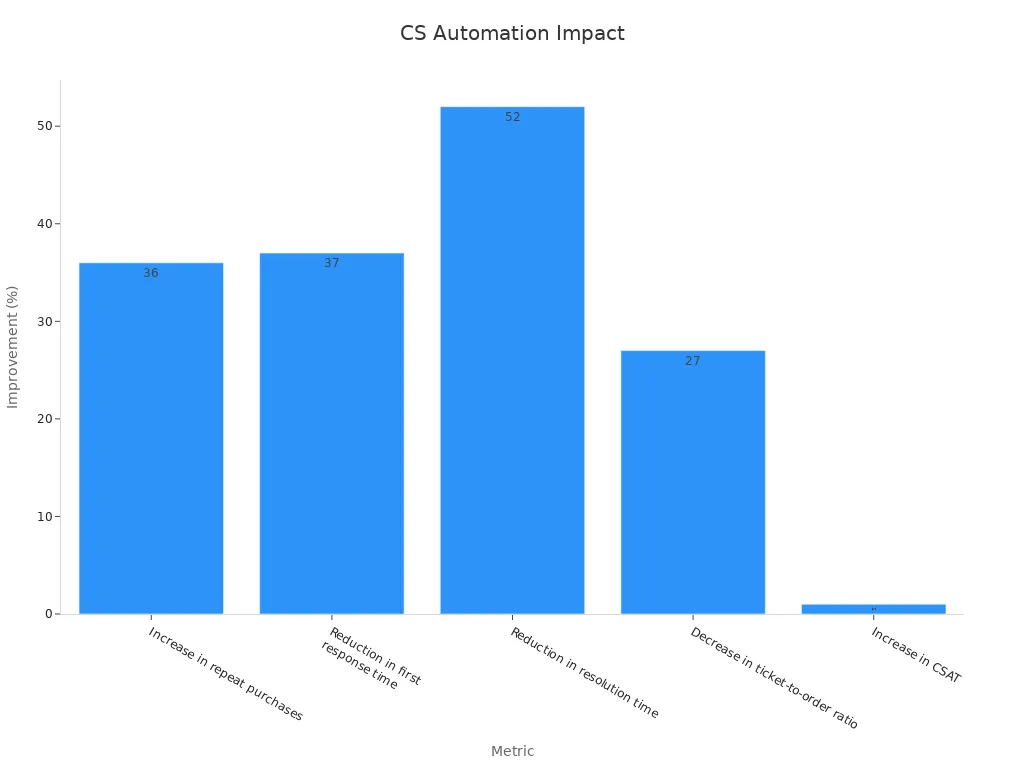
These systems also prioritize metrics like response time, resolution rate, and customer satisfaction. By streamlining processes, they ensure customers receive timely and accurate responses. Businesses using automation have reported a 37% reduction in first response time and a 52% decrease in resolution time.
With features like these, automated customer service becomes a powerful tool for enhancing both efficiency and customer loyalty.
Tools and Technologies for Automated Support

Sobot Chatbot: Revolutionizing Customer Interactions
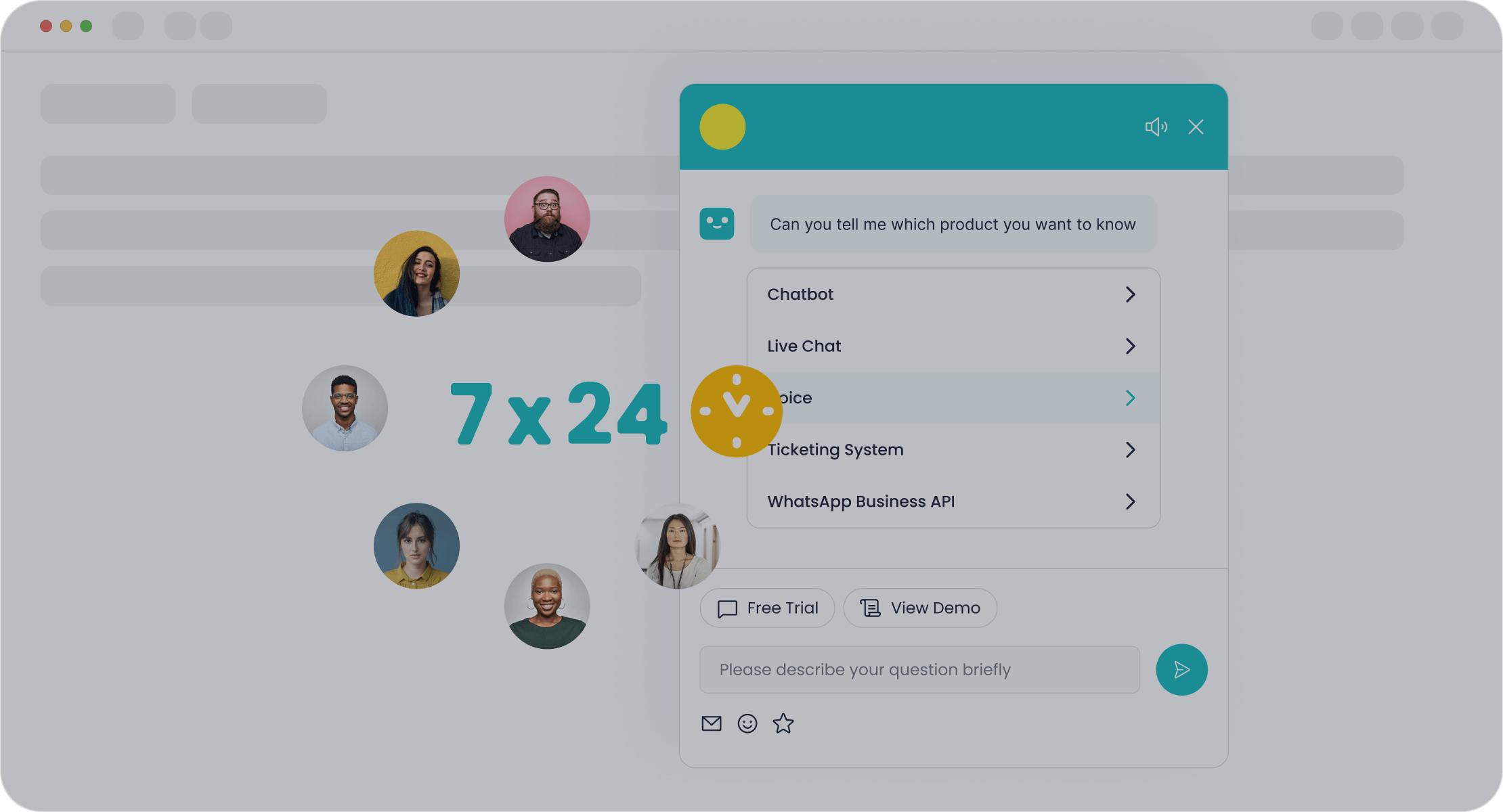
When it comes to transforming customer interactions, Sobot Chatbot stands out as a game-changer. This AI-powered virtual assistant doesn’t just answer questions—it creates meaningful connections. By using natural language processing, it understands customer intent and provides accurate responses instantly. Whether it’s resolving a query or guiding a purchase, the chatbot ensures smooth and efficient interactions.
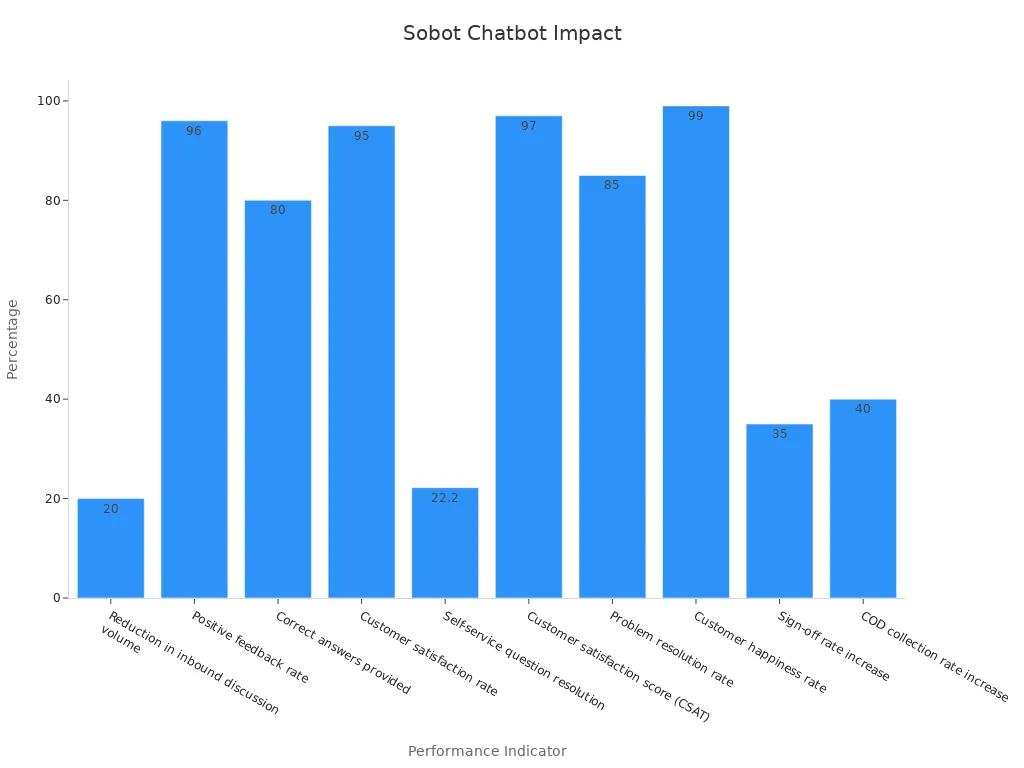
Sobot Chatbot’s performance speaks for itself. It reduces inbound discussion volume by 20% and achieves a 96% positive feedback rate. With an 85% problem resolution rate, it’s clear that automation can significantly enhance customer satisfaction. Plus, its ability to operate 24/7 means your customers always have access to support, no matter the time.
| Performance Indicator | Statistic |
|---|---|
| Positive feedback rate | 96%+ |
| Problem resolution rate | 85% |
| Customer satisfaction score (CSAT) | 97% |
By integrating Sobot Chatbot into your customer service strategy, you can reduce costs, improve efficiency, and deliver exceptional experiences.
Self-Service Portals and Knowledge Bases
Self-service is no longer a luxury—it’s a necessity. Customers want quick solutions without waiting for an agent. Self-service portals and knowledge bases empower them to find answers independently. These tools include FAQs, troubleshooting guides, and AI-powered search functions that make information easy to access.
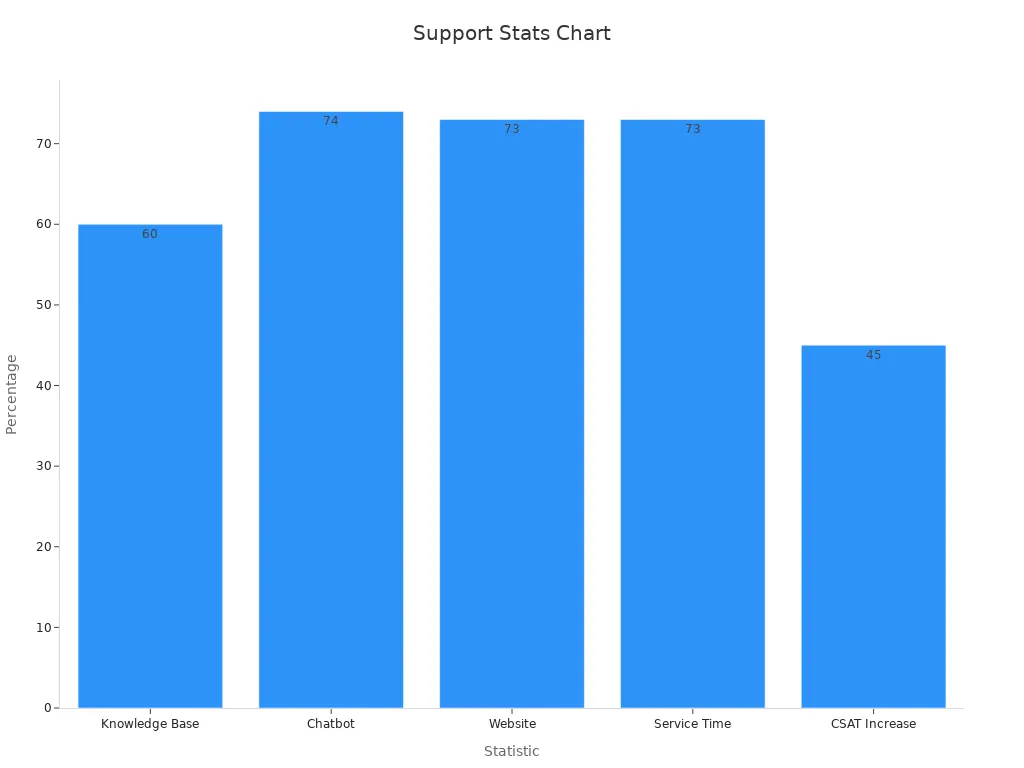
Did you know that 60% of clients prefer using a knowledge base? And 74% of customers choose chatbots over human agents for quick resolutions. These numbers highlight the growing demand for self-service options. Businesses adopting these tools have seen a 45% increase in customer satisfaction.
| Statistic | Value |
|---|---|
| Clients preferring Knowledge Base | 60% |
| Customers choosing chatbot over human agent | 74% |
| Increase in CSAT after adopting self-service | 45% |
Sobot’s self-service solutions, like its AI-powered knowledge base, allow you to offer seamless support while reducing agent workload. It’s a win-win for everyone.
AI-Powered Insights and Analytics
AI-powered insights are the secret weapon for understanding your customers better. By analyzing historical data, AI can predict trends, identify pain points, and even forecast customer behavior. This helps you make informed decisions and improve your service strategy.
For example, telecom companies use AI to predict customer churn. By acting on these insights, they retain more customers and boost loyalty. Sobot’s analytics tools take this a step further by offering real-time feedback and performance metrics. You can track key indicators like Net Promoter Score (NPS) and Customer Satisfaction (CSAT) to continuously refine your approach.
| Insight Type | Description |
|---|---|
| Predictive Insights | Analyzing historical data to forecast future outcomes, helping businesses make informed decisions. |
| Enhanced Customer Experience | Providing personalized recommendations and improving customer service through detailed analytics. |
| Customer Behavior Modeling | Building models to identify complex patterns in customer behavior that traditional methods might miss. |
With AI-powered analytics, you’re not just reacting to problems—you’re staying ahead of them.
Workflow Automation Tools for Support Teams
Imagine if your team could spend less time on repetitive tasks and more time solving meaningful problems. That’s exactly what workflow automation tools bring to the table. These tools streamline your support processes, making your team faster, more efficient, and happier.
Workflow automation tools handle tasks like ticket routing, follow-ups, and status updates. Instead of manually assigning tickets, the system does it for you based on predefined rules. This means no more delays or misplaced tickets. Your team can focus on what really matters—helping customers.
Here’s why these tools are a game-changer for support teams:
- Enhanced Productivity: Automation frees up your team to focus on high-value tasks, boosting overall efficiency.
- Reduced Errors: By automating repetitive processes, you minimize mistakes and ensure consistency.
- Faster Task Execution: Automation speeds up workflows, helping your team respond quicker to customer needs.
- Improved Collaboration: Centralized platforms keep everyone on the same page with real-time updates.
- Cost Savings: Automation reduces labor costs and prevents expensive errors.
- Scalability: As your business grows, these tools adapt to handle increased workloads seamlessly.
For example, Sobot’s ticketing system automates workflows like SLA management and email ticketing. It ensures that no ticket slips through the cracks. Plus, it provides detailed analytics, so you can track performance and make data-driven decisions.
Pro Tip: Automating mundane tasks doesn’t just improve efficiency—it also boosts team morale. When your team spends less time on repetitive work, they feel more engaged and satisfied.
With workflow automation tools, you’re not just improving operations. You’re setting your team up for long-term success. Why not give your team the tools they need to thrive?
Benefits of Customer Service Automation

Enhancing Efficiency and Reducing Response Times
Automation is a game-changer when it comes to improving efficiency and cutting down response times. Imagine a system that handles repetitive tasks like ticket routing or order entry without breaking a sweat. Automated customer service tools, such as chatbots and automated ticketing systems, make this possible. They work tirelessly 24/7, ensuring your customers get the help they need instantly.
For example, a building products distributor boosted order efficiency by 10 times and reduced errors by 90% through automation. Tasks like invoicing and follow-ups became faster and more accurate. This not only improved productivity but also enhanced customer satisfaction. With self-service support options, your customers can solve issues on their own, reducing wait times and increasing engagement.
Did You Know? Companies using automation resolve complaints 52% faster, leading to happier customers and better experiences.
Scalability for Growing Businesses
As your business grows, so does the demand for customer service. Automation ensures you can scale without compromising quality. Automated support systems handle high volumes of inquiries during peak periods, ensuring no customer feels ignored. Whether it’s managing customer interactions or streamlining workflows, automation adapts to your needs.
Here are some key metrics that show how automation supports scalability:
- Customer Retention Rate: Keep more customers happy over time.
- Customer Churn Rate: Reduce the number of lost customers.
- Customer Satisfaction Score (CSAT): Measure how satisfied your customers are.
- Product Adoption: Track how often customers use your services.
- Customer Lifetime Value (CLV): Maximize the revenue from each customer.
- Net Revenue Retention (NRR): Retain revenue even with cancellations or upgrades.
Automation also helps you manage inquiries during busy times, ensuring consistent service. This keeps your customers engaged and loyal, even as your business expands.
Boosting Customer Satisfaction Through Automation
Happy customers are loyal customers. Automation plays a huge role in improving customer satisfaction by delivering quick, accurate, and personalized service. Tools like AI-powered chatbots and self-service portals make it easy for customers to find answers without waiting. This creates a seamless experience that keeps them coming back.
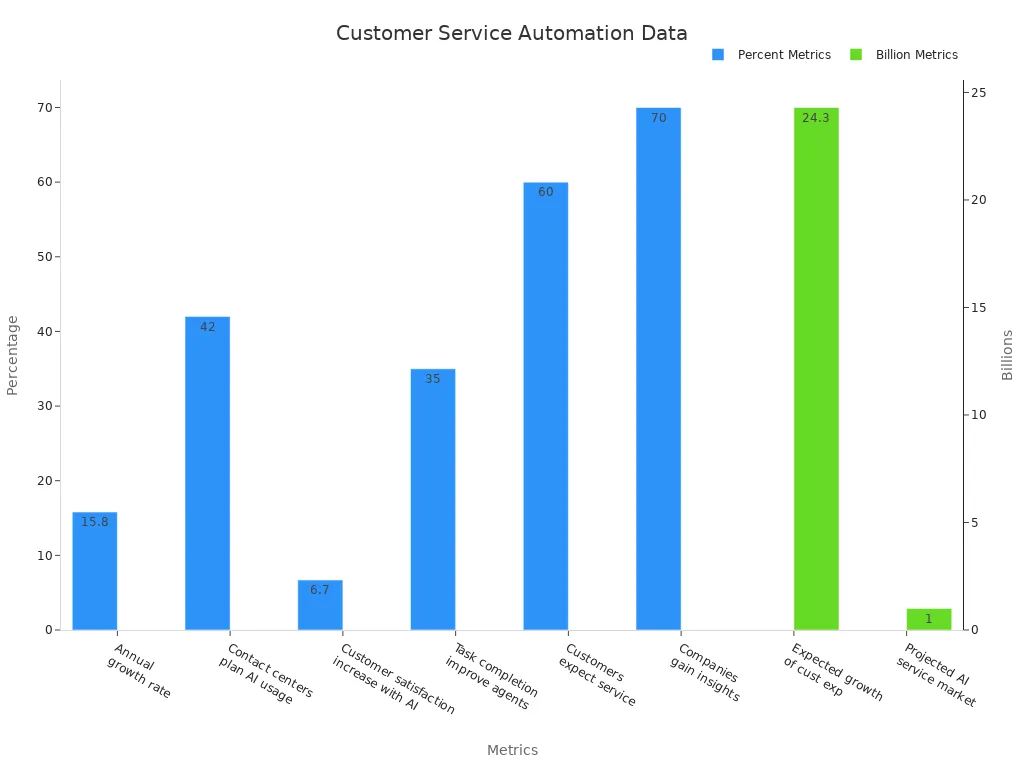
Statistics back this up. Companies using automation report a 6.7% increase in customer satisfaction. Additionally, 73% of customers welcome AI in customer service, and 72% believe it enhances their overall experience. By resolving complaints faster and offering consistent support, automation ensures your customers feel valued.
Pro Tip: Use automated ticketing systems to track and resolve issues efficiently. This not only improves satisfaction but also strengthens customer relationships.
Cost Savings and Resource Optimization
Automation isn’t just about making things faster—it’s also about saving money and using resources wisely. When you automate customer service, you cut down on repetitive tasks, reduce errors, and free up your team to focus on more meaningful work. This means you’re not only improving efficiency but also optimizing how you spend your budget.
Think about this: automated systems like chatbots and self-service tools work 24/7. They handle customer inquiries without needing breaks, overtime pay, or extra staff during busy periods. This alone can save you up to 50% on operational costs. Plus, automation minimizes human error, which means fewer mistakes and less money spent on fixing them.
Here’s how automation helps you save and optimize resources:
- Lower Labor Costs: Automated workflows reduce the need for additional staff, especially during peak times.
- Faster Processes: Tasks like ticket routing and data entry happen instantly, saving time and money.
- Scalability: As your business grows, automation scales with you without requiring proportional cost increases.
For example, companies using test automation have seen a 30% reduction in time-to-market and a 25% increase in test coverage. Even better, 70% of these organizations reported a positive return on investment within the first year. That’s a win-win for your bottom line and your customers.
Pro Tip: Investing in automation might seem costly upfront, but the long-term savings are worth it. You’ll not only reduce expenses but also improve customer satisfaction by delivering faster, more reliable service.
With tools like Sobot’s self-service support and AI-powered chatbots, you can streamline operations, lower costs, and keep your customers happy. It’s a smart move for any business looking to grow efficiently.
Overcoming Challenges in Automated Customer Service
Balancing Automation with Human Interaction
Automation is powerful, but it’s not a one-size-fits-all solution. Some situations demand the human touch. For example, emotionally charged scenarios or complex problems often require empathy and creative thinking. Customers also value personal advice when making high-stakes decisions, like purchasing expensive items or signing contracts.
Here’s how you can strike the right balance:
- Use automation for routine tasks like FAQs or order tracking.
- Assign human agents to handle sensitive or high-value interactions.
- Train your team to step in when empathy or creativity is needed.
| Statistic | Description |
|---|---|
| 69% | Customers appreciate personal advice for high-priced purchases. |
| 75% | Empathy and authenticity are top priorities for customers. |
| 64% | Consumers want more human interaction online. |
Automation enhances efficiency, but human interaction builds trust and loyalty. Combining both ensures your automated customer service delivers exceptional quality.
Addressing Technical Issues and Downtime
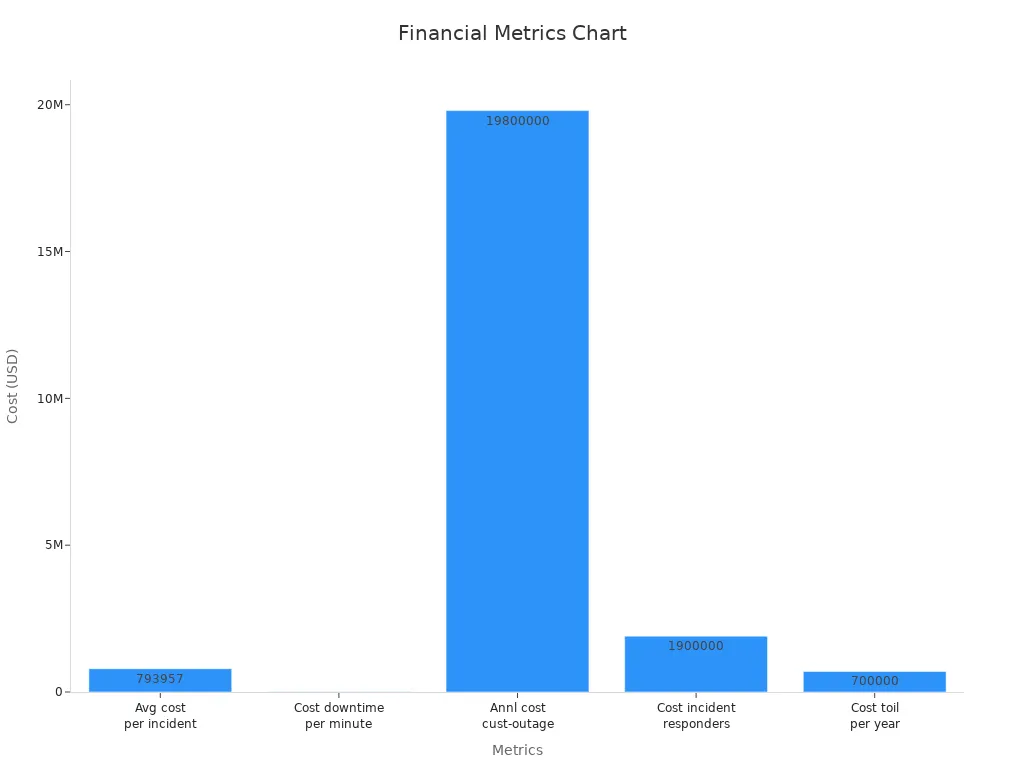
Even the best systems face technical hiccups. Downtime or glitches in automated support can frustrate customers and damage trust. Did you know the average cost of downtime per minute is $4,537? That’s a hefty price for any business.
To minimize these issues:
- Regularly update and test your systems.
- Invest in monitoring tools to detect problems early.
- Have a backup plan for critical failures.
| Metric | Value |
|---|---|
| Increase in customer-impacting incidents | 43% increase in the past year |
| Average cost per incident | $793,957 |
| Estimated annual cost of outages | $19.8 million |
| Percentage of IT leaders reporting reduced trust | 90% |
Proactively addressing technical challenges ensures your automated support remains reliable and efficient.
Ensuring Data Privacy and Security
Data privacy is non-negotiable in today’s digital world. Customers trust you with their personal information, and it’s your responsibility to protect it. Implementing strong security measures not only safeguards data but also boosts customer confidence.
Here’s how you can ensure data privacy:
- Identify and tag personal data during collection.
- Use robust security safeguards, including encryption and firewalls.
- Continuously update your security protocols to address new threats.
- Train employees on data privacy best practices.
| Evidence Type | Description |
|---|---|
| Compliance Solutions | Align with regulations like GDPR and CCPA. |
| Continuous Monitoring | Adapt to new regulations and threats through constant oversight. |
| Employee Training | Reduce breaches by educating staff on privacy practices. |
| Vendor Risk Management | Automate vendor assessments to maintain security. |
| Automation of Documentation | Simplify compliance audits with automated evidence collection. |
By prioritizing data security, you not only comply with regulations but also enhance the overall quality of your automated customer service.
Overcoming Resistance to Change in Teams
Introducing automation into your customer service team can feel like a big leap. Some employees might worry about job security or struggle to adapt to new tools. Resistance to change is natural, but with the right approach, you can turn hesitation into enthusiasm.
Start by being open and honest with your team. Explain how automation benefits everyone—not just the company, but also the employees. For example, automation can handle repetitive tasks, giving your team more time to focus on meaningful work. When people understand the "why," they’re more likely to embrace the "how."
Here are some strategies that have worked for other organizations:
- Transparent Communication: Companies like FinServe Solutions held regular meetings to address concerns and share updates. They used multiple channels to keep the dialogue open and build trust.
- Showcase Early Wins: Highlight small successes with automation to show its positive impact. This can help ease fears and build confidence in the new system.
- Upskilling Programs: Retraining employees for new roles can reduce anxiety about job loss. FinServe introduced comprehensive training programs to help their team transition smoothly.
Tip: Focus on reskilling your team instead of replacing them. This not only boosts morale but also strengthens your workforce for the future.
When employees feel supported, they’re more likely to see automation as an opportunity rather than a threat. By investing in training and maintaining open communication, you can create a culture that embraces change. After all, a motivated team is the key to making automation a success.
Strategies for Implementing Automated Support
Identifying Key Tasks for Automation
Not every task in customer service needs automation. To get started, focus on identifying repetitive and time-consuming processes that can benefit from automation. Think about tasks like answering FAQs, routing tickets, or sending follow-up emails. These are perfect candidates for automation because they don’t require human creativity or empathy.
You can use research methods to pinpoint these tasks effectively. For example:
| Research Method | Description |
|---|---|
| Experiments | Test how automation impacts customer responses in controlled settings. |
| Observational Research | Observe customer behavior in real-world scenarios to identify common pain points. |
| Secondary Data Analysis | Analyze existing data to uncover trends and patterns in customer interactions. |
| Psychometrics | Measure customer perceptions to understand which tasks they prefer automated. |
By automating these tasks, you’ll free up your team to focus on more complex customer interactions, improving both efficiency and engagement.
Selecting the Right Tools, Including Sobot Chatbot
Choosing the right tools is crucial for successful customer service automation. You need solutions that align with your business goals and are easy to implement. Sobot Chatbot is an excellent choice because it offers an out-of-the-box solution that doesn’t require coding. Its advanced AI capabilities, including natural language processing (NLP) and large language models (LLM), ensure accurate responses and continuous learning from customer queries.
Unlike ordinary chatbots, Sobot Chatbot comes with professional technical support to train and optimize its performance. This makes it ideal for businesses looking to enhance customer engagement without technical headaches. Plus, its multilingual support and omnichannel capabilities allow you to connect with customers across platforms like WhatsApp and SMS.
Pro Tip: Start small by deploying chatbots for FAQs and gradually expand their role as you see results.
With tools like Sobot Chatbot, you’ll not only improve efficiency but also deliver a seamless customer experience that builds loyalty.
Integrating Automation with CRM and Other Systems
Automation works best when it’s integrated with your existing systems. Connecting automated support tools with your CRM ensures a unified view of customer data, enabling personalized interactions. For example, integrating Sobot’s chatbot with platforms like Salesforce or Shopify allows you to streamline workflows and improve service quality.
Here’s how to ensure smooth integration:
- Assess your current systems to identify gaps and opportunities.
- Choose scalable tools that adapt to your business needs.
- Invest in a robust integration platform that adheres to industry standards.
- Monitor the impact post-implementation to refine your strategy.
Note: Effective communication and training are essential for successful integration. Make sure your team understands how automation enhances their workflows.
By integrating automation with CRM and other systems, you’ll create a cohesive ecosystem that boosts efficiency and enhances customer interactions.
Gathering Feedback to Continuously Improve
Feedback is the backbone of continuous improvement. When you actively gather input from customers and employees, you unlock valuable insights that can refine your customer service automation strategy. But how do you make feedback collection effective? Start by focusing on key metrics that reveal the impact of your efforts.
For instance:
- Retention Rate: This shows how many customers stick with your business over time. A high retention rate often reflects strong customer satisfaction.
- Customer Lifetime Value (CLV): This metric highlights the total revenue a customer brings throughout their relationship with you. It’s a great way to link customer experience to profitability.
To stay ahead, you should also monitor adoption rates and engagement scores. Regularly survey employees about their experience with automation tools. Their feedback can uncover hidden challenges and opportunities for improvement. Staying agile is equally important. Be ready to tweak your systems based on what you learn.
Sobot’s solutions, like its AI-powered chatbot, make it easy to track performance metrics. With features like real-time analytics, you can measure customer satisfaction and identify areas for improvement. By acting on this data, you’ll not only enhance your automation systems but also build stronger relationships with your customers.
Tip: Don’t just collect feedback—act on it. Small adjustments based on user input can lead to big wins in efficiency and satisfaction.
Training Teams to Work Alongside Automation
Automation doesn’t replace your team—it empowers them. But for this partnership to succeed, your team needs proper training. When employees understand how to use automation tools effectively, they become more confident and productive.
Here’s what training can achieve:
| Metric | Description |
|---|---|
| Employee Performance Data | Shows how training improves individual and team productivity over time. |
| Operational Efficiency | Tracks metrics like "time to repair" and "cost-per-click" to measure efficiency gains. |
| Training ROI | Demonstrates the profitability of training investments by linking them to revenue growth. |
For example, after training, teams often reduce the time it takes to resolve issues. They also recover faster from disruptions, ensuring smoother operations. Sobot’s automation tools, like its ticketing system, are designed with user-friendly interfaces. This makes it easier for your team to adapt and excel.
To maximize results, focus on hands-on learning. Let your team practice with real scenarios. Highlight the benefits of automation, like reduced workload and faster resolutions. When employees see how these tools make their jobs easier, they’ll embrace the change.
Pro Tip: Celebrate small wins during training. Recognizing progress boosts morale and encourages your team to keep learning.
Mastering automated support is no longer optional—it’s essential for delivering exceptional customer service. By adopting customer service automation, you can streamline operations, reduce costs, and improve customer satisfaction. Tools like Sobot Chatbot make this transformation seamless, offering 24/7 support and enhancing the overall customer experience.
Automation doesn’t just save time; it creates opportunities. It allows your team to focus on meaningful interactions while ensuring customers receive fast, accurate responses. Industries worldwide report significant efficiency improvements and higher satisfaction rates through automation.
| Evidence Type | Description |
|---|---|
| Efficiency Improvement | Automation tools handle routine inquiries, freeing agents for critical tasks. |
| Cost Reduction | Businesses save on operational costs by reducing reliance on human agents. |
| 24/7 Support | AI chatbots provide continuous assistance, boosting customer engagement and satisfaction. |
| Industry Success Stories | Companies across sectors achieve better customer satisfaction and operational efficiency. |
Now is the time to act. Start implementing customer service automation strategies today. With tools like Sobot Chatbot, you’ll stay ahead in the competitive market while delivering unparalleled customer satisfaction.
FAQ
What is the main benefit of customer service automation?
Automation saves time and boosts efficiency. It handles repetitive tasks like answering FAQs and routing tickets, freeing your team to focus on complex issues. Plus, it ensures customers get fast, accurate responses 24/7.
How does Sobot Chatbot improve customer satisfaction?
Sobot Chatbot uses AI to provide instant, accurate replies. It operates across multiple channels, supports multiple languages, and works round the clock. Customers love its proactive messaging and self-service options, which make interactions smooth and hassle-free.
Can automation work with my existing systems?
Yes! Tools like Sobot integrate seamlessly with CRMs like Salesforce and Shopify. This creates a unified workspace for customer data, making interactions more personalized and efficient. Integration is simple and scalable for growing businesses.
Is coding required to set up Sobot Chatbot?
No coding is needed! Sobot Chatbot features a point-and-click interface. You can design workflows and deploy automation without technical expertise. It’s user-friendly and perfect for businesses of all sizes.
How does automation help reduce costs?
Automation cuts expenses by handling inquiries without extra staff. Tools like Sobot Chatbot operate 24/7, saving up to 50% on agent costs. It also reduces errors, streamlines workflows, and optimizes resources for better cost management.
See Also
Harnessing Live Chat Techniques for Effective Customer Assistance
Enhance SaaS Customer Service Using Live Chat Approaches
Transforming Customer Support with AI-Powered Service Agents
Navigating Depop's Live Chat for Rapid Customer Help
Effective Strategies for Overseeing Live Chat Support Agents

