Master Your Outbound Call Campaign in 2025

A human voice builds a powerful customer connection. Inbound calls are reactive, but your outbound calls proactively drive business growth. Your business must evolve its inbound and outbound approach. You can build a sophisticated outbound call campaign. This modern strategy moves your sales team beyond simple outbound calls. A smart inbound and outbound plan helps you find the right customer. The Sobot call center, with Sobot AI, helps you master your outbound strategies.
Foundational Outbound Campaign Strategy:
A successful outbound call campaign begins with a solid foundation. Your business strategy must connect directly to your calling efforts. This ensures every action has a clear purpose and drives measurable results.
Aligning Goals with Business Objectives:
You must align your campaign goals with your core business objectives. Outbound calls are excellent for specific sales and lead generation goals. This proactive strategy expands your reach and puts your message in front of a targeted audience. An effective outbound approach gives you greater control over your sales process. This leads to key benefits for your business:
- Shorter sales cycles.
- Greater control over your pipeline volume.
- Easier entry into new markets.
Balancing Inbound and Outbound Calls:
A modern sales strategy balances inbound and outbound efforts. Think of it as a "pull" versus "push" dynamic. Inbound marketing pulls the customer toward you. Outbound marketing pushes your message out to the customer. While this article focuses on outbound strategies, a blended approach is powerful. Businesses using inbound marketing strategies can see a 54% success rate in leads generated (Source: Invespcro). Combining inbound and outbound calls creates a complete customer engagement plan. You capture interested inbound leads while proactively creating new opportunities with outbound calls. This inbound and outbound mix fuels consistent growth.
Establishing Key Performance Indicators (KPIs):
You cannot improve what you do not measure. Set clear KPIs to track your success. Two essential metrics for outbound sales are:
- Conversion Rate: This measures the percentage of calls that result in a successful outcome, like a booked meeting. You calculate it by dividing successful outcomes by the total number of outbound calls.
- Conversation-to-Appointment Rate: This shows how well your team secures appointments. For SaaS businesses, the average rate is 23%. This means a rep needs about 20 conversations to book 5 appointments.
Ensuring Legal and Compliance Standards:
Your outbound strategies must follow the law. Non-compliance leads to massive fines and damages your brand's reputation. In the U.S., fines for violating Do-Not-Call rules can reach $43,792 per call. Key regulations include:
Important Regulations to Know:
- TCPA: Requires you to get permission before using auto-dialers.
- Do Not Call Registry: Forbids you from calling numbers on the national list without consent.
- New 2025 FCC Rules: You must honor a customer's request to revoke consent within 10 business days. The Do Not Call list now also applies to texts.
- GDPR (for Europe): Requires clear consent and secure data handling.
Always check regulations in your target regions to protect your business and respect customer privacy.
Building Your High-Performance Campaign Assets:
An excellent outbound strategy relies on high-quality assets. You need to know who you are calling, what to say, and how to respond. Building these assets before you start dialing sets your team up for success and ensures your efforts are targeted and effective.
Crafting the Ideal Customer Profile (ICP):
Your first step is to define your Ideal Customer Profile (ICP). An ICP is a detailed description of the perfect company for your product or service. This profile guides your entire outbound effort. You can build a strong ICP by following a clear process.
- Identify Your Best Customers: Look at your current customer base. Find the ones with high revenue and retention. Analyze their firmographic data, like industry and company size.
- Gather and Analyze Data: Collect information on these ideal customers. This includes firmographics (company size, industry) and technographics (technology stack, IT spending). Use your internal data from your CRM and customer surveys.
- Define Key Attributes: Turn your research into a clear set of attributes. Focus on the characteristics that predict success for your business.
Building a Hyper-Targeted Prospect List:
With your ICP defined, you can build a list of potential leads. A high-quality list is crucial for effective outbound calls. Generic lists waste time and lower morale. Instead, create a hyper-targeted list.
Pro-Tip: Use a combination of tools to build and refine your list. For example, discover prospects with LinkedIn Sales Navigator, enrich their data with tools like Lusha, and verify emails with Hunter to protect your sender reputation. This multi-step process ensures you have accurate data for your outbound calls.
This approach helps you find the right sales leads and improves the chances of a successful connection. A targeted list ensures your sales team speaks to prospects who are more likely to need your solution.
Developing a Compelling Script Framework:
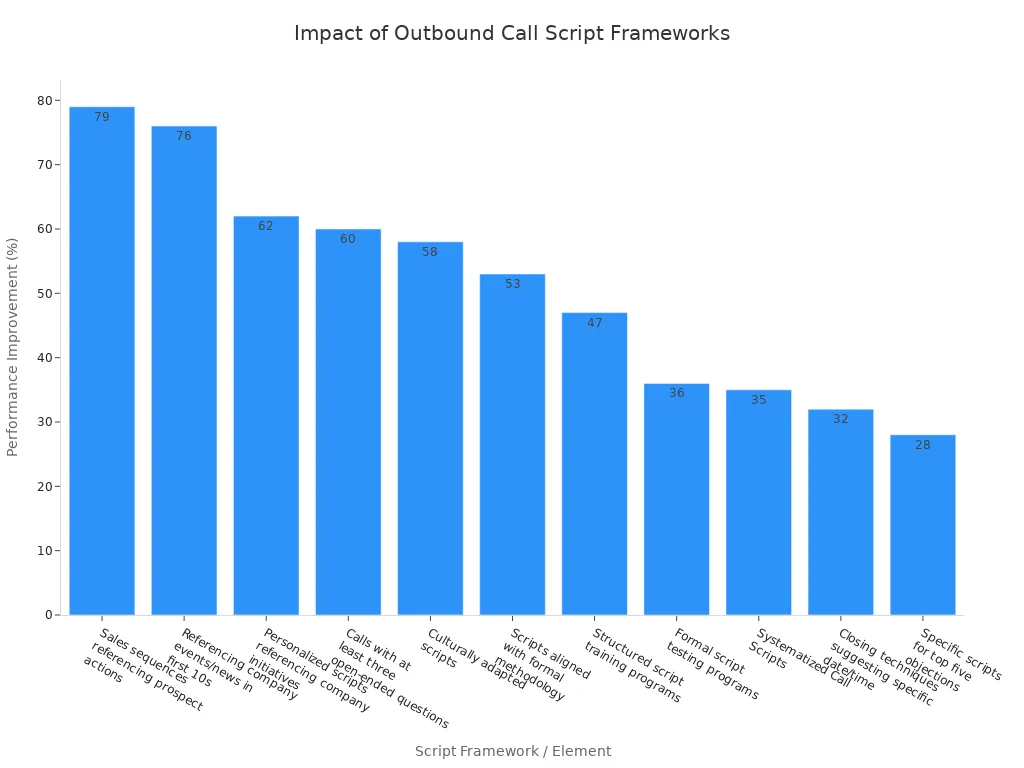
A script is not a rigid set of lines to read. It is a flexible framework that guides the conversation. A good script helps your team stay on message while allowing for natural interaction. Effective scripts include a strong introduction, a clear value proposition, and questions to uncover customer pain points. Research shows that sales calls with at least three open-ended questions have 60% higher conversion rates. Your script should also build momentum across multiple inbound and outbound interactions, creating a cohesive customer journey.
Preparing for Common Objections:
Your team will face objections during outbound calls. Common ones include "I'm not interested" or "Send me an email." Preparing for these is a key part of your outbound strategy. Instead of arguing, your team should lead with empathy. The LAER framework (Listen, Acknowledge, Explore, Respond) is a proven method.
- Listen: Hear the customer's full objection.
- Acknowledge: Validate their concern to build trust.
- Explore: Ask questions to understand the real issue behind the objection.
- Respond: Offer a thoughtful response that addresses their specific concern.
This approach turns a potential rejection into a productive conversation, helping you qualify leads and move the sales process forward. Preparing for objections empowers your team to handle any inbound and outbound call with confidence.
Executing Your Modern Outbound Call Campaign:
With your foundational strategy and assets in place, you can now focus on execution. A modern outbound call campaign uses technology, data, and psychology to connect with your customer. This section shows you how to choose the right tools, leverage AI, time your calls perfectly, and follow up effectively.
Choosing Your Tech Stack: CRM and Dialers:
Your technology stack is the engine of your outbound sales operation. The right tools automate tasks, organize data, and empower your team to focus on what matters: building relationships. Your two most critical components are your Customer Relationship Management (CRM) system and your dialer.
A CRM is your central hub for all customer information. It tracks interactions across both inbound and outbound channels. Popular CRMs that integrate well with dialing systems include:
- HubSpot: Offers built-in calling features and integrates with specialized dialers.
- Salesforce: Provides native calling and a vast marketplace of integrated apps.
- Pipedrive: A sales-focused CRM with integrated calling to streamline your process.
A dialer automates the process of making outbound calls, dramatically increasing efficiency. You can choose from several types, each suited for different call strategies.
| Feature/Dialer Type | Power Dialer | Progressive Dialer | Predictive Dialer |
|---|---|---|---|
| Primary Goal | Minimize agent downtime | Ensure quality interactions | Maximize call volume |
| Call Pacing | Dials the next call when an agent is free | Dials after an agent ends the previous call | Dials multiple numbers using algorithms |
| Agent Control | Agent is connected as the call starts | Agent can pause to review contact info | System automates the entire operation |
| Ideal Use Case | High-volume telemarketing | Sales requiring personalized engagement | Large-scale, high-volume campaigns |
Choosing and integrating these tools can be complex. An all-in-one solution simplifies your tech stack. For example, a platform like Sobot Voice for Sales provides a comprehensive telesales platform with a built-in dialer. It integrates seamlessly with major CRMs like Salesforce and HubSpot in under 30 minutes, creating a unified workspace for your team.
Success in Action: How Weee! Boosted Efficiency with Sobot America's largest online Asian supermarket, Weee!, needed to improve its customer service operations. By implementing Sobot's voice product, they replaced an inflexible system with an integrated workbench. The results were remarkable: Weee! increased agent efficiency by 20% and achieved a 96% customer satisfaction score, proving the power of a unified tech solution.
Leveraging AI for Call Optimization:
Artificial Intelligence (AI) is no longer a futuristic concept; it is a practical tool for modern outbound strategies. AI analyzes your calls to provide insights that were once impossible to gather. It helps you refine your call strategy and improve your team's performance.
AI-powered platforms can:
- Analyze Conversations in Real-Time: AI listens to live calls, identifies what works, and offers real-time coaching prompts to agents.
- Automate Call Scoring: You can use AI to grade 100% of your outbound calls against a consistent rubric. This helps you track performance, ensure compliance, and identify coaching opportunities.
- Provide Actionable Recommendations: AI delivers personalized feedback to each sales rep. It highlights skill gaps and offers tips for handling objections, improving talk time, and closing more deals.
- Automate Routine Tasks: AI can handle data entry, update your CRM with call notes, and even generate one-click summaries of conversations. This frees up your sales team to focus on selling.
By integrating AI, you turn every outbound call into a learning opportunity. This data-driven approach helps you continuously improve your customer experience and sales outcomes.
Determining Optimal Call Timing and Cadence:
When you call is just as important as what you say. Calling at the right time dramatically increases your connection rate. Data from multiple studies points to clear patterns for B2B outbound calls.
Best Days to Call:
- Tuesday and Wednesday are consistently ranked as the best days to make outbound calls. A ZoomInfo analysis found that these two days account for 44% of all booked demos.
- Monday also shows a high positive call rate, making it a strong choice.
- Friday is widely considered the worst day, as decision-makers are often wrapping up their week.
Best Times to Call:
- Late Morning (10 AM - 12 PM) is a prime window. A HubSpot survey found 51% of sales professionals see the most success during this time.
- Late Afternoon (4 PM - 5 PM) is another powerful slot. An MIT study found this window was 114% better for making contact than the worst time block (11 AM - 2 PM).
Beyond timing, you need a structured call cadence. A cadence is a scheduled sequence of touchpoints across multiple channels. It keeps you top-of-mind without overwhelming the prospect. Here is a sample 10-day, multi-channel cadence:
- Day 1: Send an introductory email.
- Day 2: Send a LinkedIn connection request.
- Day 3: Make your first phone call and leave a voicemail.
- Day 5: Send a follow-up email focused on value.
- Day 7: Send a message on LinkedIn.
- Day 9: Make a second follow-up call.
- Day 10: Send a final "break-up" email.
This structured approach combines inbound and outbound tactics to create a complete engagement plan for your business.
Mastering the Art of Respectful Follow-Up:
Many outbound calls go to voicemail. A great voicemail can be the difference between a callback and a delete. The goal of a voicemail is not to make a sale; it is simply to get a returned call. Your inbound sales team can then take over.
Here are some best practices for leaving effective voicemails:
- Keep it Short: Aim for 15-20 seconds. Quickly state your name, your company, and the reason for your call.
- Be Enthusiastic: Your tone of voice matters. Sounding excited and confident makes a customer more likely to call you back.
- Pair it with an Email: Mention that you will also send an email. This gives the prospect two ways to respond and can triple your reply rate.
- Create Curiosity: Tease a piece of valuable information. For example, say, "In our next conversation, I'd love to talk about how we helped a similar company solve [specific pain point]."
- End with Your Number: State your phone number clearly and repeat it. This makes it easy for the prospect to take action.
A respectful and strategic follow-up process for both inbound and outbound calls shows professionalism. It builds trust and keeps the door open for future conversations, turning a simple outbound call into a potential long-term business relationship.
Analyzing and Optimizing for Maximum ROI:

Your outbound call campaign is running, but your work is not done. You must now analyze performance and optimize your strategy for maximum ROI. This process turns raw data from your inbound and outbound calls into actionable insights for your business. It ensures your efforts generate predictable revenue and continuous improvement.
Tracking KPIs with Real-Time Dashboards:
You need real-time data to manage your outbound campaign effectively. Dashboards give you an instant view of your Key Performance Indicators (KPIs). This helps you track progress and spot issues early. A good dashboard organizes metrics from your inbound and outbound activities into clear categories.
| KPI Category | Metrics Tracked |
|---|---|
| Lead Quality | Contact Rate, Conversion Rate, Lead Score |
| Sales Activity | Calls Made, Conversations, Appointments Set |
| Conversion Success | Meeting Show Rate, Deal Closure Rate |
Monitoring these metrics helps you understand the health of your sales funnel. You can see if your team is making enough outbound calls and if those calls are turning into valuable leads.
Calculating Cost Per Lead and Acquisition:
Understanding your costs is essential for measuring ROI. Two key metrics help you evaluate the financial performance of your outbound strategy.
-
Cost Per Lead (CPL): This tells you how much you spend to generate a single lead. You can calculate it with a simple formula:
-
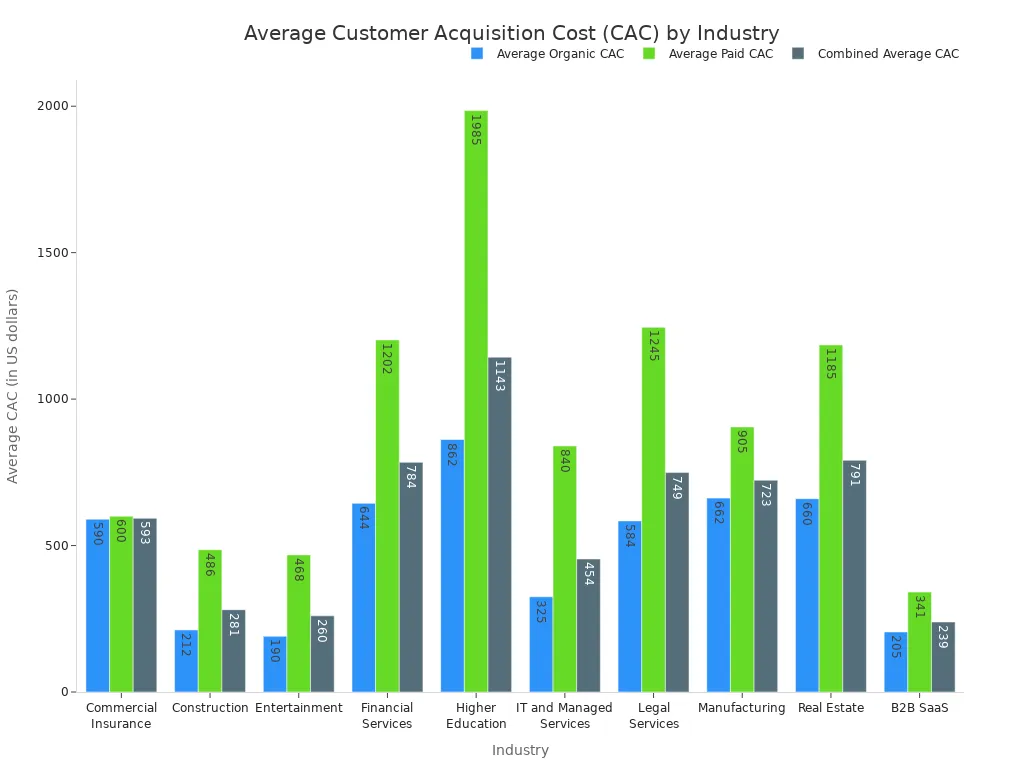
Customer Acquisition Cost (CAC): This measures the total cost to acquire a new customer. A healthy business model requires a good balance between CAC and Customer Lifetime Value (LTV). A good LTV to CAC ratio is 3:1, meaning a customer generates three times the value of their acquisition cost.
A/B Testing Scripts and Call Strategies:
Continuous improvement comes from testing. A/B testing lets you compare two versions of a call strategy to see which one performs better. You can test different elements to optimize your outbound calls.
- Opening Lines: Test a direct opener against a question-based one.
- Value Propositions: Compare a script focused on saving money with one that highlights revenue growth.
- Calls-to-Action: See if a direct request for a demo works better than a softer offer to discuss challenges.
To run a successful test, you must change only one variable at a time. This ensures you can link the results directly to the change you made. This approach helps you refine your call strategy with real data.
Refining Your Approach with Performance Data:
Use performance data to refine your sales strategies. Your outbound campaign functions as a real-time experiment. Each call provides immediate feedback. Sales leaders use this data to make quick adjustments to messaging or openers. Analyzing call recordings from both inbound calls and outbound calls helps you identify what works. You can find patterns in customer objections and successful closing techniques. This information empowers you to create better training for your sales team and improve your scripts for future leads, boosting your overall ROI.
Mastering your outbound call campaign is no longer about call volume. Your success in 2025 depends on a smart strategy that blends technology, data, and a human touch for both inbound and outbound marketing. A well-executed outbound strategy, powered by the right tools, is a powerful engine for proactive business growth. These outbound strategies help your business connect with the right customer. Let Sobot's Marketing Solution or Voice for Sales help you implement these sales strategies. You can perfect your inbound and outbound calls and Embark on Your Contact Journey.
FAQ
What is the first tool I need for a better outbound call campaign?
You should start with a good CRM and an integrated dialer. A platform like Sobot Voice for Sales combines these tools. It helps you organize contacts and automate your outbound call process, connecting with CRMs like Salesforce and HubSpot in minutes.
How does AI help my outbound call strategy?
AI gives you powerful insights. It analyzes your outbound call recordings to find what works best. AI can also score calls, offer real-time coaching to your agents, and automate notes. This helps your team improve with every outbound call they make.
My connection rates are low. What can I do?
You can improve connection rates by calling at the right times, like late mornings. Using a dialer with local phone numbers also helps build trust. A structured follow-up plan for each outbound call ensures you stay persistent without annoying your prospects.
Should I only focus on outbound calls?
No, a balanced strategy is best. You should combine your outbound call efforts with inbound marketing. This creates a complete plan where you proactively find new leads with an outbound call while also capturing customers who come to you.
See Also
Discovering the Best Free CRM Software for Call Centers This Year
A 10-Step Guide to Deploying Omnichannel Contact Center Solutions Effectively
Reviewing the Leading Contact Center Solutions Available for This Year
Exploring the Premier Cloud Contact Center Platforms Set for 2025
An In-Depth Review of Leading Automated Voice Calling Software in 2024

