5 Ways to Lower Average Handle Time


Lowering your average handle time is a primary goal for improving key customer service metrics. At Sobot, we believe this effort must enhance the overall customer experience. The objective is to remove friction from the customer service journey, not to rush agents. This focus boosts customer satisfaction. While industry benchmarks for average handle time vary, recent data shows a high standard.
The average AHT is 697 seconds (about 11.6 minutes), an 18% increase from last year.
You can lower your average handle time and improve the customer service experience with these five efficient strategies: optimizing workflows, enhancing training, leveraging technology to reduce customer service setup time, empowering agents, and refining communication guides.
How to Improve Average Handle Time by Streamlining Workflows
Efficient workflows are the backbone of a high-performing contact center. When your processes are clunky or confusing, agents spend more time navigating systems than helping customers. This directly increases your average handle time. Streamlining workflows is a key step in learning how to improve average handle time. You can create a smoother journey for both your agents and your customers.
Analyze Factors Affecting Average Handle Time
First, you must understand the core issues. A deep analysis reveals the specific factors affecting average handle time in your operations. These often include:
- Inefficient Workflows: Complex approval processes or confusing escalation paths create delays.
- Knowledge Gaps: Agents waste time searching for information they do not have.
- Ineffective Call Routing: Sending customers to the wrong department leads to transfers and frustration.
Reviewing call data and using speech analytics can uncover patterns that impact your average handle time. This analysis helps you pinpoint the exact factors affecting average handle time, allowing you to address root causes instead of just symptoms.
Map the Customer Interaction Journey
Mapping the customer journey helps you see your customer service process from the customer's perspective. You can identify unnecessary steps or points of friction. Look for moments where customer expectations are not met. This process reveals inefficiencies, like repetitive questions or complicated forms, that prolong interactions. A clear map guides multiple departments to improve the overall customer service experience.
Reduce Customer Service Setup Time
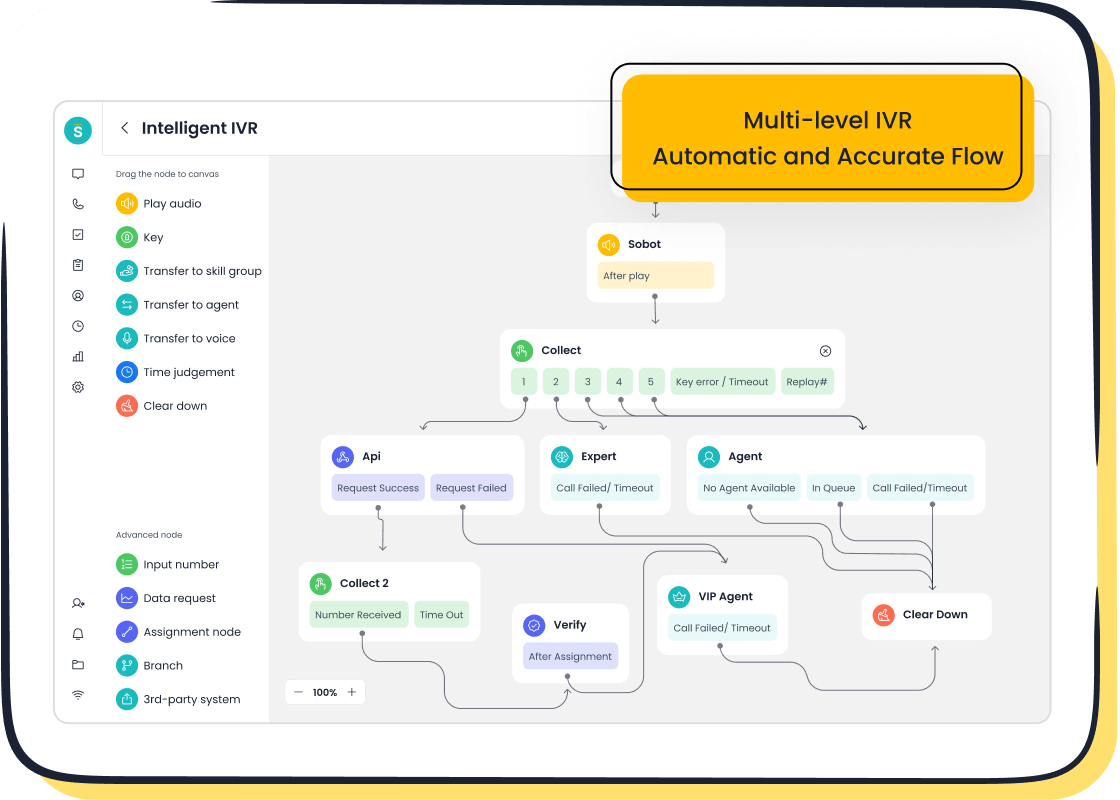
A long customer service setup time frustrates callers before they even speak to an agent. A poorly designed Interactive Voice Response (IVR) system is a common cause. Complex menus and irrelevant options force customers to wait or repeat information. This increases call duration and damages trust.
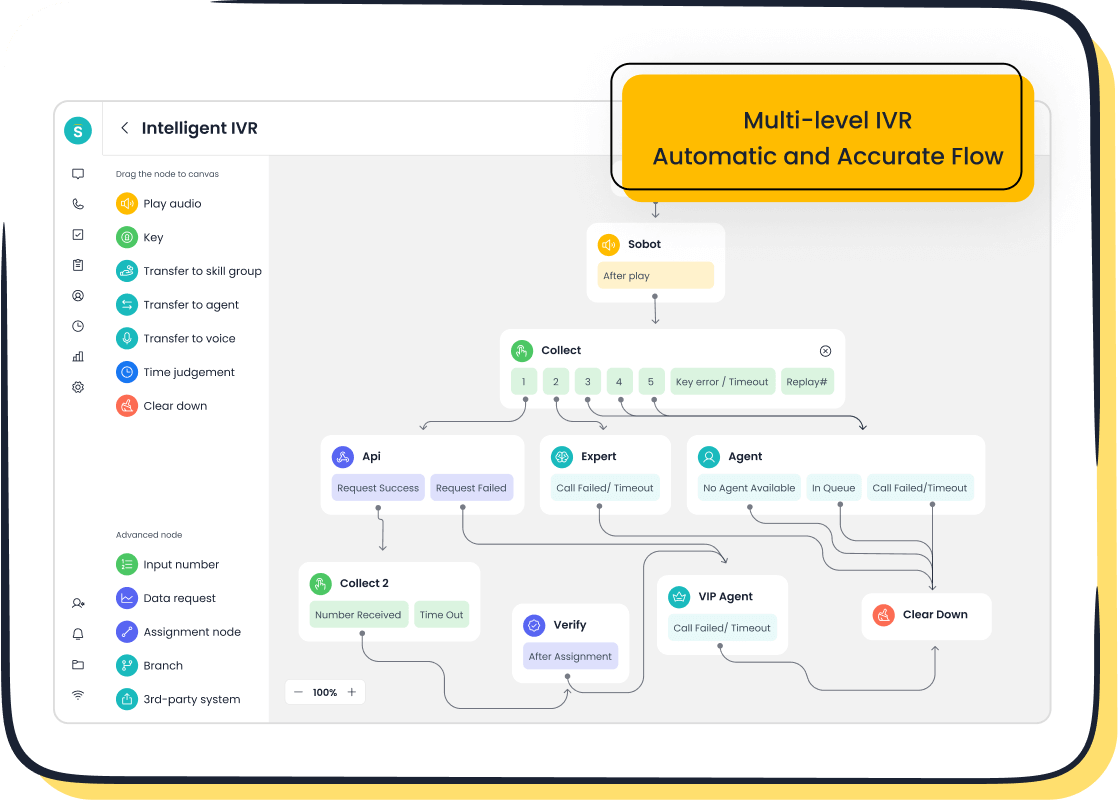
A flexible IVR is crucial for reducing customer service setup time. Tools like Sobot’s drag-and-drop IVR builder empower your managers to create and modify call routing rules in real-time. You can adjust menus without technical help, ensuring callers connect to the right agent on the first try. This simple change significantly reduces customer service setup time.
Automate Repetitive Data Entry
Your agents are skilled problem-solvers, not data entry clerks. Yet, knowledge workers can waste over 40% of their time on manual administrative tasks. This is a major drain on productivity and a hidden driver of high average handle time. Automating tasks like updating the CRM or creating call summaries frees your agents to focus on the customer. This not only improves your customer service but also reduces a significant portion of the customer service setup time, as agents can access information instantly. Automation is a powerful way to enhance your customer service and lower your customer service setup time.
Enhance Training and Agent Preparedness
Well-trained agents are your most valuable asset for reducing average handle time. When your team is prepared, they handle service calls with confidence and precision. This leads to faster resolutions and higher customer satisfaction. Investing in a robust training program is essential for excellent customer service.
Focus on Deep Product Knowledge
Agents who lack deep product knowledge often struggle. They put customers on hold to find information or transfer calls, which increases the average handle time. You can prevent this with continuous training.
- Use microlearning to break down complex product details into small, digestible segments.
- Develop a comprehensive knowledge base that gives agents instant access to troubleshooting steps and product specifications.
- Schedule regular refresher courses to cover product updates and new features.
A well-prepared agent can answer questions accurately on the first attempt, providing a superior customer service experience.
Conduct Call Simulation and Role-Playing
Theory is important, but practice is essential. Hands-on training through call simulations allows agents to refine their skills in a controlled environment. Role-playing exercises help your team practice handling difficult conversations and complex issues. This hands-on approach builds confidence and muscle memory, enabling agents to manage real customer interactions more effectively and efficiently.
Teach Effective Call Control Techniques
Agents must guide conversations without making customers feel rushed. Teach your team to manage the call flow from start to finish.
A great technique is to ask for permission before placing a caller on hold. For example, say, "May I place you on a brief hold for about one minute while I check that for you?" This simple step shows respect for the customer's time and helps manage expectations.
Setting time goals for different parts of a call also helps agents stay on track, which is key to lowering your average handle time.
Build Rapport with Soft Skills Training
Excellent customer service goes beyond technical knowledge. Soft skills like active listening and empathy are crucial for building trust. When agents actively listen, they understand the customer's true needs faster, reducing misunderstandings. Empathy helps calm frustrated callers, turning a negative experience into a positive one. Training in these areas directly boosts customer satisfaction and creates a more efficient and pleasant customer service interaction.
Leverage Technology to Shorten Handle Time
The right technology transforms your contact center from a cost center into an efficiency powerhouse. Modern tools automate repetitive tasks and give your agents the information they need instantly. This directly lowers your average handle time. Solutions like Sobot’s Voice/Call Center and Omnichannel Solution provide a practical framework for implementing these powerful technologies to enhance your customer service.
Implement a Centralized Knowledge Base
A centralized knowledge base acts as a single source of truth for your team. It eliminates the time agents waste searching for answers or asking colleagues for help. You can build a repository of user guides, FAQs, and troubleshooting steps. This empowers agents to resolve issues faster and more consistently.
An effective knowledge base can reduce average handle time by 15-25%. It gives agents real-time access to information, improving first-contact resolution and overall customer service quality.

Use a Unified Agent Workspace
Agents often switch between four to ten applications during a single customer interaction. This context switching creates delays and increases the risk of errors. A unified agent workspace consolidates all tools and customer data onto a single screen. Sobot’s platform brings together every communication channel, eliminating the need for agents to jump between systems. This streamlined interface can reduce handle times by over a minute per interaction, creating a more fluid customer service journey.
Integrate with CRM and E-commerce Platforms
When your systems do not communicate, your agents must manually enter data. This is a major driver of high average handle time. Integrating your contact center software with your CRM and other platforms creates a seamless flow of information.
For example, the online supermarket Weee! used Sobot’s open API to integrate with its existing systems. This was a key factor in reducing their resolution time by 50% and boosting agent efficiency. A well-integrated system gives your team a complete view of the customer, enabling faster and more personalized customer service.
Deploy an AI-Powered Voicebot

You can deflect a significant volume of simple, repetitive questions with AI. An AI-powered voicebot can handle common queries like order status checks or password resets 24/7.
Studies show that AI voicebots can resolve up to 80% of common customer service issues without human help.
Sobot’s AI-powered Voicebot intelligently handles initial queries, freeing your human agents to focus on more complex problems. This not only shortens the average handle time for the entire contact center but also allows your team to provide more valuable, in-depth support.
Empower Agents with Greater Autonomy
Empowering your agents with greater autonomy is a strategic move that boosts morale and efficiency. When employees feel trusted to make decisions, they report higher job satisfaction and commitment to your organization. This sense of ownership translates into stronger job performance and a better customer experience. You give your team the confidence to solve problems independently, which is a key factor in reducing your average handle time.
Define Clear Tiers of Authority
You can empower agents effectively by establishing clear tiers of authority. This structure organizes your team by skill level and defines who can handle specific issues. A well-defined hierarchy ensures everyone knows their role, avoiding confusion and delays.
- Tier 1: Frontline agents who handle common questions and perform initial triage.
- Tier 2: Senior agents with deeper product knowledge for more complex problems.
- Tier 3: Expert agents who tackle the most difficult issues and have the authority to approve actions like refunds or bug reports.
This system provides a clear escalation path and a career roadmap for your team, improving your overall customer service structure.
Reduce Supervisor Escalations
Every time an agent escalates a call, it costs you time and money. The customer waits longer, and multiple team members get pulled into a single issue. The costs add up quickly.
| Cost Category | Component | Estimated Cost |
|---|---|---|
| Technical Resolution | Support Engineer (10 hours) | $1,000 |
| Subject-Matter Experts (2 hours) | $300 | |
| Development Engineers (2 hours) | $400 | |
| Bug Fixing & Testing (10 hours) | $2,000 | |
| Release Management (2 hours) | $300 | |
| Business Aspects | Escalation Manager (10 hours) | $2,000 |
| Support VP (1 hour) | $500 | |
| Sales Rep (1 hour) | $200 | |
| CSM (5 hours) | $750 | |
| Other Non-Support Executives (2 hours) | $1,000 | |
| Total Estimated Cost | $8,450 |
By giving agents more authority to resolve issues, you reduce these costly escalations and improve customer satisfaction.
Understand the Impact of AHT on Customer Experience
It is crucial to understand the impact of AHT on customer experience. While customers want fast answers, they do not want to feel rushed. A low AHT achieved by cutting corners will damage customer satisfaction. The true impact of AHT on customer experience is positive only when efficiency comes from better processes, not hurried agents. Balance your speed-related customer service metrics with quality checks to ensure you are not sacrificing service quality.
Encourage First-Contact Resolution (FCR)
First-Contact Resolution is one of the most important goals for any customer service team. When you resolve an issue on the first try, you create a seamless customer experience.
A 1% improvement in FCR can increase customer satisfaction by 1% and employee satisfaction by up to 5%.
Encouraging FCR means giving agents the training, tools, and authority to solve problems completely. This focus on resolution over speed ultimately leads to greater efficiency and loyalty.
Optimize Scripts to Lower Average Handle Time
Your call scripts can be a powerful tool or a significant roadblock. Rigid, robotic scripts frustrate both customers and agents, leading to longer service calls. Optimizing your scripts into flexible guides empowers your team to resolve issues efficiently, which is a direct way to lower your average handle time.
Use Flexible Frameworks, Not Rigid Scripts
Treat your scripts as a guide, not a cage. When agents read from a strict text, conversations sound unnatural and impersonal. Instead, you should build flexible frameworks that focus on key talking points. This approach allows agents to use their own personality and language. A great framework includes:
- A warm, trust-building opening.
- Simple steps for customer verification.
- Prompts for open-ended questions to discover the real issue.
- A clear closing that confirms the resolution.
Encourage agents to paraphrase and adjust their phrasing. This helps them build genuine rapport and handle interactions with confidence.
Create Quick-Reference Guides
Agents need information at their fingertips. Quick-reference guides provide essential details without forcing agents to sift through long documents. These guides should be concise and easy to scan.
Tip: An effective guide contains only what is needed to complete a task. Include short instructions, annotated screenshots, and links to more detailed articles if necessary. This gives agents a fast, reliable resource to use during calls.
Ensure Language is Clear and Concise
Corporate jargon and complex terms confuse customers and slow down conversations. You must ensure your scripts use simple, direct language that anyone can understand. Replace internal acronyms and buzzwords with everyday terms.
| Instead of... | Use... |
|---|---|
| Circle back | Follow up |
| Bandwidth | Availability |
| Deliverable | Outcome |
Using plain language avoids misunderstandings and makes your customer feel heard and respected. This simple change can significantly improve communication and efficiency.
Update Guides Based on Call Analysis
Your customer needs and product offerings will change over time. Your scripts must evolve with them. Regularly analyze call recordings and customer feedback to identify outdated information or confusing language. Use these insights to update your guides and frameworks. This continuous improvement cycle ensures your team always has the most effective tools to provide excellent service and maintain a low average handle time.
Lowering your average handle time is about optimizing processes and empowering agents, not cutting corners. You improve the customer experience by removing friction. Implementing these five strategies with a powerful platform like Sobot creates a more efficient and customer-centric contact center. This approach boosts both your customer service quality and overall customer satisfaction.
Ready to enhance your customer service and lower your AHT? Embark on Your Contact Journey with Sobot today. 🚀
FAQ
What is a good Average Handle Time?
A good Average Handle Time (AHT) varies by industry. While the general average is around 11 minutes, you should focus on your own historical data. Aim for steady improvement by optimizing workflows and empowering agents, rather than chasing a universal number.
Will lowering AHT hurt customer satisfaction?
Not if you do it correctly. Lowering your Average Handle Time should come from removing friction and improving efficiency. Rushing agents will hurt satisfaction. Empowering them with better tools and training improves both speed and the quality of the customer experience.
How does an IVR help lower Average Handle Time?
A smart IVR system routes callers to the right agent on the first try. This reduces transfers and wait times. You can also use it to offer self-service options for simple queries, which frees up your agents for more complex issues.
See Also
Achieve Superior Customer Satisfaction: 10 Live Chat Optimization Strategies
Implementing Top-Tier Quality Management Practices in Your Call Center
Seamless Integration: 10 Steps for Omnichannel Contact Center Deployment
Empowering Your Team: A Guide to Effective Live Chat Agent Management
Unlocking Efficiency: Understanding the Power of Call Center Automation

