Ecommerce KPIs Definition Guide for Contact Centers


Ecommerce KPIs help you measure how well your contact center supports online business goals. You track these KPIs for ecommerce business to see how quickly agents answer calls, how satisfied customers feel, and how often issues get solved on the first try. When you focus on KPIs, you improve customer experience and make your operations more efficient. For example, contact centers that monitor ecommerce kpis see big gains:
| Metric | Improvement |
|---|---|
| Average speed of answer | Improved by 39% |
| Average answer times | Cut by 62% |
| Customer satisfaction scores | Improved by 12.5% |
| Containment rates | Boosted from 33% to 60% |
Sobot brings expertise in contact center solutions for ecommerce and retail. You can use tools like chatbot, AI agent, live chat, call center, voicebot, ticketing system, and customer contact center to boost results.
Ecommerce KPIs: What They Are And Why They Matter

Defining Ecommerce KPIs
Ecommerce KPIs are key performance indicators that help you measure how well your contact center supports online business goals. You use ecommerce KPIs to track important results like conversion rate, average order value, and customer lifetime value. These KPIs for ecommerce business show how your team handles customer questions, solves problems, and drives sales. You can use ecommerce metrics to spot trends and make better decisions. KPIs give you a clear picture of what works and what needs improvement.
Importance For Contact Centers
You need ecommerce KPIs to understand how your contact center affects the customer journey. These KPIs help you find friction points, such as slow response times or unresolved issues. You can use KPIs to allocate resources where they matter most. For example, you may see that first contact resolution needs improvement, so you train agents or add automation. Ecommerce KPIs also let you scale service quality reliably. You track b2b ecommerce KPIs to see how your business serves other companies. KPIs help you set goals and measure progress.
KPIs make it easier to see where customers struggle and where your team can improve. You can use this information to boost satisfaction and loyalty.
Sobot’s Approach To KPI-Driven Solutions

Sobot gives you powerful tools to track and improve ecommerce KPIs. You can use the Voice/Call Center to monitor call data, analyze average order value, and track conversion rate. The unified workspace lets agents see customer lifetime value and respond quickly. Sobot’s AI-powered Voicebot helps you increase first contact resolution and reduce wait times. You get real-time monitoring and analysis, so you can act fast when KPIs change. Sobot’s solutions help you automate tasks, manage tickets, and unify customer data. You can use these features to improve key performance indicators and deliver better service. Learn more about Sobot’s ecommerce and retail solutions here.
KPIs For Ecommerce Business: Key Metrics To Track
You need to track the right KPIs for ecommerce business to understand how your contact center supports online sales and customer service. These KPIs help you measure performance, spot trends, and make improvements. Sobot’s Voice/Call Center gives you tools to monitor these ecommerce KPIs in real time. Let’s look at the most important KPIs for ecommerce business and see how you can use them to drive results.
Conversion Rate
Conversion rate shows how many visitors become customers. You calculate conversion rate by dividing the number of sales by the total number of visitors, then multiplying by 100. This KPI tells you how well your contact center turns inquiries into sales.
-
To find conversion rate:
- Count the number of visitors who became customers.
- Divide by the total number of store visitors during a specific period.
- Multiply by 100.
-
Conversion rate represents the percentage of website visitors who complete a desired action, such as making a purchase or signing up for a newsletter.
-
The global average conversion rate for ecommerce is 2.9%. Food & Beverage has the highest conversion rate at 6.19%. Luxury & Jewelry has the lowest at 0.92%. The Americas region leads with 3.02%.
Sobot’s Voice/Call Center helps you track conversion rate by monitoring call outcomes and linking them to sales data. You can use this KPI to see how well agents handle sales calls and improve scripts for better results.
Average Order Value
Average order value measures how much customers spend per transaction. You calculate average order value by dividing total revenue by the number of orders.
| Total Revenue | Number of Orders | Average Order Value |
|---|---|---|
| $50,000 | 500 | $100 |
| $31,000 | 1,000 | $31 |
This KPI helps you understand buying behavior. If you want to increase average order value, you can offer bundles or upsell during calls. Sobot’s unified workspace lets agents see customer purchase history and suggest relevant products.
Customer Lifetime Value
Customer lifetime value shows how much revenue you earn from a customer over their relationship with your business. You measure customer lifetime value by multiplying average order value, number of transactions, and retention period.
- Find your average order value.
- Calculate the average number of transactions per period.
- Measure customer retention.
- Multiply these numbers to get customer lifetime value.
The average customer lifetime value for beauty brands is about $188. You can use this KPI to decide how much to invest in customer service and marketing. Sobot’s Voice/Call Center helps you track customer interactions and identify high-value customers.
Customer lifetime value helps you focus on long-term relationships, not just single sales. You can use this KPI to improve customer retention rate and boost profits.
First Contact Resolution
First contact resolution measures how often you solve customer issues on the first interaction. You track first contact resolution using several methods:
| Method | Description |
|---|---|
| Agent Logging | Agents indicate if the issue was resolved during the contact. |
| Customer Surveys | Ask customers if their issue was resolved after the call. |
| Repeat Contact Tracking | Detect if a customer contacts again about the same issue. |
| Quality Assurance Monitoring | QA teams review calls or transcripts to assess resolution. |
| Interaction Analytics | AI-driven analytics evaluate voice and text interactions. |
| CRM Case Management | Tracks reopened tickets or cases needing follow-up. |
The average first contact resolution rate for ecommerce stores is about 70%. Leading companies reach 70% to 80%. Only 5% achieve world-class rates above 80%.
Sobot’s AI-powered Voicebot and unified workspace help agents resolve issues faster. You can use this KPI to train agents and automate simple tasks.
Customer Satisfaction Score (CSAT)
Customer satisfaction score (CSAT) measures how happy customers feel after interacting with your contact center. You collect CSAT by sending surveys after calls, chats, or emails.
- Send surveys to customers after interactions.
- Gather responses and ratings.
- Calculate CSAT: (Number of satisfied customers / Total respondents) × 100.
- Analyze trends over time.
- Segment data for deeper insights.
The average CSAT score for ecommerce contact centers is 80. You can use this KPI to spot areas for improvement and reward high-performing agents. Sobot’s Voice/Call Center lets you automate surveys and track CSAT scores in real time.
Net Promoter Score (NPS)
Net Promoter Score (NPS) shows how likely customers are to recommend your business. You ask customers to rate their likelihood on a scale from 0 to 10. You group responses into detractors (1-6), neutrals (7-8), and promoters (9-10). Calculate NPS by subtracting the percentage of detractors from promoters.
For example, if 1,000 customers respond, with 500 promoters and 250 detractors, your NPS is 25.
| Industry | NPS Score |
|---|---|
| Ecommerce | 55 |
| B2B | 55 |
| B2C | 54 |
| All Industries | 42 |
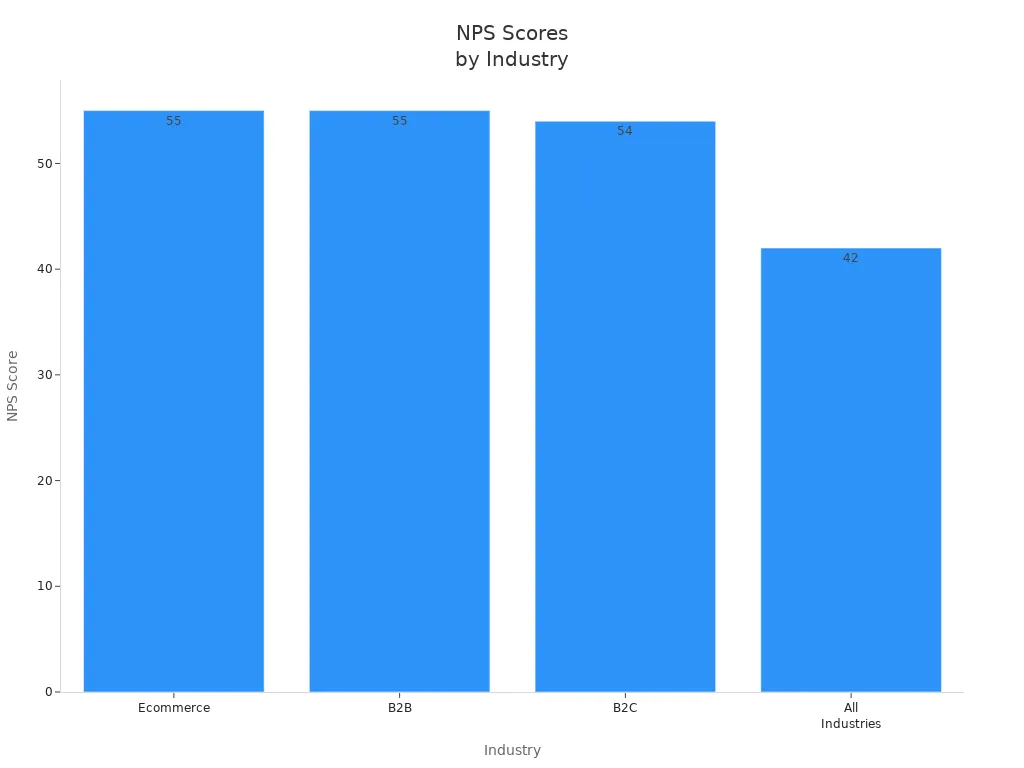
NPS helps you measure loyalty and predict future growth. Sobot’s omnichannel solutions make it easy to collect NPS feedback across channels.
Abandonment Rate
Abandonment rate measures how many customers leave before completing an action. This includes shopping cart abandonment and call abandonment. You calculate abandonment rate as the percentage of initiated processes or interactions that users leave incomplete.
| Industry | Average Abandonment Rate | What “Good” Looks Like |
|---|---|---|
| Retail & E-Commerce | 4–7% | Below 3% |
You use this KPI to spot friction points in your customer journey. Sobot’s Voice/Call Center tracks call abandonment and helps you reduce wait times. You can use automation and smart routing to lower abandonment rates and improve conversion efficiency.
Tracking ecommerce metrics like abandonment rate, conversion rate, and customer satisfaction helps you build a better customer experience. Sobot’s solutions give you real-time data and actionable insights to improve your KPIs.
Summary Table: Key KPIs for Ecommerce Business
| KPI | What It Measures | Industry Average | How Sobot Helps |
|---|---|---|---|
| Conversion Rate | Sales from visitors | 2.9% | Tracks call outcomes, links to sales |
| Average Order Value | Spend per transaction | $100 | Shows purchase history, supports upselling |
| Customer Lifetime Value | Revenue per customer over time | $188 | Identifies high-value customers |
| First Contact Resolution | Issues solved on first contact | 70% | AI Voicebot, unified workspace |
| CSAT | Customer happiness | 80 | Automates surveys, tracks scores |
| NPS | Customer loyalty | 55 | Collects feedback across channels |
| Abandonment Rate | Incomplete actions | 4–7% | Reduces wait times, smart routing |
You need to track these KPIs for ecommerce business to improve customer experience and operational efficiency. Sobot’s Voice/Call Center and omnichannel solutions help you monitor ecommerce KPIs, automate tasks, and analyze ecommerce metrics for better results. You can use key performance indicators to set goals, measure progress, and drive growth. If you serve B2B clients, you must track b2b ecommerce KPIs to ensure you meet their needs and build strong relationships.
Ecommerce Metrics vs KPIs: Understanding The Difference
Metrics Overview
You use ecommerce metrics to measure different activities in your contact center. Metrics give you raw numbers, like how many calls your team answers each day or how many chats you handle in an hour. These numbers help you see what is happening in real time. For example, you might track the number of abandoned calls or the average handle time for each agent. Metrics show you the volume and speed of your operations.
Tip: Track ecommerce metrics daily to spot sudden changes or patterns.
KPIs Overview
KPIs, or key performance indicators, help you focus on what matters most for your business goals. You choose kpis that match your strategy, such as improving customer satisfaction or increasing sales. KPIs use data from ecommerce metrics but add context. For example, if your goal is to boost first contact resolution, you set a target and measure progress with this kpi. KPIs help you see if your contact center supports your ecommerce kpis, like higher conversion rates or better customer loyalty.
Here is a simple table to compare metrics and kpis:
| Metrics | KPIs |
|---|---|
| Raw data and numbers | Strategic goals and targets |
| Show what is happening | Show if you meet objectives |
| Example: call volume | Example: CSAT score |
Why KPIs Drive Performance
You need kpis to drive performance in your contact center. KPIs help you set clear targets and measure success. When you track the right kpis, you can reward top agents, fix weak spots, and improve customer experience. For example, tracking ecommerce kpis like first contact resolution or NPS helps you see where to invest in training or technology. KPIs turn data into action. You make better decisions and reach your business goals faster.
Remember: Metrics tell you what is happening. KPIs tell you what to do next.
Selecting And Using Ecommerce KPIs In Contact Centers
Choosing Relevant KPIs
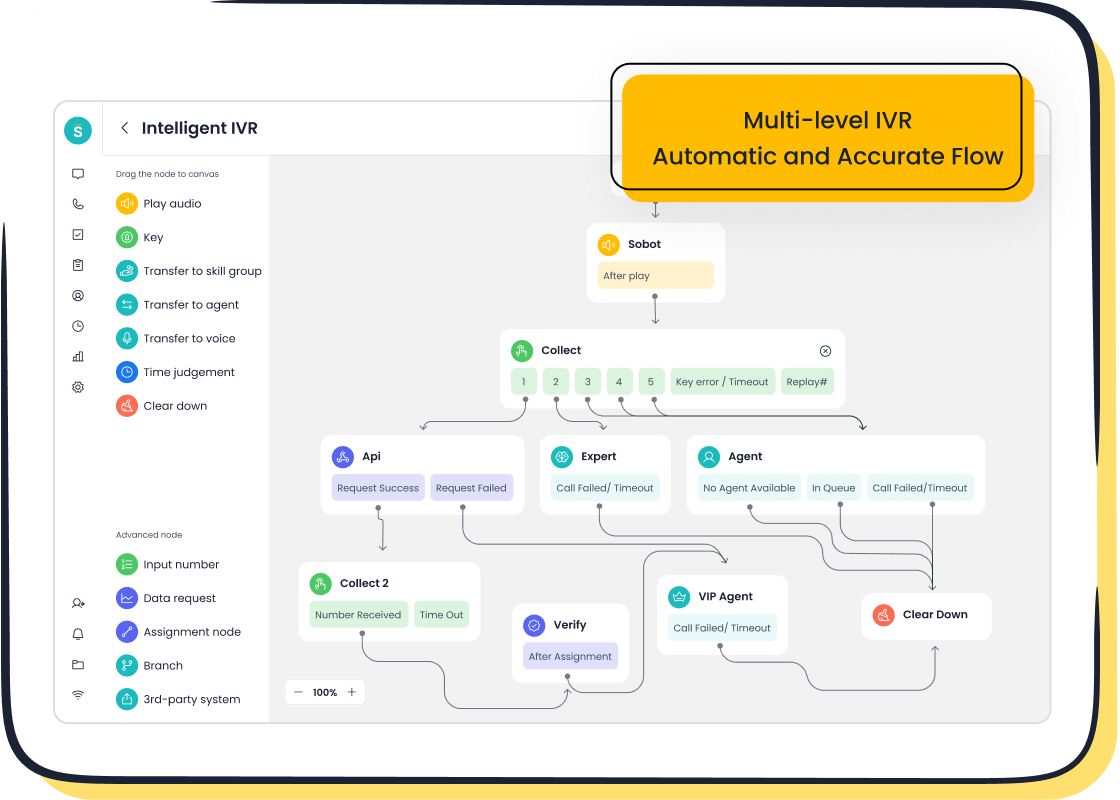
You need to select KPIs that match your business goals and customer needs. Start by looking at what matters most for your contact center. Use KPIs for ecommerce business that reflect your objectives, customer expectations, and operational efficiency. Sobot’s Voice/Call Center gives you access to over 300 statistical reports and thousands of indicators. This helps you find the right KPIs for your team. Analyze historical performance data to set realistic benchmarks. Make sure your KPIs adapt as your business grows.
| Criteria | Description |
|---|---|
| Alignment with business goals | KPIs should reflect the company's objectives to ensure that the support team contributes effectively to overall success. |
| Customer expectations | KPIs must resonate with actual customer experiences to enhance satisfaction and accountability. |
| Operational efficiency | Monitoring KPIs provides insights into team performance and helps identify areas for improvement. |
Focus on KPIs like customer satisfaction scores, average handling time, and resolution rates. These indicators help you improve customer retention rate and service quality.
Tracking And Analyzing Data
You must track and analyze KPI data to understand your contact center’s performance. Sobot’s Voice/Call Center supports the entire customer engagement process, from first contact to ongoing management. Use real-time monitoring to spot trends and act quickly. Choose KPIs that provide actionable insights. For example, tracking conversion rate and customer lifetime value helps you see how well your agents drive sales and build loyalty. Use data-driven decision-making to enhance performance. Make sure you review ecommerce metrics regularly to keep your goals on track.
Tip: Use dashboards and automated reports to make KPI tracking easier for your team.
Improving Performance With KPIs
KPIs help you improve operational performance and customer experience. When you monitor key performance indicators like first contact resolution, customer satisfaction, and net promoter score, you find areas to train agents and automate tasks. Sobot’s Voice/Call Center resolves 70% of inquiries and increases conversions by three times. Tracking KPIs like customer retention rate and call abandonment rate shows where you can streamline processes. Use KPIs to empower agents and foster a culture of continuous improvement. If you serve B2B clients, track b2b ecommerce KPIs to meet their unique needs.
| KPI | Description |
|---|---|
| Customer Satisfaction | Measures the average satisfaction score of customers, indicating areas for improvement. |
| Average Resolution Time | Time taken to resolve customer queries, impacting customer satisfaction directly. |
| Net Promoter Score (NPS) | Indicates the likelihood of customers recommending the service, reflecting brand loyalty. |
| First Contact Resolution | Percentage of issues resolved on the first contact, showcasing efficiency and competence. |
| Customer Churn Rate (CCR) | Measures the rate at which customers stop using the service, indicating customer retention issues. |
| Average Handle Time (AHT) | Average time taken to handle customer interactions, balancing efficiency and quality. |
| Call Abandonment Rate | Percentage of callers who hang up before reaching a representative, indicating service efficiency. |
| Customer Effort Score (CES) | Assesses the ease of resolving customer issues, with lower scores indicating a better experience. |
You need to use ecommerce KPIs to drive growth and improve customer retention rate. Make sure you review and update your KPIs as your business changes.
You drive growth by tracking ecommerce KPIs in your contact center. Sobot helps you optimize kpis like gross merchandise value, repeat customer rate, and customer satisfaction. You can use channel scorecards, pilots, and predictive analytics to select, track, and improve kpis. Review and adapt kpis regularly to enhance customer experience and operational efficiency.
- Start consulting with Sobot.
- Clarify requirements.
- Formulate a solution.
- Decide commercial terms.
FAQ
What are ecommerce KPIs, and why do they matter for contact centers?
Ecommerce KPIs are key performance indicators that help you measure your contact center’s impact on online sales and service. You use these KPIs to track customer satisfaction, sales conversions, and efficiency. Tracking ecommerce KPIs helps you improve customer experience and grow your business.
How often should you review ecommerce KPIs in your contact center?
You should review ecommerce KPIs at least once a month. Regular reviews help you spot trends, fix problems quickly, and set new goals. Many businesses use weekly dashboards for real-time tracking and monthly reports for deeper analysis.
Which ecommerce KPIs should you prioritize for better customer experience?
Focus on these ecommerce KPIs:
- First Contact Resolution
- Customer Satisfaction Score (CSAT)
- Net Promoter Score (NPS)
- Abandonment Rate
These KPIs show how well you solve problems and keep customers happy.
How can Sobot help you track and improve ecommerce KPIs?
Sobot’s Voice/Call Center gives you real-time data, automated reports, and AI-powered insights. You can monitor ecommerce KPIs like conversion rate, CSAT, and call abandonment. Sobot’s unified workspace helps your agents respond faster and deliver better service.
Can ecommerce KPIs help you increase sales and customer loyalty?
Yes! By tracking ecommerce KPIs, you find ways to boost conversion rates and improve customer retention. For example, OPPO used Sobot’s solutions to achieve an 83% chatbot resolution rate and a 57% increase in repurchase rate. Read more.
See Also
A Comprehensive Guide to Omnichannel Contact Center Strategies
Essential Insights on Omnichannel Call Center Technology
Enhancing Sales Through Effective Ecommerce Live Chat Tools
Increasing Customer Satisfaction with E-commerce Chatbot Solutions

