Measuring ROI for AI Voice Agents

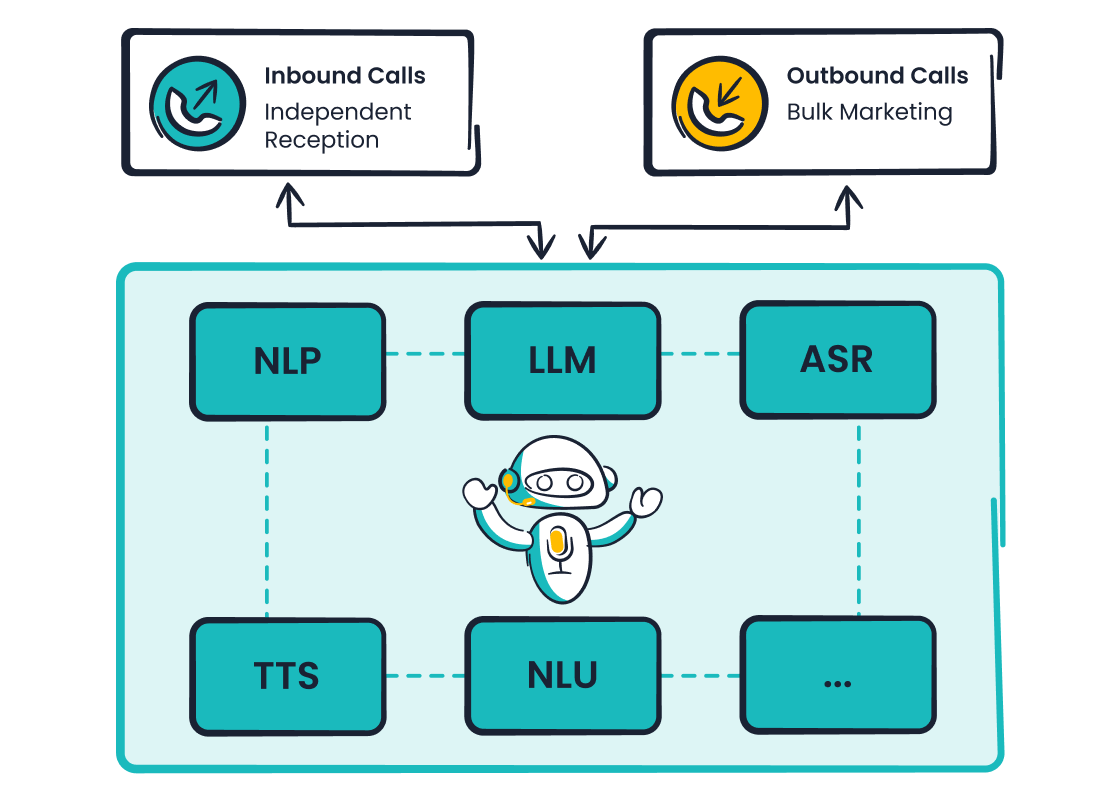
Proving the return on investment for your contact center AI is a complex but essential task. With nearly 35% of leaders finding it difficult to measure performance outcomes, you need a clear strategy. A complete ROI calculation must balance direct financial gains, operational efficiency, and the overall customer experience. This requires the right metrics and kpis for ai voice agents in contact centers. A solution like the Sobot call center, powered by Sobot AI, helps you measure the impact and define your contact center ROI, simplifying the entire experience.
Tracking Financial ROI and Cost Savings

The most direct way to prove the value of an AI voice agent is by tracking its financial impact. You can measure this through direct cost savings and new revenue generation. This approach gives you the hard numbers needed to justify your investment. A clear financial picture demonstrates the immediate benefits of automation to stakeholders.
Metric 1: Quantifying Cost Reduction
Your first step is to measure how much money the AI voice agent saves your contact center. Cost reduction comes from several key areas. The most significant saving is in agent-related expenses. AI agents handle tasks at a fraction of the cost of human agents.
Consider the cost per interaction. AI phone agents typically cost between $0.09 and $0.29 per minute. Human agents range from $0.42 to $1.08 per minute. This difference adds up quickly.
| Criteria | AI Agents | Human Agents |
|---|---|---|
| Cost per Minute | $0.08–$0.29 | $0.42–$1.08 |
| Cost per Interaction | $0.50–$5 | $5–$25 |
Sobot Voicebot enhances these savings. Its powerful automation capabilities can automate over 90% of routine interactions. This allows your customers to get answers instantly through self-service channels. It also frees up your human agents to handle more complex issues. This improved efficiency directly lowers your cost-to-serve.
You also save on training and onboarding. AI voice agents do not need weeks of training on scripts or tools. You can update policies or procedures instantly through software. This eliminates ongoing retraining costs. Your training budget can then focus on developing your human agents' soft skills and problem-solving abilities. This shift improves your team's overall performance and job satisfaction.
Real-World Impact: Agilent, a global leader in life sciences, implemented Sobot's AI solution. They achieved a 25% reduction in overall costs while increasing customer service efficiency sixfold. This shows the tangible savings possible with the right AI partner.
Metric 2: Measuring Revenue Growth
AI voice agents do more than just save money; they can also help you generate revenue. You can use their automation capabilities to drive sales and improve customer lifetime value (CLV). This turns your contact center from a cost center into a profit center.
One powerful method is through automated upselling and cross-selling. An AI agent can access customer data like order history and preferences. This allows it to make smart, contextual suggestions during a call.
- At Checkout: An AI agent can suggest relevant add-ons based on items in a customer's cart.
- During Onboarding: The agent can identify needs that justify a higher-tier plan and explain the benefits.
This proactive approach increases Average Order Value (AOV) and enhances the experience for your customers. It feels like helpful advice, not a pushy sales tactic.
Sobot's outbound call features are perfect for this. You can deploy automated marketing campaigns to inform customers about new products or promotions. This boosts sales performance without increasing your agents' workload. These targeted campaigns deliver personalized messages at scale, creating new revenue streams and strengthening customer relationships. The benefits are clear and measurable.
Calculating Your Contact Center ROI
Finally, you need to put all the numbers together to calculate your total contact center ROI. The standard formula is simple and effective. It helps you quantify the overall financial benefits of your investment.
ROI (%) = (Return of Investment / Cost of Investment) x 100
- Return of Investment: This is the net financial gain. Calculate it by adding your total cost savings and new revenue, then subtracting the cost of the AI solution.
- Cost of Investment: This includes the subscription fees for the AI software, implementation costs, and any internal resources used.
Many businesses see a quick return. The average payback period for voice AI is around three months. Some industries, like real estate, see a payback in just one to two months. A Forrester study found that most enterprises achieved a payback period of less than six months. These short timelines make the investment in AI an easy decision. Calculating your ROI provides a clear measure of success and a strong case for future investment in your contact center technology.
Key KPIs for AI Voice Agents in Contact Centers
An AI voice agent's financial return is just one part of the story. To understand its full impact, you must also track key operational metrics. These core key performance indicators (KPIs) for AI voice agents in contact centers demonstrate efficiency gains and show how automation improves your team's performance. Strong performance in these areas directly translates to a better customer experience and a more effective contact center.
Metric 3: First Contact Resolution (FCR)
First Contact Resolution (FCR) measures the percentage of customer issues resolved in a single interaction. A high FCR rate is a powerful indicator of efficiency and customer satisfaction. When customers get their answers on the first try, they are happier and your contact center operates more smoothly.
AI voice agents significantly boost FCR. They provide immediate, accurate answers to common questions, which reduces the need for follow-up calls. While industry benchmarks for FCR vary by channel, AI consistently outperforms traditional methods.
- Phone calls (human agents): 70-75%
- Live chat (human agents): 55-65%
- AI-powered self-service: Often exceeds 90%
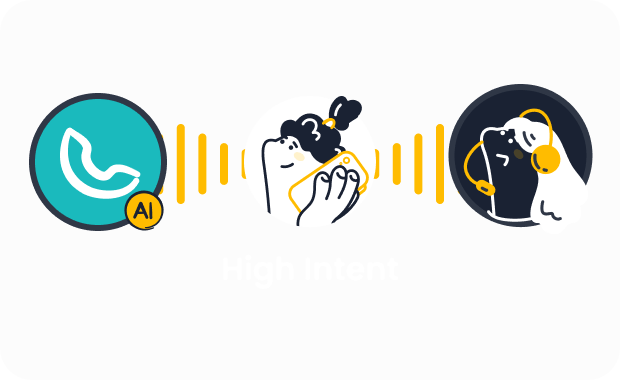
Sobot Voicebot achieves high FCR rates by using advanced speech recognition powered by Natural Language Processing (NLP) and Large Language Models (LLMs). This technology allows the voicebot to understand not just words, but the intent and context behind a customer's request. It can handle complex, multi-part questions in a single conversation, guiding users to a resolution without needing a human agent. For example, the voicebot can:
- Process account inquiries by accessing your database instantly.
- Troubleshoot technical problems with guided, conversational steps.
- Update customer information in real-time during the call.
This level of understanding ensures that more issues are resolved within the initial automated interaction, driving up your FCR and improving the overall customer journey.
Metric 4: Average Handle Time (AHT)
Average Handle Time (AHT) is the average duration of a single customer interaction, from the moment a customer initiates the call to the end of any related post-call work. Lowering AHT is a primary goal for any contact center, as it directly correlates with operational efficiency and cost savings.
AI voice agents reduce AHT in two significant ways. First, they deflect routine calls to self-service channels. Research shows that AI tools can reduce AHT by nearly 25% by automating simple steps. When customers can quickly resolve issues like checking an order status or resetting a password on their own, your human agents are free to focus on more complex problems. This deflection dramatically lowers the overall AHT for your entire contact center.
Second, AI automates post-call work, which is a major component of AHT. Sobot Voicebot helps streamline these tasks for your agents.
Tip: Automating After-Call Work AI can handle many tasks that agents traditionally do manually after a call ends. This automation gives agents more time to help the next customer. Key automated tasks include:
- Call transcription and note logging: The AI creates a full transcript and summarizes key points.
- CRM record updates: Customer records are updated automatically with new information.
- Action item detection: The AI identifies follow-up tasks and assigns them to the right team.
- Follow-up scheduling: The system can schedule callbacks or appointments automatically.
By taking over these administrative duties, the AI allows your agents to move to the next call faster, improving their productivity and overall team performance. The benefits are clear: a more efficient team and shorter wait times for your customers.
Metric 5: Escalation and Accuracy Rates
To fully evaluate performance, you need to look at escalation and accuracy rates. Escalation rate is the percentage of interactions that an AI voice agent cannot resolve and must transfer to a human agent. Accuracy rate measures how well the AI understands and responds to customers correctly. These two metrics are closely linked and are crucial key kpis for ai voice agents in contact centers.
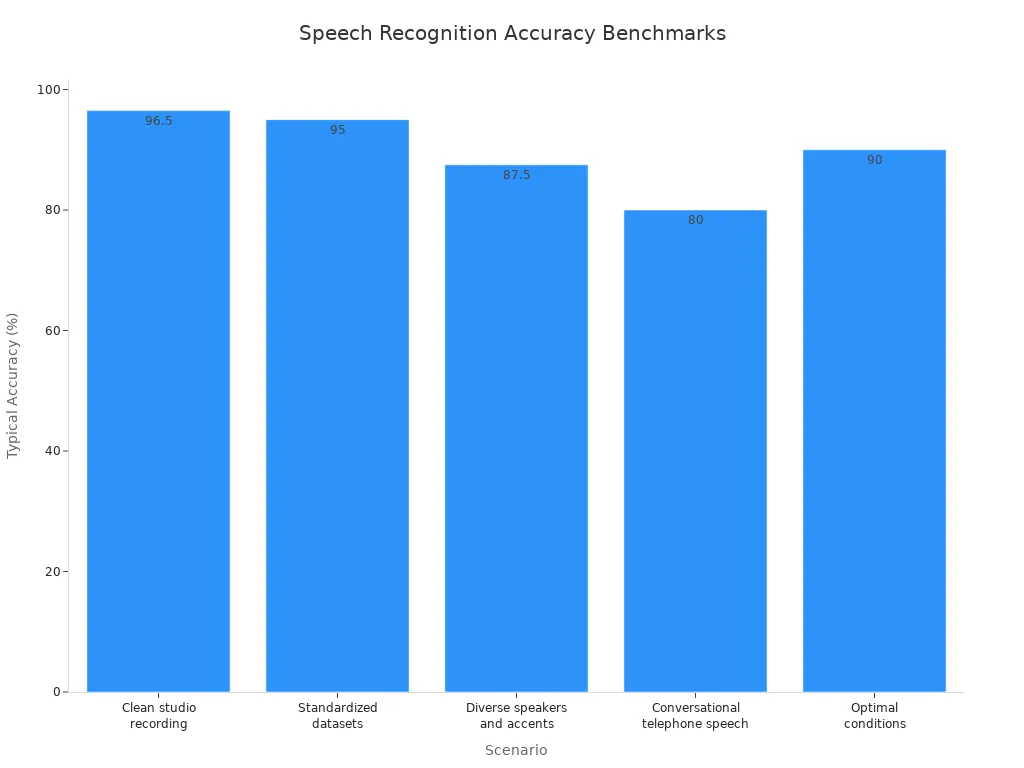
A low escalation rate is a sign of a capable AI. It means the voicebot is successfully handling a high volume of inquiries on its own. However, accuracy is just as important. An AI with high accuracy correctly interprets customer intent and provides the right information. Modern AI voice agents powered by LLMs, like Sobot Voicebot, achieve high semantic accuracy, meaning they understand the true meaning behind a customer's words. Enterprise-grade AI should aim for an accuracy rate of 85% at launch, with a goal of reaching over 90% through continuous learning.
When an escalation is necessary, a smart AI makes the process seamless. Sobot Voicebot retains the full conversational context and passes it to the human agent. This means customers do not have to repeat themselves, which is a common point of frustration. The agent receives all relevant information, allowing for a faster and more effective resolution. This smooth handoff is one of the key benefits of an integrated AI solution.
Real-World Impact: Agilent's partnership with Sobot demonstrates the power of these key kpis for ai voice agents in contact centers. They achieved a sixfold increase in efficiency and a 95% customer satisfaction score. This success was driven by strong performance across these operational metrics, proving the tangible benefits of a well-implemented AI strategy.
Analyzing the Impact on CX and Agent Enablement

Financial and operational metrics are crucial, but the human impact of your contact center AI is just as important. A successful implementation improves the lives of both your customers and your agents. Tracking metrics related to satisfaction and enablement reveals the full benefits of your investment and shows how technology can enhance human interaction.
Metric 6: Customer Satisfaction (CSAT) and Effort (CES)
Happy customers are loyal customers. Customer Satisfaction (CSAT) and Customer Effort Score (CES) are two key metrics that measure this. CSAT asks customers how satisfied they were with an interaction, while CES measures how easy it was to get their issue resolved. AI voice agents have a positive impact on both.
AI improves these scores by providing immediate, 24/7 support. Customers no longer need to wait for business hours to get answers. This constant availability reduces customer effort, as they can resolve simple issues on their own time. When customers can handle their needs at any time, their perception of your service improves. The benefits are clear: your customers get faster resolutions with less work.
Metric 7: The Role of Contact Center AI in Agent Enablement
Your agents are your most valuable resource. Contact center AI should empower them, not replace them. By automating repetitive tasks, AI frees your agents to focus on what humans do best: empathy, complex problem-solving, and building relationships. This shift has a major impact on job satisfaction and agent performance.
AI tools can improve agent retention by nearly 39% by reducing burnout. Instead of answering the same questions all day, agents can handle more engaging and rewarding work. Sobot's AI solution provides real-time interaction guidance, giving agents the information they need during a call. This support boosts their confidence and performance. The benefits extend to your entire contact center through better agent retention and higher-quality service.
AI Augments, Not Replaces AI handles the routine work so your team can shine. Key automated tasks include:
- Verifying customer data and passing it to the agent.
- Answering common questions like order status or password resets.
- Generating call summaries and updating records automatically.
Metric 8: Wait Times and Abandonment Rates
Long wait times are a primary source of customer frustration. There is a strong link between how long customers wait and how often they hang up. Studies show that 59% of callers will abandon the call if they wait on hold for 10 minutes. This has a direct impact on your contact center performance and can lead to lost revenue.
AI voice agents tackle this problem head-on. They can handle a virtually unlimited number of calls at once, eliminating wait times for common inquiries. When customers call, they get an immediate response. This instant engagement prevents them from hanging up and seeking help elsewhere. By using customer data and customer insights, the AI can offer personalized self-service options, resolving issues without a single second of hold time. This creates a better experience for your customers and ensures your contact center captures every opportunity.
How to Present Your Contact Center AI Findings
You have gathered the data. Now you need to present it effectively. Communicating AI ROI is about telling a clear story backed by solid evidence. Your goal is to show stakeholders how the investment in contact center AI creates value across the organization. A structured approach ensures your findings make a lasting impact.
Build a Comprehensive ROI Dashboard
Create a central dashboard to display your findings. This dashboard should give a clear, at-a-glance view of your AI's performance. Focus on the metrics that matter most to leadership.
Your dashboard should connect technology performance to business goals. Executives want to see a clear return on investment.
Prioritize key business metrics that demonstrate value:
- Return on Investment (ROI): Show the direct financial gain from your investment.
- Customer Satisfaction (CSAT): Highlight improvements in customer perception.
- Agent Retention: Display how AI has reduced employee turnover.
This dashboard becomes your single source of truth for tracking long-term performance and justifying the investment in your contact center.
Pair Quantitative Data with Qualitative Stories
Numbers tell part of the story, but stories make the data memorable. You should pair your quantitative metrics with real-world examples. Share a recording of a successful AI interaction or a positive review from a customer who used the voicebot. These qualitative insights show the human side of your AI's success.
You can also highlight how AI has improved an agent's workday. For example, explain how automating call summaries freed up an agent's time to solve a complex customer problem. These stories provide context and demonstrate the true impact of the technology on both customers and employees.
Tailor the Narrative for Stakeholders
Different stakeholders care about different outcomes. You must tailor your presentation to address each audience's specific priorities. Your story for the CFO will be different from your story for the Head of Customer Experience.
| Stakeholder | Key Focus | Example Metrics |
|---|---|---|
| Chief Financial Officer (CFO) | Financial Health | Total Cost of Ownership (TCO), Payback Period, ROI |
| Head of Customer Experience | Customer Loyalty | CSAT, Customer Effort Score (CES), Brand Value |
| IT Leaders | System Performance | Integration with CRM, Transcription Accuracy, Security |
When you speak to your CFO, focus on the bottom line. Use financial language and emphasize cost savings. For your Head of CX, highlight how the contact center AI improves customer loyalty. For IT, discuss seamless integration and how you use customer data securely. This targeted approach ensures your message resonates and builds support across the company.
The true ROI of an AI voice agent is more than just financial savings. It is a holistic measure of its total impact. Your contact center performance improves through operational excellence and a better experience for both your agents and customers. You must continuously track performance using the right kpis for ai voice agents in contact centers. This helps you justify and optimize your investment. A better experience for your team creates satisfied customers, boosting your financial impact and long-term savings. Ready to see the full potential in your contact center? Embark on Your Contact Journey today.
FAQ
How quickly can I see ROI from an AI voice agent?
You can see a return quickly. Many businesses achieve a payback period of less than six months, with some seeing returns in just one to two months. Your specific results depend on your call volume and implementation.
What is the main difference between an AI voice agent and a traditional IVR?
An AI voice agent understands natural language. Unlike a rigid IVR menu, it uses AI to grasp customer intent. This allows for more complex, human-like conversations and faster resolutions without frustrating your customers.
Will an AI voice agent replace my human agents?
No, it empowers them. The AI handles simple, repetitive questions. This frees your human agents to focus on complex problems that require empathy and critical thinking. This shift improves their job satisfaction and performance.
How do I start measuring the impact of my voicebot?
Start by defining your goals. Then, track the key metrics discussed in this article. A comprehensive solution like Sobot Voicebot provides a dashboard to monitor financial, operational, and customer experience data from day one.
See Also
Comparing Leading Interactive Voice Response (IVR) Software Solutions for Businesses
Exploring the Best 10 AI Tools for Enterprise Contact Centers
An In-Depth Review of AI-Powered Enterprise Call Center Solutions
A Comprehensive Guide to Artificial Intelligence Software for Call Centers
Comparing the Foremost Voice of Customer (VoC) Software Platforms

