Perfecting Performance: KPIs for Customer Service


To elevate your customer service, you need more than just data—you need the right data. The key is a three-step process. First, select customer service KPIs aligned with your business goals. Second, set clear benchmarks for your team. Third, use a consistent system like the Sobot call center to track your progress. This guide offers actionable tips from Sobot to transform your customer service performance. You will learn how to use key performance indicators for customer service, powered by Sobot AI, to improve every customer interaction and enhance your service. Mastering these KPIs helps you deliver excellent service for each customer.
SELECTING THE RIGHT CUSTOMER SERVICE KPIS

Choosing the right metrics is the first step toward transforming your service. You need to select indicators that reflect your unique business goals. This section guides you through the most critical customer service KPIs for measuring happiness, efficiency, and retention.
DEFINING KEY PERFORMANCE INDICATORS FOR CUSTOMER SERVICE
Key Performance Indicators (KPIs) are quantifiable measures that track your progress toward a specific goal. In customer service, these metrics give you insight into your team's performance. They help you understand how effectively you are assisting customers and supporting agents. When you analyze these customer success metrics strategically, you can identify areas that need improvement and make better operational decisions.
The nature of customer service has changed. Your customers now interact with you across many digital channels like chat, social media, and email. This evolution requires a new way of thinking about performance. Traditional metrics alone are no longer enough to capture the full customer experience.
As industry experts note, next-generation KPIs like Customer Effort Score (CES) are emerging to measure the true impact of interactions in an omnichannel world. This shift requires you to integrate quantitative data with qualitative feedback for a complete picture of your service success.
Ultimately, customer service KPIs allow you to analyze strengths, spot negative trends early, and drive performance enhancements. They are the foundation for building a data-driven strategy that leads to real success.
KPIS FOR CUSTOMER HAPPINESS
Happy customers are the cornerstone of a successful business. Measuring their satisfaction is essential. The three most common customer success metrics for happiness are Customer Satisfaction Score (CSAT), Net Promoter Score (NPS), and Customer Effort Score (CES). Their simplicity makes them easy for your entire team to understand and act upon.
-
Customer Satisfaction Score (CSAT): This metric measures a customer's short-term satisfaction with a specific interaction or service. You typically ask a question like, "How satisfied were you with your experience today?" and provide a scale (e.g., 1-5). A high customer satisfaction score indicates your team is meeting immediate customer needs. Tracking your customer satisfaction score helps you pinpoint moments of success or friction.
-
Net Promoter Score (NPS): This KPI measures long-term customer loyalty. It asks one simple question: "On a scale of 0-10, how likely are you to recommend our company to a friend or colleague?" Based on their answers, you can group customers into Promoters, Passives, and Detractors. Your Net Promoter Score is the percentage of Promoters minus the percentage of Detractors. A strong Net Promoter Score signals healthy customer relationships and predicts future growth.
-
Customer Effort Score (CES): This metric measures how much effort a customer had to put in to get their issue resolved. Research shows a direct link between low effort and high customer loyalty. Making things easy for your customer is a powerful driver of retention.
While these numbers provide a clear view, you should also collect qualitative customer feedback. This includes direct feedback from surveys, indirect feedback from online reviews, and observational feedback from watching how customers use your product. This customer feedback adds context to your metrics and uncovers deeper insights into the customer experience. This engagement helps build trust and shows you value their opinion.
KPIS FOR TEAM EFFICIENCY
An efficient team resolves issues quickly without sacrificing quality. Tracking team efficiency helps you optimize workflows, manage resources, and reduce operational costs. Key customer service metrics in this area focus on speed and resolution effectiveness.
Average Handle Time (AHT) measures the average duration of a single customer interaction, from start to finish. While a good AHT is generally around six minutes, it varies by industry. Your goal is to keep it low while ensuring complete resolution.
| Industry | AHT (minutes) |
|---|---|
| Retail & E-commerce | 3–4 |
| Banking & Financial Services | 4–6 |
| Telecommunications | 5–7 |
| Healthcare | 6–8 |
| Technical Support | 8–10 |
First Contact Resolution (FCR) tracks the percentage of inquiries resolved in a single interaction. A high FCR is a huge win for both customer satisfaction and your budget. Every follow-up call increases costs and demands more agent time. Improving FCR directly reduces expenses and frees up your team to handle more unique customer issues.
Agent Utilization and Occupancy are two customer success metrics that measure productivity. It is vital to balance these KPIs with agent well-being to prevent burnout.
- Utilization Rate: The percentage of time an agent is logged in and actively working.
- Occupancy Rate: The percentage of available time an agent spends on call-related tasks.
A healthy occupancy rate for calls is typically 80-90%. Pushing for 100% can lead to stress and high turnover. To measure these metrics effectively, you should also track agent satisfaction and ask for their feedback on workloads. This ensures your pursuit of efficiency doesn't harm your team's morale or the quality of service they provide. This balance is key to long-term success.
KPIS FOR CUSTOMER RETENTION
Customer retention is more profitable than customer acquisition. The data is clear: acquiring a new customer can cost five times more than keeping an existing one. A small 5% increase in customer retention can boost profits by 25% or more. Loyal customers also spend more over time. Focusing on retention is a direct path to sustainable growth.
To measure your success, you need to track the right customer success metrics. These key performance indicators for customer service help you understand why customers stay or leave.
- Customer Retention Rate (CRR): This shows the percentage of customers who remain with you over a specific period. It is a direct measure of loyalty.
- Customer Churn Rate: This is the opposite of retention. The customer churn rate measures the percentage of customers who stop doing business with you. A high churn rate is a red flag that requires immediate attention. Reducing churn is critical for success.
- Customer Lifetime Value (CLV): This metric predicts the total revenue you can expect from a single customer account. A higher customer lifetime value means greater profits. You can use customer lifetime value to guide your retention strategies, such as personalizing offers for high-value segments and making smarter decisions on acquisition spending.
- Net Promoter Score (NPS): Your Net Promoter Score is also a strong predictor of retention. Promoters are far more likely to stay with your brand and resist churn.
- Customer Satisfaction Score (CSAT): A consistently high customer satisfaction score is linked to lower churn. Happy customers are less likely to look for alternatives.
By tracking these customer service KPIs, you can identify at-risk customers, fix issues that cause churn, and develop strategies that encourage long-term engagement and satisfaction. This focus on retention and reducing churn will have a powerful impact on your bottom line.
SETTING REALISTIC AND MOTIVATING KPIS
Once you select your customer service kpis, the next step is setting targets. Your goals should be both ambitious and achievable. This balance inspires your team and drives real performance improvement. Setting the right targets turns abstract metrics into a clear roadmap for success. This process ensures every customer interaction contributes to your larger business success.
BENCHMARKING YOUR PERFORMANCE
You must first understand where you stand. Benchmarking your performance against industry standards gives you context. Reliable benchmarks for call centers exist across sectors like healthcare, finance, and retail. These metrics help you see how your service compares to competitors.
A great way to gather intelligence is through competitive analysis. You can use a SWOT analysis to identify your strengths, weaknesses, opportunities, and threats. This framework organizes your findings for clear insights. To gather data, you can:
- Analyze customer feedback: Review platforms like G2 or Reddit to find patterns in what customers say about your competitors. This shows you where they achieve success or fail to help a customer.
- Conduct primary research: Use customer surveys and interviews to ask your target audience directly about their perceptions. This gives you firsthand data for better decision-making.
APPLYING THE SMART GOAL FRAMEWORK
For example, a SMART goal could be: "Increase our Net Promoter Score (NPS) by 10 points within six months by enhancing our response to customer feedback." This goal is clear and actionable. To make goals motivating, you should also:
- Link goals to personal development: Help your team see how achieving targets contributes to their own professional success.
- Recognize achievements: Celebrate both big and small wins to boost morale and reinforce a culture of success.
COMMUNICATING GOALS TO YOUR TEAM
Your team cannot hit targets they do not understand. Clear communication is essential for success. You must explain the value of each of the key performance indicators for customer service. Help your team see how their work impacts the customer and the company's success.
Use visual aids to keep your team aligned. Displaying charts and graphs of your metrics on a dashboard makes progress easy to track. Discuss these kpis in regular one-on-one and team meetings. This keeps the goals visible and reinforces their importance. When your team understands the "why" behind the metrics, they become more invested in achieving service excellence for every customer. This shared focus is the key to sustained success.
TRACKING AND ANALYZING KPIS FOR IMPROVEMENT

Setting goals is only half the battle. You must consistently track your progress to turn data into real improvement. Modern tools make this process seamless. An all-in-one contact center solution like Sobot provides the necessary platform to track your customer service kpis automatically. This lets you focus on strategy instead of manual data entry.
ESSENTIAL TRACKING TOOLS
The right tools eliminate guesswork. Modern platforms offer powerful automations that trigger alerts when a KPI hits a certain threshold. They also provide seamless integrations with your existing apps, centralizing data from multiple sources. This gives you a complete view of your performance. You can track every customer interaction to measure success and improve the customer experience.
BUILDING YOUR KPI DASHBOARD
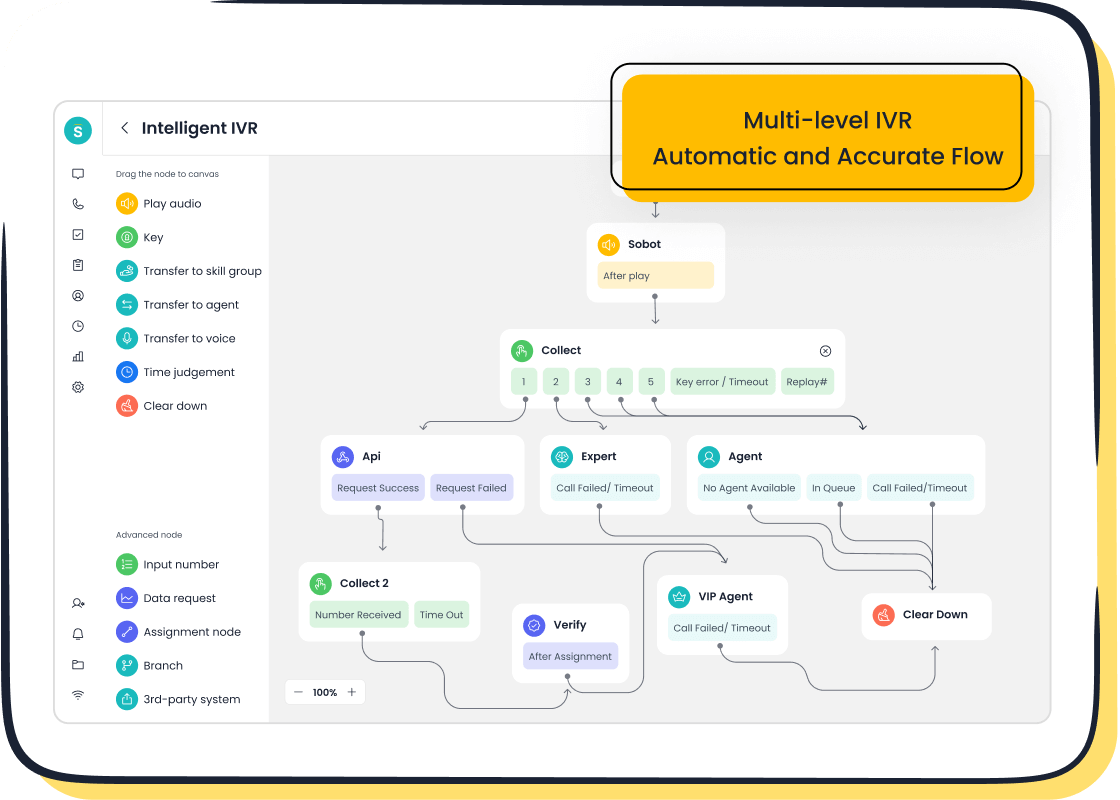
A KPI dashboard gives you a visual snapshot of your most important metrics. To be effective, your dashboard should be simple and provide real-time data. Sobot’s Voice/Call Center offers a unified workspace with real-time monitoring and analysis. This allows you to track metrics like First Contact Resolution and Average Handle Time directly. You can see how your team is performing at a glance, which helps you make quick, informed decisions to boost customer satisfaction.
TRACKING CUSTOMER SATISFACTION SCORE (CSAT)
To improve your customer satisfaction score, you need to consistently gather and analyze customer feedback. Sending surveys after each service interaction helps you evaluate support effectiveness.
For best results, send surveys on Tuesdays for short questionnaires or on Wednesdays for longer ones. This timing helps maximize engagement and the quality of the feedback you receive.
Analyzing this data helps you find the root cause of a low customer satisfaction score. Using text analytics, you can group customer feedback into themes and uncover the main drivers of satisfaction or dissatisfaction. This helps you address issues before they lead to churn.
FROM DATA TO ACTION
The final step is turning your insights into action. This is where tracking your customer success metrics pays off. For example, OPPO used Sobot's platform to enhance its service. By implementing chatbots to handle repetitive questions, they could track and improve key metrics. This strategy led to an 83% chatbot resolution rate and a 94% positive feedback rate. This success story shows how tracking the right key performance indicators for customer service and taking action on the data leads to a better customer experience and tangible business results, reducing churn and increasing customer satisfaction.
Your path to customer service success involves three clear steps.
- Select customer service kpis for satisfaction, efficiency, and customer retention.
- Set SMART goals to guide your team's success.
- Consistently track your progress with tools like Sobot to turn data into action.
Mastering your kpis is an ongoing cycle. This process of measurement and analysis drives continuous improvement for your service. It helps you make data-driven decisions for sustained success and better customer satisfaction. This focus on retention ensures every customer has a great experience. Your success in customer retention and satisfaction builds a strong foundation for growth. This is how you achieve top performance and customer loyalty.
Ready to see what tracking the right metrics can do for your service? Explore Sobot's Omnichannel Solution and start perfecting your performance today.
FAQ
How do KPIs improve customer service?
KPIs give you clear data on your service performance. You can track customer interactions to find areas for improvement. This focus helps your team achieve greater success. A data-driven approach ensures every customer receives excellent service, which is key to your business's success.
What is the first step to customer service success?
Your first step to success is selecting the right KPIs. Choose metrics that align with your business goals for customer satisfaction. This ensures your service team focuses on what truly matters for customer success and overall business success.
Why is tracking customer retention important?
Tracking customer retention shows you the long-term success of your service. Loyal customers are vital for sustainable growth. This metric helps you understand customer loyalty and reduce churn. Your success depends on keeping your current customer base happy.
How can I ensure my team achieves its service goals?
You can ensure success with clear communication and the right tools. A platform like Sobot helps you track progress in real-time. This visibility motivates your team and supports customer success. Consistent tracking is the foundation of great customer service.
See Also
Achieving Excellence: Top Strategies for Call Center Quality Management
Elevate Your Live Chat: 10 Ways to Boost Customer Happiness
Supercharge Your Call Center: Monitoring Strategies for Peak Performance
Mastering Quality Management Systems: Essential Principles for Call Centers
Discover the Best: Top 10 Customer Service Software for 2024

