7 Key Facts on Inbound and Outbound Calls


Understanding the difference between inbound and outbound calls is key to business communication. Inbound calls are reactive; customers initiate contact for support or inquiries. Outbound calls are proactive; a business initiates contact for sales or surveys. This distinction shapes a company's entire customer strategy. The global call center market is growing, showing the importance of these interactions.
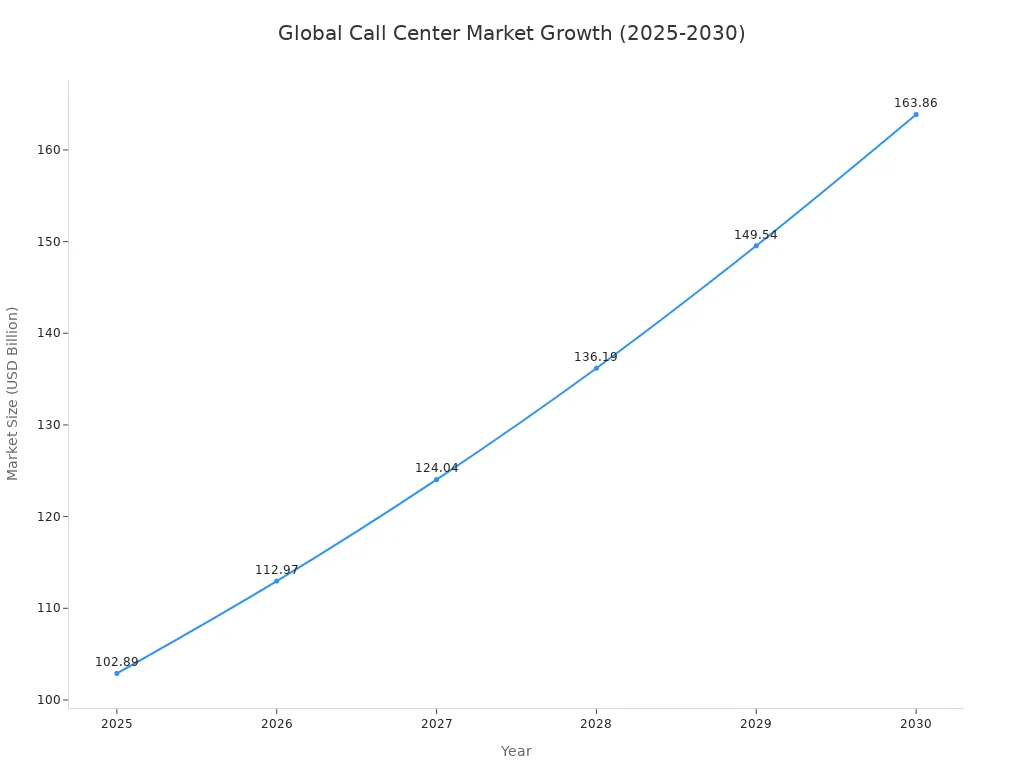
Customer expectations are also changing quickly.
- Messaging is now the fastest-growing channel for B2C communication.
- 90% of customers expect an immediate response, defining it as under 10 minutes.
- 88% of customers want brands to offer an online self-service portal.
The Sobot call center, powered by Sobot AI, helps businesses manage both inbound calls and outbound calls effectively.
Fact 1: Reactive vs. Proactive Purpose
The fundamental difference between inbound calls and outbound calls is who initiates the contact. This simple distinction creates two very different purposes. Inbound calls are reactive, serving immediate customer needs. Outbound calls are proactive, driving specific business objectives. Understanding this core contrast is the first step toward building an effective communication strategy.
The Reactive Nature of Inbound Calls
Inbound calls occur when a customer reaches out to a business. They are reacting to a need, a question, or a problem. This type of customer interaction is a critical opportunity to build trust and loyalty. A positive experience can turn a one-time buyer into a devoted fan. Good service strengthens the emotional connection customers have with a brand.
Did You Know? A great inbound experience directly impacts your bottom line. Customers who are emotionally connected to a brand offer a 306% higher lifetime value. For nearly 60% of people, excellent support is essential for them to feel loyal.
These inbound communications are moments of truth. A customer is actively seeking help, and a company's response defines the future of the relationship.
The Proactive Strategy of Outbound Calls
Outbound calls are initiated by the business. Companies use them for telemarketing, lead generation, appointment setting, or proactive customer service. This strategy allows a business to control the conversation and guide it toward a goal. When done correctly, proactive outbound calls strengthen the customer relationship and increase revenue. Research shows that integrating sales with proactive service can elevate customer lifetime value by 20–30%. These personalized outbound communications show customers a company values their business, which helps minimize churn and build loyalty.
Impact on Customer Perception
How a customer perceives a brand is heavily influenced by the call experience. Excellent handling of inbound calls creates loyal customers who trust your business. They feel heard and valued, which makes them more likely to purchase again.
However, outbound calls carry more risk. An aggressive or unsolicited call can damage a brand's reputation.
- 71% of consumers report a negative brand perception after aggressive sales outreach.
- 85% of mobile users consider brands that call from unidentified numbers to be illegitimate.
The purpose—reactive service versus proactive outreach—directly shapes the customer experience and their perception of the company.
Fact 2: Functions of Inbound and Outbound Call Centers

The purpose of a call dictates its function. Inbound and outbound call centers perform very different tasks. An inbound call center primarily reacts to customer needs. An outbound call center proactively pursues business goals. Understanding these distinct functions helps a company allocate resources effectively and choose the right technology for its teams.
Core Functions of Inbound Call Centers
Inbound call centers are the frontline of customer support. Their main job is to resolve issues and answer questions. This builds customer trust and satisfaction. Key inbound call centre services include:
- Customer Service: Agents handle general service inquiries, account updates, and billing questions.
- Technical Support: Specialists provide help for product issues or technical problems. This area often involves complex calls. The industry benchmark for first-call resolution in tech support is around 65%, highlighting the need for skilled agents.
- Order Placement and Processing: Customers call to place new orders or check on existing ones.
A well-run inbound call center is essential for retaining customers. It provides a direct channel for customer support and feedback.
Core Functions of Outbound Call Centers
Outbound call centers initiate contact to drive business growth. These proactive outbound calls are strategic tools. The functions of outbound call centres focus on expansion and engagement. Common outbound call centre services are:
- Telemarketing and Sales: Agents make outbound calls to sell products or services directly. Conversion rates for cold calling typically range from 1% to 5%.
- Lead Generation: Teams contact potential customers to gauge interest. They qualify each lead for the sales team.
- Appointment Setting: Agents schedule meetings between sales representatives and qualified prospects.
These outbound call centre functions help businesses find new customers and increase revenue.
Aligning Functions with Business Goals
Successful companies align their call centre functions with their main objectives. A business focused on customer loyalty will invest heavily in inbound call centre services. A company aiming for rapid growth might prioritize outbound call centres for lead generation. For example, financial firms often use appointment setting to scale sales.
Tip: A unified platform is key. Managing both inbound calls and outbound calls can be complex. A solution like Sobot's Omnichannel platform brings all communication channels and functions into a single system. This helps teams manage diverse tasks like customer service and lead nurturing efficiently, ensuring no opportunity is missed.
Ultimately, the choice of functions for your inbound call center or outbound call center depends on your strategic goals.
Fact 3: Contrasting Agent Skill Sets
The different purposes of inbound and outbound calls demand distinct skill sets from agents. An agent who excels at resolving a frustrated customer's issue may not have the right temperament for cold calling. Recognizing these differences is crucial for hiring, training, and managing successful teams in both inbound call centers and outbound call centers.
Essential Skills for Inbound Agents
Agents in an inbound call center are problem-solvers and brand ambassadors. Their primary goal is to address customer needs effectively and leave a positive impression. This requires a strong foundation in soft skills to improve the customer experience. Key skills include:
- Empathy: Understanding and sharing the feelings of a customer.
- Active Listening: Focusing completely on what the customer is saying.
- Patience: Staying calm and supportive, especially with upset customers.
- Problem-Solving: Finding creative and effective solutions to meet customer needs.
Acknowledging a customer's viewpoint is a powerful tool. It can de-escalate frustration and directly improve satisfaction scores. Excellent customer service hinges on an agent's ability to connect with a customer on a human level.
Essential Skills for Outbound Agents
Agents in outbound call centers are drivers of growth. They need a different kind of mental fortitude to handle rejection and stay motivated. Their success is built on resilience and persuasion. The most successful agents in outbound call centres often share key personality traits.
| Personality Trait | Impact on Performance |
|---|---|
| Resilience | Handles frequent rejection without discouragement to pursue every lead. |
| Goal-Oriented | Stays highly motivated by sales targets and performance metrics. |
| Persuasion | Effectively communicates value and negotiates beneficial terms. |
| Adaptability | Adjusts the sales pitch to suit different customer personalities. |
These skills enable agents at an outbound call centre to generate a new lead, set appointments, and close sales, directly contributing to the company's bottom line.
Training for Different Call Types
Effective training programs are tailored to the unique challenges of each role. An inbound call center agent needs deep product knowledge and de-escalation techniques for quality customer support. In contrast, training for outbound call centres must focus on building resilience and handling objections. This helps agents in outbound call centers stay motivated.
Tip: The right technology empowers every agent. Whether handling inbound service requests or making outbound sales calls, agents need context. Sobot's Unified Workspace provides a complete view of the customer's history. This allows inbound agents to solve problems faster and helps outbound agents personalize their conversations, boosting efficiency across the entire centre.
A well-equipped centre ensures every agent has the tools they need to enhance the customer experience.
Fact 4: Different Core Technologies
The right technology is essential for a successful call centre. Inbound and outbound operations have different needs, so they rely on different tools. Choosing the correct technology stack helps a centre improve efficiency, reduce costs, and enhance the customer experience.
Tech for an Inbound Call Centre: IVR & ACD
Inbound call centers use technology to manage high volumes of incoming calls smoothly. Two key pieces of technology are Interactive Voice Response (IVR) and Automatic Call Distributor (ACD). An IVR system greets callers with an automated menu. It helps customers solve simple problems on their own. This technology significantly reduces operational costs.
- IVR automates repetitive tasks, lowering the need for a large support team.
- It reduces call handling time by resolving common issues instantly.
- A payment-related call handled by an IVR costs around 50 cents, while the same call with a live agent can cost $5 or more.
After the IVR, the ACD routes the call to the right agent or department. This ensures customers connect with the person best equipped to help them. This combination of technologies is the backbone of an efficient inbound call centre.
Tech for Outbound: Predictive Dialers
Outbound call centers focus on maximizing agent productivity. The most important tool for an outbound call centre is a predictive dialer. This software automatically dials numbers from a contact list. It detects busy signals, voicemails, and disconnected numbers. The dialer only connects agents to live people. This eliminates the time agents waste on manual dialing. The impact on talk time is huge.
| Dialing Method | Talk Time per Hour (minutes) |
|---|---|
| Manual | 10-15 |
| Predictive | 40-50 |
Predictive dialers can boost agent talk time by over 200%. This technology is vital for any outbound call center focused on sales, lead generation, or appointment setting. It allows outbound call centres to contact more people in less time, directly improving the performance of outbound call centers. Many outbound call centres rely on this to meet their targets.
Sobot's AI-Powered Voice Call Center Tech
Modern technology now blends the needs of both inbound call centers and outbound call centers. Sobot's AI-powered Voice Call Center uses artificial intelligence to enhance every interaction. AI can transcribe calls, analyze customer sentiment, and identify trends. This helps managers understand customer behavior and improve agent training. For an inbound call center, AI can power smart IVRs and route calls more effectively. For outbound call centres, AI can help prioritize leads and automate post-call work, freeing up agents to focus on the next conversation. This unified approach ensures every centre has the tools to succeed.
Fact 5: KPIs for Inbound Calls and Outbound Calls
Measuring performance is essential for any call center. Key Performance Indicators (KPIs) are the metrics used to track success. However, the right KPIs for inbound calls are very different from those for outbound calls. Each set of metrics tells a unique story about efficiency, quality, and profitability.
Measuring Inbound Success
Success for inbound calls is measured by efficiency and customer satisfaction. The goal is to provide high-quality customer service quickly. Two of the most important metrics are:
- Customer Satisfaction (CSAT): This score shows how happy customers are with their support experience. It is often measured with a post-call survey. A good score is between 75% and 84%, while world-class service achieves 85% or higher.
- Average Handle Time (AHT): This KPI tracks the average time an agent spends on a call, including talk time, hold time, and after-call work. The industry standard is around 10 minutes. A lower AHT often means a more efficient team.
These metrics help managers understand the quality of their customer service and agent performance.
Measuring Outbound Success
Outbound calls focus on achieving proactive goals like sales or lead generation. Success here is measured by results and cost-effectiveness. Key metrics for outbound calls include:
- Conversion Rate: This shows the percentage of calls that result in a desired outcome, like a sale or a new lead. It can take an average of eight contacts to achieve a single conversion.
- Cost Per Acquisition (CPA): This metric calculates the total cost to gain one new customer. It includes agent wages, software costs, and other expenses. A lower CPA means a more profitable campaign.
Tracking these KPIs helps businesses see how effectively their outbound teams are turning contacts into revenue.
Why the Right Metrics Matter
Choosing the right metrics transforms a call center from a cost center into a strategic asset. Tracking performance helps businesses control costs, manage their workforce, and improve the customer experience. For example, resolving an issue on the first call improves customer satisfaction and also lowers operational expenses. A talented agent who prevents a customer from leaving saves the company thousands of dollars in future revenue. By monitoring the right KPIs, a business ensures its call center contributes directly to overall profitability and growth.
Fact 6: Choosing the Right Model
Deciding between an inbound or outbound model is a strategic choice. The right approach depends entirely on a company's primary goals. A business must evaluate its immediate needs to select the call center structure that will deliver the best results.
When to Choose an Inbound Call Center
A business should choose an inbound call center model when its main goal is to deliver outstanding customer service and build loyalty. This model is perfect for companies that receive a high volume of customer inquiries. Inbound call centers focus on reacting to customer needs, resolving problems, and strengthening relationships. A dedicated inbound call centre offers several advantages:
- It provides a personalized approach to customer communication.
- It is often more cost-effective than expanding an in-house team.
- It allows businesses to control agent training and availability.
Companies in e-commerce, SaaS, and utilities often rely on strong inbound call centers to manage support requests and maintain high satisfaction.
When to Choose an Outbound Strategy
An outbound strategy is best for businesses focused on proactive growth. Outbound calling remains a highly effective method for generating a new lead and is crucial for increasing sales. Outbound call centers are engines for expansion. For example, one B2B appointment setting service helped a client secure 516 appointments in just 90 days through outbound sales calls. Another outbound call center helped a cleaning service find new clients when its internal team became too costly. These outbound call centers use a well-structured strategy to advance sales. This approach is ideal for B2B companies, financial services, and any business looking to fill its sales pipeline and generate a new lead. Outbound call centers directly drive revenue when the primary business needs involve customer acquisition.
A Framework for Your Decision
The best model aligns with your core business objectives. Use this simple framework to guide your decision.
| Choose an Inbound Model If Your Goal Is... | Choose an Outbound Model If Your Goal Is... |
|---|---|
| 🤝 To improve customer satisfaction and loyalty. | 📈 To generate a new lead and drive sales growth. |
| 🛠️ To provide technical support and resolve issues. | 🗓️ To set appointments for a sales team. |
| 🛒 To assist with order placement and processing. | 🔍 To conduct market research or customer surveys. |
Ultimately, the choice reflects whether your priority is serving existing customer needs or actively seeking new ones.
Fact 7: The 'Blended' Call Center Model
Companies no longer have to choose between serving customers and pursuing growth. A hybrid call center model offers the best of both worlds. This approach combines inbound and outbound functions into a single, unified operation.
What is a Blended Call Center?
A blended or hybrid call centre is a setup where agents handle both inbound calls and outbound calls. Instead of having separate teams for an inbound call centre and an outbound call center, agents switch between tasks based on real-time demand. When inbound call volume is low, agents can make proactive outbound calls. When call volume picks up, the system automatically prioritizes incoming customer inquiries. This flexible strategy creates a highly efficient and responsive centre.
Benefits of a Blended Approach
The primary benefit of a blended model is a dramatic increase in productivity. This approach optimizes agent performance and improves key metrics across the board.
- It reduces agent idle time by filling quiet periods with productive outbound tasks.
- It creates a more varied and engaging workload, which can boost agent motivation.
- It improves agent skills, making them more versatile and valuable.
The International Customer Management Institute (ICMI) reported that a blended approach positively impacts both service levels and call abandonment rates. This shows that integrating inbound call centers and outbound call centers leads to better overall performance.
How Sobot Enables a Blended Model
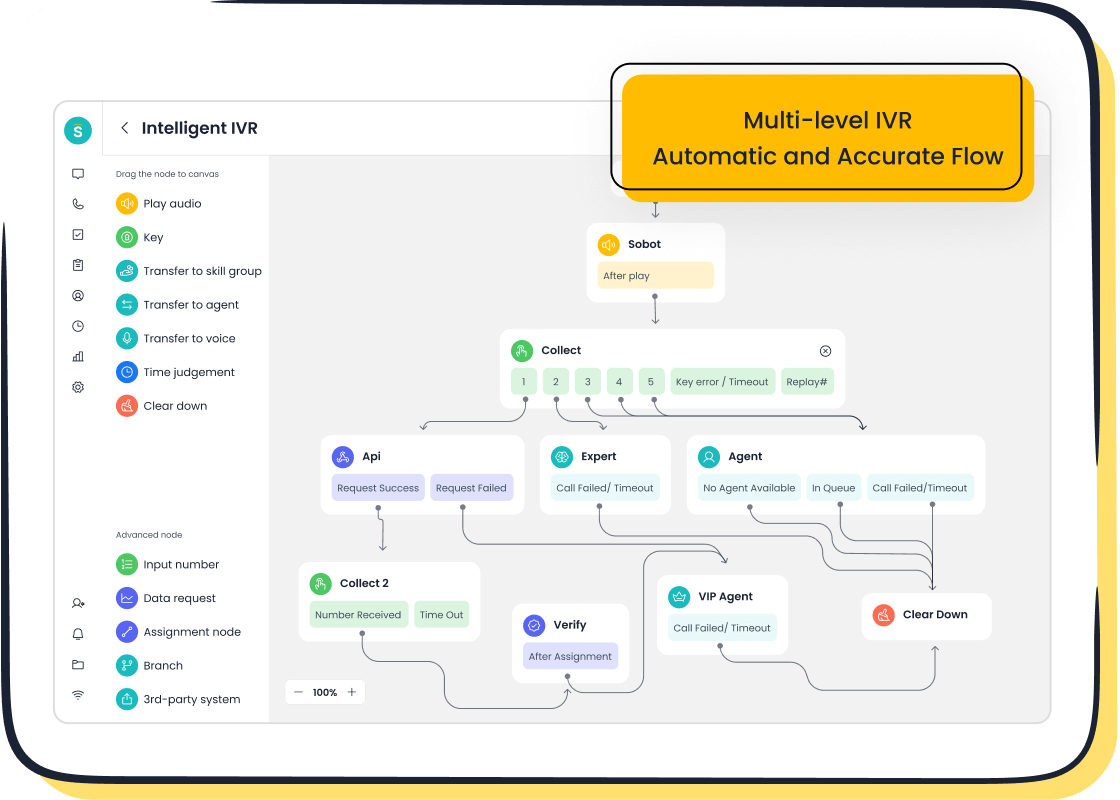
A successful hybrid call centre requires powerful technology. The system must intelligently manage call flows and empower agents to switch roles seamlessly.
Tip: Sobot's Voice/Call Center is perfectly designed to support a blended environment. Its flexible routing engine automatically assigns inbound calls or outbound tasks to available agents. The Unified Workspace gives agents a complete view of customer history for any call type. This ensures that both inbound call centers and outbound call centers can operate at peak efficiency within one system, all backed by 99.99% system stability.
This technology makes a blended outbound call center strategy a powerful and practical choice for modern businesses.
Understanding inbound calls and outbound calls is vital for business success. The seven facts show clear differences in purpose, function, skills, technology, and metrics for inbound calls and outbound calls. The choice between inbound calls, outbound calls, or a blended model is a key strategic decision. Modern platforms offer the flexibility to manage inbound calls and outbound calls effectively. Sobot's Voice Call Center provides the tools to implement any strategy. Embark on Your Contact Journey.
FAQ
Which model is better for customer satisfaction?
An inbound call centre is typically better for improving customer satisfaction. This model focuses on reactive customer service. It addresses immediate customer support needs. A positive experience here directly boosts satisfaction.
Can a small business use both inbound and outbound calls?
Yes. A blended model allows agents to handle both call types. This approach maximizes productivity. It ensures the business meets its customer support needs while also pursuing growth. This flexibility is ideal for managing resources effectively.
What is the main goal of an outbound call centre?
The main goal of an outbound call centre is proactive outreach. This includes tasks like lead generation, sales, and appointment setting. It focuses on driving business growth rather than reactive customer service.
How does technology help improve the call experience?
Technology automates and streamlines tasks. IVR systems and predictive dialers improve efficiency. A unified platform gives agents context for every call. This enhances the overall experience and boosts agent satisfaction. It helps meet customer needs faster.
See Also
Essential Capabilities of Leading Customer Relationship Management Call Center Solutions
A Ten-Step Guide for Deploying Seamless Omnichannel Contact Center Solutions
Leading Cloud-Based Contact Center Services: An In-Depth Review for 2024
Best Automated Voice Dialing Software: A Comprehensive Review for This Year
The Ten Best Interactive Voice Response Software Platforms Reviewed for 2024

