Understanding Key Customer Satisfaction Metrics for Contact Centers


Measuring customer satisfaction gives you a clear view of how well your contact center meets customer needs. When you track key customer satisfaction metrics, you can see real results—higher retention, more loyalty, and better revenue. For example, a 1% rise in first call resolution often leads to a 1% boost in customer satisfaction scores. Sobot, a leader in intelligent contact center solutions, helps you monitor important metrics like CSAT, NPS, and FCR. These numbers show you where to improve and how to make your customers happier.
| Metric | Impact on Business Outcomes |
|---|---|
| First Call Resolution (FCR) | Directly increases customer satisfaction and loyalty |
| Customer Satisfaction Score (CSAT) | Influences retention and revenue |
- Customer satisfaction drives long-term business success.
- High CSAT and FCR scores help you build strong customer relationships.
Key Customer Satisfaction Metrics Overview

Understanding key customer satisfaction metrics helps you see how well your contact center meets customer needs. These metrics guide you to improve service, boost loyalty, and increase revenue. Sobot’s intelligent contact center solutions make it easy to track and improve these important numbers. Let’s look at the most important customer satisfaction metrics for contact centers and how you can use them to create a better experience for your customers.
Customer Satisfaction Score (CSAT)
Customer Satisfaction Score, or CSAT, measures how happy your customers feel after an interaction. You usually ask customers to rate their experience on a scale, such as 1 to 5 or 1 to 10. A high CSAT means your team is meeting customer needs. The average CSAT across all industries is 78%. Scores above 70% are good, while scores below 50% show room for improvement.
- Most contact centers aim for a CSAT above 70%.
- CSAT gives you quick feedback on how well your agents solve problems.
Sobot helps you boost your CSAT by offering tools like live chat, AI-powered chatbots, and a unified workspace. These features let your agents respond quickly and accurately. Sobot’s platform supports multiple languages, so you can serve customers around the world. Real-time insights help your team spot issues and fix them fast. You can measure customer satisfaction after every interaction, which helps you improve all the time.
| Sobot Feature | Benefit |
|---|---|
| Multi-channel integration | Manage conversations across all platforms in one place. |
| Workflow automation | Free up agents to handle complex issues. |
| Real-time insights | Let agents respond quickly and confidently. |
Sobot’s AI chatbots can handle up to 70% of routine questions. This means your agents have more time for customers who need extra help. You can see how your CSAT changes over time and use this data to train your team.
Net Promoter Score (NPS)
Net Promoter Score, or NPS, shows how likely your customers are to recommend your company to others. You ask, “How likely are you to recommend us to a friend or colleague?” Customers answer on a scale from 0 to 10. You then group them as promoters, passives, or detractors.
- The average NPS for technology and services contact centers is 66.
- High NPS means your customers trust you and want to stay with your brand.
Tracking NPS helps you spot loyal customers and those who might leave. Companies that set NPS targets often see better retention. For example, following up with unhappy customers within 48 hours can increase retention rates. Sobot’s contact center solutions let you collect NPS feedback across all channels, including voice, chat, and social media. You can use Sobot’s analytics to see trends and take action quickly.
| NPS Level | What It Means |
|---|---|
| High NPS | Customers are happy and likely to stay. |
| Low NPS | Customers may leave or share negative feedback. |
Customer Effort Score (CES)
Customer Effort Score, or CES, measures how easy it is for customers to get help. You ask, “How easy was it to solve your problem today?” Lower effort means happier customers. When you reduce customer effort, you see more repeat purchases and stronger loyalty.
| Impact of Lower Customer Effort | Results |
|---|---|
| Higher retention | Customers come back more often. |
| More repeat purchases | Customers buy again and again. |
| Lower service costs | Agents spend less time on each case. |
| Less employee turnover | Agents feel less stress and stay longer. |
Sobot’s omnichannel solution helps you lower customer effort by letting customers reach you on their favorite channel—phone, chat, email, or social media. The unified workspace gives agents all the information they need, so customers don’t have to repeat themselves. AI-powered voicebots and chatbots answer simple questions fast, making the process smooth for everyone.
Customer Retention Rate (CRR)
Customer Retention Rate, or CRR, shows how many customers stay with your company over time. High retention means your customers are happy and loyal. The benchmark for CRR depends on your industry:
| Industry Type | Customer Retention Rate (CRR) |
|---|---|
| SaaS and Subscription | 85%–90% |
| Retail and E-commerce | 30%–50% |
| Telecommunications | 70%–80% |
You can improve CRR by giving fast, helpful service. Sobot’s ticketing system and call center tools help you track every customer’s journey. You can see who returns and who leaves, then use this data to make changes. Sobot’s automation features remind agents to follow up, so customers feel valued.
Customer Churn Rate (CCR)
Customer Churn Rate, or CCR, tells you how many customers leave your company during a certain period. A lower CCR means you keep more customers. In financial services, the average CCR is 25%. High churn can hurt your business, so you want to keep this number low.
You can reduce churn by:
| Strategy | Description |
|---|---|
| Strong knowledge bases | Agents find answers fast. |
| Call-flow and soft skills training | Agents solve problems with empathy. |
| Customer context upfront | Agents see customer history right away. |
| Streamlined after-call work | Agents spend less time on paperwork. |
| Intelligent call routing and IVR | Customers reach the right agent the first time. |
| Coaching and sharing best practices | Teams learn from top performers. |
| Empowering agents | Agents solve issues without waiting for approval. |
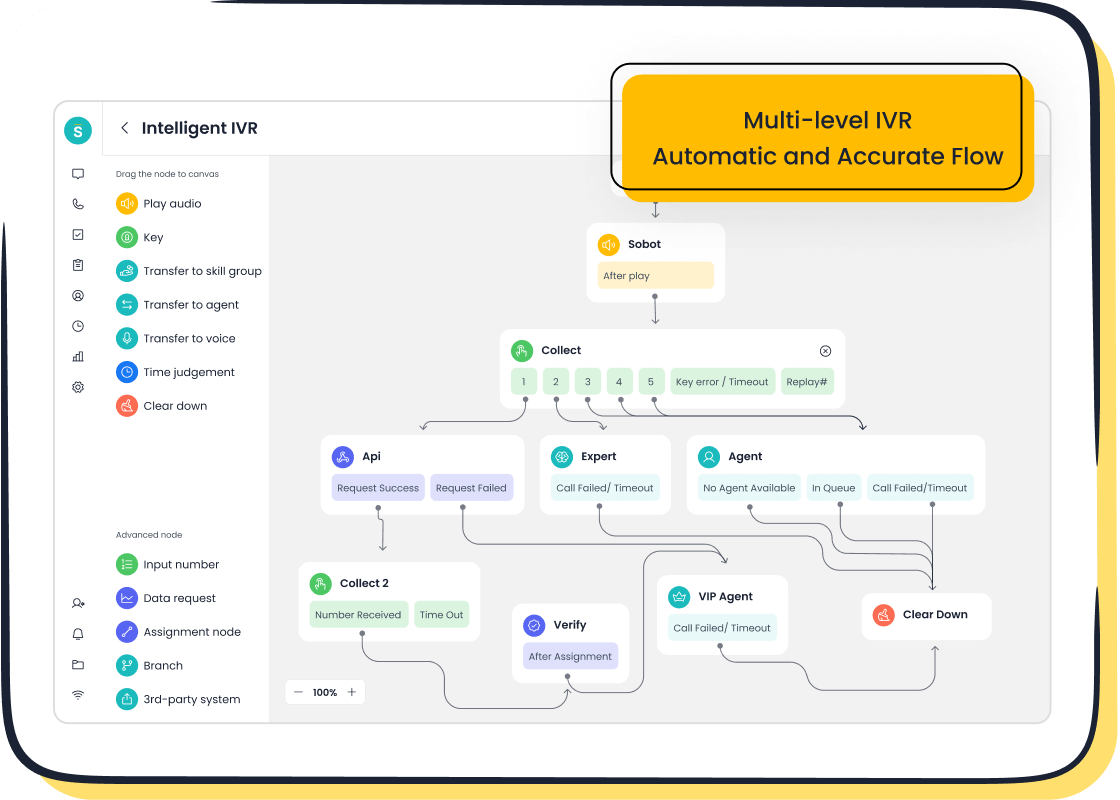
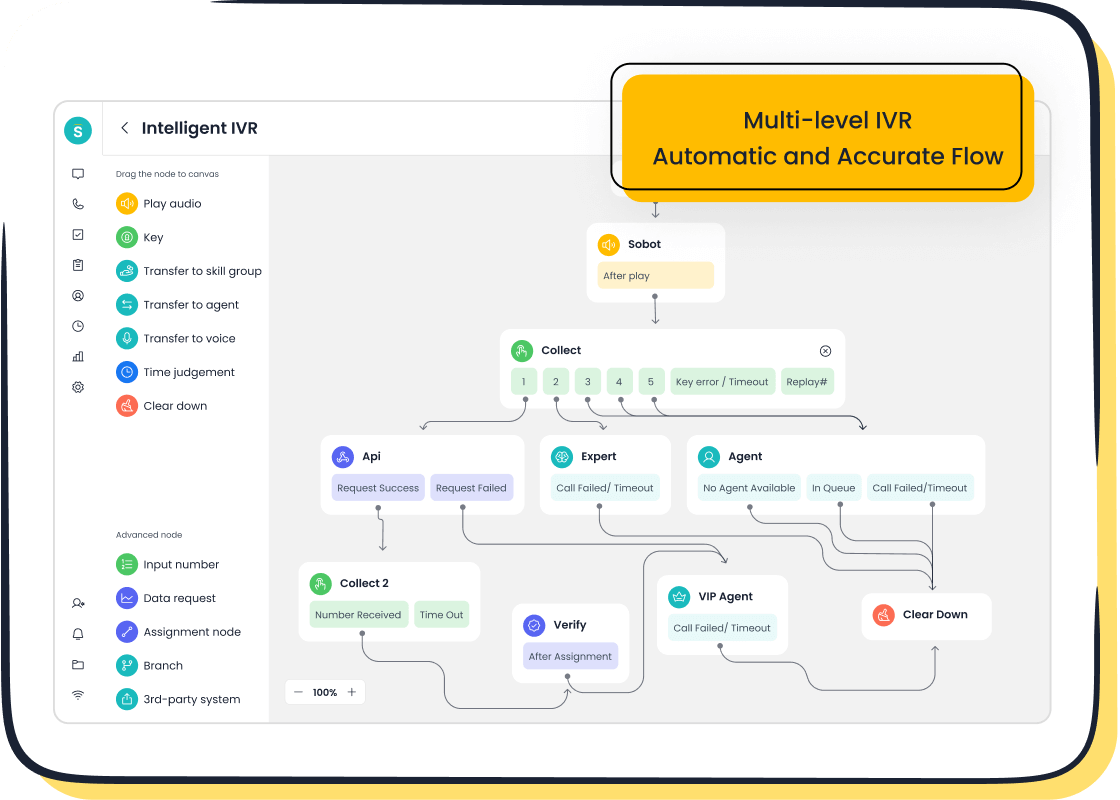
Sobot’s intelligent IVR and smart call routing make sure customers reach the right person quickly. The unified workspace gives agents all the details they need, so they can solve problems on the first call. This helps lower churn and keeps customers coming back.
Customer Lifetime Value (CLV)
Customer Lifetime Value, or CLV, measures how much a customer is worth to your business over their entire relationship with you. Higher CLV means more profit. Customers spend 67% more in months 30–36 than in their first six months. If you increase retention by just 5%, you can boost revenue by up to 95%. Keeping current customers costs much less than finding new ones.
- 97% of people say their contact center experience affects their loyalty.
- 75% of customers will pay more for a better experience.
- Companies with high customer satisfaction generate three times more revenue than others.
Sobot’s platform helps you increase CLV by making every interaction count. With AI-powered chatbots, live chat, and voice solutions, you can give fast, personal service. The ticketing system tracks every issue, so nothing gets missed. Analytics show you which customers are most valuable, so you can focus on keeping them happy.
Social Media Metrics
Social media plays a big role in customer satisfaction today. You need to track how customers feel and respond to your brand on platforms like Facebook, Instagram, and WhatsApp. Important social media metrics include:
| Metric | Description |
|---|---|
| Customer Satisfaction Score (CSAT) | Measures satisfaction with your service on social media. |
| Customer Effort Score (CES) | Shows how easy it is for customers to get help online. |
| Sentiment Analysis | Tells you if customers feel positive, neutral, or negative. |
| Response Rate | Shows how often you reply to customer messages. |
| Resolution Rate | Measures how many issues you solve on the first try. |
Sobot brings all your social media conversations into one place. You can see every message from Instagram, Facebook, and WhatsApp in a single dashboard. This gives you a full view of each customer’s journey. Sobot’s analytics help you spot trends and respond quickly. Customers enjoy seamless, personal support, which boosts satisfaction and loyalty.
Tip: Use Sobot’s omnichannel solution to track and improve all your key customer satisfaction metrics in real time. This helps you deliver a better experience on every channel.
Tracking these key customer satisfaction metrics gives you a clear picture of how your contact center performs. Sobot’s all-in-one platform makes it easy to measure, analyze, and improve every part of the customer journey. When you focus on these metrics, you build stronger relationships and grow your business.
Defining Customer Satisfaction in Contact Centers
What Customer Satisfaction Means
Customer satisfaction in contact centers shows how well you meet your customers’ needs and expectations. You can measure it using clear metrics. These numbers help you see how your service impacts your business. Here are some common ways you can define and measure customer satisfaction:
| Metric | Description |
|---|---|
| Customer Satisfaction Score (CSAT) | Measures customer satisfaction through surveys asking for overall satisfaction on a scale of 1 to 5. |
| Net Promoter Score (NPS) | Assesses customer loyalty by asking how likely they are to recommend the company on a scale of 0 to 10. |
| First Call Resolution (FCR) | Tracks the percentage of issues resolved on the first call, indicating efficiency and enhancing customer satisfaction. |
When you focus on analyzing customer satisfaction, you can spot trends and make better decisions for your contact center.
Factors Affecting Satisfaction
Many things can change how your customers feel about your service. You need to know what matters most to them. The main factors that affect customer satisfaction include:
- Agent knowledge: Well-trained agents help customers faster and better.
- Issue resolution: Customers feel happier when you solve their problems the first time.
- Channel preference: Some people like email or webchat more than phone calls.
If you keep analyzing customer satisfaction, you will see which areas need the most attention. You can then train your team and improve your processes.
The Importance of Unified Communication
Unified communication brings all your channels together. This makes it easier for your team to help customers quickly and personally. When you use a unified system, you see big improvements in customer satisfaction. Here is how unified communication helps:
| Benefit | Description |
|---|---|
| Faster Response Times | Hotels using integrated communication systems respond to guest requests nearly twice as fast. |
| Improved Coordination | Staff can share updates in real time, reducing internal friction and confusion. |
| Enhanced Personalization | Call logs and guest preferences are stored securely, making repeat visits feel more thoughtful. |
By analyzing customer satisfaction across all channels, you can make sure every customer gets the best experience. Unified communication helps you respond faster, solve problems better, and keep your customers happy.
Ways to Measure Customer Satisfaction
Surveys and Feedback Tools
You can measure customer satisfaction using surveys and feedback tools. Customer satisfaction surveys help you collect direct opinions from your customers. When you send out surveys after each interaction, you get real-time customer feedback. You can ask simple questions like, “How satisfied are you with our service?” or “How easy was it to solve your problem?” These surveys let you spot trends and see where you need to improve. You should use different types of surveys, such as post-call, email, or web-based forms, to reach more customers. Sobot’s platform makes it easy to send surveys across all channels, so you never miss a chance to measure customer satisfaction. You can also automate survey delivery, making sure you gather customer feedback at every step.
Analytics and Data Integration
Analytics and data integration give you a deeper way to measure customer satisfaction. You can track every customer interaction and see how your team performs. When you review data often, you make better decisions. Analytics help you find pain points and see what makes customers happy or frustrated. You can use real-time monitoring to check conversations and improve quality. Predictive analytics let you plan for busy times and keep service levels high. Sobot’s analytics dashboard brings all your data together, so you can measure customer satisfaction with confidence. You can also use these tools to improve self-service channels, making them easier for customers to use.
- Analytics and data integration help you:
- Analyze customer interactions and monitor performance metrics.
- Identify trends and pain points to enhance customer satisfaction.
- Use predictive analytics to plan resources and improve service.
Omnichannel and Voice/Call Center Solutions
You need to measure customer satisfaction across every channel. Sobot’s omnichannel and voice/call center solutions help you do this by unifying all your support channels. You can track customer feedback from phone calls, chats, emails, and social media in one place. This makes it easy to measure customer satisfaction at every touchpoint. Sobot’s features support your measurement efforts:
| Feature | Description |
|---|---|
| Omnichannel Integration | Unifies chats, social messaging, email, and voice in a central support hub. |
| AI-Powered Chatbot | Handles complex inquiries instantly, improving response times. |
| Automated Workflow | Streamlines routine tasks, freeing agents for complex needs. |
| Analytics Dashboard | Shows insights into interactions and satisfaction metrics. |
You can use Sobot’s tools to automate customer feedback collection and keep your support organized. This helps you measure customer satisfaction quickly and accurately. Visit Sobot’s official website to learn more about these solutions.
Using Metrics to Improve Customer Experience
Identifying Improvement Opportunities
You can use customer satisfaction metrics to find where your contact center needs to improve. These numbers show you what works and what needs attention. For example, if your first contact resolution is low, you may need to train your agents more or review your processes. If your abandonment rate is high, you might need better scheduling or call-back options. The table below shows common metrics and ways to improve customer satisfaction:
| Metric | Description | Improvement Strategies |
|---|---|---|
| First Contact Resolution | Issues solved in the first interaction | Train agents, review processes, focus on FCR |
| Abandonment Rate | Calls dropped before reaching an agent | Improve scheduling, update IVR, offer call-backs |
| Occupancy Rate | Agent time spent on calls vs. waiting | Balance staffing, support agent wellness |
| Customer Satisfaction Score | How happy customers are with your service | Review feedback, analyze journey, empower agents |
By focusing on these areas, you can improve customer satisfaction and boost customer satisfaction at every step.
Actionable Steps for Leaders
As a contact center leader, you can take clear steps to improve customer satisfaction and increase customer retention. Start by using customer feedback from surveys to guide your changes. Coaching programs help agents understand what you expect and how to meet those goals. You can also use a closed-loop process to keep improving first contact resolution and satisfaction scores. Here are some steps you can follow:
- Use customer feedback to guide service improvements.
- Set up coaching programs with clear goals.
- Review performance data to find what works best.
- Focus on improving customer satisfaction and customer retention rate.
- Make changes based on what you learn from your metrics.
Samsung used Sobot’s all-in-one contact center solution to improve customer satisfaction and increase customer retention. By unifying channels and using real-time data, Samsung raised its customer satisfaction rate to 97% and improved agent efficiency by 30%.
Monitoring Progress and Adjusting Strategies
You need to keep checking your progress to make sure your changes work. Analyze call data to spot common issues and address them quickly. Watch social media for real-time feedback. Set benchmarks for customer experience and use analytics tools to track your results. Hold regular team meetings to discuss challenges and share ideas. This helps you improve customer satisfaction, increase customer retention, and reduce customer churn. When you keep improving customer satisfaction, you also raise your customer retention rate and boost customer satisfaction over time.
Tip: Use Sobot’s analytics dashboard to track your progress and adjust your strategies for better results.
Tracking customer satisfaction gives you clear benefits for your contact center. See the main advantages in the table below:
| Benefit | Explanation |
|---|---|
| Business Growth | Loyal customers boost your revenue. |
| Loyalty and Retention | Satisfied customers stay longer and buy more. |
| Positive Word of Mouth | Happy customers recommend your service to others. |
| Lower Marketing Costs | Good service reduces the need for extra advertising. |
Sobot’s solutions help you measure, analyze, and improve these metrics. To get the best results:
- Set realistic goals for your team.
- Provide ongoing training.
- Use advanced technology like Sobot’s platform.
You can create better customer experiences and grow your business.
FAQ
What are customer satisfaction kpis in contact centers?
Customer satisfaction kpis are measurable values that show how well your contact center meets customer needs. These kpis include metrics like CSAT, NPS, and CES. You use these kpis to track service quality and improve customer loyalty.
Why should you track customer satisfaction kpis?
Tracking customer satisfaction kpis helps you see what works and what needs improvement. When you monitor these kpis, you can boost customer loyalty, reduce churn, and make better business decisions. Sobot’s analytics make it easy to follow these kpis in real time.
How do customer satisfaction kpis affect customer loyalty?
Customer satisfaction kpis show how happy your customers feel after each interaction. High scores on these kpis mean customers trust your service. When you improve these kpis, you build stronger customer loyalty and keep people coming back.
Which kpis matter most for contact centers?
The most important kpis for contact centers include customer satisfaction kpis like CSAT, NPS, CES, and customer retention rate. These kpis help you measure service quality, agent performance, and customer loyalty. Sobot’s platform tracks all these kpis in one place.
How can Sobot help you improve customer satisfaction kpis?
Sobot gives you tools to measure and analyze customer satisfaction kpis across all channels. You can use surveys, analytics, and real-time dashboards to track kpis. Sobot’s unified workspace and AI features help you raise your kpis and increase customer loyalty.
See Also
Essential Strategies for Effective Call Center Quality Management
Ten Strategies to Enhance Live Chat Customer Experience
Comprehensive Overview of Call Center Quality Management Systems
Enhancing Call Center Efficiency Through Effective Monitoring Techniques

