Why Intelligent Error Correction Shapes Consciousness

Error correction forms the backbone of intelligence, enabling systems to adapt and evolve. Your ability to learn from mistakes stems from intelligent error correction, a process that refines understanding and fosters growth. Historical insights, like Ross Ashby’s work, highlight how the brain’s self-repair mechanisms drive intelligence. Similarly, AI systems like Sobot’s Chatbot leverage intelligent error correction to enhance customer interactions. By learning from feedback, the chatbot improves responses, ensuring accuracy and efficiency. This mirrors how the mind adapts through knowledge, making error correction essential for both human and artificial intelligence.
What Is Intelligent Error Correction?
Defining Intelligent Error Correction
The process of identifying and rectifying mistakes in adaptive systems.
Error correction is a continuous process that allows systems to adapt and improve. It involves identifying mistakes, analyzing their causes, and implementing solutions to prevent recurrence. In biological systems, this process ensures survival by enabling organisms to adjust to environmental changes. For artificial systems, error correction enhances functionality and reliability.
For example, training AIs like Sobot's Chatbot relies on error detection to refine responses. By analyzing customer interactions, the chatbot identifies gaps in its understanding and adjusts its knowledge base. This process ensures accurate and efficient query resolution, making it an intelligent agent capable of learning and adapting.
Everyday examples, such as autocorrect and Sobot's Chatbot resolving customer queries.
You encounter error correction daily. Autocorrect on your smartphone adjusts typos in real-time, improving communication. Similarly, Sobot's Chatbot uses incremental error corrections to enhance customer service. It learns from past interactions, ensuring better responses over time. This approach not only saves time but also boosts customer satisfaction by providing precise solutions.
Feedback Loops in Error Correction
How feedback enables systems to self-correct and improve over time.
Feedback loops are essential for continuous error-correction. They allow systems to evaluate outcomes and make necessary adjustments. In biological systems, homeostasis maintains stability by correcting deviations. For instance, your body regulates temperature through feedback mechanisms.

In AI, feedback loops play a crucial role in training. Sobot's Chatbot uses customer feedback to refine its algorithms. Each interaction serves as a learning opportunity, enabling the chatbot to improve its decision-making and accuracy.
Biological examples, such as homeostasis, and AI examples like Sobot's Chatbot learning from interactions.
Homeostasis in living organisms exemplifies error correction. It ensures balance by adjusting internal processes. Similarly, AI systems like Sobot's Chatbot adapt through learning. By analyzing user feedback, the chatbot identifies errors and updates its responses. This iterative process mirrors how the mind evolves through experience.
Why Intelligent Error Correction Matters
Its role in adaptive learning and decision-making.
Error correction is the foundation of adaptive learning. It enables systems to evolve by addressing mistakes and refining strategies. For humans, this process enhances intelligence by fostering better decision-making. For AI, it ensures reliable performance and continuous improvement.
How it underpins customer service efficiency in tools like Sobot's Chatbot.
In customer service, error correction ensures efficiency and accuracy. Sobot's Chatbot exemplifies this by learning from interactions to provide precise solutions. Its ability to adapt reduces response times and enhances user satisfaction. This makes it an indispensable tool for businesses aiming to improve operational efficiency.
The Role of Error Correction in Intelligence and Consciousness
Intelligence as Adaptive Learning
How error correction allows systems to learn from mistakes and improve.
Error correction enables systems to evolve by identifying and addressing mistakes. For AI, this process involves detecting discrepancies between expected and actual outcomes. By analyzing these gaps, the system adjusts its algorithms to minimize future errors. Reinforcement learning further enhances this process by associating rewards with correct actions and penalties with mistakes. This iterative approach mirrors how your mind learns through trial and error, refining reasoning and decision-making over time.
Sobot's Chatbot exemplifies this principle. It learns from customer interactions, identifying areas where responses fall short. By updating its knowledge base, the chatbot improves its accuracy and efficiency. This capability not only boosts customer satisfaction but also demonstrates how error correction drives general intelligence in AI systems.
Examples from human cognition and AI systems like Sobot's Chatbot.
In human cognition, error correction plays a vital role in adaptive learning. When you make a mistake, your brain analyzes the error, adjusts your approach, and improves future performance. Similarly, AI systems like Sobot's Chatbot use feedback loops to refine their responses. For instance, if the chatbot provides an incorrect answer, it learns from the interaction and updates its algorithms. This process ensures continuous improvement, making the chatbot a reliable tool for customer service.
Consciousness and Self-Correction
The ability to reflect on and adjust thoughts and actions.
Consciousness involves the ability to reflect on your thoughts and actions. This self-awareness allows you to identify errors and make adjustments. In AI, error correction fosters a similar capability. By analyzing its decisions, an AI system can adapt and improve, mimicking the reflective nature of the conscious mind.
How error correction fosters self-awareness in both humans and AI.
Error correction is essential for developing self-awareness. In humans, it enables you to adapt to new situations and refine your understanding of the world. For AI, this process involves making incremental adjustments based on feedback. Sobot's Chatbot, for example, uses error correction to enhance its decision-making. This ability to self-correct aligns with theories of consciousness, highlighting the connection between error correction and intelligence.
AI Alignment and Error Correction
Ensuring AI systems align with human values through robust error correction.
AI alignment ensures that systems operate in harmony with human values. Error correction plays a crucial role in this process by addressing challenges like value drift and ambiguity in human values. Strategies such as imitation learning and value learning help AI systems understand and integrate these values into their decision-making.
Sobot's approach to ethical AI development in customer service.
Sobot prioritizes ethical AI development by incorporating robust error correction mechanisms. Its Chatbot uses intelligent algorithms to align with user preferences, ensuring accurate and reliable service. By continuously learning from interactions, the chatbot adapts to meet customer needs while maintaining alignment with ethical standards. This approach underscores Sobot's commitment to creating AI systems that respect human values and enhance customer experiences.
How Intelligent Error Correction Shapes Customer Interactions
Enhancing Customer Service with AI
How Sobot's Chatbot uses error correction to resolve queries efficiently.
You experience the benefits of intelligent error correction every time you interact with Sobot's Chatbot. This AI-powered tool identifies and rectifies errors in real-time, ensuring accurate responses to your queries. By analyzing past interactions, the chatbot refines its algorithms, improving its understanding of customer needs. This process allows it to resolve repetitive tasks autonomously, reducing errors and freeing up human agents for more complex issues. For example, the chatbot can handle routine inquiries like order tracking or FAQs with precision, ensuring you receive quick and reliable assistance.
Examples of improved customer satisfaction and reduced costs.
Sobot's Chatbot demonstrates how error correction enhances customer satisfaction and reduces operational costs. Businesses using the chatbot report a 70% increase in productivity and a 50% reduction in agent-related expenses. By minimizing manual handling, the chatbot ensures accurate information is shared, saving time and improving service quality. Agilent, a global leader in life sciences, achieved a sixfold increase in efficiency and a 25% cost reduction by integrating Sobot's AI-powered solutions. These results highlight how error correction drives both customer satisfaction and business success.
Intelligent Routing and Problem Solving
How error correction ensures customers are directed to the right solutions.
Error correction plays a vital role in intelligent routing, ensuring you are connected to the right solution quickly. Sobot's Chatbot uses advanced algorithms to analyze your query and direct it to the appropriate department or resource. This reduces miscommunication and ensures your issue is resolved efficiently. For instance, if you inquire about a technical issue, the chatbot routes your query to a specialized agent, avoiding unnecessary delays.
Case study: Agilent's success with Sobot's AI-powered solutions.
Agilent's partnership with Sobot showcases the power of intelligent error correction. By implementing Sobot's omnichannel workbench and AI-powered chatbot, Agilent streamlined its customer service operations. The chatbot handled routine inquiries, while intelligent routing directed complex issues to skilled agents. This approach resulted in a 95% customer satisfaction score, proving how error correction enhances problem-solving and builds trust.
Building Trust Through Accuracy
The role of error correction in delivering reliable and consistent service.
Error correction ensures the reliability and consistency of AI-powered customer service systems. By reducing human error, it allows businesses to provide accurate and efficient service. This fosters trust and loyalty among customers. Sobot's Chatbot exemplifies this by continuously learning from interactions and refining its responses. Its ability to deliver precise solutions across various channels ensures you receive consistent support, no matter how you choose to connect.
How Sobot's Chatbot ensures accurate responses across multiple channels.
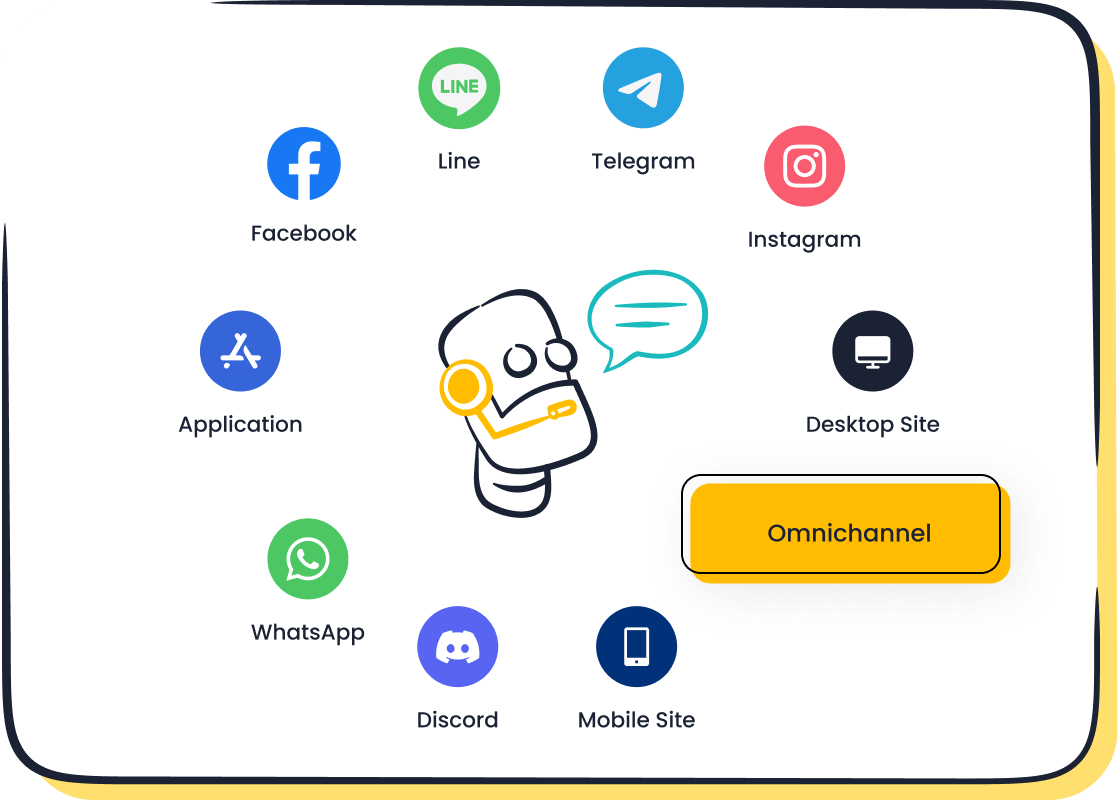
Sobot's Chatbot operates seamlessly across platforms like WhatsApp, SMS, and live chat. It uses error correction to maintain accuracy, ensuring you receive the same high-quality service regardless of the channel. By analyzing data in real-time, the chatbot detects anomalies and adjusts its responses, providing reliable assistance. This omnichannel capability not only enhances your experience but also strengthens your trust in the service.
Broader Implications of Intelligent Error Correction
Societal Systems and Governance
How error correction mechanisms improve decision-making and governance.
Error correction enhances decision-making by identifying flaws in processes and implementing solutions. In governance, it ensures policies adapt to changing societal needs. For example, public health systems use error correction to refine strategies during crises. By analyzing data, they adjust responses to improve outcomes. This approach minimizes risks and ensures better resource allocation.
Organizations also benefit from error correction. It streamlines operations by addressing inefficiencies. For instance, companies like Agilent have improved customer service by integrating AI-powered tools. These tools use error correction to refine workflows, ensuring accurate and efficient service delivery. This adaptability fosters trust and reliability in both public and private sectors.
Examples from public policy and organizational efficiency.
In public policy, error correction has been pivotal in addressing existential challenges like climate change. Governments use adaptive resonance theory to analyze feedback and refine environmental policies. Similarly, businesses employ AI systems to enhance operational efficiency. Sobot’s Chatbot, for instance, uses error correction to resolve customer queries, reducing fallibility in service delivery. These examples highlight how error correction drives progress across various domains.
AI Development and Ethical Considerations
The importance of error correction in creating reliable AI systems.
Error correction is critical for building reliable AI systems. It identifies and resolves methodological errors, ensuring transparency and accountability. This process improves the quality of AI methodologies, making systems more ethical and dependable.
- Error correction promotes rational debate by scrutinizing methodologies.
- It ensures AI systems align with human values, reducing existential risks.
- It addresses fallibility in AI decision-making, fostering trust and reliability.
Sobot exemplifies this commitment through its Chatbot. By continuously learning from interactions, the Chatbot minimizes errors and aligns with ethical standards. This approach ensures accurate and fair customer service, reflecting the importance of error correction in AI development.
Sobot's commitment to ethical AI through intelligent error correction.
Sobot prioritizes ethical AI by integrating robust error correction mechanisms. The Chatbot uses adaptive resonance theory to refine its algorithms, ensuring decisions align with user needs. This reduces risks like bias and enhances transparency. For example, the Chatbot’s multilingual capabilities ensure inclusivity, addressing ethical concerns in diverse markets. Sobot’s dedication to ethical AI underscores the role of error correction in creating reliable systems.
The Future of Error Correction
How advancements in error correction could shape AI consciousness.
Advancements in error correction could redefine AI consciousness. By enabling systems to self-correct, error correction fosters adaptive learning. This mirrors the human mind’s ability to reflect and improve. Future AI systems may use adaptive resonance theory to achieve higher levels of understanding, bridging the gap between intelligence and consciousness.
These developments could address existential risk factors in AI. For instance, error correction could prevent value misalignment, ensuring systems operate ethically. This progress would enhance AI’s role in critical areas like healthcare and governance, reducing fallibility and improving outcomes.
Potential implications for customer service and human-AI collaboration.
In customer service, error correction will revolutionize human-AI collaboration. AI systems like Sobot’s Chatbot already demonstrate this potential. By learning from interactions, the Chatbot delivers accurate and efficient support. Future advancements could enable even greater personalization, enhancing customer satisfaction.
Error correction will also strengthen trust in AI. By minimizing risks and ensuring reliability, it will foster seamless collaboration between humans and machines. This synergy will drive innovation, transforming industries and improving lives.
Why Intelligent Error Correction Is Fundamental
A Unifying Mechanism
How error correction connects intelligence, consciousness, and adaptation.
Error correction serves as a bridge connecting intelligence, consciousness, and adaptation. It enables systems, whether biological or artificial, to adjust and thrive in changing environments. For example:
- Intelligence and consciousness rely on error correction to adapt and evolve.
- Both the human mind and AI systems use error correction for self-repair and learning.
- Evolutionary processes and brain functions highlight error correction as a core mechanism.
This universality shows how error correction underpins the ability to learn, grow, and respond effectively. Your mind, for instance, constantly refines its understanding by correcting mistakes. Similarly, AI systems like Sobot's Chatbot adapt through feedback, improving their responses over time. This shared reliance on error correction demonstrates its fundamental role in shaping both natural and artificial intelligence.
The universality of error correction across biological and artificial systems.
Error correction is a universal principle found in both biological and artificial systems. In biology, it ensures survival by enabling organisms to adapt to their surroundings. For instance, your body uses error correction to maintain balance, such as regulating temperature or repairing damaged cells. In artificial systems, error correction drives innovation and reliability. Sobot's Chatbot exemplifies this by learning from interactions and refining its algorithms. This process ensures accurate responses, enhancing customer satisfaction. The shared reliance on error correction across these domains highlights its critical role in fostering adaptability and resilience.
Advancing Customer Service with AI
How Sobot's Chatbot exemplifies the power of intelligent error correction.

Sobot's Chatbot showcases how intelligent error correction transforms customer service. It identifies and corrects errors in real-time, ensuring accurate and efficient query resolution. Human oversight plays a key role in refining the chatbot's performance, enabling it to learn from mistakes and improve continuously. Recent advancements in error detection allow the chatbot to recognize when it provides incorrect information. This capability enhances customer interactions by delivering precise and reliable solutions. By integrating these features, Sobot's Chatbot not only boosts operational efficiency but also builds trust with users.
The potential for breakthroughs in customer interaction and satisfaction.
Intelligent error correction opens the door to groundbreaking improvements in customer service. Sobot's Chatbot, for example, uses self-correction to refine its understanding of customer needs. This leads to faster response times and more personalized interactions. Future advancements could enable chatbots to anticipate customer concerns, further enhancing satisfaction. Businesses using Sobot's solutions have already seen significant results, such as Agilent's sixfold increase in efficiency. These breakthroughs demonstrate how error correction can revolutionize customer experiences, making interactions smoother and more rewarding.
Intelligent error correction forms the foundation of intelligence and consciousness. It enables systems to adapt, learn, and evolve by addressing mistakes and refining processes. Both biological and artificial systems, like Sobot’s Chatbot, utilize self-repair and adaptation to thrive in dynamic environments. This mechanism mirrors how your mind resolves unexpected events and explains thoughts. As AI continues to advance, improving error correction will unlock new possibilities for understanding consciousness and enhancing customer experiences. Sobot’s innovative solutions exemplify this transformative potential, paving the way for smarter, more adaptive systems.
FAQ
What is intelligent error correction, and why is it important?
Intelligent error correction identifies and fixes mistakes in systems. It ensures adaptability and reliability. For example, your mind uses this process to learn from errors. Similarly, AI systems like Sobot's Chatbot refine their responses through feedback, improving accuracy and enhancing customer satisfaction.
How does error correction improve AI performance?
Error correction allows AI to learn from mistakes. It analyzes discrepancies and adjusts algorithms to improve outcomes. Sobot's Chatbot, for instance, uses this process to provide accurate answers and adapt to customer needs, ensuring efficient and reliable service.
Can error correction help AI align with human values?
Yes, error correction ensures AI aligns with human values by refining decision-making processes. Sobot integrates ethical principles into its AI systems, ensuring they respect user preferences and deliver fair, accurate solutions.
How does error correction shape intelligence in AI?
Error correction drives intelligence by enabling AI to adapt and evolve. It mirrors how your mind learns through trial and error. Sobot's Chatbot exemplifies this by continuously improving its responses, making it a smarter and more effective tool.
What role does error correction play in customer service?
Error correction ensures accurate and efficient customer service. Sobot's Chatbot uses this mechanism to resolve queries quickly, reducing errors and improving user satisfaction. Businesses benefit from lower costs and higher productivity.
See Also
Exploring Artificial Intelligence Solutions for Call Centers
Understanding the Functionality of IVR Voice Recognition
Key Features of Interactive Voice Response Systems

