Inbound Customer Service Representative Responsibilities in 2025


You answer questions, solve problems, and support customers as a customer service representative in 2025. Inbound customer services help businesses build trust and loyalty. Modern services use advanced tools, including Sobot call center and Sobot AI, to manage customer support quickly and accurately. You must learn new skills and adapt to changes in technology. Inbound customer services now focus on fast responses, clear communication, and excellent customer support every day.
Role of Inbound Customer Service Representative

Key Functions in 2025
As an inbound call center agent in 2025, you serve as the first point of contact for customers. You answer calls, respond to chats, and handle emails. Your main goal is to deliver excellent customer support and resolve inquiries quickly. You use advanced technology, such as unified workspaces and AI-powered tools, to manage customer interactions. You process orders, handle payments, and manage returns. You document every customer interaction in CRM systems, which helps track issues and follow up when needed. You escalate complex problems to specialized teams or supervisors. You maintain up-to-date product knowledge to give accurate information. You address complaints with empathy and professionalism. You strive to meet performance metrics like call handling time and customer satisfaction scores. You collect feedback and conduct surveys to improve services.
Here is a table that summarizes your primary responsibilities as an inbound call center agent in 2025:
| Responsibility Category | Description |
|---|---|
| Handling Incoming Calls | Manage customer calls promptly and professionally to resolve issues and answer inquiries. |
| Providing Customer Support | Assist with product information, troubleshooting, and usage guidance. |
| Processing Orders and Transactions | Take orders, process payments, and manage returns or cancellations. |
| Documenting Interactions | Record details in CRM systems for tracking and follow-up. |
| Escalating Complex Issues | Send advanced problems to the right department or supervisor. |
| Maintaining Product Knowledge | Stay updated on products and services. |
| Handling Customer Complaints | Address complaints to achieve satisfaction and retention. |
| Meeting Performance Metrics | Meet KPIs such as resolution rate and satisfaction scores. |
| Follow-Up | Schedule follow-ups to reinforce trust. |
| Customer Feedback Collection | Gather feedback to improve service quality. |
| Use of Technology Tools | Use CRM, live chat, call center software, and AI chatbots for efficiency. |
Importance for Business
You play a vital role in business success as an inbound call center agent. You act as the first point of contact, shaping the customer’s impression of the company. Inbound customer services help build trust and loyalty. When you resolve issues quickly and provide helpful support, customers feel valued. Studies show that 68% of customers leave a company because they feel unappreciated. Friendly customer service representatives encourage 73% of customers to develop strong brand loyalty. Retaining customers costs five times less than acquiring new ones. When you deliver excellent customer support, you increase customer retention and satisfaction.
Inbound call center agents also help businesses lower costs and improve efficiency. You use predictive analytics and customer data to anticipate needs and prevent problems. Automated alerts and proactive engagement reduce inbound contact volume and prevent frustration. You collect valuable feedback, which helps companies improve products and services. Metrics like Customer Satisfaction (CSAT), First Contact Resolution (FCR), and Net Promoter Score (NPS) show how your work directly impacts business outcomes. When you provide personalized service and follow up with customers, you create positive experiences that lead to repeat business and referrals.
Tip: Exceptional inbound customer services turn contact centers into loyalty engines, driving long-term growth and brand reputation.
Core Inbound Customer Services Responsibilities
Handling Inquiries and Support
As an inbound call center agent, you spend much of your day answering incoming calls, chats, and emails from customers. You use Sobot’s unified workspace to manage all these channels in one place. This workspace lets you see every customer’s history, so you can respond quickly and accurately. When handling customer inquiries, you listen carefully to each person’s question or concern. You provide information about products, services, or company policies. You might help someone track an order, explain a bill, or guide them through a return process.
You use Sobot’s Voice/Call Center features to make your work easier. The Intelligent IVR greets callers and routes them to the right agent or team. This reduces wait times and helps you connect with the right customer faster. The system’s Caller ID (oneID) shows you who is calling and pulls up their records instantly. This means you can start helping right away, without asking for repeated details.
Here are some daily tasks you handle using Sobot’s solutions:
- Answering incoming calls and chats from customers who need help.
- Providing customer support by giving clear answers and step-by-step instructions.
- Processing orders, payments, and returns directly from the unified workspace.
- Handling customer complaints with patience and empathy.
- Offering effective solutions to common problems using AI-powered suggestions.
Note: Sobot’s AI Voicebot can answer simple inquiries automatically, so you can focus on more complex customer issues.
Issue Resolution and Escalation
You play a key role in resolving customer issues. When a customer calls with a problem, you listen, ask questions, and use your tools to find answers. You use Sobot’s AI Copilot to get real-time suggestions and post-call summaries. This helps you resolve many issues on the first contact, which improves customer satisfaction.
Sometimes, you face problems that you cannot solve right away. In these cases, you follow clear escalation protocols. Here is how the escalation process usually works for an inbound call center agent:
- You try to resolve the issue using all available resources.
- If you reach a limit or company policy prevents you from solving the problem, you escalate the call to a senior agent or supervisor.
- You follow your contact center’s internal escalation protocols, which may differ for each client or product.
- You make sure the customer’s identity is verified and all details are recorded before escalation.
- The senior agent or supervisor takes over, ensuring the customer receives the right support.
- You confirm that the issue is being handled and close your part of the call.
This process ensures that every customer gets the help they need, even if their problem is complex. Escalating complex issues quickly and accurately helps maintain trust and keeps customers satisfied.
Tip: Always document the steps you take when resolving customer issues or escalating them. This helps your team track progress and ensures nothing gets missed.
Documentation and CRM Updates
Documenting interactions is one of your core responsibilities as an inbound call center agent. Every time you finish a call, chat, or email, you record the details in your CRM system. Sobot’s unified workspace makes this easy. You can enter notes, tag the type of inquiry, and update customer records all in one place.
Sobot’s Voice/Call Center features help you keep accurate records. Call recording lets you review conversations for quality control. Service summary customization allows you to categorize and track each call. CRM integration means you do not have to switch between different systems. You save time and reduce errors.
Here is a table showing how Sobot’s Voice/Call Center features support your daily documentation tasks:
| Feature/Capability | Description | Benefit to You as an Agent |
|---|---|---|
| Unified Workspace | Manage calls, chats, and emails in one place | Streamlines documenting interactions |
| Call Recording | Records every call for compliance and review | Ensures reliable records and quality control |
| Service Summary Customization | Lets you tag and categorize each call | Improves tracking and reporting |
| CRM Integration | Updates customer records automatically | Reduces manual work and errors |
| AI Copilot | Provides post-call summaries and suggestions | Helps you document key points quickly |
By keeping detailed records, you help your team spot trends and improve service. You also make it easier to follow up with customers and resolve future inquiries. Accurate documentation supports better business decisions and helps your company deliver excellent customer support.
Remember: Good documentation protects you and your company. It shows what actions you took and helps resolve any disputes.
Technology in Inbound Call Center Agent Work
AI and Automation Tools

You use advanced AI and automation tools every day as an inbound call center agent. Sobot’s AI-powered Voicebot helps you answer routine questions quickly. This tool understands what customers say and gives instant answers. In 2025, almost every business plans to use AI in customer communication. About 63% of companies invest in AI voice assistants. These tools help you handle more calls and improve customer satisfaction. When the Voicebot answers simple questions, you can focus on complex problems. This makes your work easier and helps customers get fast support.
Sobot’s AI Copilot gives you real-time suggestions during calls. It also creates summaries after each conversation. You save time and avoid missing important details. Automation tools help you meet your goals as an agent and keep customers happy.
Tip: Let AI handle simple tasks so you can spend more time solving important issues for customers.
Omnichannel Solutions by Sobot
You work with customers on many channels, not just the phone. Sobot’s omnichannel solution lets you manage calls, chats, emails, and social media in one place. This unified workspace helps you see all customer history and respond faster. You do not need to switch between different systems. This saves time and reduces mistakes.
Here is a table that shows how Sobot’s omnichannel solution improves customer service compared to single-channel approaches:
| Metric / Example | Omnichannel AI Solution (Sobot) | Single-Channel Approach |
|---|---|---|
| Chatbot Resolution Rate | 83% (OPPO case) | N/A |
| Repurchase Rate Increase | 57% (OPPO case) | N/A |
| Customer Retention Rate | 89% (with omnichannel AI) | 33% (weaker strategies) |
| Purchase Rate Increase | 287% (with omnichannel) | N/A |
| AI Handling of Interactions | 95% expected by 2025 | N/A |
You see higher customer satisfaction because customers get help on their favorite channels. You also help your company increase sales and keep more customers. Sobot’s solution gives you the tools to deliver seamless, personalized service as an inbound call center agent.
Real-Time Monitoring and Analytics
You track your performance and customer satisfaction using real-time monitoring and analytics. Sobot’s platform shows you live data about calls, chats, and emails. You can see how many customers you help, how fast you answer, and how happy they feel after each interaction. This helps you spot problems early and fix them quickly.
Supervisors use these analytics to coach you and your team. You get feedback that helps you improve as an agent. Real-time data also helps your company make better decisions. When you use analytics, you work smarter and help raise customer satisfaction.
Note: Real-time monitoring lets you see your progress and celebrate your wins as an inbound call center agent.
Skills for Customer Service Representative Success
Communication and Empathy
You need strong communication and empathy skills to succeed as a customer service representative. These skills help you understand customer needs and build trust. Active listening lets you hear what customers say and what they feel. You show empathy by recognizing emotions and responding with care. When you use clear language, you help customers solve problems faster. Emotional intelligence helps you manage tough conversations and keep a positive tone.
- Active listening and empathy help you understand and support customers.
- Clear verbal and written communication lets you explain solutions simply.
- Emotional intelligence builds rapport and trust.
- Persuasion skills help you guide customers to the best choices.
- Adaptability lets you adjust your style for each customer.
- Cultural competence helps you connect with people from many backgrounds.
- Ongoing practice keeps your communication skills sharp.
Empathy training makes a big difference. Many customers feel misunderstood. When you listen carefully and echo their concerns, you show you care. Most customers value their experience as much as the product. Empathetic conversations reduce complaints and build loyalty.
Technical and Product Knowledge
You must understand the tools and products you support. As a customer service representative, you use advanced systems like Sobot’s unified workspace. You need to know how to use these tools quickly and accurately. Maintaining product knowledge helps you answer questions and solve problems. You stay updated on new features and changes. This shows a high level of professionalism and builds customer confidence. When you know your products well, you can give better advice and support.
Tip: Review product updates and practice using new tools often. This keeps your skills fresh and your support accurate.
Adaptability and Learning
You work in a fast-changing environment. Adaptability helps you adjust to new technologies and customer needs. Continuous learning lets you grow your skills and move up in your career. Many companies offer training and support for professional development. You start with basic skills and, as you learn more, you can take on leadership roles.
| Aspect | Description |
|---|---|
| Adaptability | Lets you adjust to new tools, customer needs, and procedures. |
| Continuous Learning | Involves training and staying updated on products and services. |
| Career Levels | L1: Basic skills. L2: Advanced skills. L3: Leadership and coaching. |
| Professional Development | Companies provide resources to help you grow and prepare for higher roles. |
| Career Advancement | Skill development and adaptability help you become a lead or manager. |
Note: Adaptability and learning keep you ready for new challenges and help you advance as a customer service representative.
Impact on Customer Satisfaction and Support
Enhancing Customer Experience
You help create a positive customer experience every time you answer a call or chat. You use intelligent call routing to connect customers to the right agent quickly. Skill-based distribution lets you handle questions that match your expertise. First Call Resolution (FCR) means you solve problems in one interaction, which boosts customer satisfaction. Personalization is possible because you see real-time customer data in Sobot’s unified workspace. Interactive Voice Response (IVR) gives customers self-service options for simple issues. Real-time analytics help you improve your support quality. These strategies make customers feel valued and keep them loyal.
- Intelligent call routing reduces wait times.
- Skill-based distribution improves support quality.
- FCR increases efficiency and satisfaction.
- Personalization builds loyalty.
- IVR frees you to focus on complex issues.
- Real-time analytics optimize performance.
Measuring Success in Customer Support
You measure your success using clear metrics. These show how well you meet customer needs and improve customer satisfaction. Here is a table that explains the most important metrics:
| Metric | Description | Impact on Customer Satisfaction |
|---|---|---|
| First Call Resolution (FCR) | Percentage of issues resolved on the first contact. High FCR means happier customers. | Strong positive correlation with customer satisfaction scores. |
| Customer Satisfaction (CSAT) | Survey score after each interaction. Shows how well you serve customers. | Direct indicator of customer satisfaction levels. |
| Net Promoter Score (NPS) | Measures loyalty and likelihood to recommend the company. | Higher NPS means better long-term satisfaction. |
| Customer Effort Score (CES) | Tracks how easy it is for customers to get help. Lower effort leads to higher satisfaction. | Lower CES improves customer satisfaction. |
You also track metrics like average handle time, service level, and abandoned call rate. These help you balance speed and quality. You use these numbers to find ways to improve your support and deliver better results.
Sobot Customer Story: Agilent
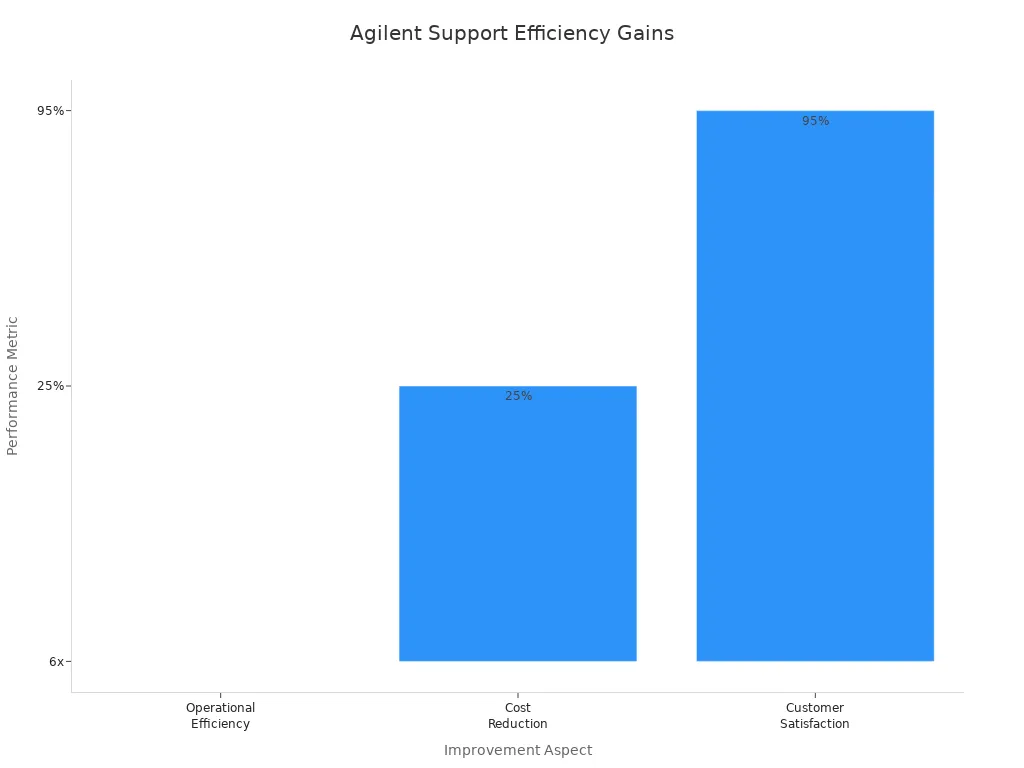
Agilent improved customer satisfaction and support efficiency by using Sobot’s solutions. Agilent combined AI-powered chatbots with human agents. This approach increased operational efficiency by six times and reduced costs by 25%. Agilent reached a customer satisfaction score of 95%. The system used intelligent routing and a stable platform to deliver fast, accurate support. You can see the improvements in the chart below:
| Improvement Aspect | Details |
|---|---|
| Operational Efficiency | Increased by 6 times |
| Cost Reduction | Reduced overall costs by 25% |
| Customer Satisfaction (CSAT) | Reached 95%, reflecting high customer satisfaction |
| Collaboration Model | Human agents and chatbot work together |
| Intelligent Routing | Targeted and efficient customer service |
You see how inbound customer service representatives drive business outcomes. You help customers feel valued, solve problems quickly, and create lasting loyalty. Agilent’s story shows how technology and teamwork lead to a positive customer experience and high customer satisfaction. For more details, visit Sobot’s official blog.
You see inbound customer service responsibilities changing fast in 2025. You use tools like Sobot’s Voice/Call Center to deliver quick, personalized support. Advanced technology helps you reduce resolution times and create positive experiences for customers. Looking ahead, you will notice these trends shaping your role:
- AI-powered support for more empathetic conversations
- Seamless omnichannel communication
- Hyper-personalized solutions using customer data
- Remote and hybrid work models
- Focus on customer satisfaction over speed
Stay ready to learn new skills and embrace smart solutions. This approach will help you succeed and keep customers happy.
FAQ
What are the main inbound customer service representative responsibilities in 2025?
You answer calls, chats, and emails. You solve problems, update records, and use AI tools. You help customers quickly and keep them satisfied. You work with advanced systems like Sobot’s Voice/Call Center to manage tasks efficiently.
How does technology improve your daily work as a customer service representative?
You use AI-powered tools and unified workspaces. These help you respond faster and track customer history. Sobot’s solutions let you handle more inquiries and reduce errors. You see real-time data that helps you improve your support.
Why is documentation important for inbound customer service representatives?
You record every interaction in the CRM. This helps you follow up, spot trends, and resolve disputes. Sobot’s unified workspace makes documentation easy. Accurate records support better decisions and improve customer satisfaction.
What skills do you need to succeed as an inbound customer service representative in 2025?
You need strong communication, empathy, and technical knowledge. You must adapt to new tools and learn quickly. You use Sobot’s platform to deliver personalized support and solve problems. Continuous learning helps you grow in your role.
How do inbound customer service representatives impact business outcomes?
You shape customer experiences and build loyalty. You resolve issues fast and collect feedback. Sobot’s technology helps you increase efficiency and satisfaction. Your work supports higher retention rates and better business results.

