In-House vs Outsourced Support A 2026 Guide

Choosing your support model is a key decision. The in-house vs outsourcing debate depends entirely on your business priorities. An in-house team offers you total control. In contrast, outsourcing delivers significant cost efficiency and scalability. This cost focus is why 34% of businesses choose outsourcing. The global market for outsourced customer support is also growing rapidly.
Consider your primary driver: If absolute control is your non-negotiable, an in-house team is your answer. If rapid growth and efficiency are paramount, outsourcing is a powerful option. An in-house team can be costly, but outsourcing your support, including ecommerce back office support services, offers flexibility. Platforms like Sobot can help manage either your in-house or outsourced team.
Choosing In-House Support for Control & Brand Integrity
Opting for an in-house team puts you in the driver's seat. This model is ideal when your brand identity and the quality of every customer interaction are top priorities. Your in-house management team has complete authority over your back office operations, a level of control not possible with back office outsourcing. While back office outsourcing offers other benefits, an in-house team excels at deep integration. Effective in-house management ensures your support team is a true extension of your brand.
Maintain Absolute Control Over Quality
With an in-house team, you directly control the quality of service. Your in-house management team dictates every aspect of the customer experience. This direct oversight is a significant advantage over back office outsourcing.
- You manage all hiring, training, and quality assurance processes.
- Your team can provide fast, reliable support tailored to customer needs.
- You strengthen company culture and foster a customer-first mindset.
- Your agents solve complex issues quickly, which boosts satisfaction and loyalty.
This hands-on approach from your in-house management ensures that agents fully understand your products and values, leading to higher quality interactions.
Handle Complex Product Knowledge
An in-house team lives and breathes your products. They develop a level of expertise that is difficult to replicate through back office outsourcing. This deep knowledge is crucial for businesses with technical or complex offerings. Your team can handle intricate questions without escalation, improving first-contact resolution. This is a core part of managing your back office operations for premium support. The in-house management can also gather direct feedback from the team to improve products.
Ensure Top-Tier Data Security
Data security is a major reason companies choose an in-house model. Your in-house management team directly oversees all security protocols, keeping sensitive customer data within your own infrastructure. This minimizes the risks associated with third-party access that comes with back office outsourcing.
When considering back office outsourcing, you must verify their security credentials. Look for key certifications like ISO 27001, SOC 2, and PCI to ensure they meet industry standards for data security. Your own in-house team operates under your direct security umbrella.
Ultimately, in-house management gives you final say over your security framework, a crucial factor for your back office operations.
Build a Unified Company Culture
An in-house team is part of your company's daily life. They participate in company meetings and absorb your culture organically. This unity is harder to achieve with back office outsourcing. Your in-house management fosters a team that is personally invested in your company's success. This cultural alignment directly impacts the quality of their work and their interactions with customers. These integrated back office operations ensure every agent acts as a true brand ambassador, a goal that requires careful management in a back office outsourcing partnership.
Choosing Outsourced Support for Efficiency & Scale
When your primary goals are rapid growth and operational efficiency, outsourcing becomes a strategic advantage. You can leverage a global talent pool and advanced infrastructure without the heavy upfront investment. This model provides the flexibility and scalability necessary to compete in a fast-paced market. For many businesses, back office outsourcing is the key to unlocking sustainable growth.
The Cost Benefits of Back Office Outsourcing
The most significant advantage of back office outsourcing is the reduction in operational cost. You eliminate expenses tied to hiring, training, salaries, benefits, and office infrastructure. Studies show that companies using back office outsourcing report an average operational cost reduction of 30% annually. This makes outsourcing a powerful, cost-effective solution. This approach to your back-office operations transforms fixed labor costs into a predictable, variable expense, improving your budget's efficiency. Back office outsourcing for smbs offers a clear path to financial savings.
Scale Rapidly with Fluctuating Demand
Your business demand is not always predictable. Outsourcing gives you the power to scale your support team up or down almost instantly. This flexibility and scalability is crucial during seasonal peaks or unexpected growth spurts.
For example, one service provider helped a client manage a sudden ticket spike by deploying trained agents within 48 hours. They resolved over 2,000 tickets in six weeks, allowing the company to maintain service quality without the cost of hiring full-time staff. This is a core benefit of back office outsourcing.
This agility ensures you always have the right amount of support. Back office outsourcing for smbs provides this essential scalability.
Offer 24/7 and Multilingual Support
Expanding into global markets requires around-the-clock, multilingual support. Building this capability in-house is extremely expensive and complex. Back office outsourcing gives you immediate access to global teams operating in different time zones and languages. This is a key advantage of outsourcing your back-office operations. While the service fee may seem high, it often eliminates many hidden costs.
| Cost Factor | In-House Team | Outsourced Partner |
|---|---|---|
| Salaries & Benefits | Direct payroll cost | Included in service fee |
| Recruitment & Training | High upfront cost | Minimal to none |
| Infrastructure | Office rent, utilities | Covered by provider |
This makes outsourcing a practical way to provide world-class support.
Scaling with Ecommerce Back Office Support Services
Growing ecommerce businesses often turn to back office outsourcing to manage complex back-office operations. As your order volume increases, so does the administrative workload. Outsourcing these tasks allows you to focus on your core product and marketing. Back office outsourcing for smbs is a popular strategy. Many companies choose ecommerce back office support services to handle these functions.
Commonly outsourced ecommerce back office support services include:
- Customer and call center support
- Data entry and document management
- Accounting and financial services
- Human resources and payroll
Using ecommerce back office support services helps you maintain efficiency. This is why many businesses rely on ecommerce back office support services for their back-office operations. Back office outsourcing for smbs makes scaling manageable. This type of outsourcing is essential for growth. The right ecommerce back office support services partner can transform your back-office operations.
In-House vs Outsourcing: A Head-to-Head Analysis

To make the best choice in the in-house vs outsourcing debate, you need a clear view of how each model performs. This side-by-side comparison breaks down the pros and cons across four critical areas. Understanding these differences will help you decide which path aligns with your business goals for 2026. Let's analyze the pros and cons of each approach.
Cost Structure: Fixed vs. Variable
Your choice between in-house and outsourcing directly impacts your budget. One model requires significant upfront investment, while the other offers a pay-as-you-go structure.
An in-house team operates on a fixed cost model. You are responsible for all expenses, which are often predictable but high. These costs go far beyond salaries.
Note: An
in-housesupport agent's totalcostis much more than their salary. You must account for benefits, taxes, and insurance, which can add $10,000-$20,000 per employee annually.
Major overhead costs for an in-house team include:
- Office Space: Rent and utilities for your physical workspace.
- Equipment: Workstations, headsets, and other hardware.
- Software: Licenses for CRM, helpdesk, and other tools.
- Salaries & Benefits: The largest fixed expense for your team.
In contrast, back office outsourcing provides a variable cost structure. You pay for the service you use, which makes outsourcing a flexible financial tool. This efficiency is a key reason many businesses choose back office outsourcing. The pricing models for outsourcing vary, allowing you to find a fit for your budget.
| Outsourcing Pricing Model | Common Fee Structure |
|---|---|
| Dedicated Agent | $8 – $30 per hour |
| Per-Minute | $0.40 – $0.90 per minute |
| Per-Call | $1.00 – $2.50 per call |
| Monthly Flat Rate | Starts around $100/month |
This flexible pricing transforms large capital expenditures into manageable operational expenses. This is one of the biggest pros and cons to weigh in the in-house vs outsourcing discussion. With back office outsourcing, you avoid the high initial setup costs, making it an attractive option for growing businesses. The pricing is designed for efficiency.
Scalability: Resource-Intensive vs. Flexible
Your business needs will change. Scalability is about how easily your support model can adapt.
An in-house team offers less scalability. Hiring and training new agents takes time and money. During slow periods, you face the financial burden of overstaffing. This lack of flexibility and scalability can be a major drawback.
- Increased Labor Costs: Paying salaries for underutilized staff drains your resources.
- Competitive Disadvantage: Money spent on idle agents is money not spent on product development or marketing.
Outsourcing, on the other hand, is built for flexibility and scalability. Back office outsourcing partners can scale your team up or down quickly to match customer demand. This is ideal for businesses with seasonal peaks or unpredictable growth. This efficiency in resource management is a core benefit of back office outsourcing. You get the support you need, exactly when you need it, without the long-term commitment of hiring.
Quality Control: Direct Oversight vs. SLAs
Maintaining service quality is non-negotiable. The in-house vs outsourcing models approach quality control in very different ways.
With an in-house team, you have direct oversight. Your in-house management team trains agents, monitors conversations, and ensures every interaction reflects your brand values. This hands-on approach gives you maximum control over quality.
With back office outsourcing, you manage quality through a Service Level Agreement (SLA). This contract defines the specific performance metrics your outsourcing partner must meet.
Common SLA metrics for quality include:
- Customer Satisfaction Score (CSAT): Measures customer happiness with an interaction.
- Net Promoter Score (NPS): Gauges overall customer loyalty.
- Error Rate: Tracks the frequency of mistakes in service delivery.
- Service Availability: Ensures the
supportteam is available during agreed-upon hours.
Many business owners worry about losing control with back office outsourcing. However, modern technology now bridges this gap.
A platform like Sobot's Omnichannel Solution gives you a unified workspace to oversee all agents, whether they are
in-houseor outsourced. You can monitor live chats, review call transcripts, and access real-time performance analytics from a single dashboard. This allows you to maintain highqualitystandards across your entire team, mitigating the classicpros and consofoutsourcing.
This technology gives you the visibility you need to ensure consistent quality, making back office outsourcing a more secure choice than ever before.
Talent & Expertise: Local Pool vs. Global Access
The final piece of the puzzle is talent. Your choice impacts the skills and expertise you can access.
Hiring an in-house team means you are recruiting from your local talent pool. This can be a great way to build a team that understands the local culture. However, it can be expensive. The average cost to hire a single employee can exceed $4,000 before you even factor in training.
Back office outsourcing opens the door to a global talent pool. Countries like India, Poland, and Mexico have vast, highly skilled workforces, often with specialized technical expertise. This approach offers value over cost, not just savings.
- India commands a huge share of the global
outsourcingmarket with millions of skilled, English-proficient professionals. - Poland is a top European hub, known for its technical expertise and proficiency in languages like English and German.
- Mexico offers a growing, bilingual talent pool with proximity to the US market.
Leveraging back office outsourcing can reduce labor costs by 40-70% compared to hiring locally in the U.S. This side-by-side comparison shows that outsourcing provides access to a wider range of skills at a more efficient pricing point, a compelling argument for businesses focused on value over cost and efficiency. The pricing for global talent is often more favorable, making back office outsourcing a strategic move. This is a key factor when weighing the pros and cons.
A 3-Step Framework for Your Final Decision

Making the right choice requires a structured approach. You can move beyond the pros and cons by using this three-step framework. It will guide you to a decision that aligns with your company's unique needs, financial reality, and growth ambitions for 2026 and beyond.
Step 1: Assess Your Core Business Needs
First, you must look inward. Your ideal support model depends on your product complexity and your customers' expectations. You need to understand what your customers demand from your back office operations. Today's customers expect fast and effective service.
Your response time is a critical metric. Failing to meet customer expectations can directly impact satisfaction and loyalty. Consider these industry benchmarks:
- Immediate Response: 90% of customers believe an immediate response is vital. For 60% of them, 'immediate' means 10 minutes or less.
- Live Chat: Customers expect a reply in under 30 seconds. Top-performing companies, like those using platforms such as Gorgias, average a first response time of just over 30 minutes across all channels.
- Email: Nearly half of consumers want a reply in less than 4 hours.
Ask yourself:
- Do your products require deep, technical knowledge that only an in-house team can provide?
- Is 24/7 availability a non-negotiable for your global customer base?
- Can you meet customer response time expectations with your current resources?
Your answers will clarify whether the control of an in-house team or the flexibility of back office outsourcing better suits your core needs. This initial assessment of your back office operations is crucial.
Step 2: Analyze Financial & Growth Projections
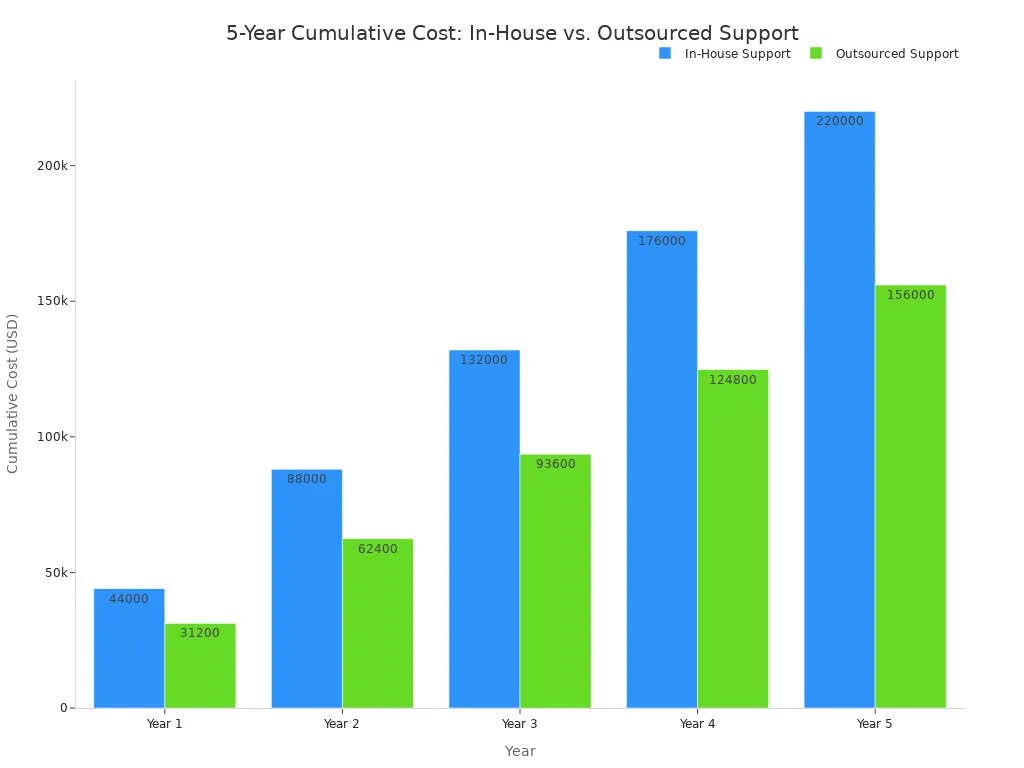
Next, you need to analyze the numbers. Your financial model and growth plans will heavily influence your decision. An in-house team involves high, fixed costs, while outsourcing offers a variable cost structure that can preserve capital.
An in-house team requires significant upfront and ongoing investment. You are responsible for salaries, benefits, recruitment, office space, and equipment. This can be a major financial commitment. In contrast, back office outsourcing converts these large capital expenditures into a predictable operational expense.
| Cost Factor | In-House Annual Cost | Outsourced Annual Cost |
|---|---|---|
| Base Salary | $31,200 | Included in Fee |
| Recruiting Costs | $4,000 | $0 |
| Training & Development | $1,300 | $0 |
| Administrative & HR | $2,500 | $0 |
| Workplace & IT Costs | $5,000 | $0 |
| Total Estimated Cost | $44,000 | Varies (Fee-Based) |
Over time, the financial benefits of outsourcing become even clearer. The right back office outsourcing partner helps you manage your budget with greater precision.
Venture capital firms often view scalable models favorably. They see strategic outsourcing as a sign that a company is built for efficient growth. A flexible model for your back office operations demonstrates that you can scale quickly without being burdened by fixed overhead. This makes outsourcing an attractive strategy for startups seeking funding. Effective back office outsourcing shows you are focused on smart, sustainable expansion.
Step 3: Streamlining Back-Office Operations with a Hybrid Model
For many businesses in 2026, the best answer is not "either/or" but "both." A hybrid model is emerging as a powerful strategic choice. In fact, around 64% of business leaders already use a hybrid work structure. This approach is about finding the right balance between control and efficiency. You can achieve this by streamlining back-office operations with the right technology.
A hybrid model combines a small, specialized in-house team with a larger outsourced team.
- Your in-house experts handle complex, high-value inquiries and manage brand strategy.
- Your outsourced partners provide 24/7 coverage, manage high-volume queries, and offer multilingual capabilities.
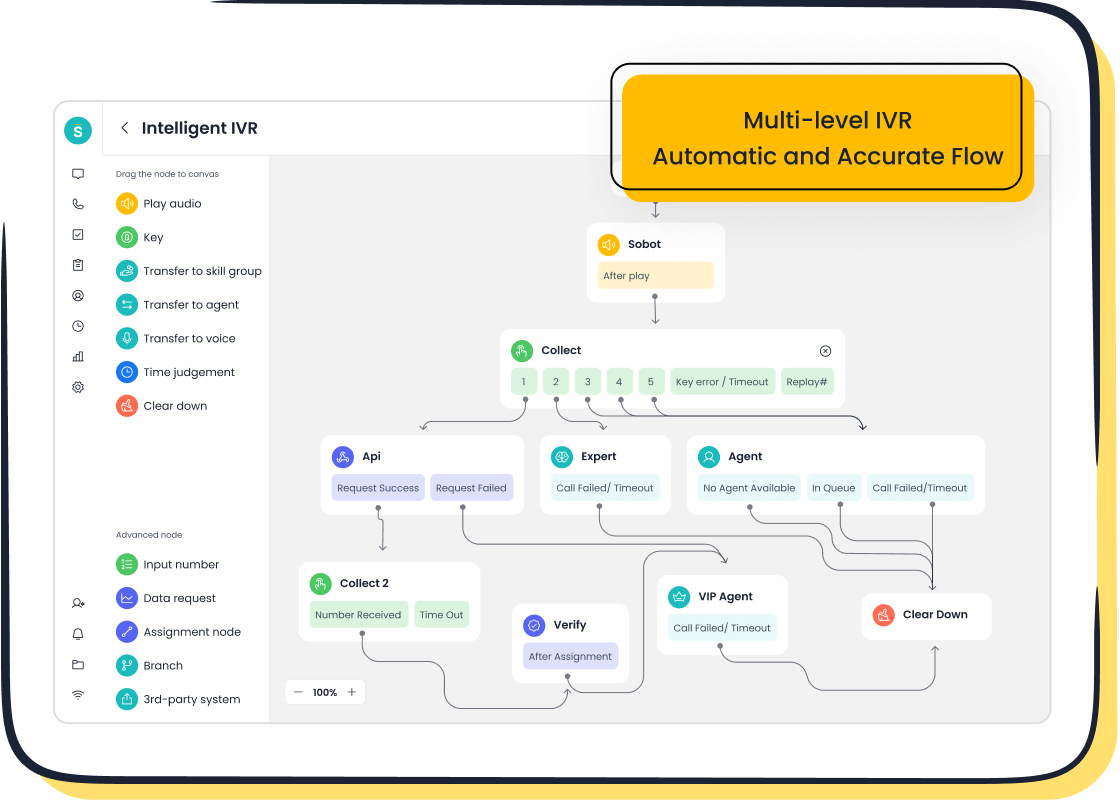
This is where a unified platform becomes essential for streamlining back-office operations. A solution like Sobot integrates your entire support ecosystem into one workspace. You can use Sobot's Voice/Call Center and Ticketing System to automatically route inquiries to the correct team. Simple questions can go to the outsourcing team, while complex issues are escalated to your in-house specialists. This intelligent routing is key to streamlining back-office operations.
Real-World Example: How OPPO Mastered the Hybrid Model
Leading smart device innovator OPPO faced huge inquiry volumes during peak seasons. They partnered with Sobot for streamlining back-office operations. By using Sobot's human-machine cooperation—combining AI chatbots with human agents—they created a powerful hybrid system.
- Chatbots handled common, repetitive questions instantly.
- Human agents (both in-house and outsourced) focused on complex problem-solving.
The result? OPPO achieved an incredible 83% chatbot resolution rate. This proves that a well-integrated hybrid approach, powered by the right technology, delivers outstanding efficiency and customer satisfaction. This method of finding the right balance in their back office operations was a huge success. This is a prime example of effective back office outsourcing.
This model of back office outsourcing allows you to maintain control over core competencies while leveraging the cost and scalability benefits of outsourcing. It represents the future of efficient back office operations. By combining human talent with AI, the outsourcing of certain tasks becomes seamless. This strategic outsourcing helps you optimize your back office operations. Ultimately, this approach to back office outsourcing is about finding the right balance for sustainable growth.
Your decision in the in-house vs outsourcing debate comes down to your goals. Choose an in-house team for deep brand control. Select outsourcing for cost savings and growth. Use the 3-step framework to guide your choice, and remember a hybrid model with a platform like Sobot offers great flexibility. This decision is not final. You should re-evaluate your model as your business evolves. Looking beyond 2026, experts predict a future where:
- AI enhances human agent value.
- Success metrics shift from speed to quality.
- AI assistants become central to commerce.
This makes strategic outsourcing a key part of future-proofing your business. An in-house team can be great, but outsourcing provides options.
FAQ
When should I choose outsourced support?
You should choose outsourcing when your main goals are cost efficiency and rapid growth. It gives you the flexibility to scale your team quickly. This is ideal for businesses with changing customer demand or those expanding into new markets.
What is the biggest benefit of an in-house team?
The biggest benefit is total control. You directly manage hiring, training, and quality assurance. This ensures your support team perfectly aligns with your brand values and culture. Your agents become true product experts, which improves service quality.
How can I maintain quality control with an outsourced team?
You can maintain quality with modern technology. A platform like Sobot's Omnichannel Solution provides a unified dashboard. You can monitor interactions and track performance analytics in real-time. This gives you direct oversight, even with an external team.
Is a hybrid model a good choice for my business?
A hybrid model is an excellent choice if you need both control and flexibility. You can use an in-house team for complex issues and an outsourced team for 24/7 coverage. This is a powerful strategy for scaling your Ecommerce Back Office Support.
See Also
Comparing Live Chat Support Expenses: A Comprehensive Cost Guide
Elevate Your SaaS Customer Support Using Smart Live Chat Strategies
Deciphering the Expenses of Outsourcing Your Live Chat Services
Your Essential Guide to Omnichannel Call Center Software Solutions
The Best Contact Center Solutions: An In-Depth Review for 2024

