Improve Your Team’s Ability to Deliver a Service to Customers


If you want your team to deliver a service to customers at a higher level, you need clear principles, practical skills, and ongoing measurement. Customer service drives business growth and loyalty. Companies that focus on customer experience see 1.5 times higher revenue growth and 1.8 times more profit. Sobot call center and Sobot AI help you boost efficiency and satisfaction. Take a moment to look at your current customer service approach. You might discover new ways to make every customer feel valued.
Customer Service and Business Success
Customer Experience Impact
You probably notice when a company goes above and beyond to make things easy for you. That’s the power of customer experience. When you deliver great customer service, you help your business stand out in a crowded market. Nearly 80% of Americans say speed, convenience, knowledgeable help, and friendly service matter most for a positive customer experience (source). People care about how you treat them, not just what you sell.
- 73% of customers say experience is a top factor in their buying decisions, right after price and product quality.
- 43% will pay more for greater convenience.
- 42% will pay more for a friendly experience.
- 65% believe a positive experience matters more than advertising.
- Companies can charge up to 16% more for products and services if they provide a positive customer experience.
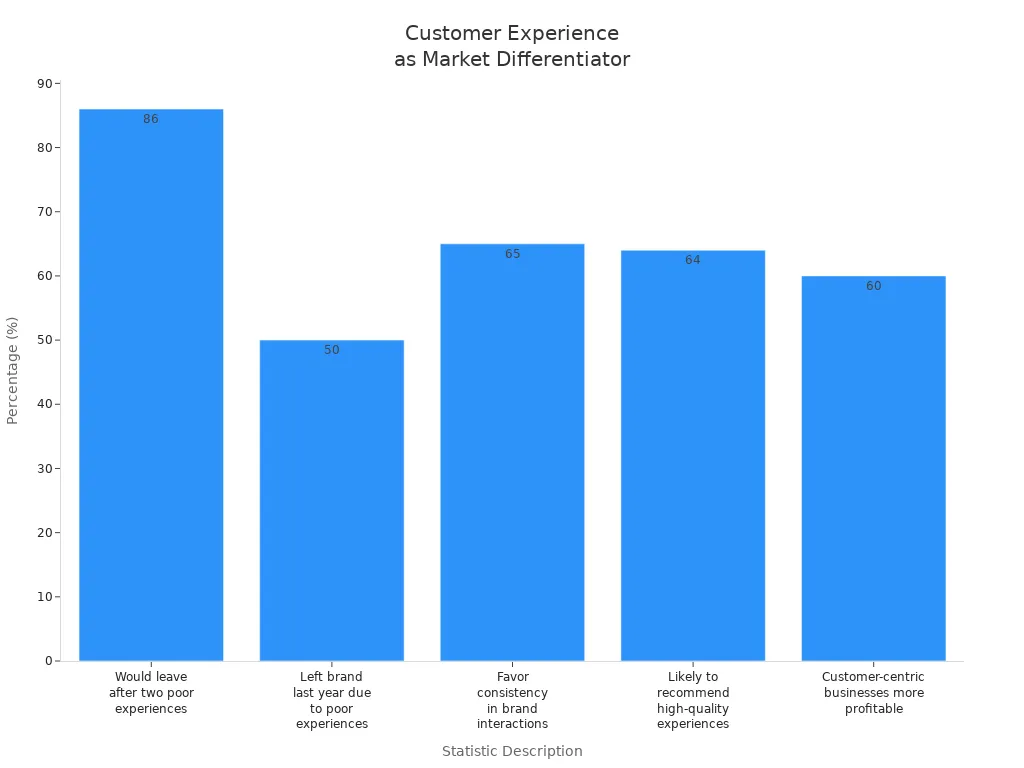
If you want to keep your customers, you need to focus on every interaction. The numbers show that 86% of people will leave a brand after just two bad experiences. Here’s a quick look at why customer experience matters so much:
Customer Loyalty Drivers
Customer loyalty doesn’t happen by accident. You build it through consistent, high-quality customer service and memorable customer experiences. Let’s break down what really drives loyalty:
| Evidence Type | Description |
|---|---|
| Cost of Acquisition | It costs five times more to attract a new customer than to keep one you have. |
| Customer Experience Influence | 33% of Americans would switch companies after one poor experience. |
| Revenue Loss | Losing a customer means losing future business, not just one sale. |
| Personalization Impact | 80% of customers prefer companies that offer personalized experiences. |
| Consistency Importance | 73% want a consistent experience across all channels. |
| Customer Service Effect | 67% have ended a relationship due to poor customer service. |
You can see how companies like Netflix, Starbucks, and Zappos use personalization and consistency to keep customers coming back. Their focus on customer service and customer experience leads to high retention rates and strong customer loyalty. If you want your business to grow, make customer experience your top priority.
Core Principles to Deliver a Service to Customers
Customer-Centric Culture
You want your team to deliver a service to customers that truly stands out. The best way to do this is by building a customer-centric culture. This means you put your customers at the heart of every decision. You listen to what they need, and you shape your services around those needs. When you focus on your customers first, you see better results. In healthcare, for example, teams that put patients first see higher satisfaction. They also find it easier to innovate and improve their services. This approach works in any industry. If you make your customers feel heard and valued, they will come back again and again.
A strong customer service culture starts with leadership. You set the tone. When you show your team that customer needs matter most, they will follow your lead. You can encourage your team to ask questions like, “What does the customer want?” or “How can we make this easier for them?” This mindset helps everyone stay focused on delivering the best possible experience.
Tip: Celebrate team members who go above and beyond for customers. Share their stories in meetings or newsletters. This helps everyone see the value of putting customers first.
You can also use feedback from your customers to guide your decisions. Ask for their opinions after every interaction. Use their suggestions to improve your processes. When you act on feedback, you show customers that you care about their experience. This builds trust and loyalty over time.
Service Standards and Guidelines
Clear service standards help your team deliver a service to customers with consistency and quality. You want every customer to have the same great experience, no matter who they talk to or what channel they use. Leading organizations set high standards for their teams. These standards cover everything from how quickly you respond to how you communicate.
Here’s a table that shows some of the most effective service standards used by top customer service organizations:
| Service Standard | Description |
|---|---|
| Consistency | Give customers a reliable experience every time. |
| Understanding and Anticipating Customer Needs | Listen closely and try to predict what customers will need next. |
| Efficient and Timely Responses | Respond quickly and keep wait times short. |
| Effective Communication Skills | Use clear language and listen carefully. |
| Personalization | Use customer names and remember past interactions. |
| Accessibility | Make sure everyone can use your services, including people with disabilities. |
| The Power of Empathy | Show empathy and try to understand how customers feel. |
| Knowledgeability | Make sure your team knows your products and services inside and out. |
| Friendliness/Amiability | Be approachable and friendly in every interaction. |
| Quality | Keep your service quality high at all times. |
| Transparency | Be honest, even when you don’t have all the answers. |
You can also set specific goals for your team. For example:
- Respond to 95% of written questions accurately and within 30 days.
- Answer 97.5% of phone calls within 120 seconds.
- Listen to customer feedback and use it to improve your service.
When you set clear guidelines, your team knows what you expect. You make it easier for them to succeed. You also help your customers know what to expect from you. This builds trust and keeps them coming back.
Note: Review your service standards often. Update them as your customers’ needs change. This keeps your team sharp and your service fresh.
Empathy and Accessibility
Empathy is one of the most powerful tools in customer service. When you show empathy, you connect with your customers on an emotional level. You make them feel understood and valued. Even if you can’t solve every problem, your customers will remember how you made them feel.
- Empathy helps you build strong relationships with your customers. When you listen and respond with care, customers feel more satisfied.
- Customers who feel understood are more likely to stay loyal, even if things don’t go perfectly.
- Businesses that focus on empathy and rapport see higher satisfaction scores and better reviews.
You can train your team to show empathy in every interaction. Teach them to listen first, then respond with understanding. Simple phrases like “I understand how you feel” or “Let me help you with that” go a long way.
Accessibility is just as important. You want everyone to be able to reach your team and use your services. This means offering support in different ways—phone, chat, email, and more. It also means making sure your website and tools work for people with disabilities.
- Make your services easy to use for everyone.
- Offer help in multiple languages if you serve a diverse group of customers.
- Use clear, simple language so everyone can understand.
When you combine empathy and accessibility, you create a customer service experience that stands out. You make every customer feel welcome and valued. This is how you build loyalty and keep your business growing.
Remember: The best customer service teams treat every customer like a VIP. They listen, they care, and they make it easy for customers to get help.
Customer Service Best Practices with Sobot

Delivering outstanding customer service takes more than good intentions. You need a strong customer service program, practical training, and the right technology. Sobot helps you build a customer service program that works across every channel. You get a unified workspace, AI-powered tools, and omnichannel solutions that make your team’s job easier. Let’s look at how you can use these best practices to improve your customer service.
Training and Product Knowledge
You want your team to answer questions with confidence. Training is the foundation of a great customer service program. When you invest in training, your team learns how to solve problems and help customers quickly. Sobot’s learning management system (LMS) makes training easy. You can upload resources, track progress, and run assessments.
Here are some ways to boost product knowledge in your customer service program:
- Read product reviews. You learn what customers like and what confuses them.
- Study product specifications. You understand the details and can answer technical questions.
- Use the product yourself. You get firsthand experience and know what customers go through.
- Stay informed about trends. You keep up with new features and competitor products.
- Deliver ongoing training. You run role-playing sessions and regular assessments.
- Invest in an LMS. You give your team access to training materials anytime.
You can also follow these steps to make your customer service program even stronger:
- Build a product knowledge base. Your team finds answers fast.
- Upgrade employee training. You offer videos, quizzes, and hands-on practice.
- Engage in expert discussions. Your team learns from specialists.
- Facilitate user onboarding. New team members get up to speed quickly.
- Provide product demos and webinars. Everyone sees the product in action.
- Use analytics and customer feedback. You spot gaps and improve training.
Sobot’s unified workspace brings all your training resources together. Your team can access guides, product specs, and customer histories in one place. This helps everyone develop strong customer service skills and deliver better service.
Tip: Encourage your team to share what they learn. When someone discovers a new solution, ask them to add it to your knowledge base.
Handling Complaints Effectively
Complaints happen in every business. How you handle them sets you apart. A strong customer service program gives your team clear steps for resolving issues. Sobot’s ticketing system helps you track complaints, assign tasks, and follow up with customers.
Let’s look at what makes complaint handling effective:
| Evidence Type | Findings |
|---|---|
| Complaint Handling Initiatives | Different approaches work for different types of customers. |
| Relationship Strength | Strong relationships make complaint handling more successful. |
| Type of Service Failure | The kind of problem affects how you should respond. |
| Congruency | Matching solutions to customer needs leads to better results. |
You want your team to listen first. Ask questions to understand the problem. Use empathy to show you care. Sobot’s AI-powered chatbot can handle simple complaints, freeing your team to focus on complex issues. The ticketing system keeps everything organized, so nothing gets missed.
Here are some steps for handling complaints in your customer service program:
- Respond quickly. Customers want answers fast.
- Apologize sincerely. Show you understand their frustration.
- Offer solutions that fit the problem. Don’t use a one-size-fits-all approach.
- Follow up after resolving the issue. Make sure the customer feels satisfied.
Samsung used Sobot’s all-in-one contact center to manage complaints across multiple channels. Their agents accessed customer histories and resolved issues without repeating questions. This led to a 97% customer satisfaction rate and a 30% increase in agent efficiency (source). You can achieve similar results by using Sobot’s tools in your customer service program.
Note: Track every complaint. Use feedback to improve your service and prevent future problems.
Empowering Teams with Sobot Voice/Call Center
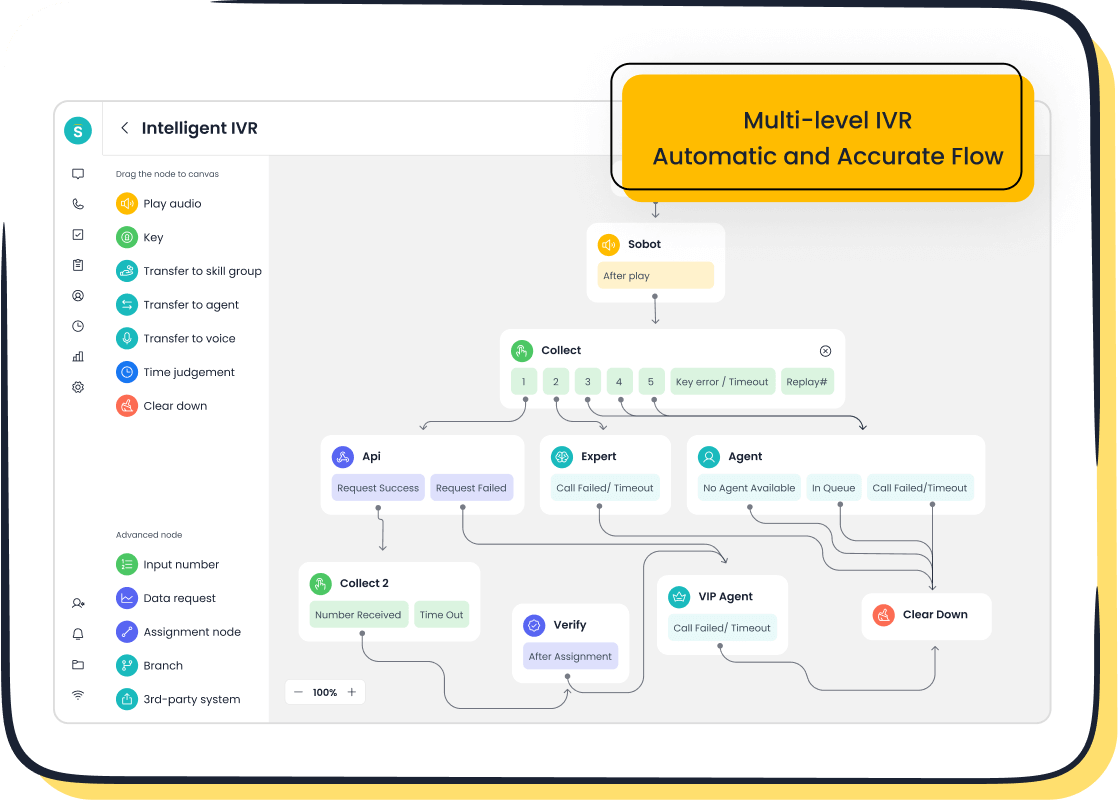
Your team needs the right tools to deliver fast, friendly customer service. Sobot Voice/Call Center gives you everything you need in one platform. You get smart call routing, real-time monitoring, and AI-powered voicebots. These features help your team resolve issues quickly and keep customers happy.
Here’s how Sobot Voice/Call Center improves your customer service program:
| Description | Impact on Customer Service Efficiency |
|---|---|
| Proactive issue resolution through early identification | Prevents escalation and boosts customer satisfaction |
| Automated call monitoring and performance coaching | Improves agent skills and productivity by 20% |
| AI-driven self-service portals | Reduces call volumes and speeds up issue resolution |
| Predictive analytics for intelligent call routing | Enhances first-call resolution rates by 30% |
| Real-time sentiment analysis | Helps agents provide more empathetic service |
You can use Sobot’s call center to connect with customers around the world. The system supports global numbers and works on mobile devices. Your agents see customer data, call histories, and tickets in one workspace. This makes every interaction smoother.
Sobot’s omnichannel solution lets you manage calls, chats, emails, and social media from one dashboard. You can automate repetitive tasks with AI-powered chatbots. Your team spends more time solving real problems and less time switching between systems.
Samsung’s story shows what’s possible. After switching to Sobot, their customer service program became more efficient. Agents handled more inquiries, resolved issues faster, and kept customers satisfied. The unified workspace and AI tools helped Samsung reach a 97% satisfaction rate and improve agent efficiency by 30%.
Callout: Sobot’s Voice/Call Center and omnichannel solutions give your team the power to deliver excellent customer service every time.
You can build a customer service program that works for your business. Train your team, handle complaints with care, and use Sobot’s technology to make every customer feel valued.
Managing Customer Expectations

Understanding Customer Needs
You want to deliver great customer service, but you need to understand customer expectations first. Customers have different needs, and you can’t guess what they want. You can use several methods to learn about customer expectations and improve customer relationships. Here’s a quick look at some effective ways:
| Method | Description |
|---|---|
| Observational techniques | Watch how customers use your service and spot pain points. |
| Open-ended questioning | Ask questions that let customers share their thoughts and feelings. |
| Participatory experiences | Try the service yourself to see what customers experience. |
| Surveys and interviews | Collect feedback to learn about customer expectations and preferences. |
| Means and analysis | Study the data to find patterns in customer expectations. |
| Social listening | Pay attention to what customers say online about your service. |
When you use these methods, you get a clear picture of customer expectations. You can spot problems early and build stronger customer relationships.
Setting Clear Expectations
Setting clear communication is key to managing customer expectations. If you don’t set boundaries, customers may expect too much. You can start with a strong discovery session. Define goals, deliverables, timelines, and budgets. Don’t guarantee results you can’t deliver. Set realistic goals and avoid over-promising. Use a statement of work and contract to clarify project scope, deliverables, timelines, and costs.
Tip: Clear communication helps you avoid misunderstandings and keeps customer expectations realistic.
When you set clear expectations, you build trust. Customers know what to expect from your customer service. You also protect your team from burnout and keep customer relationships healthy.
Proactive Communication
Proactive communication helps you manage customer expectations before problems start. You can reach out to customers with updates, answer questions, and solve issues early. This approach shows you care about customer relationships and want to meet customer expectations.
- Proactive communication builds trust and loyalty.
- You control the story and address issues before they grow.
- Customers feel valued and stay loyal to your business.
Note: Customers who feel informed are less likely to leave. Proactive communication improves customer satisfaction and keeps customer expectations in check.
When you combine understanding customer needs, setting clear expectations, and proactive communication, you create a customer service experience that stands out. You meet customer expectations and build strong customer relationships every time.
Process to Deliver a Service to Customers
Define and Communicate Values
You want your team to know what matters most when you deliver a service to customers. Clear values guide every action and decision. When everyone understands your values, your team works with purpose and customers notice the difference. Here’s a simple process you can follow:
- Understand your organization’s purpose.
- Decide how you want others to see your business.
- Build your values into daily processes.
- Describe the behaviors that show these values in action.
- Share your values with your team in clear language.
- Make your values official and easy to find.
- Review and update your values as your business grows.
Tip: Talk about your values often. Use real stories from your team to show how these values help you deliver a service to customers.
Develop Key Skills
Your team needs the right skills to make every customer feel important. Training helps, but you also need to focus on the skills that matter most. Check out this table for the top skills your team should develop:
| Skill | Description |
|---|---|
| Prioritizing customer needs | Treat each customer as a vital part of your business. |
| Empathy | Show you understand and care about customer feelings. |
| Effective communication | Listen well and explain things clearly. |
| Problem-solving | Find creative ways to fix customer issues. |
| Responsiveness | Reply to all messages quickly, usually within 48 hours. |
| Multiple support options | Give customers different ways to reach you, like phone, chat, or social media. |
Callout: When your team builds these skills, you create a strong foundation for great customer service.
Meet and Exceed Expectations
You want to do more than just meet customer needs. When you go above and beyond, you build loyalty that lasts. Customers who get more than they expect are five times more likely to buy again, four times more likely to tell friends, and seven times more likely to forgive a mistake. In today’s market, just meeting expectations is not enough. Companies that focus on exceeding expectations stand out. Over 62% of businesses say customer experience sets them apart from the competition.
- Exceeding expectations leads to repeat business.
- Happy customers share their experiences with others.
- Loyal customers forgive small mistakes.
Note: Always look for small ways to surprise and delight your customers. Even a simple thank you can make a big difference.
Measuring Customer Service Performance
Customer Feedback and KPIs
You can’t improve what you don’t measure. If you want to deliver a better customer experience, you need to track the right numbers. Customer feedback gives you a window into what people really think about your customer service. When you listen to your customers, you spot trends, fix problems, and celebrate wins.
Here are some of the most important metrics you should track:
- Customer Satisfaction (CSAT)
- Customer Effort Score (CES)
- Net Promoter Score (NPS)
- Social media metrics
- Customer churn
- First response time
- Overall resolution rate
- First contact resolution rate
- Customer ticket request volume
- Average ticket handling time
CSAT tells you how happy customers feel after an interaction. NPS shows if customers would recommend your business to others. First contact resolution rate measures how often you solve issues on the first try. These numbers help you see where your customer service shines and where you need to improve.
This strategy on how to improve first contact resolution rate offers insight into the effectiveness of your team’s resolution efforts. Additionally, patterns in survey responses can pinpoint training needs, broken processes, or product flaws.
When you use customer feedback and KPIs, you make smarter decisions and create a better customer experience every day.
Data-Driven Improvement with Sobot
Sobot gives you powerful tools to track and boost your customer service performance. You get real-time monitoring, analytics, and detailed reports that help you understand every part of the customer experience.
| Feature | Description |
|---|---|
| Comprehensive Statistical Reports | Sobot offers over 300 statistical reports with thousands of indicators for deep insights. |
| Data Statistics | Rich data analysis helps you see customer concerns, team workload, and service quality. |
With Sobot, you can spot patterns fast. Maybe you notice a drop in customer satisfaction or a spike in ticket volume. You can act quickly and fix issues before they grow. Sobot’s analytics helped one company boost customer satisfaction by 25% and cut complaints by 20% after using AI-powered review analysis.
When you use data to guide your team, you create a customer experience that keeps people coming back. Sobot makes it easy to measure, learn, and improve your customer service every step of the way.
You can boost customer service by taking clear steps. Focus on first-touch resolution, offer self-service options, and empower your team. Use regular meetings and direct observation to track progress. Keep improving with feedback and technology. Sobot’s AI tools help you connect with customers across channels and measure success with benchmarks like CSAT and NPS. If you want to optimize your operations, reach out to Sobot for support.
| Benchmark Metric | What It Shows |
|---|---|
| CSAT | Customer satisfaction |
| NPS | Loyalty and recommendations |
| Retention Rate | Long-term engagement |
Tip: Continuous improvement leads to loyal customers and better business results.
FAQ
What is the best way to improve customer service skills?
You can improve customer service skills by practicing active listening, learning about your products, and asking for feedback. Training and real-life experience help you build confidence. Great customer service starts with understanding customer expectations and building strong customer relationships.
How do you measure customer satisfaction?
You measure customer satisfaction with surveys like CSAT or NPS. You can also track reviews, social media comments, and repeat business. These tools help you see if your customer service meets or exceeds customer expectations.
Why is customer experience important for business growth?
Customer experience shapes how people feel about your brand. When you deliver great customer service, you build trust and loyalty. Happy customers return and tell others, which helps your business grow and keeps customer relationships strong.
How can technology help your team deliver better customer service?
Technology gives your team tools to answer questions faster and track customer interactions. With features like chatbots and unified workspaces, you can meet customer expectations and boost customer satisfaction every day.
What should you do if a customer is unhappy?
Stay calm and listen to the customer. Show empathy and ask questions to understand the problem. Offer a solution that fits their needs. Good customer service can turn a bad experience into a chance to build better customer relationships.
See Also
Enhancing Efficiency With AI-Driven Customer Service Solutions
Ten Strategies to Improve Live Chat Customer Experience
Enhancing Call Center Outcomes Through Effective Monitoring