Why Improve First Response Time Support?


You must improve first response time support. A low first response time is a strategic tool, not a vanity metric. It boosts loyalty and grows revenue. Your first response time is the most critical signal to a customer. It shows you value their problem. This moment shapes the whole customer experience. A fast response builds a positive customer experience from the start.
A slow reply creates a poor customer experience. In fact, subpar customer service directly contributes to 14% of customer churn. Your customer service team must deliver a fast first response time.
Excellent customer service depends on this speed. A great customer experience begins with a quick first response time. Sobot helps your customer service team master the first response time.
Enhance Satisfaction with a Low First Response Time

A low first response time directly improves customer satisfaction. You build a better customer experience when you respond quickly. This speed shows customers you value their time and are ready to help. Excellent customer service starts with this first, fast interaction. It sets a positive tone for the entire support journey and turns a moment of frustration into an opportunity for great customer service.
Meet Modern Expectations for Instant Service
Today's customers expect instant service. The pandemic increased these expectations, with 71% of employees noting that customers are now more demanding. Your customer service team must adapt to this new standard. People want immediate answers on their preferred channels, like live chat and social media. A slow first response time fails to meet this basic need and damages the customer experience.
Look at the average expected response times for popular channels:
| Channel | Average Expected Response Time |
|---|---|
| Live Chat | Under 2 minutes |
| Social Media | Under 1 hour |
Meeting these benchmarks is critical for your customer service.
Reduce Anxiety and Improve the Customer Experience
Waiting for a reply creates anxiety. Psychological studies show that unoccupied time feels much longer than it is. This uncertainty makes the customer experience worse. A customer waiting for your first response time is asking, "Will anyone help me?" Answering quickly removes this doubt. It shows your customer service is attentive and reliable.
A prompt first response time transforms the customer experience. It tells customers they are valued and that their problem is a priority. This simple action builds trust and reduces frustration from the very beginning of your customer service interaction.
Correlate Faster Responses with Higher CSAT and NPS
A fast first response time has a strong link to a higher customer satisfaction score (CSAT) and Net Promoter Score (NPS). Quick replies prevent issues from escalating. They show your customer service team is efficient. This positive customer experience encourages loyalty and positive customer feedback. Companies with a first response time under one hour often see 10-15 points higher on their NPS.
Luxury brand Michael Kors saw this firsthand. After using Sobot's all-in-one platform to improve their customer service, they achieved a 95% customer satisfaction rate. This result proves that investing in a lower first response time delivers measurable gains in customer satisfaction and positive customer feedback. Your business can achieve similar results by prioritizing a fast and effective first response time.
Drive Efficiency and Lower Support Costs
A high first response time is more than a poor customer service metric. It signals deeper operational problems that increase your costs. When your team is slow to reply, it often points to issues like inefficient ticket routing, agent knowledge gaps, or disconnected tools. These problems create waste and drive up the cost of your customer service operations. Improving your average response time is a direct path to a more efficient and cost-effective support team.
Prevent Ticket Backlogs and Escalations
A slow first response time creates a domino effect. Customers who wait too long become frustrated and their issues can become more complex. This leads to higher ticket escalations, which are more expensive and time-consuming to resolve. Your customer service team falls into a cycle of catching up, not getting ahead.
Escalations often happen when:
- Tier 1 agents lack the authority to approve a solution.
- The agent does not have the specialized knowledge to solve the problem.
- A ticket exceeds the required resolution time set by your company.
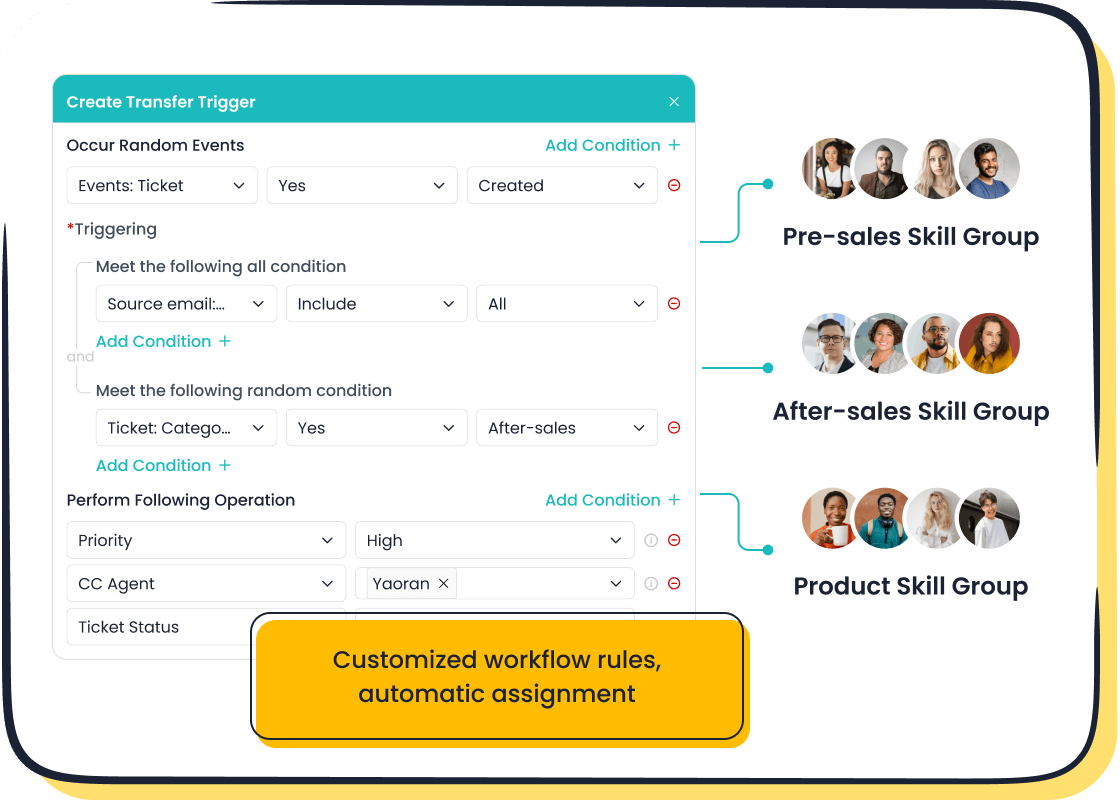
These delays build ticket backlogs and strain your entire customer service department. A tool like the Sobot Ticketing System stops this cycle. It uses automated ticket assignment to route inquiries to the right agent instantly. Features like canned responses empower agents to answer common questions immediately, reducing the need for escalations and keeping your team efficient.
Use the First Response Time KPI to Diagnose Inefficiencies
You should use the first response time kpi as a diagnostic tool. Measuring first response time reveals hidden weaknesses in your customer service workflow. A consistently high average response time or a low average speed of answer points to specific operational flaws.
For example, a poor first response time can show that your agents have uneven workloads due to bad ticket routing. It might also mean your support documentation is hard to find, forcing agents to search for answers instead of replying.
By tracking this single customer support metrics, you can identify where your customer service process is breaking down. If certain agents consistently miss their first response time benchmarks, it may signal a need for more training. This data gives you the power to make targeted improvements that boost efficiency across your team.
Reduce Duplicate Inquiries Across Channels
When customers do not get a quick first response time, they often try another channel. A customer might send an email, then open a live chat, and then post on social media about the same issue. This creates duplicate tickets for your customer service team. Your agents waste valuable time figuring out if an issue is new or a repeat inquiry. This confusion slows down the average response time for everyone.
Unifying your communication channels solves this problem. When your customer service team can see all interactions from a single customer in one place, they have complete context. An agent handling an email can see the customer already started a chat. This prevents duplicate work and ensures the customer does not have to repeat their story. This streamlined approach directly lowers ticket volume and allows your team to focus on resolving issues faster.
How to Improve First Response Time Support with Sobot
Knowing you need to lower your first response time is the first step. The next step is using the right tools to make it happen. Manual processes and disconnected systems cannot meet modern customer expectations. You need a solution built for speed and efficiency. Sobot provides an all-in-one contact center platform designed to help your customer service team respond faster and more effectively. Let's explore how you can improve first response time support with Sobot's powerful features.
Unify Channels with an Omnichannel Solution
Your agents lose precious time switching between different platforms for email, chat, and social media. This "multi-channel chaos" creates delays and forces customers to repeat their issues. You can eliminate this inefficiency by unifying all your communication channels into a single workspace.
Sobot's Omnichannel Solution brings every customer conversation into one place. This gives your customer service team a complete, unified view of every interaction. An agent sees a customer's entire history, whether they first reached out via live chat and later sent an email. This immediate context is critical for a low first response time.
A unified platform delivers several key benefits for your customer service:
- Faster Resolutions: Agents have a complete view of customer history, which helps them diagnose and solve issues much faster.
- Simplified Customer Experience: Customers can move between channels without repeating information because their context moves with them.
- Hyper-Personalized Service: Access to past inquiries and preferences allows agents to provide tailored support that makes customers feel valued.
- Increased Trust: Consistent information across all interactions builds customer confidence in your business.
By unifying your contact center, you remove the friction that slows down your team. This directly lowers your average response time and creates a seamless customer service journey from the very first contact.
Automate Workflows with a Ticketing System
A fast first response time depends on getting an inquiry to the right person quickly. Manual ticket sorting is slow and prone to error. Automation is the key to unlocking speed and precision in your customer support workflow.
The Sobot Ticketing System uses intelligent automation to streamline your entire process. Instead of agents browsing generic lists, our system automatically routes tickets to the best person for the job. This is possible through features specifically designed to reduce first response time:
- AI-Powered Routing: The system analyzes incoming tickets based on content, customer details, and agent skills. It then assigns the ticket to the most qualified agent or team.
- Automated Assignment: You can set custom rules to distribute the workload evenly. Tickets can be assigned based on agent capacity or in a round-robin style, ensuring no single agent is overwhelmed.
- Canned Responses: For common questions, your team can use pre-written templates. AI integration helps agents create sharper, more relevant responses, turning a multi-minute task into a one-click action.
This level of automation has a massive impact. It ensures your customer service agents can dedicate their time to solving problems, not sorting them.
Luxury brand Michael Kors saw incredible results after implementing Sobot's platform. By using automated workflows and an AI-powered contact center, they achieved an 83% reduction in response time. This proves that the right tools directly lead to a faster, more efficient customer service operation.
Set and Manage SLAs for Your Customer Service Team
A Service Level Agreement (SLA) is a promise to your customers. It defines your goal for metrics like first response time. Setting clear SLAs is essential, but you also need a system to monitor and manage them effectively. Vague goals like "as soon as possible" create confusion. You need concrete, measurable targets.
Sobot's platform helps you set and track SLAs with precision. You can establish different first response time goals for different channels or customer tiers. For example, you might promise a 2-minute response on live chat and a 1-hour response on social media.
To manage these goals, you should follow a few best practices:
- Create Your SLA: Start with realistic targets you know your team can hit. You can use templates for chat, email, and social media as a baseline.
- Customize the Times: Specify the exact time frame for your first response time in minutes or hours.
- Use Clear Language: Be transparent with customers about your policies. A clear SLA builds trust.
Once your SLAs are set, Sobot's system acts as your watchdog. It provides real-time monitoring and automated reminders to prevent SLA breaches. This proactive approach keeps your team on track and helps you consistently meet your goals. Automated SLA management ensures your contact center maintains a low average response time, improves compliance, and delivers the reliable customer service your customers expect.
Protect and Increase Revenue Through Rapid Responses
A fast first response time does more than improve your customer service metrics. It directly protects and grows your revenue. Every interaction is an opportunity to strengthen a customer relationship or lose it forever. A quick reply shows you are a reliable partner, turning your customer service team into a revenue-generating engine. This positive customer experience builds loyalty and encourages new sales.
Lower Customer Churn and Improve Retention
You lose customers when you are slow to respond. A delayed first response time sends a clear message: you do not value their business. This frustration is a primary driver of customer churn. Excellent customer service starts with speed. A quick reply reassures customers that you are ready to solve their problem, which is the first step to building a positive customer experience and earning positive customer feedback.
A fast first response time is a powerful retention tool. It stops small issues from becoming major frustrations. This proactive customer service approach is proven to keep customers loyal.
For example, one company, ShowMojo, improved its response time by 300% and saw a direct increase in customer retention. This shows that a better first response time is directly linked to keeping your customers. Your customer service team can achieve similar results. A great customer experience, starting with a fast reply, gives you the positive customer feedback needed to build lasting relationships.
Influence Pre-Sales Purchasing Decisions
Your first response time impacts sales before a purchase is even made. Potential buyers often have questions. They might use live chat or email to ask about features, shipping, or pricing. Your response speed in this moment shapes their entire customer experience. A quick, helpful answer from your customer service team builds immediate trust. It signals that your post-sale customer service will also be excellent.
A slow first response time, however, creates doubt. It makes potential buyers worry about your future customer service. They will likely abandon their cart and move to a competitor who provides a better initial customer experience. This first interaction is a critical piece of customer feedback, even if it is unspoken. Your customer service must be fast to convert prospects into buyers.
Create Upsell and Cross-sell Opportunities
A positive customer service interaction opens the door to more revenue. When an agent resolves an issue quickly, it boosts customer satisfaction. This happy customer is more receptive to suggestions. A great customer experience, driven by a low first response time, creates the perfect moment for your customer service team to upsell or cross-sell.
This is not about being pushy. It is about providing more value. After solving a problem, your agent can recommend a product upgrade or a complementary accessory that enhances the customer experience. This helpful suggestion is often welcomed and seen as positive customer feedback. High customer satisfaction turns a support ticket into a sales opportunity. Your customer service team becomes a source of growth, all starting with a fast first response time.
You must improve first response time support. A low first response time is a strategic investment with measurable returns, not just a simple customer support metrics. Your customer service can boost loyalty and grow revenue with a better first response time. Tools like Sobot make a low first response time achievable for your customer service. View your first response time as the foundation for excellent customer service. Let Sobot help your customer service team improve first response time support and build a truly profitable, customer-centric organization. Your customer service journey starts with a fast first response time. Excellent customer service depends on it. Your customer service is key.
FAQ
What is a good first response time for customer service?
A good first response time depends on the channel. For live chat, aim for under two minutes. For email, a response within one hour is excellent for customer service. Meeting these goals is key for great customer service.
How does a ticketing system improve customer service?
A ticketing system automates ticket routing. It sends each inquiry to the right agent instantly. This process removes manual sorting. Your customer service team can focus on solving problems, which improves the quality of your customer service.
Why is a fast response important for pre-sales questions?
A fast response to pre-sales questions builds trust. It shows potential buyers that your customer service is reliable. This positive first impression can directly influence their decision to purchase and improves your customer service reputation.
Can improving response time really lower customer service costs?
Yes. A fast response prevents simple issues from escalating into complex problems. Fewer escalations mean your agents spend less time on each ticket. This efficiency directly lowers your overall customer service operational costs and improves your customer service.
See Also
Elevating Call Center Performance Through Strategic Monitoring and Oversight
Enhancing Round-the-Clock Live Chat Operations for Peak Efficiency
Ten Strategies to Elevate Live Chat Customer Satisfaction and Experience
AI Customer Service Software: Driving Operational Efficiency and Productivity
AI Customer Service Agents: Transforming Support and Customer Interactions

