How to Set Up a Call Center and Customer Care in 2025


Setting up a call center and customer care in 2025 means embracing a step-by-step, future-ready strategy. You need advanced technology like Sobot AI to ensure efficiency and customer satisfaction. The market for call center software keeps growing, as shown below:
| Sector/Market Segment | Growth Metric | Value/Projection | Timeframe |
|---|---|---|---|
| Call Center Software Market | CAGR | 23.9% | 2023 - 2030 |
| Call Center Software Market | Current Market Size | Over USD 33 billion | 2023 |
| AI Tools Sub-sector (Global) | Market Value | Over USD 10 billion | By 2032 |
You must focus on technology, compliance, and customer-centric processes for long-term success. Use this guide as your roadmap.
Goals & Planning
Define Objectives
You need to start your call center and customer care journey by setting clear objectives. These objectives should align with your business goals and focus on measurable outcomes like customer satisfaction, response times, and first-call resolution. Using SMART goals—Specific, Measurable, Attainable, Relevant, and Time-Based—helps you create a clear path forward. Companies that set clear objectives see better results. For example, businesses with highly engaged employees, often due to clear goal setting, improve operating income by 19.2% (source). Clear objectives also help you minimize wait times, optimize resources, and reduce costs. You should monitor key performance metrics and customer feedback to make ongoing improvements.
Tip: Before investing in training or technology, make sure your objectives are well-defined. This foundation will guide every decision you make.
Identify Customer Needs
Understanding your customers is key to building a successful call center and customer care operation. You should gather data from surveys, social media, and past interactions to learn what your customers expect. Many companies use customer feedback to improve first-call resolution (FCR). Every 1% increase in FCR can reduce operational costs by 1% and boost customer satisfaction by up to 5%. Companies like Amazon and American Express have achieved high FCR rates by empowering agents and investing in training. When you know your customers’ needs, you can design workflows and choose tools that make their experience better.
Choose Service Channels
Selecting the right service channels shapes how customers interact with your business. You can offer support through phone, email, live chat, social media, or messaging apps. Each channel has its strengths. For example, chat allows agents to handle multiple conversations at once, reducing costs and speeding up responses. The table below shows how planning choices impact cost and service quality:
| Aspect | Cost Savings | Service Quality |
|---|---|---|
| Chat Support | Lower costs | Faster resolutions |
| Skill-Based Routing | Efficient resource use | Better customer matches |
| Omnichannel Integration | Consistent experience | Higher satisfaction |
Sobot’s omnichannel solution lets you manage all these channels in one place, making it easier to deliver seamless customer care. By integrating tools like Sobot, you can ensure your call center and customer care team meets customer expectations across every channel.
Call Center and Customer Care Models
Choosing the right call center and customer care model shapes your business success. You need to consider your goals, budget, and the level of control you want. Sobot offers flexible solutions that fit any industry or company size, making it easier to adapt as your needs change.
In-House vs Outsourced
You can run your call center and customer care in-house or outsource it. In-house models give you more control and help you build a dedicated team. Outsourced or virtual models often cost less and scale faster. The table below compares key performance outcomes:
| Metric | In-House Model (Typical) | Outsourced/Virtual Model |
|---|---|---|
| Turnover Rate | N/A | 73% in 2016; improved to 49% in 2017 |
| Employee Cost per Hour | $20 (U.S. average) | $12 (India, including labor, tech, routing) |
| Cost Efficiency | Baseline | Cloud centers 27% cheaper than on-premise |
| Downtime | Baseline | 35% less downtime |
| Operational Savings (WFH) | N/A | $25,000 saved per staff annually |
| First Call Resolution Impact | Dedicated agents improve metrics | N/A |
You should also decide if you need inbound, outbound, or blended call centers. Inbound centers handle customer questions. Outbound centers focus on sales or surveys. Blended centers do both.
Virtual & Hybrid Options
Virtual call centers use cloud technology. You can hire agents from anywhere, cut overhead costs, and offer 24/7 support. Hybrid models mix cloud and on-premises systems. This lets you keep sensitive data secure while enjoying cloud scalability. Hybrid centers help you expand quickly and meet strict compliance needs.
| Feature | Virtual Call Centers |
|---|---|
| Overhead Costs | Lowest overhead due to no physical infrastructure |
| Staffing Flexibility | Highly flexible and scalable staffing |
| Support Coverage | Enables 24/7 global support across time zones |
| Cost Efficiency | Highly cost-efficient, cuts real estate and equipment costs |
| Scalability | Rapid scalability without physical infrastructure |
| Challenges | Needs strong quality assurance and security controls |
Sobot’s cloud-based platform supports both virtual and hybrid models, so you can scale up or down as needed.
Budget & Scalability
You need to track key metrics to manage your budget and grow your call center and customer care operation. These include cost per call, first call resolution (FCR), average handle time (AHT), occupancy rate, and call abandonment rate.
| Metric | Description / Formula | Impact on Budget Efficiency and Scalability | Review Frequency |
|---|---|---|---|
| Cost Per Call | Total costs divided by number of calls | Measures cost efficiency per interaction | Monthly |
| First Call Resolution (FCR) | Percentage of calls resolved on first contact | Lowers repeat calls, saves resources, boosts satisfaction | Weekly |
| Average Handle Time (AHT) | Average duration including talk, hold, after-call work | Affects productivity and staffing needs | Weekly |
| Occupancy Rate | % of logged-in time spent on call-related activities | Shows agent utilization and efficiency potential | Daily/Weekly |
| Call Abandonment Rate | % of calls abandoned before answer | Indicates customer frustration and lost revenue | Daily/Weekly |
Sobot’s analytics dashboard helps you monitor these metrics in real time, so you can make smart decisions and keep your operation efficient.
Technology & Tools
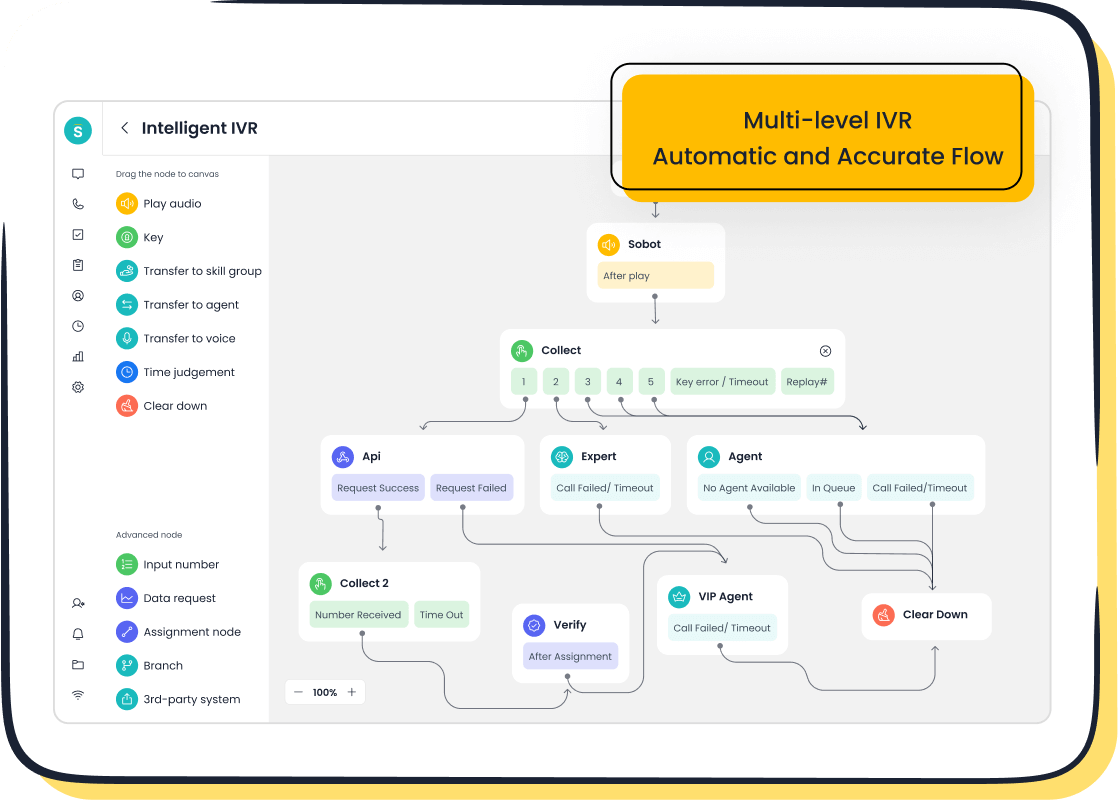
Sobot Voice/Call Center
You need strong technology to run a modern call center and customer care operation. Sobot’s Voice/Call Center gives you intelligent IVR, a unified workspace, and global telephony. You can set up custom greetings and smart menus with a drag-and-drop interface. Agents see all customer information in one place, which helps them solve problems faster. Sobot’s AI-powered voicebot understands what customers want and routes calls to the right person. The system supports global numbers and works on both computers and mobile devices. Sobot’s platform stays up 99.99% of the time, so your team can always help customers.
Sobot’s real-time monitoring and analytics let you track call data and improve your service every day.
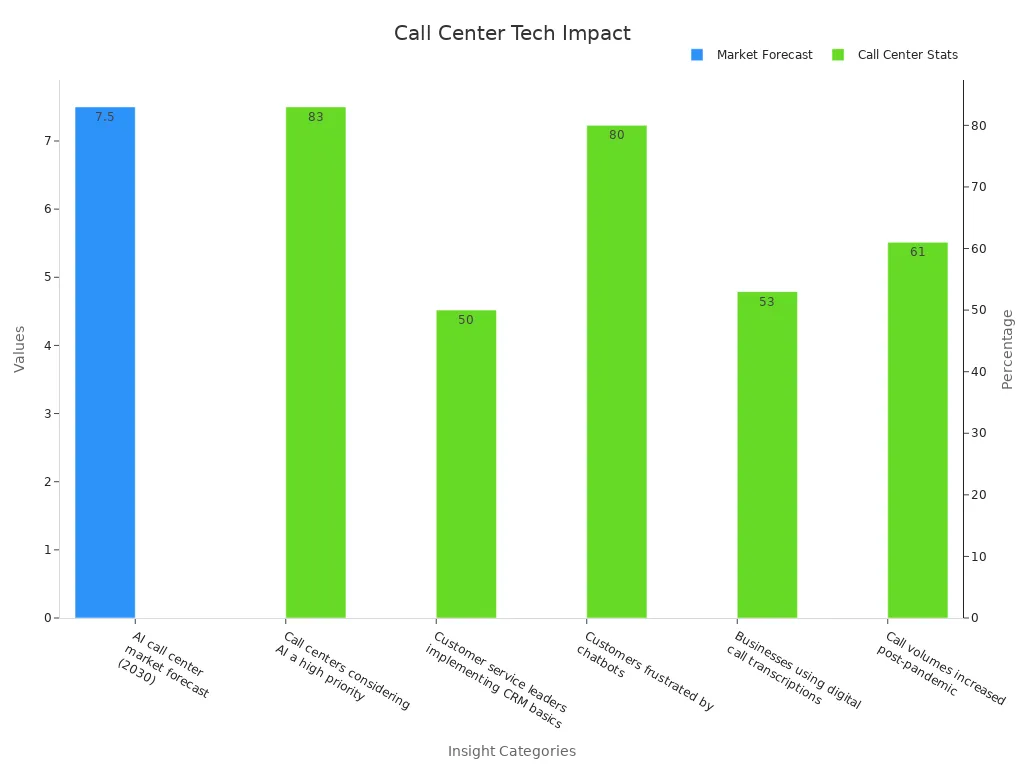
Omnichannel Solutions
Customers want to reach you on any channel—phone, chat, email, or social media. Sobot’s omnichannel solution brings all these channels into one workspace. You can answer questions from any channel without switching systems. Companies with strong omnichannel strategies keep 89% of their customers, while those with weak strategies keep only 33%. This shows how important it is to connect every channel for better customer engagement and loyalty.
A unified workspace helps you give fast, personal service, no matter how customers contact you.
AI & Automation
AI and automation make your call center and customer care smarter. Sobot uses AI to handle simple questions, route calls, and even transcribe conversations. This saves time and lets agents focus on complex issues. Studies show that AI can speed up ticket resolution by 52% and reduce average handle time by 27%. Companies using AI report higher customer satisfaction and faster service.
| Metric Description | Statistic / Percentage |
|---|---|
| Faster ticket resolution with AI automation | 52% faster |
| Reduction in average handle time with AI agent assist | 27% |
| Companies noting enhanced customer satisfaction | 48% |
Integration & Security
You need tools that work well together and keep data safe. Sobot integrates easily with CRM systems and other business tools. This means you can keep all your records in one place and avoid losing important information. Sobot follows strict security standards and keeps your data encrypted. The platform’s 99.99% uptime means your call center and customer care team can always help customers. Industry leaders agree that seamless integration and strong security are key for modern call centers.
- 99.99% uptime ensures your team stays connected.
- Sobot supports secure data transfer and advanced encryption.
- Easy integration with CRM and other systems boosts efficiency.
Infrastructure & Workspace

Physical vs Virtual Setup
You need to choose between a physical or virtual setup for your call center and customer care. Each option has unique strengths. The table below compares the two:
| Aspect | Physical Servers | Virtual Servers |
|---|---|---|
| Deployment | Requires intensive setup | Easy and instant deployment |
| Cost | Higher initial hardware cost | Higher initial software cost but more cost-effective long-term |
| Scalability | Limited, less flexible | Seamless scaling up or down |
| Performance | Dedicated resources, optimized for intensive workloads | Slight performance drop due to shared resources |
| Security | Configured per server, preferred for sensitive data | Centralized security, some risks remain |
| Disaster Recovery | Time-consuming, can take hours or days | Simplified with snapshots and backups, minimal downtime |
| Monitoring & Metrics | Traditional monitoring needed | Uses connectivity data and performance metrics |
| Best Use Cases | Resource-intensive, security-sensitive, legacy systems | Dynamic scaling, startups, development environments |
| Hybrid Approach | Possible to combine benefits of both | Enables optimized performance, cost, and resource use |
Many businesses now use a hybrid approach for their call center and customer care. This combines the reliability of physical servers with the flexibility of virtual solutions. Sobot’s cloud-based platform supports both models, making it easy to scale your call center and customer care as your needs change.
Hardware & Connectivity
You need reliable hardware and strong connectivity for efficient call center and customer care operations. Here are key requirements:
- High-speed internet is essential for VoIP calls and smooth communication.
- Adequate bandwidth ensures high-quality calls and uninterrupted service.
- Bandwidth needs depend on the number of agents and the software you use.
- Office safety features like air conditioning and fire safety systems help maintain agent productivity and safety.
Sobot’s call center and customer care solutions work well with both physical and virtual setups. The platform supports global telephony and offers mobile compatibility, so your team can stay connected anywhere.
Tip: Always monitor your network and hardware to prevent downtime and keep your call center and customer care running smoothly.
Data Security
Data security is critical for every call center and customer care operation. Cyberattacks increased by 38% worldwide in 2022, with attackers targeting remote work tools and call centers (source). You must protect sensitive customer data and business applications.
- Use data encryption for information at rest and in transit.
- Enforce strict access controls and role-based permissions.
- Back up data regularly and store copies offsite.
- Segment your network to isolate call center traffic and reduce risks.
- Train employees on cybersecurity best practices and update systems often.
Sobot’s call center and customer care solutions follow strict security standards. The platform uses encrypted data transfer and offers 99.99% uptime, helping you keep customer information safe and your operations reliable.
Strong connectivity and data security keep your call center and customer care efficient and trustworthy.
Team & Training
Recruitment
Building a strong team is the foundation of your call center and customer care success. You need to focus on every step of the recruitment funnel. Track how many applicants move from screening to interviews, then to offers and hires. This helps you spot where you can improve. The cost to get a new agent fully productive can reach $23,000 in retail and even higher in tech fields. On average, new hires take about 28 weeks to reach full productivity. You should also check for fairness in your hiring process by comparing selection rates for different groups. Recruiter performance matters, too. Look at how well your recruiters engage with candidates through emails and calls. Sobot’s unified workspace makes it easy to track these metrics and manage your hiring process efficiently.
Tip: Use data from your recruitment funnel to find and fix bottlenecks in your call center and customer care hiring.
Training Programs
Effective training programs help your call center and customer care agents avoid mistakes and deliver great service. Studies show that 60% of failed first-call resolutions happen because agents lack the right tools or training. You should aim for first call resolution rates of 80-90% and customer satisfaction scores above 4.5 out of 5. Combine technical training with soft skills like empathy and clear communication. Personalized learning plans based on agent performance can close skill gaps. Real-time monitoring and analytics, like those in Sobot’s platform, help you spot training needs quickly. Farmers Insurance, for example, boosted agent productivity from 70-80% to 92% by using performance data to guide training. Regular feedback and mentorship keep your team engaged and reduce errors.
Upskilling for AI
AI is changing how you run your call center and customer care. When you train your team to use AI tools, you see faster call resolution times. For example, companies using AI-powered chatbots have cut support ticket resolution times by up to 30%. Most organizations report big drops in manual work and faster problem-solving after AI training. Set clear goals for AI adoption, like improving efficiency by 5%. Update your training often to keep up with new AI features. Encourage teamwork and knowledge sharing to help everyone learn. Sobot’s AI-powered voicebot and analytics tools make it easy for your agents to use AI in daily tasks, leading to better customer experiences and higher satisfaction.
Customer Care Processes
Workflow Design
You need a clear workflow to keep your call center and customer care running smoothly. Data-driven workflows help you solve problems faster and keep customers happy. The table below shows how different workflows use automation and data to boost efficiency:
| Workflow Type | Description | Automation Role | Efficiency Benefits |
|---|---|---|---|
| Issue Resolution | Handles complaints, assigns tickets, and follows up | Automates ticket creation, sorting, and follow-ups | Reduces response time, improves satisfaction |
| Customer Onboarding | Welcomes new customers and helps them use your service | Sends automated welcome messages and follow-ups | Increases retention and support experience |
| Cart Abandonment | Reminds customers about abandoned carts and offers incentives | Sends automated reminders and incentives | Raises conversion rates, gives customer insights |
| Product Feedback | Collects feedback after purchase | Automates feedback requests and shares insights | Drives improvement, builds trust |
| Customer Order | Manages order confirmation, shipping, and delivery updates | Automates confirmations and tracking notifications | Minimizes errors, enhances experience |
You should also capture customer information meaningfully, archive data for easy access, and provide uninterrupted service. Sobot’s unified workspace helps you manage these workflows and keeps all customer data in one place.
Scripts & Escalation
Scripts and escalation procedures help your team handle calls with confidence. You give agents clear steps to follow, which leads to faster and more accurate responses. Here are some ways these protocols improve your call center and customer care:
- Scripted protocols ensure agents give consistent answers and follow best practices.
- Escalation procedures help agents know when to pass complex issues to experts.
- Tracking response times and resolution quality helps you spot areas for training.
- AI tools, like Sobot’s voicebot, automate routine tasks so agents can focus on tough problems.
- Real-time monitoring lets you adjust resources quickly and improve escalation handling.
You should review and update your scripts and escalation steps often. This keeps your team ready for any situation and improves customer satisfaction.
Quality Assurance
Quality assurance (QA) keeps your call center and customer care at a high standard. You need to track key performance indicators (KPIs) to measure success. Important KPIs include:
- Customer Satisfaction Score (CSAT)
- Net Promoter Score (NPS)
- Customer Retention Rate
- Customer Complaint Rate
You can use post-call surveys, monitor agent compliance, and track call resolution rates. Sobot’s analytics tools help you gather this data and create QA scorecards. These scorecards often use 15 to 25 weighted KPIs, such as average handle time and policy adherence. Regular coaching and feedback based on these metrics help your agents improve. By focusing on these KPIs, you make data-driven decisions that boost service quality and customer loyalty.
Compliance & Data Protection
Regulations Overview
You must follow strict rules when you set up a call center and customer care operation. New laws like the EU AI Act require you to tell customers when AI is involved in their interactions. You also need to make sure your AI tools act fairly and without bias. Always get clear, written consent from customers before recording calls or using their data. Each channel—phone, email, chat, or social media—has its own rules, so you need to monitor and document everything carefully.
Remote and hybrid work models bring new risks. In fact, 91% of cybersecurity professionals have seen more cyber attacks since remote work became common. You should train your team to protect vulnerable customers, such as the elderly or those with health concerns. Using AI-powered quality assurance tools, like those in Sobot’s call center and customer care platform, helps you stay ahead of changing regulations and avoid costly fines.
Privacy Best Practices
Protecting customer privacy is a top priority in every call center and customer care environment. Many organizations use privacy audits to check their programs. About 26% rely on these audits, while 56% use Privacy Impact Assessments (PIAs) to measure success. You can follow a five-step process to keep data safe:
- Map out all personal data and how it moves through your systems.
- Classify data by its purpose and risk level.
- Review your policies to make sure they match current laws.
- Report any gaps and find ways to fix them.
- Update your policies and train your team.
You should also follow major privacy laws like GDPR, CCPA, HIPAA, and LGPD. Focus on transparency, consent, and data minimization. Sobot’s call center and customer care solutions help you manage consent and keep customer data secure. Regular privacy checks help you avoid problems like data breaches, which affected 34% of organizations in recent surveys (source).
Industry Standards
You need to meet industry standards to keep your call center and customer care compliant. Important standards include PCI DSS for payment data, GDPR for privacy, HIPAA for health information, and TCPA for phone calls. These rules require you to use data encryption, control access, and get consent before recording calls.
You can use monitoring tools, like speech analytics, to make sure agents follow the rules. Create a compliance checklist and update it often. Protect payment data by using secure gateways and regular audits. Train your team on compliance and use AI tools, such as Sobot’s real-time monitoring, to reduce risks. Strong customer authentication also helps prevent unauthorized access.
Tip: Regular training and updated checklists keep your call center and customer care operation safe and compliant.
Launch & Optimization
Testing & Go-Live
Before you launch your call center and customer care, you need to test every part of your system. Testing helps you find and fix problems before customers notice them. Use test scripts to check call flows, routing, and agent scripts. Simulate real calls to see how your team handles different situations. Make sure your technology works well, including your IVR and call routing. Create a go-live checklist to confirm that everything is ready. This checklist should include:
- Verifying call flows and scripts
- Testing routing and technology
- Checking agent access and permissions
- Reviewing disaster recovery plans
- Running quality assurance checks
Sobot’s real-time monitoring tools let you track these tests and spot issues quickly. You can give feedback to agents right away, which helps everyone improve before the official launch.
KPIs & Analytics
Once your call center and customer care go live, you need to track key performance indicators (KPIs) to measure success. Important KPIs include:
| KPI Name | What It Measures |
|---|---|
| Customer Satisfaction (CSAT) | How happy customers are with your service |
| First Call Resolution (FCR) | How often issues get solved on the first call |
| Average Handle Time (AHT) | How long each call takes, including hold time |
| Net Promoter Score (NPS) | How likely customers are to recommend you |
| Call Abandonment Rate | How many callers hang up before getting help |
Sobot’s analytics dashboard gives you real-time data on these KPIs. You can see trends, spot problems, and make changes fast. For example, Weee! used Sobot’s tools to boost agent efficiency by 20% and cut resolution time by 50%. Their customer satisfaction score reached 96%, showing the power of strong analytics in call center and customer care operations (source).
Continuous Improvement
You should always look for ways to make your call center and customer care better. Set SMART goals for your team, like raising FCR to 80% or lowering call abandonment below 5%. Use data from Sobot’s real-time monitoring to find areas that need work. Regularly review your KPIs and adjust your training, staffing, or technology as needed. Encourage agents to give feedback and suggest improvements. When you focus on continuous improvement, you see better customer satisfaction, higher efficiency, and lower costs. Sobot’s platform supports this process by making it easy to track progress and make changes that help your business grow.
You can set up a successful call center by following clear steps and using proven strategies. Start with SMART goals, monitor KPIs like CSAT and FCR, and empower agents through self-assessment.
- Offer multi-channel support and self-service options.
- Build a strong knowledge base and publish FAQs.
- Invest in quality assurance and ticketing systems.
Sobot’s all-in-one platform helps you achieve these goals efficiently. For expert guidance or a personalized demo, reach out to Sobot today.
FAQ
What is the first step to set up a call center and customer care in 2025?
You should start by setting clear goals for your call center and customer care. Define what you want to achieve, like faster response times or higher customer satisfaction. Sobot’s platform helps you track these goals with real-time analytics.
How does Sobot improve call center and customer care efficiency?
Sobot uses AI-powered tools, like intelligent IVR and voicebots, to automate routine tasks. This lets your agents focus on complex issues. Companies using Sobot have seen up to 20% higher agent efficiency and 50% faster resolution times (source).
Which channels should I offer in my call center and customer care?
You should offer phone, chat, email, and social media support. Sobot’s omnichannel solution lets you manage all these channels in one workspace. Businesses with omnichannel call center and customer care keep 89% of their customers (source).
How do I keep customer data safe in my call center and customer care?
You need to use strong encryption, regular backups, and strict access controls. Sobot’s call center and customer care solutions follow global security standards and offer 99.99% uptime. This keeps your customer data protected at all times.
Can I scale my call center and customer care as my business grows?
Yes, you can. Sobot’s cloud-based call center and customer care platform lets you add or remove agents easily. You can support customers worldwide and adjust your team size as your needs change. This flexibility helps you save money and stay efficient.
See Also
How To Successfully Deploy Omnichannel Contact Center Systems
Revealing The Best Cloud-Based Contact Centers For 2025
Comprehensive Review Of Leading Contact Center Solutions 2024
Best Free CRM Software Options For Call Centers 2024
Complete Handbook For Omnichannel Call Center Software Usage

