Top Strategies to Retain Customers in 2026


Acquiring a new customer costs much more than keeping one. Many businesses see over half their revenue come from repeat customers. Your future success depends on strong customer retention. Effective client retention in 2026 requires new strategies. You must deliver a great customer experience through personalization and proactive service. This guide provides actionable customer retention strategies. You can build customer loyalty and achieve growth. You can retain customers with great service using tools like Sobot. This focus on retention is key for your business.
The Critical Role of Customer Retention
Focusing on customer retention is not just a good practice; it is a core business strategy. Effective customer retention builds a foundation for long-term success. Your strategies for client retention directly impact your bottom line, brand reputation, and growth trajectory. Understanding this role is the first step toward building powerful retention strategies.
Drive Profitability and LTV
You drive profitability when you focus on client retention. Loyal customers spend more over time, which increases their lifetime value (LTV). A small improvement in customer retention creates a large impact. For example, a 5% increase in customer retention can boost your profits by 25% to 95%. This happens because you are delivering value consistently. The chance of selling to an existing customer is 60-70%, while it is only 5-20% for a new prospect. This focus on customer value makes your business more profitable.
Reduce Acquisition Costs
Acquiring a new customer costs much more than keeping a current one. The cost varies by industry, but it is always a significant expense. Strong client retention reduces your need to spend heavily on acquisition. This allows you to invest resources elsewhere.
Average Customer Acquisition Cost (CAC) by Industry
Industry Type Avg. CAC B2B SaaS B2B ~$702 eCommerce SaaS B2B ~$274 Fashion & Apparel B2C ~$66 Electronics (D2C) B2C ~$76
This data shows that retention is a financially smart move.
Create Powerful Brand Advocates
A great customer experience turns a happy customer into a brand advocate. People trust recommendations from friends and family far more than advertising. A Nielsen survey found 88% of people trust recommendations from people they know. When you create strong relationships, you build brand loyalty. This customer loyalty leads to powerful word-of-mouth marketing. Building relationships through excellent service is key to earning this trust and loyalty.
Build Predictable Revenue
High retention rates lead to more predictable income. A stable base of repeat customers makes financial forecasting easier and more accurate. This stability is crucial for sustainable growth.
- Your loyal customers make repeat purchases with less hesitation.
- This behavior creates a stable, recurring revenue stream.
- It reduces your reliance on finding new customers each month.
- You can retain customers with great service, which supports healthier average order values and long-term client retention.
This foundation of customer retention helps your business grow with confidence.
Effective Strategies for Customer Retention
Understanding the value of customer retention is the first step. Now, you need actionable strategies to make it a reality. The following customer retention strategies provide a clear path to building lasting customer loyalty. Implementing these strategies at scale requires modern tools. An all-in-one contact center solution like Sobot provides the technology you need to unify your efforts and deliver a seamless experience.
Master the Initial Customer Experience
You have one chance to make a great first impression. The initial customer experience sets the tone for the entire relationship. A smooth, positive onboarding and first purchase journey can create a loyal customer from day one. A negative one can end the relationship before it even begins. According to PwC, 32% of all customers would stop doing business with a brand they loved after just one bad experience.
This first interaction is your opportunity to demonstrate your brand's value and commitment to customer satisfaction. A strong start significantly boosts your chances of long-term client retention.
Why a Great Experience Matters from Day One
Research Source Key Finding on Customer Experience & Retention Forrester Companies with a superior customer experience bring in 5.7 times more revenue than competitors. Deloitte Customer-centric companies are 60% more profitable than companies that don't focus on the customer. Microsoft 90% of customers say customer service is important in their choice of and loyalty to a brand. Gartner 80% of your future revenue will come from just 20% of your existing customers.
Personalize Every Interaction
In 2026, generic communication no longer works. Your customers expect you to know them, understand their needs, and tailor your interactions accordingly. According to McKinsey, 71% of consumers anticipate personalized interactions from businesses. A striking 76% of them feel frustrated when this experience is not delivered. This makes personalized communication a critical component of client retention.
Building strong relationships depends on making each customer feel seen and valued. You can use data from past purchases, browsing history, and service interactions to create this personalized experience. Leading brands already use this strategy effectively.
- Netflix uses AI to recommend shows based on your viewing habits, creating a unique homepage for every user.
- Amazon suggests products based on your browsing and purchase history, making your shopping experience faster and more relevant.
- Spotify creates hyper-personalized playlists like "Discover Weekly," which introduces you to new music you are likely to enjoy.
This level of personalization strengthens customer engagement and makes your brand indispensable.
Build a Thriving Customer Community
You can transform customers into brand advocates by creating a space for them to connect. A brand community fosters a sense of belonging that builds deep emotional loyalty. This is more than just a forum; it is a hub for shared interests, peer-to-peer support, and exclusive content. When customers feel like part of a tribe, your retention rates soar. In fact, 40% of consumers are inclined to spend more with a brand when they are members of its community.
Successful communities turn passive buyers into active participants in your brand's story.
- LEGO Ideas allows fans to submit and vote on new product concepts. This strategy turns customers into co-creators and ensures new products will be a hit.
- Sephora's Beauty Insider Community lets members share tutorials, ask for advice, and review products. This drives customer engagement and connects directly to their loyalty program.
- Salesforce's Trailblazer Community empowers millions of B2B users to solve problems together, reducing support costs and improving client retention.
Building relationships within a community creates a powerful defense against competitors and is a cornerstone of modern customer retention strategies.
Implement a Modern Loyalty Program
Traditional loyalty programs based on simple points-for-purchase systems are becoming less effective. Modern loyalty programs focus on building emotional connections, not just transactional ones. Customers with an emotional connection to a brand generate 306% higher lifetime value. Your goal is to reward engagement and create an experience that offers genuine value beyond discounts.
Effective loyalty programs in 2026 share several key features:
- Personalized Rewards: They use data to offer individualized rewards that are relevant to the customer.
- Tiered Benefits: They create aspirational levels that encourage customers to increase their spending to unlock exclusive perks.
- Omnichannel Experience: They work seamlessly across all your channels, from your mobile app to your physical store.
- Gamification: They use elements like badges and challenges to make participation fun and increase engagement.
By shifting your focus from transactions to relationships, your loyalty program becomes a powerful engine for customer retention and growth. This approach is key to delivering value consistently.
Actively Seek and Implement Feedback
The most successful brands are the best listeners. Actively seeking, analyzing, and acting on customer feedback is one of the most powerful retention strategies you can use. It shows your customers that you value their opinion and are committed to improving their experience. Failing to act on feedback can be costly. Research shows that customers are 21% more likely to respond to future surveys if they know their previous feedback led to action.
To do this effectively, you must close the feedback loop.
Best Practices for Feedback Management
- Centralize Feedback: Collect input from all channels—surveys, reviews, social media, and customer service interactions—in one place.
- Analyze for Insights: Use tools to identify trends, common pain points, and opportunities for improvement.
- Act Promptly: Empower your teams to fix issues quickly. Address small problems immediately and create a plan for larger changes.
- Communicate Your Actions: Tell customers what you have changed based on their feedback. This simple step makes them feel heard and valued.
Companies like The Ritz-Carlton use sentiment analysis to monitor guest feedback and respond quickly, turning potentially negative situations into opportunities for excellent service. When you retain customers with great service that is informed by their own feedback, you build unbreakable customer loyalty.
How to Retain Customers with Great Service

Excellent customer service is the engine of customer retention. In 2026, you cannot wait for customers to come to you with problems. You must use technology to create a service experience that is smooth, proactive, and personal. This approach turns a good experience into exceptional loyalty. Modern tools empower you to deliver this level of service at scale. You can retain customers with great service by making every interaction count. This focus on service is one of the most effective customer retention strategies you can deploy.
Create a Frictionless Onboarding Process
Your customer's journey begins with onboarding. A smooth start is critical for long-term client retention. A confusing or difficult initial experience can cause a customer to leave forever. In fact, resolving issues during the first interaction can prevent 67% of customer churn. You build a foundation for retention when you make this first step easy and welcoming.
A great onboarding experience shows customers you value their time. Research shows that 86% of people show greater loyalty to businesses that provide welcoming and educational onboarding content. To create a frictionless process, you should:
- Map the Journey: Identify every touchpoint a new customer has with your brand. This helps you find and remove friction points.
- Simplify Sign-Up: Avoid long forms or asking for credit card information upfront. Make it easy for users to get started.
- Guide New Users: Use checklists or tooltips to show users your product's most important features. This prevents them from feeling lost.
- Build a Help Center: Create a self-service knowledge base. This allows users to find answers 24/7 without contacting your support team.
- Ask for Feedback: Use simple surveys to ask new customers about their experience. This helps you fix issues quickly and improve the process for future users.
A positive onboarding experience directly impacts your bottom line. Companies that prioritize the customer experience report nearly double the annual growth in customer retention. This initial phase is your best opportunity to secure future loyalty.
Deliver Proactive Customer Service
Proactive customer service means solving problems before your customers even know they exist. This strategy shifts your support from reactive to preventive. Instead of waiting for complaints, you anticipate needs and offer solutions first. This approach builds incredible trust and is a cornerstone of modern client retention. When you inform customers about issues transparently, they feel valued and are less likely to switch to a competitor.
Technology makes proactive service possible. You can use AI to monitor for issues and communicate with customers automatically.
- Netflix informs users about service outages and sometimes offers credits, preventing a flood of complaints.
- Amazon notifies you about shipping delays before you even think to ask, "Where's my order?"
- AT&T sends new customers personalized videos to explain their first bill, reducing confusion and support calls.
You can implement these kinds of strategies with an advanced platform. Sobot’s AI Solution uses AI agents and copilots to power proactive customer service. These tools can anticipate customer needs based on their behavior and automate helpful responses. This frees your human agents to handle more complex issues, improving efficiency and the overall customer experience.
Success in Action: How OPPO Boosted Retention with Sobot
The smart device innovator OPPO used Sobot's chatbot and ticketing system to transform its customer service. By automating responses to common questions, OPPO achieved an 83% chatbot resolution rate. This great service experience led directly to a 57% increase in their repurchase rate, proving the powerful link between proactive support and customer retention.
Resolve Issues Across All Channels
Your customers interact with you on your website, through email, over the phone, and on social media. They expect a consistent experience everywhere. Research shows that 90% of customers expect consistent interactions across all channels. A disconnected experience, where a customer has to repeat their issue to different agents, creates frustration and damages loyalty. This makes omnichannel support essential for client retention.
To deliver a seamless experience, you must unify your communication channels. Your goal is to give your team a single view of every customer interaction, no matter where it happens. This ensures that any agent can pick up a conversation and have the full context. Leading brands like Sephora and Disney excel at this, blending their digital and physical channels to create one smooth journey.
This is where an all-in-one contact center solution becomes invaluable.
- Sobot’s Live Chat unifies messages from all your digital channels into one AI-enhanced workspace.

- The Voice/Call Center integrates phone support into the same platform, allowing you to manage calls and customer data together.
By bringing all your service channels into a single hub, you empower your team to resolve issues faster and more effectively. This unified approach is key to delivering the consistent, high-quality service that drives customer retention.
Use Data to Anticipate Needs
The best way to retain customers with great service is to know what they need before they ask. You can achieve this by using data to predict future behavior. Predictive analytics turns your customer data—like purchase history, browsing habits, and service interactions—into powerful insights. This allows you to identify at-risk customers and anticipate their future needs.
This is not just for large enterprises. The core principle is simple: your data tells a story about your customer.
- A decrease in purchase frequency can signal dissatisfaction.
- Repeated visits to a help page may indicate a product issue.
- Negative comments during a service chat can be an early warning sign of churn.
By analyzing these patterns, you can take action. For example, you can send a targeted offer to a customer whose engagement has dropped or create a tutorial for a feature that many users find confusing. This data-driven approach to customer service transforms your retention strategies. It allows you to move from guessing what customers want to knowing what they need. This deep understanding builds strong relationships and lasting client retention, forming the backbone of your customer retention efforts.
Measuring Your Customer Retention Strategies

You cannot improve what you do not measure. Tracking metrics is crucial to understanding the return on investment (ROI) of your customer retention strategies. This data shows you what works and where you need to improve. Integrated platforms like Sobot provide built-in data analytics and real-time monitoring. This lets you track these key metrics easily without needing separate tools, giving you a clear view of your retention performance.
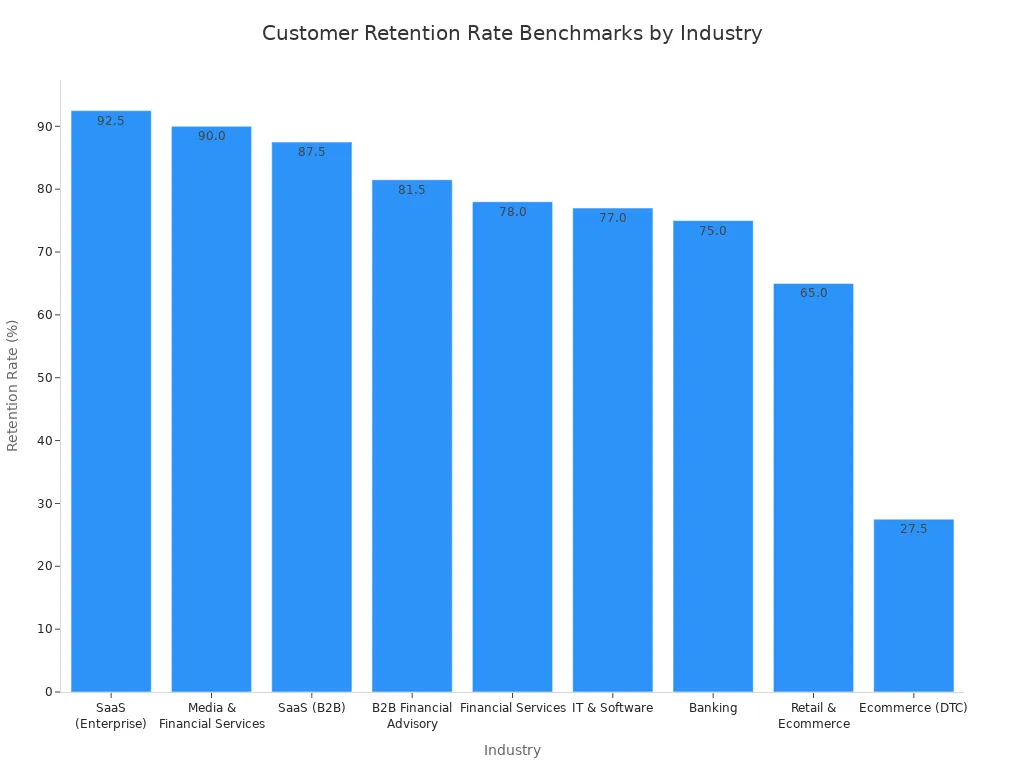
Customer Retention Rate (CRR)
Your customer retention rate (CRR) measures the percentage of customers you keep over a specific period. A high CRR means your strategies are working. This metric is a direct indicator of customer loyalty and the health of your business. CRR benchmarks vary widely by industry. For example, SaaS companies often see high retention due to contracts, while e-commerce has lower rates because customers can switch brands easily.
Customer Lifetime Value (CLV)
Customer Lifetime Value (CLV) predicts the total revenue you can expect from a single customer account. It helps you understand the long-term value of strong relationships and effective client retention. A higher CLV means each customer is more profitable over time. You can calculate a basic CLV with a simple formula.
Customer lifetime value = (customer value x average customer lifespan)
Focusing on increasing CLV is a powerful goal for your customer retention efforts.
Net Promoter Score (NPS)
Net Promoter Score (NPS) measures customer loyalty by asking one simple question: "How likely are you to recommend our brand to a friend or colleague?" Your customers answer on a scale of 0-10. A score between 30 and 60 is considered strong, but what counts as a "good" score depends on your industry. This metric helps you understand the quality of your customer experience and its impact on retention.
Customer Churn Rate
Customer churn rate is the opposite of your customer retention rate. It measures the percentage of customers who stop doing business with you over a certain period. Tracking churn helps you identify problems in your customer service or product experience. A rising churn rate is a clear signal that you need to adjust your client retention strategies to prevent further losses and protect your revenue. Successful client retention directly lowers this number.
You learned powerful customer retention strategies. These create an exceptional customer experience through personalization and proactive service. Making customer retention a core business strategy is vital for your retention. The right technology powers your customer retention efforts for long-term success. This focus on retention builds customer loyalty and boosts overall retention.
Now, take action. Choose one strategy. Implement it this quarter. Track your customer retention rate to see the impact. Each customer will notice the improved service and show their loyalty. This is how you achieve strong customer retention.
FAQ
What is the first step to improve customer retention?
You should focus on the initial customer experience. A smooth, positive onboarding journey creates a great first impression. This builds a strong foundation for future loyalty and is a key part of any customer retention plan.
How can technology help with client retention?
Technology helps you deliver better service at scale. You can use platforms like Sobot to personalize interactions and offer proactive support. Unifying your channels with an all-in-one solution creates a seamless experience that builds strong customer loyalty.
Which retention metric is most important to track?
You should start by tracking your Customer Retention Rate (CRR). This metric directly measures the percentage of customers you keep over a specific period. It gives you a clear benchmark to judge the success of your customer retention strategies.
How can I make my customer service more proactive?
You can use data to anticipate customer needs. AI solutions, like those from Sobot, help you identify potential issues and automate helpful communication. This approach allows you to solve problems before your customers even notice them.
See Also
Elevate Customer Happiness: Ten Strategies for Superior Live Chat Experiences
Discovering the Premier Voice of Customer Software Solutions for the Year 2024
Enhancing SaaS Customer Support Through Effective Live Chat Implementation Strategies
Exploring the Leading Cloud-Based Contact Center Platforms for the Year 2025
Comprehensive Review: Best Contact Center Solutions Available on the Market 2024

