How to Monitor Customer Satisfaction in 2025

Do you know how to monitor customer satisfaction effectively? In 2025, your customers use an average of nine different online channels to share customer feedback. This makes managing the customer experience complex. You can no longer just listen passively to social media chatter or online reviews. Your business needs an active strategy to improve customer satisfaction. This guide, powered by Sobot and Sobot AI, gives you a clear plan to understand and enhance the customer journey.
We will deliver a three-step framework. You will learn to use social media and online reviews, alongside insights from your Sobot call center data. This helps you understand and improve the customer experience.
How to Monitor Customer Satisfaction with Social Listening
Active social listening is your first step toward improving the customer experience. You need to go where your customers are and understand their conversations. This process shows you how to monitor customer satisfaction by turning raw social media chatter into valuable customer feedback. Effective social listening helps you protect your brand reputation and enhance the customer experience.
Identify Your Key Social Media Channels
You cannot monitor every platform. You must focus your efforts where they matter most. Your ideal social media channels depend on your business type and audience location. This focus improves your customer experience.
- For B2C companies: Visual platforms like TikTok, Instagram, and Facebook are excellent for customer engagement and improving the customer experience.
- For B2B companies: LinkedIn is the top platform. You can connect with decision-makers and share industry insights to build a better customer experience.
- For global reach: Consider platforms like WeChat for the Chinese market or Telegram for message broadcasting and collecting customer feedback.
Implement Social Listening and Analytics Tools
Manual social listening is impossible at scale. You need tools to track mentions, keywords, and sentiment across social media. These tools are essential for a good customer experience. They help you analyze customer feedback and measure the customer experience. Here are some popular options:
| Tool | Best For |
|---|---|
| Sprout Social | Marketing & customer service teams needing a unified inbox. |
| Brand24 | SMEs & consultants needing budget-friendly coverage. |
| Mention | SMEs and agencies managing multiple clients affordably. |
| Brandwatch | PR & social media teams needing integrated monitoring. |
These tools help you track key metrics like mention volume, sentiment analysis, and customer engagement. This data provides a clear view of your customer experience on social media.
Establish a Daily Monitoring Routine
Consistency is key for social listening. You can monitor social media effectively in as little as 10 to 30 minutes per day with a clear plan. A daily routine ensures you never miss important feedback and can improve the customer experience.
- Check all notifications and direct messages.
- Monitor mentions of your brand and products.
- Engage with your audience by responding to comments and questions.
- Review key metrics to spot trends in feedback.
- Plan your social media content for the next day.
This simple checklist helps you stay on top of conversations and maintain strong customer engagement.
Analyze Competitor Mentions for Context
Understanding your own social media feedback is only half the story. You must also analyze what customers say about your competitors. This context is vital for learning how to monitor customer satisfaction effectively. It reveals your strengths, their weaknesses, and opportunities to improve your customer experience and overall satisfaction.
For example, Wendy's uses social listening to monitor competitors. They craft humorous tweets that highlight competitor weaknesses. This strategy differentiates their brand and enhances their customer experience on social media.
By analyzing competitor mentions, you can identify gaps in the market, refine your messaging, and make strategic decisions that give you a competitive edge.
Manage Online Reviews to Improve the Customer Experience
Your social media listening gives you a pulse on brand sentiment, but online reviews offer deep, specific customer feedback. Managing these reviews is crucial for improving the customer experience. A strong strategy for online reviews helps you build trust, solve problems, and show potential customers you care. This active management of feedback is essential for a better customer experience.
Prioritize Core Review Sites for Your Industry
You cannot be everywhere at once. Focus your energy on the online platforms that matter most to your customers. Your industry determines where you should monitor reviews to best impact the customer experience.
| Review Platform | Primary Business Sector(s) |
|---|---|
| Google Reviews | Crucial for all businesses, especially local ones. |
| Trustpilot | E-commerce and online service companies. |
| Yelp | Restaurants, home services, and local hospitality. |
For technology, sites like Capterra and Product Hunt provide valuable customer feedback. In hospitality, TripAdvisor and Booking.com are essential for a positive customer experience. Monitoring these core sites ensures you get relevant feedback.
Develop a Strategy for Responding to Reviews
How you respond to online reviews directly shapes the customer experience. A clear plan for handling both good and bad feedback is necessary. Your responses on these sites and on social media show you value all customer feedback.
Responding to Negative Reviews 📝 Thank the customer for their feedback. Apologize sincerely and take the conversation offline to resolve the issue. This approach de-escalates the situation and protects the customer experience. Never argue online.
For positive reviews, a simple "Thank you!" goes a long way. Personalize your response to make the customer feel valued, which strengthens the customer experience. This also encourages others to share their own reviews.
Encourage Satisfied Customers to Leave Reviews
Happy customers often need a little nudge to share their feedback. Proactively asking for reviews can significantly increase the number of positive reviews you receive online. The best time to ask is right after a great customer experience.
You can automate this process with proactive tools. For example, a tool like Sobot Live Chat can trigger a satisfaction survey or a review request immediately after a positive support interaction. This captures happy customers in the moment, turning a good customer experience into powerful social proof through fresh reviews. This strategy works across your website, app, and even social media channels, improving the overall customer experience.
Use Review Analytics to Identify Key Trends
Your online reviews are a goldmine of data. Use analytics tools to analyze this customer feedback for trends, just as you do with social media. These tools use AI to detect sentiment and identify recurring themes in your reviews. This analysis helps you understand the root causes of problems and find opportunities to improve the customer experience. By tracking trends from reviews and social media, you get a complete picture of customer satisfaction and can make data-driven decisions to enhance the customer experience.
Turn Customer Feedback into Actionable Improvements
You have learned how to monitor social media and manage online reviews. Now, you must turn that customer feedback into real improvements. Listening is only the first step. The real value comes from acting on what you learn. This section shows you how to transform raw data into a powerful strategy for enhancing the customer experience.
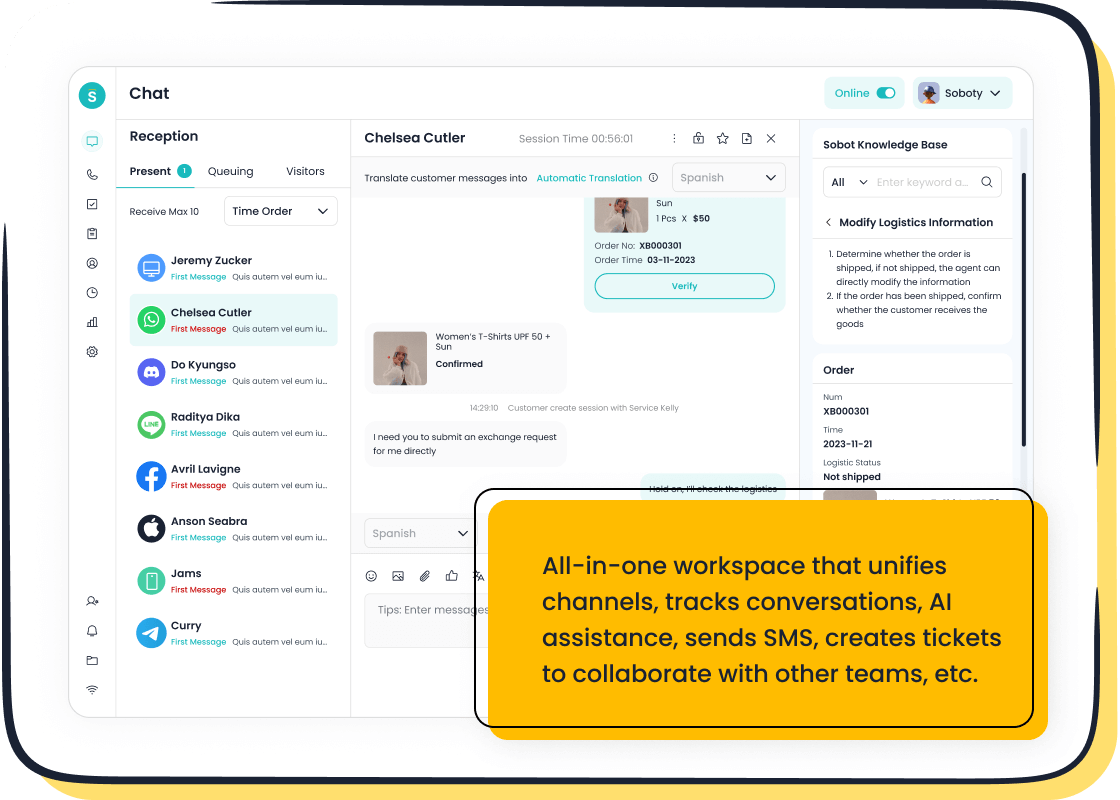
This is where tools bring your strategy to life. A fragmented approach using different tools for social media, reviews, and email creates data silos. You need a unified system. Sobot's Omnichannel Solution provides a practical way to bring all your feedback channels together. It combines social media, online reviews, email, and chat into a single, intelligent workspace. This allows your team to see the full customer journey and act on feedback efficiently.
Know When to Respond Publicly vs. Privately
Your response strategy directly impacts the customer experience. Knowing where to reply is just as important as knowing what to say. You must decide between a public or private response for every piece of customer feedback.
-
Respond Publicly When:
- Correcting Misinformation: If a review on social media contains false information, a public reply sets the record straight for everyone.
- Answering Common Questions: A public answer to a question on social media helps other customers with the same issue.
- Thanking for Positive Reviews: A public thank you shows appreciation and encourages more positive online reviews.
-
Respond Privately When:
- Handling Sensitive Information: Always move conversations involving personal data (like order numbers or account details) to a private channel like email or direct message.
- Resolving Complex Issues: A detailed complaint requires a private, one-on-one conversation to resolve it effectively. This protects the customer's privacy and prevents a lengthy public back-and-forth.
A good rule is to acknowledge publicly and resolve privately. This approach shows you are responsive while providing a better customer experience for complex issues.
Create Dedicated Channels for Proactive Feedback
Waiting for customers to post online reviews or on social media is a reactive approach. To truly lead in customer experience, you need to proactively seek out customer feedback. Creating dedicated channels for this purpose builds stronger customer engagement.
You can gather proactive feedback using several methods:
- Use Social Media Features: You can post links to customer experience surveys on platforms like Facebook and Twitter. Instagram Stories polls let you gather quick feedback on new designs or services.
- Offer Incentives: You can run contests where followers complete a survey to enter. Offering a small freebie or discount can significantly increase participation in your feedback requests.
- Enable Direct Messaging: You can use direct messages and chatbots on social media to collect personalized feedback. An automated chatbot can engage users and then present a survey link.
For deeper strategic insights, you can establish a Customer Advisory Board (CAB). A CAB is a select group of customers who act as trusted advisors. They provide honest input on your company's direction and product roadmap.
💡 Pro Tip: Learning from the Leaders Companies like Adobe, Google, and Amazon use CABs to validate ideas before launch. This proactive feedback helps them challenge internal assumptions, identify blind spots, and build products that truly meet customer needs. This level of customer engagement turns users into strategic partners.
Analyze Qualitative Data to Find Root Causes
Your online reviews, social media comments, and survey responses contain a wealth of qualitative data. This unstructured customer feedback holds the key to understanding the "why" behind customer satisfaction scores. Analyzing this data helps you uncover the root causes of problems and identify opportunities to improve the customer experience.
You can use several methods to analyze qualitative data. Each serves a different purpose in finding root causes.
| Method | Purpose for Root Cause Analysis |
|---|---|
| Thematic Analysis | Identifies recurring issues or trends in large volumes of customer feedback (e.g., many reviews mention "confusing checkout"). |
| Content Analysis | Quantifies qualitative data by counting how often certain words appear (e.g., "slow shipping" is mentioned in 40% of negative reviews). |
| Narrative Analysis | Understands the story of the customer journey, revealing key moments that led to frustration or delight. |
Manually performing this analysis is time-consuming. Modern tools use AI to automate the process. For example, Sobot's Omnichannel Solution includes integrated analytics that automatically detect themes and sentiment from all your customer feedback channels. This technology helps you quickly turn thousands of online reviews and social media comments into clear, actionable insights, just as you would with a dedicated analysis tool.
Close the Feedback Loop with Customers
Closing the feedback loop means you follow up with customers after acting on their feedback. You tell them what changes you made because of their suggestions. This final step is crucial for building trust and loyalty. It shows customers their voice matters and transforms a good customer experience into a great one.
Failing to close the loop can break trust. When customers take the time to give feedback, they expect to be heard. Ignoring them can increase customer churn. In contrast, companies that effectively close the loop can reduce churn and improve their reputation. Following up on reviews shows you care, and happy customers are more likely to recommend your brand.
Opay's Success Story: A Masterclass in Closing the Loop
Opay, a leading financial services platform, faced challenges managing customer feedback across social media, email, and voice calls. They partnered with Sobot to unify their customer contact strategy.
- The Solution: Opay used Sobot's Omnichannel Solution to consolidate all channels into one system. The ticketing system turned emails into manageable tasks. The voicebot and call center capabilities handled high call volumes, while live chat and social media integrations managed online conversations.
- The Action: With all customer feedback in one place, Opay used Sobot's analytics to identify recurring issues. They made specific improvements to their services based on this data.
- The Result: Opay then closed the loop with its customers. The results were incredible. Customer satisfaction (CSAT) jumped from 60% to 90%. The unified system also reduced operational costs by over 20% and increased conversions by 17%.
Opay's story proves that a closed-loop system powered by the right tools creates a better customer experience and delivers powerful business results. By listening, acting, and communicating, you can turn customer feedback into your greatest asset for growth.
You now know how to monitor customer satisfaction in 2025. Your strategy rests on three pillars: active social listening on social media, managing online reviews, and turning customer feedback into action. The goal is not just solving problems. You must use feedback to drive continuous improvement for a better customer experience. Combining data with feedback gives you a full view of the customer experience, building true loyalty and satisfaction. This is how to monitor customer satisfaction effectively.
Ready to unify your customer journey? An integrated solution brings all your social media feedback and customer experience data into one place. Embark on Your Contact Journey with Sobot to transform your customer feedback strategy.
FAQ
What is the first step to monitor customer satisfaction?
You should start with social listening. Identify the social media channels where your customers are most active. This helps you understand their conversations and gather initial feedback. It is the foundation of your monitoring strategy.
How should you handle a negative online review?
You must respond quickly and professionally. Thank the customer for their feedback and apologize for their poor experience. Offer to resolve the issue privately through email or a direct message. This shows you care about the customer experience.
Why should you use an omnichannel tool for feedback?
An omnichannel tool like Sobot unifies all your feedback channels. It brings social media, reviews, and chat into one workspace. This gives your team a complete view of the customer journey and helps you respond faster.
How can you encourage more customers to leave reviews?
You can ask for reviews right after a positive interaction. Use a tool like Sobot Live Chat to send a satisfaction survey or a review request automatically. This captures happy customers when they are most willing to share feedback.
See Also
Elevate Live Chat Experience: Ten Strategies for Peak Customer Delight
Discover the Leading Voice of Customer Software Solutions for 2024
Optimize Your Call Center: Enhance Performance Through Effective Monitoring
Explore the Premier Cloud Contact Center Platforms Set for 2025
The Ultimate Guide to the Best Customer Service Software of 2024

