Transforming Customer Service Evaluation Through Practical Strategies


Customer service evaluation plays a pivotal role in shaping how businesses succeed in 2025. With rising customer expectations, you must adapt to stay competitive. Over half of consumers reduce spending after poor experiences, while improving service quality can boost repurchase rates by 68%. Trust and tailored interactions have become non-negotiable, as 64% of buyers prefer personalized experiences. Yet, fewer customers report issues, making it harder to improve. Companies like Sobot offer innovative solutions to help you navigate these challenges. So, how do you measure good customer service effectively? The answer lies in evolving your strategies to meet modern demands.
Leveraging Technology to Measure Good Customer Service

AI-Powered Tools for Smarter Evaluations
Artificial intelligence (AI) has revolutionized how you measure good customer service. AI-powered tools provide actionable insights by analyzing customer interactions in real time. These tools identify patterns, detect sentiment, and even predict customer needs. For example, sentiment analysis helps you understand customer emotions, enabling you to address concerns proactively. Intelligent call routing ensures that inquiries reach the right agent, reducing wait times and improving satisfaction.
AI tools also enhance evaluation efficiency. They automate repetitive tasks like call assessments, which traditionally required manual effort. This automation allows your team to focus on more complex issues. According to recent data, AI tools can improve first contact resolution rates by up to 30%, a critical metric for customer support success. By leveraging AI, you can gain a deeper understanding of customer behavior and refine your strategies for better outcomes.
| Evidence Type | Description |
|---|---|
| Actionable Analytics | AI tools provide data-driven insights that help identify successful call behaviors. |
| Real-time Monitoring | Continuous analysis of customer interactions allows for immediate adjustments in service quality. |
| Intelligent Call Routing | AI enhances efficiency by automating call assessments, leading to faster evaluations than manual methods. |
| Sentiment Analysis | Tools analyze customer emotions and concerns, improving understanding of customer needs. |
Automation and Real-Time Analytics for Immediate Insights
Automation and real-time analytics have become indispensable in modern customer service. Automated systems streamline processes, ensuring faster response times and higher efficiency. For instance, automated workflows can handle routine inquiries, allowing agents to focus on complex tasks. Real-time analytics, on the other hand, provides instant feedback on performance metrics like response time and customer satisfaction.
These technologies also enable you to monitor customer interactions as they happen. This capability helps prioritize urgent issues, ensuring they are resolved quickly. For example, a retail chain using real-time analytics increased customer dwell time by 15%, leading to higher revenue. Additionally, automation reduces operational costs by minimizing the need for manual intervention. Metrics like Net Promoter Score (NPS) and Customer Satisfaction (CSAT) further validate the effectiveness of these tools.
| Metric | Description |
|---|---|
| Response Time | Indicates how quickly customer inquiries are addressed, impacting satisfaction levels. |
| First Contact Resolution Rate | Measures the percentage of issues resolved on the first interaction, indicating automation effectiveness. |
| Customer Satisfaction (CSAT) | Derived from customer feedback, reflecting satisfaction with the service received. |
| Net Promoter Score (NPS) | Measures customer loyalty and likelihood to recommend the service. |
| Cost Savings | Evaluates operational cost reductions post-automation implementation. |
| Usage and Engagement Rates | Monitors interaction levels and adoption of automated features. |

Sobot Chatbot: Enhancing Efficiency and Accuracy
The Sobot AI Chatbot exemplifies how technology can transform customer service evaluation. This tool operates 24/7, autonomously handling routine queries and assisting agents with complex issues. It improves productivity by 70% and reduces costs by up to 50%. The chatbot also supports multiple languages, ensuring seamless communication with diverse customer bases.
Sobot's chatbot leverages advanced AI to provide accurate and timely responses. It integrates with various platforms like WhatsApp and SMS, offering omnichannel support. This feature ensures consistent service across all customer touchpoints. Additionally, the chatbot's reporting capabilities allow you to analyze performance metrics, helping you refine your strategies.
| Metric | Value |
|---|---|
| Reduction in inbound discussion volume | 20% |
| Customer satisfaction rate | 96%+ |
| Correct answers provided by AI | 80% |
| Customer satisfaction with AI responses | 95% |
| Self-service question resolution rate | 22.2% |
| Overall customer satisfaction score (CSAT) | 97% |
| Problem resolution rate | 85% |
| Customer happiness rate | 99% |
| Increase in sign-off rate | 35% |
| Increase in COD collection rate | 40% |
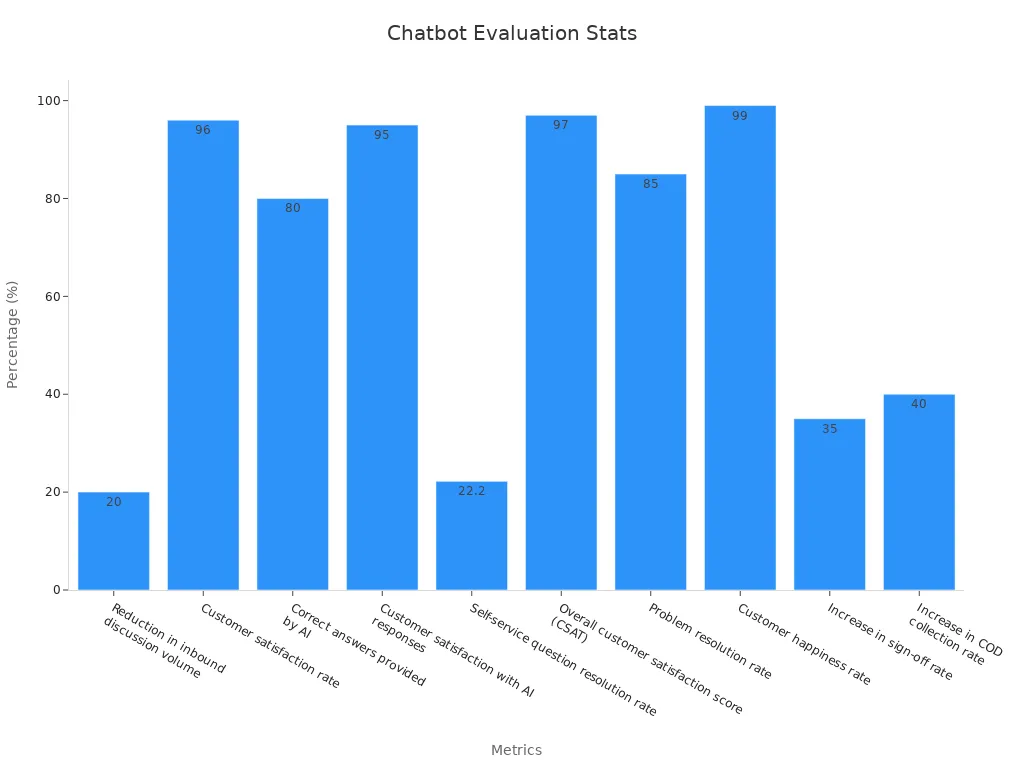
By adopting the Sobot AI Chatbot, you can enhance efficiency, improve customer satisfaction, and gain valuable insights into how you measure good customer service.
Innovative Strategies for Omnichannel Communication
Unified Customer Interaction Views for Seamless Service
Unified customer interaction views allow you to consolidate all customer touchpoints into a single, cohesive platform. This approach eliminates data silos, enabling agents to access complete customer histories instantly. When agents have a 360-degree view of interactions, they can resolve issues faster and provide more personalized service. For example, integrating chat, email, and social media interactions into one dashboard reduces response times and improves the overall customer experience.
Metrics like Customer Satisfaction Score (CSAT) and First Contact Resolution (FCR) demonstrate the effectiveness of unified views. High FCR rates indicate that agents resolve issues efficiently, while strong CSAT scores reflect customer satisfaction with the service. The table below highlights key metrics that measure the success of unified interaction views:
| Metric | Description | Importance |
|---|---|---|
| Customer Satisfaction Score (CSAT) | Measures customer satisfaction with a service through surveys. | Indicates service quality and helps identify areas for improvement. |
| Net Promoter Score (NPS) | Quantifies customer loyalty and likelihood to recommend services. | Directly relates to customer loyalty and potential growth. |
| Customer Effort Score (CES) | Assesses ease of issue resolution for customers. | A lower effort indicates a frictionless experience, enhancing satisfaction. |
| First Contact Resolution (FCR) | Evaluates effectiveness of resolving issues on the first contact. | High rates improve customer satisfaction and operational efficiency. |
| Average Handle Time (AHT) | Measures average duration of customer interactions. | Balances efficiency and quality of service interactions. |
| Service Level | Monitors percentage of inquiries answered within a specific time frame. | Ensures customer expectations for timeliness are met, enhancing trust and satisfaction. |
Consistency Across Channels: A Key to Success
Consistency across channels ensures that customers receive the same quality of service, regardless of how they interact with your business. Whether through email, live chat, or social media, maintaining uniformity builds trust and enhances the customer experience. Studies show that 79% of consumers expect consistent service, and 90% demand seamless interactions across channels.
For instance, a retail brand offering consistent messaging on its website and social media platforms can improve customer loyalty. When customers know what to expect, they feel more confident in their interactions. This consistency not only boosts satisfaction but also strengthens your brand reputation.
| Statistic | Value |
|---|---|
| Consumers expecting consistency | 79% |
| Customers expecting consistent interactions | 90% |
Sobot's Omnichannel Solutions for Better Service Evaluation
Sobot's omnichannel solutions empower you to deliver exceptional service across all customer touchpoints. By integrating communication channels like chat, email, and voice into a unified platform, Sobot enhances agent efficiency and customer satisfaction. Samsung, for example, achieved a 30% increase in agent efficiency and a Customer Satisfaction Score (CSAT) of 97% using Sobot's solutions.
These tools also provide real-time analytics, enabling you to evaluate service performance and identify areas for improvement. With Sobot, you can ensure consistency across channels while gaining actionable insights to refine your strategies. This approach not only improves the customer experience but also drives long-term success.
- Samsung experienced a 30% increase in agent efficiency.
- Customer Satisfaction Score (CSAT) reached 97%.
By adopting innovative strategies like unified views and consistent service, you can transform your customer service evaluation process and achieve measurable success.
Empowering Employees to Deliver Exceptional Customer Service
Training Programs for Effective Communication
Training programs play a vital role in equipping your team with the skills needed for effective communication. When employees understand how to convey empathy and clarity, they can resolve customer concerns more efficiently. For instance, teaching active listening techniques helps your team identify customer pain points quickly. This approach not only improves problem-solving but also enhances customer satisfaction.
Businesses with a strong learning culture see measurable benefits. Studies show that 57% of such companies experience higher retention rates. Additionally, 70% of employees feel more connected to their organization, and 80% find greater purpose in their work. These outcomes directly contribute to better customer service strategies.
| Metric | Description |
|---|---|
| Customer Satisfaction (CSAT) | Measures customer satisfaction levels based on their overall experience rating. |
| Net Promoter Score (NPS) | Assesses how likely customers are to recommend the service, indicating overall satisfaction. |
| Internal Quality Score (IQS) | Rates representatives based on criteria like tone and product knowledge from a company perspective. |
| Customer Effort Score (CES) | Evaluates the effort customers expend to receive a response or solution from customer service. |
By investing in training, you empower your team to deliver exceptional service, ensuring long-term customer satisfaction.
Employee Engagement as a Strategy for Customer Satisfaction
Engaged employees are the cornerstone of successful customer service strategies. When your team feels valued and motivated, they bring positive energy to every interaction. This energy improves customer mood and perception, fostering loyalty. Engaged employees also take a proactive approach to problem-solving, leading to better outcomes.
Research supports this connection. A Gallup study found that teams in the top quartile of engagement outperform others by 10% in customer ratings. Similarly, the Harvard Business Review highlights how increased engagement correlates with higher customer satisfaction levels. By focusing on engagement, you create a ripple effect that benefits both your team and your customers.
- Engaged employees provide personalized service, enhancing loyalty.
- Positive energy from your team improves customer perception.
- Proactive problem-solving leads to better customer outcomes.
Encouraging Feedback from Frontline Teams
Your frontline employees interact with customers daily, making them a valuable source of insights. Encouraging feedback from your team helps you identify gaps in your customer service strategies. For example, they can highlight recurring issues or suggest process improvements that enhance efficiency.
Creating an open feedback culture also boosts employee engagement. When your team feels heard, they become more invested in their roles. This sense of ownership translates into better service delivery. Regular feedback sessions and anonymous surveys are effective ways to gather input while fostering trust.
By empowering your employees through training, engagement, and feedback, you can achieve meaningful customer service improvements. These strategies not only enhance satisfaction but also build a resilient and motivated team.
Personalization and Predictive Analytics in Customer Service
Tailoring Evaluations Using Customer Data
Tailoring customer service evaluations starts with understanding your customers deeply. By segmenting customer databases, you can create dynamic profiles that enhance personalized experiences. For example, combining data from social media interactions, facility usage, and direct feedback helps you build a comprehensive view of customer behavior. This segmentation allows you to identify trends and address specific customer needs effectively.
Machine learning models further refine this process by forecasting future behaviors based on historical data. These predictions help you anticipate challenges and opportunities within different customer segments. For instance, analyzing survey responses alongside online reviews can reveal recurring pain points, enabling you to adjust your strategies for improvement. When you tailor evaluations using detailed customer data, you foster customer loyalty and improve satisfaction rates.
Predictive Analytics for Anticipating Customer Needs
Predictive analytics transforms how you anticipate customer needs. By analyzing patterns in customer interactions, you can proactively address issues before they escalate. For example, predictive models identify disengagement signals, helping you retain customers at risk of churn. Targeted marketing campaigns based on these insights also boost engagement and sales.
Operational efficiency improves as well. Predictive analytics forecasts demand, optimizing inventory management and reducing costs. Enhanced communication through personalized messages strengthens emotional connections with customers. Studies show that predictive analytics reduces resolution times and increases satisfaction, making it a vital tool for modern customer service.
Sobot AI Solutions for Personalized Interactions
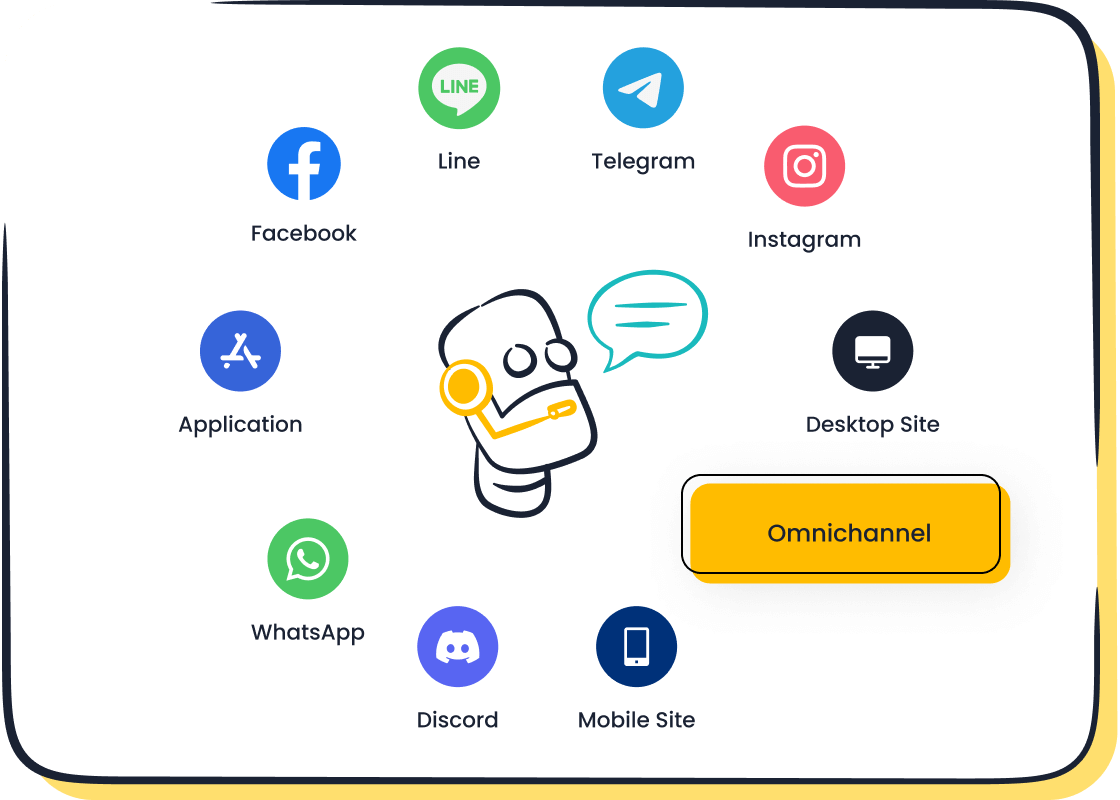
Sobot’s AI solutions redefine personalization in customer service. By integrating omnichannel support, Sobot ensures seamless communication across platforms like chat, email, and voice. Samsung’s success story highlights the impact of Sobot’s platform, achieving a 97% Customer Satisfaction Score (CSAT) and a 30% increase in agent efficiency.
Sobot’s AI leverages predictive analytics to anticipate customer needs and deliver tailored interactions. Its tools analyze customer data to provide proactive solutions, enhancing satisfaction and loyalty. With Sobot, you can create personalized experiences that drive measurable improvement in service quality and operational efficiency.
Integrating Feedback Mechanisms for Continuous Improvement
The Role of Feedback Loops in Service Evaluation
Feedback loops are essential for refining customer service evaluation. They create a cycle where insights from customer feedback drive actionable changes, which are then assessed for effectiveness. This iterative process ensures continuous improvement in service delivery. For example, ShopSmart used feedback loops to identify pain points in their checkout process and mobile navigation. By implementing changes based on this feedback, they achieved a 28% improvement in retention rates and a 20% increase in customer satisfaction scores.
Without effective feedback loops, businesses risk stagnation. RadioShack’s failure to establish robust feedback mechanisms contributed to its decline, as employees lacked the insights needed to adapt to market demands. Regular feedback empowers your team to proactively address customer concerns and align services with expectations.
Quantitative evaluation plays a pivotal role in feedback loops. It transforms raw data into actionable insights, guiding decision-making and resource allocation. This approach ensures strategic alignment with organizational goals, driving measurable improvements in service quality.
- Quantitative evaluation systematically uses numerical data to assess performance.
- It converts raw data into actionable insights for decision-making.
- Efficient resource allocation aligns strategies with organizational objectives.
Tools for Collecting and Analyzing Customer Feedback
Modern tools simplify the collection and analysis of customer feedback, enabling you to uncover valuable insights. Omnichannel feedback tools gather opinions from multiple sources, ensuring a comprehensive view of customer sentiment. AI and natural language processing automate feedback collection, saving time and reducing human error. Programs like Driver iQ identify key drivers for business improvement, helping you prioritize initiatives effectively.
| Tool Type | Description |
|---|---|
| AI-powered quality assurance tools | Leverage machine learning to analyze customer support interactions, identifying urgent issues and trends. |
| Survey tools | Software for creating and analyzing customer surveys, integrating with service software for structured feedback. |
| Social listening software | Monitors online conversations to track sentiment and trends related to a business and its products. |
| Voice of the Customer (VoC) software | Aggregates feedback from various sources for a comprehensive view of customer sentiment. |
| Data visualization tools | Transforms raw feedback data into interactive charts and dashboards for better accessibility and actionability. |
These tools not only streamline feedback collection but also enhance analysis. For instance, social listening software tracks sentiment continuously, while VoC software aggregates feedback for a 360-degree view of customer preferences. Data visualization tools make insights more accessible, enabling you to act proactively.
Sobot’s AI-powered solutions integrate seamlessly with these tools, offering advanced analytics and reporting capabilities. By leveraging Sobot’s platform, you can automate feedback collection and gain actionable insights to refine your strategies.
Turning Insights into Actionable Strategies
Customer feedback becomes impactful when transformed into actionable strategies. Insights derived from feedback help you identify areas for improvement and implement changes that drive measurable benefits. For example, companies using customer analytics are 2.6 times more likely to achieve higher ROI, according to McKinsey. Personalized email campaigns generate 58% of all revenue, with an average ROI of 4200%, highlighting the power of data-driven strategies.
| Benefit | Statistic/Improvement |
|---|---|
| Higher ROI | Companies using customer analytics are 2.6 times more likely to have a significantly higher ROI (McKinsey, 2021). |
| Revenue from personalized emails | Personalized email campaigns generate 58% of all revenue with an average ROI of 4200% (DMA, 2022). |
| Increase in sales | Data-driven personalization reports a 20% average increase in sales (Monetate, 2021). |
| Faster decision-making | Companies with advanced analytics are 5 times more likely to make decisions faster (Bain & Company, 2021). |
| Higher customer retention | Companies with mature data management report 62% higher customer retention rates (Aberdeen Group, 2022). |
Sobot’s AI solutions empower you to turn insights into strategies that enhance customer satisfaction and operational efficiency. By analyzing feedback data, Sobot helps you identify trends and implement proactive measures to reduce churn and improve retention rates.
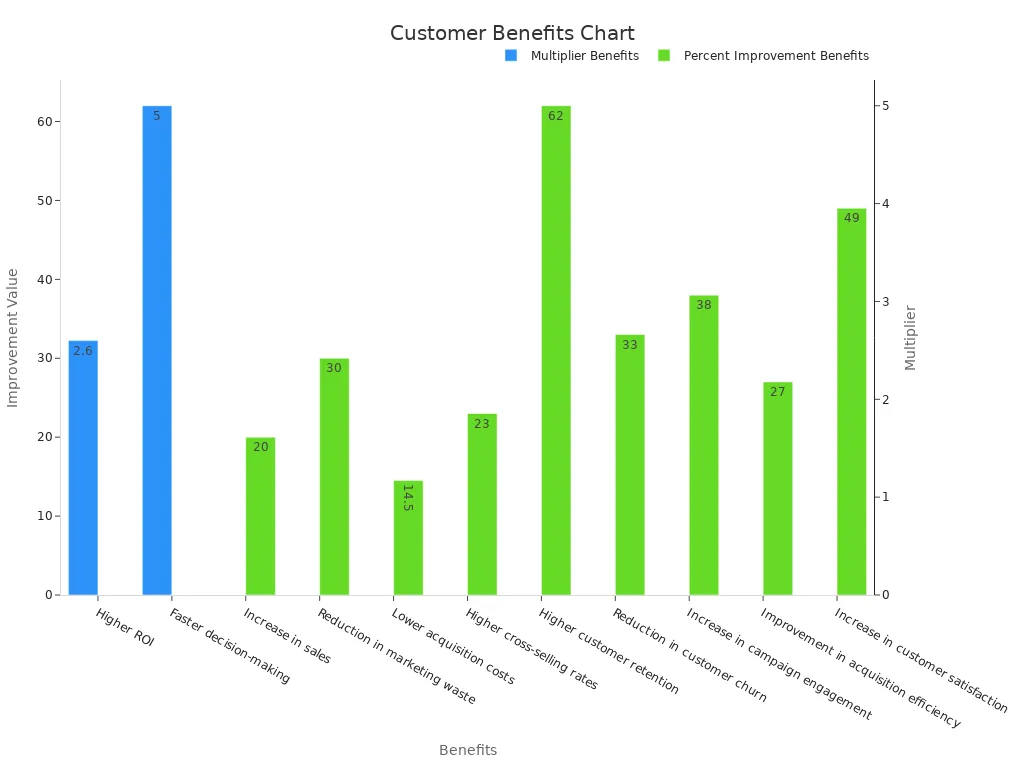
When you act on customer feedback, you foster loyalty, improve service quality, and achieve continuous improvement in your operations.
Transforming customer service evaluation requires actionable strategies. Leveraging AI tools, omnichannel communication, employee empowerment, personalization, and feedback mechanisms ensures measurable improvements. For example, predictive analytics can reduce churn rates by 20%, while unified interaction views improve first contact resolution rates.
Adopting these strategies positions you to meet rising customer expectations in 2025. Sobot’s AI-powered solutions simplify implementation, offering tools like chatbots and omnichannel platforms to enhance efficiency and satisfaction. Explore Sobot’s offerings to elevate your customer service evaluation and achieve impactful results.
Tip: Visit Sobot to learn how their solutions can transform your customer service journey.
FAQ
What is the best way to measure customer satisfaction?
You can measure customer satisfaction using surveys, Net Promoter Scores (NPS), and Customer Satisfaction Scores (CSAT). These tools provide insights into how customers feel about your service. Regularly analyzing this data helps you identify areas for improvement and build stronger customer relationships.
How does personalization improve customer loyalty?
Personalization makes customers feel valued by addressing their unique needs. Tailored recommendations, proactive support, and personalized messages create a positive experience. This approach strengthens loyalty and encourages repeat business, as customers are more likely to engage with brands that understand them.
Why is omnichannel communication important for customer service?
Omnichannel communication ensures customers receive consistent service across all platforms. Whether they contact you via email, chat, or social media, a unified approach improves their experience. This consistency builds trust and satisfaction, making it easier to retain customers and enhance their loyalty.
How can AI tools help improve customer service?
AI tools analyze customer interactions, predict needs, and automate repetitive tasks. They provide real-time insights, enabling you to address issues quickly. By using AI, you can improve efficiency, reduce costs, and deliver better service, which enhances customer satisfaction and loyalty.
What role does feedback play in improving customer service?
Feedback helps you understand what customers value and where you can improve. Collecting feedback through surveys, reviews, and social media provides actionable insights. Acting on this feedback shows customers you care, which strengthens their trust and loyalty.
See Also
Transforming Support Through Innovative AI Customer Service Agents
Essential Strategies for Effective Call Center Quality Management
Ten Strategies to Enhance Customer Satisfaction in Live Chat
Enhancing Efficiency with AI-Powered Customer Service Solutions
Improving Call Center Performance Through Effective Monitoring Techniques

