Automated Support A 2026 Guide

By 2026, the future of customer support is not a full automation takeover. It is a strategic hybrid model. You face a core challenge: balancing the efficiency of automated customer service with the risk of customer frustration with automation. Leaders understand this balance.
- 98% believe smooth AI-to-human transitions are vital.
- 51% prefer tools allowing human oversight of AI interactions.
This guide shows you how to make customer service more automated. It helps you blend AI with human support. You will learn to use AI in customer service to build a future-proof system with solutions like Sobot.
The Pros and Cons of Automated Customer Service

You must weigh the pros and cons of automated customer service to build a successful strategy. The advantages of AI offer powerful gains in speed and savings. However, the disadvantages of AI can create poor experiences if not managed correctly. Understanding both sides helps you find the right balance for your business.
Pro: 24/7 Availability and Instant Response
One of the biggest advantages of AI in customer service is providing immediate, round-the-clock support. Your customers no longer need to wait for business hours to get answers. This enhanced efficiency directly impacts satisfaction.
A survey by Drift shows that 64% of customers see 24/7 service as the best feature of chatbots. This constant availability can even lead to a measurable 1% increase in CSAT scores.
Implementing customer service automation means you can answer questions and resolve issues instantly, any time of day.
Pro: Cost Reduction and On-Demand Scalability
Automated customer service dramatically lowers operational expenses. By using AI in customer service, you can automate repetitive inquiries. This frees up your human agents to handle more valuable tasks. Solutions from Sobot show this impact clearly, helping businesses improve productivity by 70% and cut costs by up to 50%. This enhanced efficiency allows you to scale support during peak times without hiring more staff. For example, Frontier Airlines managed a 30% annual increase in demand without proportional staffing costs by using virtual agents.
Con: Lack of Empathy for Sensitive Issues
A primary challenge of customer service automation is the lack of human empathy. While AI can process facts, it cannot understand or respond to human emotion. This is one of the key disadvantages of AI. Research shows that 75% of consumers prefer interacting with a human for complex or emotional issues. When a customer is upset or dealing with a sensitive topic, an automated response can feel cold and unhelpful, leading to customer frustration with automation. This highlights the need for a human touch, as a lack of human empathy can damage customer trust.
Con: Difficulty with Complex Problem-Solving
Another one of the disadvantages of AI is its struggle with unique or multi-step problems. Automated customer service excels at answering simple, common questions. However, it often fails when faced with issues that require creative thinking or deep troubleshooting. These situations are a major source of customer frustration with automation.
Common escalations from AI to human agents include:
- Complex technical problems
- Emotionally charged complaints
- Issues involving sensitive financial data
These disadvantages of AI show that while AI in customer service is powerful, it cannot replace human judgment for every scenario. The disadvantages of AI underscore why a seamless path to a human agent is essential.
The Essential Role of Humans in the Hybrid Model

While customer service automation handles routine tasks, your human agents are the heart of your customer experience. They manage the moments that automation cannot. A hybrid model uses AI to empower your team, not replace it. This approach ensures you deliver both efficiency and empathy, creating a superior customer support journey.
Managing High-Stakes Customer Interactions
Your human agents are essential for handling complex or sensitive situations. They provide the judgment and creativity that AI lacks. You need people for high-stakes issues that require a personal touch.
Human agents excel when they can:
- Go "off-script" to solve unusual problems.
- Adapt their approach to find the right solution.
- Ask creative questions to find the root cause of an issue.
- Handle complicated issues with efficiency and care.
These interactions are where your team builds real connections. This is a critical function that customer service automation alone cannot fulfill.
Building Lasting Customer Loyalty and Trust
Empathy is the key to building strong customer relationships. Research shows that making customers feel respected and understood has a greater impact on loyalty than simply solving their problem. When you focus on empathy, you build trust that lasts.
Did you know? 70% of consumers are likely to shop exclusively with brands that personally understand them. Empathetic interactions create positive word-of-mouth and encourage repeat business.
Your agents' ability to connect emotionally turns a simple transaction into a memorable experience. This human element is a powerful driver of brand loyalty that AI in customer service cannot replicate.
The Role of AI in Customer Service Agent Support
AI in customer service also plays a vital role in helping your human agents. Instead of replacing them, AI can act as a powerful assistant or copilot. This use of AI in customer service makes your team faster and more effective.
Here is how AI can empower your customer support agents:
- Real-Time Guidance: AI provides instant suggestions and information during a call.
- Knowledge Base Access: It pulls up relevant articles and solutions for agents.
- Task Automation: It handles repetitive tasks, freeing agents for complex work.
This partnership allows your agents to focus completely on the customer, boosting both efficiency and satisfaction.
How to Make Customer Service More Automated with Sobot
Building a hybrid support model is a practical, step-by-step process. You can transform your operations by blending automation with the human touch. This guide shows you how to make customer service more automated using a clear, four-step framework. Following these steps will help you implement customer service automation effectively and prepare your team for success.
Step 1: Audit Inquiries for Customer Service Automation
Your first step in learning how to make customer service more automated is to understand your current support landscape. You need to audit your customer inquiries to find the best opportunities for automation. This analysis helps you focus your efforts where they will have the biggest impact.
Start by reviewing your support tickets, chat logs, and call transcripts. Look for patterns and common themes. Your goal is to identify simple, repetitive questions that your team answers over and over again. These are perfect candidates for your first automated customer service workflows.
Common inquiries that you can easily automate include:
- Order status updates
- Shipping and delivery information
- Return or refund policies
- Product availability questions
- Troubleshooting common issues
To conduct a successful audit, you should follow a structured approach. This ensures you choose the right use cases and prepare your team for a smooth transition.
- Analyze Customer Inquiries: Review past conversations to find frequently asked questions and simple problems that are ideal for automated responses.
- Map Customer Service Processes: Create workflows to see where bottlenecks occur. This helps you spot areas where automation can streamline operations.
- Identify Repetitive Tasks: Pinpoint tasks like ticket routing or password resets. These are prime targets for customer service automation.
- Assess Customer Feedback: Look at CSAT scores and comments related to response times to find areas needing improvement.
- Evaluate Contact Center Operations: Assess call routing and handling to find chances to boost efficiency through automation.
Step 2: Design a Seamless Escalation Path to an Agent
A key part of how to make customer service more automated is planning for when automation is not enough. You must design a smooth and frustration-free path for customers to reach a human agent. A poor handoff process is a major source of customer frustration. The goal is to make the transition so seamless that the customer feels supported, not abandoned.
A successful escalation path has several key components. It relies on smart technology and clear communication to create a positive customer support experience.
- AI-Driven Escalation: Use AI to monitor conversations for signs of frustration, like repeated questions or negative words. This allows the system to proactively hand off the conversation to a human.
- Context Preservation: Ensure the full chat history, customer details, and attempted solutions are transferred to the agent. This prevents customers from having to repeat themselves.
- Clear Communication: Inform the customer that they are being transferred to a human agent. Introduce the agent by name to build trust and make the process feel personal.
- User Interface Design: Provide clear visual cues that a handoff is in progress. This manages expectations and keeps the customer engaged.
Preserving the conversation context is the most critical part of the handoff. Your automated customer service technology must work for the customer and the agent.
Sobot's live chat integration transfers the complete conversation history, user context, and attempted solutions. Your human agents can pick up exactly where the AI left off. They receive the customer's issue, the categorized intent, and even the user's sentiment. This allows your agents to jump straight into solving the problem.
Step 3: Choose an Integrated Tech Stack like Sobot
The tools you choose are fundamental to your success. Using separate, disconnected tools for your chatbot, ticketing system, and messaging channels creates data silos and inefficient workflows. An integrated, all-in-one platform is the answer to how to make customer service more automated effectively.
An integrated tech stack ensures that information is communicated consistently across your systems and is always up-to-date.
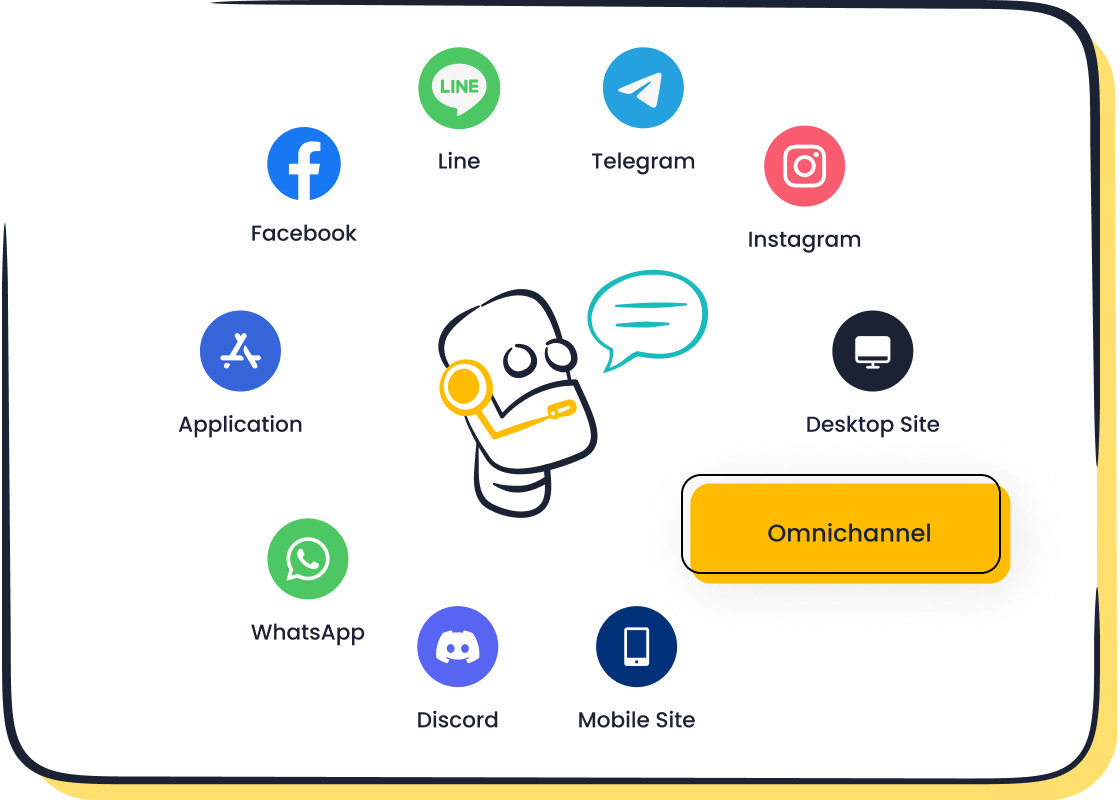
An all-in-one solution like Sobot provides a unified foundation for your hybrid model. It combines a powerful AI Chatbot, a robust Ticketing System, and an official WhatsApp API into a single platform. This integration offers major benefits:
- It gathers high-quality data for better insights.
- It reduces human labor costs and boosts business efficiency.
- It enhances communication by sharing information in real-time.
- It secures confidential information by reducing manual data transfers.
When selecting your automated customer service technology, look for a platform that grows with you. Your choice should empower your team, not complicate its work. The right platform for AI in customer service should offer a balance of power and simplicity.
Step 4: Train AI and Human Agents to Collaborate
The final step in how to make customer service more automated is training. Success depends on both your AI and your human agents working together as a single, cohesive team. You need to train your AI to understand your business and your agents to leverage the AI's power.
Training Your AI Your AI chatbot is only as smart as the data you give it. To handle company-specific questions, you must train it on real-world examples.
- Start with Strong Data: Feed your chatbot with actual customer messages, including slang, typos, and varied tones.
- Use Natural Language Processing (NLP): Train the AI to understand context and intent, not just keywords.
- Continuously Retrain: After launch, monitor chat histories and user feedback to find areas for improvement. Use this data to refine your AI's responses over time.
Training Your Human Agents Your agents need to learn how to collaborate with their new AI partner. This involves developing new skills to get the most out of the AI in customer service. Agents should master skills like prompt engineering, judging the credibility of AI answers, and knowing when to rely on human expertise.
This human-machine cooperation is where the hybrid model truly shines. For example, the smart device innovator OPPO partnered with Sobot to blend automated customer service with human expertise. By training their chatbot to handle repetitive queries and their agents to manage complex issues, they achieved incredible results:
- An 83% chatbot resolution rate.
- A 94% positive feedback rate from customers.
This proves that a well-executed hybrid strategy, powered by the right training and technology, elevates the entire customer support experience.
How to Measure the Success of Your Hybrid Model
After you implement a hybrid model, you need to measure its success. A successful strategy delivers both improved efficiency and higher customer satisfaction. You should track specific metrics to understand your performance. Integrated platforms like Sobot provide robust reporting and analytics to monitor these key indicators, giving you a clear view of your progress with AI in customer service.
Tracking Automation KPIs: Resolution and Deflection Rates
You must track how well your automation performs. Two key metrics are resolution rate and deflection rate. The resolution rate measures how many issues your chatbot solves without human help. The deflection rate shows how many inquiries are handled before they reach an agent. High rates in both areas show your customer service automation is working effectively.
Tip: Compare your chatbot's performance to industry benchmarks. This helps you set realistic goals.
Sector Typical Resolution Rate Range E-commerce 70–80% (leaders 89–92%) SaaS/Technology 55–75% Telecom 65–85% Banking 50–70%
Monitoring Customer Satisfaction (CSAT) and Effort Scores
Efficiency gains are meaningless if your customers are unhappy. You need to monitor Customer Satisfaction (CSAT) and Customer Effort Score (CES). CSAT measures overall happiness, while CES tells you how easy it was for customers to get help. You can use automated customer feedback surveys to gather this data right after an interaction.
Effective AI in customer service can directly boost these scores. It helps by:
- Reducing customer wait times.
- Providing consistent service 24/7.
- Allowing human agents to focus on complex issues that require empathy.
Analyzing Escalation Rates and First Response Times
You should also analyze how often customers need a human agent. A low escalation rate means your chatbot is handling most issues successfully. Another critical metric is First Response Time (FRT). A hybrid model dramatically shortens this time. For example, some teams have reduced their FRT from 8 minutes to just 40 seconds. This improved efficiency shows that your customer service automation is making a real impact.
Using Agent Feedback to Continuously Refine AI
Your human agents are your best resource for improving your AI. They see firsthand where the chatbot struggles. You should create a structured feedback loop for them. Agents can flag conversations where the AI misunderstood a question or provided an incorrect answer. This feedback is vital for retraining the AI. This process of continuous refinement creates a cycle of improved efficiency and better performance for your AI in customer service.
Your goal is augmentation, not replacement. True success in 2026 comes from blending automation's power with the irreplaceable human touch. This balanced approach will become the key competitive differentiator for customer experience leaders.
You can start building your hybrid model today.
- Audit your support tickets to understand customer needs.
- Map your customer escalation journey to define your strategy.
- Explore an integrated solution like the Sobot AI Chatbot.
FAQ
What is the main goal of an AI chatbot?
You use an AI chatbot to automate customer interactions. It solves common questions on its own. This frees up your human team to handle more complex problems. Your chatbot improves overall productivity and efficiency.
How does customer service automation save my business money?
Your automated customer service operates 24/7 without needing extra staff. It handles many inquiries at once, which reduces the need for additional agents. This can lower your support costs by up to 50%.
Do I need coding skills to set up a chatbot?
No, you do not need to code. Modern platforms like Sobot offer a point-and-click interface. You can use simple building blocks to design and launch your chatbot workflows quickly and easily.
How does AI help my human agents?
AI acts as a powerful assistant for your team. It provides real-time suggestions and finds knowledge base articles during calls. This use of AI in customer service helps your agents solve issues faster and focus more on the customer.
See Also
Elevate SaaS Customer Service Through Effective Live Chat Strategies
AI Agents: Revolutionizing Customer Service and Support Operations
Become a Live Chat Expert for Superior Customer Support
Discover the 10 Best Live Chat Help Software for 2024
Your Essential Guide to Call Center Quality Assurance Software

