Your roadmap to higher CSAT scores in call centers


Achieving higher CSAT scores in your call center takes more than luck—it needs a clear, step-by-step plan. Customer satisfaction shapes your business outcomes by boosting loyalty and service quality. You want good customer service, and that means you need skilled agents, smooth processes, and the right technology.
- Real-time monitoring and analytics help you spot issues fast.
- Continuous feedback and training keep your team sharp.
- Automated tools and performance goals drive better results.
Sobot offers innovative call center solutions powered by Sobot AI. With Sobot call center tools, you can deliver good customer service across every touchpoint. Ready to learn how to improve csat scores in call center? Let’s get started.
What is CSAT in Call Centers
CSAT Definition
You might hear the term CSAT a lot in the call center environment. CSAT stands for Customer Satisfaction Score. It measures how happy your customers feel after they talk to your team or use your service. You usually collect this score through a customer satisfaction survey right after a call or chat. The survey often asks, “How satisfied are you with your experience?” Customers answer on a scale, like 1 to 5 or 1 to 7. If they pick 4 or 5, you count them as satisfied. You then calculate the CSAT score as the percentage of satisfied customers out of everyone who answered. This score gives you a quick look at how well your call center environment meets customer needs. Unlike other metrics, CSAT focuses only on satisfaction, not loyalty or effort.
Why Customer Satisfaction Matters
Customer satisfaction is the heart of a great call center environment. When you make customers happy, they stick around and tell others about their good experience. A high CSAT score means your team did a good job. It also shows that your call center environment delivers what customers expect. If you respond quickly and solve problems on the first call, you boost customer satisfaction and loyalty. Studies show that 95% of customers stay with a company when they are very satisfied with their call center experience. Every 1% increase in CSAT can lower your operating costs and raise your Net Promoter Score. A strong customer experience in the call center environment leads to more repeat business and positive word-of-mouth.
Tip: Send your customer satisfaction survey right after the call. This way, you get honest feedback while the customer experience is still fresh.
CSAT Benchmarks
You might wonder what a good CSAT score looks like in the call center environment. The average CSAT score across call centers is about 78%. Most industries consider a score between 75% and 84% as good. If your call center environment scores 85% or higher, you are among the best. Here’s a quick look at CSAT benchmarks by industry:
| Industry | Average CSAT Benchmark |
|---|---|
| Retail | 85%+ |
| Finance & Insurance | 80%+ |
| Healthcare | Mid to high 70s |
| Travel | Mid to high 70s |
| Social Media | Around 73% |
Top-performing call centers reach world-class scores by focusing on first call resolution and agent training. You can see how CSAT and first call resolution go hand in hand in this chart:
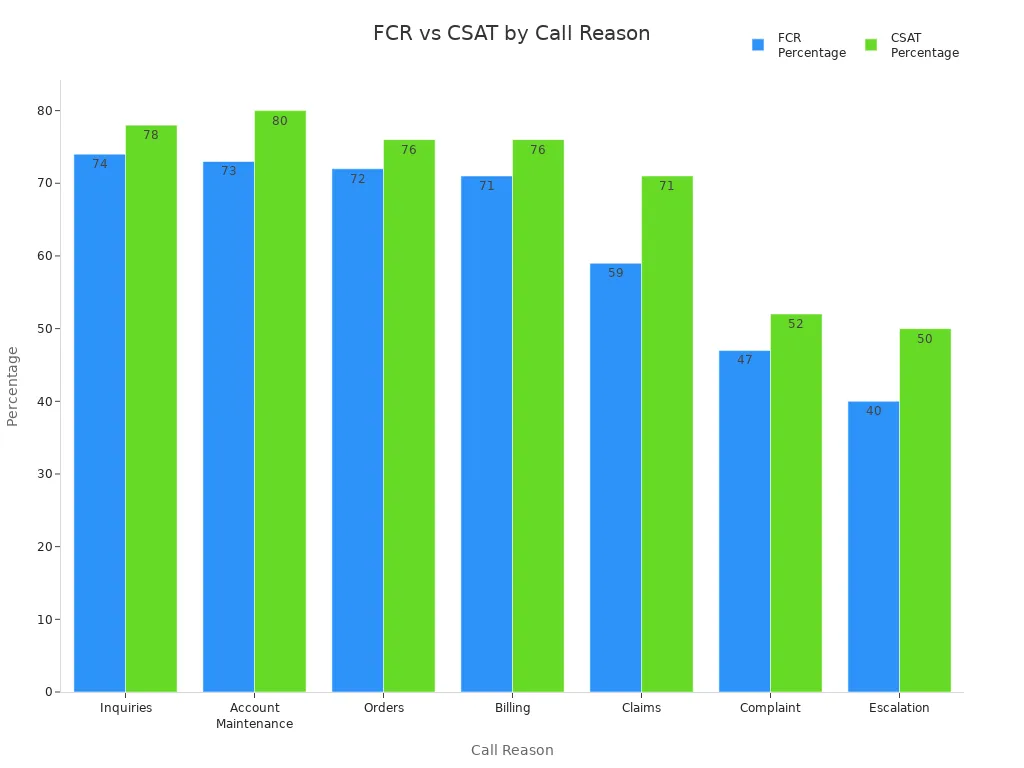
If your call center environment falls below 75%, it’s time to review your customer satisfaction survey results and make changes. Aim high, and you’ll see better results for your business.
Key Drivers of Customer Satisfaction

Agent Skills and Empathy
You can’t have good customer service without skilled agents who show real empathy. When you listen carefully and use kind words, customers feel valued. Research from SQM Group shows that when agents show genuine empathy, customer satisfaction scores jump by 35%. Empathy also helps you solve problems faster, which boosts first call resolution by 20%. You can learn empathy through active listening, roleplaying, and coaching. Many call center environments use real-time monitoring and feedback to help agents improve. AI tools can even spot when you use empathetic language and suggest ways to do better. When you practice these skills, you create a positive customer experience and make your call center environment a place people trust.
Tip: Try using phrases like “I understand how you feel” or “Let me help you with that” to show empathy during calls.
Process Efficiency
A smooth call center process makes life easier for both you and your customers. Fast answers, fewer transfers, and quick resolutions all lead to good customer service. Studies show that lowering average speed of answer and reducing abandonment rates make a big difference in customer satisfaction. If you solve problems on the first call, customers don’t have to call back, which saves time and builds trust. You can improve your call center operations by tracking key metrics, using smart routing, and offering callbacks. When you keep your call center environment efficient, you reduce frustration and create a better customer experience.
- Lower hold times by answering calls quickly.
- Use virtual queuing and callbacks to reduce abandoned calls.
- Focus on first contact resolution to solve issues right away.
- Keep experienced agents to provide consistent service.
Technology and Tools
The right technology turns a good call center environment into a great one. Sobot’s Voice/Call Center gives you tools like intelligent IVR, a unified workspace, and an AI-powered Voicebot. These features help you route calls, manage customer data, and automate routine tasks. With Sobot, you can monitor calls in real time and use analytics to spot trends and improve your call center process. Omnichannel solutions let you handle voice, chat, email, and social media in one place. This means customers never have to repeat themselves, and you can give fast, personalized service every time. Companies using omnichannel strategies see up to 91% higher customer retention (source). Sobot’s customer support automation and seamless integration make your call center operations more efficient and your customer experience more consistent.
Note: When you use advanced tools and automation, you free up agents to focus on complex issues, leading to good customer service and higher satisfaction.
How to Improve CSAT Scores in Call Center
You want to know how to improve CSAT scores in call center environments. Let’s break it down step by step. You’ll see how each part of your call center process can boost customer satisfaction and create good customer service.
Assess Current Performance
Start by looking at where you stand. You need to measure your CSAT scores and related metrics to get a clear picture. Here’s how you can do it:
- Collect customer feedback right after each call using a customer satisfaction survey. Ask customers to rate their experience on a scale, like 1 to 5.
- Track key metrics such as First Call Resolution (FCR), Average Handle Time (AHT), Call Abandonment Rate, and Agent Occupancy Rate. These numbers show how well your call center process works.
- Use real-time monitoring tools to watch trends and spot issues quickly. Sobot’s Voice/Call Center gives you instant access to call quality data and analytics.
- Take an omnichannel approach. Meet customers on their favorite channels—phone, chat, email, or social media. Sobot’s unified workspace lets you see all interactions in one place, making it easier to assess performance.
- Focus on improving FCR. If you solve problems on the first call, customers leave happy and your CSAT goes up.
Tip: Review your CSAT scores and related KPIs every week. This helps you catch problems early and adjust your customer service strategy fast.
Here are the main metrics you should watch:
- Customer Satisfaction Score (CSAT)
- Net Promoter Score (NPS)
- Quality Assurance (QA) Scores
- First Contact Resolution (FCR)
- Customer Effort Score (CES)
Tracking these numbers gives you a full view of your call center operations and helps you find areas to improve.
Train and Empower Agents
Your agents are the heart of your call center process. If you want good customer service, you need to invest in training and empowerment. Well-trained agents handle calls better, solve problems faster, and make customers feel valued.
| Evidence Aspect | Description | Impact on CSAT and Related Metrics |
|---|---|---|
| Continuous Improvement Loops | Ongoing training refinement leads to measurable improvements | 10% higher CSAT scores and 5% revenue increase per agent |
| Personalized Development Tracks | Tailored training paths build agent confidence and competence | Higher CSAT and better customer interactions |
| Mentorship and Recognition | Structured mentorship increases retention and motivation | 30% higher retention among junior staff |
| Collaborative Learning | Group activities and peer learning improve team cohesion | Retention improvements (+22% to +25%) |
| Balancing Technical and Soft Skills | Training includes product knowledge and interpersonal skills | Improved customer satisfaction |
You should:
- Offer regular training on both technical skills and soft skills like empathy and active listening.
- Use personalized coaching and feedback. Sobot’s real-time monitoring and analytics help you spot areas for improvement and give agents instant feedback.
- Empower agents to make decisions. Give them the tools and authority to solve problems without waiting for approval. Sobot’s unified workspace and AI-powered Voicebot make it easy for agents to access information and handle calls independently.
- Recognize and reward good performance. Celebrate agents who deliver good customer service and high call quality.
When agents feel confident and motivated, they go the extra mile for customers. Empowered agents solve problems faster, build trust, and create a better customer experience.
Optimize Call Center Processes
A smooth call center process is key to improving customer service and boosting CSAT. You need to look at every step, from call routing to follow-up, and find ways to make things faster and easier.
- Focus on critical KPIs like CSAT, FCR, AHT, and Service Level. Use these numbers to guide your process improvements.
- Use workforce management best practices. Schedule agents based on call volume, monitor performance, and offer flexible shifts.
- Integrate advanced technologies. Sobot’s AI-powered Voicebot, intelligent IVR, and automation tools help you handle routine tasks, reduce errors, and speed up resolutions.
- Adopt omnichannel communication. Sobot’s platform lets you manage calls, chats, emails, and social media in one place. Customers get seamless service, no matter how they reach out.
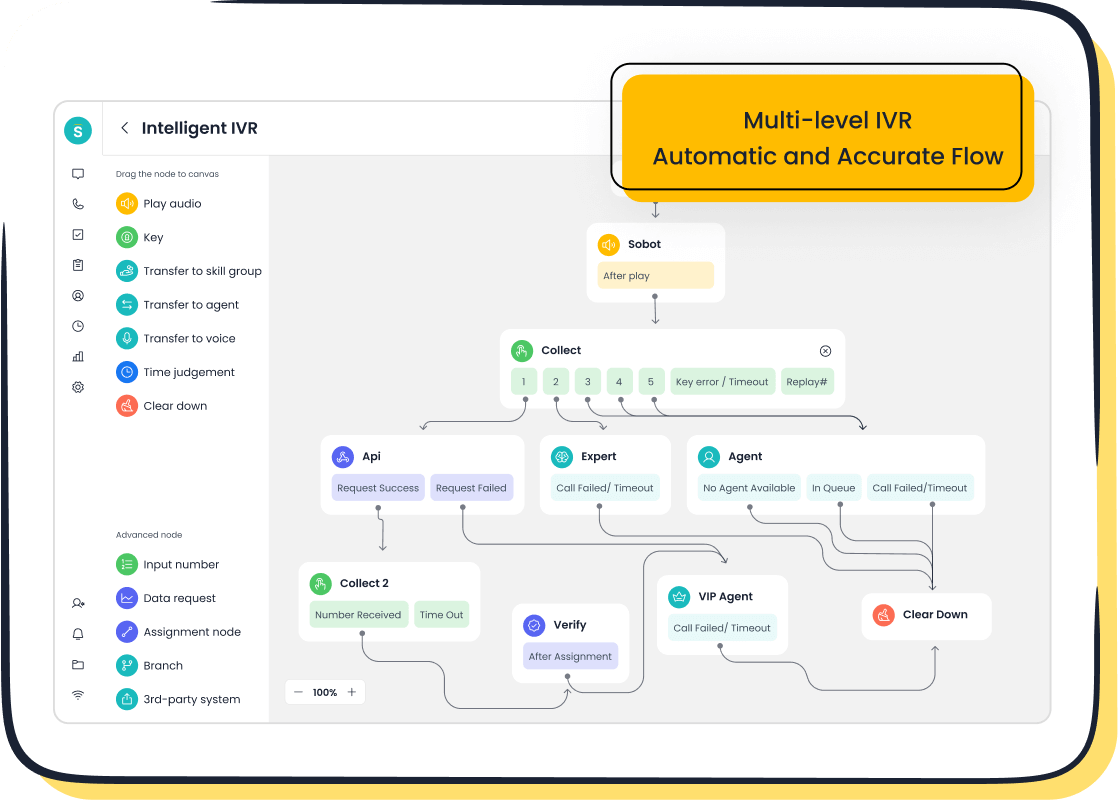
- Use CRM integration and IVR systems to streamline call handling. Sobot’s drag-and-drop IVR makes it easy to route calls to the right agent or team.
Note: Automation tools like IVR and AI Voice Agents can reduce Average Handle Time by up to 20% (source) and improve first call resolution rates.
You can also use real-time analytics and monitoring to coach agents and maintain high call quality. Regular surveys and Net Promoter Score tracking help you refine your call center process and boost CSAT.
Leverage Sobot Voice/Call Center
If you want to know how to improve csat scores in call center environments, you need the right technology. Sobot’s Voice/Call Center gives you everything you need to deliver good customer service and improve your call center operations.
- Intelligent IVR: Customize greetings, build menus, and route calls with a drag-and-drop interface. Go live in real time and adjust settings as needed.
- Unified Workspace: Agents see all customer data and interactions in one place. This makes it easy to provide fast, personalized service.
- Real-Time Monitoring and Analytics: Track call quality, agent performance, and customer feedback instantly. Spot trends and fix problems before they grow.
- Bulk Outbound Task: Automate outbound calls and assign leads based on priorities and SLAs.
- AI-powered Voicebot: Handle routine inquiries, recognize intent, and guide customers to solutions. Free up agents for complex issues.
- Multilingual Support: Serve customers in their preferred language. Sobot’s platform supports multiple languages and time zones, making it perfect for global businesses.
Let’s look at a real-world example. Weee!, America’s largest online Asian supermarket, used Sobot’s voice product to solve big challenges. They faced inflexible IVR systems and language barriers. After switching to Sobot, they saw a 20% increase in agent efficiency and a 50% reduction in resolution time. Their customer satisfaction score jumped to 96%. Sobot’s flexible IVR, integrated workbench, and multilingual support made it possible (source).
Tip: Start small with automation. Measure your SLA and CSAT, then expand as you see results. Sobot’s platform makes it easy to scale up without losing the human touch.
Sobot’s AI customer service solutions can deflect up to 43% of routine tickets, reduce agent costs, and improve customer satisfaction. You get a stable system with 99.99% uptime, global number availability, and secure data transfer. These features help you deliver consistent, high-quality service every time.
Collect and Act on Feedback
You can’t improve what you don’t measure. Collecting and acting on customer feedback is one of the most important steps in how to improve csat scores in call center environments.
- Send customer satisfaction surveys right after each interaction. Keep them short and focused to respect your customers’ time.
- Segment feedback by call type and customer journey stage. This helps you find patterns and root causes.
- Use AI and text analytics to understand customer emotions and spot trends. Sobot’s platform offers sentiment analysis and real-time reporting.
- Close the feedback loop. Share insights with agents and follow up with customers to show you value their input.
- Integrate feedback with quality assurance and coaching. Use survey results to refine training and improve agent performance.
- Benchmark your results against industry standards and your own past performance.
Note: Acting on customer feedback helps you fix recurring problems, improve training, and address broader business issues. This builds trust and loyalty, leading to higher CSAT scores.
Quality assurance processes that include customer feedback help you improve call quality and agent performance. Empowering your support team and building a customer-centric culture both contribute to better customer service and higher satisfaction.
Monitoring and Adjusting Strategies
Track Key Metrics
You want your call center environment to run smoothly. Tracking the right metrics helps you see what works and what needs fixing. Focus on numbers like CSAT, First Call Resolution, and Average Handle Time. These show how well your call center process supports customers. Real-time monitoring lets you spot problems before they grow. Use dashboards to check daily trends. This keeps your call center operations on track and helps you react fast.
Analyze Feedback
Customer feedback gives you a window into your call center environment. You should look at this feedback often. Here’s a simple way to keep your analysis sharp:
- Review feedback every week. This helps you catch small issues early and keep service quality high.
- Do a deeper review each month. Look for trends, connect CSAT with other business results, and prepare reports for leaders.
- Use weekly reviews to keep improving and avoid falling behind.
- Use monthly reviews to spot big patterns and link CSAT to things like customer loyalty.
- Share monthly reports with your team and leaders. Celebrate wins and fix ongoing problems.
Tip: Regular feedback analysis keeps your call center environment focused on what matters most—your customers.
Continuous Improvement
You can always make your call center environment better. Use a clear plan to keep moving forward. Start by setting goals that match your business needs. Pick tools that help you track progress and are easy for your team to use. Train everyone so they know how to get the most from these tools. Watch key numbers like CSAT, AHT, and FCR. Set up feedback loops so you always know what’s working.
Here’s a quick look at how different improvement levels help your call center environment:
| QA Framework Level | Description | Key Features | Impact on Sustaining High CSAT |
|---|---|---|---|
| Operational | Focuses on daily tasks and quick fixes | Daily checks, agent support, monthly reviews | Helps agents improve fast but may miss long-term trends |
| Tactical | Looks at patterns and adapts processes | Root cause checks, training, trend tracking | Builds loyalty and boosts agent skills |
| Strategic | Connects QA to big business goals | Advanced analytics, real-time feedback | Drives lasting customer loyalty and high CSAT |
Note: When you build a habit of checking, learning, and improving, your call center environment stays strong and ready for anything.
Sustaining High Customer Satisfaction
Foster a Customer-Centric Culture
You want your call center to feel welcoming and focused on your customers. Building a customer-centric culture means you put your customers first in every decision. You listen to what they need and act on their feedback. Here’s how you can make this happen:
- Use CSAT surveys to understand what your customers expect. This helps you keep up with changing demands.
- Train your agents to think like your customers. Roleplaying and quizzes help them learn empathy and problem-solving.
- Collect feedback often. Use surveys and sentiment analysis to find out what works and what needs fixing.
- Watch key metrics like CSAT, NPS, and first contact resolution. These numbers show where you can improve.
- Reward agents who go above and beyond. Celebrate those who make customers happy.
- Remove barriers that stop your team from giving good customer service.
- Work together across departments. Make customer-centric goals part of your company’s official plans.
Companies that focus on customers see better loyalty and higher retention. Research from Zendesk, Forrester, and KPMG shows that customer-obsessed businesses grow faster and keep customers longer (source).
Ongoing Training and Recognition
You want your agents to stay sharp and motivated. Ongoing training and development keeps your team ready for anything. When you recognize their hard work, you boost their confidence and job satisfaction.
Regular training sessions teach agents new skills and update them on best practices. Role-playing helps them solve problems and build confidence. Online resources let agents learn at their own pace. Studies show that companies with strong training programs see a 20% jump in customer satisfaction (source). When you celebrate achievements, agents feel proud and want to do even better. Recognition also lowers turnover and builds a positive work environment.
Keep your training materials fresh. Encourage agents to share tips with each other. Give feedback often and involve agents in decisions. These steps help your team stay engaged and ready to deliver good customer service every day.
Use Technology for Consistency
You need the right tools to keep your service consistent. Technology helps you give every customer the same great experience. Here are some ways you can use technology in your call center:
- Conversational AI and chatbots answer routine questions and help with sentiment analysis.
- Workforce management tools let you monitor calls and schedule agents for busy times.
- Omnichannel solutions connect phone, email, chat, and social media, so customers get seamless support.
- CRM integration gives agents instant access to customer data for fast, personalized service.
- Automatic Call Distribution (ACD) sends calls to the best agent, cutting down wait times.
- IVR systems offer self-service options and quick call handling.
- Call analytics show you where you can improve and help forecast busy periods.
- Call recording and monitoring support training and quality checks.
- Knowledge management systems give agents up-to-date information, reducing mistakes.
AI-powered knowledge bases and agent assistants help your team find answers quickly. Omnichannel engagement lets customers reach you however they want, making every interaction smooth. Intelligent call routing and centralized knowledge bases keep your service high-quality and consistent.
Tip: When you combine technology with a customer-focused team, you create a call center that delivers good customer service every time.
You now have a clear roadmap to boost CSAT in your call center. Start by checking your current scores. Train your agents and make your processes smooth. Use smart tools like Sobot’s Voice/Call Center to help your team work better. Keep tracking your progress and listen to feedback. When you put these steps together, you set your team up for lasting success. Ready to take your customer service to the next level? Explore what Sobot can do for you today!
FAQ
What is a good CSAT score for a call center?
A good CSAT score for a call center usually falls between 75% and 84%. If you reach 85% or higher, you’re doing great! Always aim to beat your last score.
How often should I send customer satisfaction surveys?
You should send a customer satisfaction survey right after each call or chat. This helps you get honest feedback while the experience is still fresh in your customer’s mind.
How can technology help improve CSAT in my call center?
Technology like Sobot’s Voice/Call Center gives you tools for real-time monitoring, analytics, and automation. These features help you solve problems faster and make your customer service more consistent.
Why does first call resolution matter for customer satisfaction?
First call resolution means you solve a customer’s problem on the first try. When you do this, customers feel happy and trust your call center more. It’s one of the best ways to boost CSAT.
Can I improve CSAT with agent training?
Yes! Regular training helps your agents build skills and confidence. When agents know what to do, they give better answers and make customers feel valued. This leads to higher customer satisfaction.
See Also
Effective Strategies For Managing Call Center Quality
Comprehensive Overview Of Call Center Quality Management Systems
Ways To Enhance Call Center Results Through Monitoring

