Effective Methods to Increase Call Center Agent Efficiency


When customers call your business, they expect quick answers and smooth interactions. If agents struggle to meet these expectations, it can hurt your brand reputation. Did you know that 77% of customers expect immediate interaction with a call center, and 91% won’t return after a negative experience? That’s why understanding how to improve call center agent performance isn’t just a nice-to-have—it’s critical for business success.
You can make a big difference by using actionable tips and tools. For example, advanced call routing can ensure customers reach the right agent faster. Sobot’s solutions, like AI-powered systems and real-time monitoring, help agents deliver better results while reducing inefficiencies. When agents work efficiently, customer satisfaction scores (CSAT) soar, and your business thrives.
Common Challenges in Call Center Agent Productivity
High Agent Turnover and Its Impact
High agent turnover can disrupt your call center operations and hurt productivity. When agents leave frequently, it creates a cycle of inefficiency. New hires need time to learn the ropes, which slows down service quality. This can lead to lower customer satisfaction and even lost revenue.
- High turnover rates increase operational costs as you constantly recruit and train new agents.
- It’s tough to maintain high-quality service when agents don’t stay long enough to develop their skills.
- A disengaged workplace culture often emerges, making it harder to motivate your team.
When turnover is high, first-contact resolution rates drop, and customers may feel frustrated. This directly impacts your call center’s reputation and bottom line.
Lack of Comprehensive Training Programs
Without effective training programs, agents often feel unprepared to handle customer inquiries. This lack of confidence can lead to frustration and even burnout. You might notice higher attrition rates and lower productivity as a result.
- Insufficient training leaves agents overwhelmed, which negatively affects customer satisfaction.
- Low-performing agents can disrupt team dynamics and slow down operations.
- Agents who don’t feel equipped to succeed are more likely to leave, adding to turnover challenges.
Investing in effective training programs ensures your agents feel confident and capable. This not only boosts their morale but also improves their ability to resolve issues quickly and efficiently.
Inefficient Workflows and Processes
Inefficient workflows can be a major roadblock to call center productivity. Long hold times, misdirected calls, and outdated technology frustrate both agents and customers.
- Poor call routing leads to longer call durations and wasted time.
- Inadequate tools slow down processes, making it harder for agents to perform their tasks.
- Long hold times create negative experiences for customers, which can damage your brand.
Using business intelligence tools can help you identify inefficiencies and streamline your workflows. When processes run smoothly, agents can focus on delivering excellent service, and customers enjoy faster resolutions.
Low Employee Morale and Engagement
When morale is low, your call center agents struggle to stay motivated. This lack of engagement directly impacts their productivity and the quality of customer interactions. A study from Cornell University found that 87% of contact center agents experience job-related stress. Stress leads to disengagement, which hurts customer satisfaction and slows down operations.
Low morale often stems from feeling undervalued or overwhelmed. Agents who don’t feel supported are less likely to go the extra mile for customers. This creates a ripple effect, where unresolved issues pile up and productivity drops. You might notice longer call durations or more frequent escalations, both of which frustrate customers.
To boost morale, focus on creating a positive work environment. Recognize your agents’ achievements and provide opportunities for growth. Simple gestures like celebrating milestones or offering incentives can make a big difference. When agents feel appreciated, they’re more likely to stay engaged and deliver exceptional service.
Outdated Technology Hindering Performance
Outdated technology makes it harder for your call center agents to do their jobs effectively. Legacy systems often lack the flexibility to adapt to modern demands, leaving your team stuck with inefficient tools.
- These systems fail to integrate with newer platforms, which slows down workflows.
- Agents waste time navigating multiple outdated systems instead of focusing on customer interactions.
- Customers expect fast resolutions, but outdated tools can’t keep up with their needs.
When agents struggle with clunky software, communication suffers. They spend more time troubleshooting technical issues than solving customer problems. This leads to unresolved inquiries and lower satisfaction rates.

Upgrading to advanced solutions like Sobot’s Voice/Call Center can transform your operations. Features like smart call routing and AI-powered voicebots help agents handle calls more efficiently. Modern tools reduce distractions, allowing your team to focus on delivering the best possible service.
Key Metrics to Measure Call Center Agent Efficiency
Average Handle Time (AHT) and Its Importance
Average Handle Time (AHT) is one of the most critical metrics to measure agent performance. It tracks how long an agent spends on a single customer interaction, from the moment the call starts to the time it ends, including any follow-up tasks. A shorter AHT often means your agents are resolving issues quickly, which boosts customer satisfaction.
Why does AHT matter so much? Let’s break it down:
- Customer Satisfaction: Quick resolutions make customers happy, while long calls can frustrate them.
- Operational Efficiency: A low AHT shows that your agents are productive and handling calls effectively.
- Resource Allocation: Monitoring AHT helps you plan staffing better, ensuring you have enough agents during peak hours.
| Aspect | Impact on Call Center Outcomes |
|---|---|
| Customer Satisfaction | A short AHT improves customer satisfaction by providing prompt service, while a long AHT leads to dissatisfaction. |
| Operational Efficiency | A low AHT indicates efficient call handling and high agent productivity, whereas a high AHT suggests a need for improvements. |
| Resource Allocation | AHT helps in determining the number of agents needed at different times, ensuring optimal utilization of resources. |

By regularly monitoring AHT, you can identify trends and improve processes. Tools like Sobot’s Voice/Call Center, with features like call tracking and real-time monitoring, make it easier to keep AHT in check and enhance agent productivity.
First Call Resolution (FCR) for Customer Satisfaction
First Call Resolution (FCR) measures how often your agents resolve customer issues on the first call without needing follow-ups. It’s a powerful indicator of both agent performance and customer satisfaction.
Why is FCR so important?
- Improved Customer Experience: Resolving issues on the first call shows customers you value their time.
- Operational Efficiency: High FCR rates reduce the need for repeat calls, saving time and resources.
- Agent Morale: Agents feel more accomplished when they can solve problems quickly and effectively.
| Benefit | Description |
|---|---|
| Improved Customer Experience | High FCR rates lead to effective issue resolution on the first call, enhancing customer satisfaction. |
| Operational Efficiency | Streamlined operations reduce the need for follow-ups, saving resources and time. |
| Agent Morale | Positive workplace environment due to effective problem resolution contributes to higher satisfaction. |
FCR is often considered the gold standard of customer experience metrics. With Sobot’s smart call routing and AI-powered voicebots, you can ensure customers are connected to the right agents, increasing the likelihood of first-call resolutions.
Customer Satisfaction Score (CSAT) as a Benchmark
Customer Satisfaction Score (CSAT) is a direct measure of how happy your customers are with your service. After an interaction, customers rate their experience, usually on a scale of 1 to 5. A high CSAT score means your agents are meeting or exceeding expectations.
Here’s why CSAT is essential:
- It’s a clear indicator of service quality.
- It helps you identify areas where agents can improve.
- It directly correlates with customer loyalty and retention.
| Industry | CSAT Score | Remarks |
|---|---|---|
| Consulting | 84 | Leading CSAT benchmarks |
| Ecommerce & Retail | 82 | Strong performance post-pandemic |
| Healthcare | 81 | Improved values due to pandemic focus |
| B2B Software & SaaS | 77 | Significant leap in 2023 |
| Digital Marketing Agency | 72 | Following B2B Software & SaaS |
| Internet & Software Services | 50 | Average performance |
| Education | 64 | Keeping up with customer satisfaction |
| Communication & Media | 22 | Lowest score, indicating poor satisfaction |
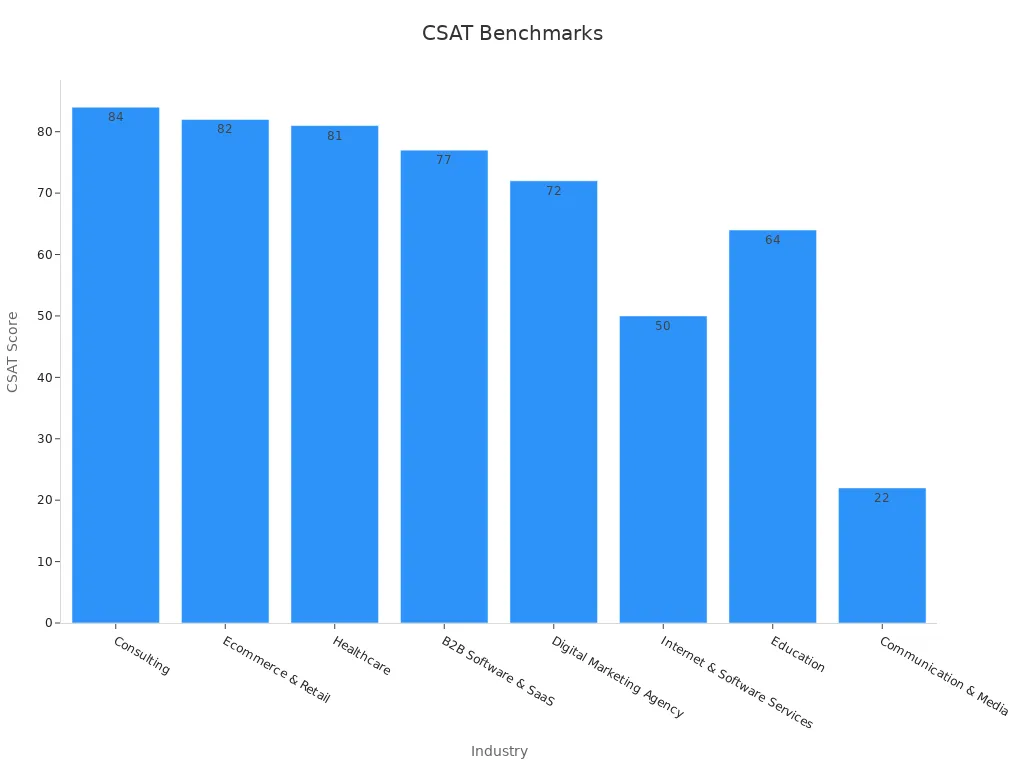
A CSAT score above 70 is generally considered good. With tools like Sobot’s Voice/Call Center, which offers real-time monitoring and analytics, you can track CSAT and take actionable steps to improve agent productivity and customer satisfaction.
Agent Utilization Rate for Productivity Insights
Agent Utilization Rate is a key metric that helps you understand how effectively your call center agents are spending their time. It’s calculated as (Productive Time ÷ Total Paid Time) × 100. This simple formula gives you a clear picture of how much of your agents’ paid hours are spent actively helping customers.
A good target for full-time agents is between 80% and 90%. For example, companies like USAA maintain an impressive 85% utilization rate while still prioritizing employee satisfaction. When you hit this sweet spot, your agents stay productive without feeling overworked.
Why does this matter? High utilization rates mean your call center is running efficiently. But if the rate is too high, agents may feel burned out, which can hurt morale and lead to mistakes. On the flip side, a low rate could mean your team isn’t being used to its full potential.
Here’s how you can improve this metric:
- Use AI-powered tools to streamline workflows. Salesforce reports that these tools can boost utilization by up to 15%.
- Monitor real-time data to identify downtime and adjust schedules accordingly.
- Provide agents with the right tools, like Sobot’s Voice/Call Center, to handle calls more efficiently.
When you optimize agent utilization, you create a balanced environment where productivity thrives, and your team feels supported. This balance ensures your call center delivers top-notch service while keeping agents happy.
Net Promoter Score (NPS) for Measuring Loyalty
Net Promoter Score (NPS) is a powerful way to measure customer loyalty in your call center. It categorizes customers into promoters, passives, and detractors based on their likelihood to recommend your business. This simple score gives you valuable insights into how well your agents are meeting customer expectations.
Here’s why NPS is so effective:
- It directly links customer loyalty to financial performance, as shown in The Service Profit Chain.
- It empowers agents by providing feedback they can act on to improve customer experiences.
- It fosters a culture of loyalty by recognizing and rewarding agents who consistently deliver great service.
When you act on NPS feedback, you show customers that their opinions matter. This not only improves loyalty but also motivates your agents to perform better. For example, sharing positive feedback with your team can boost morale and encourage them to keep up the good work.
To make the most of NPS, integrate it with tools like Sobot’s Voice/Call Center. These tools help you gather and analyze feedback efficiently, so you can take action quickly. By prioritizing NPS, you create a customer-first culture that drives long-term success for your call center.
Actionable Strategies to Improve Call Center Agent Performance

Invest in Call Center Coaching and Training
If you want to know how to improve call center agent performance, start by investing in call center coaching and training. Agents who receive consistent coaching feel more confident and prepared to handle customer inquiries. This directly impacts their productivity and the overall customer experience.
Here’s why coaching matters:
- Improved Metrics: Studies show that effective coaching leads to better CSAT scores and reduced handle times.
- Agent Feedback: Listening to agents’ experiences during the coaching process helps you refine your approach and boost morale.
- Positive Environment: Observing coaching sessions reveals how a supportive atmosphere can enhance agent development.

To make your coaching strategy effective, focus on real-time coaching. This involves providing immediate, data-driven feedback during or right after a call. For example, if an agent struggles with call resolution, you can use collaborative feedback to guide them toward better solutions. Tools like Sobot’s Voice/Call Center make this easier by offering real-time monitoring and analytics. These features allow you to identify areas for improvement and deliver constructive feedback on the spot.
Remember, coaching isn’t just about pointing out mistakes. It’s about creating a learning environment where agents feel supported and motivated to grow. When you prioritize coaching methods that emphasize growth, your team becomes more skilled and engaged, leading to better customer interactions.
Optimize Call Routing with Sobot Voice/Call Center
Call routing can make or break your call center’s efficiency. Misrouted calls waste time and frustrate both agents and customers. That’s where advanced systems like Sobot Voice/Call Center come in.
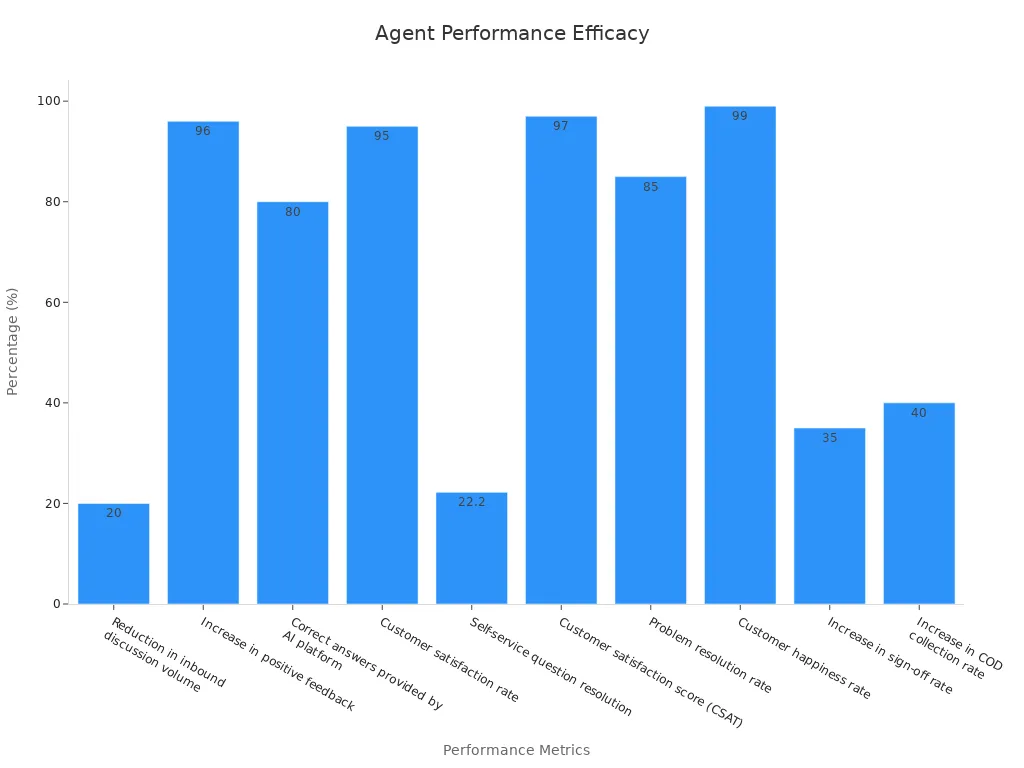
Sobot’s smart call routing ensures customers are connected to the right agent or department quickly. This reduces hold times and improves first-call resolution rates. Here’s a look at the impact of advanced call routing:
| Metric | Value |
|---|---|
| Reduction in inbound discussion volume | 20% |
| Increase in positive feedback | 96%+ |
| Correct answers provided by AI platform | 80% |
| Customer satisfaction rate | 95% |
| Self-service question resolution | 22.2% |
| Customer satisfaction score (CSAT) | 97% |
| Problem resolution rate | 85% |
| Customer happiness rate | 99% |
| Increase in sign-off rate | 35% |
| Increase in COD collection rate | 40% |
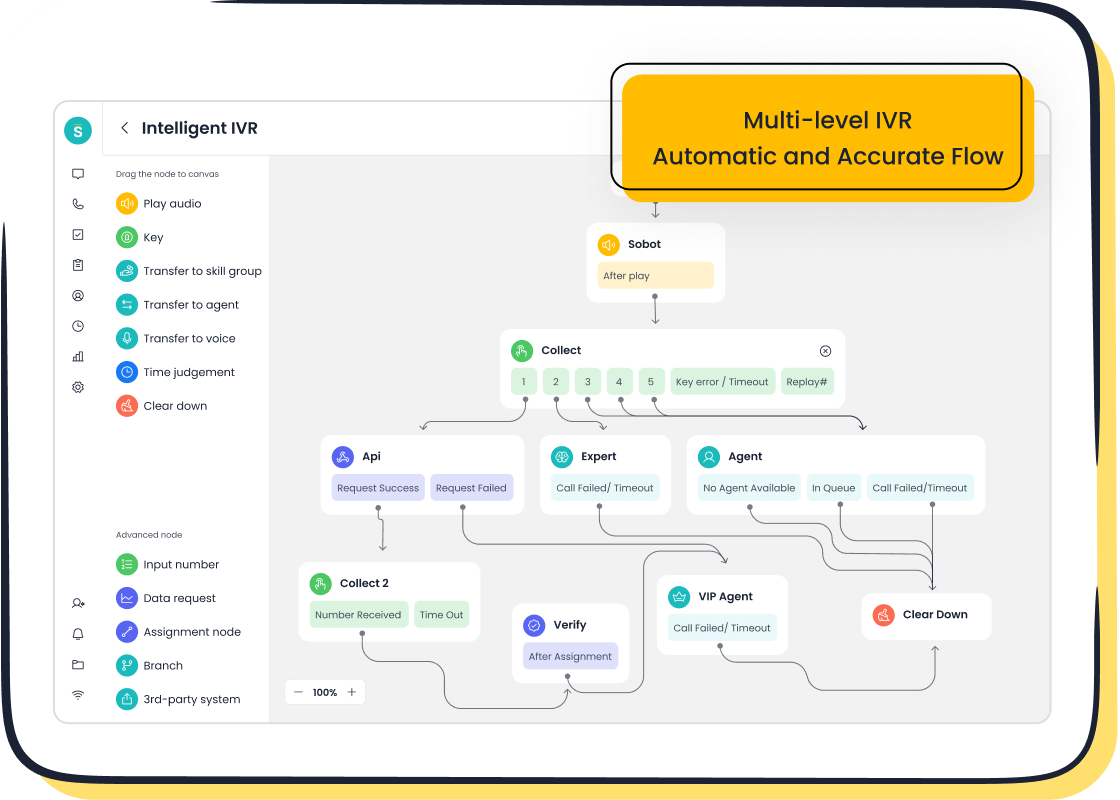
With Sobot’s AI-powered voicebots and intelligent IVR, you can automate workflows and reduce the burden on your agents. These tools also provide time zone support, ensuring customers receive timely assistance no matter where they are. By optimizing call routing, you not only improve productivity but also enhance customer satisfaction.
Foster a Positive Work Environment and Culture
A positive work environment is essential for improving call center efficiency. When agents feel valued and supported, they’re more likely to stay engaged and perform at their best. Research shows that a healthy workplace boosts agent well-being, which directly impacts productivity.
Here’s how fostering a positive culture helps:
- Enhanced Engagement: Agents who feel appreciated are more motivated to deliver excellent service.
- Job Satisfaction: High-quality training and modern tools increase job satisfaction, reducing burnout.
- Cost Savings: Retaining agents lowers recruitment and training expenses, saving your business money.
Simple steps like recognizing achievements, celebrating milestones, and offering growth opportunities can make a big difference. For instance, you could implement gamification strategies to reward top performers. Tools like Sobot’s Voice/Call Center also contribute by providing agents with the resources they need to succeed.
When you create a supportive culture, your agents feel empowered to tackle challenges. This leads to better customer interactions, higher morale, and a more efficient call center overall.
Implement Gamification to Motivate Agents
Let’s face it—working in a call center can sometimes feel repetitive. That’s where gamification comes in. By turning everyday tasks into fun challenges, you can make work more engaging for your agents. Gamification involves using game-like elements, such as leaderboards, rewards, and badges, to motivate your team. It’s not just about having fun; it’s about promoting agent motivation and boosting productivity.
Why does gamification work so well? It taps into your agents’ natural desire for recognition and achievement. When they see their names climbing a leaderboard or earn rewards for hitting targets, they feel more driven to perform. This sense of accomplishment can transform a mundane workday into an exciting challenge.
Here’s what the numbers say about gamification:
| Statistic Description | Value |
|---|---|
| Companies adopting gamification | 70% |
| Increase in productivity | 50% |
| Employees feeling more engaged | 89% |
| Reduction in training time | 50% |
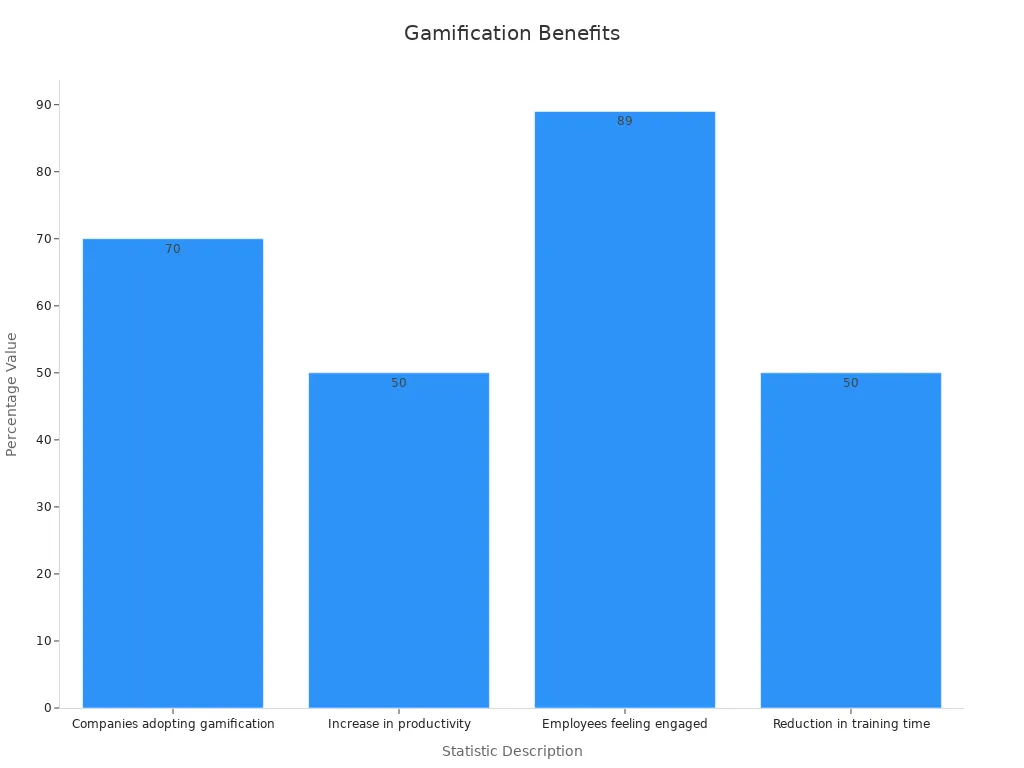
Gamification doesn’t just benefit your agents—it also improves your call center’s overall performance. For example, when agents are motivated, they handle calls more efficiently, leading to shorter wait times and happier customers. Plus, gamification can make training sessions more interactive, cutting training time in half.
To get started, you can introduce simple elements like daily challenges or monthly rewards for top performers. Tools like Sobot’s Voice/Call Center can help you track performance metrics in real time, making it easier to implement gamification strategies. When you create a fun and competitive environment, your agents will feel more engaged, and your call center will thrive.
Provide Access to Advanced Technology and Tools
Imagine trying to solve a puzzle without all the pieces. That’s what it feels like for agents who don’t have access to the right tools. Advanced technology can make a world of difference in your call center, helping your team work smarter, not harder.
For instance, real-time reporting tools allow you to monitor call center activities as they happen. This ensures your agents get the support they need when they need it. Advanced quality assurance platforms can also provide personalized feedback, helping agents improve their call handling skills.
Here’s how technology has transformed call centers:
- A retail company increased customer satisfaction scores by 27% using AI-powered tools.
- A tech firm reduced costs by 20% and improved response times with a cloud-based solution.
- A financial firm achieved a 21% sales increase through AI analytics.
When you equip your agents with cutting-edge tools like Sobot’s Voice/Call Center, you’re setting them up for success. Features like intelligent IVR and AI-powered voicebots streamline workflows, reducing the time agents spend on repetitive tasks. This not only boosts productivity but also enhances the customer experience.
Advanced tools also make it easier to track key metrics like Average Handle Time (AHT) and First Call Resolution (FCR). With real-time analytics, you can identify areas for improvement and take action immediately. This level of insight empowers your agents to deliver top-notch service every time.
By investing in advanced technology, you’re not just improving your call center’s efficiency—you’re also showing your agents that you value their work. When they have the tools they need to succeed, they’ll feel more confident and capable. And that confidence translates into better performance and happier customers.
Tools and Resources to Enhance Call Center Productivity

Sobot Voice/Call Center for Intelligent Call Management
If you’re looking to boost call center productivity, Sobot Voice/Call Center is a game-changer. It’s designed to simplify call management while delivering exceptional results. With features like AI-powered voicebots and seamless CRM integration, this tool ensures your agents spend less time on repetitive tasks and more time solving customer problems.
Here’s how Sobot Voice/Call Center can transform your operations:
| Feature | Benefit |
|---|---|
| AI voice bot | Replaces manual calls, handling simple questions efficiently. |
| Intent and call data capture | Analyzes insights to target high-intent customers with personalized outreach. |
| Omni-channel service | Provides a unified experience across platforms like voice, chat, and email. |
| Seamless CRM integration | Eliminates manual data transfer, streamlining workflows. |
| Cost reduction | Cuts labor costs by 50% while doubling operational efficiency. |
| Increased sales | Drives 150%+ more sales through optimized outreach strategies. |
By utilizing technology like Sobot Voice/Call Center, you can achieve a 200% increase in efficiency and significantly reduce costs. Imagine your agents focusing on high-value interactions while the system handles routine inquiries. That’s not just smart—it’s revolutionary.
AI-Powered Chatbots for Self-Service Options
AI-powered chatbots are another essential tool for enhancing call center productivity. These bots empower customers to resolve issues on their own, reducing the workload on your agents. They’re especially effective for handling routine questions, which make up a large portion of customer inquiries.
Did you know that 80% of routine questions can be resolved by chatbots? This means fewer calls for your agents to handle, allowing them to focus on more complex issues. Plus, chatbots improve call deflection rates, ensuring customers get quick answers without waiting in line.
| Metric | Description |
|---|---|
| Customer Satisfaction (CSAT) | Measures how satisfied customers are with their interactions, reflecting service quality. |
| Call Deflection Rate | Indicates how effectively chatbots reduce the number of calls reaching human agents. |
| Self-Service Success Rate | Assesses how well customers resolve their queries independently, showcasing the chatbot’s efficiency. |
When customers can solve their problems through self-service, everyone wins. Your agents get more breathing room, and your customers enjoy faster resolutions. Sobot’s AI-powered chatbots take this a step further by integrating seamlessly with other tools, ensuring a smooth experience across all channels.
Workforce Management Tools for Scheduling and Monitoring
Managing your team effectively is crucial for maintaining high call center productivity. Workforce management tools help you schedule shifts, monitor performance, and optimize resource allocation. These tools ensure your agents are always in the right place at the right time.
Companies with engaged employees are 21% more profitable and 17% more productive. That’s the power of workforce analytics. By tracking real-time metrics, you can identify patterns and make adjustments to improve efficiency. For example, if you notice a spike in call volume during certain hours, you can adjust schedules to ensure adequate coverage.
Workforce management tools also provide insights into employee behavior and job satisfaction. This data helps you coach your agents more effectively, boosting their morale and performance. When your team feels supported, they’re more likely to deliver exceptional service.
By utilizing technology like workforce management tools, you can streamline operations and create a more productive environment. It’s not just about managing schedules—it’s about empowering your agents to succeed.
Call Monitoring and Analytics Software for Insights
Call monitoring and analytics software is like having a magnifying glass for your call center operations. It helps you see what’s working and what needs improvement. With real-time analytics and AI-driven tools, you can track conversations, evaluate performance, and make data-driven decisions that boost productivity.
Here’s how this software can transform your call center:
- AI tools analyze conversations as they happen, giving you instant insights into how your agents are performing.
- Automated evaluations save time for managers, letting them focus on coaching and improving customer satisfaction.
- Keyword tracking highlights trends, helping you align training with customer needs.
Imagine being able to pinpoint areas where your agents excel and where they need support. AI-powered call monitoring does just that. It identifies patterns and provides constructive feedback immediately, so your team can improve on the spot. This not only enhances agent interactions but also ensures quality standards are met consistently.
The benefits don’t stop there. Call monitoring software also collects valuable customer data. You’ll learn what your customers prefer and how satisfied they are, which helps you make smarter business decisions. When agents deliver high-quality service, customer loyalty grows, and your brand reputation shines.
Tip: Tools like Sobot’s Voice/Call Center make call monitoring effortless. With features like real-time analytics and automated scoring, you can keep your team on track and ensure every customer interaction is top-notch.
Knowledge Management Systems for Quick Information Access
Knowledge management systems are the secret weapon for reducing handle times and improving customer satisfaction. These systems give your agents instant access to the information they need, so they can resolve issues faster and more efficiently.
Here’s what makes them so effective:
- They cut average handle time by up to 30%, letting your agents assist more customers in less time.
- Support costs drop by 15-20%, saving your business money while improving service quality.
- Customer satisfaction scores rise, leading to stronger brand loyalty.
Think about it—when your agents don’t have to dig through multiple systems to find answers, they can focus on solving problems. This streamlined access to information boosts their productivity and makes every interaction smoother for your customers.
Knowledge management systems also help you keep your resources organized. Whether it’s FAQs, troubleshooting guides, or product details, everything is stored in one place. This makes it easier for agents to find accurate information quickly, reducing frustration for both your team and your customers.
Note: Sobot’s solutions integrate seamlessly with knowledge management systems, ensuring your agents always have the tools they need to succeed.
When you invest in these systems, you’re not just improving efficiency—you’re empowering your agents to deliver exceptional service. And that’s the kind of experience customers remember and appreciate.
Benefits of Improving Call Center Agent Productivity
Enhanced Customer Satisfaction and Loyalty
When your agents work efficiently, your customers notice. Faster response times and quicker resolutions create a seamless experience that keeps customers coming back. For example, reducing the First Response Time (FRT) from six hours to two hours can significantly boost positive feedback. Similarly, cutting the Average Resolution Time (ART) from 14 days to just two days has been shown to increase customer retention.
| Metric | Description | Impact on Customer Experience |
|---|---|---|
| First Response Time (FRT) | Measures the speed of initial agent response to customer inquiries. | Reduced FRT from 6 hours to 2 hours led to increased positive feedback from customers. |
| Average Resolution Time (ART) | Indicates the average time taken to resolve customer issues. | Implemented a model that reduced ART from 14 days to less than 2 days, boosting retention. |
| Customer Satisfaction Score (CSAT) | Reflects customer satisfaction levels post-interaction. | A training initiative resulted in a 15% increase in CSAT scores, linking agent development to satisfaction. |
By focusing on high productivity, you not only improve these metrics but also build trust and loyalty. Tools like Sobot’s Voice/Call Center help streamline workflows, ensuring your agents can deliver exceptional service every time.
Increased Revenue and Operational Cost Savings
Improving productivity doesn’t just make your customers happy—it also boosts your bottom line. Traditional contact centers often face high staffing and training costs, but inefficiencies can lead to lost revenue opportunities. Addressing these challenges can result in significant savings.
- AI-powered tools improve response times, allowing agents to handle more interactions in less time.
- Predictive analytics help you anticipate customer needs, enhancing loyalty and driving repeat business.
- Streamlined workflows reduce call handling times, increasing overall efficiency and revenue potential.
For instance, understanding busy periods allows you to staff your team more effectively, ensuring no customer is left waiting. Sobot’s solutions, like its AI-powered voicebots, automate repetitive tasks, freeing up agents to focus on high-value interactions. This not only reduces operational costs but also creates opportunities for revenue growth.
Improved Employee Retention and Morale
Happy agents are productive agents. When you invest in their well-being, they’re more likely to stay and perform at their best. Studies show that employees who receive daily feedback are three times more engaged than those who don’t. Strong recognition programs can also decrease voluntary turnover by 31%.
| Statistic | Description |
|---|---|
| 96% | Customers consider customer service essential, increasing purchase likelihood by 140% when agents are retained. |
| 3x | Employees receiving daily feedback are three times more likely to be engaged compared to those receiving infrequent feedback. |
| 8.5x | Satisfied agents are 8.5 times more likely to stay than leave within a year. |
| 31% | Strong recognition programs can decrease voluntary turnover by 31%. |
When you recognize a job well done, your team feels valued and motivated. Sobot’s tools, like real-time monitoring and analytics, make it easier to provide constructive feedback and celebrate achievements. This focus on agent happiness and productivity creates a positive work environment that benefits everyone—your team, your customers, and your business.
Streamlined Operations and Workflow Efficiency
Streamlined operations are the backbone of a productive call center. When workflows are efficient, your agents can focus on what matters most—helping customers. By automating repetitive tasks and optimizing call distribution, you can save time and reduce costs. This creates a smoother experience for both your team and your customers.
Here’s how streamlined operations can transform your call center:
| Benefit | Description |
|---|---|
| Reduced Costs | Automating routine tasks and improving call distribution lowers operational expenses. |
| Improved Customer Satisfaction | Efficient workflows eliminate friction, leading to happier, more loyal customers. |
| Increased Employee Satisfaction | Agents feel less stressed and more engaged, reducing turnover and boosting morale. |
Imagine your agents no longer wasting time on manual processes. Instead, they can focus on resolving customer issues quickly and effectively. Tools like Sobot’s Voice/Call Center make this possible by offering features like intelligent IVR and real-time monitoring. These tools simplify workflows, allowing your team to handle calls with ease and precision.
When operations run smoothly, everyone benefits. Customers enjoy faster resolutions, agents feel more accomplished, and your business saves money. It’s a win-win situation that boosts productivity across the board.
Better Brand Reputation and Market Competitiveness
Your call center plays a huge role in shaping your brand’s reputation. Customers judge your business based on their interactions with your agents. High-quality service not only keeps customers happy but also sets you apart in a competitive market.
Here’s why improving your call center can elevate your brand:
- AI-driven tools personalize customer service, making every interaction memorable.
- Satisfied customers are more likely to recommend your business, driving organic growth.
- A strong reputation helps you stand out in the age of online reviews and social media.
- High-quality service turns negative experiences into opportunities for growth.
When your agents deliver exceptional service, customers notice. They’re more likely to return and share their positive experiences with others. This builds trust and loyalty, which are essential for long-term success.
Investing in advanced tools like Sobot’s Voice/Call Center gives you a competitive edge. Features like AI-powered voicebots and seamless CRM integration enhance customer interactions, making your brand more appealing. In a crowded market, these small improvements can make a big difference.
By focusing on productivity and customer satisfaction, you’re not just improving your call center—you’re strengthening your brand. A great reputation attracts more customers, boosts loyalty, and keeps you ahead of the competition.
Improving call center efficiency isn’t just about fixing problems—it’s about creating a system where your agents thrive. By addressing challenges like outdated technology or low morale, you set the stage for better performance and happier customers. Continuous improvement strategies, such as ongoing training and clear KPIs, ensure your team stays sharp and focused.
- Ongoing training keeps agents updated and boosts problem-solving skills.
- Setting clear expectations enhances focus and productivity.
- Measurable KPIs, like First Contact Resolution and Average Handle Time, track progress effectively.
| KPI | Description |
|---|---|
| First Contact Resolution | Percentage of customer issues resolved in the initial interaction, indicating high productivity. |
| Average Handle Time (AHT) | Average time taken by an agent to handle an interaction, including hold and after-call work. |
| Customer Satisfaction (CSAT) | Scores derived from customer feedback, reflecting the quality of service provided by agents. |
Tools like Sobot Voice/Call Center make this journey easier. With features like AI-powered voicebots and real-time analytics, you can empower your agents to deliver exceptional service. Remember, every small improvement adds up, helping you achieve your business goals while keeping your team and customers happy.
FAQ
What is the best way to motivate call center agents?
You can motivate agents by recognizing their achievements, offering incentives, and creating a positive work environment. Gamification works wonders too! It turns daily tasks into fun challenges, keeping your team engaged and excited about their work.
How can I reduce agent turnover in my call center?
Focus on training and development. When agents feel prepared and supported, they’re more likely to stay. Offer career growth opportunities and listen to their feedback. A happy team equals lower turnover rates.
Why is advanced technology important for agents?
Advanced tools make agents’ jobs easier. Features like AI-powered voicebots and real-time analytics help them handle calls efficiently. This reduces stress and boosts productivity, allowing them to focus on delivering great customer service.
How do I measure the performance of my agents?
Track key metrics like Average Handle Time (AHT), First Call Resolution (FCR), and Customer Satisfaction Score (CSAT). These metrics give you insights into how well your agents are performing and where they can improve.
Can self-service options really help agents?
Absolutely! Self-service tools like AI chatbots handle repetitive queries, freeing up agents to focus on complex issues. This improves efficiency and ensures customers get quick answers, making everyone’s job easier.
See Also
Understanding The Efficiency Of Call Center Automation
Enhancing Call Center Efficiency Through Effective Monitoring
Essential Practices For Quality Management In Call Centers