How to Cut Churn with AI Service Analytics


AI service analytics helps you find at-risk customers before they leave. Companies using these tools see a 10-15% churn reduction. Customer churn is a major challenge across many industries.
- Retail: 20–37% annual churn
- Financial Services: 15–25% annual churn
- SaaS (SMBs): 5–7% monthly churn
This guide explains the role of AI in analyzing feedback. You will learn how to analyze feedback and use analytics for effective churn prevention. Solutions like Sobot use AI customer service analytics tools to help you reduce customer churn. You can reduce churn by understanding your customer feedback and taking action.
Why Service Analytics Best Predicts Customer Churn

Service analytics provides the tools you need for understanding customer churn. It helps you move from guessing why customers leave to knowing for sure. This allows you to predict customer churn with greater accuracy and prevent it from happening.
Moving Beyond Lagging Indicators
Many companies track customer churn with lagging indicators. These are metrics like revenue loss or a low Net Promoter Score (NPS). The problem is that these numbers only tell you about customer churn after it has already occurred. They are reactive, not predictive.
To get ahead of customer churn, you must focus on leading indicators. These proactive signals from your analytics can warn you of potential churn before it happens. This shift is essential for effective customer churn prediction.
💡 Tip: Leading indicators empower you to act early in the customer journey, while lagging indicators only confirm past events.
| Indicator Type | Characteristics | Examples of Churn Indicators |
|---|---|---|
| Lagging Indicators | Reactive, after-the-fact, confirm churn has happened. | ARR Decrease, Low NPS Score, Missed Quarterly Targets |
| Leading Indicators | Proactive, predictive, signal potential churn. | Incomplete Onboarding, Declining User Activity, Low Feature Adoption |
Uncovering the "Why" in Customer Feedback
Leading indicators show you what is happening, but a deep understanding customer churn requires knowing why. The answers are hidden within your unstructured customer feedback. This feedback comes from customer interactions like support tickets, chat logs, and reviews. It makes up 80-90% of all customer feedback you collect.
A proper feedback analysis uncovers the emotional drivers behind customer behavior. Research shows that emotionally connected customers have a 306% higher lifetime value and are less likely to leave. Your analytics on customer feedback can pinpoint the common causes of customer churn and help you improve customer satisfaction. This feedback analysis provides the churn and retention insights needed to enhance the overall customer experience. By analyzing customer feedback, you transform your strategy from reactive problem-solving to proactive churn prevention, which is key to reducing customer churn and boosting customer satisfaction.
How AI Analyzes Feedback to Pinpoint Risk

You now understand that your customer feedback contains the reasons for customer churn. The challenge is sorting through thousands of interactions to find them. This is the role of AI in analyzing feedback. AI automates this process, turning massive volumes of unstructured data into clear, actionable insights. It finds the negative signals hidden in conversations so you can act before it's too late.
Decoding Emotion with Sentiment Analysis
First, you need to understand how your customers feel. Sentiment analysis is how AI decodes the emotion behind words. It uses Natural Language Processing (NLP) to read text from support tickets, chats, and reviews. The AI then determines if the emotional tone is positive, negative, or neutral.
Modern AI goes beyond simple labels. It can identify specific feelings that are strong negative signals of customer churn.
- Frustration in a customer's tone of voice.
- Disappointment in a written message about a product feature.
- Confusion expressed during a support chat.
- Sarcasm that a human agent might miss.
A consistent rise in negative customer feedback is one of the strongest negative signals of future customer churn. When you analyze feedback for emotion, you can spot dissatisfaction long before a customer cancels their subscription. This initial feedback analysis is your first line of defense.
AI assigns a score to each piece of customer feedback, creating a clear metric for tracking satisfaction. A dip in this score is a negative signal that requires your immediate attention. This allows you to move from guessing about customer happiness to measuring it accurately.
Identifying Issues with Topic Extraction
Knowing a customer is unhappy is only half the battle. You also need to know why. This is where topic extraction comes in. AI tools analyze feedback from all your service channels to automatically identify and group the main subjects of conversation. Instead of manually reading every transcript, you get a concise summary of what customers are talking about.
This feedback analysis uncovers the specific pain points that cause customer churn. AI can identify recurring themes that are clear negative signals, such as:
- Product Issues: Frequent mentions of "feature gaps" or "bugs."
- Service Problems: Common complaints about "long wait times" or "unresolved tickets."
- Pricing and Billing: Customer feedback showing "pricing confusion" or unexpected charges.
- Competitive Mentions: Customers discussing a competitor's product or service.
When you analyze feedback this way, you get a clear roadmap of what to fix. If many customers mention the same issue, you have found a primary driver of customer churn. Addressing these core problems helps you improve your product and service, which is essential to reduce customer churn.
Using Predictive Analytics to Predict Customer Churn
The final step combines emotion and topics with behavioral data to predict customer churn. This is the most powerful role of AI in analyzing feedback. Predictive analytics models use machine learning algorithms like Logistic Regression or Random Forest to calculate a real-time risk scoring for each customer. This score tells you the probability that a customer will leave.
These models look at a wide range of data points and negative signals to make an accurate customer churn prediction.
| Data Category | Examples of Negative Signals |
|---|---|
| Support Interactions | High ticket volume, negative sentiment, unresolved issues |
| User Behavior | Decreased login frequency, shorter session times |
| Product Usage | Low feature adoption, drop-off at key points |
| Billing Data | Failed payments, subscription downgrades |
The analytics model processes these negative signals to generate a real-time risk scoring. This gives your team actionable insights. For example, the system can automatically flag a customer whose real-time risk scoring suddenly increases. This allows your team to intervene with a special offer or proactive support. Using ai customer service analytics tools with predictive analytics transforms your approach. You no longer wait for customers to complain. Instead, you can predict customer churn and take preventative steps, turning your feedback analysis into a powerful retention engine. The real-time risk scoring provides the analytics you need to focus your efforts where they matter most.
A 4-Step Framework to Reduce Customer Churn
Knowing the risks is the first step. Taking action is what truly drives results. This four-step framework provides a clear path to turn your AI-driven feedback analysis into effective churn prevention. By following these strategies, you can systematically address the root causes of customer churn and build lasting customer loyalty.
Step 1: Integrate Your Customer Data
Your first move is to break down data silos. Customer feedback is scattered across many channels: your Voice Call Center, Live Chat, Ticketing System, emails, and social media. To get a complete picture of the customer experience, you must bring all this information together. A unified view is essential for an accurate feedback analysis.
An all-in-one platform simplifies this process immensely. For example, Sobot's Omnichannel Solution unifies customer communication tracking from every channel into a single workspace. This integration is the foundation for powerful churn and retention insights. When your data is connected, you unlock several key advantages:
- Seamless Customer Experience: Customers can switch between channels without repeating themselves. Agents have full context, which improves customer satisfaction and makes interactions more efficient.
- Enhanced Personalization: A unified profile allows you to tailor marketing and support. This level of personalization can increase customer satisfaction by 20% and boost sales conversion rates.
- Improved Customer Retention: Understanding the complete customer journey helps you identify and fix pain points. A seamless experience makes customers more likely to stay, and even a 5% increase in customer retention can boost profits by 25-95%.
Step 2: Identify Core Churn Drivers
With your data integrated, you can now perform a comprehensive feedback analysis to uncover the common causes of customer churn. AI helps you sift through thousands of interactions to pinpoint the specific issues that push customers away. Your goal is to move beyond general assumptions and identify concrete, data-backed problems.
AI models can identify patterns that signal a high risk of customer churn. These patterns often fall into several categories:
- Service Interactions: A high volume of support tickets or repeated negative sentiment in customer feedback are strong predictors.
- Purchase Behavior: A sudden drop in purchase frequency or a decline in spending is a clear warning sign.
- Product Engagement: Decreased login frequency, low feature adoption, or a lack of response to emails signal disengagement.
By combining these behavioral signals with your feedback analysis, you can identify the most common causes of customer churn for your business. For example, you might discover that customers who complain about "long wait times" and also show "decreased login frequency" are almost certain to leave. These actionable insights are critical for developing targeted strategies.
Step 3: Develop Proactive Retention Strategies
Now you can use your insights to build proactive churn prevention strategies. Instead of waiting for customers to leave, you can intervene at the first sign of trouble. The key is to segment customers based on their churn risk and tailor your strategies accordingly.
First, use AI to group customers into risk categories (e.g., high, medium, low). Then, you can develop specific strategies for each group.
For High-Risk, High-Value Customers: These customers require immediate, personal attention. A dedicated manager could reach out to understand their issues and offer a solution. For Medium-Risk Customers: You can use automated but personalized outreach. An email campaign offering a discount or highlighting a new feature relevant to their usage history can re-engage them.
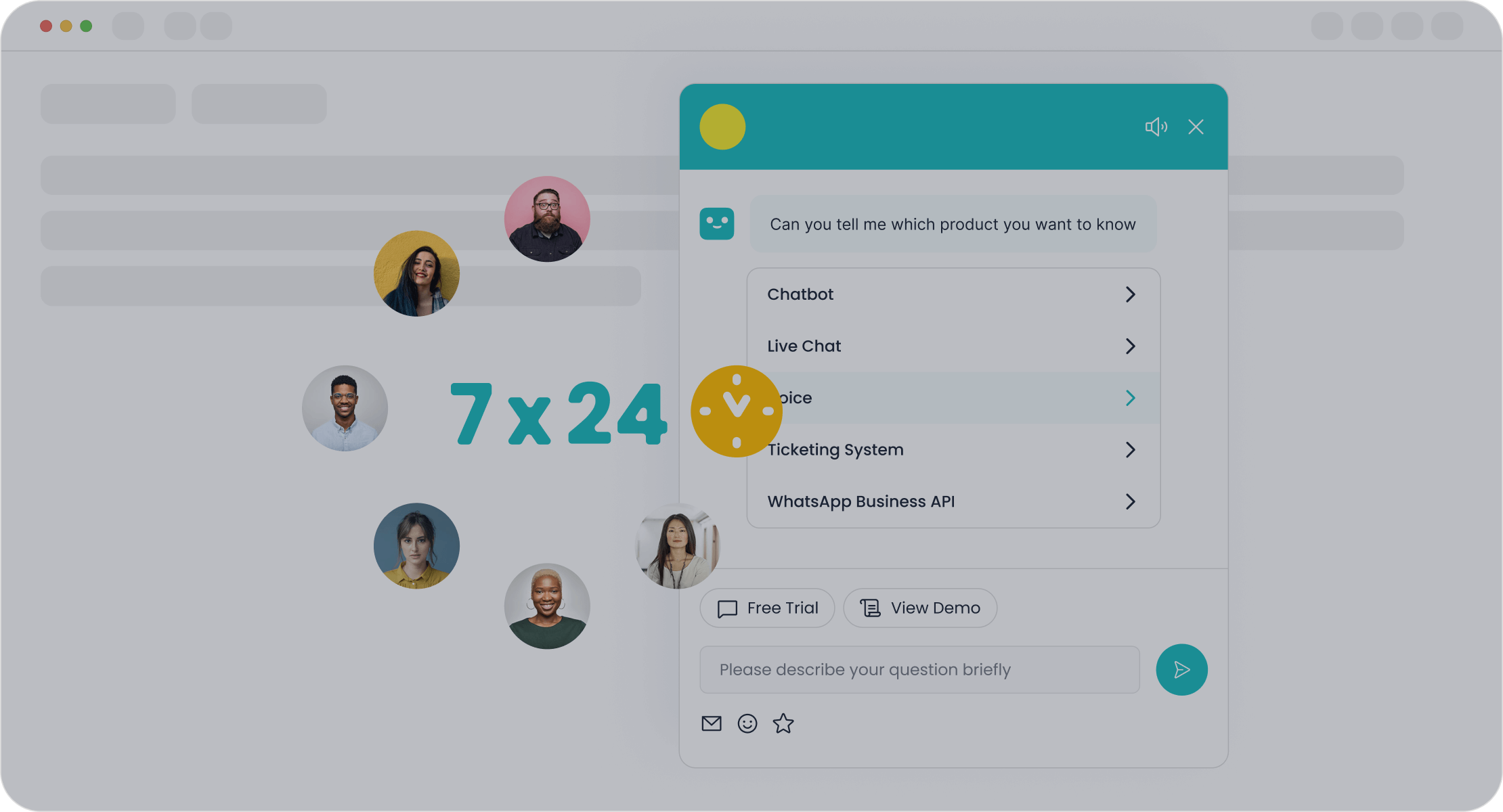
One of the most effective strategies is to provide instant, 24/7 support for common issues. An AI Chatbot can autonomously resolve simple queries, which is crucial since 53% of shoppers will abandon a purchase if they cannot get immediate help. This frees up your human agents to handle more complex problems. These proactive strategies directly improve customer service and customer satisfaction.
A perfect example of these strategies in action is OPPO, a leading smart device innovator. Facing high inquiry volumes, OPPO implemented Sobot's chatbot and ticketing system to improve customer service.
- The chatbot handled repetitive questions, achieving an 83% resolution rate.
- This human-machine cooperation allowed agents to focus on complex issues, improving the overall customer experience.
- The result was a 57% increase in repurchase rate, a direct indicator that they were able to reduce customer churn by proactively addressing customer needs.
This case shows how combining the right tools and strategies for churn prevention leads to significant gains in customer retention and loyalty.
Step 4: Measure Impact and Refine
Finally, you must measure the effectiveness of your churn prevention strategies and continuously refine them. To do this, you need to track the right Key Performance Indicators (KPIs). These metrics will tell you if your efforts to improve customer service are successfully reducing customer churn.
Here are some of the most important KPIs to monitor:
| KPI | What It Measures | Why It's Important for Churn Prevention |
|---|---|---|
| Churn Rate | The percentage of customers you lose over a period. | The ultimate measure of whether your strategies are working. |
| Customer Retention Rate | The percentage of customers who stay with you. | The inverse of churn; an increase shows your strategies are effective. |
| Customer Lifetime Value (CLV) | The total revenue a customer generates over time. | A rising CLV indicates customers are staying longer and are more valuable. |
| Net Promoter Score (NPS) | Customer likelihood to recommend your brand. | An improving score suggests higher customer satisfaction and loyalty. |
To refine your strategies, use A/B testing. You can test different retention offers, email subject lines, or chatbot scripts to see what works best. For example, you could offer one group of at-risk customers a 10% discount and another group a free month of service. By analyzing the results, you can determine which incentive is more effective at preventing customer churn. This data-driven approach ensures your strategies are always improving.
Choosing the Right AI Customer Service Analytics Tools
Selecting the right tools is crucial for your churn reduction strategies. The best AI customer service analytics tools not only provide data but also empower you to act on it. You need a solution that fits your team's workflow, business needs, and budget. This section will guide you through choosing the perfect tools for your strategies.
Core Features: Dashboards, Integrations, and Alerts
Your first step is to identify the essential features you need. Look for AI customer service analytics tools that offer a complete view of your operations. A unified workspace with omnichannel support is fundamental. It brings all your customer conversations into one place, which is a key feature of the Sobot platform. This integration is vital for effective strategies.
Key features to look for include:
- Real-Time Dashboards: These give you a live view of churn risk and customer satisfaction trends.
- Automated Alerts: Get notified instantly via email or Slack when a customer's risk score increases, allowing for immediate action.
- Powerful Analytics: The tool should analyze text and speech to identify topics and sentiment, helping you understand the "why" behind customer feelings. These analytics are the core of your churn prevention strategies.
Comparing Tool Types for Your Business
Next, you must compare different types of tools. You can choose standalone analytics software or an all-in-one customer service platform. Standalone tools offer deep analytics but often require complex integrations. All-in-one solutions provide a more seamless experience.
Platforms like Sobot combine a Chatbot, Ticketing System, and powerful analytics in one package. This approach offers a significant advantage. You do not just analyze feedback; you can immediately deploy strategies to address it. For example, you can use the analytics to identify a common problem and then configure your chatbot to resolve it automatically. This comprehensive approach improves customer satisfaction and makes your retention strategies more efficient.
Matching a Solution to Your Budget
Finally, you need to find a solution that matches your budget. AI customer service analytics tools come with various pricing models. Common options include monthly subscriptions, usage-based fees, and tiered plans. Subscription tiers often start around $50-$500 per month for small to medium-sized businesses. Enterprise packages require custom pricing based on your specific needs. When evaluating costs, consider the total value. A tool that helps you execute retention strategies and reduce churn offers a strong return on investment.
You can transform your approach to customer retention. AI service analytics helps you move from reactive fixes to proactive churn prevention. Solutions like Sobot empower you to analyze feedback effectively. By understanding your customer feedback, you can build powerful strategies for churn prevention. This helps you reduce churn and build loyalty.
Start your customer service journey today. Explore how Sobot's Omnichannel Solution and AI Chatbot can help you analyze feedback from every channel to reduce churn.
FAQ
What is AI service analytics?
AI service analytics uses artificial intelligence to analyze customer feedback from channels like chats and calls. It helps you understand customer feelings and identify problems. This process gives you the insights needed to prevent customer churn before it happens.
How quickly can I see a reduction in customer churn?
You can see early results within the first few months. As the AI model gathers more data, its predictions become more accurate. Consistent action on these insights will lead to a steady decline in your customer churn rate over time.
Are these tools suitable for small businesses?
Yes, many AI analytics platforms offer scalable pricing plans suitable for small businesses. Solutions like Sobot provide all-in-one tools that are affordable and easy to implement. They help you reduce customer churn without needing a large budget or a dedicated data science team.
See Also
AI Customer Service Software: Supercharging Efficiency in Modern Businesses
An In-Depth Look at AI Solutions for Enterprise Call Centers
The 10 Best Call Center Analytics Software Platforms for 2024
Your Comprehensive Guide to Call Center Artificial Intelligence Software

