Your 2025 Guide to Repeat Purchase Rate

Your Repeat Purchase Rate (RPR) is the percentage of your customer base making repeat purchases. A high repeat customer rate signals a healthy business because you have a 60-70% chance of selling to an existing customer. These return customers make profitable purchases. A great customer experience, perhaps guided by Sobot through its Sobot call center or Sobot AI, boosts your repeat customer rate. Do you know your repeat customer rate or how to calculate repeat purchase rate for each customer?
How to Calculate Repeat Purchase Rate
Understanding how to calculate repeat purchase rate is the first step toward improving it. This key metric shows you how loyal your customers are. You can use a simple formula to find your number. This helps you measure business health effectively.
The Simple RPR Formula
You can find your repeat customer rate with a straightforward calculation. This formula gives you a clear percentage.
Repeat Purchase Rate = (Number of Customers Who Purchased More Than Once) / (Total Number of Customers) x 100
This calculation reveals the portion of your customer base that returns for more purchases. A higher number often points to greater customer satisfaction.
Choosing the Right Time Frame
Selecting the right time frame is crucial for an accurate repeat customer rate. A common mistake is using a period that is too short. For example, a 30-day window might work for coffee but not for electronics. The product's buying cycle directly impacts how often a customer will return.
| Product Type | Buying Lifecycle | Expected Purchase Frequency |
|---|---|---|
| Razors / Consumables | Short | More often |
| Mattresses / Grills | Longer | Less often |
Your time frame should match your product's natural lifecycle. Avoid calculating your rate only during seasonal peaks like holidays. This can create a misleadingly high number. Knowing how to calculate repeat purchase rate correctly means choosing a period that reflects typical customer behavior.
A Practical Calculation Example
Let's walk through how to calculate repeat purchase rate with an example. Imagine you want to find your rate for the last quarter.
- First, find the total number of unique customers who made a purchase during that quarter. Let's say you had 1,000 total customers.
- Next, identify how many of that same group made two or more purchases in the same period. Let's say 250 of them did.
- Finally, apply the formula: (250 / 1,000) x 100 = 25%.
Your repeat customer rate for the quarter is 25%. Each customer is a valuable part of this equation. This simple process gives you a powerful insight into customer loyalty.
What Is a Good Repeat Purchase Rate in 2025?
After you learn how to calculate repeat purchase rate, you will naturally ask what a good number looks like. The answer is not a single magic number. A good repeat customer rate depends heavily on your industry, product type, and business goals.
General Industry Benchmarks
You can start by looking at general benchmarks to see where you stand. For most ecommerce businesses, a repeat customer rate between 20% and 30% is a solid target. Some industries see even higher rates due to the nature of their products.
For example, categories like health supplements and beauty products often have a loyal customer base that makes regular purchases.
Here is a quick look at average rates for a few popular ecommerce categories:
| Category | Repeat Purchase Rate |
|---|---|
| Fashion & apparel | ~25–26% |
| Beauty & cosmetics | ~25.9% |
| Health & supplements | ~29% |
These numbers give you a starting point for setting your own goals.
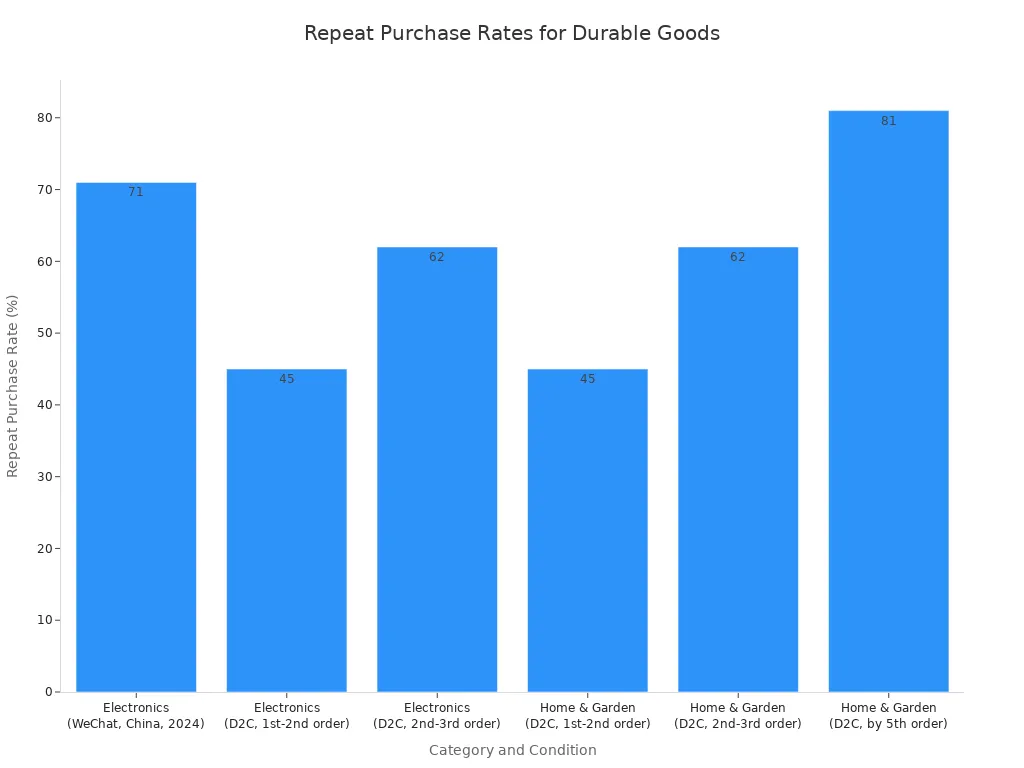
Rates for Consumables vs. Durables
Your product type is a major factor. Consumable goods have a much different purchase cycle than durable goods.
- Consumables: These are products a customer uses up and buys again, like coffee or cosmetics. Brands like Luckin Coffee expect frequent repeat purchases. Their business model relies on a high repeat customer rate.
- Durables: These are items a customer buys infrequently, like electronics or appliances. A customer might buy a device from Philips or HP and not need another one for years.
Because of this difference, the repeat purchase rate for durables is often lower. However, a strong brand can still encourage a customer to return for their next big purchase. Even with long buying cycles, a positive experience can create a loyal customer for life.
Context for Your Business
Ultimately, a good repeat customer rate is one that supports your business's health and growth. For a startup, any consistent repeat business is a great sign. It shows you have found a product that people want to use again and again. An established ecommerce brand might aim for a higher rate to maximize profitability. Your business model also matters. A subscription service will naturally have a higher rate than a one-time purchase model. The key is to understand your context and aim for steady improvement over time.
Why Your Repeat Purchase Rate Matters
Your repeat customer rate is more than just a number; it is a vital sign of your business's health. Understanding why this metric is so important helps you see how it can directly impact a business. A strong repeat customer rate shows that each customer finds value in what you offer, which fuels sustainable growth.
Drive Higher Profitability
Return customers are a direct path to higher profits. They already trust your brand, so you spend less to convince them to buy again. Research from Bain & Company shows that even a small 5% increase in customer retention can boost profits by 25% to 95%. This happens because a loyal customer tends to spend more over time. In fact, repeat customers can spend nearly five times more than first-time buyers. A higher percentage of repeat customers means more stable revenue for your business.
Lower Acquisition Costs
Focusing on your repeat customer rate helps you save money. Acquiring a new customer can be five times more expensive than keeping an existing one. When you have a strong base of loyal buyers, you can reduce your spending on costly marketing campaigns.
By keeping your current customer base happy, you lower your overall Customer Acquisition Cost (CAC). This allows you to invest your budget more wisely in other areas of your business.
Your Repeat Customer Rate as a Loyalty Metric
Your repeat customer rate is a clear indicator of customer loyalty. It works hand-in-hand with other metrics like the Net Promoter Score (NPS). The creator of NPS found a strong link between a customer's willingness to recommend a brand and their repeat purchase behavior. A happy customer is more likely to become a repeat buyer. This loyalty creates a stable foundation for your company, as each satisfied customer is more likely to stick around and explore more of your products.
Fuel Word-of-Mouth Marketing
A happy customer loves to share their positive experiences. This turns them into powerful brand advocates for your business.
- Repeat customers introduce 50% more people to a brand than one-time buyers do.
- About 60% of a loyal customer group will talk about their favorite brands with friends.
This word-of-mouth marketing is free and highly effective. Each new customer brought in by a referral helps grow your business without you spending an extra dime on advertising.
5 Strategies to Boost Your Repeat Purchase Rate
Improving your repeat customer rate does not happen by accident. You need a clear plan. These five strategies can help you turn first-time buyers into loyal fans who make repeat purchases. Each strategy focuses on creating a better experience for your customer.
Implement a Customer Loyalty Program
A customer loyalty program gives people a reason to come back. You reward your customer for their continued business. This makes them feel valued and encourages future purchases. Many successful ecommerce brands use this strategy.
- Starbucks uses its mobile app to offer personalized rewards. This drives frequent visits from each customer.
- Monos generated over $8 million in revenue with its tiered rewards program.
- Topps rewards customers for purchases and referrals, building a strong community.
Tiered programs are especially effective. Customers spend more to reach the next level of rewards. This increases their purchase frequency and average order value. Loyalty program members can spend up to 40% more than non-members. The data below shows how much a program can impact an ecommerce business.
| Company | Repeat Purchase Rate (Members) | Repeat Purchase Rate (Non-members) |
|---|---|---|
| Jordan Craig | 68% | 21% |
| Dixxon | Up to 6 orders | Up to 2 orders |
Leverage Personalized Marketing
Personalized marketing makes your customer feel seen. You use their data to send relevant offers and content. This shows you understand their needs. A great example is sending personalized product recommendations. About 56% of online shoppers are more likely to return to an ecommerce site that offers them.
Abandoned cart emails are another powerful tool. Five Below saw a 41% open rate on these emails, with 21% of recipients making a purchase. You can also re-engage past buyers with targeted campaigns.
Sobot's Marketing Solution helps you do this at scale. It uses a unified customer data platform to create personalized campaigns across channels like WhatsApp and SMS. You can reactivate a dormant customer with special offers, boosting their lifetime value and your repeat customer rate.
Master Post-Purchase Upselling
The moments after a purchase are a golden opportunity. Your customer is already engaged with your brand. You can use this time to suggest other valuable products. This is known as post-purchase upselling or cross-selling. Returning customers often spend 67% more than new ones, so this is a key moment to build loyalty.
You can use several effective techniques:
- One-Click Bundles: Offer a discount on complementary products that a customer can add with a single click.
- Email Upselling: Use order and shipping confirmation emails to present personalized offers. These emails have high open rates.
- Thank You Page Offers: Show related products on the thank you page right after a customer completes their order.
These offers have impressive conversion rates. Automated post-purchase emails can convert at 10% or higher. SMS campaigns can see conversion rates between 14% and 33%.
Deliver Exceptional Customer Service
Great customer service builds trust. When a customer has a positive experience, they are more likely to buy from you again. In fact, 88% of customers say good service makes them more likely to make another purchase. Fast, helpful, and friendly support can turn a problem into a moment of loyalty.
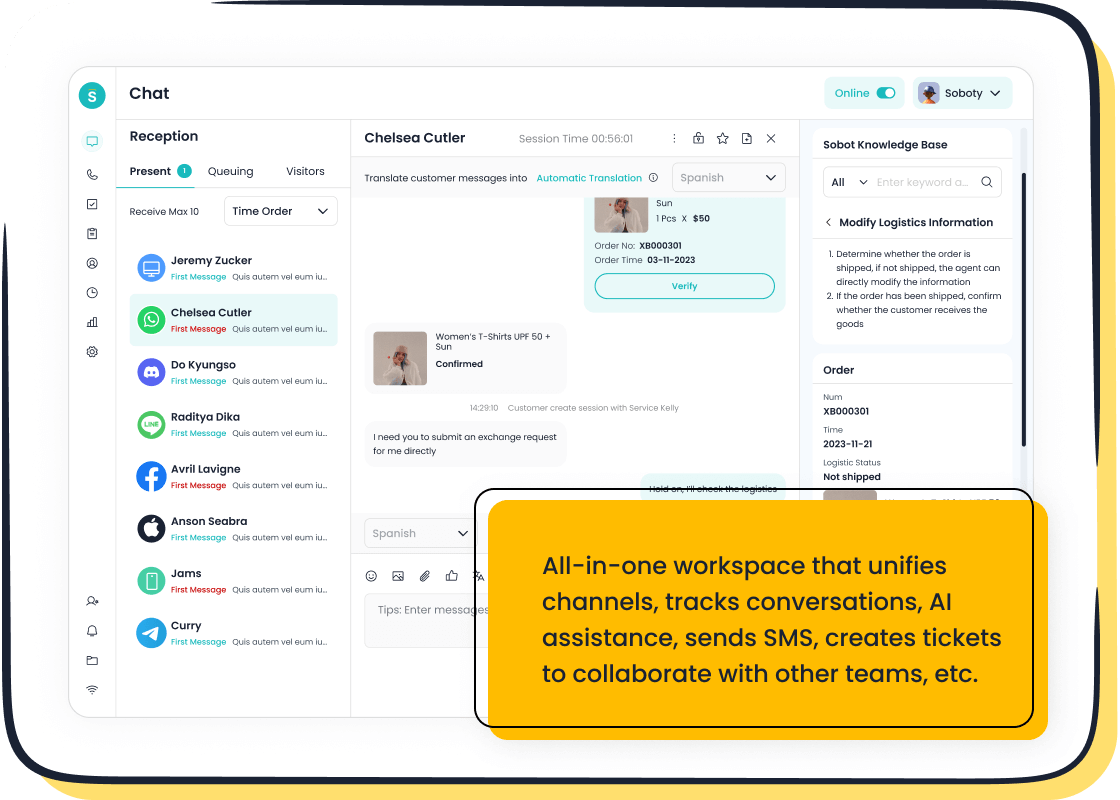
You need the right tools to provide this level of service. Sobot's Live Chat helps you deliver instant, omnichannel support. You can meet your customer on their preferred channel, whether it is your website, app, or social media. The platform unifies all conversations into one workspace. This allows your agents to provide personalized and efficient service that fosters loyalty.
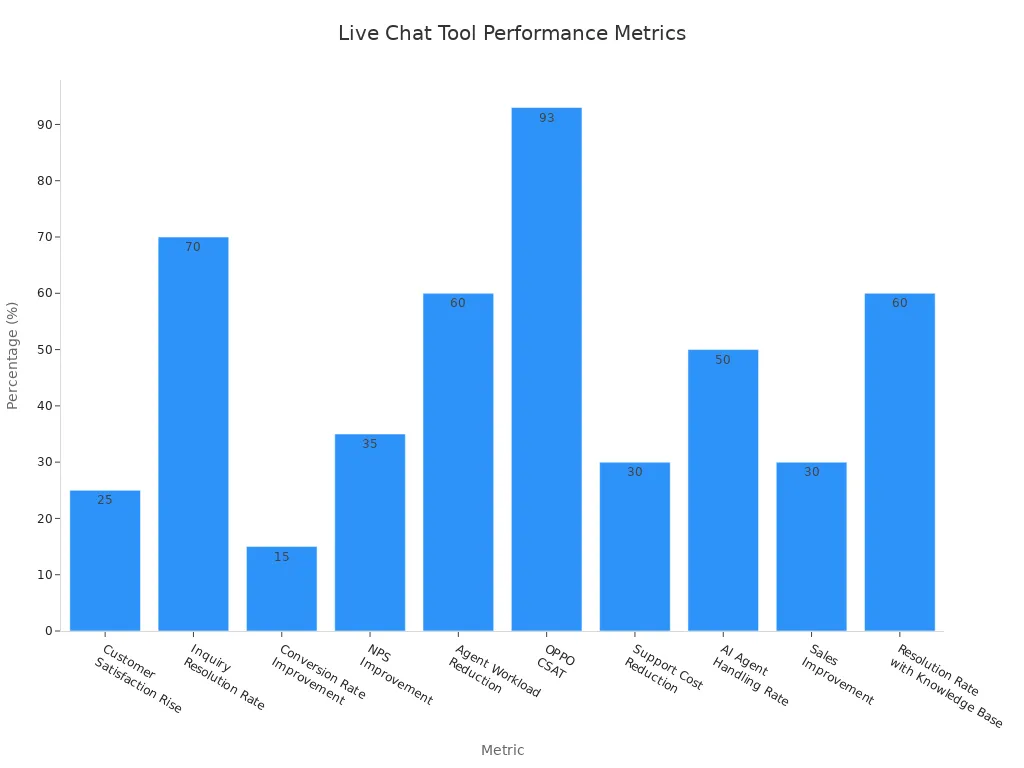
The impact of excellent service is clear. Just look at the smart device innovator, OPPO.
By using Sobot's solutions to improve service efficiency with human-machine cooperation, OPPO achieved an 83% chatbot resolution rate. This led to a remarkable 57% increase in their repurchase rate. This real-world example shows how investing in customer service directly boosts your ecommerce success.
Act on Customer Feedback
Your customers are your best source of information. You should actively collect their feedback through surveys, reviews, and direct conversations. This shows each customer that you value their opinion. More importantly, you must act on what you learn.
When you make changes based on customer suggestions, you build incredible trust. You are showing them that their voice matters. This strengthens their connection to your brand. A customer who feels heard is a customer who will stick around. This simple act of listening and responding can be one of the most powerful drivers of your repeat customer rate.
Your repeat customer rate is more than a number. It reflects the loyalty of each customer and drives sustainable growth. Improving your repeat customer rate is one of the most cost-effective ways to increase revenue. A happy customer will return, and a loyal customer will spend more. This boosts your repeat customer rate.
Your challenge this week: Calculate your current rate. Then, choose one strategy to implement this quarter to turn each new customer into a returning customer.
FAQ
What is repeat purchase rate?
Your repeat purchase rate shows the percentage of customers who buy from you again. You calculate it over a set period to measure customer loyalty and business health. A higher rate means more customers are choosing to return to your brand.
How often should I calculate my repeat customer rate?
You should calculate your rate based on your product's buying cycle. For items bought often, like coffee, check it monthly. For products bought rarely, like electronics, a quarterly or yearly check works best. This gives you a more accurate view of your repeat customer rate.
Is repeat purchase rate the same as customer retention rate?
No, they are different but related metrics. Repeat purchase rate tracks how many customers make a second purchase. Customer retention rate measures how many customers you keep over a longer period. Both help you understand loyalty.
What tools can help improve my repeat customer rate?
You can use several tools to boost your repeat customer rate. Loyalty program software rewards returning buyers. Personalized marketing platforms re-engage customers with targeted offers. Exceptional support tools, like Sobot's Live Chat, create positive experiences that encourage customers to return.
See Also
Leading 10 Voice Of Customer Platforms To Consider In 2024
The 10 Premier Customer Service Solutions For Businesses In 2024
Unveiling The Top 10 Call Center Analytics Tools For 2024
Exploring The 10 Best IVR Interactive Voice Response Systems 2024
Achieve Greater Live Chat Customer Satisfaction With These 10 Tips

