How to Build an Omnichannel Call Center

An omnichannel call center unifies every channel of customer communication into a single platform. You need this unified approach because 76% of customers expect consistent interactions across departments. This guide provides your blueprint for building an omnichannel contact center to deliver a seamless customer experience. You can enhance satisfaction and efficiency, just as Sobot helped Samsung achieve a 97% customer satisfaction rate. The Sobot call center, powered by Sobot AI, helps you create the ideal omnichannel contact center for your business.
Why Build for an Improved Customer Experience?
Building an omnichannel contact center is a strategic investment in an improved customer experience. To understand its value, you must first distinguish it from a multichannel approach. While both use multiple channels, their impact on customer service and business outcomes is vastly different.
Omnichannel vs. Multichannel
The Siloed Multichannel Model
A multichannel model offers customer support on several platforms, like email, chat, and phone. However, these channels operate in isolation. This creates a fragmented journey where information is not shared between teams or systems. For example, a customer might report an issue via live chat and later follow up on social media, only to find the new agent has no record of their previous conversation.
This forces customers to repeat themselves, a major point of friction. In fact, studies show that 87% of consumers are frustrated by having to repeat their issues across multiple channels.
This disconnected approach leads to longer resolution times, inconsistent customer service, and frustrated customers.
The Unified Omnichannel Model
An omnichannel contact center, in contrast, integrates all platforms into a single, unified system. It creates a consistent cross-channel experience where conversations flow seamlessly from one channel to the next. When you adopt an omnichannel strategy, your agents gain a complete view of all customer interactions, regardless of the channel. This means customers never have to repeat their story, saving them time and effort. This cohesive experience directly leads to faster resolutions and higher satisfaction.
Core Business Benefits
Adopting an omnichannel strategy delivers tangible results that go far beyond just making customers happy. It strengthens your entire business operation.
Boosting Customer Loyalty
A seamless journey builds trust and loyalty. When customers feel understood and valued, they are more likely to stay with your brand. The data is clear: companies with strong omnichannel customer engagement strategies retain an average of 89% of their customers, compared to just 33% for companies with weak engagement. This dramatic increase in retention directly impacts your bottom line.
Increasing Agent Efficiency by 30%
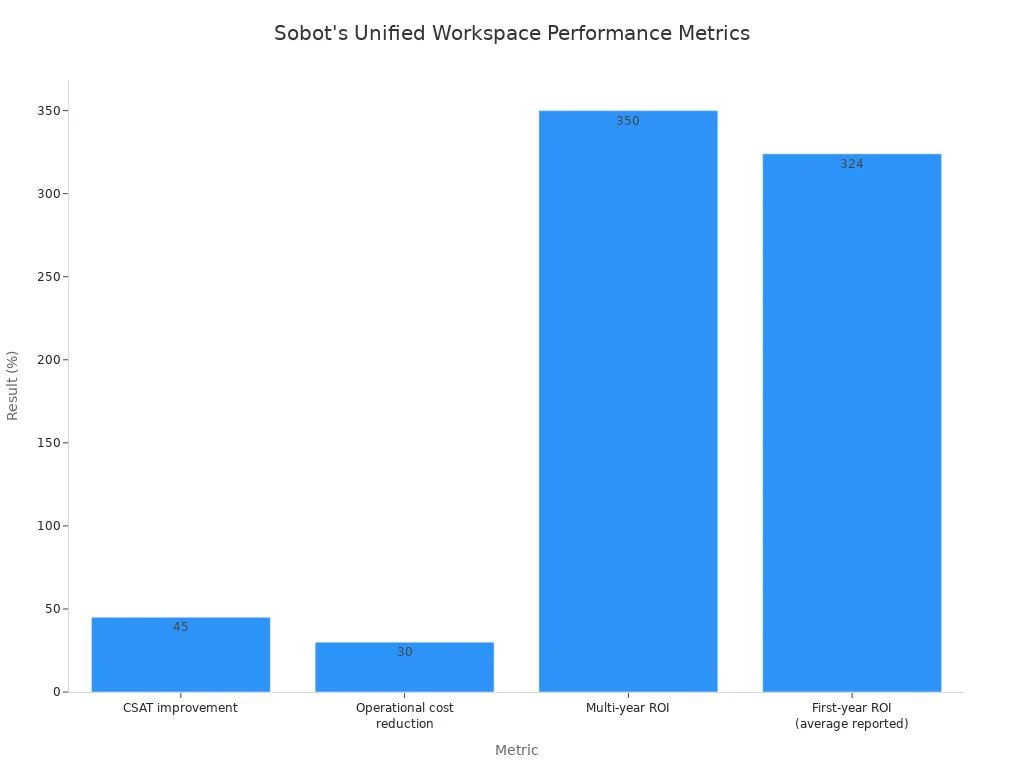
An omnichannel contact center empowers your agents to perform at their best. By consolidating all tools and customer data into one unified workspace, you eliminate the need for agents to switch between different systems. This was a key factor for Samsung, which saw a 30% increase in agent efficiency after implementing Sobot's solution. Agents can handle interactions more quickly and effectively, reducing handle times and improving productivity.
Unlocking Data for Personalization
A unified platform is a goldmine of customer insights. Every interaction across every channel contributes to a comprehensive customer profile. You can analyze this data to understand customer preferences, anticipate their needs, and meet their expectations. This allows you to move from reactive customer support to proactive, personalized engagement, delivering the cohesive and personalized care experience that modern customers demand.
Your 5-Step Omnichannel Call Center Blueprint

Transforming your support model requires a clear plan. This five-step blueprint provides a practical roadmap for building a successful omnichannel contact center. It guides you from initial strategy to final optimization, ensuring you create a system that enhances both customer satisfaction and operational efficiency.
Step 1: Map the Customer Journey
Before you can build a unified experience, you must understand the current one. Mapping the customer journey reveals how customers interact with your brand across all touchpoints. This process helps you identify pain points and opportunities for improvement.
Analyze Customer Touchpoints
Start by adopting a customer-centric approach. Document every interaction a customer has with your business, from initial awareness to post-purchase support. These touchpoints might include visiting your website, reading an email, calling support, or engaging on social media. For example, a global brand like Samsung had to understand how its customers moved between its website, social media pages, and support lines. Analyzing these interactions helps you see your business through your customers' eyes.
Prioritize Essential Channels
You do not need to be everywhere at once. Use your journey map to identify which channels your customers use most frequently. Focus your initial omnichannel strategy on these essential platforms. This ensures you invest resources where they will have the greatest impact. As your omnichannel contact center matures, you can expand to include other channels.
Set Clear Goals and KPIs
Define what success looks like for your omnichannel strategy. Your goals should be specific, measurable, and aligned with broader business objectives. Key Performance Indicators (KPIs) will help you track progress.
Key Metrics to Monitor:
- Customer Experience: Customer Satisfaction (CSAT), Net Promoter Score (NPS), and Customer Effort Score (CES).
- Operational Efficiency: Average Handle Time (AHT), First Contact Resolution (FCR), and Cost Per Contact.
- Agent Performance: Occupancy Rate and Quality Assurance Scores.
Setting these benchmarks early allows you to measure the impact of your new system accurately.
Step 2: Choose Your Omnichannel Contact Center Platform
The right technology is the backbone of your omnichannel call center. Your platform must unify communications, empower agents, and scale with your business. A powerful cloud-based contact center solution simplifies this process.
Must-Have Platform Features
A true omnichannel contact center platform offers more than just support for multiple channels. It integrates them seamlessly. Look for these essential features:
- Unified Interface: A single workspace that gives agents a complete view of all customer interactions and data.
- Seamless Channel Integration: The ability to connect voice, email, chat, and social media into one continuous conversation thread.
- AI and Automation: Tools like chatbots and AI-powered agent assistance to handle repetitive tasks and provide instant support.
- Intelligent Routing: Skills-based or AI-backed routing that directs customers to the best-qualified agent or resource.
- Reporting and Analytics: A centralized dashboard to monitor performance across all channels in real-time.
Evaluating Vendor Scalability
Your business will grow, and your platform must grow with it. When evaluating vendors, estimate your current and future user counts and interaction volumes. Create a checklist of your needs, categorizing them into "must-haves" and "should-haves." A scalable cloud platform ensures you can add new agents, channels, and features without disrupting your operations.
Planning for Future Growth
Choose a partner committed to innovation. The best platforms continuously evolve, incorporating new technologies like advanced AI and automation. This future-readiness ensures your customer service stays ahead of changing customer preferences and market trends. Your omnichannel contact center should be a long-term investment that adapts to your needs.
Step 3: Integrate Core Tools and Systems
An omnichannel contact center cannot operate in a vacuum. Integration with your existing business systems is crucial for creating a single source of truth and enabling truly personalized interactions.
Creating a Single Source of Truth
Data fragmentation is a major obstacle to great customer service. When your CRM, e-commerce platform, and support software do not communicate, agents lack the context they need. A key challenge is ensuring data synchronization between systems. Your omnichannel platform must integrate with your CRM to create a unified customer profile, giving agents a 360-degree view of every customer.
Connecting Your Knowledge Base
An integrated knowledge base empowers both agents and customers. It provides agents with instant access to accurate information, which is essential for improving First Contact Resolution (FCR). When agents can pull up articles, guides, and previous resolutions without leaving their workspace, they can solve issues faster. This also powers self-service options like chatbots, allowing customers to find answers on their own.
Linking Backend Business Systems
To deliver seamless support, your agents need visibility into backend operations. For Samsung, a critical step was implementing a solution from Sobot that offered deep integration with its internal ERP and ticketing systems. This connection allowed agents to check order statuses, process returns, and manage repairs without switching applications. This level of integration transforms your support team from a simple call center into a true resolution hub.
Step 4: Empower Agents for Personalized Interactions
Technology alone cannot create a great customer experience. Your agents are the human element that turns a powerful platform into a source of genuine connection. To enable truly personalized interactions, you must invest in their development. This means equipping them with the right skills, mastering the new tools, and fostering a customer-first mindset.
Develop a Comprehensive Training Program
A successful transition to an omnichannel contact center requires a training program that goes beyond basic software tutorials. Your program should be a continuous cycle of learning, practice, and feedback. It must prepare agents for the technical and interpersonal demands of a unified environment. A blended learning model that combines self-paced e-learning, hands-on workshops, and peer coaching is highly effective. Use real-world scenarios from your own support tickets and call logs to make the training relevant and impactful.
Master the Unified Agent Desktop
The unified desktop is your agent's command center. Effective training ensures they can navigate it with confidence. Your training modules should cover core functionalities and configurations.
- System Fundamentals: Teach agents how to access and use the unified desktop. Explain the principles of automatic call distribution (ACD) and intelligent routing.
- Core Functions: Provide hands-on practice for managing interactions across different channels, accessing the integrated knowledge base, and utilizing customer data from the CRM.
- Advanced Features: Train agents on more complex functions, such as executing warm transfers between channels and understanding how to handle a ring-no-answer condition correctly.
Mastery of this single interface allows agents to focus on the customer, not the technology.
Cultivate Cross-Channel Soft Skills
In an omnichannel environment, soft skills are more critical than ever. Agents must communicate effectively across voice, chat, and email, adapting their tone and style to each channel. Your training should emphasize these key competencies:
- Set Clear Objectives: Define specific training goals, such as teaching agents to use empathetic phrasing when a customer expresses frustration.
- Practice with Realistic Scenarios: Use role-playing exercises to simulate challenging interactions, allowing agents to practice active listening and problem-solving in a safe environment.
- Analyze and Coach: Use interaction analytics to review conversations across all channels. This helps identify skill gaps and provides opportunities for targeted, in-the-moment coaching to improve performance.
By developing these skills, your agents can build stronger relationships with customers and deliver consistently high-quality service.
Step 5: Launch, Monitor, and Optimize
With your platform integrated and your team trained, you are ready to go live. A successful launch is not the end of your journey but the beginning of a continuous improvement cycle. A strategic launch, diligent monitoring, and data-driven optimization will ensure your omnichannel contact center delivers long-term value.
Plan Your Launch Strategy
A phased launch minimizes disruption and reduces risk. Instead of switching everything at once, roll out your new system in manageable stages. This allows your team to adapt gradually and lets you resolve issues before they impact all customers.
- Phase 1: Start Small: Begin by migrating one or two high-volume channels, like voice and email, to the new platform. This allows you to stabilize the core system.
- Phase 2: Layer in Channels: Once the initial channels are running smoothly, gradually add others like chat and social media.
- Phase 3: Full Deployment: After all channels are integrated and the team is confident, complete the full rollout.
This methodical approach ensures a smooth transition for both your agents and your customers.
Monitor Key Performance Metrics
From day one, you must track the KPIs you defined in Step 1. Your omnichannel platform should provide a centralized dashboard for real-time monitoring. Keep a close eye on metrics related to customer experience, operational efficiency, and agent performance. Consistent monitoring helps you confirm that your new omnichannel contact center is meeting its goals. For Samsung, this focus on metrics was crucial to achieving its impressive 97% customer satisfaction rate.
Use Analytics for Continuous Improvement
Your omnichannel contact center generates a wealth of data. Use analytics to turn this data into actionable insights for continuous optimization. Analytics can help you identify friction points in the customer journey where people struggle or abandon a process. For example, you might discover that a confusing checkout page leads to a spike in support calls.
By analyzing interactions across channels, you can pinpoint agent performance bottlenecks, such as slow email response times, and provide targeted training. These insights also allow you to optimize agent schedules based on peak interaction times for different channels, ensuring you always have the right resources in place. This data-driven approach transforms your support operation from reactive to proactive, creating a truly seamless experience for your customers.
Powering Your Omnichannel Call Center with Sobot
Following the five-step blueprint requires a powerful technology partner. Sobot provides an all-in-one omnichannel contact center solution that simplifies this entire process. You can unify your customer service channels and empower your team with a single, intelligent cloud platform.
The Sobot Omnichannel Solution
Sobot's solution is designed to create a cohesive customer experience from the ground up. It combines a user-friendly interface with powerful backend capabilities.
A Unified Workspace for Agents
Sobot consolidates every customer interaction into one unified workspace. This gives your agents a complete view of the customer journey, eliminating the need to switch between systems. This single view boosts productivity and improves customer service outcomes.
AI-Driven Automation with Chatbots
You can automate repetitive tasks with Sobot’s AI-powered chatbots and Voicebots. These tools provide 24/7 customer support for common questions, freeing your agents to handle more complex issues. As an official WhatsApp Business Solution Provider (BSP), Sobot helps you engage customers on their preferred messaging apps.
Seamless Integration Capabilities
A successful omnichannel contact center depends on strong integration. Sobot connects effortlessly with your core business systems, including CRMs and e-commerce platforms. This seamless support ensures your agents have all the data they need for personalized and efficient customer service.
Key Features of the Sobot Voice/Call Center
Sobot’s cloud call center offers robust features that are both powerful and easy to manage. You can build a sophisticated omnichannel call center without a complex setup.
Drag-and-Drop Intelligent IVR
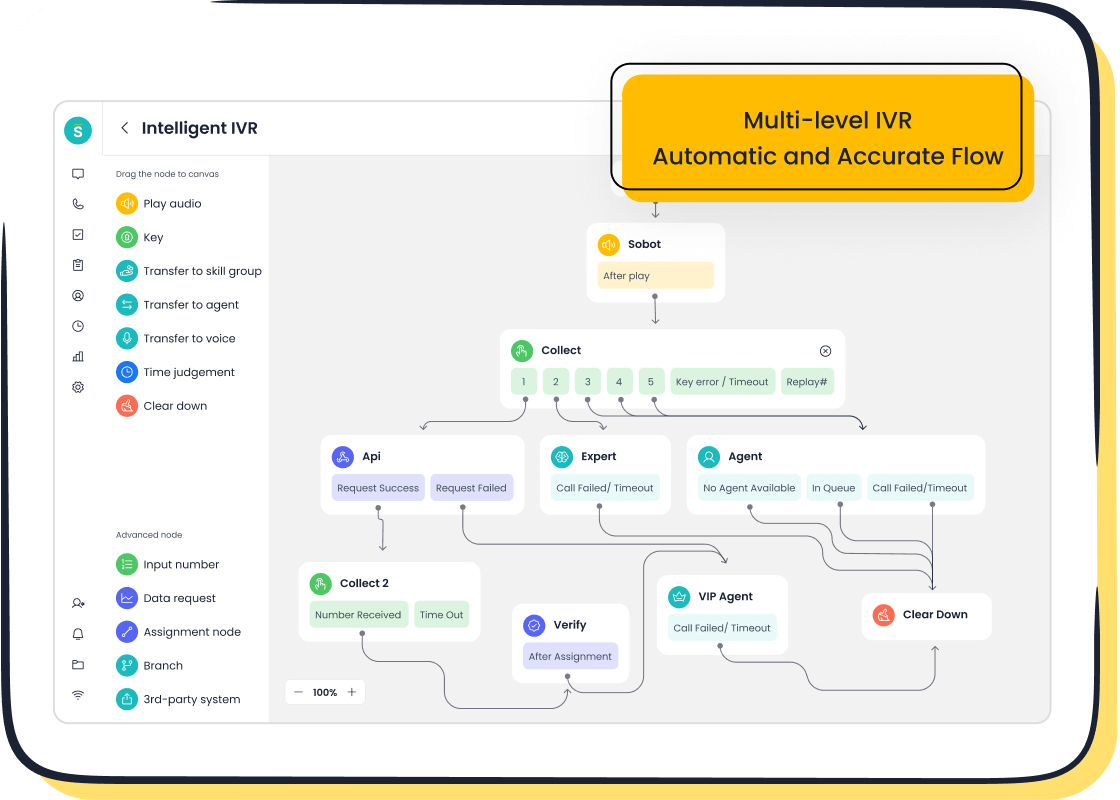
You can easily design and deploy custom call flows with the drag-and-drop Intelligent IVR (IVR) builder. This tool lets you create personalized greetings and menus to guide callers to the right agent or department in real-time.
Smart Call Routing and Tracking
Sobot ensures every customer connects with the best agent for their needs. The platform offers advanced call routing and distribution options to optimize your workflow.
- Routing & IVR
- Intelligent distribution
- Call routing
- Automated routing
Global Number Availability
You can expand your business globally with Sobot. The platform provides access to phone numbers worldwide, allowing you to establish a local presence in any market from a single cloud solution.
Achieving a Better Customer Experience
Sobot’s platform turns data into opportunities, helping you deliver an exceptional customer experience.
Proactive Insights and Analytics
Sobot's 'AI Insight' dashboard gives you a unified view of your entire operation. It provides over 300 indicators to help you identify operational gaps and make informed adjustments. You gain real-time customer insights, including shifts in sentiment, allowing you to respond proactively.
Secure and Stable Operations
Your omnichannel contact center needs to be reliable. Sobot guarantees high performance with a 99.99% uptime SLA. This secure and stable integration ensures your customer support operations run smoothly around the clock.
Preparing Your Team for the Omnichannel Transition

Technology is only one part of your omnichannel contact center. A successful transition also requires you to prepare your team for new roles, a new culture, and new ways of measuring success. You must invest in your people to deliver exceptional customer service.
Redefining Agent Roles
From Specialist to Universal Agent
Your agents must evolve from channel specialists into universal agents. A universal agent can manage interactions across multiple channels, providing a consistent experience for customers. This broader role empowers them to resolve issues more effectively. For deeply technical problems, you can create a "Skills Academy" within your team. This allows certain agents to become subject matter experts who support their colleagues with complex queries.
New Tiered Support Structures
The universal agent model changes your support structure. Universal agents become your new front line, capable of handling a wide variety of inquiries. You can then reserve specialized agents for a higher tier. This structure ensures that customers get the right level of support quickly, improving the efficiency of your customer service operation.
Fostering a Customer-Centric Culture
A customer-centric culture is the foundation of a great omnichannel contact center. Every decision should aim to improve the experience for your customers.
Aligning Goals with CSAT
You should align your team's performance goals directly with customer satisfaction (CSAT). When agents are measured by how happy they make customers, their focus shifts from speed to quality. This alignment ensures that everyone is working toward the shared goal of meeting customer expectations.
Empowering Agents with Information
Empowerment is key to excellent customer service. You must give your agents the tools and customer insights they need to make decisions that benefit the customer.
To build this culture, you should:
- Invest in training on omnichannel best practices and CX skills like empathy.
- Provide access to unified data so agents understand customer history and preferences.
- Recognize and reward employees who deliver outstanding customer service.
Managing Omnichannel Performance
Your methods for measuring performance must adapt to the new environment. A unified approach to management is essential for your omnichannel contact center.
New KPIs for a Unified Environment
Traditional, channel-specific KPIs are no longer enough. You need new metrics that measure the entire customer journey. Focus on KPIs like First Contact Resolution (FCR) across all channels and overall Customer Effort Score (CES). These metrics give you a clearer picture of your customer service performance.
Quality Assurance Across All Channels
Your quality assurance (QA) process must cover all customer interactions, not just phone calls. You need to adapt your evaluation criteria for the unique characteristics of each channel.
- Tailor QA forms for different interaction types like email, chat, and social media.
- Differentiate criteria to evaluate tone on a call versus clarity in a written message.
- Provide training on channel-specific best practices to meet customer expectations.
This ensures you maintain high standards and consistency across your entire operation.
Building an omnichannel call center is a strategic shift. You move toward a unified model for enhanced customer service. This omnichannel strategy boosts both efficiency and the customer experience. Your success depends on a clear plan and a powerful technology partner. Sobot provides the tools you need for better customer engagement.
Ready to improve your customer interactions and engagement? Embark on Your Contact Journey with Sobot today.
FAQ
What is the main difference between omnichannel and multichannel?
A multichannel approach uses several disconnected channels. An omnichannel call center integrates all channels into one unified platform. This creates a seamless conversation for the customer, so they never have to repeat information.
How long does it take to set up an omnichannel call center?
The timeline varies based on your needs. A phased launch is often best. You can start with core channels like voice and email in a few weeks. A full deployment depends on the complexity of your integrations.
Can I integrate my existing CRM with an omnichannel platform?
Yes. A key feature of a strong omnichannel call center is its ability to integrate with your existing systems. Sobot, for example, connects seamlessly with CRMs to create a single source of truth for customer data.
How does an omnichannel call center improve agent efficiency?
It provides a unified workspace. Agents see all customer history in one place and do not need to switch between apps. This reduces handle times and allows them to solve issues faster, boosting productivity by up to 30%.
What kind of training do agents need for an omnichannel transition?
Agents need training on two main areas:
- Technical Skills: Mastering the unified agent desktop and its features.
- Soft Skills: Adapting communication style for different channels like chat, email, and voice.
Is an omnichannel call center secure?
Yes, security is a top priority. Leading platforms like Sobot offer a 99.99% uptime SLA and ensure all data transfers are encrypted. This provides a stable and secure environment for your customer service operations.
See Also
Your Essential Handbook for Omnichannel Call Center Software Solutions
A 10-Step Blueprint for Deploying Omnichannel Contact Center Solutions Effectively
Unveiling the Key Features of Leading CRM Call Center Software
Optimizing Operations: How Call Center Automation Achieves Peak Efficiency
Elevate Performance: Leveraging Monitoring Strategies for Call Center Success

