Build an Ecommerce Chatbot to Boost Service

You want your ecommerce business to stand out. A modern AI chatbot is the key to enhancing your customer service. It provides the 24/7 support that 89% of shoppers now expect. This chat bot ecommerce tool also personalizes shopping and automates sales-boosting conversations. This guide offers a practical path to build a chatbot. You can create a powerful ecommerce chatbot using accessible tools like Sobot. This ecommerce chatbot will transform your service.
Why You Need a Chat Bot Ecommerce Strategy
A solid chat bot ecommerce strategy is no longer a luxury; it's a necessity for growth. An ecommerce chatbot helps you meet modern customer expectations and drives real business results. This tool transforms your customer support and boosts your sales pipeline. Let's explore why you need an ecommerce chatbot for your retail business.
Provide 24/7 Instant Support
Your customers shop at all hours. An ecommerce chatbot provides immediate answers 24/7, unlike human agents who need breaks. While top support teams aim for response times under two minutes, a chatbot offers instant interactions. This speed is crucial, as modern AI chatbots in ecommerce can resolve up to 80% of routine customer inquiries without human help. This allows you to automate customer service and deliver a superior customer experience around the clock.
Personalize the Shopping Journey
You can turn your ecommerce chatbot into a virtual shopping assistant. Over 80% of consumers are more likely to buy from brands that offer personalized experiences. Your chatbot can deliver this by offering personalized product recommendations based on a user's browsing history. This level of customer engagement with tailored product suggestions can increase your average order value by 20% or more. This makes the shopping journey more relevant and profitable for your retail store.
Automate Order Tracking and FAQs
Your team likely spends hours answering the same questions. An AI chatbot for retail can handle common queries instantly. These include:
- "Where is my order?"
- "What is your return policy?"
- "Do you have any discounts?"
Automating these customer service conversations frees up your team for complex issues. This approach to customer support with AI agents can reduce operational costs by over 40%, making your ecommerce website more efficient.
Reduce Cart Abandonment and Boost Sales
The average online shopping cart abandonment rate is over 70%. A proactive AI chatbot for retail can significantly lower this number. Instead of waiting for a customer to leave, the chatbot can offer help or a discount code at the right moment. This strategy of increasing engagement can reduce cart abandonment by up to 30%. This turns potential lost sales into completed orders for your retail business.
Planning Your Ecommerce Chatbot
A successful ecommerce chatbot starts with a clear plan. You need to define its purpose before you build a chatbot. This planning stage ensures your chatbot development aligns with your business goals. It helps you deliver real value to your customers and your bottom line. Let's walk through the key planning steps for your retail business.
Define Your Chatbot's Primary Goal
First, you must decide what you want your chatbot to accomplish. A focused goal makes your chatbot more effective. Creating a retail-focused chatbot means targeting specific ecommerce challenges. Your primary goal could be one of the following:
- Boost Sales: Use the chatbot to offer product recommendations and guide users to purchase.
- Generate Leads: Have your chatbot collect contact information from potential customers.
- Provide Instant Support: Offer 24/7 answers to common questions about orders, shipping, and returns.
- Reduce Cart Abandonment: Program the chatbot to proactively engage users who are about to leave your site.
Defining a clear objective is one of the best practices for retail chatbots. It guides the entire development process.
Choose the Right Type: Rule-Based vs. AI
Next, you need to choose the right type of chatbot. Your two main options are rule-based and AI-powered. Rule-based chatbots follow simple, predefined scripts. They are good for basic FAQs. However, AI conversational chatbots use natural language processing to understand and respond to complex questions. This makes an AI chatbot for retail a much better choice for the dynamic needs of ecommerce.
Note: An AI ecommerce chatbot can understand customer intent, learn from conversations, and handle a wide variety of queries, which is essential for a modern retail experience.
| Category | Rule-Based Chatbots | AI-Powered Chatbots |
|---|---|---|
| Flexibility | Rigid, follows a set script. | Adapts to new questions and scenarios. |
| Query Complexity | Handles simple, direct questions. | Excels at complex and varied queries. |
| Context | Limited understanding of context. | Understands intent and conversation history. |
Select a Build Method: No-Code vs. Custom Code
Finally, you must select a development method. Custom chatbot development gives you total control but requires a large budget ($20,000+) and months of work. A more accessible option is using no-code chatbot platforms.
Platforms like Sobot offer a point-and-click interface. This makes chatbot development possible for non-developers. Sobot's AI solution is designed specifically for the retail and ecommerce industry. It helps you manage high inquiry volumes and provides omnichannel support. This approach lowers the cost and time of development. You can launch a powerful chat bot ecommerce tool quickly and efficiently. An AI chatbot for retail built this way can transform your customer service.
Building an AI Chatbot: A 5-Step Guide
Now that you have a plan, you are ready for the development phase. Building an AI chatbot for your ecommerce store does not require a team of developers. With modern no-code platforms, you can launch a powerful chatbot quickly. This five-step guide will walk you through the process, using Sobot as an example to illustrate how easy chatbot development can be.
Step 1: Choose Your Platform
The first step in building an AI chatbot is selecting the right platform. Your choice will impact the chatbot's capabilities, scalability, and ease of deployment. You need a platform that offers essential features for ecommerce, such as seamless integrations, robust security, and analytics.
Tip: Look for platforms with features like cart recovery, upselling, multilingual support, and easy escalation to human agents. These are critical for a successful retail chatbot.
While many chatbot platforms exist, you should choose one designed for the unique demands of retail.
- Chatty: This platform integrates with Shopify and uses GPT to act as a sales associate. It is strong in commerce-native intelligence.
- Picky Assist: This is a good option for businesses focusing on WhatsApp automation, featuring a drag-and-drop builder.
- ManyChat: This platform is popular for social media automation on Facebook and Instagram but has more limited WhatsApp functionality.
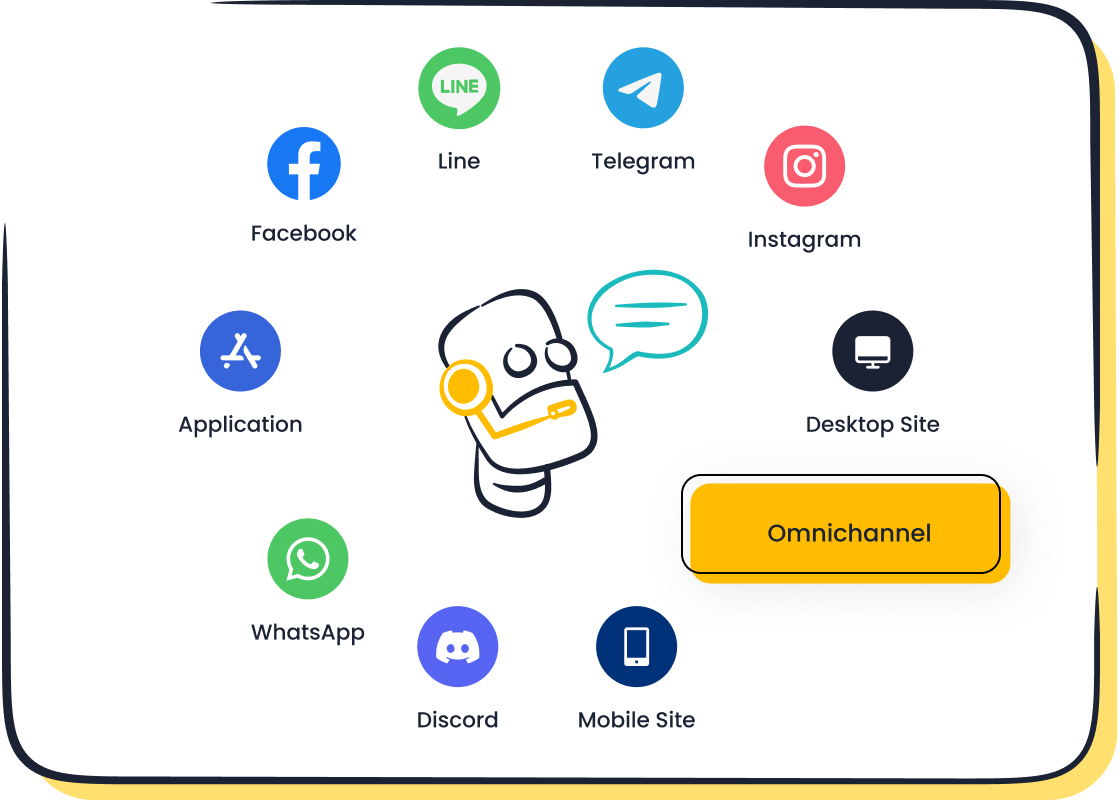
For a truly integrated solution, consider a comprehensive platform like Sobot. Sobot is more than just a chatbot builder; it is an all-in-one contact center solution. It combines an AI chatbot, live chat, a voice call center, and a ticketing system into one unified workspace. This integration means your ecommerce chatbot can work alongside human agents, providing omnichannel support across channels like WhatsApp and SMS. The no-code builder makes development accessible to everyone on your team.
Step 2: Design the Conversation Flow
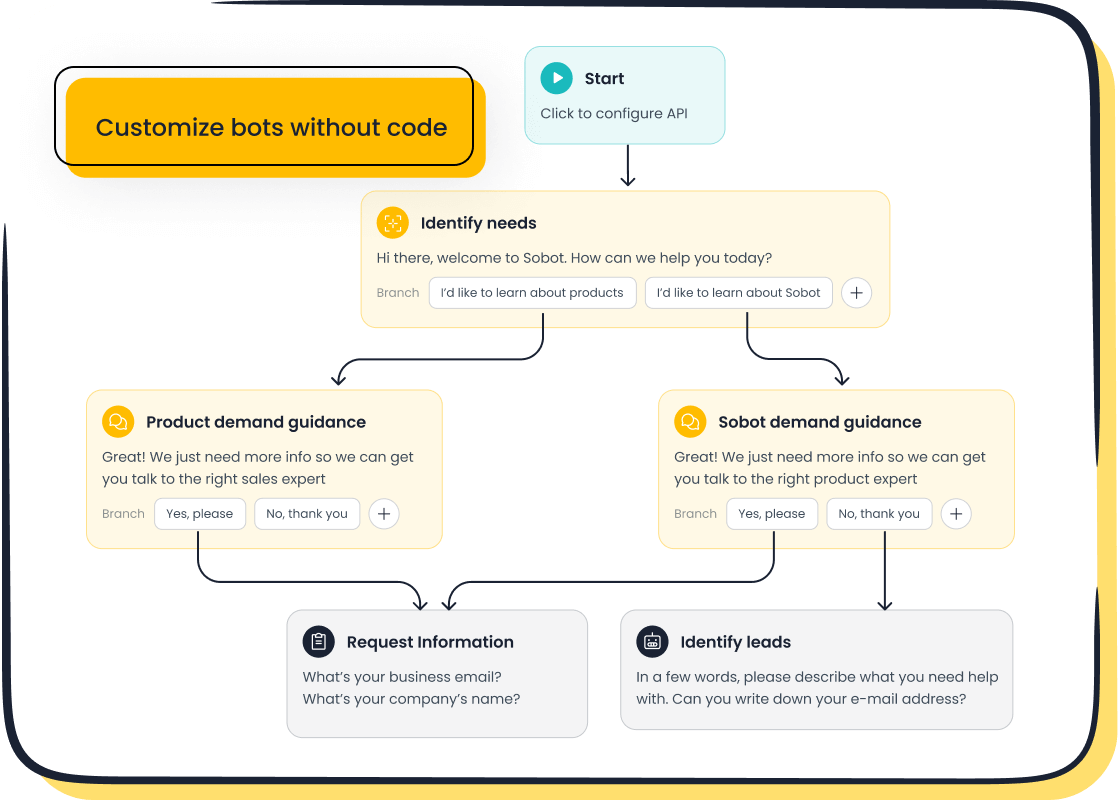
Next, you need to design how your chatbot will talk to customers. A well-designed conversation flow feels natural and helpful. The goal is to guide users to a solution without causing frustration. Start by mapping out the most common user journeys.
Here are some best practices for creating a retail-focused chatbot flow:
- Start with a Clear Welcome: Your chatbot should introduce itself and explain what it can do.
- Use Simple Language: Avoid jargon. Keep messages short and easy to understand.
- Offer Quick Replies: Use buttons to guide users and speed up interactions.
- Personalize the Experience: Use the customer's name and reference their order history when possible.
- Vary Message Length: Deliver information in bite-sized chunks to avoid overwhelming the user.
Avoid common pitfalls like overly scripted messages or a complete lack of personality. Your chatbot should reflect your brand's voice. A chatbot that fails to understand natural language or constantly redirects users will create a poor experience. The key is to make the chatbot a helpful assistant, not a robotic obstacle. This is a crucial part of chatbot development.
Step 3: Connect Your Knowledge Base
An AI chatbot is only as smart as the information it can access. You need to connect it to a knowledge base. This is the central repository of information your chatbot will use to answer questions. Modern platforms make this process simple.
With a solution like Sobot, you can build a comprehensive knowledge base from various sources without manual data entry. You can upload existing documents, including:
- PDFs
- Excel files
- Text snippets
- Website articles
Sobot's AI can automatically extract information from these sources. This is similar to how Sobot helped the global brand OPPO reduce its knowledge base maintenance efforts by 90%. An AI-powered knowledge base also improves over time. It learns from interactions, identifies knowledge gaps, and ensures the information is always accurate and up-to-date. This continuous learning process makes your ecommerce chatbot smarter and more effective with every customer conversation.
Step 4: Configure Key Actions and Handoffs
A great chatbot knows its limits. Some queries are too complex or sensitive for a bot to handle. You must configure rules for escalating conversations to a human agent. This seamless handoff is a core feature of an integrated customer support platform like Sobot.
You should set triggers for escalation. Common triggers include:
- Explicit customer requests to speak with a person.
- Expressions of frustration or negative sentiment.
- Repeated failed attempts by the chatbot to understand a query.
- Sensitive topics like billing disputes or major complaints.
When a handoff occurs, the chatbot should transfer the entire conversation history to the human agent. This allows the agent to see the full context without asking the customer to repeat information. Integrating your chatbot with your CRM system enables smart routing, ensuring the customer connects with the right department, whether it's sales or customer support with AI agents. This creates a smooth and efficient experience for everyone.
Step 5: Test, Iterate, and Refine
The final step before full deployment is to test your chatbot thoroughly. Testing helps you find and fix issues before your customers do. You should review chat logs to identify common drop-off points and analyze user interactions to see where the chatbot struggles.
To measure your chatbot's effectiveness, track key performance indicators (KPIs).
| KPI | Description |
|---|---|
| Resolution Rate | Percentage of queries solved by the chatbot alone. |
| Containment Rate | Percentage of conversations handled entirely by the chatbot. |
| Human Handover Rate | How often a human agent needs to take over. |
| Customer Satisfaction (CSAT) | Direct feedback from users on their experience. |
Use this data and customer feedback to refine your chatbot. The development process is not a one-time task; it is a cycle of testing, learning, and improving. Continuous iteration ensures your AI chatbot for retail remains a valuable asset for your ecommerce business. After successful testing, you are ready for the final deployment of your new tool. Following these best practices for retail chatbots will help you build a chatbot that boosts service and drives sales.
Success Story: How OPPO Used a Chatbot to Boost Service
Theory is helpful, but you want to see real-world results. Let's look at how OPPO, a leading global smart device brand, transformed its customer service. This case study shows the return on investment you can get from implementing an ecommerce chatbot. It provides a clear example of how a chatbot can drive success in the competitive retail and ecommerce space.
The Challenge: High Volume and Manual Effort
OPPO faced a major challenge during peak shopping seasons. The company saw a huge surge in customer questions. This high volume overwhelmed its human support team. Agents spent too much time answering repetitive questions, leading to long wait times for customers. This manual effort was costly and inefficient for its retail operations. The brand needed a solution to manage its ecommerce support at scale.
The Solution: Sobot's Human-Machine Cooperation
OPPO implemented Sobot’s AI chatbot to work alongside its human agents. This strategy of human-machine cooperation transformed their workflow. The chatbot managed automated and real-time conversations on a single platform.
- The chatbot seamlessly integrated with the WhatsApp Business API.
- It handled routine queries, freeing the human team to focus on complex tasks.
- This streamlined all customer interactions and improved overall efficiency.
This approach allowed OPPO to provide instant support without hiring more agents. The chatbot became the first line of defense for their retail customer service.
The Results: A 57% Increase in Repurchase Rate
The results for OPPO were remarkable and demonstrate the power of a well-implemented ecommerce chatbot. The new system delivered a massive return on investment for their ecommerce business.
By automating support, OPPO achieved:
- An 83% chatbot resolution rate
- A 94% positive feedback rate
- A 57% increase in customer repurchase rate
An 83% resolution rate is an outstanding figure. Advanced AI chatbots in the retail sector typically achieve resolution rates between 70% and 90%. OPPO’s success places their chatbot among the top performers. This shows that the right chatbot strategy does more than just answer questions; it builds customer loyalty and directly boosts sales.
Building an effective ecommerce chatbot is an achievable project for your ecommerce business. This chatbot boosts efficiency and customer engagement, lowering costs for your ecommerce operations. The success of OPPO's chatbot shows the power of this chat bot ecommerce strategy. Their ecommerce chatbot built customer loyalty. You can start building your own powerful chatbot for ecommerce. Explore a no-code solution like Sobot to create your chatbot. Embark on Your Contact Journey.
FAQ
How much does an ecommerce chatbot cost?
The cost varies greatly. Custom development can exceed $20,000. You can use a no-code platform like Sobot for a more affordable option. These platforms often use a subscription model, making a powerful ecommerce chatbot accessible to businesses of all sizes.
How long does it take to build a chatbot?
You can launch a basic chatbot in just a few hours. Using a no-code builder with a point-and-click interface simplifies the process. A more complex ecommerce chatbot with many integrations might take a few days to configure and test properly.
Can my chatbot speak multiple languages?
Yes. Modern AI platforms like Sobot offer multilingual support. You can configure your chatbot to interact with customers in their preferred language. This feature is essential for global ecommerce businesses looking to provide excellent service to a diverse audience.
What if the chatbot cannot answer a question?
A good chatbot knows when to ask for help. You can set rules to transfer the conversation to a human agent. Integrated platforms like Sobot pass the full chat history to the agent, so your customer never has to repeat themselves.
See Also
Elevate Your Sales: The Power of E-commerce Live Chat Software
Enhancing Customer Happiness: Chatbots' Impact on E-commerce Satisfaction
Crafting a Chatbot: Your Guide to Website Triumph

