How Top Brands Use AI Chatbots for Conversions

Leading retail brands know how top ecommerce brands use ai chatbots for conversions. These AI tools have evolved beyond simple support into powerful retail sales engines.
You can use retail chatbots to create a personalized customer journey. This AI-driven personalization makes each customer feel valued on their purchase journey. Smart chatbots from a provider like Sobot can streamline buying and recover abandoned carts. This is how you boost conversions. This single conversion focus is key for modern retail and AI success, as retail chatbots turn every interaction into an opportunity.
How Top Ecommerce Brands Use AI Chatbots for Conversions

You can transform your online store from a simple catalog into a dynamic sales floor. The secret is understanding how top ecommerce brands use ai chatbots for conversions. These tools are no longer just for answering questions. They are active participants in the sales process. You can use them to guide each customer, overcome hesitation, and make buying simple. This approach turns every interaction into a revenue opportunity for your retail business.
Personalize Shopping Experience with Quizzes
You can create a truly personalized experience for every shopper. Retail chatbots act as 24/7 personal shoppers. A great way to start is with interactive quizzes. These quizzes make the shopping journey fun and engaging. They also help you gather important data about what your customer wants. This is how top ecommerce brands use ai chatbots for conversions.
AI-powered quizzes help you do the following:
- Enhance customer engagement: Interactive elements reduce bounce rates. They guide the customer toward the right products.
- Gather zero-party data: You learn directly from your customer about their needs and preferences.
- Translate technical details: The AI can map product features to real-world uses. It turns complex specs into simple benefits like "Good for gaming."
This level of personalization builds trust. Customers are more likely to buy when they understand why a product is right for them. This AI-assisted shopping journey replaces endless scrolling with tailored recommendations. The AI presents a small, relevant selection of products. This makes the decision process easier for the customer. This is a key part of how top ecommerce brands use ai chatbots for conversions.
This hyper-personalization directly impacts your revenue. AI-assisted shopping can significantly increase average order value (AOV). By understanding the customer, retail chatbots can make smarter recommendations.
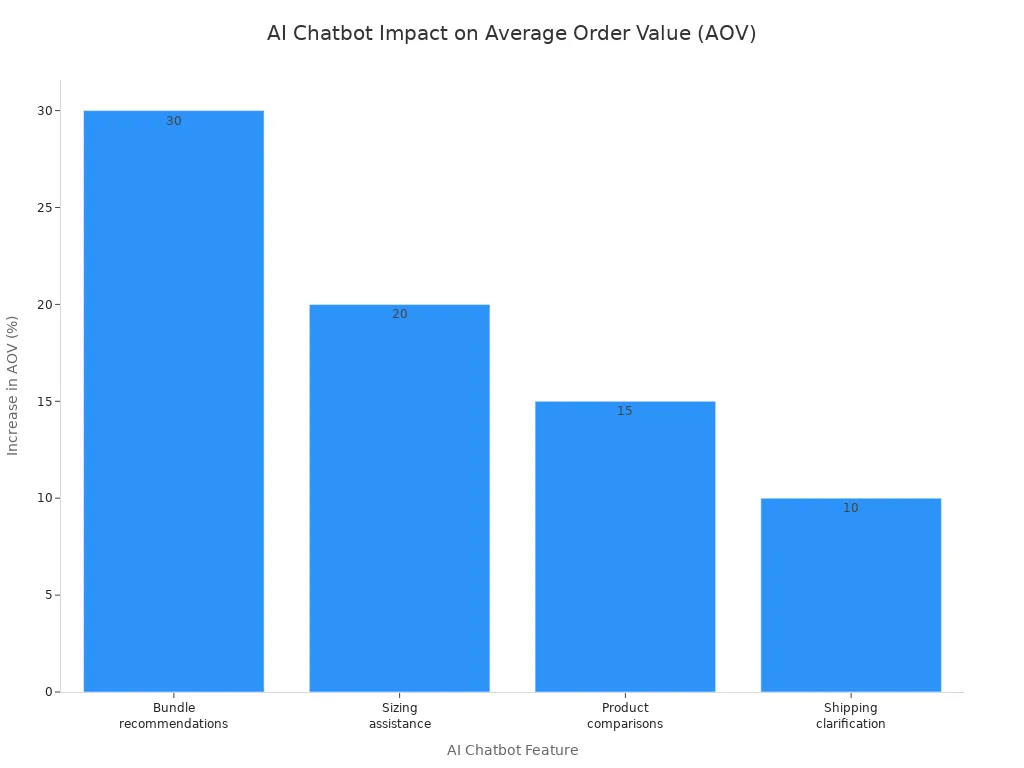
As you can see, strategic AI recommendations have a clear financial benefit. AI chatbots analyze customer behavior in real time. They identify the perfect moment to suggest a product bundle or a relevant upgrade. This is how you personalize shopping experience and boost your bottom line.
Recover Carts with Proactive Messaging
Abandoned carts represent a huge loss of revenue for retail stores. AI chatbots offer a powerful solution to this problem. You can use them to re-engage customers before they leave your site. This proactive approach is a core strategy for turning browsers into buyers.
A solution like Sobot's AI Chatbot uses proactive push messaging to re-engage users. This feature alone can boost conversions by 20%. It works by identifying exit-intent and intervening with a helpful message or a timely offer.
Effective retail chatbots use several strategies to recover carts:
- Real-time Engagement: The AI detects when a user is about to leave the checkout page. It can then instantly start a conversation to address any hesitation.
- Conversational Diagnosis: Unlike a simple email reminder, a chatbot can ask why the customer is leaving. This two-way dialogue helps you understand the exact issue, whether it's shipping costs or a problem with a promo code.
- Personalized Reminders: The AI can access cart details to make the conversation personal. It might say, "I see you were looking at the Blue T-Shirt. Do you have any questions about the size?" This makes the interaction feel like a concierge service.
- Timely Offers: If the AI detects price sensitivity, it can offer a small discount or free shipping to neutralize the issue and encourage the customer to complete the purchase.
This AI-assisted shopping strategy is highly effective. Studies show that AI chatbots can recover between 14% and 20% of at-risk carts immediately. When you combine chat with other channels like email and SMS, you can increase conversions by an additional 10% to 25%. This makes a significant impact on your retail sales.
Streamline Checkout and Order Support
Friction during checkout is a major reason for lost sales. A customer might have a last-minute question about shipping, returns, or payment options. If they cannot find an answer quickly, they will likely abandon their purchase. AI chatbots eliminate this friction.
You can place retail chatbots directly on your product and checkout pages. They provide instant answers to common questions. This builds customer confidence at the most critical point in the shopping journey.
Your chatbot can handle questions like:
- "What is your return policy?"
- "Do you offer free shipping to my location?"
- "Is this item in stock in a different color?"
- "What payment methods do you accept?"
By providing immediate clarity, you remove uncertainty from the buying process. This simple step can dramatically reduce your cart abandonment rate. AI optimization can lower the average abandonment rate by up to 20%. For mobile shoppers, where abandonment rates are even higher, AI intervention can reduce it by 25-30 percentage points. For more complex issues that the AI cannot solve, a seamless handoff is crucial.
Sobot's platform excels here. It integrates Live Chat and a Ticketing System with its AI. If a customer has a complex problem, the chatbot can instantly transfer them to a human agent or create a support ticket. This ensures no customer question goes unanswered.
This combination of AI and human support creates a frictionless shopping journey. It ensures every customer feels supported from browsing to final purchase.
Qualify Leads with 24/7 Sales Assistance
Your website receives visitors at all hours. An AI chatbot acts as your round-the-clock sales assistant. It engages every visitor, qualifies their interest, and ensures your sales team focuses only on the most promising leads. This 24/7 availability is a game-changer for lead conversion. Businesses using always-on AI see 53% higher win rates.
The AI qualifies leads by asking a series of simple questions. This process helps determine the visitor's needs, budget, and timeline.
For example, a chatbot might ask:
- "Are you interested in our products for personal use or for your business?"
- "What is your approximate budget?"
- "Are you looking to make a purchase within the next month?"
Based on the answers, the AI can take the next step. It might offer tailored recommendations, provide relevant case studies, or schedule a call with a sales representative. This ensures that your sales team's time is spent on high-intent prospects. This efficiency is one of the most valuable aspects of AI-powered shopping experiences.
The impact on conversions is significant. One online retailer saw a 35% jump in conversion rates after implementing 24/7 chat support. Another brand, Fresh Roasted Coffee, used chatbots to help customers make decisions and saw a 17% increase in revenue. These AI-powered customer interactions turn casual browsers into qualified leads, driving measurable growth for your retail business.
Brand Success Stories with AI Chatbots
The strategies for using retail chatbots are not just theoretical. Top retail brands are already using them to achieve remarkable results. You can see how AI transforms the customer journey into a powerful conversion funnel by looking at real-world examples. These stories show the tangible impact of AI on sales, customer loyalty, and your bottom line.
Boosting Conversions and Customer Experience
You can significantly boost conversions by creating a superior customer experience. The luxury brand Michael Kors provides a perfect example. By implementing Sobot’s all-in-one customer contact center solution, they achieved a 20% increase in conversion rates.
This success came from using AI to deliver a highly personalized customer journey. Their retail chatbots used several key features:
- AI-powered chatbot and CRM integration: This allowed for personalized customer engagement across channels like WhatsApp and social media.
- Proactive engagement: The AI initiated relevant conversations with each customer.
- Multilingual support: This catered to a global customer base, making every interaction feel unique.
This approach improves the entire customer experience. Other brands like The North Face have also seen success by using AI to offer personalized recommendations. When you use AI to help a customer find the perfect product, you make the shopping journey seamless and effective.
Driving Loyalty and Satisfaction
A great customer experience does more than just secure a single sale; it builds long-term customer loyalty. The Michael Kors story continues here. After implementing Sobot’s solution, they saw their customer satisfaction rate soar to 95%. They also achieved an incredible 83% reduction in customer response time.
This speed was possible because their AI chatbots were integrated across all platforms, from chat to email. This ensures no customer has to wait for an answer.
This direct impact on service quality is how you build trust. Research shows that 88% of customers who trust a store become repeat buyers. A fast, helpful, and personalized journey turns a one-time buyer into a loyal advocate for your brand. Excellent customer interactions powered by AI are the foundation for strong customer retention and creating loyal customers for your retail business.
Reducing Costs to Fuel Growth
AI chatbots do more than just increase revenue; they also reduce operational costs. This creates new opportunities for you to invest in growth. A solution like Sobot’s AI Chatbots can cut agent-related costs by up to 50% by handling routine inquiries 24/7.
This frees up significant budget. You can reinvest these savings directly into conversion-focused activities.
- Empower your staff to focus on complex, high-value customer problems.
- Invest in research and development for new products.
- Expand your marketing campaigns to reach new audiences.
By automating routine tasks, AI lets you allocate resources more strategically. This efficiency creates a powerful cycle: you save money on support, reinvest it into growth initiatives, and drive even more sales for your retail brand.
Best Practices for Your Conversion-Focused Chatbot
Implementing retail chatbots is just the first step. To truly drive sales, you need a clear strategy. Following best practices ensures your AI tool is a powerful asset for your retail business. You can turn your chatbot from a simple Q&A tool into a core part of your conversion funnel. This approach helps you build a better customer journey and increase revenue.
Define a Clear Conversion Goal
You must first define what success looks like for your retail chatbots. A clear goal guides your strategy and helps you measure results. Without a specific target, you cannot optimize your AI for performance. Your goal should be measurable and directly tied to your retail sales objectives.
Consider setting goals like these:
- Boost Conversion Rate: Aim to increase the conversion rate by 5% for any customer who interacts with the bot.
- Increase Average Order Value (AOV): Program your bot to suggest relevant upsells with a target of increasing AOV by 10%.
- Recover Abandoned Carts: Set a goal to recover 15% more abandoned carts each quarter.
Defining a clear objective focuses your efforts and makes your chatbot a powerful tool for growth.
Craft a Brand-Aligned Persona
Your chatbot's personality matters. It is an extension of your brand and a key factor in building customer trust. A well-designed persona makes interactions feel more natural and engaging. This directly influences a customer's willingness to complete a purchase. For example, Lego’s gift bot, Ralph, uses playful language that aligns perfectly with the brand's creative identity.
A chatbot with a strong, positive persona can increase purchase intention and customer satisfaction. The right personality makes the shopping journey more enjoyable and builds a stronger connection with each customer.
This human-like touch enhances the entire experience. It turns a simple transaction into a memorable interaction, encouraging the customer to return.
Ensure Seamless Human Handoff
Even the smartest AI chatbots cannot solve every problem. You must plan for a seamless handoff to a human agent. This is a core feature of an effective customer contact center. A poor transition frustrates the customer and can kill a sale. In fact, companies with smooth handoffs see much higher customer retention rates.
To create a seamless journey, your process should:
- Transfer the full conversation context so the customer never has to repeat themselves.
- Use smart triggers, like negative sentiment, to escalate the chat automatically.
- Clearly inform the customer that they are being transferred to a human agent.
This ensures your customer feels supported at every step of their journey.
Integrate for Full Personalization
True personalization requires data. You must integrate your AI with your core business systems. Connecting your chatbots to your CRM, inventory, and payment systems is crucial for creating a truly personalized experience. This integration allows your AI to access customer history and real-time stock levels.
This deep connection enables powerful personalization. Your retail chatbot can offer recommendations based on past purchases or check if an item is available in a different color. This level of service transforms the customer experience. A solution like Sobot's AI Chatbot is designed for this kind of omnichannel integration, making the process seamless. This full personalization is what separates a basic bot from a high-performing sales tool for your retail brand.
You now see how top ecommerce brands use ai chatbots for conversions. These retail chatbots are no longer just for support; they are essential sales tools. You can use AI to provide personalized recommendations and guide each customer through a seamless customer journey. This approach transforms the retail experience for every customer. Your retail chatbots can turn every interaction into revenue. The journey for your customer becomes simple and satisfying. Start your own AI journey today.
Explore a solution like Sobot to turn conversations with your customer into conversions. You can enhance your retail sales and drive real growth.
FAQ
How quickly can I set up an AI chatbot?
You can set up a chatbot very quickly. Modern platforms like Sobot offer a no-code, point-and-click interface. This allows you to design and deploy a bot without any programming experience. You can build your automated customer journey in just a few simple steps.
Will a chatbot sound robotic to my customers?
No, your chatbot does not have to sound robotic. You can craft a unique brand persona for your AI. This makes interactions feel more natural and engaging. A well-designed personality helps build trust and improves the overall shopping experience for every user.
What if the chatbot cannot answer a question?
A good chatbot system plans for complex issues. Solutions like Sobot ensure a seamless handoff to a human agent. The AI transfers the full conversation history, so the customer never has to repeat their problem. This creates a smooth and supportive experience.
How do AI chatbots increase conversion rates?
AI chatbots boost conversions in several ways. They offer personalized product recommendations and recover abandoned carts with proactive messages. They also provide instant answers during checkout, which reduces friction and encourages shoppers to complete their purchases.
See Also
Elevating E-commerce Customer Satisfaction Through Smart Chatbot Solutions
Leading Websites Leveraging Chatbot Technology: A 2024 Overview
Discovering the Top 10 Website Chatbots for 2024 Success
Driving E-commerce Sales Growth with Live Chat Software
Simple Steps to Implement Effective Website Chatbot Examples

