Startup Guide to Virtual and Traditional Call Center Choices


For most startups, virtual call centers deliver more flexibility, cost savings, and room to grow than traditional setups. Your decision should reflect your business goals and industry standards. The table below shows how key needs—like cost, scalability, and technology—shape your options:
| Business Need / Industry Requirement | Virtual Call Centers | Traditional Call Centers |
|---|---|---|
| Cost Considerations | Low setup cost | High upfront investment |
| Scalability | Easy to scale | Limited by hardware |
| Agent Accessibility | Work from anywhere | On-site only |
Sobot leads the way with Sobot call center solutions and Sobot AI, supporting you as you ask, "how can i start a call center business?"
Virtual Call Centers vs Traditional Call Center
What Is a Virtual Call Center?
A virtual call center is a customer service model where agents work remotely from different locations. You do not need a physical office. Instead, you use cloud-based software to connect your team and manage calls, chats, emails, and social media. This model lets you hire talent from anywhere, giving you access to a wider pool of skilled agents. You can scale your team up or down quickly as your business grows.
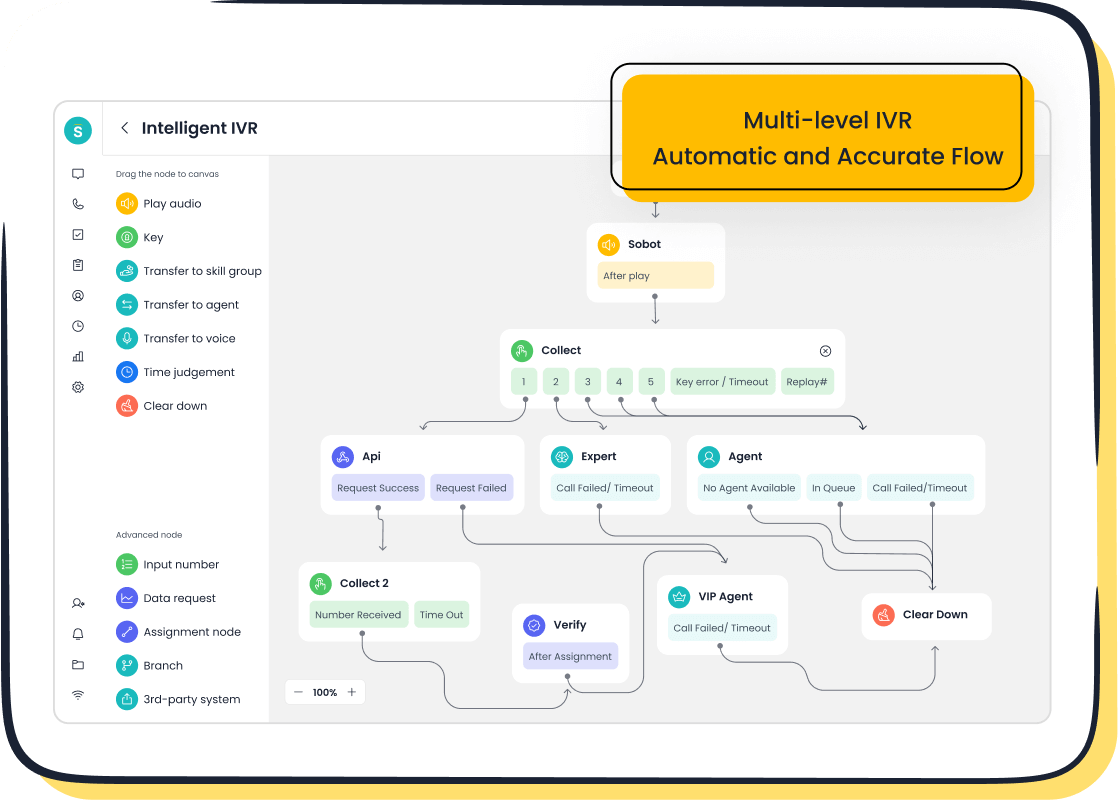
Sobot’s Voice/Call Center is a strong example of a modern virtual call center. It supports both inbound and outbound calls, uses AI voicebots to handle routine questions, and connects all your communication channels in one place. With Sobot, you get features like real-time analytics, global number availability, and secure cloud storage. These tools help you deliver a seamless customer experience and keep your operations efficient.
What Is a Traditional Call Center?
A traditional call center is a centralized office where all agents work on-site. You set up physical infrastructure, such as desks, phones, and servers. Managers and team leaders supervise agents in person. This model relies on dedicated hardware and secure networks. You need to invest in office space, equipment, and maintenance. Traditional call centers often suit larger companies with strict security or compliance needs.
Key Differences
You will notice several key differences between virtual call centers and traditional call centers. The table below highlights how each model operates:
| Aspect | Traditional Call Centers | Virtual Call Centers |
|---|---|---|
| Setup | Physical, centralized office space with on-site infrastructure | Remote, cloud-based setup requiring robust internet connectivity |
| Technology | Dedicated hardware, secure networks, and physical infrastructure | Cloud storage, CRM software, VoIP, chat platforms, video conferencing, and performance monitoring tools |
| Team Structure | On-site managers and team leaders enabling direct supervision and in-person team cohesion | Virtual managers and team leaders overseeing remote agents using digital communication and management tools |
| Operational Costs | Higher due to rent, utilities, and maintenance of physical space | Lower due to elimination of physical infrastructure costs |
| Flexibility | Limited; agents commute to a fixed location | High; agents work from any location |
| Scalability | Challenging; requires investment in physical expansion | Easy; can scale by hiring remote agents without physical constraints |
| Management | In-person management allows immediate feedback and problem-solving | Requires different management techniques, virtual meetings, and performance tracking software |
| Challenges | Higher costs, limited flexibility, scalability constraints | Technology dependence, potential agent isolation, management complexity |
Virtual call centers use cloud technology to enable remote work, while traditional call centers depend on physical offices. With a virtual call center, you can integrate tools like CRM, chat, and performance management software. This integration helps you track metrics, improve agent engagement, and boost customer satisfaction. Sobot’s platform, for example, unifies all channels and uses AI to automate over 50% of customer interactions, making your support team more productive.
Tip: If you want to keep your startup agile, consider starting with a virtual call center model. You can scale quickly, reduce costs, and adapt to changing customer needs.
Virtual call centers offer more flexibility and lower costs. You can manage your team using digital tools and cloud-based dashboards. Traditional call centers give you more direct control but require higher investment and offer less flexibility. The right model depends on your business goals, industry, and growth plans.
Virtual Call Centers: Pros & Cons
Cost Savings
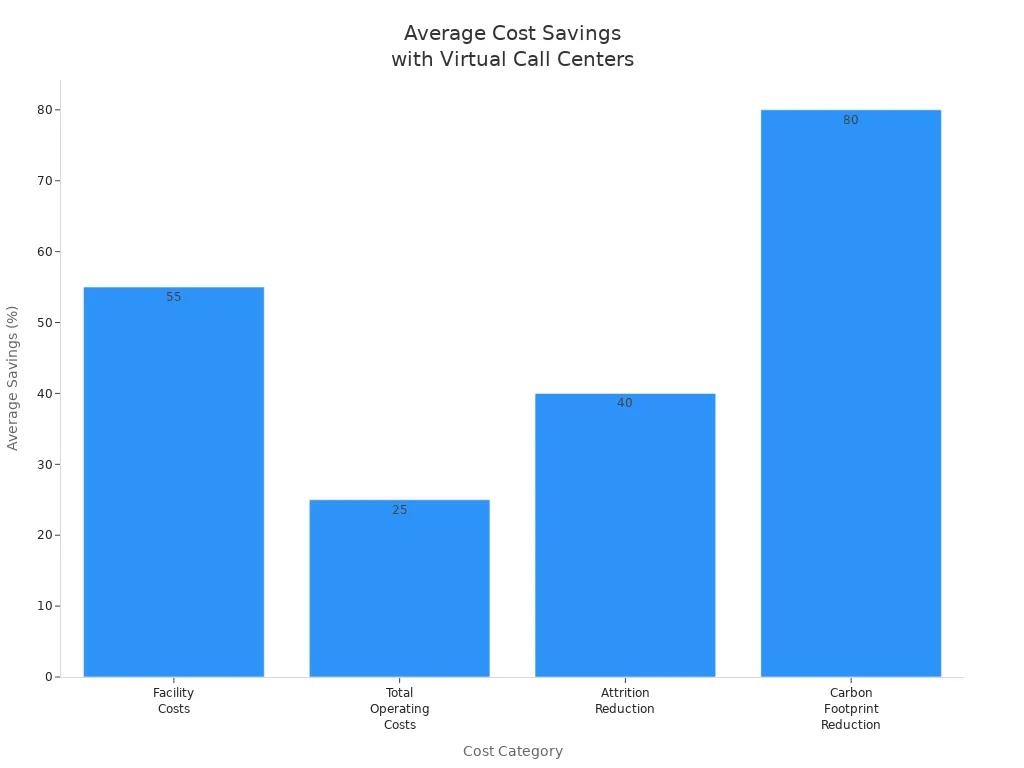
You can achieve significant cost efficiency by choosing virtual call centers for your startup. Remote call centers eliminate the need for expensive office space, utilities, and hardware. This approach leads to a 20-30% reduction in total operating costs compared to traditional setups. For example, American Express saved $160 million annually in real estate by moving to a remote call center model. The table below shows how much you can save in different areas:
| Cost Category | Savings Range / Impact | Example Companies & Outcomes |
|---|---|---|
| Facility Costs | 40-70% reduction | American Express saved $160 million annually in real estate |
| Total Operating Costs | 20-30% reduction | TTEC achieved 35% lower infrastructure costs |
| Attrition Reduction | 30-50% decrease | Sykes Enterprises improved retention by shifting remote |
| Carbon Footprint Reduction | 80% reduction | TTEC reduced environmental impact significantly |
Cloud-hosted virtual call centers use a subscription model, so you only pay for what you need. This cost-effective approach helps you avoid large upfront expenses and supports scalability on-demand.
Flexibility & Scalability
Virtual call centers give you unmatched flexibility for agents and your business. You can hire talent from anywhere, offering flexible work options and improving work-life balance. Remote call centers let you scale your team up or down quickly, matching your business needs as they change. This remote work flexibility means you can respond to customer service demands without being limited by office space or local hiring pools. Sobot’s cloud platform supports global access, making it easy to expand your customer support operations as you grow.
Technology & Security
Remote call centers rely on advanced cloud technology and strict security standards to protect customer data. You benefit from features like:
- Encryption protocols (SSL, TLS) for data security
- Role-based access control and multi-factor authentication
- Compliance with data protection laws (GDPR, etc.)
- Regular security audits and incident response plans
- Secure telecommuting practices for remote agents
Sobot’s call center software uses encrypted data transfer and offers 99.99% uptime, ensuring your customer service operations stay secure and reliable.
Team Management
Managing remote call centers requires the right tools and strategies. You can use cloud-based call center software for call routing, recording, and real-time analytics. Collaboration tools like chat and video calls help your team stay connected. Workforce management platforms optimize scheduling and monitor productivity. Sobot’s unified workspace brings all these features together, making it easier to manage remote teams, track performance, and maintain high work-life balance for agents.
Note: Virtual call centers offer cost efficiency, remote work flexibility, and scalability on-demand, making them a smart choice for startups seeking a cost-effective and modern customer service solution.
Traditional Call Center: Pros & Cons
Control & Supervision
You gain strong control and direct supervision in a traditional call center. Supervisors can monitor calls in real time and give agents immediate feedback. This approach helps you improve agent performance and customer satisfaction. You can use call reviews to spot recurring issues and coach your team for better first call resolution. Quality assurance teams set clear expectations and use scorecards to track progress. This structure ensures agents follow scripts and comply with regulations, which reduces risk and improves service standards.
Tip: Direct supervision in traditional call centers often leads to higher first call resolution rates and fewer customer escalations.
Here are some key benefits of control and supervision in a traditional call center:
- Supervisors provide targeted coaching to improve agent skills.
- You can raise customer satisfaction by reducing escalations.
- Agents resolve more issues on the first call.
- Compliance checks lower legal and regulatory risks.
- Efficient workflows help you handle more calls and focus on team development.
Infrastructure & Costs
Running a traditional call center requires significant investment in infrastructure and ongoing expenses. You need to budget for office space, equipment, and technology. Labor costs also make up a large part of your total cost. The table below shows typical expenses for traditional call centers:
| Cost Category | Typical Cost Estimate for Traditional Call Centers |
|---|---|
| Labor Costs | Around $31,200 per agent annually (salary, training, benefits) |
| Infrastructure & Facilities | About $2,500 per month (office space, utilities, equipment) |
| Software & Technology | CRM, call routing, security, compliance tools (costs vary) |
| Downtime & Maintenance | $5,600 lost per minute of IT downtime |
| Regulatory Compliance | Over $1,000 per agent annually for training and compliance |
You must plan for these costs to keep your traditional call center running smoothly. Sobot offers cloud-based solutions that help you reduce many of these expenses by moving operations online.
Team Culture
Traditional call centers build a strong team culture through daily in-person interactions. Agents work together in the same space, which helps them share knowledge and support each other. You can organize team meetings, training sessions, and recognition programs on-site. This environment boosts morale and creates a sense of belonging. Many agents feel more engaged when they see their peers and supervisors every day. However, you need to manage stress and burnout, as high call volumes and strict schedules can affect team spirit.
Scalability Limits
Scaling a traditional call center takes time and resources. You need to invest in more office space, equipment, and staff. Physical limits can slow your growth, especially if your business expands quickly. Hiring new agents means more training and higher costs. You may also face challenges with technology upgrades and system maintenance. Virtual solutions like Sobot’s cloud call center let you scale faster and more efficiently, without the need for extra physical infrastructure.
Note: Traditional call centers offer strong supervision and team culture, but you must consider the higher cost and limited scalability when planning for growth.
How Can I Start a Call Center Business?
Starting a call center business can transform your startup’s customer service and sales operations. Whether you choose virtual call centers or a traditional setup, you need a clear plan. This section guides you through the essential steps, regulatory requirements, and best practices for both models. You will also see how Sobot’s solutions make the process easier and more effective for startups.
Virtual Call Center Setup Steps
Virtual call centers offer a modern approach for startups that want flexibility, cost savings, and scalability. You can launch a virtual call center with less upfront investment and reach customers worldwide. Here is a step-by-step guide to help you get started:
-
Define Your Objectives and Services
Identify your business goals. Decide if you will handle customer support, sales, technical help, or all three. Understand your target audience and the types of inquiries you expect. -
Select the Right Call Center Software

Choose a reliable platform that supports cloud-based operations, integrates with your CRM, and offers features like intelligent IVR, call routing, and analytics. Sobot’s Voice/Call Center provides a unified workspace, AI-powered voicebots, and global number availability, making it ideal for startups.
-
Ensure Regulatory and Compliance Readiness
You must comply with key laws such as the Telephone Consumer Protection Act (TCPA), Fair Debt Collection Practices Act (FDCPA), and Health Insurance Portability and Accountability Act (HIPAA) if you handle sensitive data.Tip: Create clear policies, train your agents regularly, and use technology like encryption and call recording to protect customer data.
Here are the main compliance steps you should follow:
- Adhere to relevant laws and regulations.
- Establish detailed call handling and escalation procedures.
- Train agents on compliance and data security.
- Identify and address operational risks.
- Conduct regular compliance audits.
- Use technology solutions for secure operations.
- Monitor regulatory changes and adapt quickly.
- Manage third-party vendors to ensure compliance.
- Protect consumer data with secure storage and transmission.
-
Recruit and Train Remote Agents
Hire agents who can work independently and have strong communication skills. Provide comprehensive training on your products, customer service standards, and compliance protocols. -
Set Up Communication Channels
Decide which channels you will use—voice, chat, email, or social media. Sobot’s omnichannel solution lets you manage all channels in one place, improving efficiency and customer satisfaction. -
Configure Call Routing and Workflows
Use smart call routing to direct customers to the right agent or department. Sobot’s drag-and-drop IVR and rule-based routing make this process simple. -
Monitor Performance and Optimize
Track key metrics like response time, resolution rate, and customer satisfaction. Use analytics to identify areas for improvement and adjust your processes as needed. -
Go Live and Scale as Needed
Launch your virtual call center. As your business grows, you can easily add more agents or expand to new markets without major investments.
Starting a virtual call center gives you the agility to adapt quickly to market changes and customer needs. You can scale your team up or down with ease, making it a smart choice for startups.
Traditional Call Center Setup Steps
If you prefer a traditional call center, you need to plan for physical infrastructure, on-site staff, and higher upfront costs. Here is how you can set up a traditional call center for your startup:
-
Define Your Objectives
Clarify why customers will contact you and what services you will provide. -
Conduct Market Research
Analyze your competitors and understand customer preferences to select the right services and technology. -
Determine Your Budget
Calculate setup and operational costs, including office space, equipment, technology, and training. -
Develop a Staffing Plan
Decide how many agents you need, their roles, and training requirements. -
Choose Call Center Technology
Select systems that support your objectives and can integrate with your existing tools. Look for scalability and cost-effectiveness. -
Set Business Hours and Call Distribution Rules
Define your operating hours and how you will handle calls when agents are unavailable. Set up rules for routing calls, such as simultaneous ringing or voicemail. -
Hire and Train Agents
Recruit agents and provide thorough training on your processes, technology, and compliance requirements. -
Optimize Processes and Set KPIs
Continuously improve your workflows. Choose key performance indicators (KPIs) and set up quality assurance measures. -
Test Systems and Processes
Before going live, test all systems and processes to ensure smooth operations. -
Launch Your Call Center
Open your call center for business and monitor performance closely.
Many startups face challenges with traditional call centers, such as outdated technology, high attrition, and difficulty scaling. You can address these issues by investing in modern tools, providing strong training, and using automation where possible.
Common Challenges and Solutions for Traditional Call Centers:
- Outdated technology: Upgrade to cloud telephony and IVR systems.
- High attrition: Offer comprehensive training and support.
- Poor call routing: Use intelligent routing to improve first call resolution.
- Lack of automation: Implement real-time performance tracking and automation tools.
- Compliance risks: Stay updated on regulations and conduct regular audits.
Note: Traditional call centers require more resources and time to set up. You must plan carefully to avoid common pitfalls and ensure long-term success.
Sobot Voice/Call Center for Startups
Sobot makes it easy for startups to launch and manage both virtual call centers and traditional call centers. You get a powerful, cloud-based platform that supports global operations, integrates with your existing systems, and scales as your business grows.
Why Choose Sobot for Your Startup?
- Fast Deployment: You can set up your call center in days, not weeks. Sobot’s intuitive interface and drag-and-drop tools simplify the process.
- Seamless Integration: Sobot connects with popular CRM systems and business tools, so you can unify customer data and streamline workflows.
- Global Support: Access phone numbers in over 50 countries and manage teams across different regions with 99.99% uptime.
- AI-Powered Features: Use intelligent IVR, voicebots, and analytics to automate routine tasks and improve customer experience.
- Omnichannel Capabilities: Manage voice, chat, email, and social media from a single platform. Sobot’s unified workspace boosts agent productivity and customer satisfaction.
- Secure and Compliant: Sobot ensures encrypted data transfer and meets industry standards for privacy and security.
Sobot’s Voice/Call Center solution helps you answer the question, how can i start a call center business, with confidence and ease.
Real-World Example: Opay’s Success Story
Opay, a leading financial service platform, faced challenges managing customer interactions across multiple channels. By partnering with Sobot, Opay unified its customer service through social media, email, and voice channels. The result? Customer satisfaction jumped from 60% to 90%, operational costs dropped by 20%, and conversion rates increased by 17%. Sobot’s omnichannel solution and intelligent IVR system allowed Opay to handle high call volumes efficiently and deliver a seamless customer experience.
You can read more about Opay’s journey and results in Sobot’s customer stories.
Ready to Get Started?
If you are asking, how can i start a call center business, Sobot provides the tools, support, and expertise you need. Whether you choose virtual call centers or a traditional setup, Sobot’s solutions help you launch quickly, stay compliant, and scale with your business.
Reach out to Sobot for a personalized demo or explore the Voice/Call Center solution to see how you can transform your startup’s customer service.
Decision Guide for Startups
Matching Needs to Model
Choosing the right call center model for your startup can shape your growth and customer service success. You need to match your business needs to the best approach. Start by looking at your goals, call volume, budget, customer expectations, and technology readiness. The table below helps you compare these criteria for remote call centers and traditional setups:
| Criteria | Description & Considerations |
|---|---|
| Business Goals | Define your main goals. If you want cost reduction, remote call centers or outsourcing work well. If you need more control, an in-house or traditional model fits better. Flexibility and scalability point to remote or hybrid models. Align your choice with your long-term direction. |
| Call Volume Patterns | Study your call volume. Steady volumes suit in-house teams. If you see spikes or seasonal changes, remote call centers or hybrid models help you scale quickly. |
| Budget Constraints | Review your total costs. In-house models need more spending on infrastructure and training. Remote call centers lower overhead and let you manage costs as you grow. |
| Customer Expectations | Think about your service levels. If your customers expect strict SLAs and full-time agents, in-house or dedicated remote call centers work best. For global or 24/7 coverage, remote or hybrid models offer more flexibility. |
| Technology Capabilities | Check your tech readiness. Remote call centers need strong cloud systems and performance tracking. If your tech is limited, a traditional model may be easier to manage. |
Tip: Remote call centers give you flexibility, cost savings, and fast deployment. Traditional models offer more direct control and established processes.
Checklist for Founders
Before you decide on a call center model, use this checklist to make sure you cover all important factors:
- Do you need to scale your team quickly as your business grows?
- Is reducing costs a top priority for your startup?
- Will your agents work from different locations or need to access systems remotely?
- Do your customers expect support across multiple channels, like phone, chat, and email?
- Can your current technology support a remote call center setup?
- Are you prepared to manage data security and compliance in a cloud-based environment?
- Do you need to provide customer service in multiple languages or time zones?
- How important is disaster recovery and business continuity for your operations?
- Will you benefit from advanced features like AI-driven chatbots or smart call routing?
- Are you ready to train and manage a remote team?
If you answer "yes" to most of these questions, a remote call center or cloud-based model will likely fit your needs best. This approach supports rapid growth, improves customer satisfaction, and keeps your business agile.
Note: Remote call centers help you reach global markets, reduce overhead, and improve customer service quality. You can also adapt quickly to changes in demand.
Sobot Omnichannel Solution
Startups aiming for rapid growth and high customer satisfaction need more than just a basic call center. You need a solution that brings all your communication channels together and gives you the tools to deliver seamless customer service. Sobot’s Omnichannel Solution does exactly that.
With Sobot, you can:
- Manage voice, chat, email, and social media from a single dashboard.
- Use AI-driven chatbots to handle routine questions and free up your agents for complex issues.
- Offer multilingual and multicultural support, helping you expand globally.
- Access real-time analytics and performance data to make smarter decisions.
- Personalize every interaction with unified customer profiles and conversation histories.
- Scale your operations easily as your business grows, without heavy investments in infrastructure.
- Ensure 24/7 availability for your customers, even with a small team.
Remote call centers powered by Sobot’s omnichannel platform help you reduce customer churn and improve response times. Your agents can see all customer interactions in one place, so they never miss important details. This unified approach leads to faster resolutions and higher customer satisfaction.
Sobot’s Omnichannel Solution gives you the flexibility and scalability you need. You can start small and grow fast, all while keeping your customer service consistent and efficient.
Many startups choose Sobot because it combines advanced technology with ease of use. You get features like AI-powered voicebots, smart call routing, and seamless CRM integration. Sobot’s platform supports over 10,000 brands worldwide, including leaders in retail, finance, and technology. With 99.99% uptime and strong data security, you can trust Sobot to keep your operations running smoothly.
If you want to deliver top-tier customer service and support rapid business growth, Sobot’s omnichannel solution is the right choice. You can learn more about Sobot’s offerings and see real-world results from companies like Opay on the official website.
Choosing the right call center model is a big decision for your startup. Use this guide, review your needs, and consider Sobot’s solutions to set your business up for long-term success.
Virtual call centers usually serve startups best. You save up to 50% on operational costs, scale quickly, and access global talent without heavy infrastructure. Sobot’s AI-powered platform supports omnichannel communication and delivers proven results for brands like OPPO and J&T Express.
To move forward, map your customer journey, assess your needs, and explore Sobot’s demo or customer stories. Sobot helps you build a reliable, scalable, and efficient call center for your startup’s growth.
FAQ
What are the main benefits of virtual call centers for startups?
Virtual call centers help you save up to 50% on operational costs. You can hire agents from anywhere and scale your team quickly. Sobot’s cloud-based platform supports global operations and offers 99.99% uptime, making it ideal for startups that want flexibility and growth.
How can I start a call center business with minimal investment?
You can launch a virtual call center business by choosing a cloud-based provider like Sobot. You avoid high upfront costs for office space and equipment. Sobot’s Voice/Call Center lets you deploy quickly, integrate with your CRM, and manage calls, chat, and email from one dashboard.
What makes Sobot’s omnichannel solution different from traditional call centers?
Sobot’s omnichannel solution unifies voice, chat, email, and social media in one workspace. You can use AI-powered chatbots and smart routing to handle customer requests faster. Traditional call centers often lack this level of integration and flexibility.
Are virtual call centers secure for handling sensitive customer data?
Yes, virtual call centers like Sobot use encrypted data transfer, role-based access, and regular security audits. Sobot complies with global standards such as GDPR. You can trust Sobot to keep your customer information safe and secure.
Can I switch from a traditional call center to a virtual call center easily?
You can migrate to a virtual call center with careful planning. Sobot offers seamless integration with your existing systems and provides global support. Many startups move to virtual call centers to reduce costs and improve scalability without disrupting service.
Tip: If you want to learn more about Sobot’s solutions, visit the official website or request a demo.
See Also
Comprehensive Overview Of Multichannel Call Center Platforms
Essential Guide To Quality Management Systems In Call Centers
In-Depth Analysis Of AI Solutions For Enterprise Call Centers

