How AI Agents Transform B2B Support

AI agents are revolutionizing B2B support. These advanced AI agents move beyond simple bots to handle complex B2B interactions. This AI transformation reflects a rapidly growing market, with businesses investing heavily in AI to improve efficiency.
| Metric | Value |
|---|---|
| Market Valuation 2024 | USD 8.5 Billion |
| Projected CAGR (2025-2032) | 25.0% |
| Forecasted Valuation 2032 | USD 50.6 Billion |
This growth highlights the demand for a better customer experience. B2B AI customer support tools from providers like Sobot deliver on this need. The smart agents create personalized customer interactions, transforming the support journey for every customer.
What Are AI Agents and Why Do They Matter for B2B?
AI agents represent a major evolution in business technology. They are not just advanced chatbots. These agents are autonomous systems that understand goals, make decisions, and take action. For any B2B company, this shift from simple automation to true intelligence is critical. It changes the foundation of customer support and opens new doors for growth. The core differences lie in their ability to act independently, learn continuously, and integrate deeply into business workflows.
Autonomous Action vs. Scripted Responses
Traditional chatbots operate on fixed scripts. They recognize keywords and provide pre-programmed answers. AI agents work differently. They possess high autonomy, allowing them to operate independently without constant human oversight. These advanced agents analyze situations and execute complex, multi-step tasks to achieve a goal. This makes them invaluable for handling the unique challenges of B2B customer support.
The key distinction is goal-oriented behavior. A chatbot follows a path. An AI agent finds its own path to the destination.
| Feature | Traditional Chatbots | AI Agents |
|---|---|---|
| Decision-Making | Follows pre-programmed decision trees and scripts. | Makes autonomous decisions and solves problems. |
| Learning | Does not learn from interactions. | Continuously learns and adapts from every interaction. |
| Task Complexity | Handles simple, repetitive questions. | Manages complex, multi-step B2B issues. |
| Proactiveness | Reactive; waits for user input. | Proactive; initiates conversations and anticipates needs. |
Proactive Engagement and Continuous Learning
Modern B2B relationships thrive on proactive support. AI agents excel here by shifting support from a reactive function to a proactive one. Instead of waiting for problems, these agents identify opportunities. For example, an AI can detect when a client's usage patterns signal an upsell opportunity or a risk of churn, then alert the appropriate team.
This capability is powered by continuous learning. Every interaction helps the AI improve. The process is a simple cycle:
- The agent performs a task.
- It evaluates the outcome based on success metrics.
- It analyzes what worked and what did not.
- The AI adjusts its strategy for the next interaction.
This self-improvement loop ensures the AI becomes more effective over time, enhancing customer engagement without manual intervention.
Seamless Integration with Business Systems
The true power of AI agents is unlocked through integration. They connect seamlessly with the tools you already use. This includes systems like:
- CRM (e.g., Salesforce)
- ERP (e.g., SAP)
- Email and chat platforms
- Project management tools
When b2b ai customer support tools integrate with these platforms, they gain a complete view of the customer. An agent can pull a customer's order history from an ERP, check their support ticket status in the CRM, and analyze their product usage data all at once. This deep integration enables true workflow automation, streamlines operations, and allows agents to provide highly contextual and personalized support.
How B2B AI Customer Support Tools Revolutionize Workflows
AI agents do more than just understand concepts. They actively reshape daily business operations. By integrating into core systems, these intelligent agents automate complex tasks, deliver personalized customer interactions, and provide deep strategic insights. This moves support from a reactive necessity to a proactive driver of business value. Tools like the Sobot AI Chatbot are at the forefront, executing these transformations and turning abstract potential into tangible results.
Automating Complex B2B Customer Support
B2B customer support involves more than answering simple questions. It requires managing intricate, multi-step processes that traditional bots cannot handle. AI agents excel here. They possess the autonomy to execute complex workflows from start to finish. This automation frees human agents to focus on high-value strategic tasks. For example, an AI can manage the entire lifecycle of a customer order.
Common B2B tasks automated by AI agents include:
- Order Management: AI agents provide real-time order status, process requests for address changes, handle cancellations, and manage returns without human help.
- Stock Availability: They connect to inventory systems to give instant, accurate answers about product availability.
- Bulk Order Support: The AI identifies B2B buyers and uses dynamic forms to collect structured order details like PO numbers and delivery windows.
- Technical Product Search: An AI can understand technical requirements from a buyer's message (e.g., "a pump for corrosive water at 150 L/min") and match it to the right product, acting like a digital sales engineer.
This level of automation is possible because AI agents can break down a complex goal into smaller, manageable steps. They coordinate these steps, handle exceptions, and interact with different business systems to get the job done. This capability allows b2b ai customer support tools to deliver significant efficiency gains. For instance, the Sobot AI Chatbot can improve team productivity by 70% by autonomously solving regular customer inquiries and assisting human agents.
| Company | AI Agent Use Case | Challenge | Results |
|---|---|---|---|
| Salesforce (Einstein AI) | B2B Lead Generation | Manual lead qualification slowed sales cycles. | 30% increase in lead conversion; 20% reduction in sales cycle time. |
| Zendesk (Answer Bot) | Enterprise Customer Support | High ticket volume overwhelmed human agents. | 40% deflection rate; 15% improvement in CSAT scores. |
| ServiceNow (Virtual Agent) | IT Helpdesk Automation | IT teams spent too much time on repetitive tickets. | 50% reduction in ticket resolution time; Freed up IT staff. |
Delivering Instant and Personalized Client Onboarding
First impressions matter, especially in B2B relationships. A smooth onboarding process is critical for long-term success. AI agents transform this experience by making it instant, interactive, and highly personalized. Instead of a generic manual, a new customer gets a guided journey tailored to their specific role, industry, and goals. For example, an AI can analyze a new client's profile and recommend the most relevant setup steps or training materials.
This personalization has a massive impact. According to Forrester Research, AI-powered onboarding can improve feature adoption by 42%. The AI adapts its communication style, offering detailed explanations or quick instructions based on user preference. This dynamic approach ensures every customer quickly finds value.
The data shows a clear link between automated, personalized onboarding and client success.
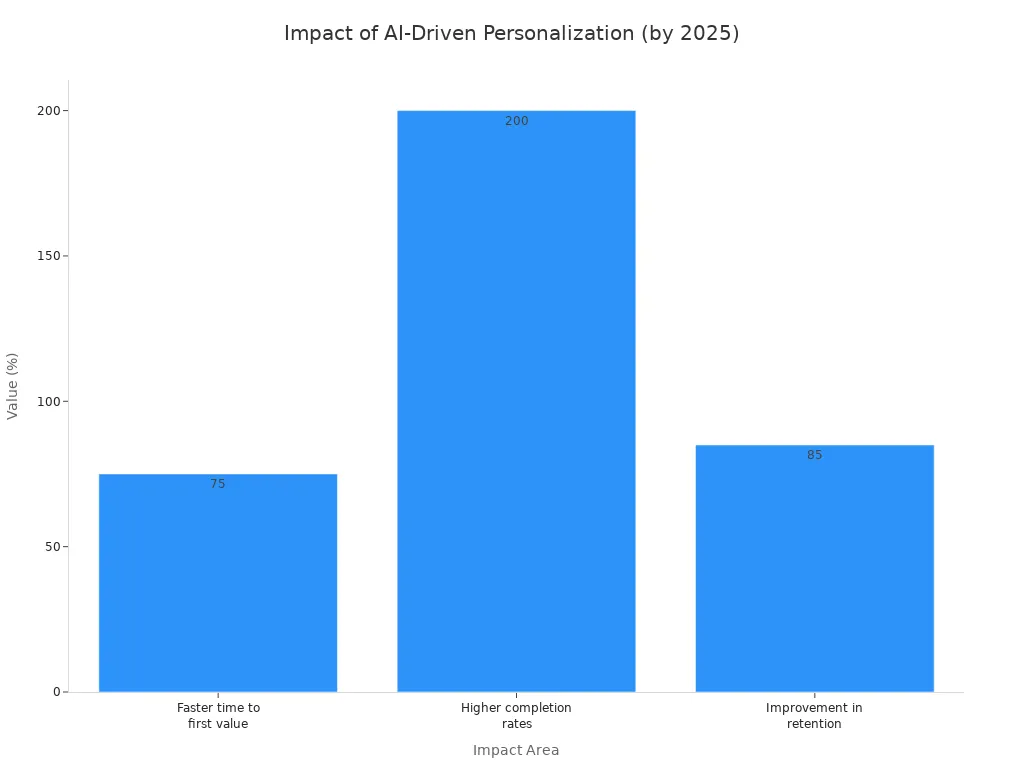
By automating workflows and adapting to user behavior, AI agents can reduce onboarding errors by 80% and shorten the time it takes for users to become productive by 40%. This leads to a better customer experience and stronger, more profitable relationships from day one.
Enabling Proactive Customer Success Management
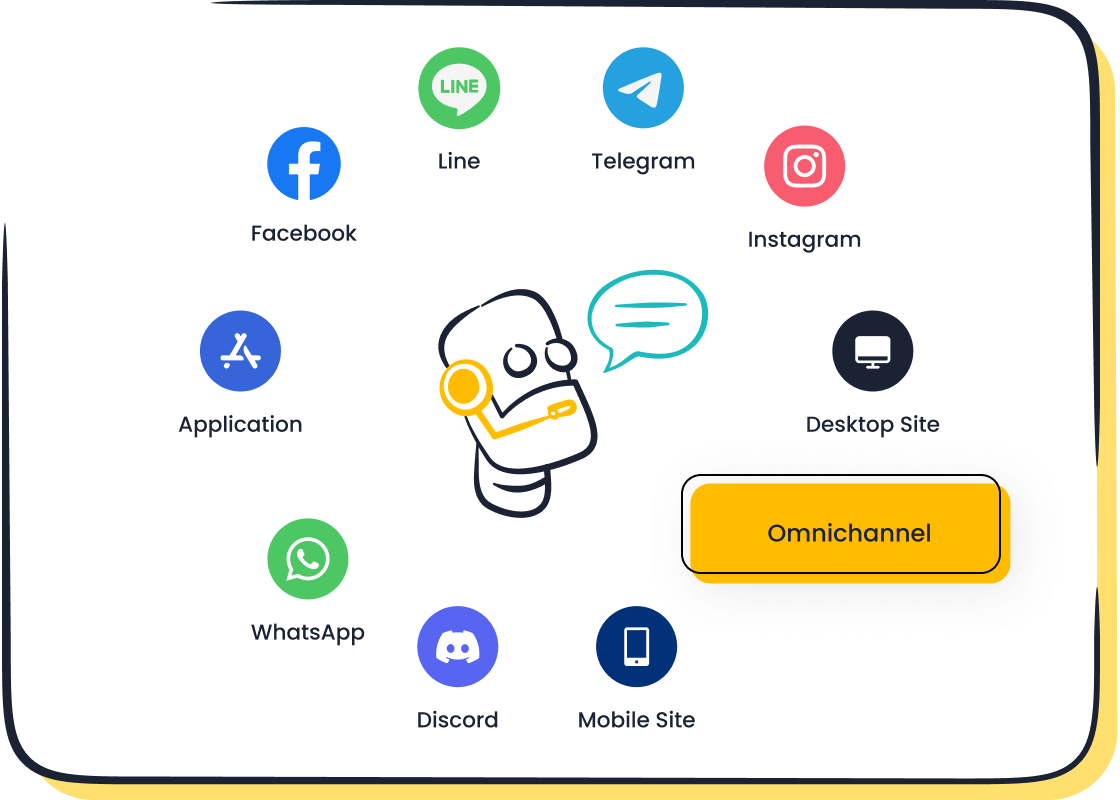
The best support is the kind a customer never has to ask for. AI agents make this possible by enabling proactive customer success management. They constantly monitor customer health signals across different platforms to identify opportunities and risks before they escalate. This is where omnichannel capabilities become crucial. An AI agent from a provider like Sobot can unify interactions from channels like WhatsApp, email, and voice calls into a single workspace. This gives the AI a complete view of the customer relationship.
Using this unified data, AI agents can identify at-risk accounts with remarkable accuracy. The process is systematic:
- Data Extraction: The AI pulls data like product usage frequency, support ticket history, and contract details from various systems.
- Data Merging: It combines all information into a single, unified customer profile.
- AI Scoring: The AI uses a model to analyze the data and generate a churn risk score.
- Score Computation: It refines the score with rule-based logic, such as adding points for high ticket volume or low feature adoption.
- Risk Assignment: The AI assigns a final risk level (e.g., HIGH, MEDIUM, LOW) and flags the account for the customer success team.
Once a risk is identified, the AI can trigger proactive alerts. These might include tooltips for a confused user, video tutorials that appear after repeated errors, or an alert for a human agent to follow up personally. This proactive support model helps businesses solve problems before they happen, boosting loyalty and retention.
Generating Actionable Insights with AI
Beyond workflow automation, the greatest value of AI agents lies in their ability to generate actionable insights. They analyze vast amounts of interaction data from chats, emails, and calls to uncover patterns that would be impossible for humans to spot. These insights provide a clear roadmap for strategic business improvements.
B2B AI customer support tools can reveal critical information for different teams:
- For Product Teams: AI identifies features that cause frequent frustration or lead to support tickets, helping prioritize the development backlog.
- For CX Leaders: AI provides clarity on agent performance, highlights training needs, and pinpoints gaps in the knowledge base.
- For Sales & Marketing: AI uncovers upsell opportunities and identifies customers most likely to churn, allowing for targeted engagement campaigns.
Business leaders can use these AI-generated insights to make smarter, data-driven decisions. Instead of relying on intuition, they can see exactly what customers are saying, where they are struggling, and what they want next. This intelligence allows companies to refine their service strategies, enhance product offerings, and ultimately build a more customer-centric organization. The AI transforms raw support data into a powerful engine for growth and innovation.
The Measurable Impact of AI Agents on B2B
Adopting AI agents delivers a clear return on investment. These intelligent systems drive significant improvements across key business metrics. They reduce costs, boost satisfaction, and empower teams. The impact is not just theoretical; it is a measurable reality for businesses that leverage b2b ai customer support tools. The data shows how this technology transforms operations into a more efficient and profitable model.
Reduced Resolution Times and Operational Costs
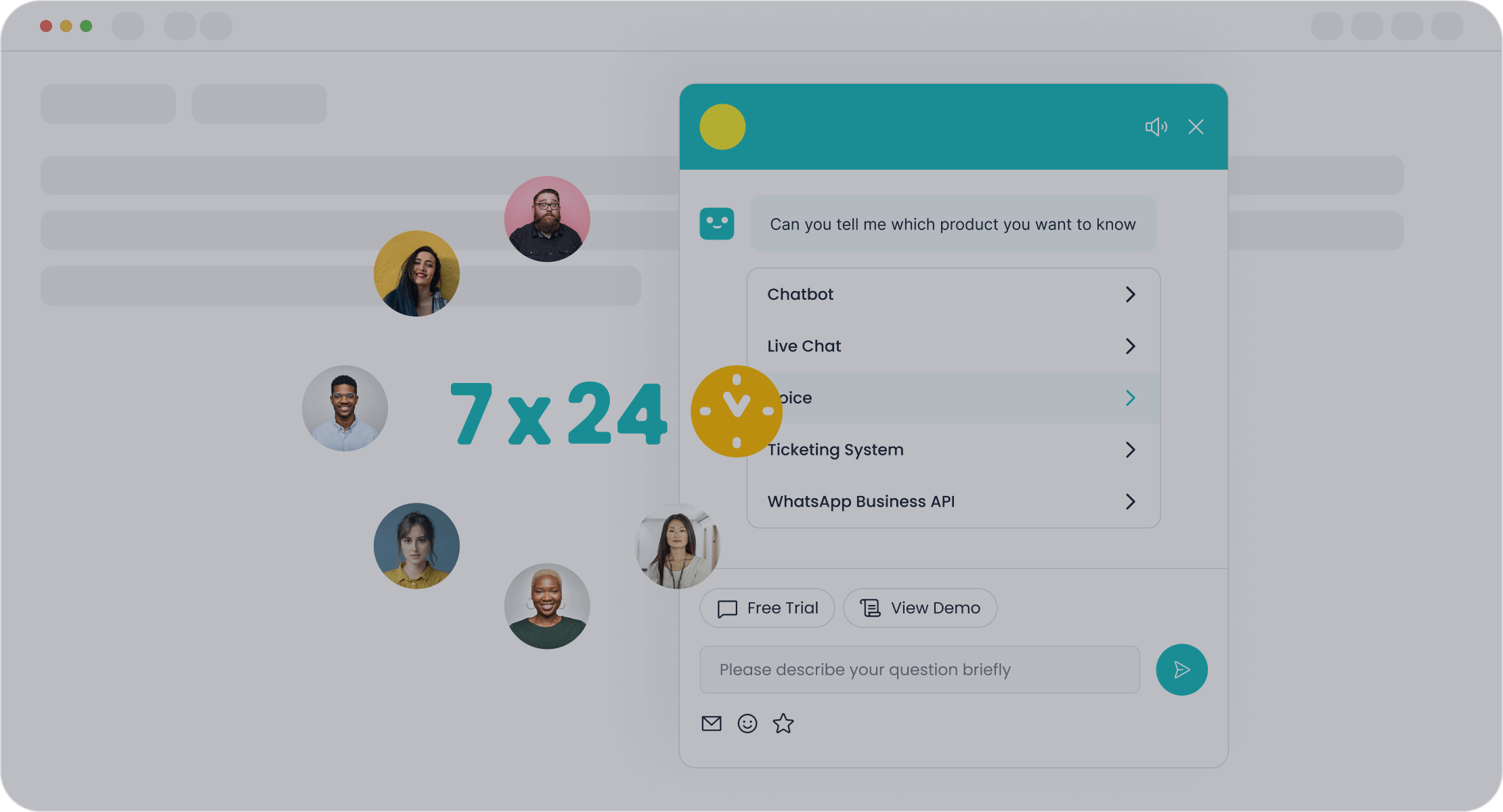
AI agents directly lower operational costs by handling customer inquiries 24/7. This automation reduces the need for a large human support staff. Organizations often see labor cost reductions of 20-40% after implementing AI. Solutions like the Sobot AI Chatbot can save companies up to 50% on agent costs by triaging queries around the clock.
A prime example is Agilent, a leader in life sciences. By implementing Sobot’s AI solution, the company achieved a 25% reduction in costs. This efficiency comes from the AI agents' ability to resolve common issues instantly, cutting down resolution times and freeing human agents.
Increased Customer Satisfaction and Loyalty
Faster responses lead to happier customers. AI provides instant support anytime, which significantly improves the customer experience. Studies show this immediate interaction boosts customer satisfaction. For instance, some companies see a 14-point jump in CSAT scores after implementing AI. This improved experience builds trust and loyalty.
Agilent’s partnership with Sobot resulted in a remarkable 95% customer satisfaction score. When an AI can resolve issues quickly and accurately, it enhances customer sentiment and strengthens the relationship, which is crucial for long-term retention.
Improved Support Team Productivity and Focus
AI agents act as a powerful force multiplier for support teams. They handle repetitive questions, allowing human agents to focus on complex, high-value tasks. This shift makes the entire team more productive. Research shows that agents using an AI assistant can increase their productivity by an average of 14%.
With Sobot, Agilent experienced a sixfold increase in efficiency. The AI agents handled routine inquiries, which allowed the human team to manage more strategic work. This synergy between human agents and AI creates a more effective and focused support operation.
Enhanced Customer Retention and Lifetime Value
A superior customer experience is the foundation of customer retention. AI agents contribute by personalizing every interaction and proactively addressing issues. This proactive support model prevents problems before they escalate, which is key for customer retention. The AI can also identify upsell opportunities during a support interaction. This capability helps increase customer lifetime value. For example, Sobot's AI can boost conversions by 20% through smart, proactive messaging, turning a support touchpoint into a revenue opportunity.
AI agents are fundamentally reshaping B2B support. These intelligent agents transform the customer service model from a reactive cost center into a proactive, value-driving operation. Through autonomous resolution, proactive engagement, and seamless system integration, AI agents deliver a superior customer experience. This AI transformation empowers human agents to focus on strategic tasks.
Is your support process facing a bottleneck? Assess your biggest challenge and discover how an AI solution can help. Explore the Sobot AI solution to see how intelligent agents can drive value for your business.
FAQ
How do AI agents improve customer retention?
AI agents boost customer retention. They offer proactive support and deep personalization. These AI agents use AI to analyze interactions to solve issues before they grow. This improves the overall customer experience and builds loyalty.
Can AI agents replace human support agents completely?
No, AI agents do not replace human agents. Instead, these AI agents assist them. The AI agents handle routine questions. This frees human agents to focus on complex problems. The AI provides support for the human agents, making all agents more effective.
What is the main benefit of AI personalization in B2B?
The main benefit of AI personalization is creating relevant interactions. The AI tailors every communication to the specific customer's needs and history. This makes the support feel more valuable. The AI agents enable this.
How does real-time interaction with AI agents work?
Real-time interaction happens instantly. The AI agents access a vast knowledge base to understand and answer questions immediately. This AI capability ensures 24/7 support. The AI agents provide quick resolutions without making the customer wait for human agents.
See Also
Transforming Customer Support: The AI Agent Revolution for Enhanced Service
Elevate SaaS Customer Support: Strategic Live Chat for Improved Engagement
Comprehensive Review: AI-Powered Solutions for Modern Enterprise Call Centers
Unlocking Peak Efficiency: AI Software's Impact on Customer Service Operations
Discovering the Top 10 AI Tools for Enterprise Contact Center Excellence

