What Sets Modern CRM Systems Apart from Early CRM Practices


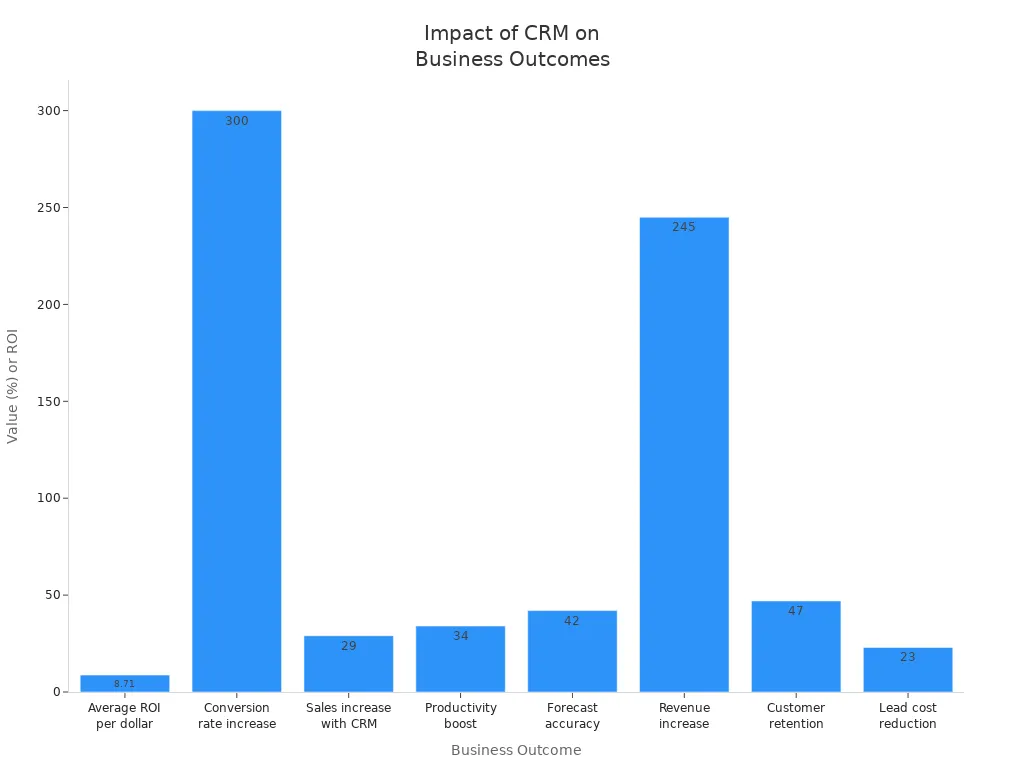
You see a clear difference between early crm practices and modern crm systems in the way they shape customer experience and drive business results. Today, crm platforms like Sobot use advanced automation, analytics, and unified data to transform customer relationship management. This evolution allows you to respond faster, personalize every interaction, and boost customer satisfaction. The history of customer relationship management shows that modern crm can increase sales by 29% and productivity by 34%.
| Statistic Description | Value |
|---|---|
| Average ROI for CRM systems | $8.71 for every dollar spent |
| Increase in conversion rates | Up to 300% |
| Increase in sales with CRM solutions | 29% |
| Boost in productivity | 34% |
| Improvement in forecast accuracy | 42% |
| Potential revenue increase when leveraging CRM platforms | Up to 245% |
| Improvement in customer retention | 47% of businesses |
| Reduction in lead costs | Up to 23% |
History of Customer Relationship Management
Early CRM Practices Overview
The history of customer relationship management shows how businesses have changed the way they connect with customers. In the early days, you would use paper files, Rolodexes, and handwritten notes to keep track of customer details. These traditional crm methods made it hard to share information and slowed down your work. As technology improved, digital databases started to replace paper records. This shift marked a big step in the history of customer relationship management.
Here is a timeline that highlights key moments in the history of customer relationship management and the rise of crm:
| Year/Period | Key Developments |
|---|---|
| 1980s | CRM began as a product. Database marketing helped you store and use customer data. |
| 1993 | Siebel Systems launched, bringing integrated crm software and sales force automation. |
| Mid-to-late 1990s | CRM software became a main tool for tracking sales and leads. |
| 1990s | Sales Force Automation made it easier to manage leads and sales steps. |
| Early 2000s | The internet and cloud computing made crm available to more businesses. |
| 2000s onwards | Cloud-based crm and SaaS models became popular. |
| Recent Years | CRM expanded to include marketing and customer service automation, focusing on customer experience. |
Traditional crm systems in the early years offered basic digital tools. You could store more data and let your team access customer information at the same time. These traditional crm systems improved data accuracy and started to automate simple tasks. They also allowed your business to grow without worrying about running out of space for records.
Limitations of Traditional CRM
You faced many challenges with traditional crm. These traditional crm systems often slowed you down. Here are some of the main problems you might have experienced:
- Manual updates took a lot of time and often led to outdated information.
- Physical records made it hard for teams in different places to work together.
- Handwritten notes caused mistakes and miscommunication.
- Finding information in paper files was slow and frustrating.
- Traditional crm systems did not connect with other business tools, so your work felt scattered.
Traditional crm could not keep up with the fast pace of modern business. You needed better ways to manage customer relationships, share data, and work as a team. The history of customer relationship management shows that these limits pushed companies to look for smarter, faster crm solutions.
Modern CRM Systems: Features and Capabilities

Modern crm systems have changed the way you manage customer relationships. You now have access to advanced tools that help you understand, engage, and support your customers better than ever before. These new crm platforms use ai, automation, and real-time data to give you a complete view of your customer interactions. You can see how these systems unify sales, marketing, and support, making your business more efficient and your customers happier.
To see how modern crm systems stand out from classic crm systems, look at the table below:
| Feature | Classic CRM Systems | Modern CRM Systems |
|---|---|---|
| AI-Driven Insights | No | Yes |
| Personalization | Limited | Extensive |
| Scalability | Difficult | Easy |
| Data Security | Basic | Advanced |
| Customer Life Cycle | Fragmented | Comprehensive |
Automation and AI Integration
You can use automation and ai to make your work easier and faster. Modern crm systems like Sobot give you ai-powered tools that handle routine tasks, so you can focus on what matters most. For example, Sobot’s chatbot and ai agent answer common questions 24/7. This means your customers get instant help, even when your team is offline. You do not have to worry about long wait times or missed messages.
With ai-first crm, you can:
- Use machine learning to score leads based on how they interact with your business.
- Segment your customers for better marketing.
- Let ai chatbots handle simple requests, freeing your agents for complex issues.
- Route tickets to the right department automatically.
- Get instant responses to common questions.
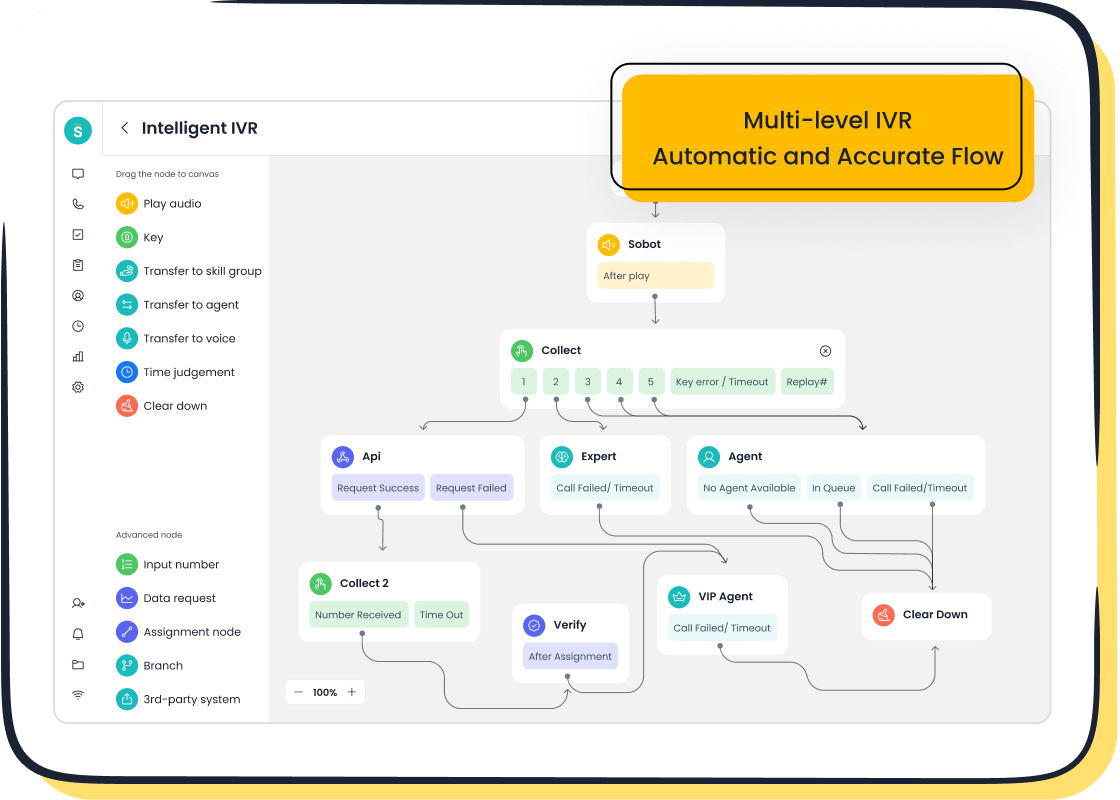
Sobot’s ai capabilities include a voicebot for phone support, live chat for web and app conversations, and a ticketing system that tracks every customer request. These features help you provide personalized experiences and keep your customers happy. You can see how ai-driven automation improves efficiency and reduces costs. Businesses that use ai-first crm report higher customer satisfaction and faster response times. Sobot’s platform, for example, supports over 6 million online communications and 3 million phone calls every day, with a system uptime of 99.99% (source).
You also benefit from ai ensuring that complex issues reach the right human agent. This smooth handoff keeps your service consistent and reliable. Automation in new crm systems means you do not have to do everything by hand. You can trust the system to handle repetitive tasks, so you can focus on building strong relationships.
Here are some key benefits you get from automation and ai in new crm:
- Improved customer insights from ai analysis of customer data.
- Personalized customer experience through predictive analytics.
- Streamlined sales and marketing with automated processes.
- Optimized customer support with 24/7 ai chatbots.
- Data-driven decision-making with real-time insights.
Omnichannel Communication
Modern crm systems let you connect with your customers on any channel they choose. You can talk to them by phone, chat, email, social media, or messaging apps like WhatsApp. Sobot’s contact center solution brings all these channels together in one place. You do not have to switch between different tools or worry about missing messages.
Omnichannel communication gives you:
- Seamless and integrated messaging across all channels.
- Consistent customer experience, no matter where the conversation starts.
- Personalized experiences based on customer behavior and preferences.
- The ability to gather customer data from every touchpoint.
With new crm, you can follow a conversation as it moves from chat to email to phone. Your agents see the full history, so they can help customers without asking them to repeat information. Sobot’s unified workspace makes this possible by combining all messages, tickets, and customer data in one view (source). This approach leads to higher satisfaction and loyalty.
Brands that use omnichannel support see better results. Studies show that companies with integrated customer experiences increase conversion rates and reduce churn. Businesses that unify their digital channels report a 9.5% yearly increase in revenue. You can build trust and keep your customers coming back by offering a smooth, engaging experience.
Here is what makes omnichannel support in new crm systems so effective:
- Integrated experiences boost satisfaction and loyalty.
- Consistent messaging reduces confusion and errors.
- Targeted communication increases engagement and sales.
- Real-time data accessibility helps you respond quickly.
Data Analytics and Insights
You can use data analytics in modern crm systems to make smarter decisions. These systems collect and analyze customer data from every interaction. You get real-time insights into what your customers want and how they behave. Sobot’s platform uses ai to process data and give you actionable recommendations.
With new crm, you can:
- Segment your customers by demographics, purchase history, and engagement.
- Personalize your marketing messages for each group.
- Forecast sales trends using historical data.
- Adjust your strategy based on real-time data analysis.
Sobot’s ai capabilities help you spot patterns in customer behavior. You can predict what your customers need and offer them the right products or services at the right time. This level of hyper-personalization leads to better results. For example, a global retail brand saw a 37% increase in customer retention and a 25% boost in satisfaction after using an ai-first crm.
The table below shows how data analytics in new crm systems can improve your business:
| Statistic | Value |
|---|---|
| Likelihood of exceeding sales goals with CRM | 86% |
| Businesses that met or exceeded sales goals | 97% |
| Increase in sales revenue after CRM implementation | 21-30% |
| Higher customer retention rates after using CRM | 93% |
You can see how real-time insights from customer data help you stay ahead of the competition. Sobot’s data analytics tools let you track performance, measure customer satisfaction, and optimize your operations. You get the information you need to make quick, informed decisions.
Modern crm systems give you the power to:
- Segment customers for targeted campaigns.
- Personalize every interaction.
- Forecast sales and plan resources.
- Use ai-driven automation to improve efficiency.
- Access real-time data for better decision-making.
With Sobot, you get a complete ai-first crm solution that brings together automation, omnichannel communication, and advanced data analytics. You can manage every part of the customer journey, from first contact to long-term loyalty. This is how new crm systems help you grow your business and deliver outstanding service.
Mobile CRM and Accessibility
Mobile Integration in Modern CRM
You need to stay connected with your customers wherever you go. Mobile crm gives you this power. You can access customer data, answer questions, and update records from your phone or tablet. Sobot’s mobile crm works on Android and iOS, so you can use it on any device. You do not have to sit at a desk to help your customers. You can check messages, make calls, and see tickets from anywhere.
Mobile crm makes your work easier. You get real-time updates, so your team always has the latest information. You can see what your coworkers are doing and share notes quickly. This helps you avoid mistakes and keeps everyone on the same page. Sobot’s mobile crm also supports global telephony. You can call customers in any country without switching apps. This feature is important for businesses with customers around the world.
Here are some ways mobile crm helps you every day:
- You can check customer details before a meeting.
- You can send follow-up messages right after a call.
- You can update tickets while you travel.
- You can see all your tasks in one place.
Mobile crm lets you work smarter and faster. You do not waste time looking for information. You always know what your customers need.
Enhancing Customer Contact on the Go
Mobile crm changes how you talk to your customers. You can answer questions right away, even if you are not in the office. This quick response makes your customers happy and builds trust. Mobile crm helps you manage your contacts, schedule meetings, and track every conversation. You can use location-based tools to find customers near you. This saves time and helps you plan your day better.
The table below shows how mobile crm improves your work:
| Benefit | Description |
|---|---|
| Real-time access | You get customer data right away, so you can make smart choices and reply fast. |
| Streamlined operations | Mobile crm does simple tasks for you, so you can focus on helping customers. |
| Enhanced collaboration | You and your team can share updates and work together easily. |
| Increased productivity | You can set up meetings and follow-ups while you move, saving time and energy. |
Mobile crm gives you tools for quick and easy communication. You can send messages, make calls, and check updates in seconds. You can also see reports and track your progress. This helps you reach your goals and keep your customers happy. Sobot’s cloud-based mobile crm lets you do all this with a simple app. You do not need to worry about missing important messages or calls. Mobile crm keeps you connected and ready to help at any time.
Tip: Use mobile crm to check your schedule and customer notes before every meeting. This helps you feel prepared and confident.
Mobile crm is now a must-have for every business. You can work from anywhere, help your customers faster, and keep your team connected. With mobile crm, you turn every moment into a chance to build better relationships.
Comparing Early CRM vs Modern CRM Systems
Customer Communication and Experience
You can see the key differences between traditional crm and modern crm systems most clearly in how you communicate with your customers. In the past, traditional crm relied on paper files, spreadsheets, and basic databases. You had to search through scattered notes or separate systems to find customer information. This made it hard to give customers a smooth experience. You often missed important details, and your communication felt generic.
Modern crm systems change this completely. You now get a unified view of every customer interaction. You can see emails, calls, chats, and social media messages in one place. This 360-degree view helps you understand what your customers need and how they feel. You can personalize every message and respond faster. Automation in crm systems lets you handle routine tasks, so you spend more time building real relationships.
Here is a table that shows the key differences in customer communication and experience:
| Feature | Modern CRM Systems | Early CRM Practices |
|---|---|---|
| Customer Interaction View | Unified view across multiple touchpoints | Fragmented and siloed data |
| Automation | Automates routine tasks to enhance efficiency | Manual processes prone to errors |
| Data Accessibility | Instant access to crucial customer data | Limited access and visibility |
| Personalization | Enables tailored interactions based on customer data | Generic communication |
| Analytics | Advanced analytics for insights into customer behavior | Minimal data analysis capabilities |
Modern crm systems give you advanced analytics. You can track trends, measure customer satisfaction, and adjust your approach. You can also automate workflows, so your team focuses on important conversations. This leads to higher customer satisfaction and loyalty.
- Modern crm systems provide a 360-degree view of customer interactions.
- They automate workflows, allowing agents to focus on critical customer engagement.
- Advanced analytics capabilities help you identify trends and optimize support strategies.
You move from managing contacts to managing relationships. This shift is one of the most important key differences between traditional crm and modern crm systems.
Integration and Scalability
Integration capabilities set modern crm systems apart from traditional crm. In the past, you had to enter data by hand and switch between different tools. Traditional crm often could not connect with other business platforms. This made your work slow and increased the risk of mistakes.
Modern crm systems solve this problem. You can connect your crm to email, chat, phone, and even social media. Cloud-based crm systems let you access your data from anywhere. You can scale your operations as your business grows. Automation and flexibility help you adapt to new challenges.
Here is a table that highlights the key differences in integration and scalability:
| Feature | Traditional CRM | Modern CRM |
|---|---|---|
| Scalability | Limited scalability options | Designed to scale with businesses |
| Integration | Often requires manual processes | Seamless integration with various platforms |
| Flexibility | Rigid workflows | Supports automation and flexibility |
You benefit from streamlined integration for efficient data exchange. Modern crm systems operate in the cloud and integrate with your existing tools, reducing manual admin. AI-first crm systems adapt to changing needs and market conditions. You can add new features or channels as your business grows. This flexibility is a key difference that helps you stay competitive.
- New crm systems are cloud-based, allowing access from anywhere.
- They offer better compatibility with various digital platforms.
- Modern crms operate in the cloud and integrate with existing tools, reducing manual admin.
- AI-first crm systems adapt to changing needs and market conditions.
- They integrate seamlessly with other tools and platforms.
You no longer worry about outgrowing your crm. Modern crm systems grow with you, making them a smart choice for any business.
Real-World Impact: Sobot Case Study
You can see the real impact of modern crm systems by looking at OPPO’s experience with Sobot. OPPO, a global leader in smart devices, faced challenges during busy shopping seasons. They needed to handle a surge in customer inquiries and maintain high customer satisfaction. Traditional crm could not keep up with the volume or complexity.
OPPO chose Sobot to upgrade their customer relationship management. Sobot’s crm systems provided automation, ai-powered chatbots, and seamless integration with OPPO’s business systems. This allowed OPPO to answer common questions instantly and route complex issues to human agents. The result was a dramatic improvement in customer satisfaction and efficiency.
Here is a table showing OPPO’s results after implementing Sobot crm systems:
| Metric | Before Implementation | After Implementation | Improvement |
|---|---|---|---|
| Churn Rate | N/A | 15% reduction | 15% reduction |
| Customer Satisfaction Score | N/A | 20% increase | 20% increase |
| Resolution Rate | N/A | 83% | 83% |
| Positive Sentiment Score | N/A | 94% | 94% |
| Annual Support Cost Reduction | N/A | $1.3 million | $1.3 million |
You can see the key differences in outcomes. OPPO achieved an 83% resolution rate and a 94% positive sentiment score. Their customer satisfaction increased by 20%. They also reduced annual support costs by $1.3 million. These results show how modern crm systems deliver real business value.
Other companies have seen similar results. A global retail brand that used an ai-powered crm system increased customer satisfaction by 25% and reduced complaint resolution time by 30%. They also saw a 335% increase in ROI. These examples show that modern crm systems do more than store data. They help you build stronger relationships, improve customer satisfaction, and grow your business.
Key Differences at a Glance
You can summarize the key differences between traditional crm and modern crm systems:
- Transition from basic databases to powerful interaction management tools.
- Use of data analytics for anticipating customer needs.
- Delivery of seamless experiences across multiple channels.
- Automation of routine tasks for higher efficiency.
- Integration capabilities that support business growth.
- Focus on relationship management, not just data storage.
Modern crm systems give you the tools to understand your customers, personalize every interaction, and scale your business. You move beyond the limits of traditional crm and unlock new opportunities for customer satisfaction and success.
Choosing the Right CRM Solution
Assessing Business Needs
You should start by looking at your business goals and daily challenges. Every company has unique needs, so you must choose crm systems that fit your industry and size. Begin by talking with your team. Ask them about their workflows and where they face problems. Make a list of what you want to improve. For example, you may want to speed up response times or reduce manual work. Involve different departments to get a full picture. This helps you find the right crm for your business.
Here is a simple process you can follow:
- Review your current processes and spot pain points.
- Set clear goals for growth and customer engagement.
- List the features you need in crm systems.
- Check if the crm can connect with your other tools.
- Plan to track results and make changes as needed.
Evaluating CRM Features
When you compare crm systems, focus on features that help you manage customer contact. Look for tools that make your work easier and help you serve your customers better. Important features include:
- Lead management and scoring to find your best prospects.
- Integrated marketing tools for targeted campaigns.
- Mobile access so you can help customers anywhere.
- Easy integration with your current software.
You should also check for contact management, sales automation, marketing automation, and strong reporting tools. These features help you keep all customer information in one place and automate routine tasks. Sobot offers these features in one platform, making it easy for you to manage every customer interaction.
Tip: Choose crm systems that support AI and automation. These tools can save you time and help you make better decisions.
Planning for Growth and Adaptability
As your business grows, you need crm systems that can grow with you. Look for platforms that offer scalability and flexibility. Sobot supports companies of all sizes and industries, from retail to finance. You get automated lead generation, 24/7 customer support, and multilingual options. The table below shows how scalable crm systems like Sobot help your business adapt:
| Feature | Description |
|---|---|
| Automated Lead Generation | Engages visitors, qualifies leads, and schedules demos, allowing sales teams to focus on closing deals. |
| 24/7 Customer Support | Provides immediate answers to common questions, improving satisfaction and reducing support costs. |
| Proactive Engagement | Identifies user struggles and offers help proactively, enhancing user experience. |
| Multilingual Support | Communicates in multiple languages, catering to a global audience. |
You should also consider security. Look for crm systems with AI-powered threat detection, biometric authentication, and compliance with rules like GDPR. Sobot provides secure, scalable solutions trusted by leading brands. This helps you protect customer data and stay ready for future growth.
You can see clear differences between early CRM and modern CRM systems. The table below highlights how modern CRM brings better data, automation, integration, and access for every customer:
| Feature/Aspect | Classic CRM Systems | Modern CRM Systems |
|---|---|---|
| Data Management | Basic contact management | Actionable insights for customer needs |
| Automation | Manual processes | Automated workflows for faster service |
| Integration | Limited | Omnichannel for a unified customer view |
| Accessibility | On-premise only | Cloud-based, work from anywhere |
Solutions like Sobot help you boost customer communication and business results. For example, you can improve agent efficiency by up to 40% and reduce routine inquiries by 70%. You also see higher conversion rates and better customer satisfaction.
| Improvement Area | Percentage Improvement |
|---|---|
| Agent Efficiency | 30-40% |
| Reduction in Routine Inquiries | 70% |
| Increase in Conversion Rates | 15-20% |
| Customer Satisfaction Scores | Improved |
If you want to upgrade your CRM, follow these steps:
- Assess your needs and ask your team about pain points.
- Research CRM solutions and request demos.
- Make sure your CRM integrates with your current tools.
- Use AI and automation to help your team.
- Track your results and adjust your strategy.
Tip: Choose a CRM that grows with your business and puts the customer first.
FAQ
What is a CRM system and why do you need it?
A crm system helps you organize customer information, track interactions, and manage sales. You use crm to improve communication, boost productivity, and grow your business. Companies see up to a 29% increase in sales after adopting crm.
How does modern CRM differ from early CRM practices?
Modern crm uses automation, ai, and real-time data. You get a unified view of customer interactions across channels. Early crm relied on manual processes and basic databases. Modern crm helps you personalize every contact and respond faster.
Can you use CRM on your mobile device?
Yes, you can access crm on your phone or tablet. Mobile crm lets you check customer details, update records, and make calls from anywhere. Sobot’s crm supports Android and iOS, helping you stay connected on the go.
How does CRM improve customer satisfaction?
CRM systems help you respond quickly, personalize messages, and track every interaction. You see customer history in one place. Businesses using crm report higher satisfaction scores and better retention rates.
Is CRM secure and scalable for growing businesses?
Modern crm platforms like Sobot offer advanced security features and cloud-based scalability. You protect customer data with encryption. You can add new features as your business grows. CRM adapts to your needs and keeps your information safe.
See Also
Essential Aspects of Call Center CRM Software Solutions
Best No-Cost Call Center CRM Tools for 2024
Understanding Quality Management Systems in Call Centers
Effective Strategies for Quality Management in Call Centers
Comprehensive Overview of Omnichannel Solutions for Call Centers

