Help Desk vs Contact Center A Support Evolution Story


The debate of help desk vs contact center highlights a major shift in customer support. A help desk reacts to problems. A modern contact center from Sobot proactively manages the entire customer experience. This evolution is driven by new technology and rising customer expectations. A customer wants fast, effective support. Businesses that understand this journey can significantly boost efficiency and customer satisfaction.
Proactive contact centers see a 14.0% annual improvement in satisfaction rates. This is double the improvement seen in reactive models. Understanding this evolution is key for any business.
Help Desk vs Contact Center The First Stage
The story of modern customer support begins with the help desk. This initial stage represents the classic, reactive approach to solving problems. The core idea was simple. When something broke, an employee needed a dedicated place to call for a fix. This model laid the groundwork for the entire help desk vs contact center evolution by establishing a formal channel for technical assistance. It was the essential first step in organizing how businesses handled internal issues.
The Reactive Help Desk Model
The traditional help desk operated on a reactive basis. It did not seek out problems. Instead, it waited for a user to report an issue. An agent’s job was to respond to these incoming requests and restore normal service as quickly as possible. The focus was entirely on resolution. This model was a cost center for the business, designed to minimize employee downtime and maintain operational stability.
The types of issues handled were almost always technical and internal. This form of support was a lifeline for employees facing daily operational hurdles. Common problems included:
- Password resets for locked accounts
- Basic software setup and installation
- Troubleshooting glitches in applications
- Fixing hardware issues like printer jams
This reactive stance meant the relationship with the customer, in this case an internal employee, was transactional. The interaction started with a problem and ended with a solution. There was little focus on the overall user experience or proactive assistance.
Core Function and Technology
The primary function of a help desk was, and often still is, technical problem-solving. Its scope is narrow and deep. Agents require specific technical knowledge to diagnose and resolve complex IT issues. This differs greatly from the broader scope of customer service found in later evolutionary stages.
The customer support technology of a traditional help desk was built for one purpose: managing incidents. The key tools included:
- Ticketing Systems: To log, track, and manage user requests.
- Knowledge Bases: To store troubleshooting steps and solutions for common problems.
- Remote Desktop Tools: To allow agents to directly access and fix a user's computer.
These systems were often siloed from other business departments. They rarely integrated with a sales or marketing CRM because their function was not commercial. The goal was not to understand the customer journey but to close a support ticket efficiently. A Salesforce study found that 82% of customers expect to solve complex problems by talking to one person. The help desk model, with its specific technical focus, often struggled to meet this expectation for non-technical issues, highlighting a key area for future evolution.
The following table clearly outlines the fundamental differences in function and purpose that define this first stage of support.
| Feature | Help Desk | Call Center |
|---|---|---|
| Primary Function | Provides technical support for IT-related issues. | Handles a high volume of calls for customer service and sales. |
| User Base | Internal employees or external clients using a specific product. | External customers. |
| Scope of Issues | Specific technical problems like software bugs or hardware failures. | Broad inquiries like billing, order taking, and product info. |
| Agent Skills | Technical expertise and diagnostic skills. | Strong communication and customer service orientation. |
| Tools Used | Ticketing systems, knowledge bases, remote desktop tools. | CRM systems, call routing software, auto-dialers. |
| Proactive vs. Reactive | Primarily reactive, responding to user-initiated issues. | Can be both reactive (inbound service) and proactive (outbound sales). |
Understanding this foundation is critical. The limitations of the reactive help desk—its narrow focus, siloed technology, and transactional nature—created the need for a more customer-centric approach. This set the stage for the next phase in the help desk vs contact center journey: the rise of the call center.
Stage 2 The Call Center and Voice Support

The evolution in the help desk vs contact center story continues with the call center. As businesses grew, the focus expanded beyond internal employees. Companies needed a way to manage large-scale interactions with their external customer base. This marked a fundamental shift from providing technical fixes to delivering broad customer service.
The Shift to External Customer Service
The 1990s brought a new business landscape. Globalization and outsourcing became major trends. Companies moved their support operations to external call centers, often in other countries, to reduce costs. The primary function was no longer just IT support. It now included a wide range of customer-facing tasks:
- Answering billing questions
- Taking sales orders
- Providing product information
- General account assistance
This new model centered on the external customer. The goal was to handle a high volume of voice calls efficiently. The service provided was transactional, but its audience was now the paying public, making every call a direct reflection of the brand.
Focusing on Call Efficiency Metrics
Managing thousands of calls required a new focus on performance. The contact center introduced key metrics to measure efficiency. Two of the most important were:
- Average Handle Time (AHT): The industry benchmark is around 7 minutes per call.
- First Call Resolution (FCR): Top-performing centers aim for an FCR rate above 85%.
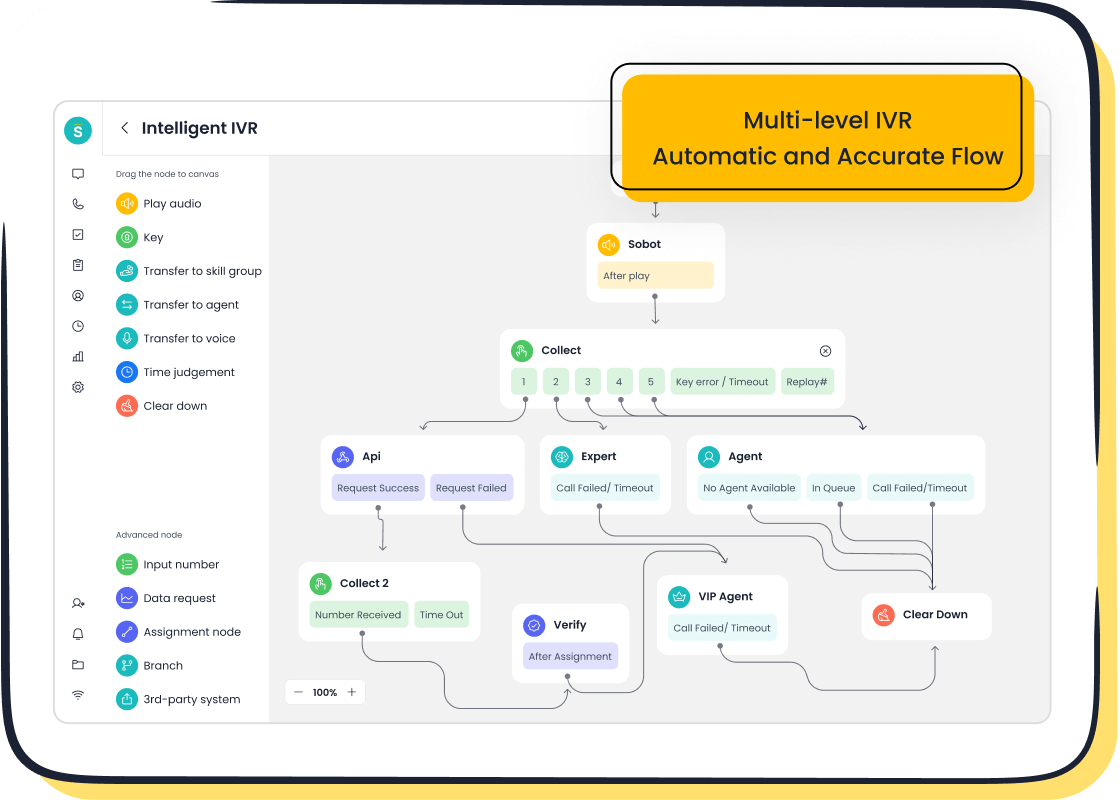
Improving these numbers became a primary goal. This is where modern customer support technology makes a difference. Solutions like Sobot's Voice/Call Center are designed to optimize performance. Features like Intelligent IVR gather information from a customer upfront. This allows Smart Call Routing to send the call to the agent with the right skills, reducing transfers and improving the chance of a first-call resolution. Agents use a Unified Workspace to see all customer information in one place, enabling faster and more effective assistance. This technology provides the foundation for excellent service and efficient operations.
Stage 3 The Multichannel Contact Center
The next leap in the help desk vs contact center story came with the internet boom. Businesses realized that customer communication was no longer limited to the telephone. This led to the rise of the multichannel contact center, an evolution that brought both new opportunities and significant challenges.
Adding Digital Communication Channels
The multichannel model added a variety of digital channels to the traditional voice-centric operation. Customers could now reach out through their preferred method. This shift was driven by changing consumer habits.
- Live chat support quickly became a favorite, boasting a 92% customer satisfaction rate.
- Email became a primary channel for detailed inquiries.
- Social media emerged as a public forum for customer service, with 80% of consumers expecting brands to be active there.
This expansion gave businesses more ways to connect with each customer. The goal was to be available everywhere. However, simply adding more channels did not create a better experience. It created more entry points for support, but these entry points were not connected.
The Challenge of Siloed Conversations
The biggest flaw of the multichannel model was its fragmented nature. Each channel operated in its own silo. A customer might email a company one day, use live chat the next, and call the following week. Agents in each of these channels had no visibility into the previous interactions.
This disconnection is a major source of frustration. Studies show that 66% of consumers are annoyed when they have to repeat their information to different support staff.
These data silos create massive operational inefficiencies. Agents waste time gathering information the company already has, and the customer is forced to explain their issue over and over. This broken journey slows down service and damages the customer relationship. The multichannel system offered more ways to talk but lacked the intelligence to listen. This critical failure highlighted the need for a truly unified omnichannel approach to deliver seamless omnichannel support.
Stage 4 The Modern Contact Center Solution
The final stage in the help desk vs contact center evolution directly solves the failures of the multichannel model. Siloed conversations created a broken and frustrating journey. The modern contact center rebuilds this journey from the ground up. It focuses on one core principle: a single, unified customer experience. This is not just about adding more channels. It is about weaving them together into a seamless conversation.
Unifying the Customer Experience
The modern contact center erases the lines between communication channels. It creates a persistent, context-aware environment where the customer never has to repeat themselves. This is achieved through a unified platform, like Sobot's Omnichannel Solution, which acts as a central hub for all customer interactions.
A unified agent workspace is the engine of this new model. It empowers agents to deliver exceptional service by giving them the right tools and information at the right time. This unified approach includes:
- Managing all communication channels (email, chat, voice, social media) from a single screen.
- Centralizing all customer data, including past conversations and purchase history, into a 360-degree view.
- Integrating telephony so agents can handle calls directly from their desktop without switching applications.
- Providing a built-in knowledge base for instant access to answers, improving resolution speed.
This level of integration is powered by a sophisticated technology stack. A modern contact center solution is built on key components that work together to deliver a seamless experience. These include omnichannel communication systems, deep Customer Relationship Management (CRM) integration, and powerful analytics. By syncing the CRM in real-time, the platform ensures every agent has the most current information, eliminating fragmented communication and delivering truly responsive support.
From Proactive Support to AI-Powered Insights
True evolution goes beyond simply reacting faster. The modern contact center shifts the entire paradigm from reactive assistance to proactive engagement. It uses technology not just to solve problems, but to anticipate them. This proactive support is made possible by the power of artificial intelligence (AI).
Instead of waiting for a customer to report an issue, businesses can now use data to get ahead of problems. Examples of proactive support in action include:
- Automated Chatbots: An AI chatbot can do more than answer questions. It can proactively notify a customer that their order is ready for pickup, preventing them from having to ask.
- Anticipatory Resources: By analyzing past support tickets, a company can identify common pain points. It can then create personalized videos or guides that explain complex topics, like a customer's first bill, reducing inbound calls.
- Dynamic FAQs: A searchable and well-organized FAQ center allows customers to find answers on their own, empowering them with self-service options 24/7.
This proactive approach is fueled by AI-powered insights. By analyzing every interaction across all channels, AI can uncover deep patterns in customer behavior and sentiment.
Did you know? AI-powered sentiment analysis can identify at-risk customers in real-time. This allows support teams to intervene before a customer becomes frustrated, significantly reducing churn.
This technology gives businesses a powerful new sense of awareness. AI algorithms analyze text and voice interactions to gauge emotional tone, providing a clear view of customer satisfaction. This allows managers to identify successful agent behaviors and use them for team-wide coaching. Furthermore, by analyzing trends in real-time interactions, businesses can spot emerging issues or viral topics, allowing them to react quickly. This use of automation and AI transforms customer support from a cost center into a strategic intelligence hub, driving better service and strengthening the overall customer relationship.
The Evolution in Action A Customer Story
The journey from a siloed help desk to a unified contact center is best understood through a real-world example. The story of Opay, a leading financial service platform, shows how this evolution delivers powerful results. It demonstrates the true value of a modern omnichannel support strategy.
Overcoming Fragmented Communication
Opay faced a major challenge. As a one-stop financial platform for tens of millions of users, it managed a massive volume of customer interactions. These conversations happened across disconnected channels like social media, email, and voice calls. This fragmentation created an inefficient and frustrating experience for both agents and the customer.
To solve this, Opay adopted Sobot’s Omnichannel Solution. This platform unified all communication channels into a single, integrated workspace.
Opay successfully consolidated its customer service across social media, email, and voice channels. Agents no longer needed to switch between multiple systems. They could manage all customer interactions from one screen, providing faster and more consistent service.
This move was the key to delivering excellent support at scale. It broke down the data silos and created a single source of truth for every customer conversation.
Achieving a 90% Customer Satisfaction Rate
The results of this transformation were immediate and impressive. By unifying its support operations, Opay dramatically improved its performance and delivered a superior customer experience. The implementation of chatbots to handle routine queries also played a key role in boosting efficiency.
The key benefits included:
- Customer satisfaction at Opay soared from 60% to 90%.
- Overall operational costs dropped by over 20%.
- An intelligent IVR system allowed 60% of customers to resolve issues independently.
This new efficiency also drove business growth, contributing to a 17% increase in conversion rates. The Opay story proves that a true omnichannel platform does more than just manage conversations. It transforms customer support from a cost center into a powerful engine for satisfaction and growth. You can learn more about their success on the Opay customer story page.
The help desk vs contact center story shows a clear evolution. Support grew from a simple help desk to a unified, intelligent system. This journey reflects a major strategic shift. Businesses now focus on managing the holistic customer relationship, not just resolving tickets. This customer-centric approach turns every interaction into an opportunity to build loyalty. Adopting an all-in-one solution is crucial for delivering excellent service and thriving in today's market. It is time for your business to Embark on Your Contact Journey.
FAQ
What is the main difference between a help desk and a contact center?
A help desk offers reactive technical support. A modern contact center proactively manages the entire customer journey. It uses technology for a unified customer service experience. This evolution meets higher customer expectations for quick, seamless assistance.
How does a CRM improve customer service?
A CRM system gives agents a complete view of the customer. Integrating the CRM provides context from past interactions. This CRM data allows for personalized assistance. A good CRM integration is essential for efficient customer service.
What role does AI play in modern support?
AI powers automation and provides intelligent assistance. Chatbots handle simple customer questions, freeing up agents. AI also analyzes data to predict customer needs. This AI-driven assistance helps teams deliver faster, more proactive support.
Why is a unified platform important?
A unified platform connects all communication channels. It prevents a customer from repeating information. This system uses CRM data for consistent assistance. It creates a seamless experience for every customer and integrates with the CRM.
See Also
Transforming Customer Support with AI-Powered Service Agents: A New Era
Evaluating the Best Contact Center Solutions and Platforms for 2024
In-Depth Reviews of Leading Cloud Contact Center Services This Year
Elevate Your SaaS Customer Support Using Effective Live Chat Strategies
Your Comprehensive Guide to Omnichannel Call Center Software Solutions

