Your Guide to 2026's Outsourced CX Trends


By 2026, four pivotal shifts will define outsourced customer experience management. These CX trends include Agentic AI, a focus on Agent Experience (AX), the shift to value hubs, and fortified data security. The outsourced customer experience market is growing fast, making these trends a competitive necessity.
| Metric | Value |
|---|---|
| Market Size (2022) | USD 7.5 Billion |
| Projected Market Value (2030) | USD 17 Billion |
| CAGR (2024-2030) | 13.5% |
Intelligent automation with AI is now a practical tool. A better agent experience directly builds customer loyalty. Partners like Sobot use Sobot AI and the Sobot call center to transform CX. This creates a superior customer experience and turns a cost center into a strategic asset for every customer.
Trend 1: Agentic AI and Other Key CX Trends
The evolution of AI is one of the most significant CX trends for 2026. AI is moving beyond simple, rule-based chatbots. The future is Agentic AI, where autonomous systems act as true partners to human agents. This shift redefines the roles within a support team, creating a powerful new synergy.
The New AI-Human Partnership
The partnership between humans and AI allows each to excel. Agentic AI handles high-volume, repetitive tasks with speed and accuracy, while human agents focus on complex, high-value customer interactions that require empathy and critical thinking. This creates a better overall customer experience.
| Feature | Simple Chatbots | Agentic AI |
|---|---|---|
| Core Function | Serve generic, canned responses. | Perform complex tasks autonomously. |
| Context/Tone | Limited understanding of context. | Understands context and tone; learns continuously. |
| Task Complexity | Handles basic FAQs and scheduling. | Manages complex workflows and personalized assistance. |
This model allows businesses to scale support efficiently. For example, Sobot’s AI Chatbot can instantly resolve common queries and collect initial customer feedback, freeing up agents to manage escalated issues. This ensures every customer receives the right level of support.
Preparing for the Agentic AI Shift
Adopting Agentic AI requires a strategic approach. Businesses must prepare their teams and systems for this change. A successful transition focuses on integration, not just implementation.
Pro Tip: Start by assessing your business needs to find a high-value use case for an AI pilot. After implementation, continuously measure key metrics like resolution time and customer satisfaction. Use these insights to refine the AI's performance and build trust in its capabilities.
Automating with AI Copilots
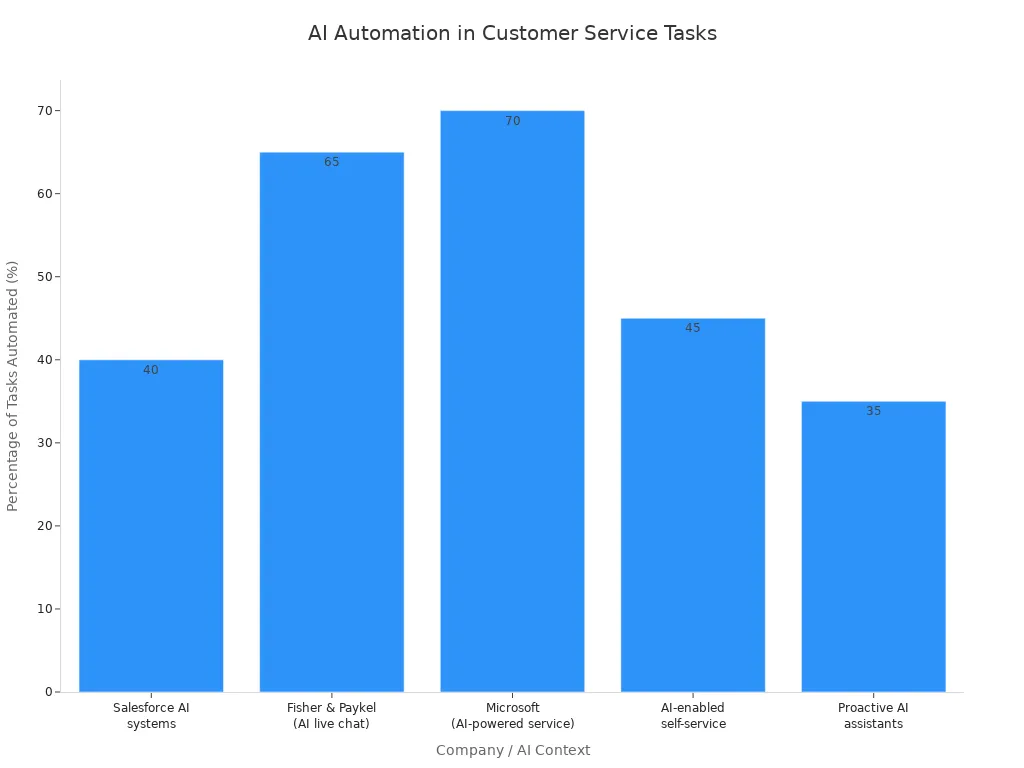
AI copilots are becoming essential tools for agents. These assistants work alongside humans, automating tasks and providing real-time support. The impact on efficiency is substantial, with some companies seeing significant reductions in the need for human intervention for routine tasks. This automation directly improves the customer experience by speeding up resolutions.
Copilots can analyze customer sentiment, summarize long conversations, and retrieve information from knowledge bases instantly. This support reduces an agent's cognitive load, allowing them to deliver a more focused and empathetic CX. Analyzing customer feedback becomes an automated process, providing valuable insights for service improvement.
Mapping Journeys for AI Intervention
To maximize the benefits of AI, businesses must identify the right intervention points in the customer journey. A well-mapped journey reveals moments where AI can reduce friction for both the customer and the agent.
- Pinpoint High-Value Areas. Focus AI implementation on high-volume or complex workflows where it can deliver the most significant impact on the customer journey.
- Equip Teams with AI Tools. Provide agents with AI-powered tools to analyze customer feedback and gain real-time insights, enabling faster and more consistent CX.
- Manage the Entire Journey. Unify all customer touchpoints to create a cohesive experience, making it easier to see where AI can best improve the overall CX.
By strategically mapping the journey, companies can ensure their AI investments deliver tangible results, turning these technology trends into a competitive advantage.
Trend 2: Agent Experience (AX) Drives Outsourced Customer Experience
In 2026, a top-tier outsourced customer experience hinges on a superior Agent Experience (AX). The direct link between employee satisfaction and customer loyalty is one of the most critical trends for business leaders. A positive work environment reduces costly turnover and improves service quality. Investing in AX is no longer a perk; it is a core strategy for building a resilient and effective outsourced customer experience management program.
The AX to CX Connection
A strong AX directly creates a better customer experience. Happy agents lead to happy customers. When agents feel valued and have clear career paths, their job satisfaction increases. This boosts agent retention and attracts top talent.
A senior director of customer care noted a significant impact: “Before, our agent attrition rate was 20% a month. Now, we are down to 13%.” This improvement was partly due to a better agent interface and more work flexibility, showing a clear link between a positive experience and higher retention.
This focus on retention is crucial for a stable and knowledgeable support team, which is the foundation of excellent CX.
Empowering Agents for Success
Empowering agents means giving them the right tools. Outdated systems create friction and frustration, hurting both the agent experience and the customer interaction. Modern solutions provide a complete view of the customer journey. For instance, Sobot's Omnichannel Solution offers a Unified Workspace. It combines tools like live chat and a ticketing system into one interface. This gives agents a full history of every customer, enabling them to provide fast and personalized support. This empowerment improves first-contact resolution and builds customer loyalty.
AI-Driven Training and Development
AI is transforming agent training. AI-driven simulations accelerate onboarding and skill development, reducing training time by up to 30%. These tools create realistic scenarios, allowing agents to practice handling difficult customer interactions in a safe environment. For example, AI can simulate different customer personalities and emotions. This helps agents develop the soft skills needed for complex problem-solving. This advanced training ensures agents are prepared for any customer situation, improving their confidence and performance. Better training leads to better CX and higher agent retention.
The Importance of Employee Feedback
Agents are on the front lines of customer interactions. They have direct insight into customer problems and needs. Creating channels for agents to share this feedback is essential for improving the overall experience. An organized system allows managers to identify common issues and patterns. This feedback loop helps refine processes, update knowledge bases, and improve the customer journey. Listening to agents makes them feel heard and valued, which enhances their job satisfaction and retention. This practice turns an outsourced team into a source of valuable business intelligence, strengthening the entire CX operation.
Trend 3: Proactive Value Hubs: The Future of Outsourcing Trends
The most strategic of the 2026 CX trends is the evolution of outsourced support teams from reactive cost centers into proactive value hubs. This model redefines the purpose of customer service. Instead of just fixing problems, teams now focus on creating value, driving revenue, and increasing Customer Lifetime Value (CLV). This shift turns the outsourced customer experience into a powerful engine for growth.
From Cost Center to Value Hub
Traditionally, businesses viewed contact centers as a necessary expense. The new paradigm sees them as revenue generators. By focusing on value creation, companies can achieve a significant return on investment. This transformation requires a deep commitment to improving the customer experience at every touchpoint.
| Industry | Average ROI from Value Creation |
|---|---|
| High-Tech Manufacturing | 300-500% |
| SaaS Technology | 250-400% |
| Financial Services | 200-300% |
This data shows that investing in a value-driven CX strategy delivers substantial financial returns across various sectors.
Shifting to Value-Driven KPIs
To become a value hub, teams must adopt new Key Performance Indicators (KPIs). Metrics like Average Handle Time are replaced by goals centered on customer loyalty and retention. The focus moves to CLV, which measures the total revenue a business can expect from a single customer.
Real-World Example: OPPO transformed its customer service by partnering with Sobot. By implementing AI solutions, OPPO achieved an 83% chatbot resolution rate. This efficiency freed up agents to build better relationships, leading to a 57% increase in repurchase rate. This demonstrates a clear shift from saving costs to creating long-term customer value.
Proactive and Personalized Engagement
Value hubs thrive on proactive engagement. Instead of waiting for a customer to report an issue, teams use data and AI to anticipate needs. This allows for hyper-personalization, where every interaction is tailored to the individual customer's journey. Proactive engagement strategies include:
- Monitoring customer accounts to identify usage patterns.
- Informing a customer about new features relevant to them.
- Reaching out before a potential issue escalates.
This approach makes the customer feel understood and valued, strengthening their connection to the brand. This level of personalization is a key driver of a positive experience.
Identifying Revenue Opportunities
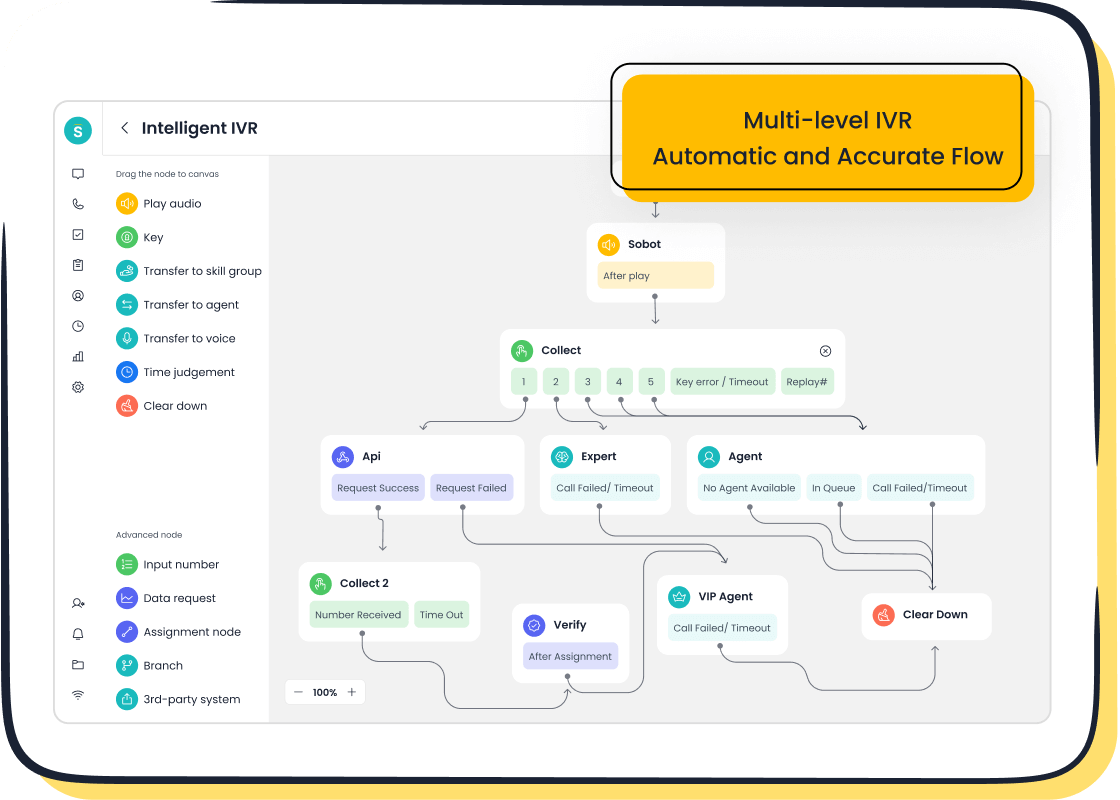
A proactive outsourced customer experience team actively identifies opportunities for upselling and cross-selling. With a complete view of the customer journey, agents can recognize buying signals and make relevant recommendations. AI plays a crucial role here. For example, the AI analytics within Sobot's Voice/Call Center can analyze call transcripts to flag conversations where a customer expresses a need that a premium product could solve. This AI-driven insight empowers agents to transition smoothly from service to sales, turning a support interaction into a revenue-generating opportunity and enhancing the overall customer experience.
Trend 4: Fortified Security and AI Governance
As AI becomes central to the customer experience, trust emerges as the most valuable currency. A single data breach can destroy a customer relationship forever. For this reason, robust security and ethical AI governance are non-negotiable trends. Strong outsourced customer experience management depends on protecting every customer. This commitment is fundamental to building lasting loyalty.
Trust as the New CX Currency
Data security is a top priority for the modern customer. Studies show that 90% of consumers consider the security of their personal information a primary concern. A data breach can cause 65% of customers to lose trust in a company. This makes building customer trust a critical business objective. When a customer interacts with an AI system, they expect their data to be safe. A secure experience is now a core component of a positive CX. Any failure here puts brand reputation and customer loyalty at risk.
Building a Trust-First Strategy
A trust-first strategy requires transparency and powerful security protocols. Businesses must be clear about how they use customer data. They also need to implement next-generation security. This includes data encryption, strict access controls, and regular security audits. For outsourced customer experience management, the technology partner is key. Solutions like Sobot's Voice/Call Center provide a stable and secure foundation. Its 99.99% SLA and encrypted data transfer ensure that every customer interaction is protected. This technical reliability is essential for a trustworthy CX.
Improving Outsourced Customer Experience Management
Managing security with an external partner presents unique challenges. The partner needs access to sensitive customer information to do their job well. This increases the risk of data breaches if not managed properly. Improving outsourced customer experience management means choosing partners with transparent security practices. It is vital to ensure the partner's technology aligns with your security standards. This protects the customer and the wealth of data generated from daily AI interactions. A secure partnership turns a potential vulnerability into a strength.
Establishing an Ethical AI Framework
An ethical AI framework guides the responsible use of AI technology. This framework ensures the AI operates with fairness, transparency, and accountability. Key principles include:
- Respect for Privacy: The AI must have clear rules for data collection and use, always with customer consent.
- Fairness and Avoiding Bias: The AI should be audited continuously to prevent biased outcomes for any customer.
- Human Oversight: A person must always be able to intervene, especially in sensitive situations.
This ethical approach to AI ensures the technology enhances the human experience, rather than creating new problems. It is the final piece in building a secure and trusted CX.
The future of outsourced customer experience is clear. Four trends define success: Agentic AI, agent experience, value hubs, and security. The best CX fuses intelligent AI with an empowered human workforce. This creates a superior experience for every customer. Businesses that embrace these AI-driven CX changes will build lasting customer loyalty. They will transform their customer experience centers from cost centers into powerful engines for growth, turning every interaction into an opportunity to strengthen customer loyalty.
FAQ
How does Agentic AI change the outsourced customer experience?
Agentic AI automates routine tasks. This allows human agents to handle complex issues requiring empathy. This AI-human partnership makes the outsourced customer experience more efficient and personalized, improving overall service quality and customer satisfaction.
Why is Agent Experience (AX) important for outsourcing?
A positive Agent Experience reduces turnover and attracts top talent. Happy, empowered agents provide better service. Investing in AX directly improves the quality of your outsourced customer experience and builds stronger customer loyalty for the brand.
What is a proactive value hub?
A value hub transforms a support team from a cost center into a revenue driver. It focuses on proactive engagement and identifying sales opportunities. This model elevates the outsourced customer experience by increasing Customer Lifetime Value (CLV).
How can businesses ensure data security with an outsourced partner?
Businesses should choose partners with strong security protocols. Look for features like data encryption and high uptime SLAs. A secure partner like Sobot protects customer data, which builds trust and is essential for a successful outsourced customer experience.
See Also
Discovering the Best Cloud Contact Center Platforms for 2025
Evaluating Leading Contact Center Solutions: A 2024 Review
Analyzing Premier Cloud Contact Center Services: 2024 Insights
Your Essential Guide to Omnichannel Call Center Software Solutions

