Your 2026 Guide to Monitoring Calls for Quality

Your traditional call quality monitoring is slow. This monitoring can be biased. It fails to meet modern customer expectations. In 2026, AI-powered call quality monitoring is necessary. It ensures your quality assurance program delivers quality. Your quality monitoring software needs to evolve. Is your quality assurance program built for the future? A modern program improves the customer experience. This guide provides a blueprint for an effective program. It details call center monitoring, quality monitoring software, and monitoring calls for quality assurance. Excellent call center monitoring and quality monitoring software from Sobot can help. Sobot AI and the Sobot call center improve your quality monitoring. This monitoring ensures quality for every customer. Your team needs this quality monitoring. The customer deserves quality. This monitoring program provides quality for each customer.
Foundations of Call Quality Monitoring
Building a future-ready quality assurance program starts with understanding its core principles. You must grasp what call quality monitoring is, why it matters, and how it has evolved. This foundation prepares your call center for a new era of performance and customer satisfaction. Effective call center monitoring and management depend on these basics.
What is Call Quality Monitoring?
Call quality monitoring is the practice of listening to and analyzing agent-customer interactions. You review these conversations against a set of standards. The process helps you identify areas for agent improvement and opportunities to enhance the customer experience. Modern quality monitoring software automates this entire process, providing deep insights into every call. This monitoring is crucial for consistent service quality.
The Goal of Monitoring Calls for Quality Assurance
The ultimate goal of monitoring calls for quality assurance is to drive business success. A well-designed program helps you achieve several key objectives. Your call center quality management efforts should aim to:
- Enhance customer interactions
- Boost overall service quality
- Optimize agent performance
- Improve customer satisfaction
- Increase the accuracy of call evaluations
Achieving these goals creates a direct path to better business outcomes and stronger brand loyalty. This assurance process is vital for quality management.
From Manual Spot-Checks to AI-Powered Analysis
Traditional call center monitoring relied on manual spot-checks. Managers would randomly listen to a few calls per agent each month. This method has a major flaw. Manual call scoring typically covers only 2% to 5% of total calls. You miss over 95% of interactions, leaving huge blind spots in your quality assurance program.
The 2026 Shift: AI-powered quality monitoring software analyzes 100% of your interactions. This comprehensive monitoring provides unbiased, consistent data for true performance management.
Key Metrics That Define Call Quality in 2026
In 2026, customer expectations demand speed and accuracy. First Contact Resolution (FCR) is no longer a bonus; it is a baseline for quality. Your call quality metrics must reflect this reality. Improving agent performance directly lifts key indicators. Your quality monitoring software should track both traditional and emerging metrics for complete call center quality management.
| Metric | What It Measures | Impact on Customer Experience |
|---|---|---|
| First Contact Resolution (FCR) | Efficiency of problem-solving. | Directly increases customer happiness and loyalty. |
| Customer Satisfaction (CSAT) | Immediate happiness after an interaction. | Provides instant feedback on agent performance. |
| Agent Quality Score | Adherence to internal standards. | A leading indicator of future CSAT and FCR success. |
Beyond these, AI introduces new dimensions to call quality. Your quality monitoring software can now measure agent empathy, proactive problem-solving, and overall customer sentiment over time. This level of assurance and monitoring helps you build a truly customer-centric program.
Implementing Your Quality Assurance Program
Transforming your call center monitoring from a reactive task into a proactive driver of excellence requires a structured implementation plan. A successful quality assurance program is built on a solid framework of clear standards, the right people, powerful technology, and a commitment to continuous improvement. Follow these six steps to build a program that not only meets but exceeds the expectations of 2026.
Step 1: Define Your Quality Standards and Scorecards
Your first step is to define what "quality" means for your organization. Your quality standards are the foundation of your entire program. These standards must align directly with your business objectives, such as improving customer satisfaction or increasing first-contact resolution. Once you define your standards, you translate them into a scorecard.
A great scorecard is objective, clear, and focused on behaviors that impact the customer experience. For 2026, move beyond simple yes/no checklists. Modern scorecards are dynamic and can be tailored to different interaction types. For example, a scorecard for a technical support call will look different from one for a sales inquiry.
Consider these elements for a robust scorecard:
- Accuracy: Did the agent provide correct information and follow procedures?
- Empathy and Tone: Did the agent show understanding and build rapport?
- Problem Resolution: Did the agent effectively solve the customer's issue?
- Efficiency: Was the interaction handled in a timely manner without sacrificing quality?
Pro Tip: Use a weighted scoring system. Assign more points to critical behaviors, like providing accurate information, to ensure your quality monitoring focuses on what matters most. This approach makes your monitoring more impactful.
Step 2: Build Your Quality Assurance (QA) Team
Your QA team is the engine of your quality assurance program. The people you choose for this role need a unique blend of skills. They are not just evaluators; they are analysts, coaches, and partners in agent development.
Essential skills for a modern QA specialist include:
- Analytical Skills: You need team members who can interpret data, spot trends, and identify the root causes of performance issues.
- Empathy: A great analyst understands the agent's perspective and can deliver feedback constructively.
- Attention to Detail: The ability to notice nuances in conversations is crucial for accurate evaluations and effective coaching.
- Strong Communication: Your specialists must be able to provide clear, actionable feedback that empowers agents to improve their performance.
There is no magic ratio for QA analysts to agents. A common approach is to start by evaluating 10 calls per agent per month and adjusting based on the data. The goal is to find a balance that provides meaningful insights without overwhelming your management resources. The right team size ensures consistent monitoring and support.
Step 3: Select the Right Call Center Quality Monitoring Software
In 2026, manual spot-checks are obsolete. You need technology that provides comprehensive, unbiased insights. The right call center quality monitoring software is the cornerstone of a modern program. It automates the heavy lifting of call center monitoring, freeing your team to focus on high-impact coaching and strategic improvement.
When evaluating quality monitoring software, look for these key features:
- AI-Powered Analysis: The software should be able to analyze 100% of interactions across all channels.
- Automated Scoring: This feature ensures consistent, unbiased evaluations based on your custom scorecards.
- Sentiment Analysis: Understanding customer emotion provides deep context that goes beyond words.
- Integration Capabilities: Your quality monitoring software must connect seamlessly with your CRM and other business systems.
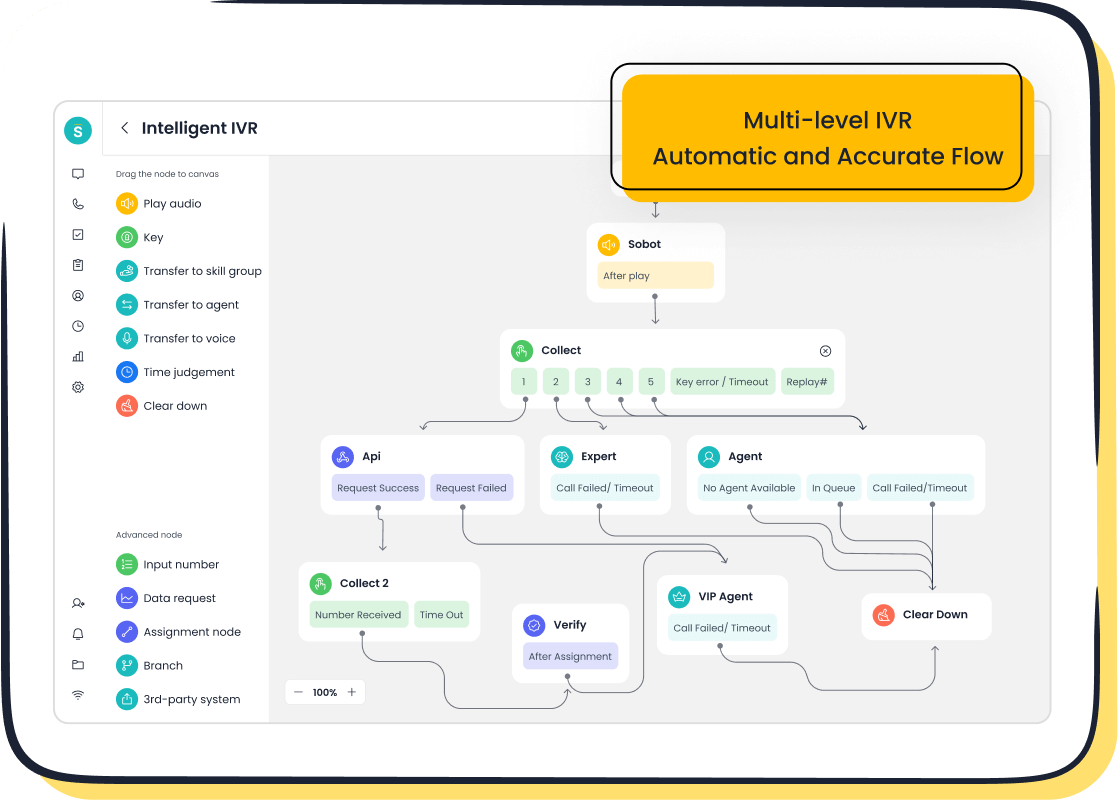
An all-in-one platform simplifies this process significantly. For instance, Sobot's Voice/Call Center offers built-in call recording software, transcription, and analytics. This eliminates the need for complex, costly integrations between separate quality monitoring tools. With a unified solution, you get a complete picture of every customer interaction from a single source of truth, making your call center quality management more efficient and effective. Choosing the right call center quality monitoring software is a critical step for your program.
Step 4: Calibrate Your Team and Technology
Consistency is the key to a fair and effective quality assurance program. Calibration ensures that every evaluator—whether human or AI—scores interactions using the same standards. Regular calibration sessions are essential for maintaining alignment and trust in the monitoring process.
During a calibration session, your QA team reviews the same call and scores it independently. Then, they discuss any discrepancies. This process helps you:
- Refine Your Scorecard: Identify confusing criteria or areas that need clarification.
- Align Evaluators: Ensure everyone has a shared understanding of what "good" looks like.
- Fine-Tune Your AI: Use the sessions to validate and adjust your automated scoring models for better accuracy.
Set a baseline for acceptable variance, typically around 5%, to flag significant differences in scoring. This data-driven approach to calibration ensures your monitoring is both consistent and credible. This assurance is vital for program success.
Step 5: Roll Out the Program and Communicate with Agents
How you introduce your new quality monitoring program is just as important as the program itself. Your goal is to position it as a tool for development, not punishment. Clear communication is essential to address agent anxiety and build buy-in.
Explain the "why" behind the program. Show agents how this new approach to monitoring will help them succeed and grow. Highlight the benefits, such as fair evaluations and personalized coaching.
A unified agent workspace is crucial for a smooth rollout. A platform like Sobot provides a single interface where agents can access their performance scorecards, listen to their call recordings, and review customer feedback. This transparency empowers agents to take ownership of their development.
This is where theory meets practice. The online Asian supermarket Weee! successfully implemented Sobot's voice product to overcome challenges with their previous system. By leveraging Sobot's integrated platform, they achieved a 20% increase in agent efficiency and an incredible 96% customer satisfaction score. This success story demonstrates the power of combining the right technology with a well-executed program rollout.
Step 6: Establish a Feedback and Coaching Loop
Data is useless without action. The final and most critical step is to create a continuous feedback and coaching loop. This turns insights from your quality monitoring software into tangible performance improvement.
Effective coaching is a two-way conversation. It should be timely, specific, and focused on behavior. Follow these best practices for your coaching sessions:
- Start with the Positive: Acknowledge what the agent did well to build trust.
- Use Specific Examples: Refer to specific moments in a call to make your feedback concrete.
- Focus on Behavior, Not Personality: Frame feedback around actions the agent can change.
- Encourage Dialogue: Ask questions and invite the agent to share their perspective.
- Define Next Steps: End each session with clear, actionable goals for improvement.
Regular, consistent coaching transforms your quality assurance program from a simple monitoring function into a powerful engine for agent development and higher customer satisfaction. This loop of monitoring, feedback, and improvement is what drives lasting quality.
AI Best Practices for Call Quality Monitoring
AI transforms your quality assurance program from a periodic check-up into a continuous engine for improvement. By adopting AI-powered best practices, you can unlock unprecedented levels of insight, consistency, and efficiency in your call center. This modern approach to call center monitoring ensures every interaction contributes to better performance and higher customer satisfaction.
Automate 100% of Call Scoring with AI
Manual spot-checks are a thing of the past. AI-powered call quality monitoring allows you to analyze every single interaction. This comprehensive monitoring provides a complete picture of your call center performance. Instead of guessing based on a 2% sample, you get data from 100% of calls. Sobot's AI Solution makes this a reality, analyzing every customer conversation automatically. This approach is also cost-effective, with some systems reducing evaluation costs to under a single cent per call. The result is a dramatic improvement in quality.
For example, one company saw a 30% drop in escalations within three months of implementing 100% AI-audited calls and real-time coaching.
Use AI for Unbiased and Consistent Evaluations
Human evaluators, no matter how well-trained, are prone to bias and fatigue. This leads to inconsistent scoring and erodes agent trust in the quality program. AI eliminates this problem. Quality monitoring software uses a fixed set of rules for every evaluation, ensuring total fairness and consistency. AI systems demonstrate over 80% self-consistency, far surpassing human evaluators. This level of assurance builds a fair and objective monitoring environment.
Leverage Sentiment Analysis to Understand Emotion
Words only tell part of the story. AI-powered sentiment analysis helps you understand the emotion behind the customer feedback. Quality monitoring software can detect frustration, happiness, or confusion in a customer's tone. This gives you deep context into the true customer experience. Companies like Vodafone have used sentiment analysis to reduce customer churn by 20% by proactively identifying unhappy customers. This quality of insight is vital for management.
Identify Trends and Root Causes with AI Insights
Your quality monitoring software should do more than score individual calls. It should identify large-scale trends and root causes. AI excels at connecting dots across thousands of interactions to pinpoint recurring issues. This could be a confusing script, a product flaw, or a gap in agent training. This level of call center monitoring helps management make strategic decisions for process improvement.
Personalize Agent Coaching with Data-Driven Feedback
Generic feedback leads to slow improvement. AI enables highly personalized agent coaching. Sobot's AI Insights can pinpoint specific agent behaviors and trends, providing concrete data points for coaching sessions. You can focus on areas like resolution effectiveness or empathy, using exact moments from calls as examples. This data-driven approach turns every quality monitoring interaction into a targeted opportunity for performance improvement.
Integrate QA with Your CRM and Business Systems
Your call quality monitoring program should not exist in a silo. Integrating your call center quality monitoring software with your CRM creates a single source of truth. This provides a 360-degree view of the customer journey. When your quality monitoring tools and business systems are connected, you can correlate agent performance with business outcomes like customer retention and sales. This integration is essential for effective call center management and program success.
Overcoming Common Monitoring Challenges
Implementing a modern quality program comes with hurdles. You can overcome these common challenges with the right strategy and technology. This ensures your call center monitoring efforts lead to real improvement and a strong return on investment.
Addressing Agent Resistance and Anxiety
Agents may see new monitoring as punitive. You must frame your quality program as a tool for growth. Organizations with strong change cultures experience up to 50% less resistance. You can build this culture.
- Communicate the "Why": Explain how the quality monitoring software helps agents improve their performance and succeed.
- Foster a Safe Environment: Create a space where agents feel secure expressing concerns about the new monitoring process.
- Recognize Champions: Celebrate employees who embrace the new system and demonstrate adaptability.
This approach turns resistance into engagement, which is vital for your program's success.
Ensuring Scorecard and Evaluator Consistency
Fairness is the bedrock of quality assurance. Your call center quality monitoring software provides unbiased AI evaluations, but you must also ensure your human evaluators are aligned. Regular calibration sessions are essential for consistent quality monitoring and building agent trust. This management practice guarantees every agent is measured by the same standard.
From Data to Actionable Call Center Quality Management
Data is only valuable when it drives action. The challenge is turning insights from your quality monitoring software into tangible performance improvement. Effective call center quality management requires a clear path from data to coaching. Your management team must use the data to guide specific, constructive feedback for every customer interaction.
Managing the Cost and ROI of New Technology
Investing in new call center quality monitoring software requires a clear business case. You can prove its value by calculating the Return on Investment (ROI).
Simple ROI Formula:
ROI = (Total Benefits – Total Costs) / Total Costs × 100
Benefits include higher First Call Resolution (FCR) and better customer satisfaction. A powerful quality monitoring software quickly pays for itself through operational efficiencies and improved customer loyalty, making it a smart investment for your call center.
Navigating Data Privacy and Compliance
Monitoring calls for quality assurance involves handling sensitive customer data. Your call center must comply with regulations like GDPR and CCPA. This requires a focus on quality and assurance.
Your quality monitoring software must support compliance by:
- Obtaining Explicit Consent: You must inform the customer and get their permission before recording.
- Ensuring Secure Storage: All call recordings and data must be encrypted and stored securely.
- Respecting Customer Rights: You need processes to handle requests for data access or deletion.
Proper call center quality management ensures your monitoring practices are both effective and lawful.
A modern call quality monitoring program is proactive, comprehensive, and driven by AI. Your quality assurance program succeeds when you define standards, choose the right technology like Sobot, and create a positive coaching culture. This management and monitoring deliver quality and assurance, improving performance and customer satisfaction. Your 2026-ready program is the engine for an exceptional customer experience and better call quality. This call center quality management delivers quality for every customer. This monitoring and management improve performance. This monitoring provides quality assurance. This monitoring improves customer satisfaction and performance. This monitoring delivers quality for the customer. This management delivers quality.
Your call center quality management can create positive customer experiences. This quality assurance program and monitoring deliver quality and customer satisfaction. This management improves performance. This is quality. Embark on Your Contact Journey by exploring Sobot's Voice/Call Center solution.
FAQ
How often should you monitor calls for quality?
Traditional management suggests sampling a few calls monthly. Modern quality programs use AI to analyze 100% of interactions. This comprehensive approach provides a complete view of performance. Your management team gains better insights for improving service quality. This ensures consistent quality for every customer interaction.
What is the difference between quality assurance and quality control?
Quality assurance is a proactive process. It focuses on preventing issues and improving overall service quality. Quality control is reactive. It identifies defects after they occur. A strong quality management program uses both. This management approach ensures a high standard of quality is consistently met.
How do you measure the ROI of a quality management program?
You measure ROI by linking quality efforts to business outcomes. Track improvements in metrics like customer satisfaction, agent efficiency, and retention. Effective quality management reduces costs and increases revenue. This demonstrates the financial value of your investment in quality and superior management practices.
Can AI completely replace human quality management?
AI enhances, but does not replace, human management. AI automates scoring and analysis for better quality. Your human team uses these insights for strategic coaching and complex problem-solving. This partnership between AI and people creates the most effective quality management system for top-tier quality.
See Also
Essential Guide to Elevating Call Center Quality with Assurance Software
Mastering Call Center Quality Management System Principles: A Comprehensive Guide
The Best Contact Center Solutions of 2024: An In-Depth Review
Implementing Top-Tier Quality Management Best Practices in Your Call Center
Reviewing the Leading Automated Voice Calling Software Solutions for 2024

